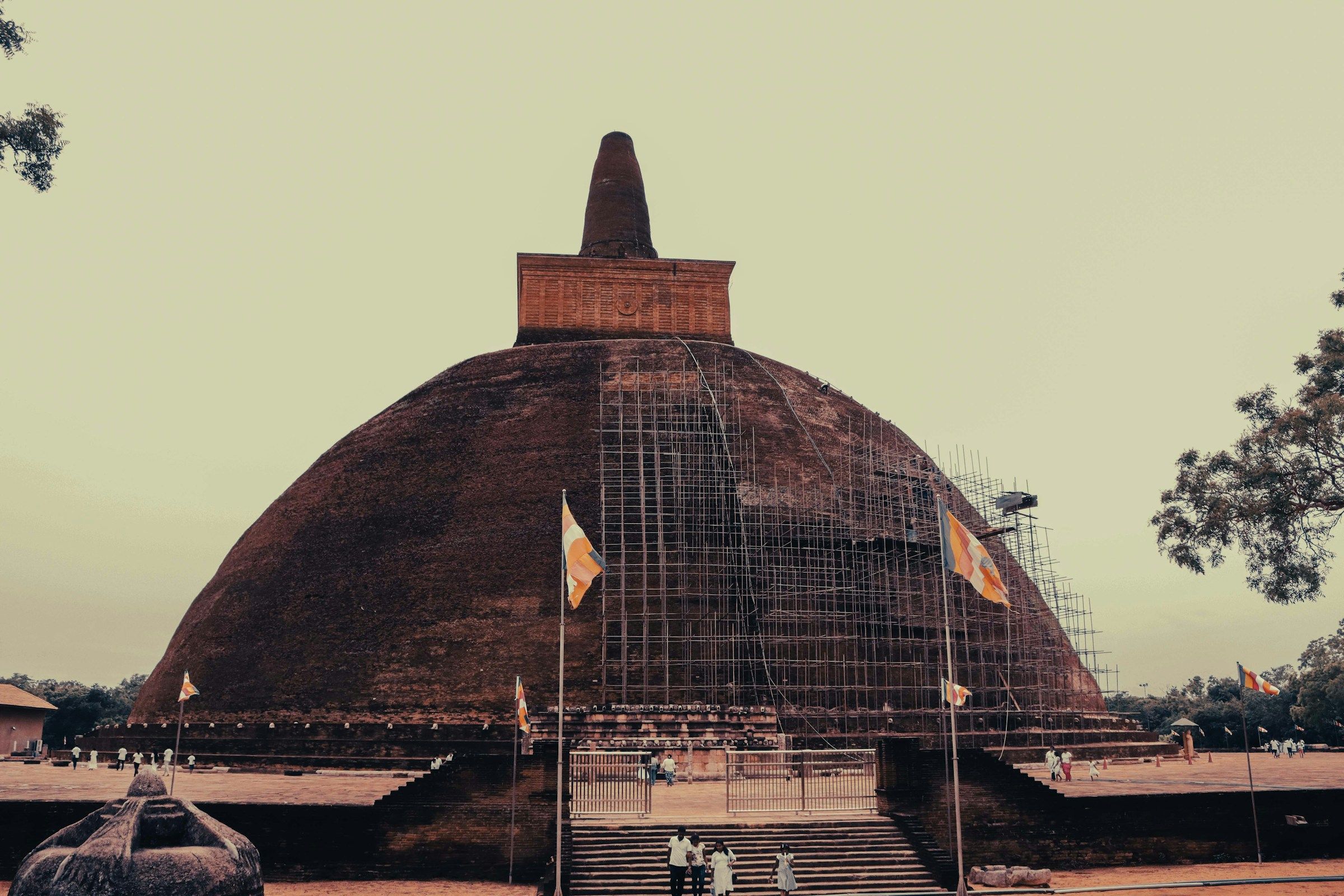
Visit Anuradhapura on a full moon day and the past doesn’t feel distant at all. Pilgrims in white walk barefoot along dusty paths, and saffron-robed monks chant at dawn.[1] Rising above them is Jetavanaramaya, a brick stupa in Sri Lanka that is one of the great building projects of the ancient world.
Here’s the surprising part. Outside Sri Lanka, Jetavanaramaya is little known.[1] This article looks at what it is, why it was built, how it has lasted, and what still isn’t certain about it.
A Sacred Capital on the Northern Plains
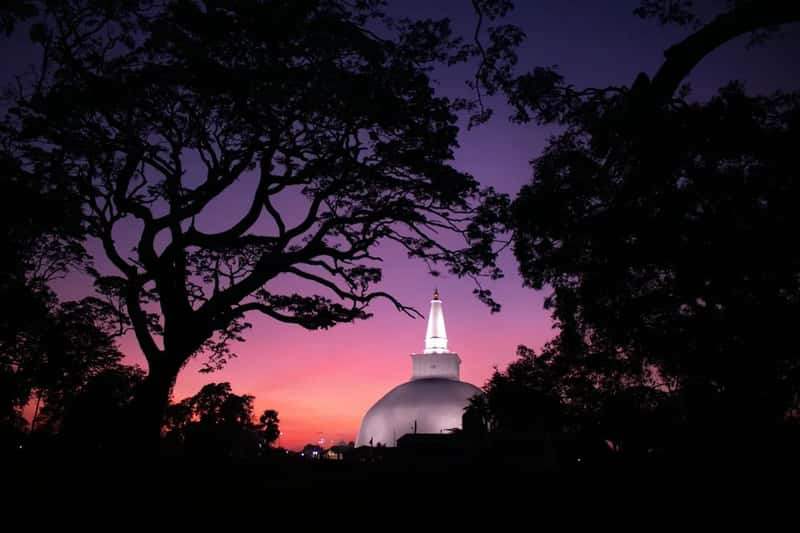
Anuradhapura sits on Sri Lanka’s north-central plains. It was the island’s first great capital and is still one of the most sacred cities in the Buddhist world, known as the first place outside India to adopt Buddhism.[1] The setting matters because the stupa isn’t an isolated ruin. It belongs to a living religious landscape.
The city’s large archaeological park is scattered with monasteries, reservoirs and stupas that rank among the most ambitious religious monuments ever built.[1] Anuradhapura was designated a UNESCO World Heritage Site in 1982, which gave international recognition to Jetavanaramaya and the city’s other ancient monuments.[2]
Once the Third-Largest Structure on Earth
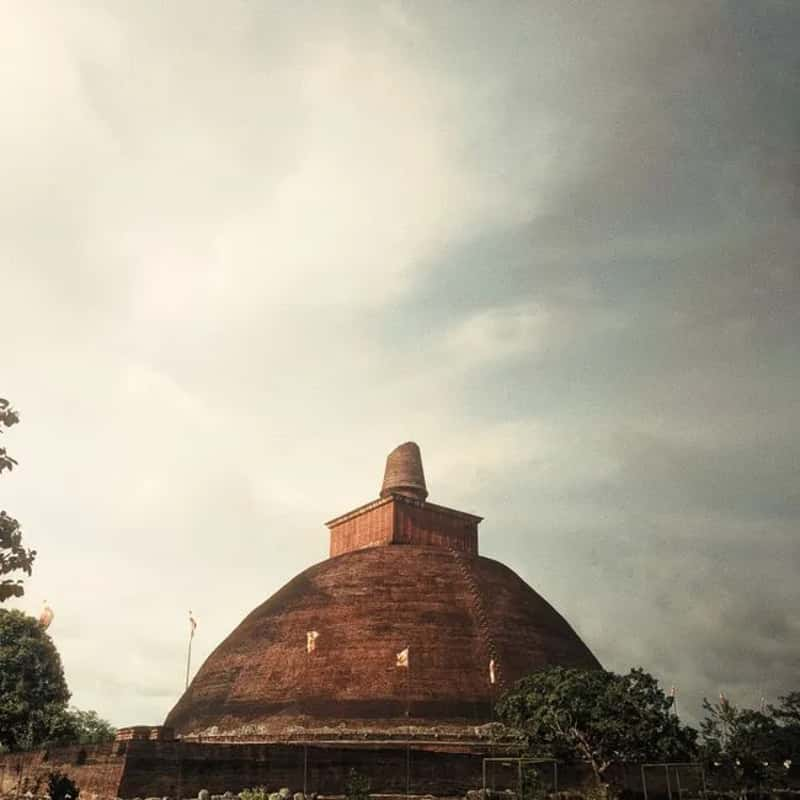
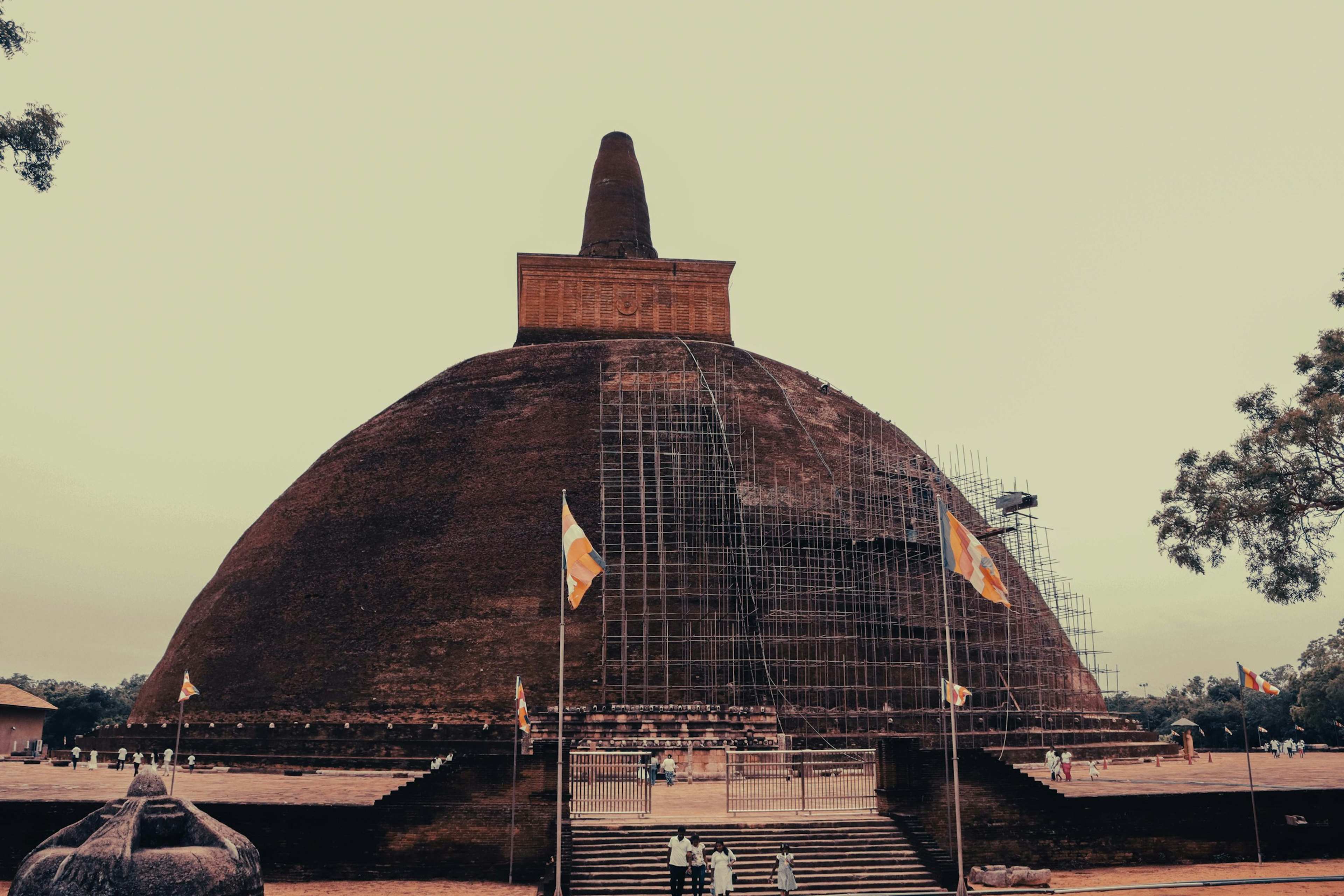
The numbers explain the “megastructure” label. When it was completed in the early fourth century CE, it ranked as the third-largest man-made building on Earth, behind only the Great Pyramids of Giza.[1] It was completed around 301 CE using an estimated 93.3 million baked mud bricks, and it originally rose to about 122 meters (400 feet).[1]
Its mass is hard to picture, so archaeologists have offered a comparison. They estimate its bricks could build a three-foot-high wall from London to Edinburgh, or from New York City to Pittsburgh.[1] Dates for the king’s reign vary by source, so it’s safest to say the stupa dates to the late third and early fourth century CE.
A Monument Born of Religious Rivalry
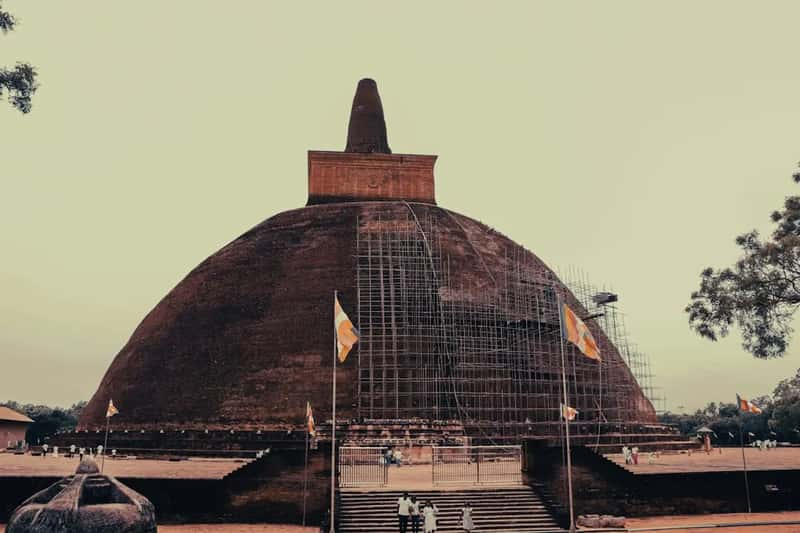
The stupa grew out of conflict as much as devotion. According to one account, King Mahasena ordered the monks of the Mahavihara, the country’s largest Theravada temple, to accept Mahayana teachings. When they refused, he banned people from feeding them and set a fine for anyone who did.[3] The rivalry between the Mahavihara and the Abhayagiri monastery reached its peak in the third century CE during his reign.[4]
Traditional chronicles, as summarized in several modern sources, say the king later regretted this. His chief minister, Meghavannabhaya, rebelled and then persuaded him to stop the violence against Theravada Buddhists.[3] Accounts differ on the details, and some say the stupa was meant as atonement. Another account says it was founded within the Mahavihara’s own precincts.[5] Either way, it began as a politically charged project.
Engineering With Mud Bricks
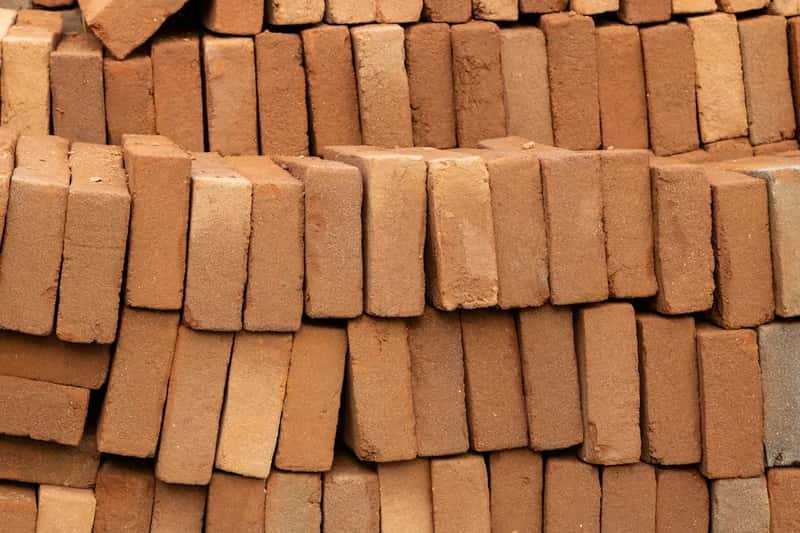
Building something this big out of brick was a serious challenge. Unlike Egypt’s stone pyramids, it was built almost entirely from mud bricks, a material far more vulnerable to erosion.[1] The builders seem to have planned carefully. They tested soil conditions, used bamboo scaffolding and coir rope, and probably moved materials with elephants and carts.[6]
The foundations were substantial. The stupa has a foundation 8.5 meters deep and rests on bedrock.[7] Its hemispherical shape helped spread the weight efficiently, which let it withstand earthquakes and monsoon rains.[6] The original mortar was a mix of finely crushed dolomite, limestone, sieved sand and clay.[8]
Puzzles in the Spire and Discoveries Inside
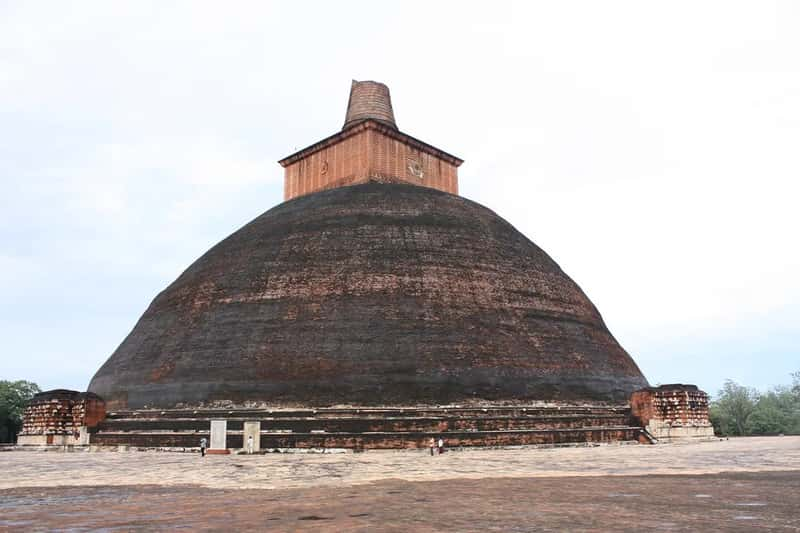
Some details still raise questions. The spire is unusual because it resembles a tower, and some scholars think this may reflect technological influence from the Roman or wider Mediterranean world, passed along Indian Ocean trade routes.[9] That’s a scholarly suggestion, not a settled fact. Whether symbolic or functional, much about its construction remains unclear.[9]
Excavations have turned up important finds. Reliquary caskets were found embedded in the stupa at different structural levels.[8] Gold panels with Bodhisattva imagery, inscribed with sections of the Prajñāpāramitā sutra, are now in the National Museum in Colombo.[8] An archaeology officer also points to a hollow cylindrical chamber that suggests an early understanding of ventilation.[8]
Jungle, Decline and a Shorter Dome
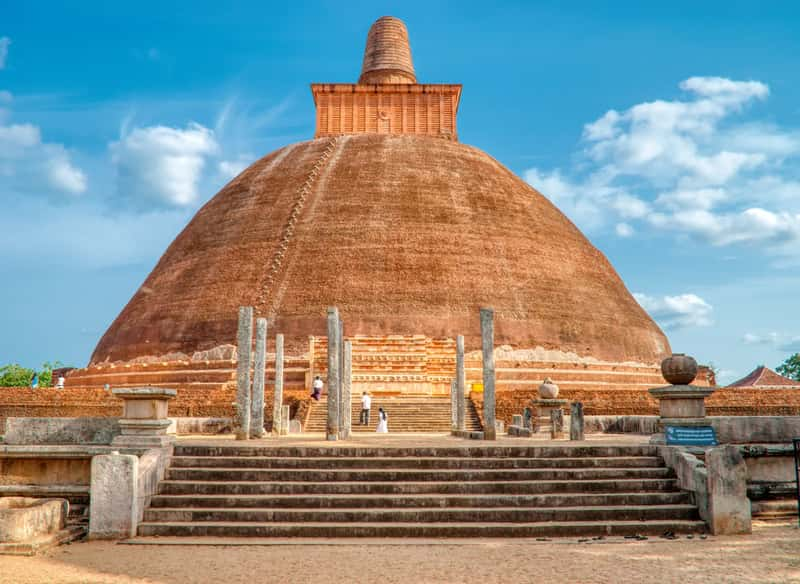
Jetavanaramaya didn’t stay in its original form. When the Anuradhapura kingdom was destroyed and abandoned in the 11th century, the stupa and others were covered by jungle.[7] In the 12th century King Parakramabahu tried to renovate it, and it was rebuilt to a lower height. It now stands at 71 meters (233 feet).[7]
That’s little more than half its original height, yet it remains the largest brick structure by volume ever constructed.[1] Modern repairs haven’t always helped. Restoration introduced cement into some outer layers, which archaeologists now think may have sped up deterioration rather than preventing it.[8]
The Last of Its Kind
One of the most striking facts is that nothing like it was built again. For nearly 700 years after its completion, no stupa of comparable scale was attempted in Sri Lanka.[10] The scale of labor and resources it needed may help explain why, though the sources don’t give a single clear answer.
Nearby Ruwanwelisaya shows a different story. It was smaller than Jetavanaramaya originally, but it has been continuously maintained and now stands more than 100 meters (328 feet) tall, higher than Jetavana’s truncated form.[9] One site represents architectural audacity and doctrinal debate, while the other represents devotional continuity.[9]
A Complex Built Around the Stupa
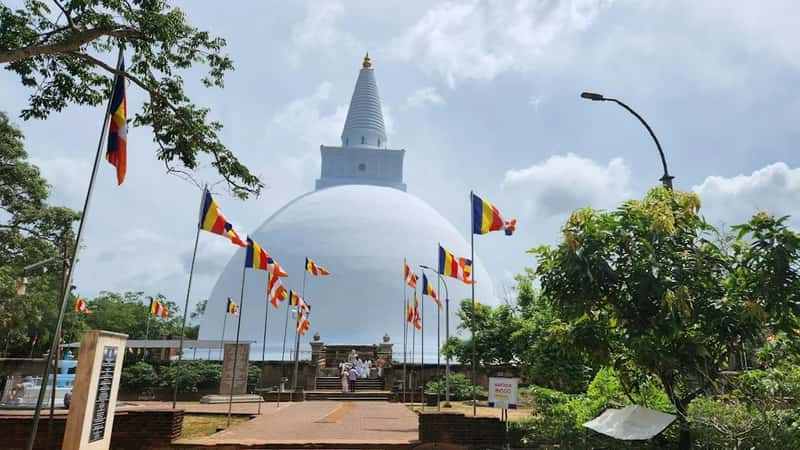
The stupa was the center of a large monastic community. It was the centerpiece of the Jetavana Vihara complex, once home to hundreds of monks, and every structure in the complex was deliberately oriented toward it.[6] The site covers about 5.6 hectares, and one estimate says it housed 10,000 monks.[7] Those two figures differ a lot, so the true population is uncertain.
Dimensions help show how ceremonial the space was. One side of the stupa is 176 meters long, and the stairways on each of its four sides are 9 meters wide.[7] As one local archaeology officer puts it, people came to offer robes, books and food to gain merit.[10] That sense of offering is part of why the monument was built so big.
Why Jetavanaramaya Still Matters
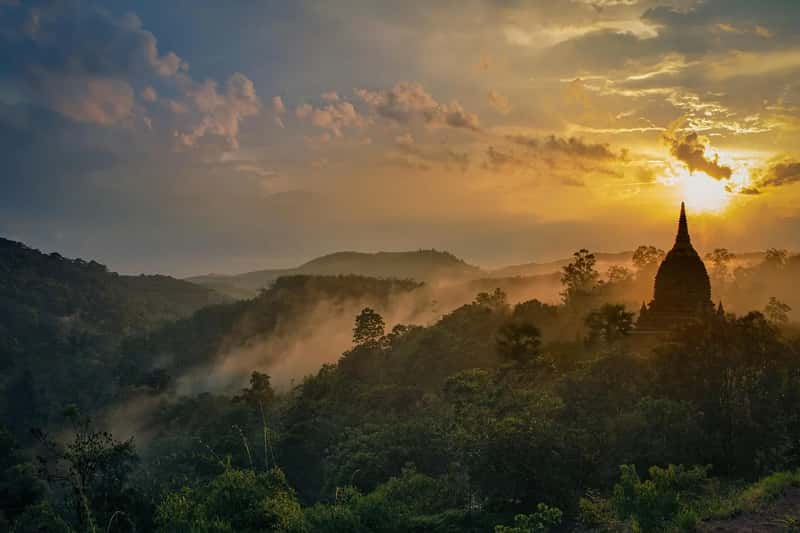
Jetavanaramaya ties together engineering, faith and politics. It shows what a kingdom could do with brick, bamboo, rope and a huge workforce, and it records a bitter religious dispute in physical form. It has also survived earthquakes, neglect and civil war[10], while losing a good deal of its original height.
Today it is still a place of ritual rather than only a ruin. Pilgrims walk its perimeter, following rituals that have endured for more than two millennia.[6] A monument built to last forever has not quite kept its original form, but it has kept its purpose.