Happiness in America is not evenly distributed. Some states consistently report high levels of depression, financial stress, and poor physical health, while others enjoy sunshine, strong communities, and shorter work weeks. Every year, WalletHub crunches the numbers on emotional well-being, work environment, and community conditions to produce a state-by-state happiness ranking, and the results for 2026 paint a fairly consistent picture of which states are struggling the most.
This list walks through the twelve states that landed at the bottom of the latest happiness rankings, counting down toward the single unhappiest state in the country. The patterns that emerge, poverty, poor healthcare access, high depression rates, and weak job markets, show up again and again, suggesting these are not isolated problems but interconnected ones.
12. Ohio
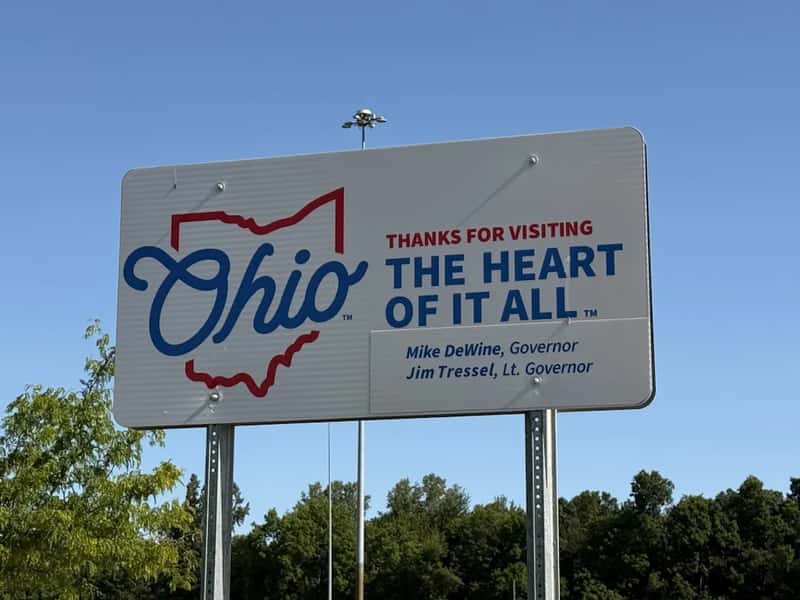
Ohio has become something of a fixture near the bottom of these rankings, and 2026 was no exception. WalletHub ranked Ohio as the 13th unhappiest state in the country, due to its struggle with high rates of inadequate sleep and depression, along with financial and job-related pressures.[1] A WalletHub analyst noted that “Ohio continues to rank among the unhappiest states largely because of its weak performance in both emotional and physical well-being, in addition to its work environment.”[1]
There is a silver lining, though. In the most recent ranking residents reported increased happiness compared with WalletHub’s 2024 study, when Ohio placed as the 11th unhappiest state in the country.[1] Analysts pointed to specific gains behind that improvement, noting that the improvement stems from gains in its community and environment ranking, where Ohio jumped from 36th to 22nd.[1] It is a reminder that these rankings shift, sometimes for the better, even for states with long histories of poor scores.
11. South Carolina
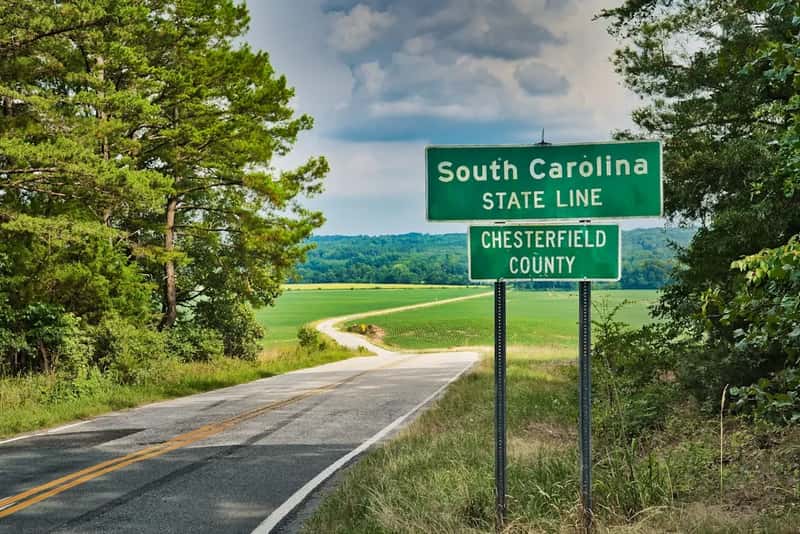
South Carolina’s struggles are largely tied to money. According to one recent analysis, South Carolina ranked 5th in the country for financial distress[2], a factor that tends to ripple outward into nearly every other happiness metric. When households are constantly worried about bills, it becomes much harder to report high life satisfaction, regardless of how nice the weather is.
The Palmetto State’s issues echo a broader Southern pattern, where economic insecurity, limited healthcare access, and elevated stress levels combine to drag down overall well-being scores. Unlike some Northeastern or Western states with higher costs of living but stronger safety nets, South Carolina’s affordability advantages have not been enough to offset deeper structural challenges in income and financial stability.
10. Nevada

Nevada’s happiness problems are closely tied to mental health. Survey data from 2023 found a striking gap: 38.4% of Nevada adults showed signs of anxiety or depression in 2023, well above the national average of 32.3%.[2] That is a meaningful difference, and it points to daily pressures affecting residents’ overall well-being and sense of safety.
Nevada’s economy leans heavily on tourism and hospitality, industries known for irregular hours, lower job security, and limited benefits compared to more diversified state economies. Combine that with a transient population that can make forming lasting community ties more difficult, and it is not hard to see why the state consistently underperforms on happiness measures despite its reputation for entertainment and excitement.
9. New Mexico

New Mexico presents an interesting case because the state is genuinely in the middle of significant economic transition, yet the benefits have not fully trickled down to everyday residents. New Mexico is a state undergoing transition, though not everything is good; its unemployment rate, which stands at 4.2 percent according to BLS 2025 figures, is above the national rate.[3]
That elevated unemployment figure matters because job insecurity is one of the strongest predictors of unhappiness in these kinds of studies. When people cannot find stable work, financial anxiety spikes, and that anxiety tends to spill over into physical health, relationships, and community engagement. New Mexico’s natural beauty and cultural richness have not been enough to offset these underlying economic pressures.
8. Tennessee

Tennessee’s happiness challenges are rooted in both mental and physical health outcomes. Tennessee ranks among the worst states for physical and emotional well-being, with some of the highest adult depression rates in the country.[4] On top of that, healthcare access remains a persistent obstacle for many residents.
The insurance gap is particularly telling. Roughly one in nine people under 65 lack health insurance, a gap that pushes people away from preventive care and makes chronic conditions harder to manage.[4] Without regular checkups, small health issues can turn into major ones, and that cycle of deferred care and worsening conditions clearly weighs on the state’s overall happiness score.
7. Mississippi

Mississippi consistently ranks near the bottom of national well-being surveys, and depression is a central part of that story. Mississippi ranks as one of the unhappiest states in the nation, with over 25 percent of residents reporting[4] struggles with mental health, a figure that far exceeds the national average.
The state also grapples with structural challenges that compound emotional distress, including limited access to specialists, rural healthcare deserts, and persistently low household incomes. These are not new problems for Mississippi, but they have proven remarkably difficult to solve, and they continue to show up year after year in happiness and well-being rankings.
6. Kentucky

Kentucky lands solidly in the bottom tier of happiness rankings, with WalletHub data showing just how far behind the state trails the national average. At 40.58, Kentucky scored the fifth lowest on WalletHub’s report, making it one of the unhappiest states in the US.[5]
Much of Kentucky’s struggle traces back to health outcomes, particularly chronic disease rates and limited access to quality medical care in rural parts of the state. Economic factors play a role too, with lower median incomes and fewer high-paying job opportunities compared to neighboring states. Together, these pressures create a difficult environment for residents trying to build financial and emotional stability.
5. Alaska

Alaska is a genuinely unusual entry on this list because it does not fit the typical Southern or Rust Belt profile. Alaska ranks as the fifth least-happy state, weighed down by concerning mental health and lifestyle outcomes, with one of the highest suicide rates in the nation and a relatively low life expectancy.[6]
Isolation appears to be a major driver of Alaska’s low ranking. Alaska’s geographic isolation may also play a role, reflected in high food insecurity and limited economic security for many households.[6] Interestingly, the state does not lack for personal freedom or outdoor access, since volunteerism and leisure time are relatively strong, yet poor health outcomes and elevated stress drag down overall happiness.[6] It is a state where isolation and harsh conditions outweigh the benefits of wide-open space.
4. Alabama

Alabama’s happiness problems stem primarily from a combination of health and economic weaknesses. Alabama struggles with health and economic measures, landing it as the fourth least-happy state, with rates of depression and chronic disease higher than average and fewer residents reporting feeling active and productive compared to happier states.[6]
What makes Alabama’s case notable is that unemployment alone does not explain the low ranking. Although Alabama’s unemployment rate isn’t the highest, WalletHub says its overall challenges in health and financial well-being push it into the bottom tier.[7] It is a useful reminder that happiness rankings capture more than just jobs; they capture whether people feel healthy, secure, and capable of thriving day to day.
3. Arkansas

Arkansas consistently shows some of the weakest numbers in the entire country when it comes to mental health. Arkansas scores a low 39.72 on WalletHub’s happiness index, and in addition to issues like poor healthcare, crime, and poverty, the state suffers from the highest rate of depression in the United States.[4]
Income disparity plays a major role as well. The median household income in Arkansas runs 25 percent below the national average, a gap that cascades through nearly every other quality-of-life indicator.[4] Beyond income, the state’s broader profile echoes what shows up in similar rankings: Arkansas places third to last, with poor rankings across health, economic, and social measures, reporting one of the lowest physical health scores, while depression rates and adverse childhood experiences are high.[7] Social isolation compounds the issue too, since social support is limited compared to other states, while divorce rates are also among the nation’s highest.[7]
2. Louisiana

Louisiana’s position near the very bottom of happiness rankings reflects a mix of health, economic, and safety-related struggles. Louisiana is the second least-happy state, weighed down by a combination of poor health and economic challenges, with residents reporting high levels of depression and adverse childhood experiences alongside low scores for social well-being, and relatively short life expectancy paired with lagging economic security.[7] On top of that, Louisiana also reports some of the lowest productivity and purpose scores[6] of any state in the nation.
Poverty remains one of the state’s most persistent challenges. Structural poverty compounds the problem, with 18.7 percent of Louisiana’s population living in poverty, according to 2025 Census data.[4] Natural disasters add another layer of difficulty, since the problems facing Louisiana are admittedly difficult, as the state is continually struggling against natural calamities such as hurricanes and floods, which are costly to people and infrastructure.[3] Healthcare access rounds out the picture, with the state ranking near the bottom nationally, at 48th, according to WalletHub’s analysis.
1. West Virginia

West Virginia takes the unfortunate top spot as the least happy state in the entire country, a position it has held with troubling consistency across multiple years of research. West Virginia ranks last as the least happy state in America, by WalletHub’s assessment, with the highest rate of adult depression in the nation and the lowest share of adults who feel active and productive.[7]
The economic picture is equally bleak. Physical health outcomes are poor, with chronic disease significantly impacting residents’ happiness, while household incomes are low, food insecurity is high, and job opportunities are limited. Suicide and divorce rates are also elevated.[6] Despite the state’s natural beauty, residents consistently report low emotional health and dissatisfaction at work, along with weak community support that leaves the state with a great deal of work still to do in helping people feel truly content.
What These Rankings Reveal

Looking across all twelve states, a clear pattern emerges. Nearly every state on this list struggles with some combination of high depression rates, limited healthcare access, and economic insecurity, whether that means low median incomes, high poverty rates, or unstable job markets. The Southern and Appalachian regions dominate the bottom of the list, though Alaska’s inclusion shows that geographic isolation and harsh conditions can produce similarly damaging effects even far from the traditional Rust Belt or Deep South.
None of this is set in stone. Ohio’s modest climb out of the bottom fifteen shows that targeted improvements in community programs and environmental quality can move the needle, even for states with long histories at the bottom. The broader challenge for the rest of these states will be addressing the deeper structural issues, poverty, healthcare deserts, and job insecurity, that keep showing up as the common threads behind America’s unhappiest places.