You are standing in an airport bookstore at Gate C-14.
The flight boards in forty minutes.
You pick up a hardcover. Something serious. Something with a spine worth being seen.
You don’t want the book. You want what holding the book says about you.
That gap – between the reader you perform and the person quietly scrolling Instagram at 35,000 feet – is not a character flaw. It’s a wound dressed in a dust jacket. It is the ghost of every classroom where you sat up a little straighter when the teacher walked past your desk. It is the memory of every report card, every parent-teacher conference, every moment you learned that being seen doing the right thing mattered as much as actually doing it.
1. The Prop, Not the Page
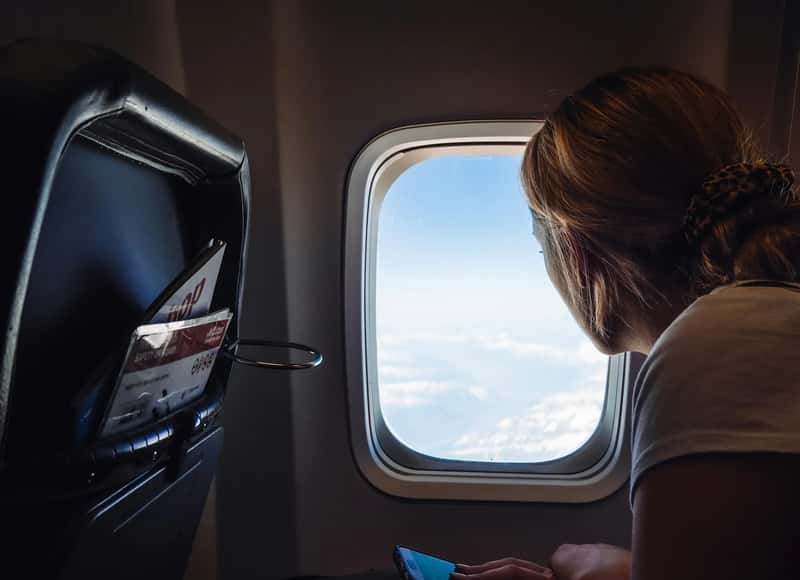
The book is never really about reading.
It is a prop in a costume you have been wearing since you were eight years old.
The book becomes a prop in a drama about identity. That drama began long before the airport. It began the moment you understood – viscerally, wordlessly – that certain objects signaled certain things to the adults who held power over your days. A book meant you were serious. Occupied. Productive. Safe from criticism.
The airport is just the latest stage.
To be in public is to be watched in return; to read in public is to be read in return.
You aren’t buying a book. You are buying a version of yourself that you hope strangers – and some older, louder voice inside you – will approve of. The pages stay unturned. The performance does not.
2. The Childhood Equation
There was a lesson you learned early. It was never spoken aloud.
It went something like this: idle hands are suspicious hands.
According to attachment theory, adolescents’ attitudes toward authority may derive from early interaction with primary caregivers. Individuals internalize these interaction experiences and form internal working models, which will be applied in later life stages when interacting with authority figures.
You internalized the model. Deeply. Permanently.
The model said: when someone with power over you is watching, you must look like you are producing something. Something intellectual. Something that justifies your existence in the room. A book in your lap was your alibi. It said you were going somewhere – not just geographically, but mentally. That you were the kind of person who used time wisely.
The airport, with its anonymous crowd and transient authority – gate agents, fellow passengers silently judging carry-ons – triggers the old equation automatically. Buy the book. Prove the point. Move on.
3. The Identity Gap
Here is the uncomfortable truth that sits in the overhead bin with your unread paperback.
You are not buying the book for the flight. You are buying it for the person you wish you already were.
Performance may be less about deceit than about aspiration. When we are reading, we are becoming the person we want to be, and shyly showing others the spine of that dream.
The identity gap is the distance between that aspirational self – calm, intellectual, someone who annotates margins and quotes Camus at dinner – and the actual self, who is anxious about turbulence and really just wants a ginger ale and an episode of something familiar.
That gap is not shameful. It is deeply human.
But it is also exhausting. Because maintaining a performance at altitude, when the pressure drops and the anxiety rises, is a particular kind of invisible labor that nobody names.
4. The Goffman Moment
The sociologist Erving Goffman had a name for what you do in that bookstore.
He called it impression management.
Goffman employed a “dramaturgical approach,” concerning himself with the mode of presentation employed by the actor and its meaning in the broader social context. Interaction is viewed as a “performance,” shaped by environment and audience, constructed to provide others with “impressions” that are consonant with the desired goals of the actor.
The airport is Goffman’s stage in its purest form. Everyone is passing through. No one knows your name. And yet – or perhaps because of this – the performance intensifies. You are a stranger among strangers, and strangers carry no context. They can only see what you show them.
So you show them the book.
You show them, quietly, desperately, that you are someone worth sitting next to. Someone with interior life. Someone a childhood teacher would have pointed to and said: look at that one.
5. The Anecdote at 30,000 Feet
I once bought a copy of a dense, 600-page work of narrative history in a Dallas airport. The kind of book that looks serious from across a gate lounge. I carried it through security, tucked it into the seat pocket in front of me, and watched three movies instead.
The book came home still creased at page twelve – exactly where the author’s note ends and the actual difficulty begins.
I put it on my shelf.
It looked good there.
Life gets busy, and the intention to read often gets delayed. However, the intention alone feels fulfilling – and we let this feeling sink in.
What I did not ask myself, not for years, was this: who was I performing for at that Dallas gate? My father, who once walked through my childhood bedroom and raised an eyebrow at the TV? My seventh-grade English teacher, who wrote “reads below potential” in red ink? Both. Neither. Some composite authority figure I carry through every terminal, every transition, every moment of unstructured time.
6. The Tsundoku Disguise
There is even a Japanese word for what you do. It is older than your guilt about it.
This habit of collecting books without reading them has a name: tsundoku, a Japanese term that translates to the art of piling books up.
Tsundoku has been rebranded in recent years as charming. Relatable. A personality trait, not a symptom. But beneath the aesthetic – the Instagram shelfies, the teetering nightstand stacks – something quieter is happening.
One key factor behind our obsession with collecting books is the concept of potential. Each book holds the possibility of new experiences, insights, and inspiration. Even if we never open a particular book, owning it gives us the comforting sense that knowledge and entertainment are within reach whenever we need them.
In the airport context, that potential is specifically social. The unread book on the tray table is a placeholder for the intellectual life you intend to lead once the turbulence of ordinary days settles down. It says: I am not done yet. I am still becoming. Please believe in the version of me holding this hardcover, not the one too tired to lift it.
7. The Approval Archaeology
Dig down far enough beneath the airport bookstore reflex, and you hit bone.
You hit the specific memory of being evaluated. Ranked. Found either sufficient or wanting by someone who had power over your daily existence.
Fear of authority figures stems from power and control, masquerading as authority, that was harsh, capricious, and unempathetic in the childhood home. Authority figures later may be intellectually understood as legitimate or potentially helpful, but there will at least be an approach/avoidance conflict.
That conflict does not dissolve at eighteen. It does not dissolve at thirty-five. It shape-shifts. It migrates from the classroom to the boardroom to the boarding gate. The authority figures change – parents become bosses become the ambient gaze of strangers in a terminal – but the reflex remains: demonstrate productivity. Signal effort. Hold something that proves you are working on yourself.
The physical book is the adult equivalent of doing your homework at the kitchen table where your parents could see you.
8. The Digital Confession
You could read on your phone. You know this.
Your phone contains seventeen books you purchased last year, all sitting in a reading app, all at page zero.
But the phone doesn’t broadcast the signal. Nobody sees a Kindle app from the next seat over. Nobody glances at your screen and thinks: ah, a thoughtful person. The phone is private. And what you need – what the childhood wound needs – is not privacy. It is visibility.
In this context, performative reading isn’t just the act of reading with an audience in mind; it’s reading as an assertion of self.
The physical book is legible from twelve feet away. Its cover communicates genre, seriousness, cultural alignment. It speaks without speaking. It does the work your anxious inner child always wanted to do: it says I am trying to the room, without you having to open your mouth or actually turn a page.
9. The Transit Self
There is something particular about the psychology of transit.
The airport is a nowhere. A between-place. Airports truly warp reality. And in that warped reality, identity becomes simultaneously more fragile and more performatively urgent. You are not at work. You are not at home. You are no one’s colleague, no one’s neighbor. You are briefly, beautifully anonymous – and that anonymity terrifies the part of you that was trained to be legible to authority at all times.
The concept of performativity suggests that identity is not fixed, but actively constructed through repeated performances. This idea challenges traditional notions of identity, emphasizing the role of social norms and expectations in shaping how we present ourselves to the world.
In the in-between space, the performance intensifies to fill the void. The book becomes an anchor. A proof of self. A physical object that answers the question the transient space keeps asking: who are you, exactly, when nobody knows your name?
10. The Unread Confession
The book sits in the seat pocket.
You ordered the drink. You pulled out your phone. The book watched you from below the tray table like something patient and slightly accusatory.
And that is the heaviest part of this whole transaction: the guilt that follows the performance. The book does not just fail to get read. It becomes evidence. It becomes a small, rectangular verdict on the gap between who you intended to be and who you actually are when no one you know is watching.
When reading becomes primarily a means of projecting identity, it risks losing its generative energy. Books begin to matter for how they position the reader within a cultural hierarchy, instead of mattering for what they do to the reader.
And there it is. The deepest mechanism. When the book is a prop, the airplane is a stage, and the reading is a performance – then the actual inner experience of literature, the quiet transformation that happens when you are genuinely absorbed in a sentence, becomes structurally impossible. You cannot read for yourself while performing for an audience. You cannot surrender to a text while monitoring how the surrender looks from the outside.
The childhood need to appear intellectually productive to authority figures did not just teach you to buy books you don’t read. It taught you to experience your own leisure as something that requires justification. It planted an invisible teacher in the aisle seat who grades you on how you spend the three hours between cities. And until you find that teacher and sit quietly with them – asking where they came from and what they actually needed from you – the hardcover will keep coming home with the spine uncracked.
The question worth sitting with, somewhere over the clouds, is not “why don’t I read more?” It is softer and more surgical than that. It is: whose approval am I still trying to earn, and would they even remember giving me the assignment?
Put the book in your bag. Not to read it. Not to display it. Just to carry it somewhere quieter, where the only audience is you – and see what happens when the performance finally goes dark and the person underneath it gets to choose what to do with the silence.
The flight lands. The terminal empties. And somewhere on a shelf at home, a book waits at page twelve – not as a failure, but as a map of the distance between who you were told to be and who you are still, slowly, becoming.