You booked the flight at midnight.
Not to the beach. Not to the spa resort with the infinity pool and the complimentary prosecco.
To the ruins. To the city that burned. To the place where something enormous and irreversible happened.
You told yourself it was educational. You said you wanted context. You mentioned – casually, to whoever was listening – something about history and perspective.
But the real reason runs deeper. Quieter. And you already know what it is, even if you’ve never said it out loud.
1. The Permission Slip
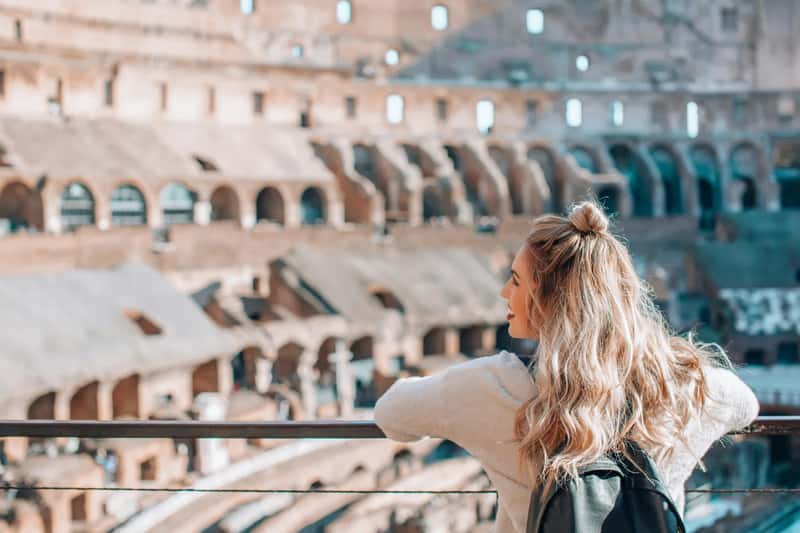
Grief is not socially portable. You cannot carry it into a Tuesday morning meeting. You cannot wear it to a dinner party.
But you can carry it to Hiroshima.
You can carry it to the cobblestone streets of Warsaw, to the bullet-marked facades of Sarajevo, to the silent fields of Gettysburg where the grass grows thick and indifferent over what happened beneath it.
These destinations are not typical tourist attractions; they are spaces of reflection where history’s darkest chapters become tangible.
That tangibility is the point. When a place grants you permission to feel heavy, you don’t have to justify the weight.
The dark destination becomes a container. It holds the emotional inventory you’ve been dragging through daily life with nowhere to set it down.
You aren’t being morbid. You are being strategic, in the most subconscious way imaginable. You are going to a place where sadness is the agreed-upon frequency, and for once, you are perfectly tuned to it.
That is not dysfunction. That is a form of profound, if unspoken, self-care.
2. The Mirror in the Rubble
There is a line of thinking among researchers that gets to the bone of this.
“When we go to these places, we see not strangers, but often we see ourselves and perhaps what we might do in those circumstances.”
Read that again. Slowly.
You are not going to these places to witness other people’s suffering from a safe, academic distance. You are going to look at the human capacity for collapse – and to recognize it. In history. In a regime. In a city. In yourself.
The rubble is a mirror. The cracked wall is a mirror. The empty shoes in the glass case at a Holocaust museum – those are a mirror.
Not because you are capable of atrocity. But because you are capable of fragility. Because you know what it is to be dismantled – by loss, by failure, by the quiet violence of a life that didn’t go the way you planned.
You go to the ruined place to confirm that ruin is survivable. That something can be completely destroyed and still, somehow, still be there.
3. The Mortality Rehearsal
Modern life has become extraordinarily efficient at removing death from view.
What dark tourism researchers are fascinated by is “the way people face their own mortality by looking at other deaths of significance,” because “we’ve become quite divorced from death yet we have this kind of packaging up of mortality in the visit economy.”
You are not divorced from death. You know it exists. But you live in an environment engineered to make you forget – the hospital wings you never see, the funeral homes tucked discreetly off the highway, the way grief is given a two-week window before it becomes professionally inconvenient.
So you travel toward it instead.
You stand in the place where it happened – where thousands of lives ended in a single morning, a single decree, a single eruption – and you rehearse. You let yourself feel the proximity of impermanence.
This is not morbid. It can mediate our sense of mortality through the fatality of others, where the dead act as warnings from the history of our own fights, follies, and misfortunes.
The destination becomes a dress rehearsal for your own eventual disappearance. And somehow, walking away from it, the world looks sharper. More worth being in.
4. The Beauty That Shouldn’t Exist
There is a specific aesthetic that only brutal history creates. And it is genuinely, uncomfortably beautiful.
The moss on the abandoned Soviet architecture. The wildflowers pushing through the cracked floor of a bombed cathedral. The light falling through a rusted prison gate at four in the afternoon, laying shadows like a painting no one commissioned.
This beauty shouldn’t be there. That’s precisely why it hits so hard.
In dark tourism landscapes, narratives of death and tragedies co-exist or overwrite pre-existing narratives, catering to tourists who are looking for something – whether it is excitement, hope, fear, catharsis, empathy, or any other affect.
Hope. That word keeps appearing in the research, nestled quietly between fear and catharsis.
The beauty you find in the broken place is not decorative. It is argumentative. It is making a case – wordlessly, structurally, through vine and stone and filtered afternoon light – that beauty is not contingent on perfection. That it arrives precisely where things have been shattered and not yet fully rebuilt.
You find this beautiful because you need it to be true about more than architecture.
5. The Weight That Grounds You
I stood in the Tuol Sleng Genocide Museum in Phnom Penh on an unremarkable Thursday afternoon.
I had come from three weeks of cities that blurred into each other – temples, markets, guesthouses, the relentless lightness of a life in motion. I was, in the clinical sense, fine. In the honest sense, I was hovering somewhere above my own life, untethered by comfort and routine and the frictionless ease of the itinerary.
Inside those rooms, I stopped hovering.
The weight arrived like something physical. And with it – strangely, guiltily – a sense of being completely present. Completely located. Not in geography, but in myself.
Standing on the very ground where history unfolded creates a visceral connection that books and documentaries cannot replicate.
The weight of a brutal place is, paradoxically, one of the lightest things you can carry out of it. Because it returns you to your body. It puts you back inside your own skin. After weeks of frictionless travel, I finally felt my own feet on the ground.
That is the dark destination working its particular, unrepeatable magic.
6. The Catharsis Economy
You cannot cry at your desk. You cannot rage in the grocery store. Emotional expression, in the context of ordinary adult life, has a very narrow and very policed range of acceptable expression.
But you can be moved – visibly, openly, without explanation or apology – at a war memorial.
Psychologists and tourism researchers identify multiple overlapping motives for visiting dark sites: a mixture of curiosity, learning, empathy, reflection, and even thrill.
What the research often underweights is the pure cathartic function. The release.
The traveler who weeps in the Anne Frank House in Amsterdam is not simply sad about 1944. They are sad about everything the year 1944 represents about human nature – and everything in their own life that rhymes with it. The tragedy provides the syntax. The traveler provides the content.
Dark destinations operate as licensed theaters of emotional discharge. The context gives you cover. The history gives you vocabulary. The brutality gives you scale – suddenly, your own private grief feels appropriately sized, neither too large nor too shameful, when placed beside what these walls have witnessed.
You didn’t come to mourn their dead. You came, partly, to mourn your own.
7. The Proof of Resilience
You are not just looking at what fell apart.
You are looking at what remained.
To understand a dark tourism visit purely through the lens of death would be to exclude the demonstrations of national identity, educational experience, thrill, joy, fear, hope, nostalgia and all the embodied experiences and feelings central to these encounters.
Hiroshima didn’t just survive the bomb. It built a peace park where the hypocenter used to be. It planted trees. It made art from the shadows of the vaporized. It continued, in the most stubborn and gorgeous way imaginable.
Medellín – once the murder capital of the world – now has outdoor escalators connecting its hillside communities and a metro system that locals treat with a reverence usually reserved for civic religion.
Berlin built a Holocaust memorial in the middle of its capital city. Not to the side. Not underground. In the center, between the government buildings, where no one can pretend it isn’t there.
You seek this out because resilience, when witnessed in the concrete and the municipal, is the most convincing argument you have ever encountered. The city endured. And if the city endured – maybe. Just maybe. So can you.
8. The Identity Without Audience
At home, you are performing. Constantly, exhaustingly performing.
At the somber destination – the quiet memorial, the crumbling fort at the edge of a cliff, the empty corridors of an abandoned penitentiary – no one is watching you for cues. No one cares what you’re projecting.
Dark tourism experiences arise through explicitly sought-after encounters, whereby tourists are receptive to the affects arising from connections with death and its representations. Death is part of the story of such sites, but not always the main overt and explicitly acknowledged motivation for the visit.
The unacknowledged motivation is identity.
You come to these places to find out who you are when the performance stops. When the ambient noise of your social role is removed. When there is nothing to project and no one to perform for and the only thing left is whatever you actually think when you’re standing in a place that demands honesty.
The brutal destination strips the social costume. What’s underneath is the closest thing to your actual self that most people ever get to meet. This is why you return to these places. Not for the history. For the honesty.
9. The Refusal of the Sanitized
There is a particular claustrophobia that comes from a world designed to keep you comfortable. The resort with the manicured beach. The itinerary with the sunset cocktail cruise and the charming market and the zero possibility of discomfort.
Something in you chafes at that. Not because you’re perverse. Because you’re perceptive.
“People like to witness spectacles from a place of safety,” says one researcher. “It’s the same instinct that draws audiences to boxing matches, true crime podcasts or horror films. There’s a thrill to it but you’re not personally at risk.”
But it goes beyond thrill-seeking. The traveler drawn to brutal history is often making an epistemological statement. They are insisting: I want to know what actually happened. I want to see the evidence. I refuse to accept the curated, the airbrushed, the convenient.
Dark tourism is not about chasing shock – it is about remembering, learning, and honoring.
The refusal of the sanitized is, at its core, a refusal to be lied to. By history. By marketing. By the version of the world that requires you to look away from everything difficult in order to enjoy a good time.
You’d rather know. Even if knowing is harder.
10. The Quiet That Only Ruin Provides
There is a silence available in broken places that exists nowhere else on earth.
Not the silence of an empty room. Not the silence of a library or a church. Something different. Something older and stranger and harder to name.
It is the silence of consequence. The silence left behind when something enormous happened and then, slowly, the world grew over it – grass through the cracks, trees through the rooftops, light through the collapsed walls – and the noise of what occurred eventually became something else entirely.
Dark heritage sites bear witness to painful, traumatic, and difficult historical events that have profoundly transformed societies, embodying the remembrance of human suffering caused by wars, genocides, and other humanitarian catastrophes.
And yet they still stand. Altered. Partial. Beautiful in their incompleteness.
This is the deepest subconscious logic of the brutal destination. You go because you need proof that beautiful things can survive their own destruction. That a city, a culture, a monument – and by quiet extension, a person – can be broken almost entirely and still hold something worth traveling toward.
The ruin doesn’t ask you to resolve anything. It simply demonstrates, by its continued existence, that existing is enough.
There is something that happens to a person – quietly, without ceremony – when they stand in a place where history cracked open and the world kept going anyway.
Something recalibrates. The things that felt enormous before the flight – the unread messages, the stalled ambition, the slow and grinding weight of ordinary disappointment – they don’t disappear. But they resize. They find their correct proportion against the backdrop of what you’re standing inside.
You weren’t chasing sadness when you booked the ticket to the broken place. You were chasing the specific and unrepeatable relief of context. The dark destination hands you scale. It hands you proof. It hands you the most stubborn, stone-cut, moss-covered argument in the world that beauty is not something that arrives when everything is intact – it is something that survives when almost everything is not.
Maybe you already knew that. Maybe you just needed to go somewhere that proved it.