The forecast says rain for seven days straight.
You feel something close to relief.
Everyone else cancels their trip.
You book yours.
There is a version of you that exists only in transit – in the window seat above a bruised sky, in the rental car idling at the edge of a storm front, in the hotel room where the window rattles and nobody knows your name. That version doesn’t perform. Doesn’t optimize. Doesn’t maintain the careful, curated distance between what you feel and what you show.
The storm doesn’t ask you to explain yourself. It doesn’t hand you a framework or a diagnosis. It simply arrives, enormous and indifferent, and in its enormity it briefly makes the noise inside you proportionate. You are not overreacting. You are not too much. The sky is doing it too.
There is something deeply human about needing the outside world to validate the inside one. About needing geography to speak the language your social life will not.
The Atmospheric Permission Slip
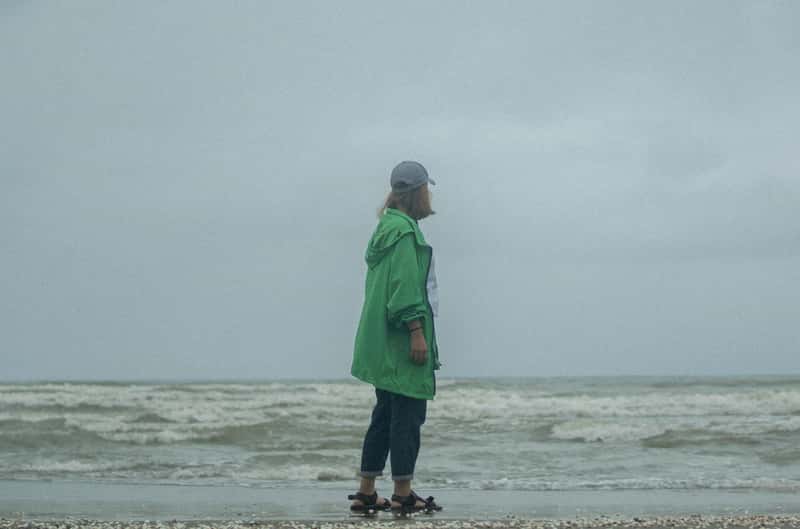
Rain-centric travel is not an escape. It is a permission slip. Permission to finally be as loud inside as the world outside the window.
That is the whole weight of it, right there.
Sunny destinations ask something of you. They demand performance. Smiling photographs. Bright linen. The social contract of a good holiday. But a storm? A storm makes no such demands. It doesn’t ask you to look happy. It doesn’t care if you haven’t slept. It just arrives – massive, indifferent, and utterly honest – and in that honesty, there is a strange, almost somatic permission to stop pretending.
The rain-seeker isn’t running from something.
They are running toward the only landscape that doesn’t require them to lie.
That is a specific and urgent need. And it is growing.
The Environmental Congruence Effect
There is a particular kind of cognitive relief that arrives when external noise volume matches internal noise volume. Psychologists call it environmental congruence. The rest of us call it finally being in the right room.
Think about what it costs – neurologically, emotionally – to exist in a landscape that contradicts your inner state.
To sit on a sun-soaked beach when everything inside you is grey. To wear sunscreen while quietly falling apart. To watch children build sandcastles while the architecture of your own life feels unstable and temporary.
The storm traveler has stopped trying to perform that contradiction.
They have found, perhaps accidentally, perhaps through years of miserable, sunny, wrong-feeling vacations, that the external world can serve as a mirror. And sometimes, the most healing thing a mirror can do is tell the truth.
The Identity the Weather Builds
A 2020 study published in the Journal of Environmental Psychology found that individuals scoring high on openness to experience were significantly more likely to report positive emotional responses to stormy weather compared to those prioritizing stability and predictability.
Openness to experience.
That phrase carries more weight than it’s given credit for.
It describes people who never quite fit the forecast. People for whom the expected, the comfortable, the approved version of a holiday feels like wearing a suit one size too small. They aren’t contrarians. They aren’t performing depth. They are wired differently – cognitively, emotionally – and the storm simply resonates at the right frequency.
The weather doesn’t create who you are.
It confirms it.
And for someone who spends most of their life feeling misread – by workplaces, by families, by the relentless optimism of modern productivity culture – being confirmed by something as vast and indifferent as a storm is not a small thing.
The Nervous System Already Knew
Ever felt inexplicably edgy just before a storm? There’s a physiological reason: the drop in atmospheric pressure that precedes a storm may affect the superior vestibular nucleus – a part of your brain involved in balance and sensory perception. This disruption can create a subtle sense of unease.
But here is what the clinical language misses.
For the rain-seeker, that pre-storm unease isn’t a malfunction. It isn’t something to be soothed or corrected. It is recognizable. It is familiar. It is the same low-frequency hum they carry internally on any given Tuesday afternoon in a fluorescent-lit office. The body recognizes the pressure drop and thinks: finally, an honest environment.
The storm doesn’t disturb the rain-seeker’s nervous system.
It synchronizes with it.
That synchronization – the moment the body stops fighting the dissonance between inner weather and outer weather – is the closest thing to peace some people have felt in years.
The Shortcut to the Real Self
I remember standing in a doorway in Bergen, Norway, watching the rain come sideways off the fjord. It was the third consecutive day of weather the tour operator had apologized for. I hadn’t asked for an apology. I had planned for exactly this. I’d booked it because of the forecast, not in spite of it. And standing there, soaked and anonymous and entirely unobserved, I felt something I hadn’t felt in months of “successful” and comfortable living: I felt accurately described.
Not happy, exactly.
But true.
That is the specific gift of the storm. It strips the performance layer clean. Who are you when the weather is terrible and nobody is watching? Not the curated version. Not the LinkedIn version. The version with wet shoes and no signal bars who is standing in a field in the middle of a storm just because it felt necessary. That version is the real one. Rain-centric travel is, at its core, the deliberate pursuit of the conditions that make pretending impossible.
The Tourism of Emotional Honesty
Storm chasing with organized tours is a rapidly growing tourism industry where experienced storm chasers guide adventurers and tourists to amazing severe weather.
What the industry calls adventure, the psychology calls something else entirely.
Every year, groups of tourists travel to central U.S. states like Oklahoma, Texas and Nebraska for their summer vacation. But these people aren’t looking for sunshine or sightseeing – they’re going to chase storms. What was once an activity reserved for scientists and adrenaline junkies, storm chasing has become an increasingly popular pastime for people from all over the world.
The growth of this industry is not incidental.
It is a data point about how many people feel unseen by the world of curated, warm-filtered, golden-hour travel content. How many people scroll past the beach photos and feel, quietly, nothing. The storm tours are selling something the algorithm cannot provide: a landscape that doesn’t lie to you.
And people are booking in numbers that suggest this is not a niche preference.
It is a cultural signal.
The Emotional Weather Map
Therapists often use the metaphor of “emotional weather” to help clients better understand their feelings and build tools for emotional regulation – because just like the weather over the course of a week, with sunshine, wind, storms, and cloudy skies, emotions work the same way. Rain-centric travel takes that metaphor and turns it into geography. Instead of sitting with your emotional weather inside a therapy room, you take it outside. You find the place on the map where the weather already knows your name.
That is not a small reframe.
That is the entire philosophy of experiential emotional processing made literal – made geographic. The therapeutic tradition has long understood that insight arrived at in the body, in motion, in sensory experience, lands differently than insight arrived at in a chair under fluorescent light. The rain-seeker has, perhaps without the vocabulary for it, been practicing this intuitively.
They leave.
They go somewhere that mirrors them.
They return slightly less at war with themselves.
The Reset That Requires Disruption
In 2024, Black Tomato’s “Get Lost” offering – which helps travelers explore uncharted territories – saw a 39% increase in delivery year-over-year.
As Black Tomato co-founder Tom Marchant puts it, “it feels like people are craving a reset” – whether through silent travel or chasing natural phenomena, it’s all about “stepping away from the noise of daily life and reconnecting with something grounding and bigger than ourselves.”
The critical word there is disruption.
Not relaxation. Not restoration. Not a gentle unwinding. Disruption. A hard interrupt on the narrative you’ve been running – the competent, contained, performing narrative – so that something truer can surface for a moment. The storm provides that interruption more efficiently than almost anything else available in the modern leisure economy. You cannot scroll through a storm. You cannot optimize it. You cannot post a flattering photo from inside one without getting wet. It simply insists on itself. And in that insistence, it insists on you too.
The Petrichor Principle
After a storm, the air changes. The clouds clear. Petrichor fills the air, and we’re hardwired to enjoy the sweet scent of relief. That relief is the whole trip. Everything else is just the hotel booking.
Petrichor. That ancient, specific smell of rain on dry earth.
Rain has a unique psychological effect. For some, the sound of rain creates a sense of calm and comfort. But the post-storm smell is something else entirely – it is the smell of a system that was under enormous pressure finally releasing. And the human body, exquisitely attuned to that chemical signal over millennia, responds with something close to catharsis.
The rain-seeker knows this feeling.
Knows it in their chest before they can name it.
They are not just chasing weather. They are chasing the specific embodied experience of pressure released. Of tension dissolved. Of a world that was wound tight finally, gloriously, letting go. They are chasing – if we’re being honest – the physical sensation of exhale.
The Heaviest Truth: The Storm Was Never the Point
Psychology suggests “we often seek environments that reflect our inner world,” and “when someone says they love storms, they may really be saying, ‘I feel seen when the world is loud and raw.'”
That is the heaviest sentence in this entire conversation.
Because what it means – stripped of the travel language, the itinerary language, the adventure-tourism language – is that a significant and growing number of people move through ordinary life feeling fundamentally unseen. Not by any single person. Not because of any single failure. But structurally unseen by a world that rewards the performance of wellness, the performance of stability, the performance of a life that looks like a well-lit editorial spread.
A growing number of people report feeling emotionally and psychologically connected to stormy weather. This attraction isn’t random; it’s rooted in biology, psychology, and even personal history. Understanding this bond can reveal deeper truths about your emotions, temperament, and inner world.
The storm traveler is not broken. They are not an adrenaline junkie or a misanthrope or someone who needs to be redirected toward sunnier destinations and warmer attitudes. They are someone who has found, perhaps by accident, perhaps by exhaustion, that the most honest conversation they have ever had about who they are was conducted not with another person, not in a therapist’s office, not in a journal entry – but standing in a field in wind and rain with no audience, no performance, no gap between the weather outside and the weather within.
Some people find themselves in the sun. Some people find themselves somewhere quieter, darker, louder.
The storm doesn’t promise resolution. Only recognition. And sometimes, in a life full of performance and pretending, recognition is enough to keep going.