You haven’t slept. Not really. Not in months.
You close your eyes at night and your mind runs its own second shift.
You wake before the alarm and lie there, performing rest for a body that has forgotten what it feels like.
You are tired of being tired. And somehow, inexplicably, you think a boarding pass will fix it.
This is the identity gap at the quiet, exhausted heart of sleep tourism. There is the version of you that moves fast, answers everything, never stops – and there is the version of you hunched over a laptop at midnight booking a $4,000 sleep retreat in Bali. Those two people are the same person. One of them is finally telling the truth.
The Permission Economy
Here is the dark irony that nobody in a blackout-curtain suite will say out loud.
You needed permission to rest.
Not a nap. Not an early night. A plane ticket. A reservation. A curated itinerary of doing nothing, validated by a five-star brand and a receipt.
In our always-on society, many people wear exhaustion as a badge of honour, bragging about working to their limits and sacrificing rest in favour of productivity. The tragedy isn’t the burnout. The tragedy is that we’ve made rest so culturally illegitimate that we had to commodify it, rebrand it as tourism, and charge admission before we’d allow ourselves to participate.
Sleep didn’t become a luxury because we got busier. It became a luxury because we decided that busyness was the measure of worth.
You don’t need a flight. You need permission. And the saddest part is: the industry knows that.
The Numbers Don’t Lie, They Just Keep You Awake
Let’s talk about the scale of our collective collapse.
Chronic insomnia affects roughly 30% of adults worldwide, and the CDC calls insufficient sleep a public health epidemic, linking it to heart disease, obesity, diabetes, and depression.
In the American Psychological Association’s 2024 Work in America Survey, 67% of workers said they felt burned out in the past month – a clear sign people are struggling to keep up.
In the UK, 74% of adults report sleeping badly, and research suggests that 5–7% are seeing their GP to complain about fatigue.
These aren’t wellness statistics. They are a civilizational confession.
The Sleep Tourism Market, valued at USD 74.54 billion in 2024, is projected to reach USD 148.98 billion by 2030, growing at a 12.4% CAGR. A $75 billion industry, built entirely on the premise that people cannot close their eyes at home.
Read that again. Slowly. Then try to sleep.
The Altar of Productivity
We didn’t end up here by accident. This is a designed outcome.
The always-on culture of modern life has left many in chronic exhaustion. Work stress, late-night scrolling, and blurred boundaries between professional and personal time have made quality sleep elusive.
The smartphone arrived. The boundary between office and bedroom dissolved. Then the pandemic arrived and dissolved the boundary between everything and everything else.
One major cause of sleep debt is “revenge bedtime procrastination” – when people put off sleep to carve out personal time after long days. We are literally stealing minutes of wakefulness from our exhausted bodies just to feel like we own a single hour of our own lives.
That is not a productivity hack. That is a hostage situation.
And the hostage is you. Every night. In your own bed.
The Cartography of Escape
So where do we run? Somewhere far enough that the laptop feels intrusive. Somewhere foreign enough that the inbox feels irrelevant.
Countries jumping on the sleep tourism movement include Japan, Switzerland, the Maldives, and Greece, all offering their own unique experiences aimed at improving sleep quality for travelers.
At Lefay Resort & Spa’s five-night sleep programme in Lake Garda, Italy, traditional Chinese medicine treatments focus on stimulating specific acupuncture points, while Sri Lanka’s Santani Wellness Kandy offers ayurvedic sleep treatments as part of its five-night programme.
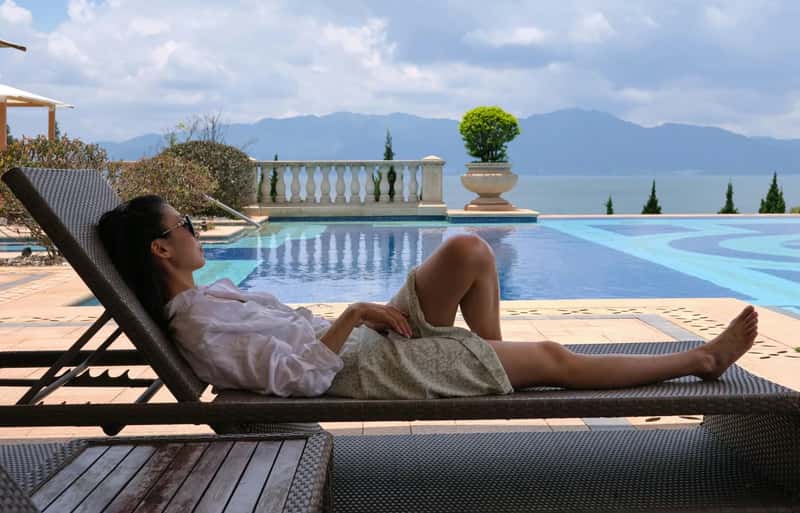
At Four Seasons Resort Bali at Sayan, guests are suspended in an aerial silk hammock while being gently swayed to the sounds of nature during a 60-minute “sacred nap.”
The geography shifts. The ZIP code changes. The circadian wound, however, travels in your carry-on.
You carry it through customs. You carry it to the check-in desk. You lay it down on a $900-a-night mattress and pray that the time zone will confuse it long enough to get eight hours.
The Mirror at 3 Am
I need to tell you something personal here, because theory without witness is just noise.
I was in a hotel in Lisbon – a city I love, a room I could not afford – when I realized I hadn’t slept without pharmaceutical assistance in four months. I lay in that clean, anonymous bed in a city that didn’t know my name and felt the specific relief of someone who had finally, briefly, escaped their own life. The room asked nothing of me. The room had no expectations. The room didn’t know my title, my targets, or my unread messages.
I slept eleven hours.
I woke up and cried before the coffee arrived, because I understood, in the particular clarity of the well-rested, that I had needed to fly 1,400 miles to feel safe enough to close my eyes. That isn’t a travel itinerary. That is a diagnosis.
The hotel didn’t cure me. But the distance gave me the first honest look at myself I’d had in a year.
The Architecture of Surrender
The industry has done its homework on your breakdown.
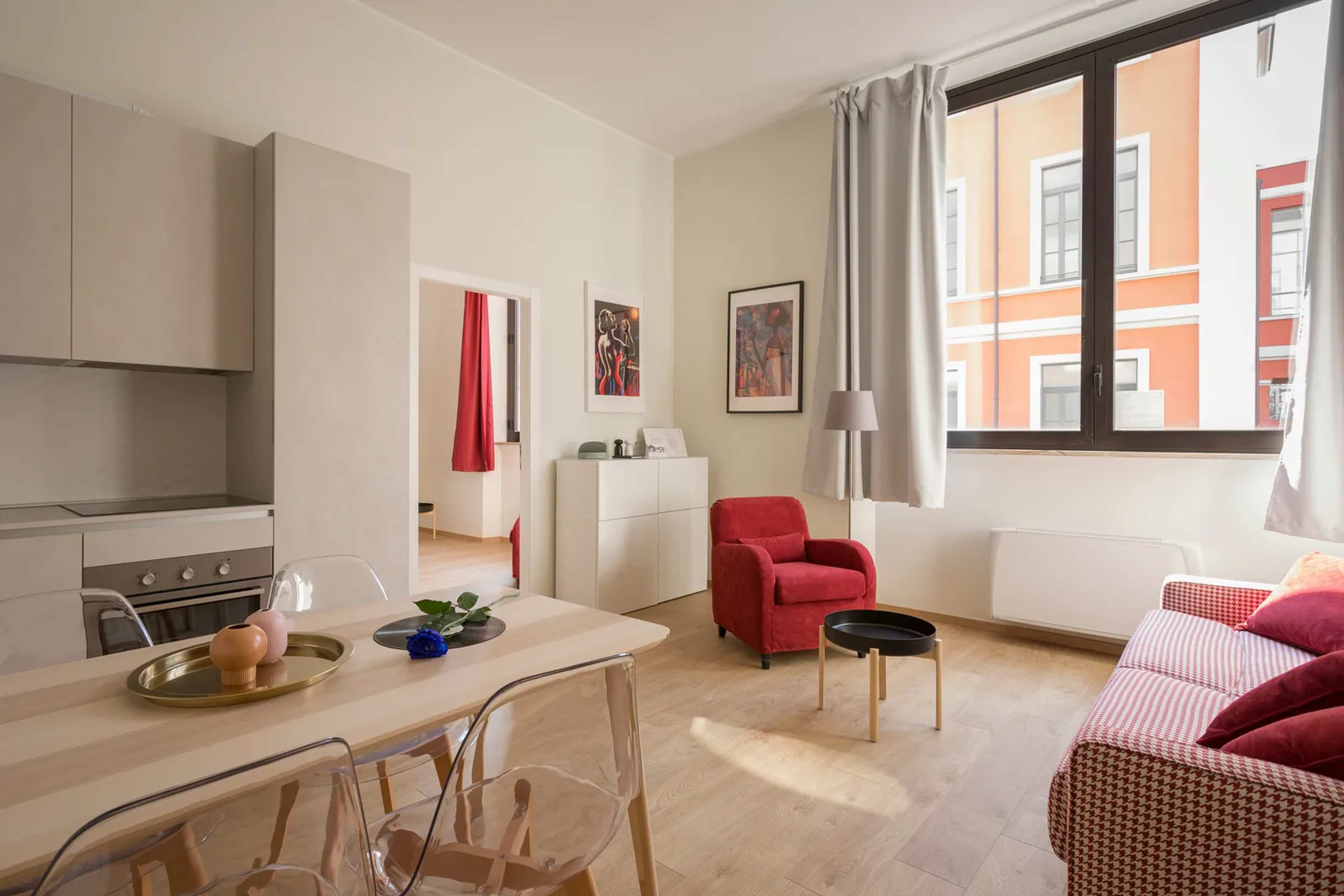
Sleep tourism spans a wide range of offerings – from five-star hotel upgrades to immersive sleep therapy retreats. Hotels are prioritizing sleep design with blackout curtains, circadian lighting, ambient sound control, and air purification. Soundproofed walls, ergonomic pillows, and temperature-regulating bedding are baseline amenities in sleep-first rooms.
Equinox Hotels has teamed up with renowned sleep scientist Dr. Matthew Walker to transform guests’ nighttime experiences with cutting-edge sleep technology. Meanwhile, Hilton has partnered with Calm, a leading global app for mental wellbeing, to provide hotel guests with in-room meditation, sleep stories and soothing soundscapes.
They have engineered a fortress against the modern world. Soundproofed against its noise. Darkened against its light. Scented against its anxiety.
The room is a womb. The checkout time is a birth canal.
And you will leave it refreshed and return to the exact conditions that broke you.
The Class Politics of Collapse
Here is where the romance curdles into something harder to swallow.
Not everyone can afford to outsource their nervous system to a resort in Tuscany.
Sleep tourism is often priced for the affluent, raising serious inclusivity questions. Critics argue that monetizing sleep commodifies a basic human need.
Burnout isn’t just a trendy word; it’s a real and growing problem. But the proposed solution – a structured sleep retreat with melatonin mocktails and a bedtime concierge – carries a price tag that turns rest into yet another arena of privilege.
The working mother on a double shift cannot book a Bali sleepcation. The warehouse worker running on five hours cannot access ayurvedic sleep coaching. Their exhaustion is indistinguishable from the executive’s. Their credit limit is not.
When rest becomes a luxury product, we haven’t solved the burnout crisis. We’ve just given it a thread count.
The Identity of the Sleepless
There is a particular identity that modernity rewards: relentless, available, perpetually switched on.
Sleep therapist Heather Darwall-Smith says, “At its core, sleep tourism speaks to desire for rest in an overstimulated world. We’re looking for a need to escape from the relentless demands of modern life. Our brains and bodies are often in a chronic state of stress, juggling multiple roles and responsibilities without sufficient downtime for recovery.”
That identity – the always-on, always-available self – is not who you are. It is who you perform.
And the performance is killing you in increments.
Modern life has blurred the line between work and rest. Smartphones buzz around the clock, and social media keeps people comparing, scrolling, and worrying long after sunset. For many, even home feels overstimulating.
We book the flight not to find ourselves. We book the flight to lose the performance, even briefly, even expensively.
The Temporary Self
There is a specific psychological relief in being a stranger.
The hotel room does not know your debts. The retreat does not know your history. According to travel experts, sleep tourism is about more than rest – it’s about redefining what we value when we travel. “Sleep tourism is just the beginning of a broader redefinition of luxury travel, one that centers on well-being, not just seeing a new destination.”
In the temporary self – the one who exists only for the duration of the stay – there is no identity to maintain. No productivity to demonstrate. No calendar to defend.
The body, sensing the absence of performance pressure, does the thing it has been trying to do for months.
It lets go.
Nearly half of global travelers avoid setting an alarm on vacation. And two in five travelers choose hotels where they think they can achieve a better night’s sleep. Not adventure. Not culture. Sleep. That is the destination now.
The Admission We Keep Not Making
In a world where burnout feels normal, the growing demand for rest-first getaways shows how badly people need to recover. It points to something deeper: the pace of modern life is unsustainable without time to recharge.
Sleep tourism is not a trend. It is a symptom. It is a $75 billion fever chart for a civilization that has forgotten the first and most fundamental act of being human: lying down and letting the darkness be enough.
In a world that measures worth by productivity, intentionally doing nothing has become an act of self-care. Sleep tourism reminds us that rest is not a waste of time; it’s how we restore the energy to live fully.
Ultimately, sleep tourism reminds us that our bodies are not machines. By honouring our need for rest, we aren’t just sleeping – we are reclaiming our life, one quiet night at a time. But reclaiming one night in a soundproofed room six thousand miles from home is not the same as reclaiming the conditions of your daily existence. One is a vacation. The other is a revolution that we keep postponing.
We will keep booking the flights. We will keep arriving at the retreats, hollow-eyed and over-scheduled, handing over our phones at the front desk with the particular relief of someone surrendering a weapon they were tired of carrying. We will sleep. Deeply. Expensively. Temporarily.
And on the last morning, before the car arrives to take us back to the airport, we will sit on the edge of a bed that cost more per night than some people earn in a week, and we will feel the familiar shadow beginning to move at the edge of the window – the unread messages, the undone tasks, the identity we left behind temporarily, patient as always, waiting for us to come back and put it on.
The question sleep tourism cannot answer – the one no blackout curtain can block out – is the only one that matters: what would it take to sleep like this at home?