Something quietly significant is happening across America. Retirees, many of them solidly middle-class, are closing up their homes, selling their cars, and boarding one-way flights to countries most Americans still struggle to find on a map. The Balkans, that jagged stretch of southeastern Europe encompassing Albania, Montenegro, Serbia, North Macedonia, Romania, and beyond, has steadily become one of the most talked-about destinations for Americans seeking a dignified, affordable retirement. It is not a dramatic exodus. It is a slow exit, deliberate and considered, driven by arithmetic as much as by wanderlust.
The Numbers Behind the Trend
Over 760,000 retirees now receive US Social Security abroad, a number that has grown sharply in just two years. That figure represents real people who have done the math and concluded that staying was not working. In 1974, only 10% of US citizens expressed interest in moving abroad. By 2024, that number had risen to 34%. The scale of that shift is remarkable, and it shows no sign of reversing.
A February 2025 Harris Poll survey found that 55 percent of Americans were striving to achieve retirement and financial security and 52 percent believed they could live a higher quality of life abroad. The poll was held between August 2024 and February 2025 and asked 6,358 US adults in three rounds. In 2024-2025, retirees accounted for 62% of US citizens relocating abroad. These are not fringe numbers. They represent a mainstream reckoning with what retirement actually costs in America today.
Why the US Is Pushing People Out

In countries like Portugal, Romania, and Bulgaria, retirees can live comfortably on about €1,000 to €1,500 a month. This is a stark contrast to the average monthly spending of $4,818 for Americans aged 65 and older, according to the Bureau of Labor Statistics. For someone living on a fixed Social Security income, that gap is simply not manageable. A substantial number of retirees rely almost completely on Social Security payments to make ends meet in the US, which average around $1,900 per month.
With fewer than half of Americans expressing confidence in the US healthcare system and Medicare projected to run short within a decade, retirees are increasingly seeking affordable, reliable alternatives abroad. Healthcare costs are outpacing inflation, making long-term care unaffordable for many. Social Security’s sustainability is in question, with 2033 marked as a critical tipping point. The Balkans, for all their imperfections, offer a way out of that pressure.
The Affordability Advantage: What the Balkans Actually Cost
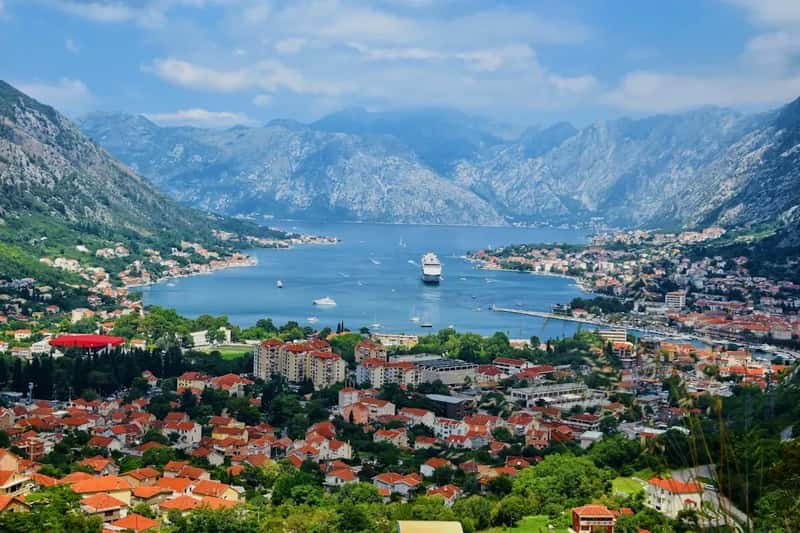
In the Balkan town of Kotor, a monthly retiree budget was estimated at $2,224 by Live and Invest Overseas, making it competitive with some of the most popular retirement destinations globally. In Serbia, the numbers are even more striking. The cost of living in Serbia is around 50% cheaper than in the US. Expats and remote workers can expect living costs ranging from $600 to $1,500 per month, depending on location and lifestyle.
Albania stands out for its exceptional affordability at the lower end of the spectrum. Albania wins on low prices. Two-bedroom apartments in Tirana or in coastal cities like Durres average €350 to €500 per month. Daily expenses are also remarkably cheaper. One American retiree rents a comfortable apartment in Tirana for about $527 a month and describes it as transformative. Montenegro sits in the middle range, with average monthly expenses in 2025 ranging from €700 to €900 for a single person.
Safety, Visas, and the Welcoming Culture

Safety is a recurring theme among Americans who make the move. According to the 2024 Global Peace Index, Albania ranks 52nd out of 162 countries. The US ranks 131st. That gap surprises many Americans who arrive expecting to feel less secure and discover the opposite. Albania is considered one of the safest countries in Europe, offering retirees a peaceful and secure environment. The low crime rates and the friendly nature of the locals contribute to a sense of safety.
Visa access is another major draw. Unlike most of Europe, Albania welcomes US citizens to stay up to one full year visa-free, with no paperwork, no consulate visits, no visa runs every 90 days. For US expats, one of the biggest advantages of the Balkans is that only one of the five key countries, Slovenia, is part of the Schengen Zone. That makes the region an ideal “escape-from-Schengen” option for long-term travelers. When a permitted 90-day visa-free period in Western Europe is reaching its end, retirees can hop over into one or more non-Schengen Balkan nations.
Healthcare: The Real Picture for Expat Retirees

Healthcare is where the Balkans picture becomes more nuanced, and honesty matters here. Healthcare remains the thorniest issue for retirees outside the US. Medicare does not cover treatment overseas, forcing Americans abroad to rely on local healthcare systems or take out private international insurance. Public healthcare in Montenegro still falls behind European standards, is inadequately funded, resulting in poor quality of care, long wait times, and a lack of trained professionals.
Private care, however, is a different story and far more affordable than anything back home. Compared to western countries, it is cheap to see a private doctor without health insurance in the Balkans. A visit to a doctor could cost 10–25 euros. Annual direct health payments in Serbia remain below €300, according to Eurostat data for 2024. For retirees willing to maintain a private international health insurance policy, the cost-quality trade-off still lands firmly in their favor compared to navigating America’s healthcare pricing.
Real Stories, Real Choices: Who Is Actually Making the Move

When 61-year-old Nancy A. left the US on Halloween 2023, she called it “the scariest thing since Navy boot camp.” Moving abroad on her own wasn’t easy, but the motivation was clear: she wanted safety, simplicity, and a lower cost of living. Stories like hers are multiplying. For 62-year-old Ron E., Albania represented a chance to take control of his future before someone else did. A high-tech specialist for decades, he saw the signs when his company began implementing AI across operations.
When examining the demographic profile of Americans relocating abroad in 2025, retirees stand out as one of the most visible and fastest-growing groups. This is no longer a movement limited to lower-income individuals or a small group of adventurers. Middle- and upper-income Americans, firmly embedded in the economic and social mainstream, are now actively planning life outside the US. Over the past three years, coastal Balkan towns have drawn increasing numbers of retirees from North America and Europe, lured by tax-free pensions, affordable living, and the vibrant Mediterranean lifestyle. Foreign retirees are not taxed in Albania, enabling them to maximize their income. Albania’s double tax treaties with most Western European countries and legislative amendments exempt foreign retirees’ pension income from taxation.