The compass sits heavy in your jacket pocket.
Cold. Brass. Analogue.
Your phone has GPS. It has satellite triangulation. It knows your altitude, your pace, your heart rate.
And yet.
You reach for the compass first.
There is a version of you that the phone cannot locate. A version that existed before the pings and the push notifications and the curated coordinates. That version was lost once – genuinely, viscerally, existentially lost – and it learned something in the dark that no algorithm has since been able to replicate: the feeling of finding north on your own terms.
This is the identity gap. The chasm between the person you perform in the daylight – composed, directed, purposeful – and the person who still wakes at 3 AM unsure of which city they’re in, which version of themselves is expected downstairs. The compass lives in that gap. It is not a navigation tool. It is a psychological artifact. A relic from the era of your becoming.
1. The Weight of Proof

There is something about holding an object that exists in three dimensions – something that has mass, that resists gravity, that cannot be swiped away – that tells a frightened nervous system: this is real.
The phone is a portal. The compass is a fact.
The object becomes a psychological anchor. Your brain learns that when you’re holding it, engaging with it, you’re in a safe place – and this learned association means the object can calm your nervous system through simple exposure.
You don’t carry the compass because you distrust GPS.
You carry it because there was a period in your life when nothing felt provably real. When the ground beneath your identity was soft and shifting. And the compass, in that period, was one of the few things that gave back a definitive answer.
It still does. That’s the anchor. Not the needle. The proof.
The brass remembers what the cloud cannot store.
2. The Transitional Object
You had a blanket once. Or a stuffed animal. Or a particular corner of a particular room.
You outgrew those things – or so the world told you.
The concept of transitional objects comes from pediatric psychologist Donald Winnicott’s theory. A transitional object is something that bridges the gap between your internal world and external reality.
The compass is your adult transitional object.
Comfort objects in adulthood often take less obvious forms than a teddy bear. A well-worn hoodie, a piece of jewelry from a loved one, or even a coffee mug with sentimental value can serve as a source of comfort. These objects often carry emotional significance and may be linked to a person, place, or period of stability.
The period of stability you are linked to is not one you remember with warmth.
It is the period just before you found your footing. The compass came with you through it. That is enough. The psyche does not require happiness from a talisman – only survival.
3. The Directionless Archive
Every traveler carries a private archive of the time they were genuinely without direction.
Not lost in the charming, postcard sense. Lost in the way that strips you down to syllables. Lost in a city where no one knows your name. Lost in a decade where you could not explain yourself to a mirror.
Some scholars characterise nostalgia as an existential coping mechanism: a source of identity uncertainty-reduction that helps individuals navigate times of transition or crisis by anchoring them to a stable narrative of the past.
The compass is a chapter of that archive made physical.
Nostalgia can be an important coping resource when one feels lonely and isolated, providing a sense of belonging and meaning. Whenever we encounter something that sends out nostalgic shocks, it can appear as a palpable bridge to our private pasts, anchoring us in a sense of identity and continuity.
You are not carrying the compass forward. You are carrying the archive forward. The compass is just its binding.
4. The Tactile Interruption
Modern anxiety is frictionless.
It lives in screens that offer no resistance. In notifications that demand everything and weigh nothing. In a digital life that never pushes back, never has texture, never makes your thumb callus.
With the rise of digital connection and physical disconnection, the need for tactile, grounding experiences may be stronger than ever. Transitional objects offer a counterbalance to the intangible and often overstimulating nature of modern life.
The compass interrupts.
Its bezel has edges. The glass is slightly scratched. The needle trembles with a kind of mechanical anxiety that mirrors your own – and then settles.
Emotional grounding is a coping strategy intended to assure safety and control in the midst of overwhelming emotion. It is simply a stop-gap – a way to detach from emotional pain as quickly and effectively as possible. Rather than processing or understanding emotional responses, the goal of grounding is to provide distraction from intense feelings, focusing outward rather than inward.
Your thumb finds the compass the way it used to find a worry stone. On purpose. Without thinking. That’s not nostalgia. That’s a trained reflex born in the years you needed one.
5. The Year I Couldn’t Name a Direction
There was a year – I won’t date it precisely, because the year is not the point – where every decision I made felt arbitrary. Where I chose cities the way you choose items from a menu you can’t read in a language you don’t speak. Pointed. Guessed. Moved.
I bought the compass in a junk shop in a port city. It cost less than a coffee.
I didn’t need it to navigate. There were signs everywhere. I needed it because I wanted something in my hand that knew something I didn’t. Something that, no matter how disoriented I became, could always identify a fixed point in the universe and hold it quietly.
According to Lowen, grounding is “feeling contact between the feet and ground… in a broader sense grounding represents an individual’s contact with the basic realities of his existence.”
The compass was that contact. The brass edge against my palm. The needle that had no memory of my failures, no opinion about my choices. Just north. Reliably north. I have never let it go because that year taught me something I refuse to unlearn: that sometimes the most revolutionary act is finding one fixed point and refusing to look away.
6. The Identity Residue
Objects absorb the identity of the people who carry them. Not metaphorically. Psychologically.
As our lives unfold, our things embody our sense of selfhood and identity still further, becoming external receptacles for our memories, relationships, and travels.
How much we see our things as an extension of ourselves may depend in part on how confident we feel about who we are. When people were led to feel uncertain about themselves, they responded by rating their belongings as particularly self-expressive – as saying something about who they are.
During the directionless years, you poured yourself into the compass.
You held it at crossroads. You held it in airports. You held it in conversations where you were performing a version of yourself you hadn’t yet earned. The residue of all that holding lives in the metal now. You feel it when your fingers close around it. That is not sentiment. That is identity, externalized and stored for safekeeping.
You are retrieving yourself, one pocket check at a time.
7. The Control Mechanism
There is a particular kind of person who travels with contingencies.
The paper map in the bag with the GPS on the phone. The cash in the sock with the card in the wallet. The compass in the pocket with the satellite in the sky.
This is not distrust of technology. This is the psychology of someone who has been let down by systems – institutional, relational, internal – and learned the hard lesson that redundancy is dignity.
Comfort objects provide stability, safety, and grounding during stressful or uncertain times. Although often associated with childhood, comfort objects can remain valuable across the lifespan.
The compass is your redundancy protocol for the self.
When every external system fails – when the phone dies, when the map is wrong, when the person you trusted gives you bad directions – the compass works. It always works. It works on the same physics it worked on before you were born. That permanence is not a small thing to a person who once had no permanent thing to hold.
8. The Self-Continuity Thread
There is a version of you that is very old. That version existed in the directionless year, in the transit years, in the years of becoming.
The compass knew that version.
Nostalgia helps you feel like a coherent person with a story that connects your past to your present. When life feels chaotic or uncertain, revisiting meaningful memories reinforces the sense that you are still fundamentally “you,” despite changes.
Nostalgia is an identity-based emotion. It consolidates the self-concept by fostering self-continuity – a sense of connection among one’s past, present, and future selves.
The compass threads those selves together.
The person who bought it, lost. The person who carried it, searching. The person who carries it now, more settled but still suspicious of stillness. It is not a souvenir. It is a thread. Tug it in the right direction and you can feel every version of yourself pulling back from the other end.
9. The Permission Slip
Here is what the compass actually gives you, stripped of all the poetry:
Permission.
Permission to be uncertain. Permission to be the person who does not always know the way. Permission to be analog in a digital age, tactile in a touchscreen world, slow in a real-time culture that has no patience for the kind of internal recalibration that actually changes a life.
Nostalgia, anchored in memory but oriented toward future adaptation, is a uniquely flexible resource during change. Its emotional ambivalence – combining comfort with loss – enables individuals to tolerate uncertainty while maintaining continuity of identity.
The compass is a permission slip written in brass.
It says: You have been here before. You have been genuinely without direction. You survived it. You found north. You can find north again.
Nostalgic memories are not merely retrospective; they serve prospective functions by energizing and directing behavior toward personally meaningful goals. Individuals often draw on nostalgic recollections to reaffirm their values, maintain a sense of purpose, and bolster goal commitment in the face of challenges.
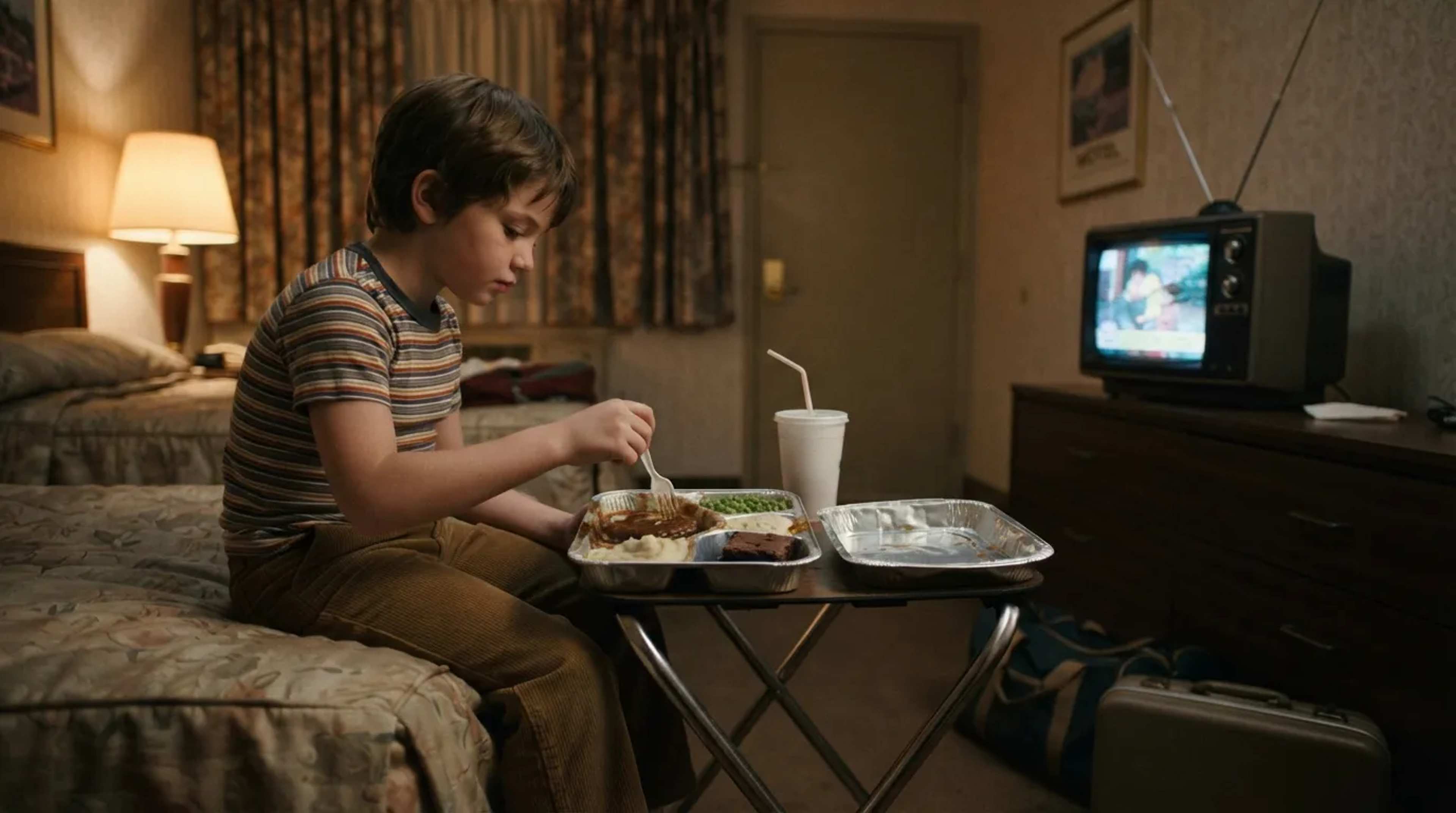
That is the permission slip. And you keep it in your pocket because some days, in some cities, in some hotel rooms at some hour that has no good name, you need to hold it.
There is a certain kind of traveler who moves through the world with practiced ease. They book the right hotels. They know the airport layouts. They speak in the clipped, efficient language of people who are never visibly lost. Watch their hands. Watch what they reach for in the moment before the taxi arrives, in the breath between the meeting and the door. There is always something. A coin worn smooth. A ring they twist. An object that the polished version of themselves would never mention at dinner.
The compass is yours. It is also theirs. It belongs to everyone who has ever stood in a foreign street in a borrowed life and felt the particular vertigo of not knowing which direction home is – or whether home, at that point, was a place or a person or a feeling that had simply stopped being available. Experiences of displacement necessarily involve movement across, and separation from, meaningful spaces – the space left behind, the new space inhabited, the transit spaces in-between, and the imagined or remembered spaces that persist even when physical return is impossible. The compass cannot return you to those spaces. But it can remind you that you once navigated them. That the needle in you still points at something true.
You already know where north is. You just like the confirmation.