The cabin lights dim at 36,000 feet.
You are still awake.
The stranger beside you says something small. Unremarkable. And somehow, you answer with the truth.
Not the polished version. Not the version you rehearse for Sunday dinners. The actual, unguarded, terrifying truth.
This is the Identity Gap – the chasm between who we perform ourselves to be and who we quietly are when the stakes of tomorrow are removed. It lives in transit. It breathes in departure lounges. It speaks first at 30,000 feet, where no one knows your name, your history, or your debts.
1. The Liminal Corridor
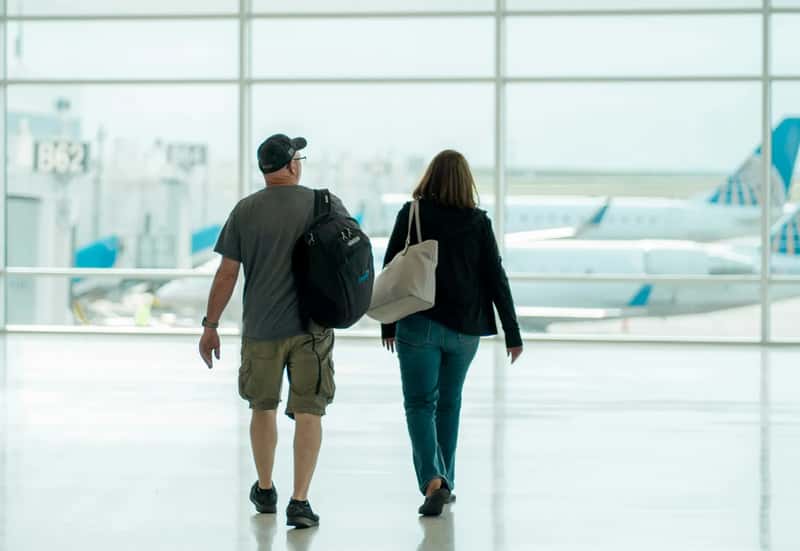
The airport is not a place. It is a psychological threshold.
Airports exist in a unique psychological space, operating under different rules than the outside world. The moment travelers pass through those sliding glass doors, they enter what anthropologists might call a “liminal space” – a transitional zone where normal social conventions begin to blur.
In that blur, you are nobody’s child. Nobody’s spouse. Nobody’s disappointment.
You are just a body moving between two coordinates on a map.
One of the most profound psychological effects of airports is how they temporarily strip away our usual identity markers. In the international transit zone, national boundaries become fluid, and our usual social roles temporarily suspend.
That stripping is not a loss. It is relief.
It is the first breath you’ve taken in weeks that doesn’t carry the weight of who everyone else needs you to be. The liminal corridor doesn’t demand performance. It simply holds you, mid-air, between one version of yourself and whatever comes next.
2. The Stranger on a Train
Psychology has a name for what happens when you tell a stranger everything.
This happens so often that psychologists have a name for it: the “stranger on a train” phenomenon. And it turns out there’s solid science behind why we do this.
You have two hours. A shared armrest. Recycled air and the low hum of an engine you can’t control.
And somehow, the words just come.
Most people enjoyed these interactions far more than they predicted. But here’s the more interesting finding: not only did people enjoy talking to strangers, they often disclosed more personal information than they would to acquaintances.
More than acquaintances. Sometimes more than family. Sometimes more than themselves.
The science doesn’t lie. The plane is a confessional. The stranger is a priest who will never find your number. And the truth pours out of you like it’s been waiting for a door that locks from both sides.
3. The No-Consequence Architecture
Here is what your family brings to every conversation: history.
They were there for the failure. They remember the version of you from fifteen years ago. They carry your worst moments like archived files, ready to be retrieved.
The stranger on the plane has none of that.
Because there’s no tomorrow with your Uber driver. No follow-up. No consequences. You can be completely honest about your job frustrations, relationship doubts, or family drama without worrying about how it’ll affect next week’s dinner plans.
This is no-consequence architecture. A structure built entirely from the knowledge that the conversation ends at the gate.
This temporary intimacy feels liberating. You’re not managing a long-term relationship or protecting someone’s feelings. You’re just being real for fifteen minutes.
Fifteen minutes of being real. Some people never get that in a lifetime of belonging somewhere.
4. The Family File
Your family doesn’t just know you. They have a dossier on you.
Our closest relationships are our most complex ones. A spouse is a friend, often a co-parent, also a lover, and hopefully, an advocate of our work. A mother has your entire life’s history in her head. When we need comfort, we’re unsure which of their roles these people might play – and wary that it might be a role that gives us something other than the unconditional support we’re looking for in the moment.
So we close our mouths at the dinner table. We say “fine” when someone asks how we are.
We perform wellness for the people who love us most, because their love comes tethered to memory. They cannot hear today’s version of you without filtering it through every yesterday they’ve witnessed.
The stranger has no file. No filter. They receive you raw, in the present tense, without the weight of everything you’ve ever been.
That is an extraordinary gift. And we hand it out freely to people whose last names we never learn.
5. The Cognitive Tax of Secrets
Here is the part that lives in the body.
I remember a flight from Dublin to New York. The kind of flight where the night outside the window is absolute and the cabin is a floating dark room. I’d been carrying something heavy – a decision I hadn’t told anyone. Not my partner, not my closest friend. Certainly not my parents.
The woman beside me, a retired architect from Amsterdam, asked me what I did for a living. And twenty minutes later, I had said the thing. The full, unredacted thing.
She nodded. She didn’t flinch. She ordered us both another drink. And I understood, somewhere beneath my sternum, why people have been doing this since the first long journey.
Research by psychologist James Pennebaker at UT Austin has shown that keeping secrets is cognitively exhausting. Your brain has to constantly work to suppress the information, and that takes a measurable toll. Sharing the secret, even with someone who can’t do anything about it, reduces that cognitive burden. This might be why people feel better after confession, even when nothing changes in their external circumstances.
The road offers something rare. It offers you the chance to put the weight down. Even briefly. Even at altitude.
6. The Beautiful Mess Effect
Here is the quiet irony at the center of all of this.
You believe your vulnerability makes you look weak. You believe the thing you’re hiding is the thing that would make people recoil. You have spent years building walls against the very act of being seen clearly.
But the research says something else entirely.
A now famous series of seven studies carried out at the University of Mannheim, published in the Journal of Personality and Social Psychology, revealed that participants tended to think that showing their own vulnerabilities would make them appear “weak and inadequate.” However, the “beautiful mess” effect kicked in when they spoke of others’ vulnerability, finding it endearing and even desirable. We find vulnerability attractive even in people we don’t know personally.
The stranger on the plane finds you beautiful in your mess. They are not burdened by the expectation of your competence.
They meet you as you are. Not as you were. Not as you’re supposed to be.
And for a few hours somewhere above the clouds, you feel – for the first time in perhaps a very long time – like you are exactly enough.
7. The Identity Suspension
Travel does something to the self that nothing else replicates.
The same applies to identity. A sense of identity is important to our psychological health but can become constricting. Like actors who are stuck playing the same character in a soap opera week after week, we enjoy the security of our roles but long to test and stretch ourselves with new challenges. So to step outside our normal routines and environments feels invigorating.
At home, you are the responsible one. The difficult one. The one who never asks for help. The one who has it together. The one who doesn’t cry.
In transit, those roles have no jurisdiction.
A CEO and a student might find themselves sharing the same uncomfortable seats at the gate, their usual social hierarchies temporarily meaningless. This dissolution of identity can be both liberating and unsettling. Some travelers embrace this temporary freedom from social constraints, while others might feel adrift without their usual anchors of self-definition.
The ones who feel adrift are addicted to their roles. The ones who feel liberated are finally, dangerously, themselves.
8. The Stakes of Tomorrow
The reason vulnerability feels impossible at home is consequence.
With family, every revelation is a stone dropped into still water. The ripples don’t stop. They reach the edges and come back.
Family, like a spouse, knows your weaknesses and can “play you like a fiddle” and you have fewer options to “leave for good.” So you can be ambushed by them and repeatedly. But with a friend or even better, a bartender or random person online, there are none of those “strings attached” – or historic relationship between you and them to be either leveraged for good, or leveraged for self-interest.
The stranger has no leverage. No shared mortgage. No mutual friends. No seat at your table next Christmas.
A stranger’s judgment feels temporary and inconsequential. Your mother’s judgment? That could last a lifetime.
This is not a flaw in your character. It is a flaw in the math of closeness. The closer someone is to your life, the higher the cost of their disapproval. So you protect yourself. You go quiet. You answer “fine.” You pass the bread.
9. The Prosocial Stranger
There is something the road gives that the living room withholds.
Neutrality.
Strangers offer the unique advantage of providing fresh perspectives and objective viewpoints, offering unbiased advice and impartial opinions. “Strangers allow us to get out of our heads… They break up that negative self-focus, and prevent the train of negative circular thinking,” explains psychologist Louise Lambert.
Your family loves you. But love is not neutral. Love comes with investment. With anxiety. With an agenda of wanting you to be okay, which sometimes makes it impossible for them to sit with you while you are not.
Opening up to strangers is good for us. “Since encounters with strangers are generally characterized by low conflict, they are likely to elicit kind, prosocial behaviors,” writes psychologist Noam Shpancer in Psychology Today. “The psychological benefits of social support may serve to attenuate the effects of stress and offer one a sense of purpose, hope, and meaning, thus nurturing psychological resilience.”
Low conflict. No agenda. No panic when your truth is darker than expected.
Just a stranger, and the quiet courage of a conversation with no past and no future.
10. The One Who Carries Your Whole Life
There is a specific loneliness that lives inside long-term love.
It is not the loneliness of being alone. It is the loneliness of being known so completely that there is no room left for reinvention. Your family has watched every version of you collapse and rebuild. They have hope for you that has been disappointed before. They have love that has been tested until it bent.
Many people learned early in life that expressing emotions led to rejection, punishment, or dismissal. Others learned that being emotionally open created instability in relationships. Over time, self-protection became automatic. This is especially true for people who live with chronic pain, unresolved grief, anxiety, or a personal history marked by emotional inconsistency.
So the walls went up. Not out of coldness. Out of survival.
Perhaps they grew up with caregivers who taught them vulnerability is weakness and dangerous. They may find it harder to be vulnerable because they have people and experiences that consistently taught them: we don’t talk about those kinds of things – so don’t bring them up.
And so the thing that was never talked about became the thing that could never be said. Not at home. Not to the people who were there at the beginning of you.
Only to strangers. Only in motion. Only when the engine is too loud for anyone to hear you think.
The flight lands. You exchange no numbers. You don’t need to. Something has been returned to you – some small, essential piece of yourself that you forgot you were carrying. You walk through the gate lighter than you boarded. Not because anything changed. But because something was finally, briefly, witnessed.
Perhaps the deepest human need is not to be loved. It is to be seen without consequence. To have someone hold the unedited version of you and not look away. The stranger on the plane offers this because they have nothing to lose. And you accept it from them because, in that cabin, neither do you.
The tragedy is not that we confide in strangers. The tragedy is that we’ve forgotten how to build the kind of safety at home that makes the stranger unnecessary. Somewhere between the first broken confidence and the last argument where our words were used against us, we learned that closeness was dangerous. We learned to save our truths for the departures terminal, where no one will follow us through the gate.
The next time you find yourself telling a stranger your life, don’t be ashamed of the openness. Be curious about it. Ask yourself what you needed in that moment that you didn’t know how to ask for at the table. Because the answer, when you finally sit with it, will tell you everything – not about who you are when you travel, but about who you’ve been too afraid to become at home.