You book what looks like a fantastic deal. A hundred-dollar flight. Maybe even less. You’re feeling smug, smart, practically a travel genius. Then reality shows up at the check-in counter, and suddenly that “bargain” has quietly grown into something far more expensive than a full-price ticket would have been.
Airline baggage fees have become one of the most sophisticated fee-extraction systems in modern consumer life. The numbers are staggering, the tactics are deliberate, and the whole machine is designed to catch you off guard. So let’s pull back the curtain.
A Billion-Dollar Business Built on Your Suitcase
Let’s start with the raw numbers, because they are genuinely jaw-dropping. In 2024, U.S. airlines amassed a staggering $7.27 billion in baggage fees, marking a continued reliance on ancillary revenue streams as the industry rebounds from pandemic-era disruptions. That’s not a typo. Seven billion dollars. For bags.
American, Delta, and United, the three largest airlines, each generated more than $1 billion in checked bag fees in 2024, continuing a consistent year-over-year increase in luggage revenue since the sharp decline caused by the pandemic in 2020. For comparison, the industry had generated $5.76 billion in 2019, before the global travel slowdown. So the rebound didn’t just recover, it blew past previous records.
Some of the most aggressive baggage fee collectors relative to passenger volume were ultra-low-cost carriers. Frontier Airlines brought in $861.6 million, while Spirit Airlines generated $774.7 million. These airlines, which often offer low base fares and charge for nearly every add-on, derive a significant portion of their revenue from checked and carry-on bag fees. Think about that the next time you see a $29 fare advertised online.
The Anchor Price Trick: How Low Fares Are Used as Bait
Here’s the thing most travelers don’t realize until it’s too late. That impossibly cheap base fare you see in search results is a psychological anchor. It is not the price you will actually pay. The federal government’s own analysis found that consumers overpay by roughly $543 million per year simply because surprise fees appear late in the booking process, after a low base fare has already set the psychological anchor.
This will help consumers avoid unneeded or unexpected fees that can increase quickly and add significant cost to what may, at first, look like a less expensive ticket. That’s the U.S. Department of Transportation acknowledging the problem in plain English. The system is structured so that you’re hooked before you see the real price.
The advertised fare wins the sorting algorithm on Google Flights. Everything else is à la carte. The golden age when a ticket price meant a ticket price is gone. What replaced it: a base fare that gets you from A to B in a seat you didn’t choose, eating food you brought yourself, with bags you either paid for or strategically didn’t pack. That about sums it up.
Carry-On Bags: When Even Bringing a Backpack Costs Extra
Budget carriers have been especially creative in extending the fee culture to carry-on luggage, something travelers have historically expected to be free. Budget carriers charge $31 to $65 for overhead bin access. Spirit and Frontier hit you for $50 when you pre-pay online. Pre-pay. Meaning you pay less if you plan ahead, but even planning ahead costs money.
Spirit’s cheapest fares don’t even allow carry-ons, just one personal item that fits under the seat. I know it sounds crazy, but this is a real fare category. You are paying for the privilege of flying with your feet surrounded by your belongings. The landscape of air travel, particularly with budget airlines, is undergoing a subtle but significant shift concerning carry-on baggage. There’s a trend where the allowed dimensions for carry-on bags are shrinking, in some cases by a substantial 20%, while the associated fees for exceeding these limits are ballooning.
The lowest prices for carry-on bags advertised by major European budget airlines Ryanair, EasyJet, and Wizz Air are almost never available, according to UK consumer watchdog Which?. In fact, the cheapest advertised cabin bag fee for Ryanair could only be found twice out of a staggering 634 flights, or a grand total of 0.3 per cent of the time. The airline’s average cabin luggage fare was £20.50.
Shrinking Weight Limits: A Quiet Rule Change Nobody Announced
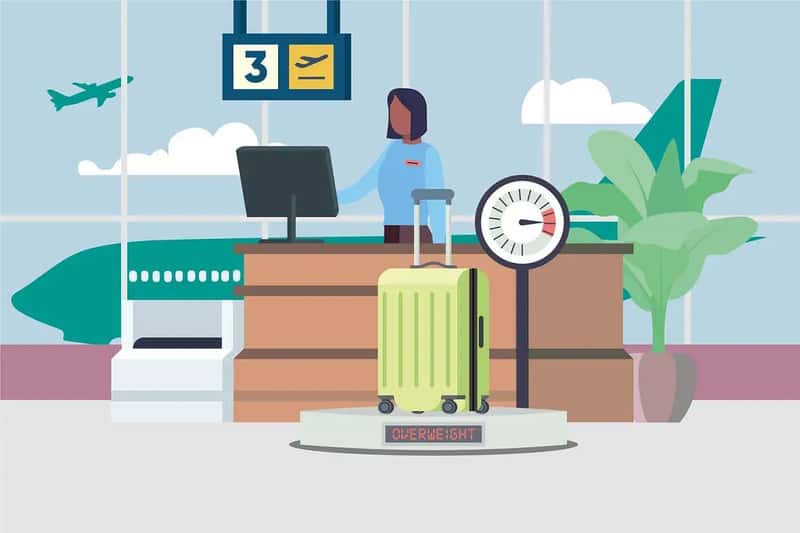
One of the sneakiest tactics in the baggage fee playbook involves quietly lowering weight thresholds. Several major U.S. carriers have quietly lowered the threshold for overweight baggage fees, now starting at a mere 45 pounds. Previously, a more generous 50-pound limit was often the norm, giving passengers slightly more leeway. Five pounds. It sounds trivial until you realize what it triggers.
This seemingly small adjustment has significant implications, potentially triggering hefty surcharges for bags that were previously considered standard weight. Analysis of current fee structures indicates that exceeding this new 45-pound mark can easily result in charges ranging from $100 upwards, a considerable unplanned expense for the average traveler.
Overweight bags between 51 and 70 lbs cost travelers $100 to $150 extra. Oversized items run $150 to $200. On top of whatever you already paid for the checked bag itself. On many airlines, if your bag is both heavy and large, both fees can apply simultaneously. Honestly, at that point you might as well ship the suitcase separately.
European Regulators Push Back: The €179 Million Wake-Up Call
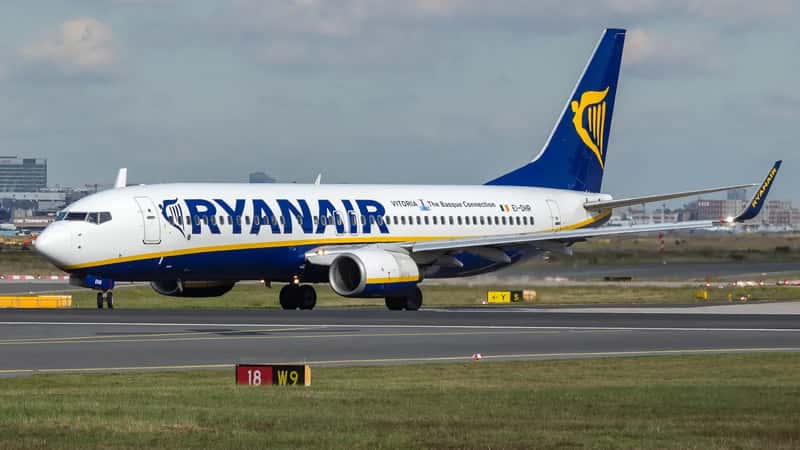
Not everyone is accepting this quietly. Spain made headlines in late 2024 with one of the most significant regulatory actions against airline baggage practices in recent memory. Spain’s Consumer Rights Ministry levied fines totaling 179 million euros, approximately $187 million, against several low-cost airlines including Ryanair, for practices deemed abusive regarding cabin luggage fees. The airlines implicated also include Vueling, EasyJet, Norwegian, and Volotea, highlighting a significant crackdown on fee structures that Spain’s government believes unfairly burden consumers.
Ryanair, which was hit with the biggest fine of almost €108 million, pledged to appeal the “illegal” penalties issued over its baggage policies. EasyJet was fined €29 million after the Spanish ministry said the airline had given misleading information and failed to provide price transparency, which hinders consumers’ ability to compare offers and make informed decisions.
The ministry pointed to a 2014 Court of Justice of the European Union ruling that defined cabin baggage as an “indispensable element of air transport”, meaning airlines cannot legally charge extra for it. Yet the fees kept on coming. In July 2025 the Ministry announced it was opening a sixth sanctioning case against another low-cost airline for continuing to apply these prohibited fees.
Dynamic Pricing: When Baggage Fees Become Unpredictable
Just when you thought it couldn’t get more complex, some airlines have introduced dynamic pricing for baggage. Think of it like surge pricing, but for your suitcase. Dynamic pricing models, like those used by JetBlue, are likely to spread to other airlines, making fees even more unpredictable. U.S. checked baggage fees hit $7.27 billion in 2024, with Southwest introducing first-time charges and JetBlue adding dynamic pricing.
These changes raise travel costs, reduce free baggage options, and complicate budgeting for passengers, as airlines rely more on fees to boost profits amid rising operational expenses. If you’ve ever tried to plan a travel budget and been surprised at checkout, this is exactly why. The fee you see today may not be the fee you see tomorrow.
Most experts expect checked baggage fees to keep rising in 2025 and beyond. Airlines have already announced plans to raise fees by another $5 to $15 per bag. There’s no ceiling in sight, and some advocacy groups are calling for new rules to limit baggage fees or require airlines to show the total cost of a trip upfront. So far, regulators have not set any caps, but this could change if public pressure increases.
The Last “Free Bag” Airline Folds: Southwest Ends a 50-Year Promise
For decades, Southwest Airlines was the rare holdout in a fee-hungry industry. It was practically their identity. Their entire brand proposition rested on “bags fly free,” and millions of travelers, especially families, specifically chose Southwest because of it. Then came 2025.
On May 28, 2025, Southwest began charging $35 for the first checked bag and $45 for the second. This change applies to all flights booked on or after that date. Rapid Rewards loyalty program members, business class ticket holders, and Southwest credit cardholders will continue to enjoy complimentary checked bags. For everyone else, the free ride is over.
Southwest projects the new baggage fees could generate around $1.5 billion in annual revenue. That’s not a small number. With Southwest now charging for checked bags, all major U.S. airlines have similar baggage fee policies. This reduces consumer choice and makes it harder to find a “free bag” option. The last domino has fallen.
The Airport Premium: Paying More Because You Didn’t Know
Here’s a particularly cruel mechanic in the baggage fee machine. If you try to pay for your bag at the airport instead of online during booking, you often pay significantly more. Luggage pricing feels intentionally escalated. Fees increase significantly at the airport, making it the most expensive place to resolve baggage issues.
According to an estimate released by DOT, consumers were paying an additional $543 million annually in surprise fees, mostly baggage charges that were more expensive at the airport than when booked in advance. This is a direct punishment for the uninformed traveler. It’s not random. It’s calibrated.
Pre-purchasing baggage services can lead to savings of up to 50% compared to paying for extra weight at the airport. Half the price, just by clicking a box during booking. When paying for luggage, it is often unclear whether the payment applied to the outbound flight, the return flight, or both. Some travelers discovered they had only paid for luggage on the return leg, which resulted in unexpectedly high baggage fees at the airport.
The Regulatory Tug of War: Rules That Were Born and Killed
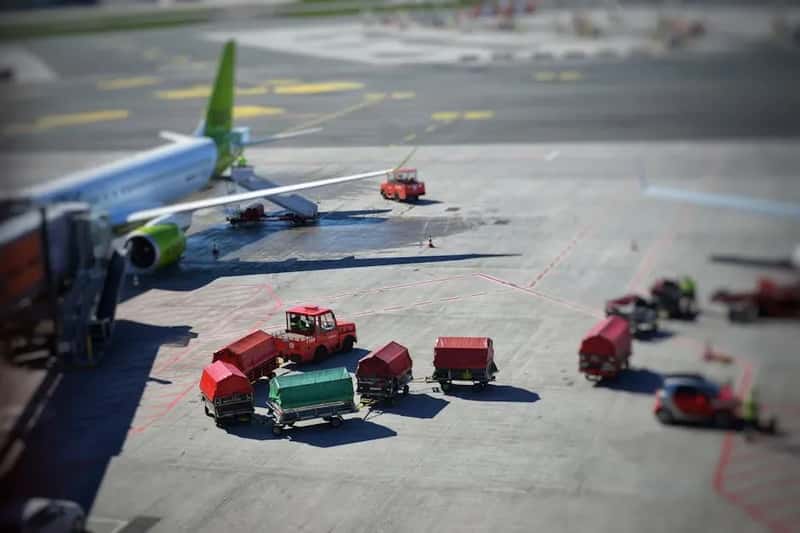
The U.S. government tried to fix this. Briefly. A rule was passed to save consumers over half a billion dollars each year in expensive, unexpected baggage, change, and cancellation fees by requiring airlines to make these costs clear upfront. It was supposed to be a watershed moment for consumer protection in air travel.
The ruling became effective in April 2024. It required airlines and ticket agents to post baggage fees, change fees, and other ancillary charges alongside the base airfare. Then, almost as quickly as it arrived, the momentum stalled. The January 28, 2025, decision returned the rule to the department for revision, tampering with the administration’s efforts to boost pricing transparency in air travel.
DOT’s Bureau of Transportation Statistics data shows that airline revenue from baggage fees increased by more than 30 percent between 2018 and 2022, while their operating revenue grew at less than half that pace in the same period. The fees aren’t a side story. They have become the core business model, and the regulations trying to contain them keep hitting walls.
What Travelers Are Actually Doing to Cope
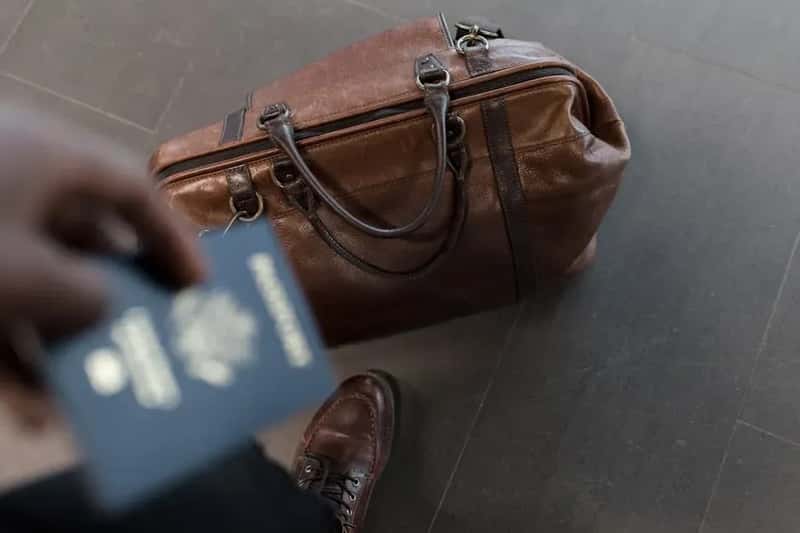
People are noticing, and they’re changing their behavior accordingly. On average, nearly half of American travelers travel with one check-in bag, and roughly a third travel with two or more. On average, Americans spent $175 on check-in baggage in the last year. That’s a significant chunk of any travel budget, especially for families.
Nearly one in five Americans plan to cut back on travel in response to increased baggage fees, with Gen Z being the most likely to do so at 27 percent. Younger travelers in particular are adapting, going carry-on only, switching to travel credit cards, or simply flying less. Many airline credit cards come with benefits like free checked bags, priority boarding, and airport lounge access. Free checked bags alone can save travelers $30 to $60 per flight.
It’s hard to say for sure where this ends. The dynamic is self-reinforcing. Airlines add fees, travelers adapt, airlines find new things to charge for. It’s more important than ever to carefully review a flight’s final cost before booking to ensure you aren’t surprised by inflated prices and unexpected charges. The need for thorough planning and a deep understanding of potential fees is crucial to avoiding sticker shock when travelling with budget airlines.
The Bigger Picture: This Isn’t Going Away
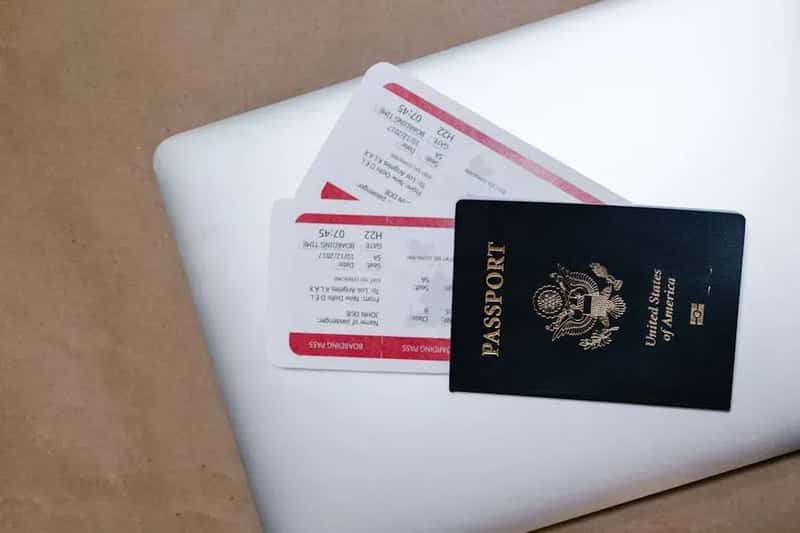
Let’s be real about what this all adds up to. In 2024, airlines globally collected a record $148 billion in fees, including ancillary charges for seat selection, baggage, priority boarding, carry-on access, Wi-Fi, and the creeping inventory of amenities that used to be included in what we called a ticket purchase. The fee explosion isn’t a bug. It’s the feature.
This industry-wide trend reflects airlines’ efforts to boost revenue from ancillary sources, taking advantage of a tax loophole that exempts baggage fees from federal taxes. There it is. Baggage fees are not subject to the same federal taxes as ticket prices. It is financially advantageous for airlines to make the base fare cheaper and the bag fee bigger.
The system is elegant if you’re the one designing it, and maddening if you’re the one paying. The fines in Spain are a challenge to budget airlines’ business models, which hinge on charging rock-bottom fees for tickets and adding supplemental fees for things like larger carry-on bags that were previously not charged by traditional airlines. Regulators are beginning to push back. Consumers are adapting. Whether the industry actually changes course is a different question entirely.
The suitcase weight scam is less a scam in the illegal sense and more a masterclass in legal exploitation of consumer psychology. The cheap fare feels like a win. The bag fee feels like a penalty. The airline collects both. Next time you book a flight, price the whole trip – base fare plus every bag, every seat, every fee – before you assume you’ve found a deal. What looks like the cheapest ticket might just be the most expensive trap in the terminal. What do you think, have you been stung by surprise baggage fees? Tell us in the comments.