
Turks and Caicos has long been a favorite of American sun-seekers, known for its powdery beaches and turquoise water. But the U.S. State Department just gave travelers a fresh reason to pack a little more caution alongside their sunscreen. On July 7, 2026, the agency updated its travel advisory for the British Overseas Territory, keeping it under a heightened alert level tied to crime and a strict firearms law that has already landed several Americans in serious legal trouble.
The update doesn’t ban travel to the islands, and it isn’t the kind of advisory that will make headlines the way a Level 4 warning does. Still, it’s a reminder that even postcard-perfect destinations come with real risks, and that the rules governing what you can and can’t bring through customs are taken far more seriously there than many visitors expect.
What the Renewed Advisory Actually Says
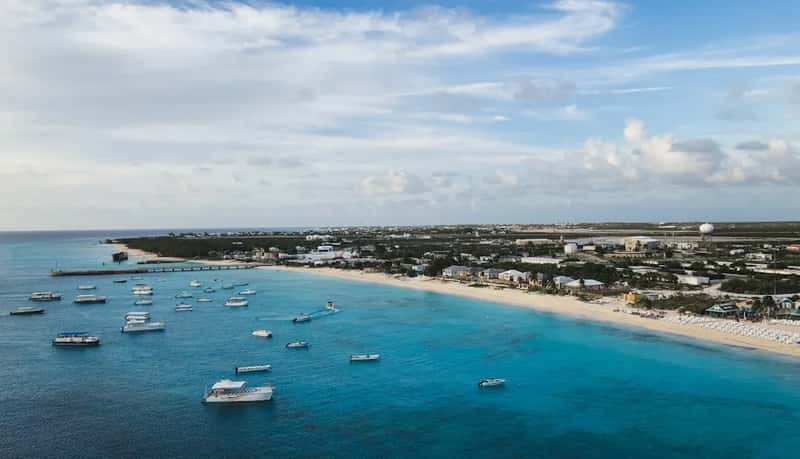
According to the State Department, Turks and Caicos remains under a “Level 2: Exercise Increased Caution” advisory because of crime, including sexual assaults, following the update issued on July 7. The State Department has framed this as part of its normal review process rather than a response to any single incident.
Level 2 sits in the middle of the four-tier system the State Department uses worldwide, meaning the islands are not considered dangerous enough to avoid altogether, but risky enough that ordinary vigilance matters. The State Department classifies destinations under four advisory levels with Level 1 being the lowest and coming with a recommendation to “exercise normal precautions” and Level 4 being the highest with a “do not travel” warning attached. For context, other Caribbean neighbors sit at very different points on that scale, with Haiti at the very top of the risk list.
Crime Concentrated in Providenciales

Most of the trouble the advisory describes isn’t spread evenly across the archipelago. Most crimes take place in Providenciales, the country’s most populated island, according to the advisory. That’s also the island where the bulk of tourism infrastructure, resorts, and beaches are concentrated, so visitors are effectively being told to stay alert in the very places they’re most likely to spend their vacation.
The State Department has been fairly specific about the type of crime travelers should watch for. The State Department said petty crime is common, particularly in tourist areas. That’s a familiar pattern across many warm-weather destinations, but the renewed advisory suggests it’s persistent enough in Turks and Caicos to warrant repeated mention rather than a one-off note.
Scams, Overcharging, and Aggressive Vendors

Beyond violent crime, the advisory spends real attention on the kind of low-grade hassle that can sour a vacation without ever becoming dangerous. “Tourists should beware of overcharging and scams in tourist areas,” the advisory states. It’s the sort of warning that applies to plenty of tourist hotspots worldwide, but the State Department clearly felt it worth calling out by name for this destination.
The advisory goes further, describing tactics that sound almost like a bait-and-switch. “You may encounter aggressive vendors. Some will offer ‘free’ gifts that lead to money demands,” the advisory notes. Travelers are essentially being told that a friendly stranger offering something for nothing on the beach might not be quite as generous as they seem.
The Firearms Law That Keeps Catching Americans Off Guard

If there’s one section of the advisory that carries the most weight for unsuspecting travelers, it’s the one covering firearms. The State Department also reminded travelers that firearms and ammunition are strictly prohibited in the Turks and Caicos Islands, even if they are brought unintentionally. That last phrase, “even if brought unintentionally,” is doing a lot of work, because it means an honest mistake carries the same legal exposure as a deliberate violation.
This isn’t a minor administrative rule either. Officials said U.S. firearm permits and licenses are not recognized there, and travelers found with guns, ammunition or even a single bullet can face arrest, significant fines and lengthy prison sentences. The gap between how casually Americans sometimes treat spare ammunition at home and how seriously it’s treated at customs in Turks and Caicos is exactly where trouble tends to start.
What Happens If Someone Gets Caught

The consequences described in the advisory are steep by almost any standard. Offenders face being arrested, heavy fines and jail sentences of 12 years or more, and the State Department said it cannot get U.S. citizens out of detention. That last part is worth sitting with, since it means diplomatic pressure alone won’t necessarily resolve a case once someone is charged.
This isn’t a hypothetical risk dreamed up for the advisory’s sake. Some Americans have been detained and held in the Turks and Caicos Islands for several weeks after being found with bullets in their luggage. The advisory’s language reflects lived experience rather than a theoretical worst-case scenario, and the State Department appears to be trying to get ahead of a problem that keeps recurring.
The Case That Put This Law on the Map
One incident in particular has become something of a cautionary tale for American travelers. In April 2024, an Oklahoma man vacationing with his wife and some friends was arrested and detained when officials found four rounds of ammunition that were accidentally left in a duffel bag from a past deer hunting trip. It’s the kind of oversight that could happen to almost any hunter or gun owner packing for a beach trip, which is precisely why the story resonated.
The outcome underscores just how unforgiving the system can be. He was released in June 2024, but was banned from returning to the country and fined $2,000. Weeks in detention, a permanent travel ban, and a substantial fine, all stemming from four stray bullets left over from an unrelated trip months earlier. It’s a stark illustration of why the advisory keeps returning to this specific warning.
A Pattern of Updates, Not a One-Time Alert

This July revision isn’t the first time firearms issues have prompted the State Department to revisit its guidance for the territory. In March, the travel advisory was updated to reflect ammunition arrests. That earlier update suggests the agency has been tracking a steady stream of cases rather than reacting to a single dramatic event.
The advisory frames this as a broader principle that applies well beyond firearms. “U.S. citizens must follow local laws abroad,” the advisory states. “If you break laws in another country, even by mistake, you could be deported, fined, or imprisoned.” It’s a blunt reminder that ignorance of a local law, however unintentional, rarely functions as a legal defense once someone is on the ground.
How Turks and Caicos Fits Into the Wider Caribbean Picture

It’s worth putting this advisory in context, since the Caribbean as a whole has seen a wave of updated warnings this year. In 2026, the Caribbean’s reputation as a safe and sunny vacation destination has faced a test as the State Department updates its travel advisories amid mounting safety concerns, with destinations including Haiti, Jamaica, the Dominican Republic, Venezuela, the Bahamas, and Aruba subject to cautionary guidance. Compared to that list, Turks and Caicos sits on the milder end, but it’s still part of a regional trend of closer scrutiny.
Some islands remain firmly in low-risk territory. Islands such as Barbados, Aruba, the Cayman Islands, and Turks and Caicos have maintained low crime rates and are popular among travelers looking for a more tranquil experience, with the State Department noting these islands provide high levels of safety and well-developed tourism infrastructure. That framing helps explain why Turks and Caicos sits at Level 2 rather than something more severe, even as its advisory gets refreshed periodically to reflect specific incidents.
What This Means for Anyone Planning a Trip

None of this should be read as a reason to cancel a Turks and Caicos vacation outright. The advisory is a Level 2, not a do-not-travel warning, and the overwhelming majority of visitors to the islands come home with nothing more dramatic than a sunburn and some great photos. Even so, the renewed guidance is worth actually reading before departure, not just skimming past.
The most practical takeaway is also the simplest: check every bag, pocket, and piece of luggage for stray ammunition before flying, and treat local firearms law as absolute rather than a technicality. Beyond that, ordinary travel sense applies, staying alert around aggressive vendors, being skeptical of “free” offers on the beach, and keeping valuables out of sight in busier tourist zones around Providenciales.
The Bottom Line

The renewed advisory for Turks and Caicos isn’t a dramatic escalation, but it is a clear signal that the State Department sees an ongoing pattern worth flagging, both in petty crime aimed at tourists and in a firearms law that keeps ensnaring unsuspecting travelers. The islands remain a popular, largely safe destination, yet the gap between American assumptions about travel and local legal reality is exactly where the real risk lies.
For travelers, the lesson is less about fear and more about preparation. A few extra minutes checking luggage and reading the fine print of a travel advisory can be the difference between a relaxing week on a beautiful beach and a costly, weeks-long ordeal that no amount of sunshine can fix.