The lake house has been in the family for three decades. Everyone has a favorite dock story, a favorite summer, a favorite memory of grandpa flipping burgers on the porch. Yet somewhere between the funeral and the first property tax bill, a lot of families discover that the thing they thought would bring them closer together is quietly pulling them apart.
This isn’t a rare, freak occurrence. It’s becoming one of the more predictable friction points in American estate planning, especially as a historic wave of aging homeowners begins passing down property in the years ahead. The details of who gets what, who pays for what, and who even wants the place at all rarely get discussed while parents are still alive, which is exactly why so many families end up blindsided.
The emotional math nobody puts on paper

A vacation home rarely behaves like a normal asset once it enters an estate. It carries decades of memory, identity, and unspoken meaning that a stock portfolio or a savings account simply doesn’t. Financial advisors note that an inherited vacation home often carries steep emotional value alongside its financial worth, which can complicate family relations if not handled carefully.[1] That combination is exactly why disputes over a cabin or cottage tend to run hotter and longer than disputes over cash.
Sentiment doesn’t distribute evenly among siblings, either. Sentimental items like jewelry or the family vacation home often cause more fights than cash, as they’re tied to memories.[2] One sibling may see the property as sacred family ground, while another sees a maintenance headache six states away from where they actually live.
Equal shares rarely mean equal interest

Most parents assume splitting the home evenly among their kids is the fair, simple solution. It almost never plays out that simply. Without a cottage succession plan in place, ownership goes to all children equally, and the result is almost always conflict.[3] Equal ownership on paper does not translate into equal enthusiasm, equal finances, or equal willingness to keep paying the bills.
The mismatch usually comes down to circumstance rather than affection. What different family members want can depend on many circumstances, such as whether they live near the vacation house or across the country from it, whether they have another vacation home of their own, whether or not they need the money, and even whether they have fond childhood memories of spending summers at the house.[4] A sibling drowning in tuition bills is going to view a shared cabin very differently than one who is financially comfortable and nostalgic.
What happens when one heir wants out

This is the scenario that estate attorneys see over and over. When siblings co-own property and one sibling wants to sell, that sibling can demand to be bought out, and if the other siblings can’t come up with the money to buy out the sibling, the sibling who wants out can force the sale of the house.[4] It sounds like a technical legal footnote until it happens to your family, and then it becomes the defining crisis of the inheritance.
The emotional fallout tends to outlast the financial one. This situation is not at all unusual and, unfortunately, can create a lot of hurt feelings, as one owner has no interest in the property while another has strong ties to it but can’t afford to buy out the other owner or owners.[4] The person who wanted to keep the home often ends up feeling like they lost both the property and the relationship in the same year.
The tax surprise that actually works in your favor

Despite how stressful inheritance can feel, the tax mechanics are often more forgiving than people expect. Inheriting property is not a taxable event, capital gains tax applies only when you sell, and the stepped-up basis resets your cost basis to fair market value at the date of death.[5] That single rule, formally known as Section 1014 of the tax code, is one of the most consequential and least understood parts of inheriting real estate.
The effect can be dramatic when a property has appreciated for decades. If someone paid $150,000 for a home decades ago and it was worth $400,000 at death, the beneficiary’s basis becomes $400,000, so a sale at $410,000 would produce only $10,000 in taxable gains, not the $260,000 gain the original owner would have had.[5] Heirs who sell relatively soon after inheriting often owe little or nothing in federal capital gains tax, which surprises a lot of people who assumed the opposite.
Property taxes don’t always play by the same rules

Where the property sits matters just as much as who inherits it. California’s Proposition 19, for example, limits the parent-to-child transfer exclusion and can result in a reassessment to current market value when a property is inherited.[5] A cabin that had a modest, decades-old tax bill under the original owner can suddenly cost the new owners several times more once it’s reassessed at current value.
Other states handle the transition very differently. Texas does not reassess at inheritance but has its own rules around homestead exemptions for heirs.[5] Families spread across state lines often discover, sometimes painfully, that the rules governing their childhood home have nothing to do with the rules they’re used to in their own state.
The upkeep bill that quietly adds up
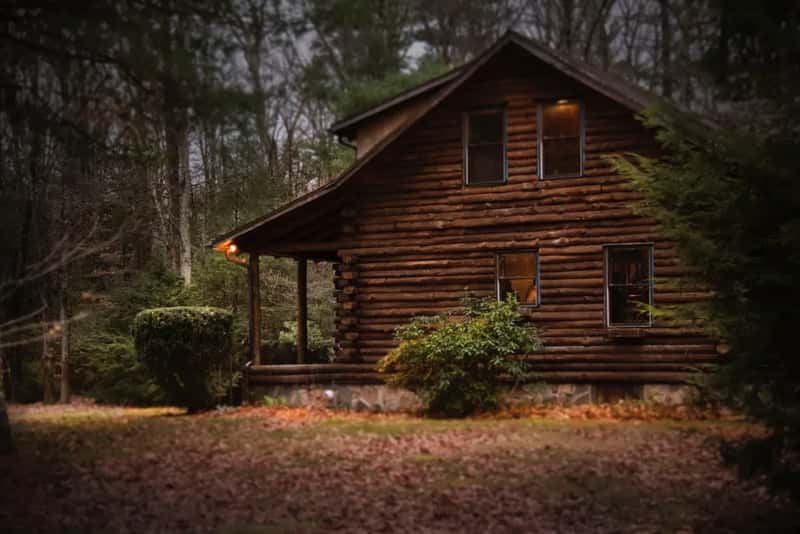
A vacation home doesn’t take a break just because ownership changed hands. Roofs still age, pipes still freeze, and docks still rot. Even if you’re not renting a vacation home, it still needs regular upkeep, and financial guidance typically recommends saving at least 1% of the home’s value annually for repairs and maintenance, which comes out to roughly $5,000 a year, or about $415 a month, on a $500,000 home.[6] That’s before anything goes seriously wrong.
And things do go wrong more often than people expect on older, seasonally used properties. One homeowner’s air conditioning system failed one summer and cost her $8,000 to replace.[6] When three or four siblings are supposed to be splitting that bill, and one of them is slow to send their share, resentment builds fast.
Insurance costs that catch heirs off guard

Insuring a vacation home is a different financial reality than insuring a primary residence, and it’s rarely explained to heirs ahead of time. Homeowners can expect to pay roughly 20 to 30% more for homeowners insurance on a second home compared to a primary residence, and coastal properties or homes in wildfire zones can cost substantially more, sometimes several thousand dollars annually.[6] That premium arrives as a genuine shock to heirs who only ever saw their parents’ modest, decades-old policy.
Climate exposure has made this worse in certain markets over the past few years. Coastal cottages, lakefront cabins, and mountain retreats in wildfire country now sit at the center of an insurance market that has tightened considerably, and families inheriting these properties often need to shop several carriers just to find coverage at all, let alone affordable coverage.
Probate and the absence of a real plan

A surprising number of families discover, only after a parent has died, that there was never an actual plan for the vacation home. Many families assume that leaving a vacation home to “the kids” is enough, but it rarely works that smoothly, and without clear legal instructions, the property will go through probate, where a judge, not the family, decides how it’s divided or sold.[7] That single gap, an assumption instead of a document, is behind a large share of the family conflict that follows.
Disputes over inheritance are also landing in court more frequently than they used to. Applications to block probate reached more than 11,500 in a recent 12-month period, up 12 percent from the previous year, and taking an inheritance dispute to court can cost hundreds of thousands of pounds.[8] Even families that never intended to fight can end up there simply because no one wrote down what should happen next.
Why a trust or LLC often beats a simple deed

For families determined to hold onto a vacation property across generations, a plain will or a basic deed usually isn’t enough structure. In some states, a transfer-on-death deed allows an owner to name who will inherit real estate directly and avoid probate, but all named beneficiaries end up owning the property equally and immediately, with no built-in plan for resolving disagreements or costs, and for multiple heirs, a trust or LLC is usually safer.[7] The extra paperwork upfront tends to save far more heartache later.
A well-built trust does something a deed can’t: it assigns actual decision-making authority. A carefully structured trust can lay out exact rules for upkeep, assign a responsible trustee who isn’t caught up in sibling politics, provide funds for maintenance, dictate usage schedules, allow buy-outs or sales under certain conditions, and keep the property out of probate court, so everyone knows the plan, the house gets cared for, and the family relationships stay intact.[9] That structure replaces guesswork with rules everyone agreed to in advance.
A much bigger transfer is already underway

Vacation home disputes aren’t happening in isolation. They’re part of a much larger demographic shift now unfolding across the country. A recent study estimates homeowners 65 and older will pass down roughly $17.2 trillion in wealth between 2026 and 2045, with a large share concentrated in states like California, Florida, New York, and Texas.[10] Real estate, including second and vacation homes, makes up a significant portion of that figure.
The pace of this shift is picking up rather than slowing down. Baby Boomers hold approximately $78 trillion in assets, and the transfer of those assets is accelerating sharply as Boomers enter their late seventies and eighties.[11] That means the conversations families keep postponing, about who gets the cabin and how it will actually be managed, are arriving for more households, sooner, than most people are prepared for.
The talk that most families keep avoiding

Every source in the estate planning world seems to agree on one point: the problem usually isn’t the house itself, it’s the silence around it. Parents want to avoid an uncomfortable conversation, adult children don’t want to seem greedy by bringing it up, and the topic gets pushed off until there’s no parent left in the room to ask.
By the time siblings are sitting across from each other dividing up a deed, a will, and a lifetime of memories, the easiest moment to have prevented conflict has already passed. Raising the subject early, while everyone can still speak calmly and without grief in the room, remains the one step that consistently keeps families from turning a beloved vacation home into the reason they stop speaking to each other.