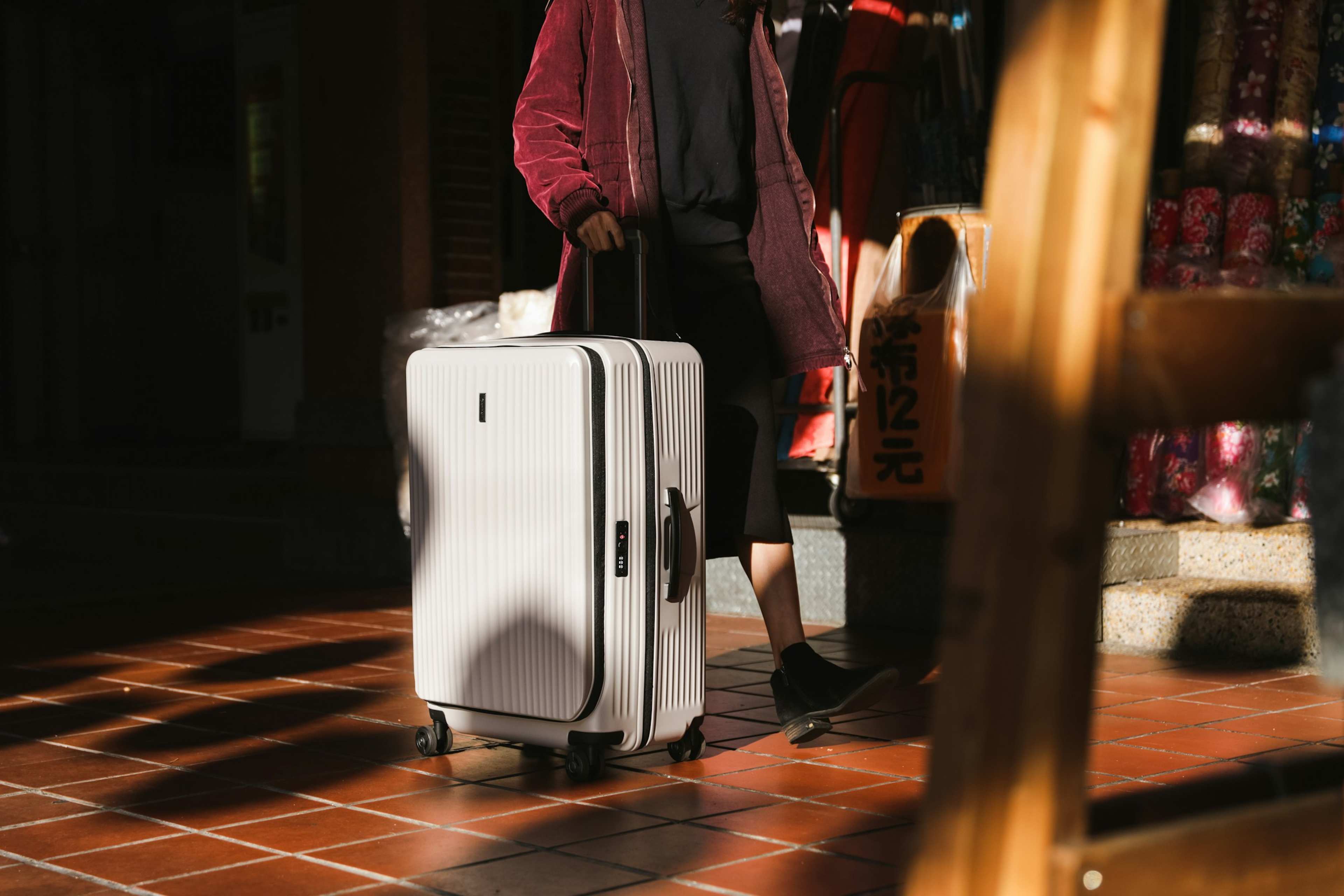
I threw my suitcase into the trunk of a taxi, climbed into the passenger seat, and settled in for an hour-long drive. The crowded neighborhoods of the capital city gave way to emptier, greener land. The driver rolled the windows down, and we made conversation in raised voices to be heard over the wind, our only form of air conditioning.
When the journey ended, he pointed to my new San Antonio Spurs ballcap and said, “Careful where you wear that around.” I pulled it snug and ventured into the center of Granada, the first stop on my two-week solo trip to Nicaragua.
Honestly, I didn’t know much about the country before arriving. Someone told me it had something of a communist history. Another recommended I try Flor de Caña—“the best rum in the Caribbean,” he said. All I knew was flights from Miami to Managua were cheap, so I left with an open mind and a very loose itinerary.

Granada
Granada is not a large city, but it has political and economic historical importance. It was a hub for the country’s conservatives, in contrast to the more liberal city of León. They fought many battles for decades over control of the country. Evidence of Granada’s commercial past can be seen in its Spanish colonial architecture, which has been well-preserved.
I woke up early the next day to hike Mombacho Volcano, a few miles outside of town. There is a two-mile paved trail from the base to the nature preserve at the top. The inclines were 45 degrees steep in parts, and the humidity was unforgiving, but I pushed myself to the crater. The volcano has been dormant for many centuries and is now covered in dense tropical forest.
I paused and listened to the howler monkeys’ call to one another across the mouth of the crater. Later, I passed a sign that read “No hiking on the Puma Trail without a guide” and made sure to keep to the Crater Loop Trail. I followed it to the lookout with wide views of Lake Nicaragua and the Islets of Granada, nearly 5,000 feet below. Unsurprisingly, my descent went much faster, and once at the base, a young man in an old white Volvo offered me a ride back into town for around seven or eight dollars.

León
My hostel informed me about a minivan shuttle that ran between Granada and León. That sounded better than a “chicken bus,” the backpackers’ term for the cheapest mode of intercity transportation, so I booked the last spot. Whereas Granada happily catered to tourists by playing up its colonial charm, I found León to be a more serious city.
Visitors are welcome, but the city doesn’t exactly revolve around tourism. Nevertheless, there are things to see and do. I climbed to the roof of the white-domed León Cathedral and glimpsed the volcanoes in the distance.
I visited the Revolution Museum dedicated to the Sandinista rebel movement that overthrew the US-backed dictatorship in the 1970s. The guides, veterans of the war, told stories of sacrifice and pointed to bullet holes left in the concrete walls.

But the most thrilling and memorable activity in León was volcano boarding on Cerro Negro. I signed up for a tour through Bigfoot Hostel. They drove us to the black volcano, small by Nicaragua’s standards, where we carried what looked like sleds up steady slopes. At the peak, we pulled orange jumpsuits over our clothes and fixed goggles for eye protection. The others in my tour group tied handkerchiefs around their faces to prevent debris from flying into their mouth and noses. I stupidly forgot mine back at the hostel.
The guide gave us some brief instructions, which boiled down to, “just keep going.” There’s not exactly a science to flinging yourself 2,000 feet down the side of a volcano. When it was my turn, I started slow, using my feet to create friction. Ash and black pebbles attacked my face. I lifted my feet, and my pace immediately quickened. Soon, I was travelling fast enough that it would have been impossible to stop. I gave up trying to control the pace and enjoyed the rush as I careened toward the bottom. One of the guides clocked me at 45 km/hr. That felt far too slow.
Surf Town
After an eventful few days in León, I retreated to the sleepy town of Las Peñitas on the Pacific coastline. There I rented a private room at Casita Bomalu and spent the better part of a week reading in a hammock, drinking Toña, and taking surf lessons. My instructor, Eduardo, was a stocky young man. He had me practice popping up on the sand before paddling out.
It wasn’t my first time surfing, but I had learned in the gentler, more forgiving white washes of the Caribbean. These were real crested waves. Just paddling out far enough to launch was challenging enough.
I tried to turtle roll under the coming waves as Eduardo taught me, but I was too slow, and the force pushed me back ten or twenty meters. In the course of an hour, I only stood up twice. Eduardo remained optimistic. “Not bad for a beginner,” he lied.

The next day, I walked down to Playa Roca and watched the pros take on large waves with their short boards. I rented a longboard and walked along the beach to a spot where the waves rolled in smaller and slower. A few other foreigners, inexperienced like me, aimed for the white washes instead of paddling all the way to the proper launch point. After a while, I started to do the same and had much more success getting to my feet. Sometimes, there’s no shame in settling for the low-hanging fruit.
The Corn Islands
With my back and shoulders sufficiently sore, I went coast to coast to check out the Islas de Maíz—the Corn Islands. Outside the one-room airport, a crowd of taxi drivers rushed me for my business. The inhabitants of the islands speak English with tourists like me, Spanish with visitors from the mainland, and Creole with one another. Their multilingualism can be traced to British control in the 18th century. Most islanders today are descendants of former slaves from Jamaica brought to the islands by the British.
Despite its name, Big Corn Island is small. It takes only forty-five minutes to drive the entire perimeter. But the sea is large and inviting. I climbed aboard a boat for a guided snorkeling tour of the coral reefs that lie a few minutes’ ride from the shore. The reefs were the largest and most vibrant I’ve seen to date. For over an hour, we floated on our bellies, gazing at the nautical city beneath us, draped in greens, purples, pinks, and yellows. Schools of silver fish darted between swaths of algae and corals. Following the guide’s lead, I held my breath and dove under a few times to get a closer look. There was so much activity, and it all played out in silence.

On the tour were a brother and sister pair from Texas. He was going through a divorce, and she had spent a long winter in Alaska. The Corn Islands were a much-needed getaway for both. That evening, we had dinner on the second floor of a tatch-roofed house, fighting off mosquitoes between bites. An older couple from California joined us. The conversation was lively, and after nearly two weeks of mostly Spanish, speaking English made me feel weightless and empowered. The brother gave me his business card and told me to look him up if I was ever in Texas. A week later, I lost the card. “Oh, well,” I thought. Most friendships made on the road stay on the road, and this might be for the better because, like it or not, environment and context shape human connection, and it wouldn’t feel the same back home.
Nicaragua feels much larger than it is—volcanoes and reefs, big waves and long hikes, Pacific sunsets and Caribbean sunrises. But from the moment I arrived, the country felt familiar, like I was reuniting with an old friend whom I’d not seen in a decade. We got along immediately. Wherever I went, warm and good-spirited people greeted me, poured me a drink, taxied me to and fro, tackled waves alongside me, and chatted freely just because. Nicaragua is unassuming. It’s the kind of place that takes you in, whatever your condition, and allows you freedom to roam at your own pace. You’re welcome to join the crowd any time or wander off alone for as long as you need.