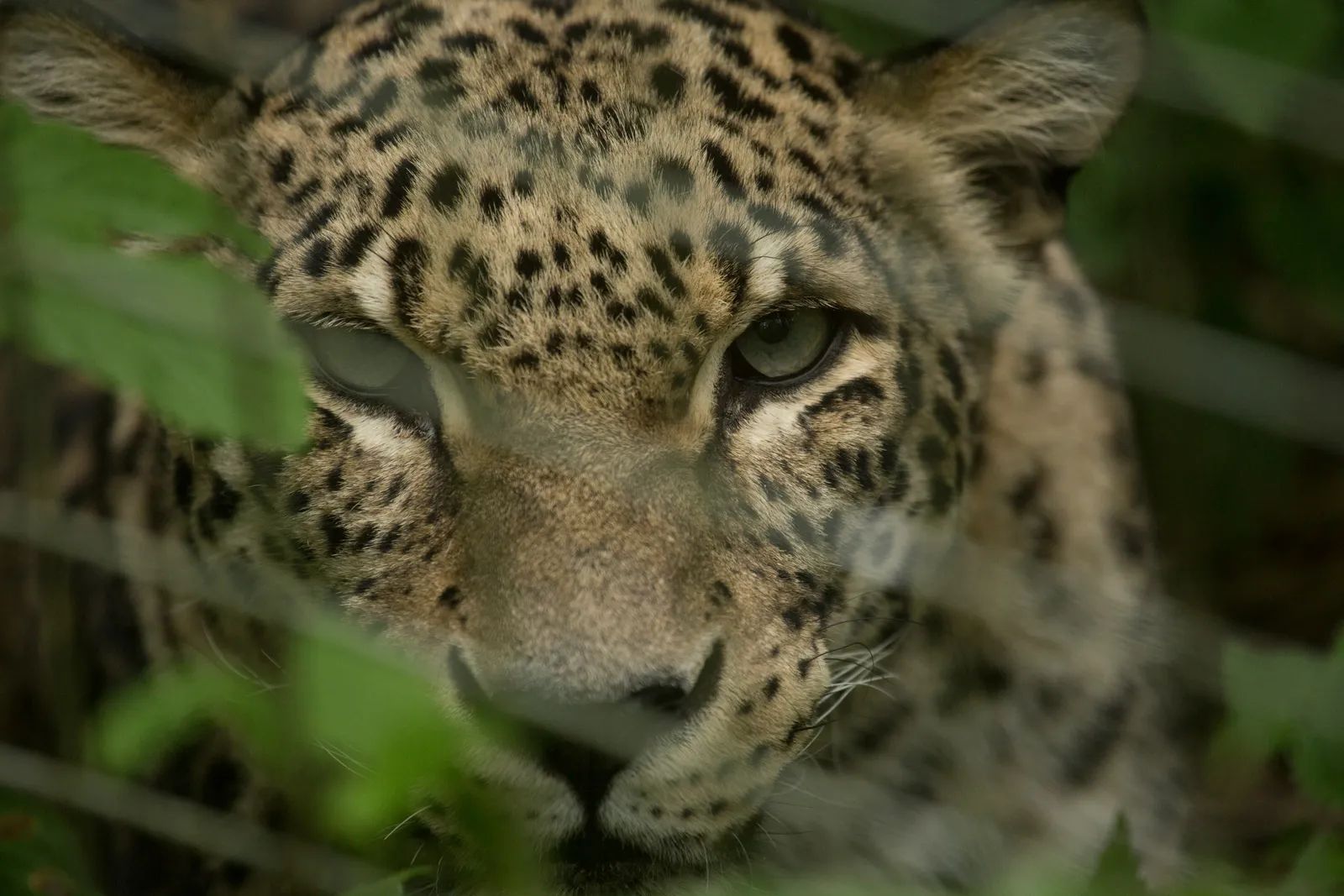
Snow covers the Caucasus Mountains, a range that stretches across Russia, Georgia, Armenia and Azerbaijan. The terrain also holds decades-old minefields left from earlier conflicts. Researchers have named one endangered Persian leopard in the region Aren, and he recently covered the distance on just three legs ([1]).
A 150-mile route through danger
Aren completed a 240-kilometer, or roughly 150-mile, trek through the snow-bound mountains. The route runs through a landscape that still contains minefields from past wars, which makes the journey far more perilous than its length alone suggests. Mongabay contributor Kayleigh Long reported on the trek and its implications for wildlife, and her coverage brought the leopard’s story to a wider audience.
Crossing the region on three legs means Aren must move through terrain that would challenge any animal in full health. Researchers have not publicly described how he managed the steep and snowy ground, and the available reporting does not document his day-to-day movements. What is clear is that he kept moving across a region where wildlife movement is limited by both natural and human-made obstacles.
From a healthy male to a three-legged traveler
Camera traps in Armenia’s Arpa Protected Area first recorded Aren, and at that point he was a healthy four-legged male. When rangers spotted him again months later, the lower part of his left foreleg was missing. Arpa rangers say the injury may have been caused by an antipersonnel mine along the border of Nakhchivan, an Azerbaijani exclave. The rangers’ explanation is a likely cause, not a confirmed one, and the available reporting does not settle the question.
The injury is not an isolated case in the region. According to WWF Armenia, three of the 10 leopards recorded in Armenia since 2002 have lost a limb. That pattern points to a recurring risk along the borders rather than a single unlucky encounter, and it raises questions about how many animals are affected without ever being recorded.
- Aren covered about 240 kilometers on three legs through snowy mountains.
- Rangers say his injury may have come from a mine near the Nakhchivan border.
- Three of the 10 leopards recorded in Armenia since 2002 have lost a limb.
A species with very few individuals left
The International Union for Conservation of Nature estimates that fewer than 1,044 Persian leopards remain worldwide, and the species is listed as endangered. Each animal carries significant weight for the population’s future. Sightings in the region are also rare. Over the past two decades, scientists have documented just three leopard sightings in Georgia and 10 in Armenia.
Those sparse records make it hard to know how often leopards move between countries. Limited sightings can reflect both a small population and the difficulty of monitoring remote terrain. Camera traps have provided some of the clearest evidence so far, though they capture only a small part of an animal’s range.
Fences and borders that divide the range
Soviet-era electric signal fences known as Sistema, along with modern border barriers, further restrict movement across Iran, Armenia, Azerbaijan and Georgia. These structures sit on top of the existing hazards, making a long-distance trek more difficult for any animal that crosses the region.
Related Stories From Travelbinger



Hana Raza, founder of the nonprofit Leopards Beyond Borders, offered a blunt assessment to Long. “Leopards do not recognize political boundaries,” she said. The statement captures the central tension in the region. Wildlife follows terrain and food, while fences and mines follow national lines drawn by people.
Aren’s journey does not answer every question about the region’s leopards. It does, however, offer a clear view of how a single animal moves through a landscape shaped by old conflicts and modern borders. Whether that landscape can allow safer passage for the species remains an open question.