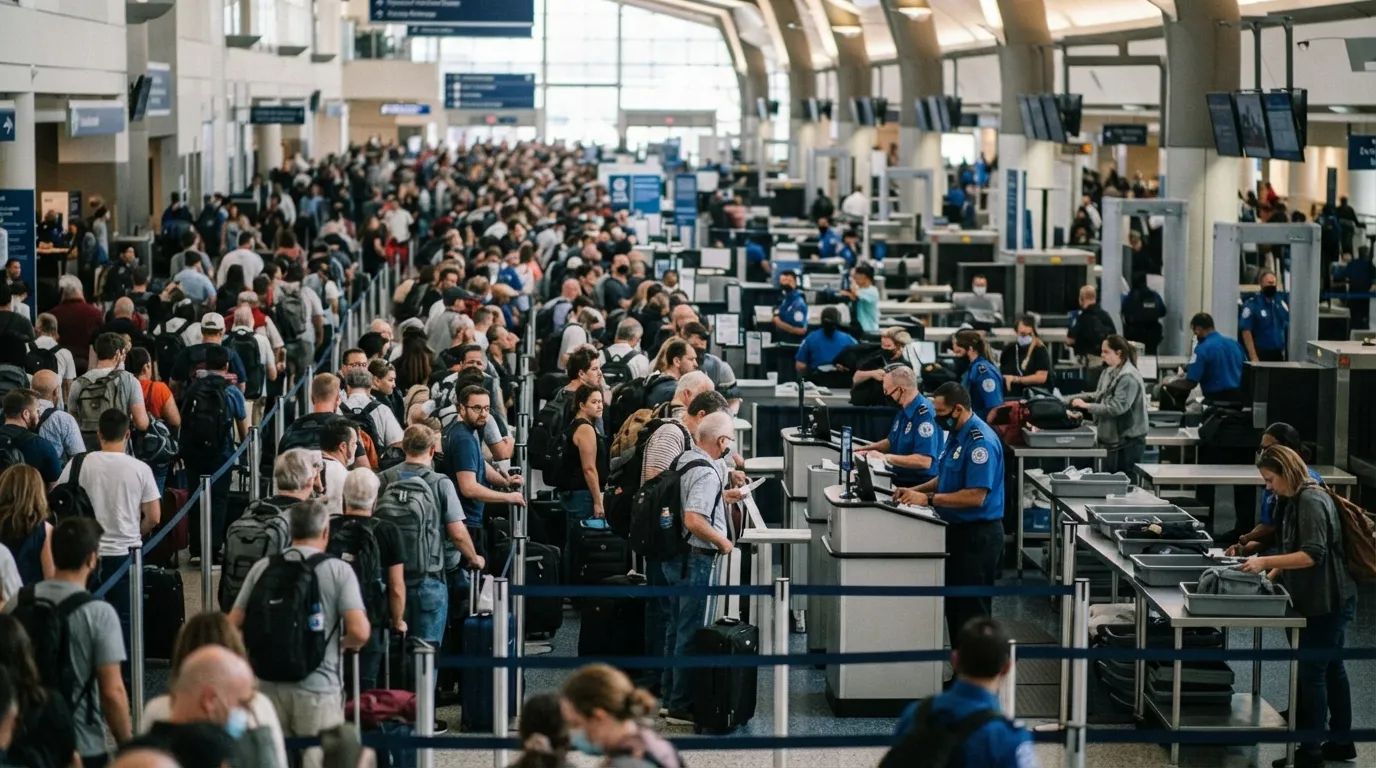
Ten years at a TSA checkpoint means about 2.48 million travelers a day sliding past your podium, and that changes what a person notices. Things that would stop a first-time flyer cold, like a record-breaking crowd or a loaded handgun in a carry-on, slowly fade into background noise. Here are 21 of them, built from TSA’s own public figures and policy changes.
The list isn’t what you’d expect. Some entries are rules that changed under officers’ feet, some are numbers that would make anyone else gasp, and one is the memory of a checkpoint so quiet it now feels unreal. Stay for #1, because it’s the one that surprised us most.
#21 – A Daily Crowd Bigger Than Almost Any U.S. City
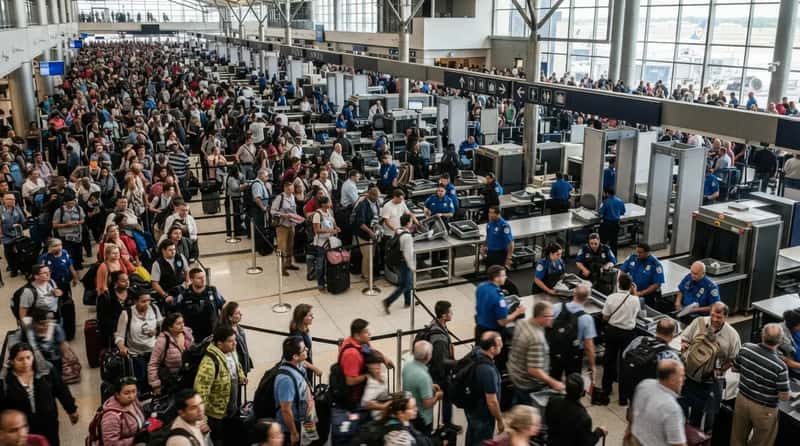
TSA put its current daily volume at about 2.48 million travelers in late 2025, up from 2.47 million in 2024. That’s a bigger daily crowd than the population of all but a handful of American cities. Ten years in, a number that size stops sounding like a number.
Zoom out and it gets stranger. TSA screened roughly 906.7 million people in 2025, the most in its history and the second straight year above 900 million. Most travelers don’t realize the checkpoint is now one of the busiest public spaces in the country.
#20 – The Wallet Scramble That Quietly Faded After May 2025
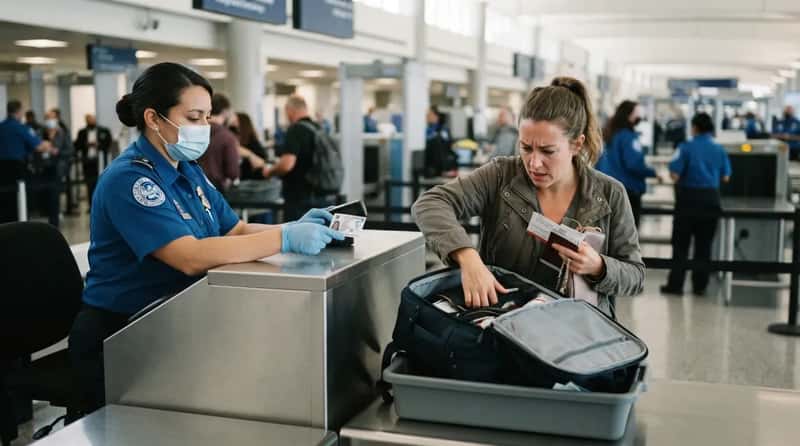
Since May 2025, you need a REAL ID-compliant license or another accepted ID, such as a passport, to fly within the US. That could have meant chaos at every podium. Instead, TSA reported that nearly 94% of passengers were presenting a REAL ID or another acceptable form of ID in the weeks after enforcement began.
Do the math and roughly 6 out of every 100 travelers still weren’t showing an accepted ID at that point. TSA’s advice stayed simple: have your ID and boarding pass out and ready for the travel document checker. After a decade, the sight of someone digging through a bag for a license is just part of the scenery.
Fast Facts
- Enforcement of the REAL ID rule for domestic flights began in May 2025.
- A passport counts as an accepted alternative.
- Nearly 94% of passengers showed a REAL ID or other acceptable ID in the weeks after.
- TSA’s advice: ID and boarding pass out and ready before you reach the podium.
#19 – The Shoe Bins That Ran the Checkpoint for Nearly 19 Years
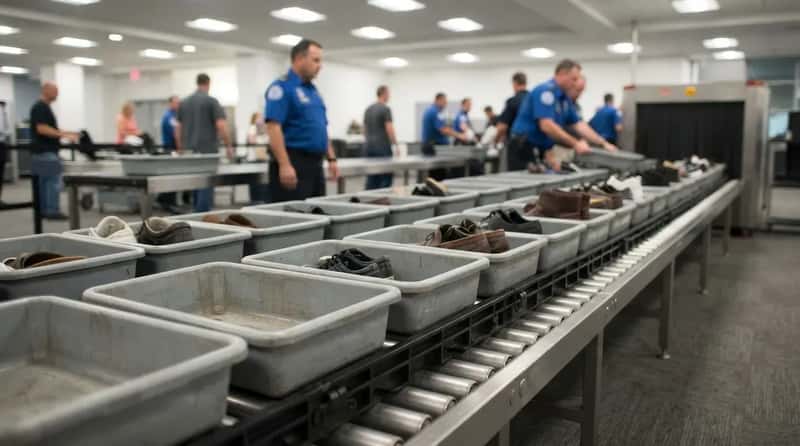
TSA first began requiring most passengers to remove their shoes in August 2006. In July 2025, it officially ended that policy, which had been in place for nearly 19 years. An officer with ten years on the job spent their entire career watching a sea of socks.
Before the change, only travelers enrolled in TSA PreCheck could keep their shoes on. Not everyone cheered the timing, and some critics questioned it. DHS said newer technology made the change possible.
#18 – The One-Footed Balancing Act That Experts Called a Fall Risk
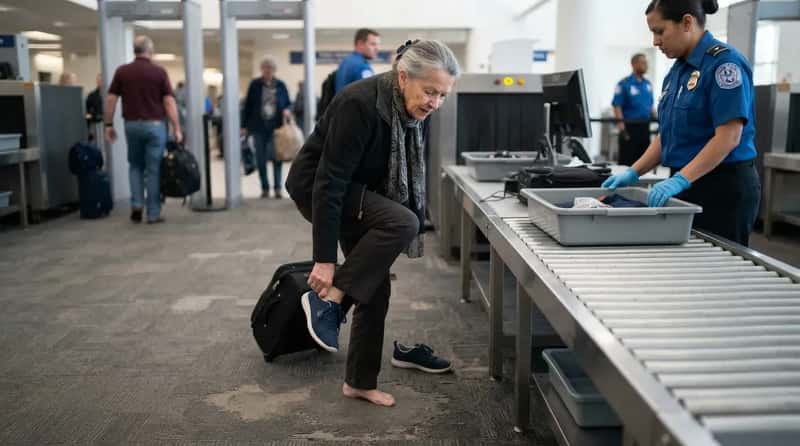
When the shoe rule ended, the National Council on Aging’s Emily Nabors pointed to older travelers and people with mobility issues or chronic pain. Taking off shoes, bending down and rushing are known risk factors for falls. To an officer, it looked like routine hurry-up at the belt. For some travelers, it was a real hazard.
Nabors also noted there’s often no seating to remove your shoes safely. AARP’s coverage added context: its 2025 Travel Trends survey found airplanes are the most popular form of transportation for people 50 and older. The hop-on-one-foot routine hit the biggest group of flyers hardest.
#17 – The Quart-Size Bag That Refuses to Retire
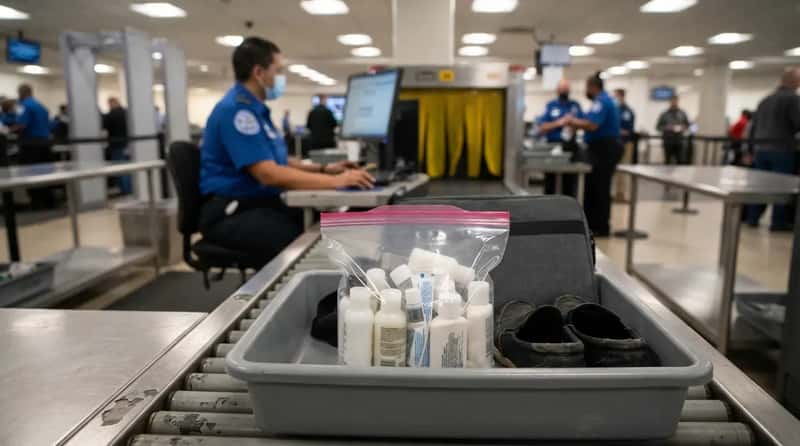
When shoes came off the required list, AARP reported that removing laptops from bags and keeping liquids to 3.4 ounces in a clear, quart-sized bag remained in place, for now. Officers have watched that little baggie ritual for years. It has become so familiar that nobody looks twice.
DHS Secretary Kristi Noem said at the time, “Every rule is being evaluated.” Some travelers still call the liquids rule pure theater. DHS’s answer is that it relies on a multi-layered security approach, not any single rule.
#16 – The Laptop Tray Parade
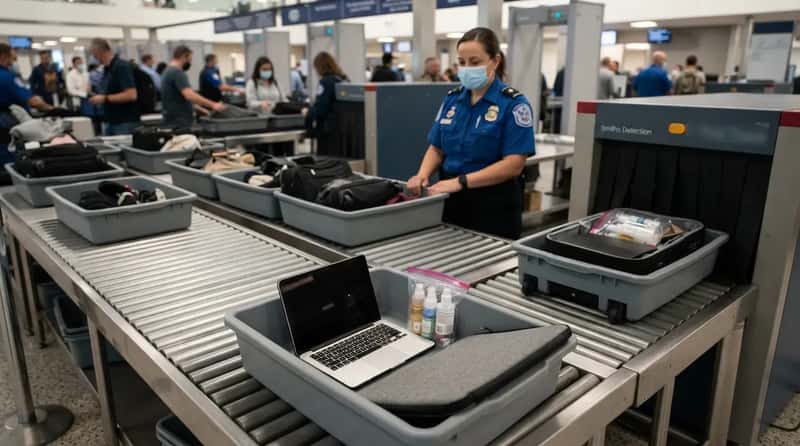
In standard lanes, laptops still come out of bags and ride through in their own bins. It is the most predictable sight in the building. Every day, thousands of people unzip the same sleeve, slide the same device into the same gray tray, and hope they’ll remember to grab it.
The exception is PreCheck. PreCheck still lets you keep your belt and a light jacket on and leave your laptop and liquids packed. Officers see both versions of the checkpoint side by side, all day, and the contrast has stopped being remarkable.
Quick Compare
- Standard lane: laptop out and in its own bin, liquids out in a clear quart-size bag.
- PreCheck lane: laptop and liquids stay packed, and belt and light jacket stay on.
- Both lanes: shoes can stay on unless an alarm or extra screening says otherwise.
#15 – The Pocket Dump Everyone Forgets Until the Alarm
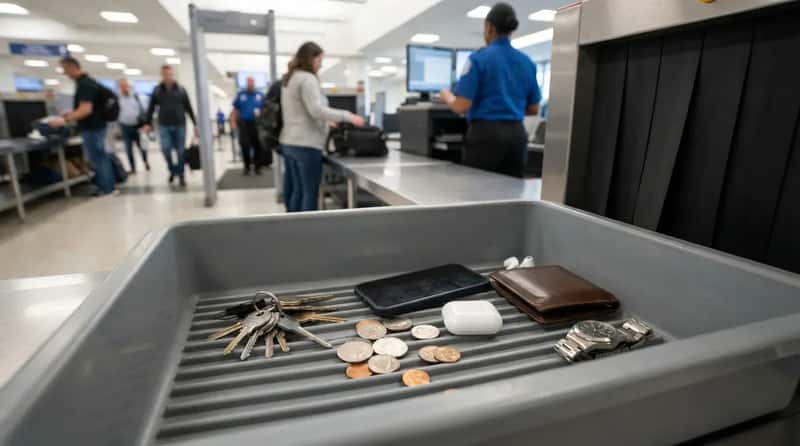
Keys, coins, phones, earbuds. TSA’s advice is to place items from your pockets securely into your carry-on bag while you’re still in line. It may be the most repeated instruction at any checkpoint. After enough repetitions, it becomes white noise on both sides of the belt.
The same guidance urges travelers to listen to officers’ instructions, since screening protocols vary from airport to airport depending on available technology. The lane you used last month may not work the way the one in front of you does today. Officers know that. Travelers usually don’t.
#14 – The PreCheck Debate That Got Complicated Overnight
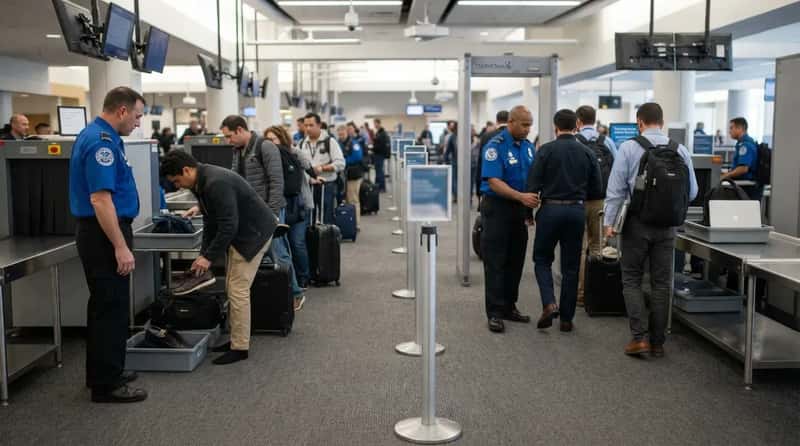
PreCheck costs about $78 for five years. Before July 2025, keeping your shoes on was one of its most famous perks. Then the shoe rule ended for everyone, and one of the program’s best-known selling points went free overnight.
AARP noted that people who paid for PreCheck now have to decide whether its remaining perks are worth the cost. Noem argued the opposite: she still expects travelers will see value in the program. Frequent flyers are split, and officers watch the argument play out in two very different lines.
#13 – The “Please Step Over Here” Shrug
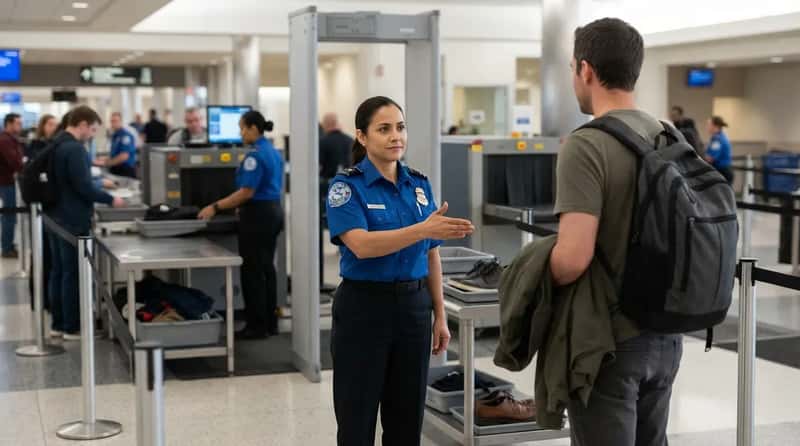
Ending the shoe rule didn’t end shoe checks. If you set off a detector, your shoes alarm, or you are picked for additional screening, an officer can ask you to take them off. To a traveler, that request feels like a spotlight. To an officer, it’s Tuesday.
Noem said at the announcement that there may be situations where a traveler is asked to comply with additional layers of screening, including shoe removal. Being pulled aside is a routine procedure, not a verdict on you. Knowing that changes how the whole thing feels.
#12 – The Toy Gun That Never Makes It Past the X-Ray
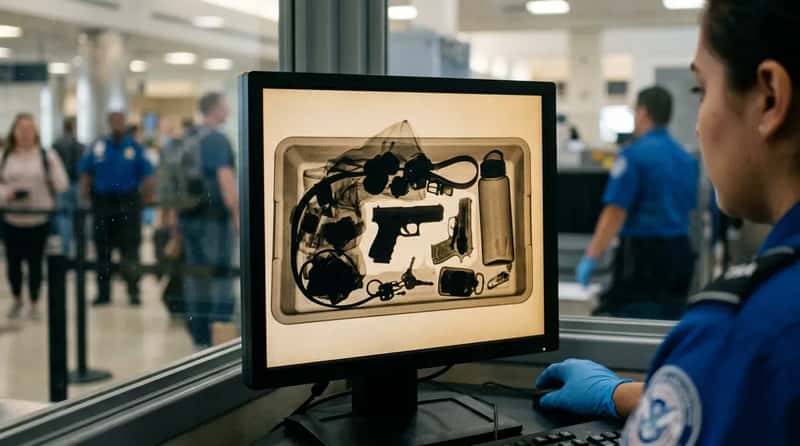
It’s a costume prop, a movie replica, or a novelty from a gift shop. TSA’s rule is blunt: any type of replica firearm is prohibited in carry-on baggage and must be transported in checked luggage. Even a fake gets treated as a serious item at the checkpoint.
The reason is how screening works. TSA has said the firearms it found in 2023 turned up during routine X-ray screening of carry-on property. Officers see shapes on a screen all day long. A harmless-looking replica raises the same question every time.
#11 – The Question Line That Quietly Moved to Your Phone
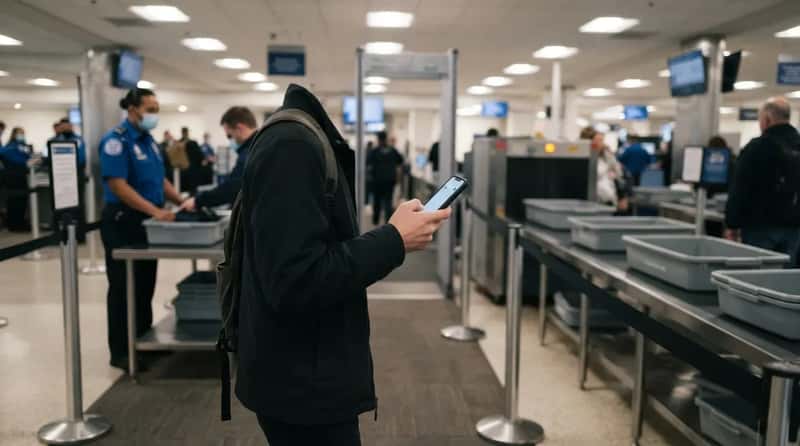
Travelers ask officers the same handful of questions all day. Can I bring this? Where does this go? TSA built a shortcut: text 275-872 (“AskTSA”) to engage its virtual assistant 24/7. Most people don’t realize it exists until they’re already at the belt.
There’s a second resource that gets even less attention. Travelers with disabilities or medical conditions can contact TSA Cares at (855) 787-2227 to request assistance at the checkpoint. Officers assume everyone knows about these options. Plenty of flyers don’t.
Worth Knowing
- Text 275-872 to reach the AskTSA virtual assistant any hour of the day.
- Call TSA Cares at (855) 787-2227 if a disability or medical condition affects your screening.
- Both are designed to answer questions before you’re standing at the belt.
#10 – The Five Airports Where Guns Turn Up Most
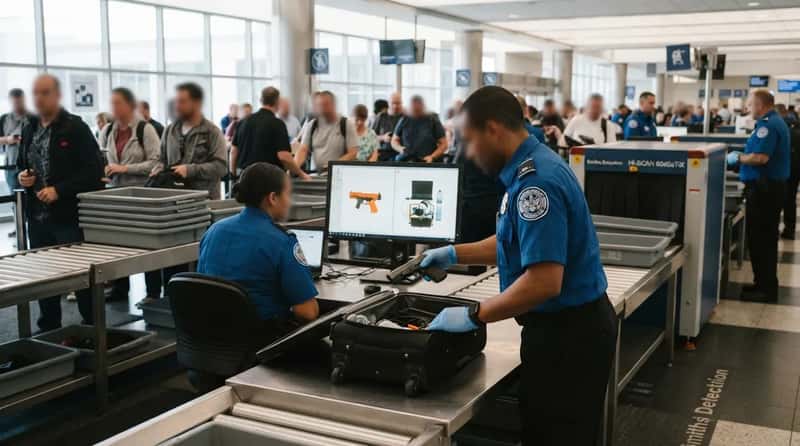
TSA’s 2023 tally put Atlanta at the top with 451 firearm finds. Dallas Fort Worth came second with 378, then Houston’s George Bush Intercontinental with 311, Phoenix Sky Harbor with 235, and Nashville with 188. For officers at those airports, a firearm find is routine enough to have its own protocol.
Denver, Orlando, Tampa, Fort Lauderdale-Hollywood and Dallas Love Field round out the top 10. That is the most recent airport-by-airport ranking in TSA’s 2023 release. It’s a reminder that this isn’t a rare-airport problem. It shows up across the country.
#9 – The “Record Day” Headline They’ve Read a Dozen Times
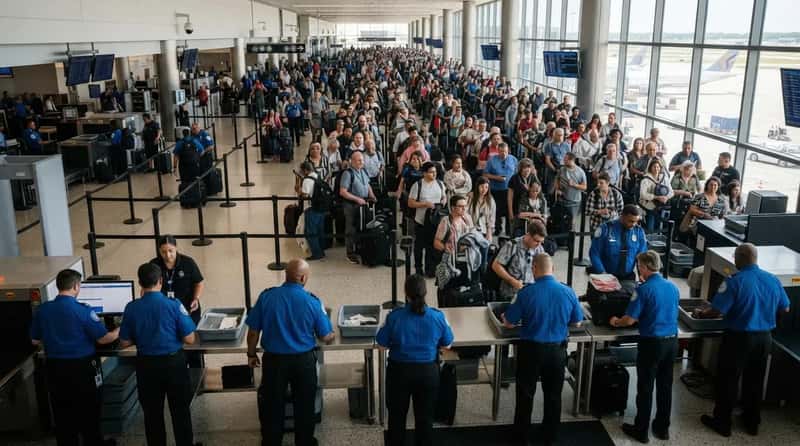
On Nov. 30, 2025, TSA screened 3,133,924 people, the highest single-day number it has published. It beat the previous record of 3,096,797, set on June 22. The record fell twice in one year.
It’s no longer a fluke. All 10 of TSA’s busiest days have topped 3 million, and every one has come since July 2024. Eight of those top 10 days occurred in 2025 alone. When records arrive that often, they start to feel like ordinary days.
#8 – One Airport, One Day, a Small City’s Worth of People
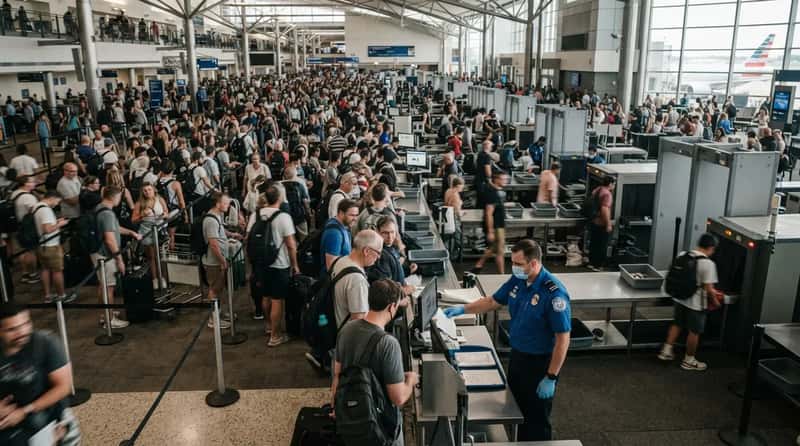
In late June 2025, TSA reported a record at Chicago O’Hare: just shy of 114,000 people screened in a single day. That’s more than the population of many U.S. cities, walking past one set of checkpoints in 24 hours.
O’Hare’s second busiest day ever was June 19, 2025, when more than 111,000 people were screened. Two near-record days in the same week. TSA’s Illinois director said officers “remain laser-focused” on those peaks. After a decade, that focus is simply the job.
#7 – The Record Day That Happened in the Middle of a Meltdown
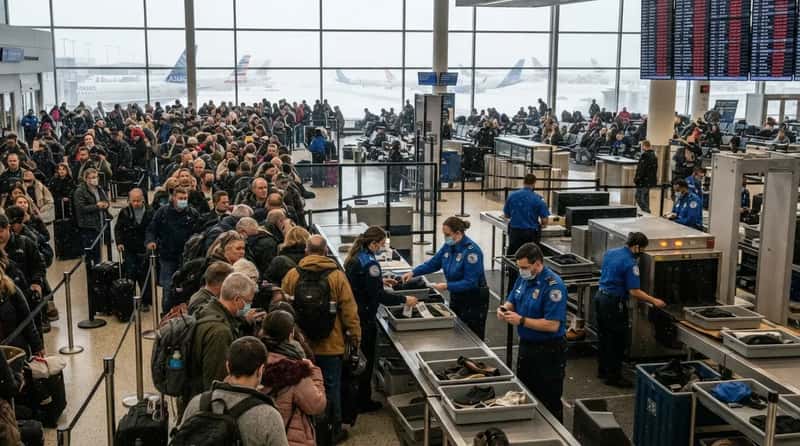
The Nov. 30 record didn’t happen on a calm day. Weather disruptions caused more than 1,000 flight cancellations and over 13,000 delays that Sunday, according to FlightAware. Even so, more than 3.1 million people went through security.
The record also came despite a sudden recall of some Airbus A320 Family aircraft. The checkpoint keeps running whether or not the planes do. Officers don’t get a pause button when a storm hits. They get a bigger, angrier line.
#6 – The Turnover Problem the Agency Finally Tried to Fix
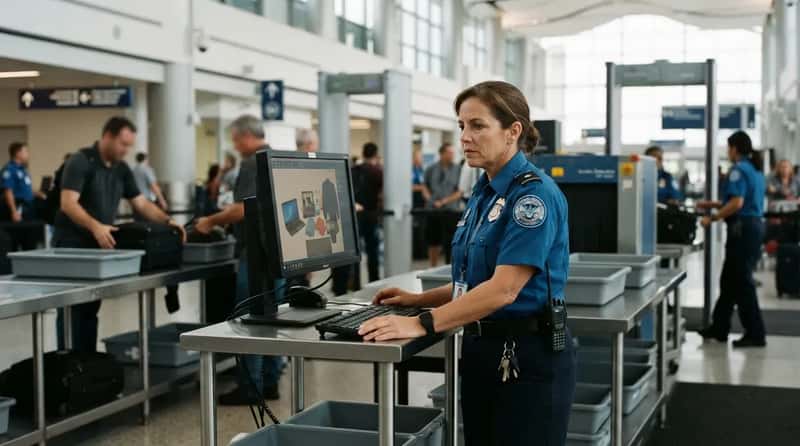
In June 2024, TSA Administrator David Pekoske said that compared to the year before, the agency had cut its attrition rates by almost half and increased recruiting. He credited the TSA Compensation Plan, which Congress had funded. That’s a striking thing for an agency to announce.
It shows retention had become a priority worth highlighting. Someone who has stayed a full decade has outlasted many colleagues who came and went. The numbers don’t show exactly why people leave, so we won’t guess. They do show the agency treated it as a problem.
#5 – The Pilot Lanes That Promise a Different Checkpoint
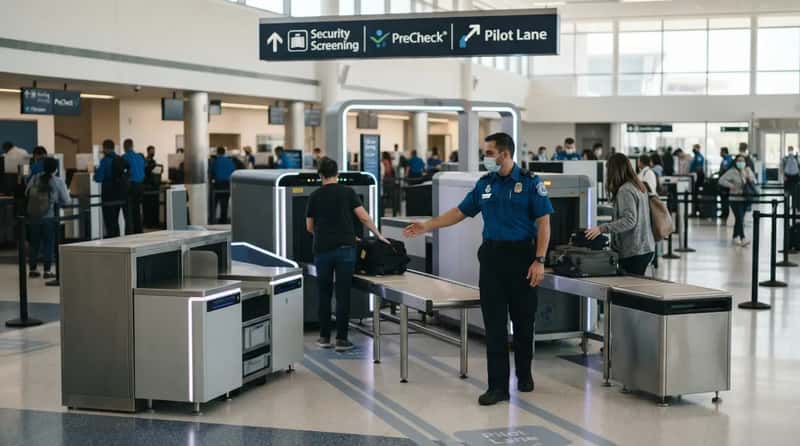
Noem said that over the next six to nine months, travelers would see pilot lanes at security checkpoints across the country aimed at a more streamlined process. The idea is that the checkpoint you know may not look the same for long. Officers have heard promises of change before.
Some changes are already targeted at specific groups. In July 2025, TSA announced the “Serve with Honor, Travel with Ease” program, which gives uniformed service members and their families a PreCheck enrollment discount and expedited access lanes at select airports. Those lanes are tiny pieces of a bigger experiment.
#4 – The Firearm Script and the $15,000 Price Tag
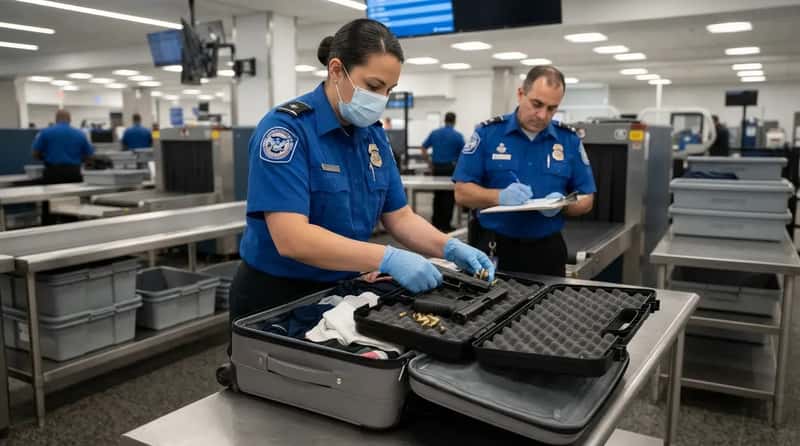
The rules for flying with a gun are short. It must be unloaded, packed in a locked, hard-sided case and placed in checked baggage. At check-in, the passenger must declare the firearm, ammunition and any firearm parts at the airline counter. Officers recite this script constantly.
Ignore it, and the cost is steep. Depending on local laws, the passenger may be arrested or cited, and TSA may add a civil penalty of up to $15,000. For a first offense, passengers lose TSA PreCheck eligibility for five years. One forgotten bag can cost thousands and half a decade of shortcuts.
At a Glance
- The firearm must be unloaded.
- It goes in a locked, hard-sided case, inside checked baggage.
- Declare the firearm, ammunition and parts at the airline counter.
- Penalty for getting it wrong: possible arrest or citation, a civil fine up to $15,000, and five years without PreCheck after a first offense.
#3 – One in 135,370: The Needle That Keeps Showing Up
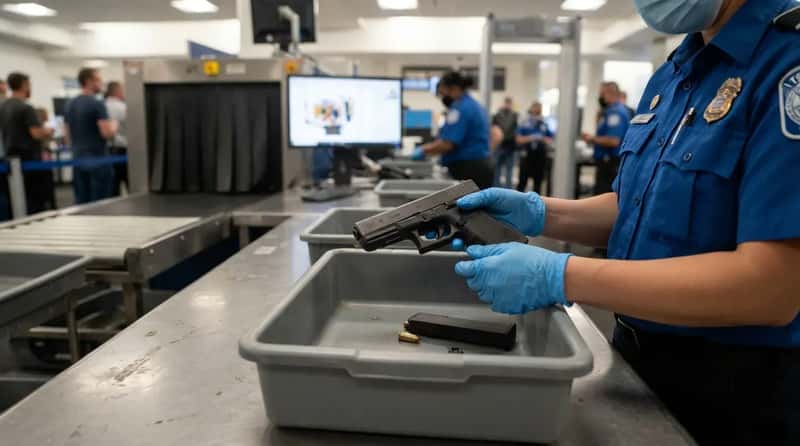
In 2024, TSA screened more than 904 million people and intercepted 7.4 firearms per million, down from 7.8 per million in 2023. Stated another way, TSA detected one firearm for every 135,370 travelers screened. That is a rare event per person. Across a whole year, it happens thousands of times.
The totals: 6,678 firearms in 2024, compared with 6,737 in 2023. That’s the kind of math that shapes an officer’s outlook. For any single traveler the odds are tiny, but at the checkpoint the needle keeps turning up.
#2 – 18 Loaded Guns a Day, and the Line Keeps Moving
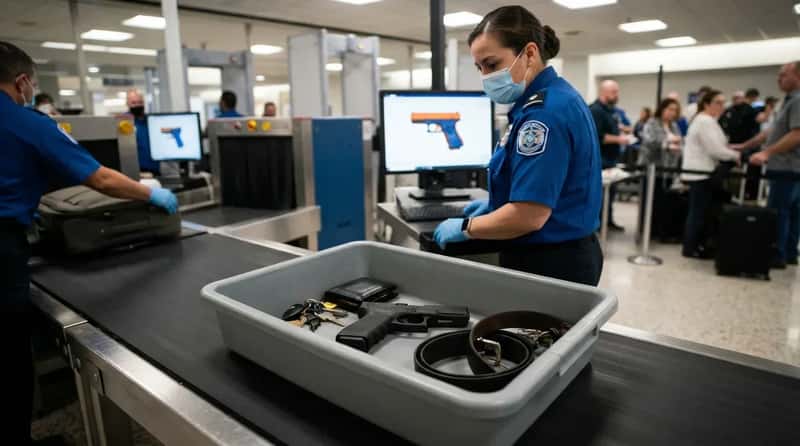
In the first nine months of 2024, TSA intercepted 5,028 firearms at checkpoints, an average of 18.3 per day, with more than 93% of them loaded. Nearly every gun officers found was loaded. Picture that as a daily routine.
Pekoske spelled out the stakes in January 2025. He said firearms present a safety risk for employees and everyone else at the checkpoint, and are also costly and slow down operations. For the officers who see it every day, the shock has long since worn off. That’s what makes it hard to hear.
#1 – The Checkpoint That Once Sat Nearly Empty
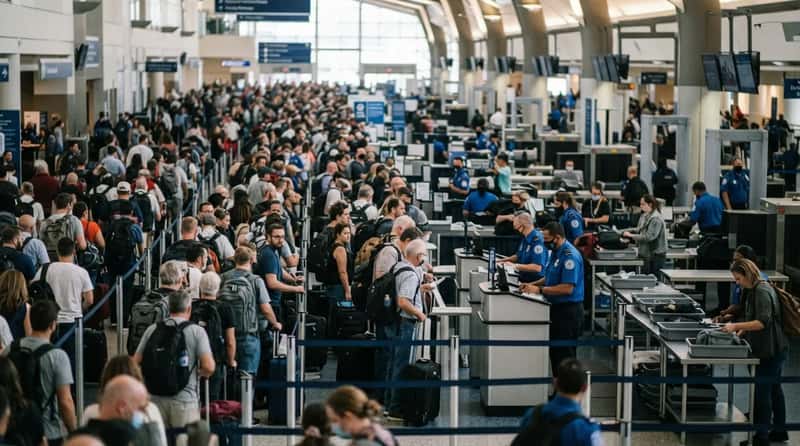
Here’s the one that has quietly faded most. In 2020, screening collapsed to well under half of its pre-pandemic level. Lines vanished. Hallways echoed. The busiest checkpoints in America looked like ghost towns.
Then came the rebuild. TSA screened about 906.7 million in 2025, and a single day now tops 3.1 million. For anyone who has worked the line since before 2020, that’s a whirlwind from silence to record crowds. The strangest part is how fast the crowd became ordinary again.
After ten years, what officers stop noticing says a lot about what they’ve been through: shoe bins, quart bags, record crowds and, yes, loaded handguns. The rest of us just see a line.
Maybe that’s the real reveal. The checkpoint feels like one long, annoying moment to us, but for the people standing there, it’s a decade of moments stacked on top of each other until even the extraordinary looks like Tuesday.