
When I first arrived in Bangkok, I remember being overwhelmed at how incredibly packed the streets were. Riding from the airport to our Airbnb felt like a rush, like a fish swimming through a river during a salmon run.
What stuck out to me the most, however, was the sheer prominence of motorbikes everywhere, and not at all like back in the USA. Rather than rigidly following lanes and signals, motorbikes here flow and weave through traffic, sometimes centimeters away from other vehicles.
After living here for a while now, I’ve learned that this isn’t some random quirk or collective recklessness. Rather, motorbikes here are a part of the city’s civic infrastructure. Let me explain what I mean.
Motorcycles as Urban Infrastructure
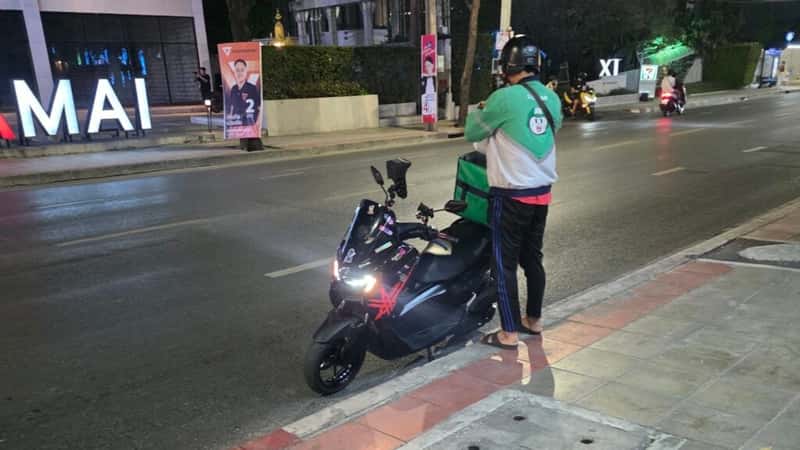
Just down the road from my apartment, a street is currently being worked on as new pipes are installed. Because of this, the road has been reduced to a single narrow lane, with minimal signage describing the direction of traffic. What was already a tight street has become nearly impossible to navigate on four wheels. While cars struggle to pass in either direction, motorbikes move through in a steady, uninterrupted flow.
This is just one small illustration of the challenges motorbikes solve here. Given the way streets branch off from main roads throughout Bangkok, often narrowing into tight sois, motorcycles are frequently the only viable way to deliver goods and move people efficiently through the city.
Utility Over Identity
I used to ride a motorcycle myself back in the USA. There, motorcycles occupy a very particular place in society: less a means of transportation and more a statement of identity. Riders are “bikers,” and that identity often comes with larger, more distinctive machines customized to reflect the individual.
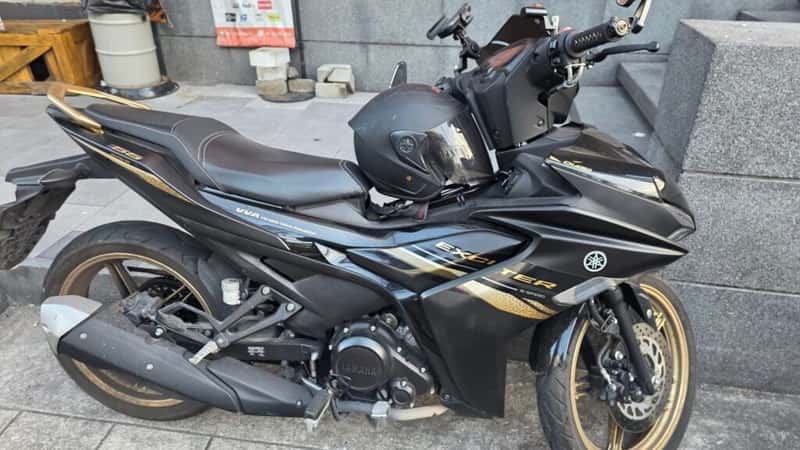
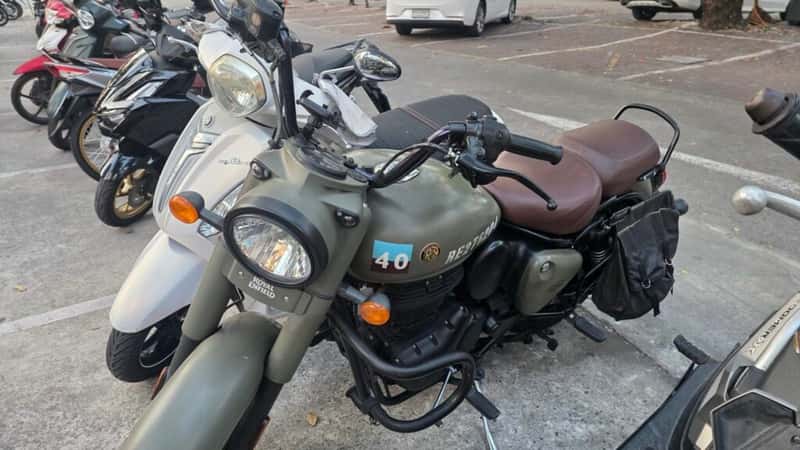
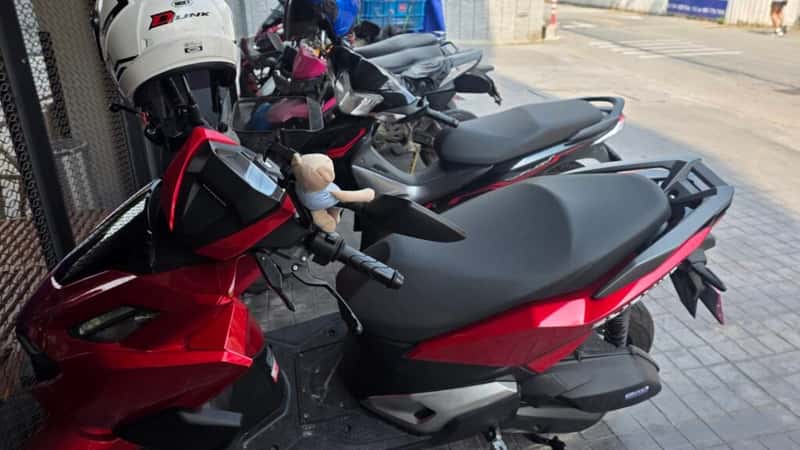
In contrast, motorbikes in Thailand are overwhelmingly utilitarian. Most are scooters or small-displacement bikes with automatic transmissions, optimized for short trips and city speeds. Customization is minimal and practical with phone mounts, top boxes, maybe a sticker,r or a simple paint job. Almost all show visible wear and tear, marks of constant use rather than neglect. Here, motorcycles aren’t about standing out. They’re about getting where you need to go.
A City Designed Around Motorcycles
Another striking feature of Bangkok is the way motorbikes move through the city. They aren’t constrained strictly to the road. Bikes routinely slip onto shoulders, sidewalks, and gaps between lanes whenever space allows.
After riding on motorbikes through ride-sharing apps, I was shocked by how much faster they are than cars. I’ve reached destinations in nearly half the time it would have taken by car.
What makes this possible is not chaos, but coordination. Drivers of larger vehicles seem to understand the unwritten rules of the road, rarely objecting to bikes weaving through traffic. Motorcyclists, in turn, move around one another with an almost unsettling precision. While accidents do happen (I’ve witnessed a couple since arrivin,g) the sheer volume of bikes on the road makes the relative rarity of serious incidents remarkable.
Built for the City They Serve
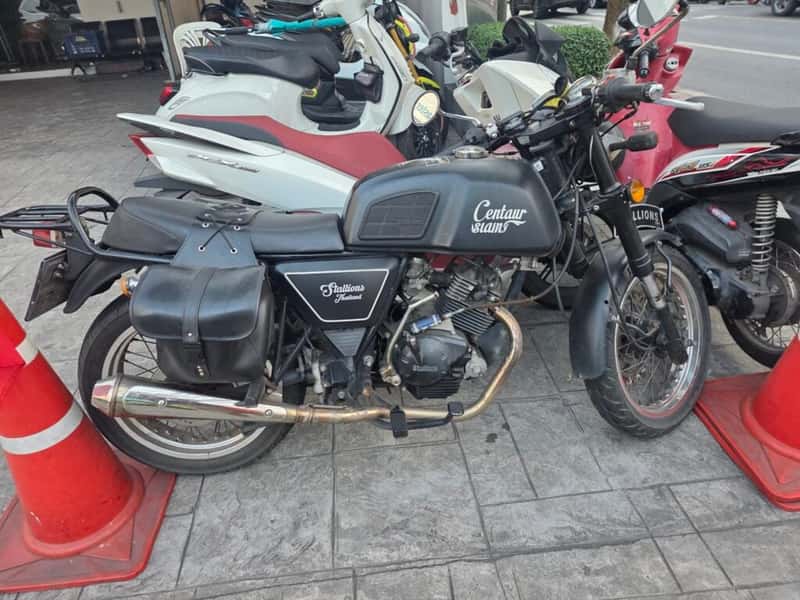
Since arriving in Thailand, I’ve also enjoyed discovering local motorcycle manufacturers and the bikes they produce. Many Thai-made bikes draw inspiration from older European design traditions, particularly the café racer aesthetic, but adapt those ideas for dense urban environments and smaller engines.
Brands like Stallions, Centaur Motorcycles, and GPX Racing focus on affordability, simplicity, and maneuverability. Their bikes aren’t designed for open highways or high speeds, but for daily navigation through tight streets and unpredictable traffic. The presence of these manufacturers reflects a willingness not just to consume foreign brands, but to build practical solutions shaped by the realities of the city itself.
One City, Millions of Engines
With so many motorbikes on the road, it’s easy to let them fade into the background. They can start to blur together, like schools of smaller fish constantly moving around something much larger. But if you ever get the chance, I’d recommend riding one at least once during your stay.
Experiencing the city from that perspective changes how you understand it. Afterwards, it becomes clear that motorbikes aren’t just a feature of Bangkok’s streets; they’re the lifeblood that keeps the city moving.