Most people think valets are just parking attendants – eyes on the car, mind on the keys. They’re not.
The moment your vehicle rolls under that awning, an experienced valet is already building a complete picture of who you are, how your stay will go, and exactly how much attention you’ll get.
In roughly 30 seconds, they’ve clocked your body language, your luggage, your eye contact, your car’s interior, and a dozen other signals you never thought to hide. Here’s what they actually see.
#16 – How Fast You Get Out of the Car
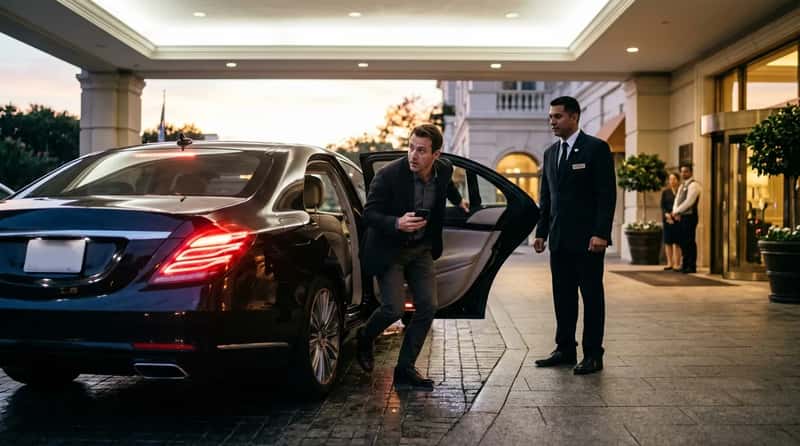
Guests who fling the door open before the car fully stops are almost always running late, stressed, or both. Valets say this rushed exit is one of the most reliable early signals of a guest’s mood for the entire stay.
On the flip side, guests who take a slow beat before stepping out – stretching, glancing around – tend to be relaxed travelers with nowhere urgent to be. That single-second behaviour sets the tone for every interaction that follows.
Valets read the exit before they read anything else. The speed of your door tells them whether to ask questions or stay quiet and efficient. Most guests have no idea the read has already happened.
But how you exit is just the opening move. What you do with your eyes next tells a completely different story.
#15 – Whether You Make Eye Contact at Handoff
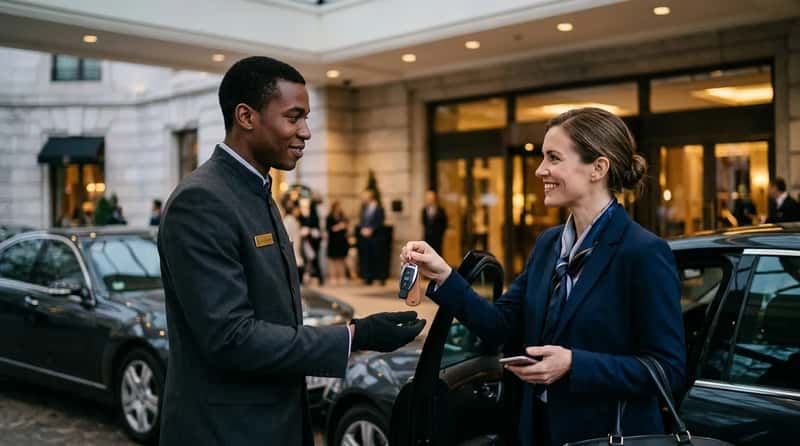
Guests who make direct eye contact before handing over keys are, according to many attendants, usually the friendliest guests inside the hotel too. It’s a small habit that signals someone who sees service staff as people, not furniture.
Valets say this moment often predicts tipping behaviour later on. And guests who avoid eye contact entirely, staring at their phone through the whole handoff, tend to be first-timers nervous about the process rather than rude.
It’s almost never about arrogance – it’s almost always about unfamiliarity. Experienced attendants say they can tell the difference between nerves and dismissiveness within one exchange. The nervous guest gets a gentle, reassuring tone; the dismissive one gets polished efficiency and nothing more.
The eyes reveal one thing. But the hands reveal something else entirely.
#14 – The Hesitation Before Releasing the Keys
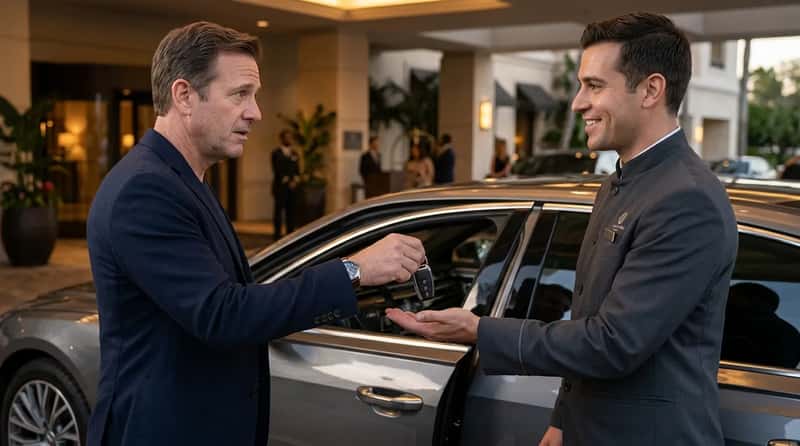
Experienced valets can spot a luxury newcomer almost instantly. Guests unfamiliar with high-end hotel service often hesitate before letting go of their keys – a brief pause rooted in unfamiliarity, not distrust.
Regulars, by contrast, release keys automatically, often mid-conversation. That tiny pause tells a valet exactly how much extra explanation to offer at handoff.
This micro-moment shapes the entire handoff script. Valets who skip the explanation with a first-timer risk leaving them confused and anxious. Those who catch the hesitation and slow down are the ones guests remember as exceptional.
And once the keys are handed over, they’re reading the car itself like a document.
#13 – The Condition of Your Car’s Interior
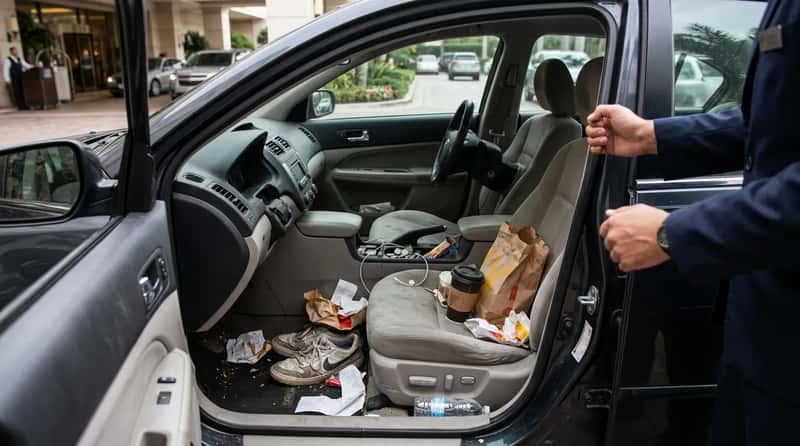
The state you leave your car in is something valets pick up on right away – used coffee cups and fast-food wrappers on one end, meticulously cleaned interiors on the other.
It’s not a judgement, it’s information. For most people, a car is just a way to get from here to there; for valets, it’s a window into how stressed or overscheduled a guest actually is.
A spotless interior with a gym bag and a laptop sleeve reads completely differently than takeout bags and a backseat buried in luggage. Each picture tells valets what kind of stay this is likely to be, before you’ve even reached the door.
Worth Knowing
- Empty coffee cups and fast-food wrappers often signal a rushed, high-stress trip.
- A gym bag and laptop sleeve usually point to a quick business stopover.
- A back seat loaded with luggage and snacks is the classic sign of a family vacation.
- A freshly detailed interior often belongs to a guest who cares about appearances – inside the hotel too.
But what’s inside the car only tells half the story. Dashboard warning lights tell the rest.
#12 – Every Warning Light on Your Dashboard
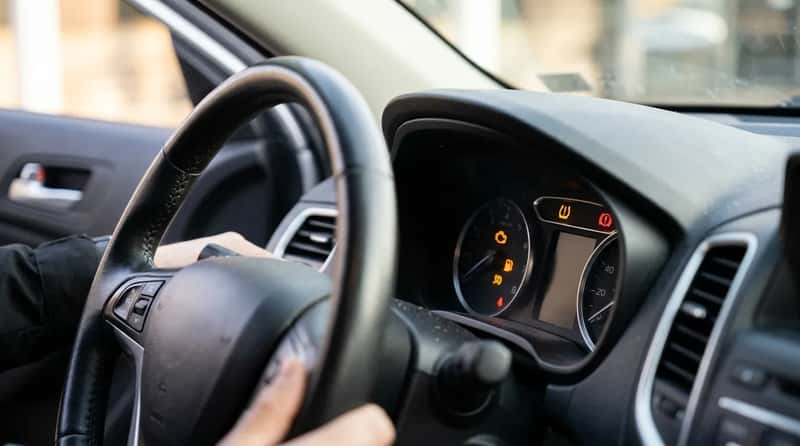
It’s easy to ignore that dashboard warning light when you’re rushing somewhere. Your valet won’t – they notice check-engine lights, tire-pressure warnings, and low-fuel alerts the second they slide into the seat.
A tire that looks noticeably low may just need air, or it could be a slow leak. Valets aren’t mechanics, but they’re clocking your tyre condition the moment they take the keys.
Most guests are genuinely unaware their car is sending distress signals. A good valet will often quietly flag these – not because it’s required, but because sending a guest off with a flat tyre is the kind of thing that sticks with an attendant.
Warning lights are one thing. What’s not mentioned out loud is another.
#11 – What You Don’t Tell Them About Your Car
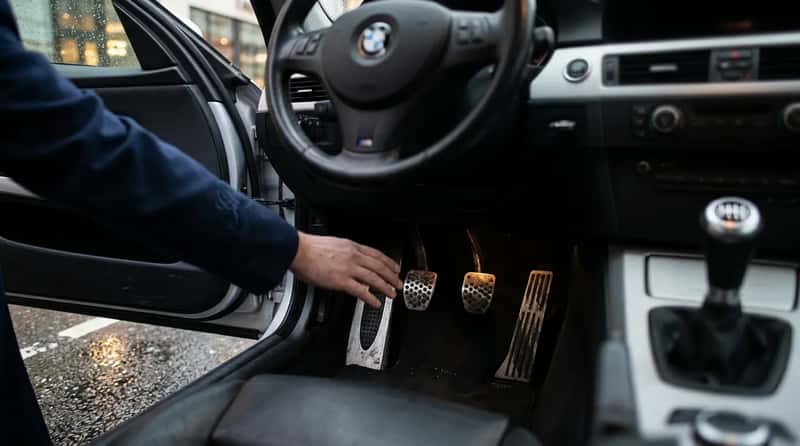
Perhaps the most important thing valets notice is what drivers don’t mention. You know your car best – a quick heads-up at drop-off can save a lot of confusion later.
This one has caused actual on-the-spot panic. A driver hands over the keys, walks off, and the valet realises seconds later they’re staring at a clutch pedal they weren’t braced for.
Valets quietly note the guests who brief them versus the ones who vanish. The guest who says “the key fob is a bit temperamental” earns instant respect. The one who hands over a stick-shift without a word? That’s a story told at the end of the shift.
Speaking of things that get noticed immediately – the car type itself is a complete briefing.
#10 – The Vehicle’s Make, Model, and Clearance
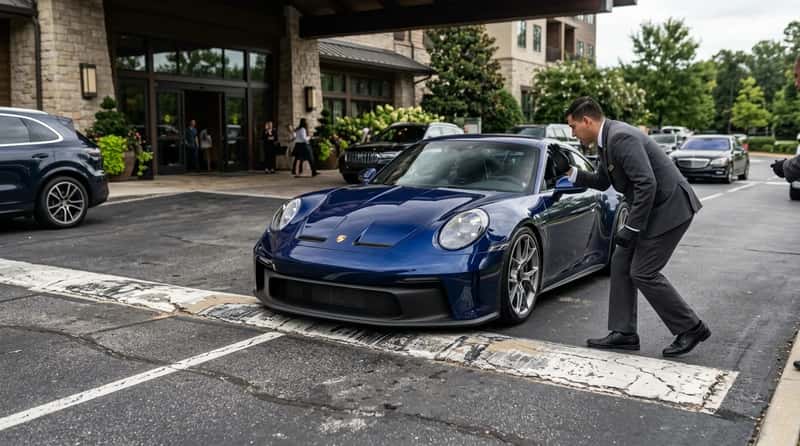
Many luxury sports cars sit dangerously low to the ground. A speed bump a normal sedan clears without issue can wreck a lowered car’s front splitter in an instant, so attendants have to know every inch of the route.
The vehicle you arrive in is basically a briefing document. A battered compact and a new Porsche get handled through entirely different mental checklists.
The make and model doesn’t just affect parking – it affects every second of the drive to the lot. A Porsche 911 has a different key sequence than a Mercedes S-Class, a Lamborghini’s doors trip up untrained attendants, and a vintage Ferrari demands a whole different gearbox etiquette.
The car is the briefing. The luggage is the next chapter.
#9 – What’s in (and on) Your Luggage
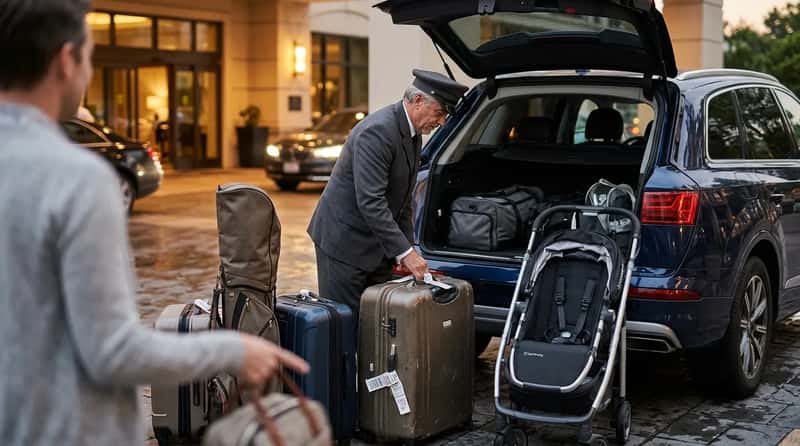
A valet who spots golf clubs, a stroller, or medical equipment instantly adapts their approach – long before you’ve said a word. These aren’t random details, they’re signals.
How a guest handles the trunk – popping it open instantly or guarding it like a secret – reveals what kind of trip they’re actually on. Business travellers with a single carry-on get a different read than families unloading a week’s worth of gear.
Luggage volume and type is one of the fastest guest-profiling tools valets have. One bag means short trip, probably business. Five bags, a car seat, and a folding cot? That’s a family holiday, and the arrival gets managed accordingly.
Quick Compare
- One bag, no fuss: likely a short business trip.
- Golf clubs or ski gear: a leisure trip, probably a longer stay.
- Stroller, car seat, diaper bag: a family vacation, expect multiple trips to the car.
- Medical equipment or oversized cases: a health-related stay, handled with extra care and discretion.
What the luggage says about your trip is one thing. What your energy says about your reason for being there is something else entirely.
#8 – The Emotional Weight You’re Carrying
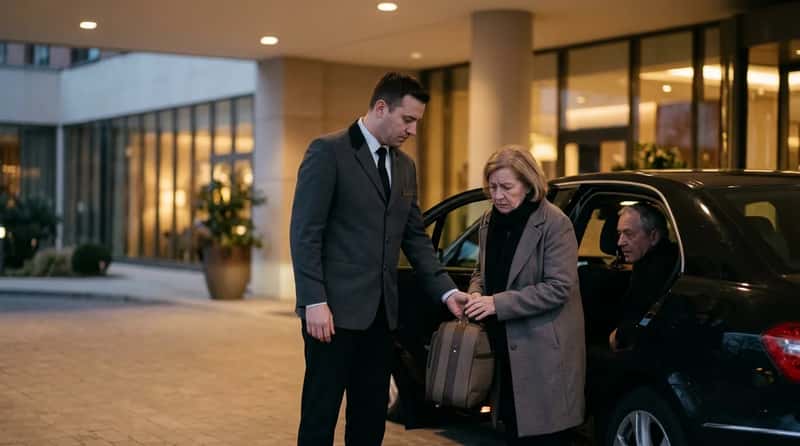
Valets say guests arriving for funerals, medical stays, or difficult family visits carry a noticeably quieter, heavier energy at drop-off – even before a word is exchanged.
This recognition shapes the whole interaction – softer tone, fewer questions, more patience with slow movements. Many valets say learning to read this correctly is one of the most meaningful parts of the job, even though nobody ever trains them for it.
No one teaches you to spot grief. You just start to feel it before you even notice the bags.
A longtime hotel valet
Experienced attendants pick up on it within seconds – a slumped posture, a forced smile – and respond by dialling down the small talk. That restraint is a form of care most guests never consciously notice but always feel.
Emotion is invisible – but tip timing is anything but.
#7 – Whether You Tip at Drop-Off
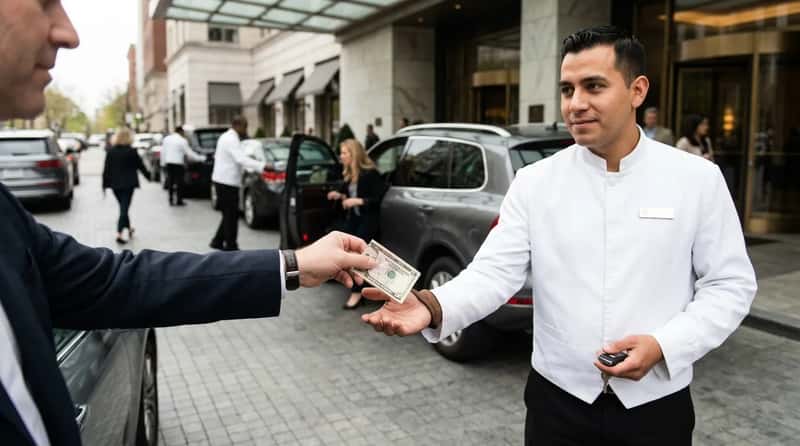
The two-touch rule applies to most valet encounters: a guest tips on drop-off and again on retrieval. Either touch on its own is only half the interaction.
Here’s the part most guests never notice: when someone tips upfront, attendants often remember, which can lead to faster retrieval or a better parking spot once that guest calls down for their car.
Tipping at arrival isn’t just manners – it’s strategy. Valet lots get chaotic fast, cars stacked and double-parked during busy shifts, but a guest who’s already tipped tends to get parked somewhere easier to reach. That’s not policy. That’s human nature.
Fast Facts
- Standard valet tips run $2 to $5 at pickup, with $5 now considered the modern baseline at hotels.
- Drop-off tips are optional but common – usually just $2 to $3.
- Exceptional service can bump the tip to $10 or more.
- Tipping both ways, the “two-touch” approach, is most common at luxury hotels and longer stays.
The tip tells valets about your generosity. But how you carry yourself tells them about your confidence.
#6 – Body Language at the Curb
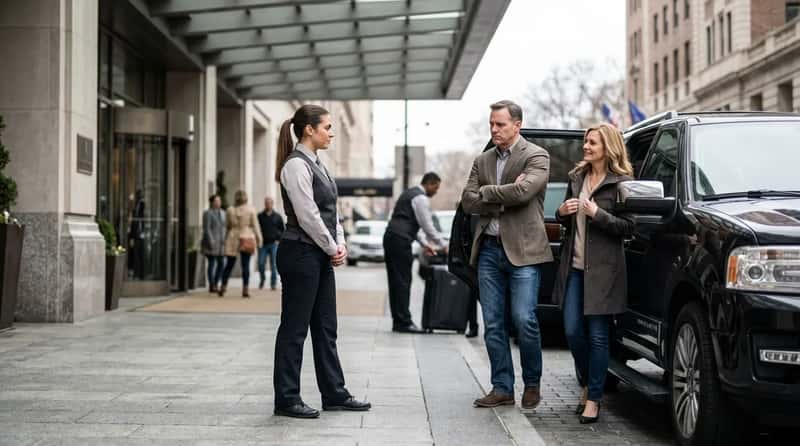
Valets are often the first people to greet arriving guests, which means they help set the tone for a stay. But the guest is setting a tone too, whether they realize it or not.
Relaxed shoulders, a steady pace, a brief smile – these signal comfort and confidence. A tight jaw, scanning eyes, crossed arms – that’s someone guarded, maybe arriving mid-conflict.
Body language at the curb is the one signal guests can control but almost never think about. The valet has already formed an impression before you’ve finished parking. The question is what impression you’ve given them.
That impression gets sharper when valets already know your face.
#5 – Whether You’re a Returning Guest
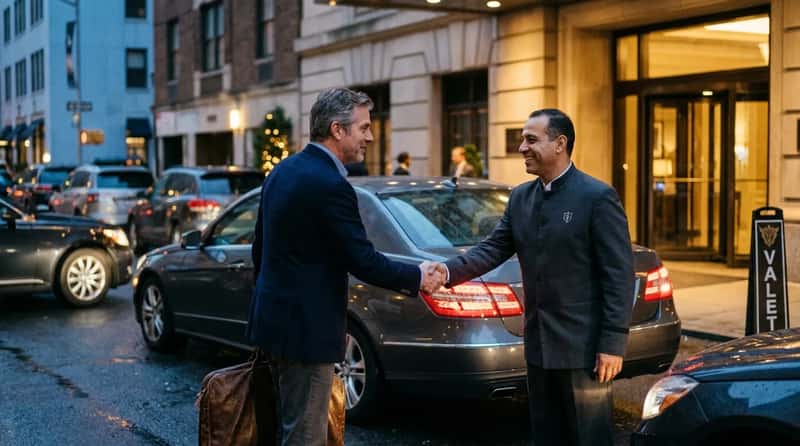
Once a valet knows your name, you stop being “the grey sedan in row three” and become a returning face they want to take care of. It’s a small psychological switch that changes how quickly and carefully your car gets handled for the rest of your stay.
Regulars get a genuinely different experience – not favoritism, just familiarity enabling efficiency. Top valets develop an almost sixth sense for where vehicles are parked and can retrieve a car faster than the guest could find it themselves.
The returning guest who uses the valet’s first name gets invisible VIP treatment without ever asking for it. That’s the open secret most hotel loyalty programmes will never tell you. Recognition is the real currency at the curb.
But what about the guest trying not to be recognised?
#4 – When a VIP Is Trying to Blend In
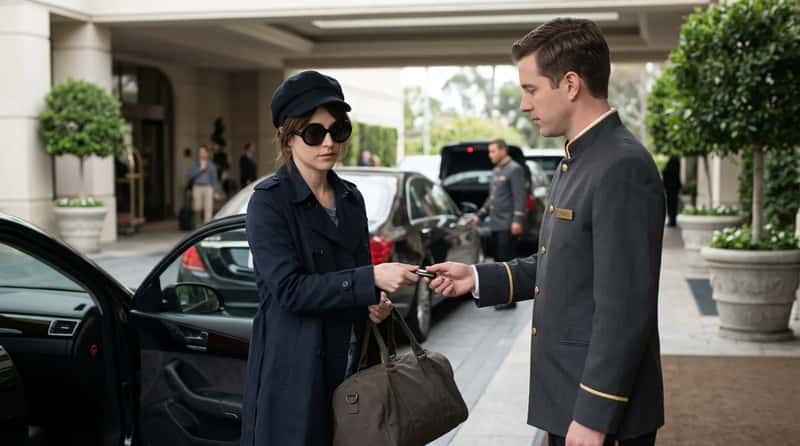
Ironically, valets say the guests trying hardest to appear low-key – oversized sunglasses, minimal luggage, quiet voices – are frequently the ones with the most recognisable names.
The effort to disappear is often the biggest tell of all. True low-profile guests don’t think about blending in, because they don’t feel the need to.
Valets are trained not to react – and that trained non-reaction is itself a skill. The professional move is to treat the guest exactly like anyone else, which is precisely what they need. The recognition happened at the kerb. It’s just never mentioned.
You’d think the car would be the biggest tell of status. It’s not always.
#3 – The Glance Back at the Car
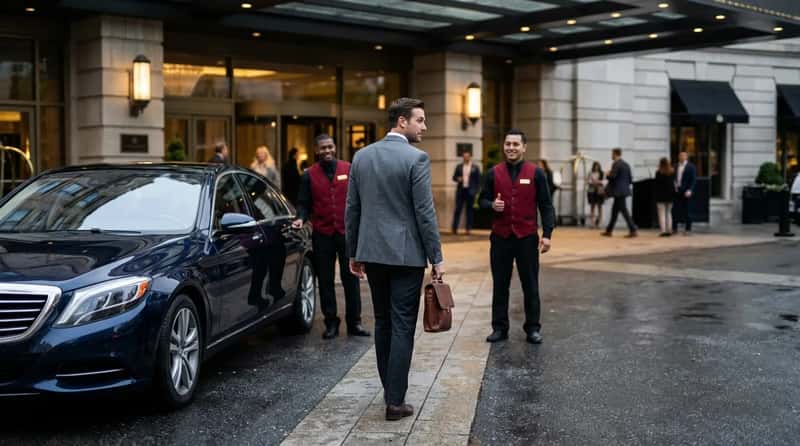
Some guests walk toward the entrance but keep looking back at their car – sometimes two or three times before disappearing inside. Valets say this habit is almost always tied to a genuinely valuable vehicle, or something precious left inside.
A quick wave or a simple “I’ve got it” often puts the guest at ease instantly. It’s a small gesture, but valets say it changes the entire tone of the interaction.
This is the detail that separates a good valet from a great one. Most attendants wait to be asked for reassurance. The exceptional ones give it before the guest even realizes they need it.
Only two things left that valets notice. Number two will make you rethink every arrival you’ve ever made.
#2 – How You Treat the Valet in Front of Other Guests

Some guests don’t tip valet attendants, especially when the service is complimentary, and good attendants are trained to provide the same service regardless. Differentiating quality based on expected tips is the fastest way to damage a hotel’s reputation.
What valets actually notice is how guests behave publicly. A guest who thanks a valet warmly in front of a group signals something specific about their character – and a guest who snaps or talks over an attendant while on the phone signals something else, with every other staff member watching.
The valet stand is arguably the most public interaction of any arrival. It happens outside, in front of other guests, with no filter. Valets say the guests who treat them well in public are almost universally the easiest guests to serve throughout an entire stay.
Why It Stands Out
- Guests who greet valets by name build instant rapport with the whole team, not just one attendant.
- A genuine “thank you” in front of friends or colleagues carries more weight than one said in private.
- Staying calm and polite during a mix-up is one of the fastest ways to earn extra attention going forward.
- Public rudeness travels fast among staff – word gets around before the guest even reaches the front desk.
And the final thing valets notice – the one they bring up most – isn’t the car, the tip, or the luggage.
#1 – The Last Look Before You Walk Inside
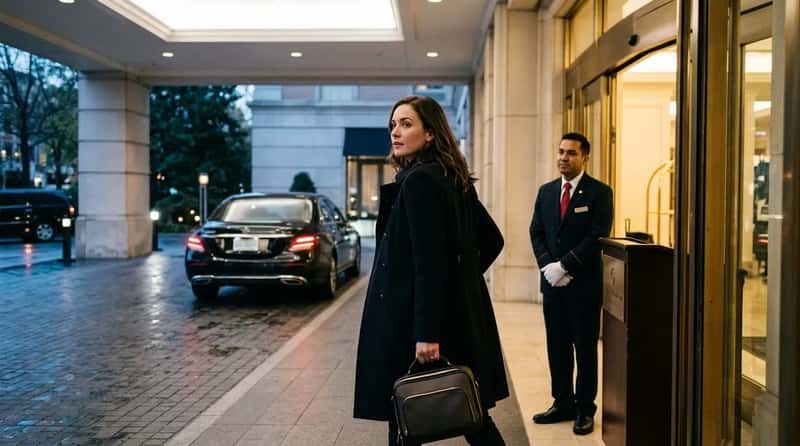
Right before stepping inside, many guests take one last glance back at the driveway – sometimes at the car, sometimes just at the world they’re leaving behind. Valets say this final look is almost universal, cutting across every type of guest.
It’s a small, unconscious habit that marks the shift from “travelling” to “arrived.” Several valets say noticing it has made them more aware of how much weight a short walk to the lobby doors can carry for someone who’s tired, excited, or nervous.
It’s the one moment that’s completely unguarded. Experienced valets call it the most honest thing they see all day – and quietly, the reason many of them love the job. In a role built on watching people, that one involuntary look backward is the only moment no one performs for an audience.
The Bottom Line
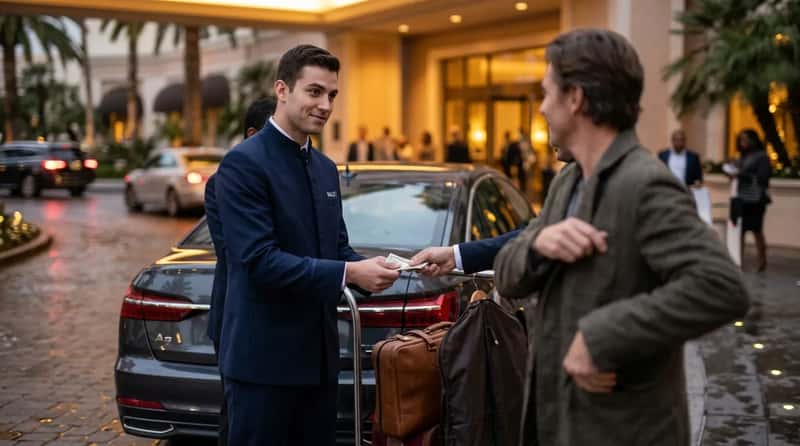
Valets are reading you from the second your car rolls in – your speed, your eyes, your luggage, your hesitation, your energy, and your car’s condition all feed into a silent assessment most guests never know is happening.
The ones who tip early, make eye contact, mention their car’s quirks, and treat valets like professionals consistently get faster retrieval, better parking spots, and a smoother stay overall. The ones who treat the stand like a transaction get exactly that – a transaction.
The curb is the first test of every visit, and most people walk through it completely unaware they were being evaluated. Which of these surprised you most? Drop it in the comments.
#17 – The One Move That Beats Every Tip on This List
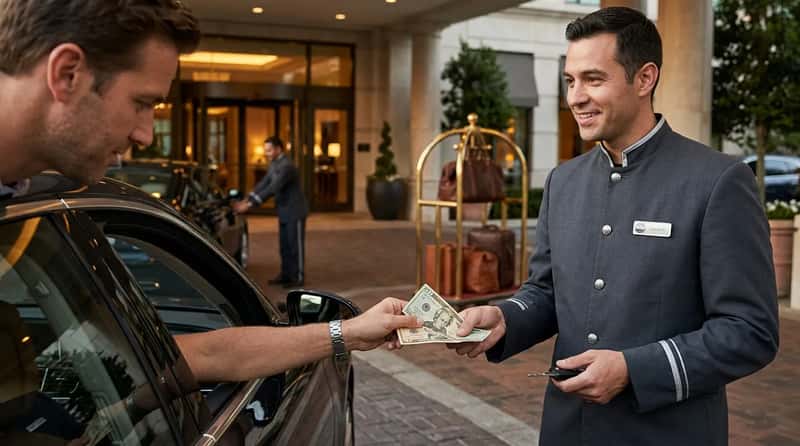
Here’s the move top valets say almost nobody uses, even though it works nearly every time.
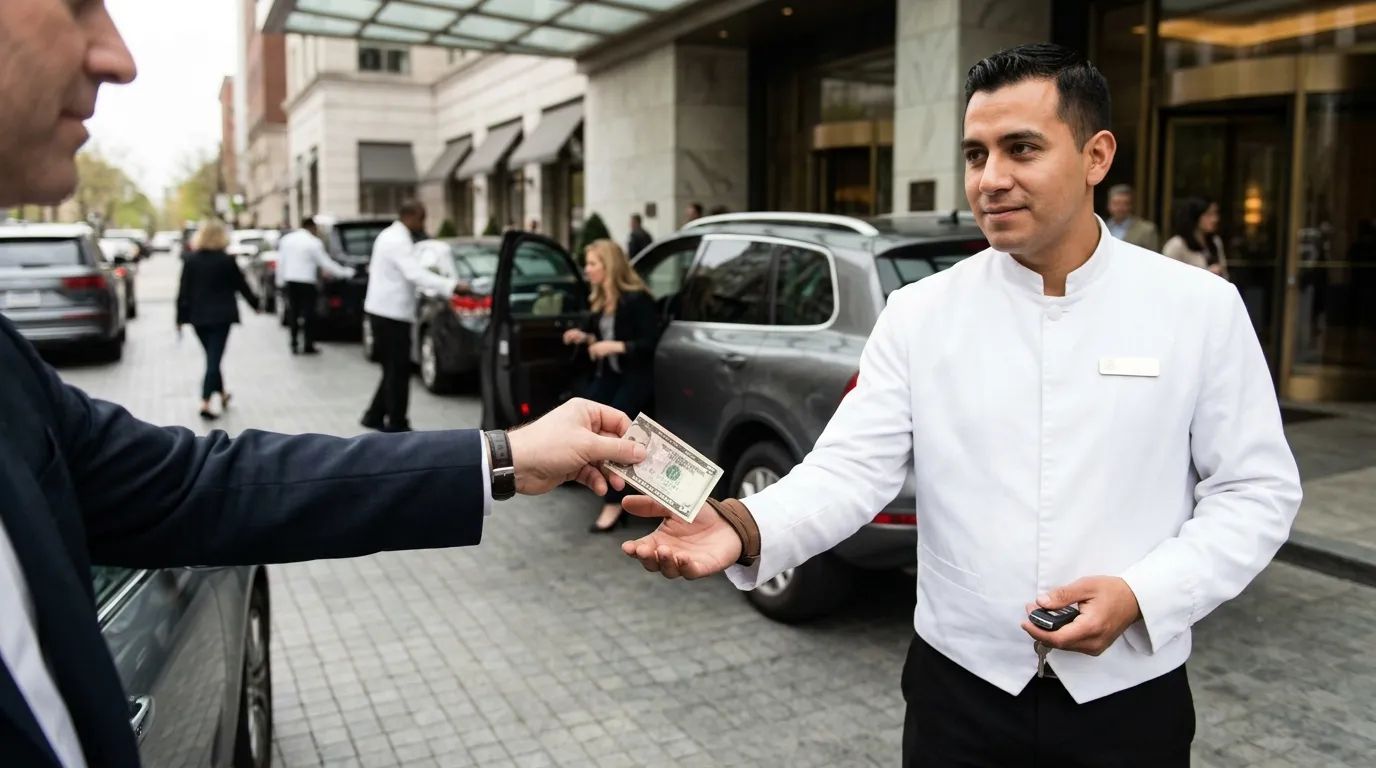
At drop-off, hand over a bill that’s double the usual baseline – $10 to $20 instead of $5 – paired with one specific, memorable detail instead of a generic “take care of it.”
- Give a concrete detail: “I’m heading out again in about 45 minutes” or “there are groceries in the trunk that need to stay cold.”
- Use the valet’s name if it’s visible on a badge – it turns you into a person they remember, not just a car number.
- Repeat the same specific request every time you return to that hotel; consistency is what builds true “regular” status.
A bigger tip plus one memorable detail does more for speed and parking placement than anything else on this list, because it gives a valet a reason to remember you before you’ve even reached the lobby doors.