Most people assume that once they click “Book,” the deal is done. But the travel industry has a quiet, little-discussed problem: a booking that nobody fully confirms exists in a dangerous gray zone.
Every year, thousands of travelers only discover this at the worst possible moment. Here’s what actually happens in that gap between “reserved” and “confirmed” – and why it costs people money, rooms, and seats.
#7 – Your Confirmation Number Doesn’t Mean You Have a Ticket
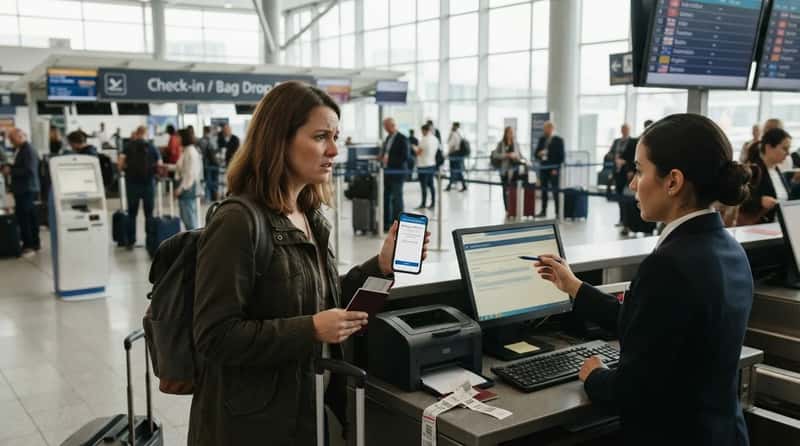
Travelers treat a confirmation number like a golden ticket. It isn’t.
A “confirmed” reservation just means a Passenger Name Record (PNR) exists. Holding a confirmation number doesn’t mean you’ve actually been ticketed.
Your 13-digit e-ticket number is what actually proves your payment cleared and your seat is real. Without it, you have a placeholder, not a promise.
Confirmation and ticket numbers are often issued together, but not always. Award holds are a classic example – you get a confirmation number the moment you activate the hold, but no ticket until you pay.
Travelers screenshot the confirmation page, close the browser, and move on – never noticing the second step never happened. The booking exists in the system; the seat does not yet exist for you.
Fast Facts
- A confirmation number is generated the instant a reservation record exists – before payment ever clears.
- A 13-digit e-ticket number is proof of purchase; a short confirmation code is not.
- Award holds can sit ticket-free while you decide whether to pay, sometimes for a full day or more.
But that’s nothing compared to what we found about #6…
#6 – A Payment “Authorization” Is Not a Captured Payment

Here’s one the travel industry quietly buries in the fine print.
If your entry shows as “authorized but not yet captured,” the funds were placed on hold – but the airline never actually collected them. The booking stays stuck in limbo.
A charge can sit pending on your account for up to five days. Your seat is technically held during that window, but if payment never clears, it simply evaporates.
Your bank account looks charged, but the airline may never have received a cent.
If the original authorization already expired, you may need to pay again from scratch. Resolving that payment mismatch in real time is often the one move that unsticks the ticket.
The cruel irony: travelers who paid in good faith can end up with no ticket and no clear refund, stuck bouncing between the bank and the airline. Most never know this is even possible – until it happens to them.
But that’s nothing compared to what we found about #5…
#5 – Airbnb and Activity Platforms Run on a Brutal 24-Hour Clock

Short-term rental and activity platforms operate on a completely different timer – and most guests never know it’s ticking.
Hosts have 24 hours to accept or decline a reservation request. If they don’t respond in time, no reservation is made and you’re free to book elsewhere.
That sounds fine until you’re locked into specific dates, your backup property just sold out, and prices are climbing by the hour. An expired request simply means the host took too long to answer.
Activity and tour bookings raise the stakes even higher. An “unconfirmed booking” happens when you’ve paid, but the reservation never actually lands in the operator’s system – meaning you’re holding a receipt, not a ticket.
At a Glance
- Hosts get a full 24 hours to accept or decline before a request quietly expires.
- An expired request cancels itself – no fee charged, but also no room secured.
- Paid activity bookings can still fail to reach the operator’s calendar, even after your checkout completes.
Acting fast is supposed to reduce this risk, but that responsibility sits with the operator, not you. If they ignore the queue, you’re the one standing at the gate with proof of payment and no way in.
But that’s nothing compared to what we found about #4…
#4 – An Expired Credit Card Can Silently Kill a Booking Made Months Ago

You booked months in advance. The card was valid then. What could possibly go wrong?
Platforms only check that your card is valid at the exact moment you book. They don’t check whether it will still be valid on your check-in date.
Your card is really just a guarantee for the hotel against a no-show. The moment it expires, that guarantee quietly disappears.
Quick Compare
- At booking: your card only needs to pass a single, one-time validity check.
- At check-in: the card must still be active and able to clear a fresh pre-authorization.
- In between: nothing re-verifies your card unless staff flag it manually.
When a hotel tries to pre-authorize an expired card, the charge declines and the system flags it as invalid. You then get an email demanding updated payment details – with a strict 24-hour window to respond.
Miss that window and your reservation can be cancelled outright, with no further warning. Most travelers never even see the email in time.
But that’s nothing compared to what we found about #3…
#3 – Hotels Deliberately Sell More Rooms Than They Actually Have

This one isn’t a glitch. It’s a strategy.
Just like airlines, hotels overbook on purpose to offset no-shows and last-minute cancellations. Most nights the math works out fine – but sometimes it doesn’t, and there simply aren’t enough rooms left.
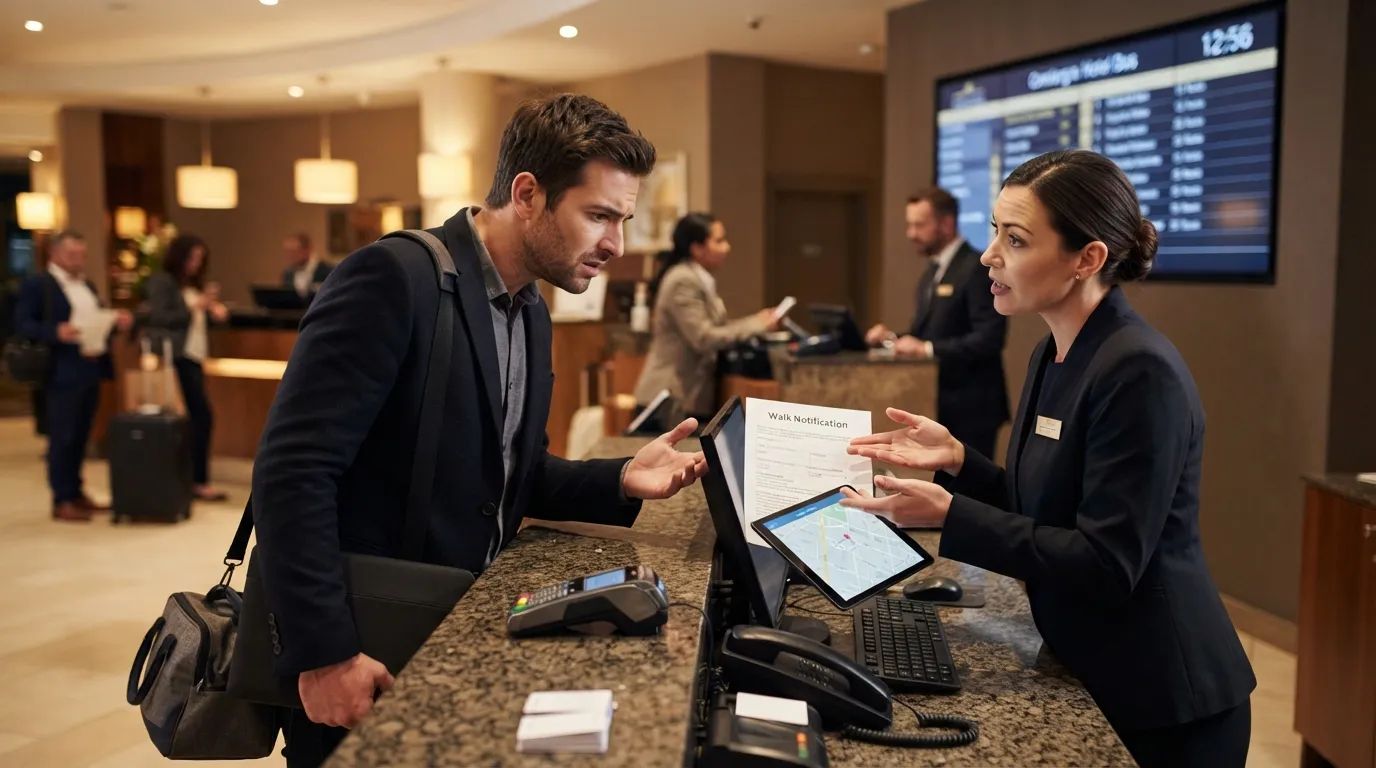
Hotels routinely overbook by 5 to 15 percent, and someone always gets “walked” – industry slang for being turned away and shipped to another property.
Men are more likely to be relocated than women, as are solo travelers compared to couples or families.
Reneta McCarthy, Cornell University hospitality expert
Guests with only a single night booked are more vulnerable, and so are anyone checking in late in the day.
Checking in before 6 p.m. on a sold-out night is one of the few things you can actually control. The system quietly profiles you the second you walk in – and the late solo traveler almost always loses.
But that’s nothing compared to what we found about #2…
#2 – Your Confirmation Email Is a Contract Full of Loopholes

You have a confirmed booking. The hotel cancels it anyway. Surely the law protects you here?
Not necessarily. A confirmed reservation can still fall apart – a delayed hotel opening, routine overbooking, or a big group buying out the whole property.
Here’s the gap that stings most: an airline that bumps you involuntarily owes you up to $2,150 in cash, by federal law. A hotel that walks you owes you nothing beyond a refund.
Hotel compensation is entirely voluntary, shaped by brand reputation and internal policy – not regulation. Only a handful of states, notably Florida and New Jersey, legally require hotels to offer alternative accommodations or pay fines.
Worth Knowing
- Airlines must pay up to $2,150 for an involuntary bump – hotels owe nothing beyond a refund in most states.
- Florida and New Jersey are among the only states requiring hotels to rebook or compensate walked guests.
- Everywhere else, what you receive depends entirely on brand policy, not law.
If you’re not in one of those states and don’t know the brand’s internal policy, you have almost no leverage. Most travelers never ask – so they never receive anything.
But that’s nothing compared to what we found about #1…
#1 – He Arrived at the Airport With a Confirmation Number and No Seat
This is the scenario that should make every traveler obsessively double-check their bookings.
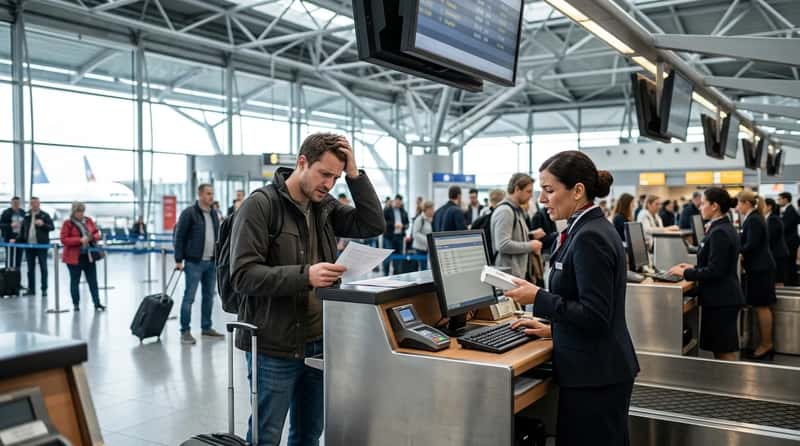
A real traveler had a confirmed reservation online. But at the airport, the airline told him he had no seat – and forced him to buy a new, far more expensive ticket.
The reason? His credit card had supposedly been rejected. Nobody had told him. The airline simply let the clock run out in silence.
He ended up paying $711 – the highest walk-up fare available – for a seat he thought he already owned.
The brutal truth: a confirmation number is sometimes just a placeholder generated by a system that never finished the transaction. In cases where the original booking was voided by a system error, agents can sometimes rebook you at the same fare – especially if the failure was the airline’s fault, not yours.
The catch? You have to know to ask. Most travelers assume everything is fine, right up until they find out it isn’t.
The Bottom Line

A booking that nobody confirms doesn’t just sit there quietly – it unravels the moment you’re not looking. Your confirmation number can be a dead placeholder, and your card authorization can expire in silence.
Your hotel can legally sell your room to someone else, and without a 13-digit e-ticket or a direct operator confirmation, you may have nothing enforceable at all. The travel industry built these systems for revenue efficiency, not traveler protection.
The single most powerful habit you can build: verify every booking independently, 24 hours before you travel. Did any of this happen to you, or have you spotted another booking trap we missed? Drop it in the comments.
Bonus: The Insider Verification Trick Nobody Tells You

Here’s the move that catches a dead booking before you ever reach the counter – and it takes less than five minutes.
Skip the generic “is my trip confirmed” question. That always gets a yes, because agents are just reading the same reservation record you already have.
- For flights: Call the airline directly and ask the agent to read back your 13-digit e-ticket number, not just your confirmation code. If they can’t produce one, you were never actually ticketed.
- For hotels: Call the property’s front desk directly (not the central reservations line) and ask them to confirm your reservation is showing in their in-house system for your exact check-in date.
- For tours and activities: Email or call the operator directly and ask them to confirm your name and time slot are on their internal schedule, separate from your booking platform receipt.
- Timing: Do this exactly 24 hours before departure or check-in – early enough to fix a problem, late enough that it reflects your final, real status.
If any of these checks come back empty, you still have time to rebook, escalate, or demand a fix – instead of finding out at the counter with no leverage left.