Ask anyone who has lived in Canggu or Ubud for more than a few years, and they will tell you the island feels different than it did five years ago. Cafes that once served ten customers a day now run reservation lists. Rice paddies that used to stretch to the horizon are dotted with coworking signs and infinity pools. None of this happened by accident, and most of it traces back to the wave of remote workers who arrived chasing sunsets and cheap living.
Talk to Balinese business owners, farmers, or immigration officers, though, and a quieter frustration surfaces. It’s not that locals resent digital nomads showing up. It’s that too many arrive without understanding the place they’re settling into, and that gap between intention and impact is exactly what longtime residents keep trying to explain.
The visa situation is stricter than the Instagram posts suggest

Plenty of newcomers still believe Bali has an easy, informal “digital nomad visa” that lets anyone show up and work from a beach café indefinitely. In reality, the digital nomad visa Bali refers to Indonesia’s E33G Remote Worker Visa, designed for foreign remote workers who want to live in Bali or elsewhere in Indonesia while working for a company outside Indonesia, and it is not a tourist visa. It requires proof of foreign employment and a KITAS stay permit, not just a laptop and good intentions.
What locals wish people understood is how seriously this is now enforced. Indonesia has intensified supervision of digital nomads, lifestyle influencers and travel content creators on the resort island of Bali, warning that even unpaid barter deals with local businesses would be classified as illegal work if done on tourist visas. Immigration officials have made clear that intent matters more than payment. The Indonesian Directorate General of Immigration has cautioned foreigners that accepting free goods or services in exchange for promotional social media posts is considered illegal work if done on a standard tourist visa.
Tax residency creeps up faster than most people expect

One of the most common mistakes newcomers make is assuming that as long as their income comes from abroad, Indonesian tax rules simply don’t apply to them. It’s more nuanced than that. If you spend more than 183 days in Indonesia within any rolling 12-month period, Indonesia considers you a tax resident, and tax residents are liable for worldwide income at progressive rates up to 35%.
The tricky part is the counting method. This is calculated on a rolling basis, not by calendar year, and every day physically present counts. Locals who work in tax advisory or immigration consulting say this catches people off guard constantly, especially those who assume a single visa run resets the clock. E33G holders do get a four-year exemption, meaning they are generally exempt from Indonesian tax on foreign-sourced income for the first four years of tax residency, but that grace period has limits and conditions worth understanding before, not after, the fact.
Rents have climbed out of reach for the people who grew up there
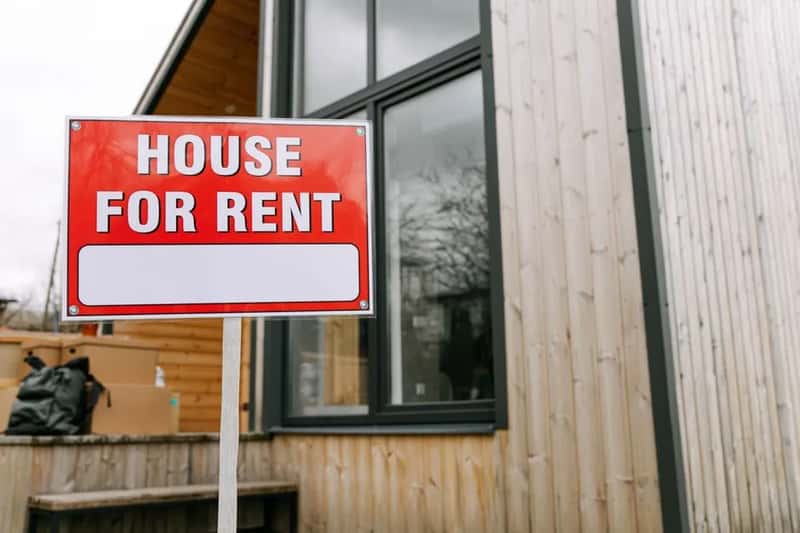
This is probably the sorest point among long-term residents. In the hubs where nomads cluster, landlords have been hiking prices by over 15% in just a year, and the pattern isn’t slowing. Beachfront villas and jungle bungalows are being snapped up at premium prices, often before locals even get a chance.
The wage gap makes this sting more. With the average monthly wage in Bali barely scraping IDR 2.4 million, roughly $150, many locals are now forced into long commutes or even relocating to neighboring cities just to make ends meet. A hotel worker in Denpasar summed up the frustration simply: “We can no longer afford to live in Denpasar. How can we compete with foreigners who pay with dollars?” That’s not resentment toward any one person. It’s a structural squeeze that locals watch happen in real time, rental listing by rental listing.
Water is not the infinite resource it appears to be
Nothing captures the disconnect better than water. Villas advertise private pools and long showers as part of the tropical fantasy, but behind that convenience sits a genuine crisis. Bali recorded more than 16 million tourists in 2024, four times its permanent population, and tourism now consumes over 65% of Bali’s fresh water.
Farmers feel this directly. One rice grower described watching his neighbor’s field run dry while companies diverted supply toward tourism zones, saying plainly, “Companies take our water and bring it to the tourism places.” In southern Bali, groundwater extraction has pushed aquifers beyond sustainable levels in many areas, and coastal wells are turning brackish as seawater moves inland to fill the void. A long soak in a villa pool doesn’t feel like part of that story, but hydrologists say it very much is.
Rice fields are disappearing faster than most visitors realize
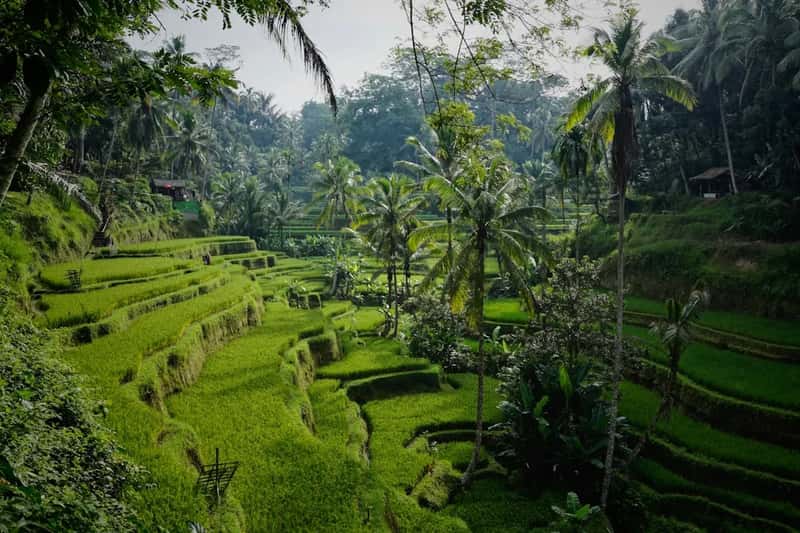
The postcard image of Bali, endless green terraces cut by irrigation channels, is quietly shrinking. Development pressure is a big driver. Between 2018 and 2023, nearly 5,838 hectares of rice fields were lost to urban development in the regencies of Tabanan, Gianyar, Badung, and Denpasar City, roughly equivalent to 58 square kilometers, or about 10% of Bali’s total rice field area based on 2018 estimates.
Canggu shows the pattern most starkly. In Canggu, farmland has declined by 60% while land underdevelopment has increased by 69%. This isn’t just an aesthetic loss. The subak irrigation system that has managed Balinese water for centuries depends on connected, functioning paddies, and every villa or coworking space built on former farmland weakens that network for everyone still farming nearby.
Temples are places of worship, not photo backdrops
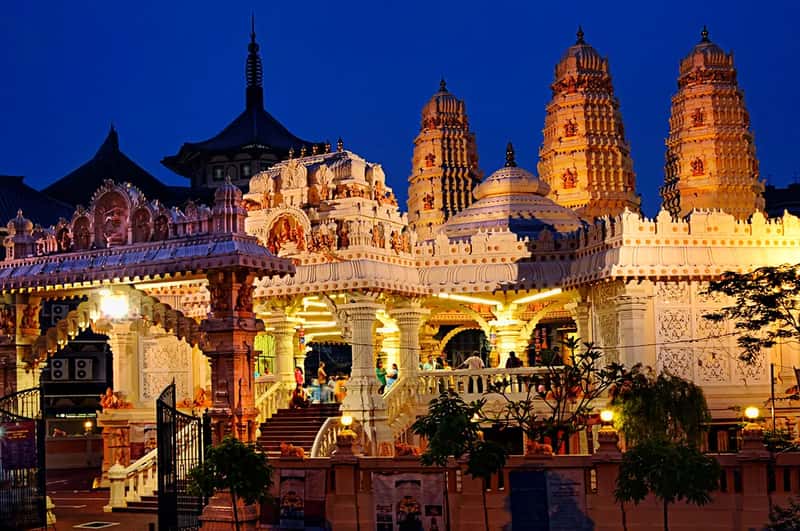
Locals are generally patient with visitors who make small, honest mistakes at temples. What wears thin is the pattern of people treating sacred sites as scenery. Basic etiquette isn’t complicated: modest dress generally means ensuring shoulders and knees are covered, for both genders involving t-shirts or shirts with sleeves and trousers, long skirts, or shorts that reach below the knee.
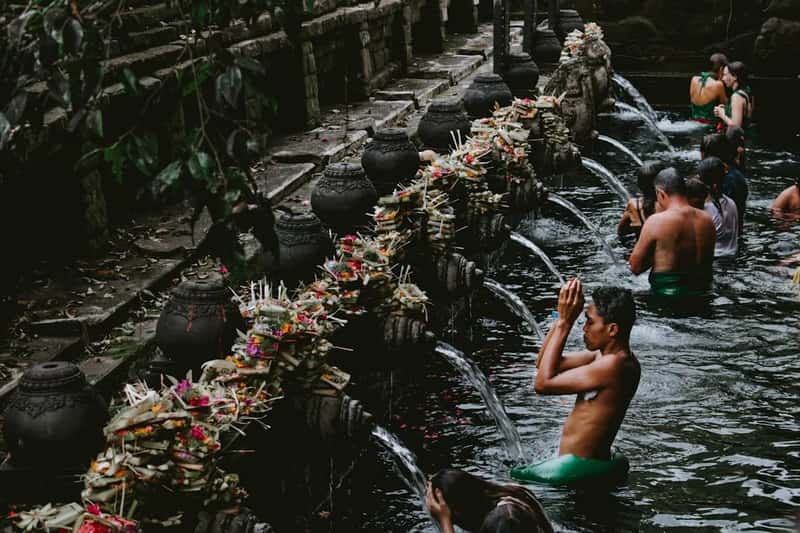
Beyond dress, the deeper issue is behavior during active worship. Examples of disrespect include not sitting or climbing on spiritual monuments like walls or statues, not getting in the way of religious processions, being courteous when taking photos, and public displays of affection while in the temple, which is frowned upon. Balinese Hindus aren’t asking visitors to skip temples entirely. They’re asking that people remember someone is actually praying a few feet away.
Village life still runs on customary obligations, not convenience
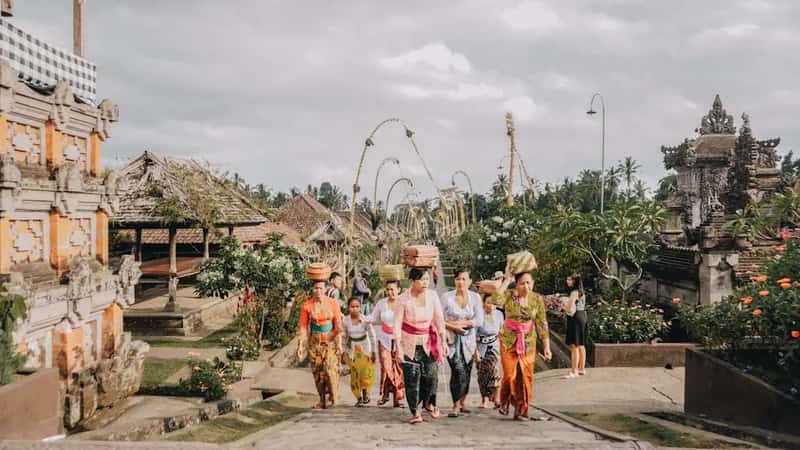
Many nomads settle into a rental without realizing that the neighborhood around them operates on a system that predates any tourism boom. Balinese communities are organized through the banjar, a customary village association that handles everything from ceremonies to local disputes, and through the subak for water sharing. What dismantled some of these protections was replacing community consultation with a national online permitting system that lets investors apply remotely, meaning developers can now build without the neighborly consultation that once governed land use.
That shift has real consequences for how locals view foreign residents. A water priest in the hills above Munduk, who tends a sacred waterfall as part of his customary duties, has fielded offers from developers wanting to buy land that has belonged to his family for generations. It’s a reminder that behind every “for rent” listing in a nomad-friendly area, there is usually a family or a customary council with a stake in that land that goes back much further than any recent rental boom.
Traffic and infrastructure were never built for this many transient residents
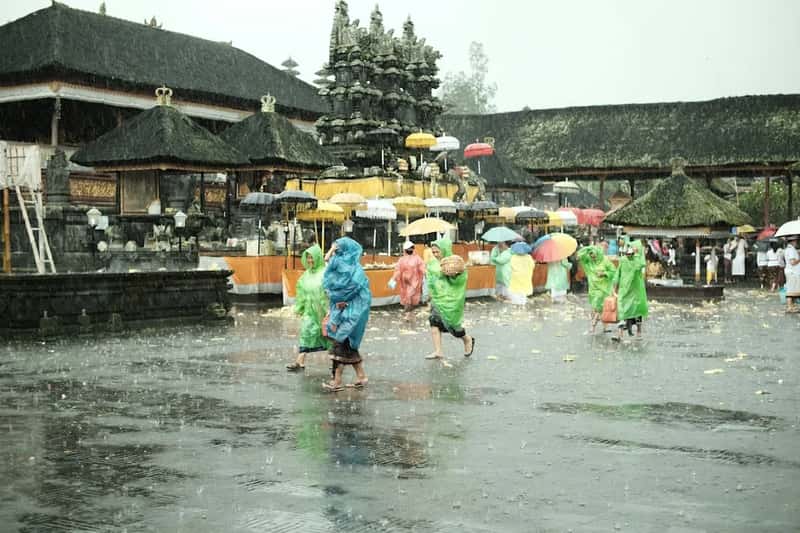
Complaints about Canggu’s gridlock have become a running joke among nomads themselves, but locals experience the same roads as a daily grind rather than a mild inconvenience. Bali’s road network, drainage systems, and waste management were designed decades ago for a much smaller, more static population. Massive development to support tourism in Bali has reduced the island’s water catchment areas, making Bali more vulnerable to disasters.
The September 2025 floods made this visible in a way that was hard to ignore. Experts blamed overtourism and land conversion for worsening the disasters, noting that the loss of rice fields and traditional subak irrigation systems reduced Bali’s natural flood resilience. For locals, the flooding wasn’t an abstract climate story. It was their street, their motorbike, their shop floor underwater, tied directly to development patterns tourism and remote work have accelerated.
Working with local clients or businesses without the right paperwork causes real harm
A surprising number of nomads assume that as long as they’re not taking a “real job” from a Balinese person, freelancing quietly for local clients or running small side businesses is harmless. Officials disagree, and for reasons that go beyond bureaucracy. Representatives from ASITA, the Indonesian Tours and Travel Agencies Board, have observed a rise in foreigners using tourist rental accommodation as an office base, with some specifically running tours and travel services around Bali.
The concern isn’t paperwork for its own sake. This is described as a targeted endeavor to implement existing laws that help prevent fake travel agencies, protect Balinese and Indonesian livelihoods, and ensure that tour operators are working within the law. When an unlicensed foreign-run tour operation undercuts a registered local agency, or a nomad quietly takes on Indonesian clients without the right permit, the effect lands directly on Balinese business owners trying to compete on an already uneven playing field.
The takeaway
None of this means digital nomads aren’t welcome in Bali. Most Balinese people remain genuinely warm toward foreigners who show up with curiosity and a willingness to learn. What locals keep repeating, in different words, is that Bali isn’t a backdrop for someone else’s lifestyle experiment. It’s a place with its own water limits, its own land pressures, its own legal systems, and its own communities trying to hold onto a way of life that took centuries to build.
Understanding the visa rules, respecting the tax timelines, and paying attention to where your rent money and your water actually come from won’t fix every tension on the island. It will, at least, close the gap between the Bali people imagine before they land and the Bali that locals are quietly asking them to see.