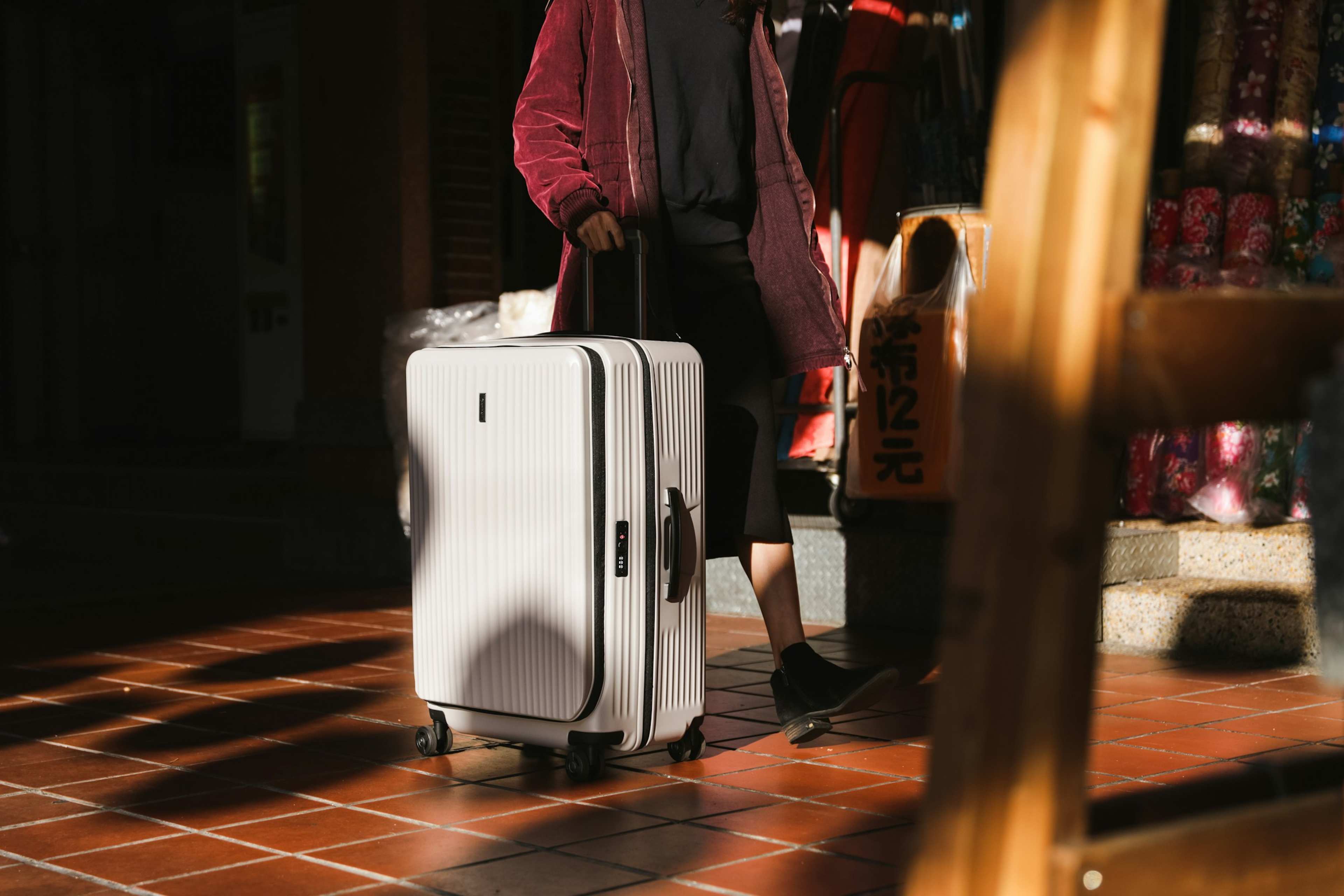
The suitcase is still by the door.
You haven’t unpacked it.
You know why.
Because the moment you put those clothes back in the drawer, something ends. Not the trip. Something bigger. Something you can’t quite name standing in your kitchen at 7 AM, staring at the coffee machine like it’s evidence of a crime.
Here is the identity gap nobody talks about: the version of you who existed last Tuesday in a narrow cobblestone street, eating something you couldn’t pronounce, laughing with strangers – that person felt real. This version, the one standing in the fluorescent light of your own life, checking a work inbox that never actually emptied – this one feels like a costume.
1. The Signal You Keep Misreading

Post-vacation depression is the term for the negative emotions people experience when returning from vacation – sadness, anxiety, nostalgia. That’s the clinical framing. Clean. Contained. Manageable.
But that framing is also a lie of omission.
Because it treats the symptom. It ignores the source.
When you drag yourself back into a life that no longer fits, your psyche doesn’t file a complaint quietly. It screams in the only language it knows: dread, flatness, the specific grey of a Sunday evening that somehow lasts all week.
The distance from our homes and routines causes us to reevaluate our everyday lives. On vacation, we have time and space to be reflective and more indulgent of our personal needs.
That reflection isn’t a side effect. It’s the whole point.
In 2026, we are finally starting to understand that. The depression isn’t the problem. The depression is the dispatch. It’s a flare sent up from the part of you that knows the truth and is tired of pretending otherwise.
2. The Dopamine Isn’t the Point
Most articles about post-vacation blues reach for neuroscience first. It’s comforting. It’s tidy. It reduces a crisis of identity into a question of brain chemistry.
Post-vacation depression could be caused by changes in dopamine levels. Dopamine is a natural chemical that allows you to feel happy and motivated. Your brain releases dopamine when you look forward to something or while doing something enjoyable. Afterward, dopamine levels drop. Post-vacation blues could be your brain adjusting back to its normal dopamine levels.
Sure. And hunger is just a drop in blood sugar.
Technically accurate. Emotionally insufficient.
Because the dopamine explanation doesn’t account for the specific, surgical grief of walking back into a job you’ve outgrown. It doesn’t explain why your apartment feels smaller every time you return. It says nothing about the eerie sensation that your own life is a rental you’ve been subletting to someone else while you were away.
The chemistry is real. But the chemistry is downstream of something harder: the growing, undeniable awareness that who you are on the road and who you are at home are two different people – and you are starting to prefer one over the other.
3. The Reverse Culture Shock Nobody Admits To
There’s a technical term for this particular vertigo.
Reverse culture shock occurs when a person becomes accustomed to a culture or way of life in another place, but then experiences culture shock upon returning home and re-entering their former society. The contrast between the vacation and their home life may be hard to adjust to.
But reverse culture shock isn’t just about customs or clocks.
It’s about values.
Once you’re thrown back into your “normal” life back home is when the reverse culture shock hits. You find that your old priorities, values, and worldview don’t always line up with your new views. These changes are part of the human experience – but that doesn’t mean it’s easy.
You went somewhere. You were changed by it. You came back to a world that did not change with you.
The furniture is the same. The commute is the same. The small talk at the coffee machine is the same. And you stand inside all of it like a stranger who knows where the bathroom is.
That disorientation is not dysfunction. It is data.
4. The Temporary Identity Feels More True
Here is the thing about who you become on vacation.
You make decisions faster. You talk to people you would never approach at home. You eat alone without feeling lonely. You get lost and find it interesting instead of catastrophic.
Avid travelers love the feeling of being in an unfamiliar country, stepping out of their comfort zone and experiencing ultimate freedom. This new and exciting environment is constantly creating new connections within the brain, forcing you to come up with solutions for problems you face on your travels.
That person – decisive, curious, unburdened – is not a vacation character you put on like a linen shirt.
That is you. Uncompressed.
Travel often plays a role in identity formation. Someone who has spent weeks hiking in Patagonia may begin to see themselves as an adventurous, nature-oriented person. The tragedy is not that the identity is temporary. The tragedy is that it feels more honest than the permanent one.
When you come home and the temporary identity evaporates, what you grieve isn’t the place. You grieve the access to yourself.
5. The Gap Year I Didn’t Take
I want to tell you about a Tuesday in October, two years ago.
I came back from three weeks traveling through the south of Portugal. Villages that smelled like bread and salt. Evenings slow enough to actually exist in. I returned to my apartment, a city I’d chosen for practical reasons, a job I was competent at but no longer curious about, and a social calendar that felt like a series of obligations dressed up as choices.
I sat on the floor next to my suitcase – not on the couch, on the floor – and I didn’t move for about forty minutes.
That was not jet lag. That was reckoning.
After some people return home, they realize how boring and unsatisfactory their normal lifestyle is when compared to the activities they did while on their vacation. Boring. That word lands hard. Because boring isn’t really about activity level. It’s about alignment. The life I’d returned to no longer aligned with the person the trip had quietly confirmed I was. The depression that followed wasn’t a crash. It was a compass.
6. The 2026 Shift: From Escape to Diagnosis
The 2026 traveler is highly motivated by identity, values, and personal meaning. This is not a trend report talking point. This is a civilizational correction.
For decades, we treated vacation as a pressure valve. Work until you break. Travel until you recover. Repeat.
Travel begins with a why – rest, renewal, reflection, reconnection, or contribution – and the destination becomes the setting that supports that intention. This is a response to exhaustion. Burnout, digital saturation, and social fragmentation have altered how people value time away.
In 2026, something has shifted. People are no longer asking: where should I go to escape? They are asking: what is the life I’m escaping from, and why do I keep building it?
A majority of 57% identify the opportunity to rest and recharge as the single most meaningful benefit they gain from their time away, highlighting travel’s essential role in combating burnout and renewing a sense of self.
Renewing a sense of self. Not recovering from a hard quarter. Renewing the self.
That is a different category of need entirely.
7. The Home That Stopped Fitting
Exploring the world and immersing in local culture has the power to teach and transform. Upon returning home, the transformation process is halted. Home has seemingly frozen in time, completely unchanged from when you left.
Read that slowly.
You change. The home doesn’t.
This is the quiet disaster of post-vacation depression that no wellness article wants to touch: sometimes the reason returning home hurts is because home, in its current form, is wrong for you.
Not permanently. Not dramatically. But meaningfully.
Sometimes, all it takes is some time away to help you recognize unresolved conflicts at work or home. If coming back from vacation to regular life feels especially tough because of a bad relationship with a colleague, maybe it’s time to discuss this with your boss. Or, if you simply can’t bear the thought of returning to an apartment you hate, it may be time to consider a new living situation.
The trip didn’t break your life. It just turned the lights on.
And now you can see the walls.
8. The Identity You’ve Been Borrowing
We talk about burnout, workload, engagement. But we rarely talk about identity dilution. The slow erosion of clarity.
Identity dilution. Sit with that phrase.
Because most of the lives we are living in 2026 were assembled from other people’s expectations. The career that made sense at twenty-four. The city that was chosen for a relationship that has since ended. The version of “responsible adult” modeled by a generation who measured life in different currencies.
The traveler’s reference points – routines, conversations, and even tastes – can shift during travel. Upon returning home, these shifts can make familiar environments feel strangely foreign or uninspiring. This dissonance may manifest as irritability toward mundane tasks or difficulty re-connecting with people who did not share the travel experience.
You come home to a borrowed identity wearing a face that used to be yours. Post-vacation depression is the moment you notice the seams.
9. The Exit Strategy That Wasn’t
There is a particular kind of traveler in 2026 who doesn’t book trips for the destination.
They book them for the exit.
Post-vacation depression can be understood as an emotional state after vacations and holiday breaks in which a person struggles to get back to their everyday life. But what if the struggle is not a malfunction? What if it is the psyche doing its job – refusing to quietly accept re-entry into something that has long since expired?
Vacation sometimes allows for indulgence and escape from daily responsibilities. The word “escape” does a lot of unexamined work in that sentence. We frame escape as indulgence. As irresponsibility. As a temporary cheat code before reality reasserts itself.
But what if the life you are escaping from is the real problem?
The exit strategy that wasn’t is this: we keep leaving, briefly, hoping the distance will make home look better. Sometimes it does. When it doesn’t – when every return feels heavier than the last – that pattern is the answer. Stop managing the symptom. Start reading the map.
10. The Weight of the Return
For many travelers, returning home is the hardest part of their trip. Reverse culture shock can be incredibly difficult and it’s natural to experience these feelings. We spend so much time preparing for our overseas travels, but there is one area no one seems to talk about – the reverse culture shock and post-travel depression that nearly every traveler feels once they return home.
No one prepares you for the weight of the return.
Not the bags. Not the laundry. The weight of sliding back into a life that, somewhere between the flight out and the flight home, you quietly decided you needed to change.
Data from late 2025 demonstrates a continued rise in burnout rates since the sharp increase observed in 2020. The subtle early warning signs – difficulty concentrating, increased irritability, sleep disturbances – often go unheeded, allowing the condition to escalate into debilitating anxiety, depression, and even physical ailments.
Post-vacation depression lives inside that gap between the warning sign and the action. Most people treat it like weather. Wait it out. It passes. And then they book the next trip, not because they want to go somewhere, but because they need another window of time in which to feel like themselves.
2026 marks a profound reawakening in how we explore the world – and ourselves. Travel has transcended entertainment to become a form of modern spirituality, helping people reset, reconnect, and renew. In this era, the passport is not just a ticket to somewhere new – it’s a tool for becoming someone better.
The heaviest return is the one that finally stays heavy. The one you stop explaining away with time zones and inbox anxiety. The one you let land, fully, without immediately reaching for the next booking page as an anesthetic.
That weight is asking something of you. It is not asking you to plan a better vacation. It is not asking you to build a better morning routine or meditate more consistently. It is asking you the one question that travel has always been quietly asking on behalf of your most honest self.
It is asking: Is this the life?
Not is this a bad life. Not are you ungrateful. Just: is this the life? The specific, irreplaceable one you would choose, knowing what you now know, having been who you are when no one is watching?
The suitcase is still by the door.
Maybe leave it there a little longer. Not out of avoidance. Out of respect for the question it is holding.