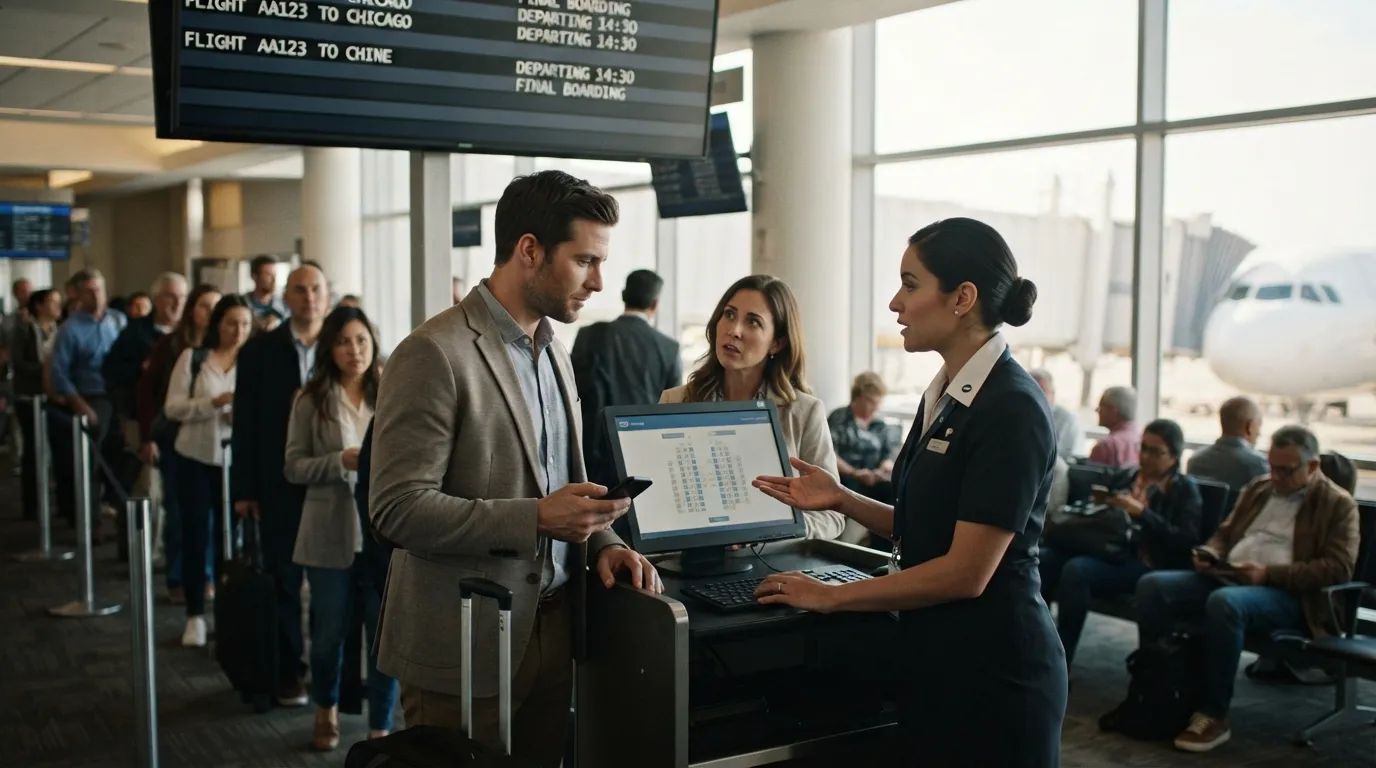
Most travelers assume an empty seat is a wasted seat – a sale the airline just couldn’t close. That assumption is almost entirely wrong.
Airlines run one of the most secretive inventory systems in modern business, and the reasons certain seats stay locked until the final hour go far beyond bad luck. Physics, crew law, loyalty scoring, and cold financial math are all quietly at work – and once you see how, you’ll never trust a “sold out” flight the same way again.
#7 – The Revenue Management Machine You’ve Never Heard Of
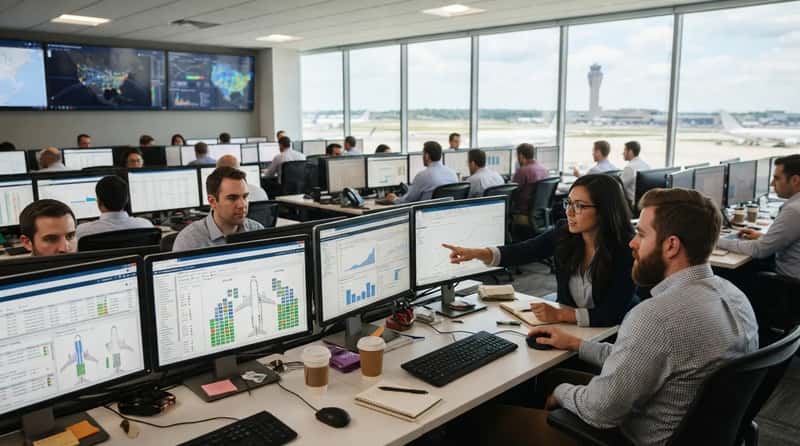
Airlines don’t just sell tickets. They run one of the most complex pricing systems ever built, adjusting inventory and price in real time on every route.
Revenue management software constantly compares actual bookings to forecasted demand. It’s trying to fly each plane as full as possible without letting a cheap early booking crowd out a full-fare passenger who books later.
Here’s what most people miss: an airline can’t just discount an unsold seat without risking a fare war or undercutting its own pricing structure. That would mean slashing prices for business travelers too – a financial disaster no airline wants.
Deep last-minute discounts, if they happened often, would train every flyer to simply wait. That would quietly destroy the higher-fare sales made weeks earlier, so the empty seat stays empty on purpose.
But pricing strategy is only the first layer. The next reason seats stay blocked has nothing to do with money – and everything to do with physics.
#6 – The Physics Problem No One Tells You About
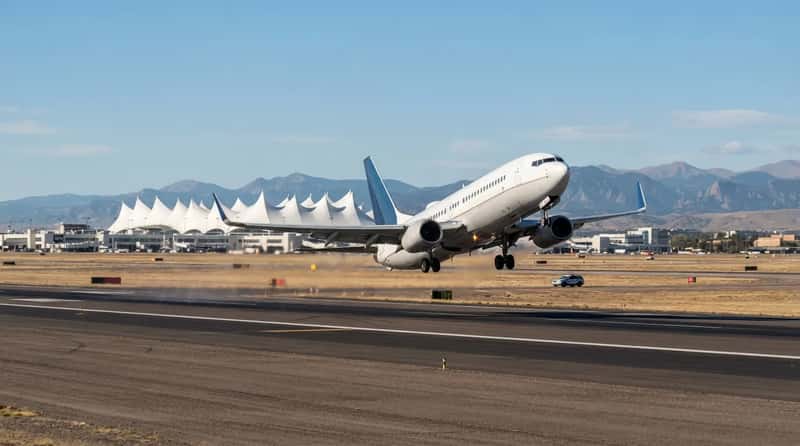
You’d think an empty seat can always be filled. Not always – sometimes the plane itself won’t allow it.
On certain routes, airlines cap ticket sales to meet engine-out takeoff requirements or to carry enough fuel, even if the cabin has open seats. Heat and high elevation both quietly steal performance from an aircraft.
The shocking part: on some flights, the fuel needed is so heavy it would push a fully loaded plane over its maximum takeoff weight. That blocked seat isn’t there to annoy you – it’s there so the plane can actually leave the ground.
Fast Facts
- Hot, high-elevation airports like Denver, Phoenix, and Aspen trigger the most frequent weight restrictions.
- Every flight’s maximum payload is recalculated using real-time temperature, altitude, and runway length.
- Engine-out climb performance is often the single biggest limit on how much weight a jet can carry off a short runway.
- A sudden heat wave can quietly turn a normal boarding into a weight-restricted one within hours.
Route planners study weather patterns and average passenger loads months before a flight ever takes off. It’s a calculation made far in advance, and you’ll never see it mentioned at checkout.
So once the plane is airborne, who really controls that empty row? The answer involves people you’ve probably never thought about.
#5 – The Crew That’s Secretly Sleeping in Your Row
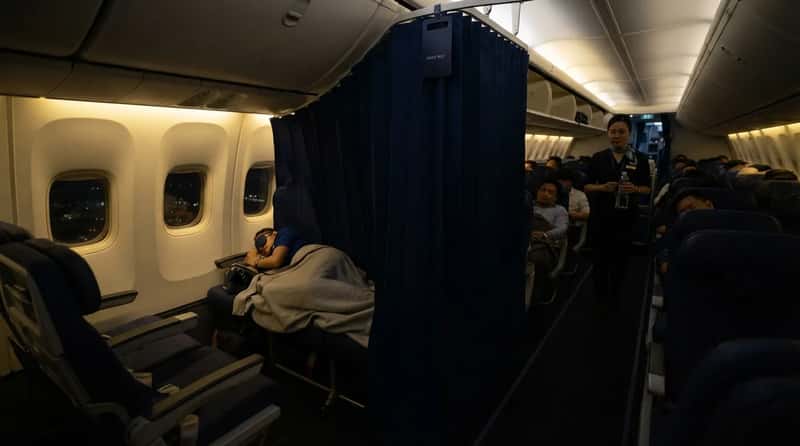
That cluster of blocked seats near the back – or sometimes the front – of the plane may not be available to you for a very specific reason.
Larger jets like the 777, 747, and A380 have hidden crew rest compartments tucked out of sight. Medium-haul planes like the 757 and 767 usually don’t – so airlines block regular passenger seats instead.
What most passengers never realize: those seats aren’t actually empty. Off-duty flight crew, legally required to rest mid-flight, are quietly using them.
At a Glance
- Boeing 777 and 787 aircraft carry two separate rest areas – one for pilots near business class, one for cabin crew at the rear.
- FAA rules generally require at least 10 hours of rest for pilots and nine hours for flight attendants on domestic routes.
- On aircraft without hidden bunks, like United’s 767-300ER, an entire row of passenger seats is curtained off for crew instead.
- JetBlue reserves the last row of its Mint business class for pilot rest on select long routes.
Regulations mandate minimum rest periods on long-haul flights, and if there’s no dedicated bunk, a paying customer’s seat gets sacrificed instead. Once departure approaches, control of these seats shifts entirely to the gate agents.
At that point, an entirely new set of priorities takes over – and it’s one of the most misunderstood parts of the entire boarding process.
#4 – The Loyalty Algorithm Quietly Claiming Your Upgrade
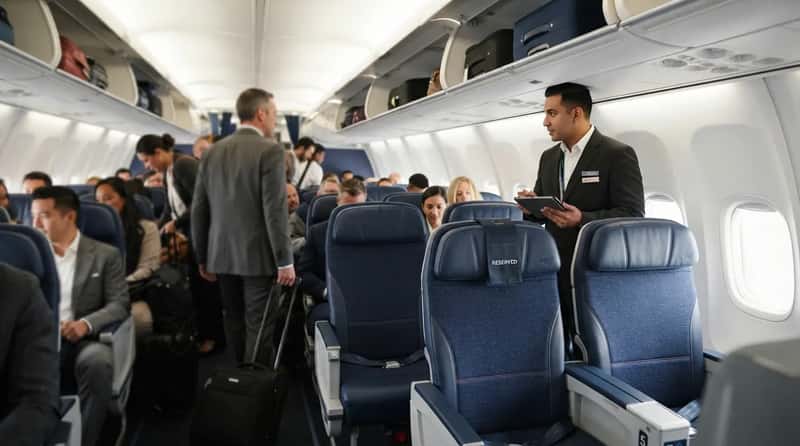
That open aisle seat in row 5 isn’t actually free. It’s being held for someone the airline values more than you.
Preferred aisle and window seats are often reserved for elite members, last-minute upgrades, or paid seat assignments that only appear at check-in or the gate. The airline is betting a high-value elite flyer will claim it and generate more lifetime revenue than you would today.
The uncomfortable truth: algorithms decide who moves up, using fare class, spending history, and loyalty data. Being polite at the counter has almost nothing to do with it.
What used to be a free upgrade is now frequently sold outright, hours before boarding. Elite passengers still get priority – but now they’re competing against automated systems built to squeeze maximum revenue from every seat.
The seat map you’re staring at during booking is already a quiet battlefield you can’t see. But what about seats that are technically “sold” – to no one in particular?
#3 – The Ghost Reservations Sitting in Unsold Rows
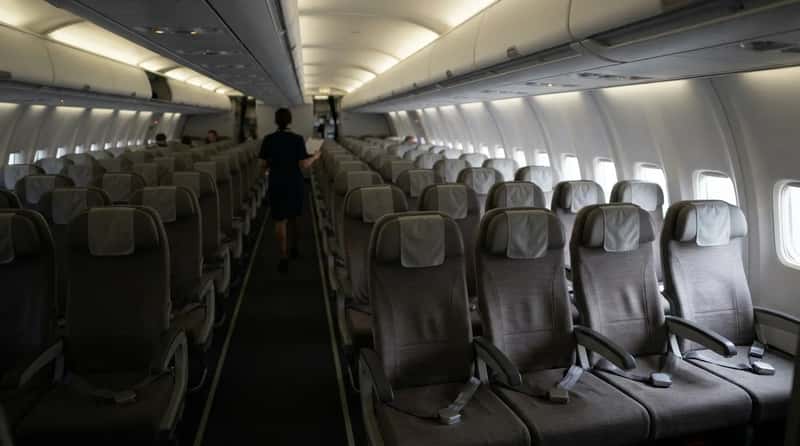
Group bookings are one of aviation’s dirtiest open secrets. They’re also the reason half the plane can look mysteriously empty online.
When a group coordinator waits until the last minute to shrink their reservation, the airline is left holding seats it thought were sold. These are called unmaterialized reservations, and they can leave a flight quietly less full than it appears.
This happens more than airlines admit. To compensate, carriers track “materialization levels” for group bookers – essentially a track record of how many seats they actually fill versus how many they cancel.
Even the best forecasting models get this wrong sometimes. The seat shows as “taken” for weeks, until it suddenly isn’t – often too close to departure to sell normally.
That scramble leads straight into one of the most misunderstood moments in air travel. And how airlines handle it is far more calculated than any apology announcement ever admits.
#2 – Overbooking Is the System, Not the Glitch
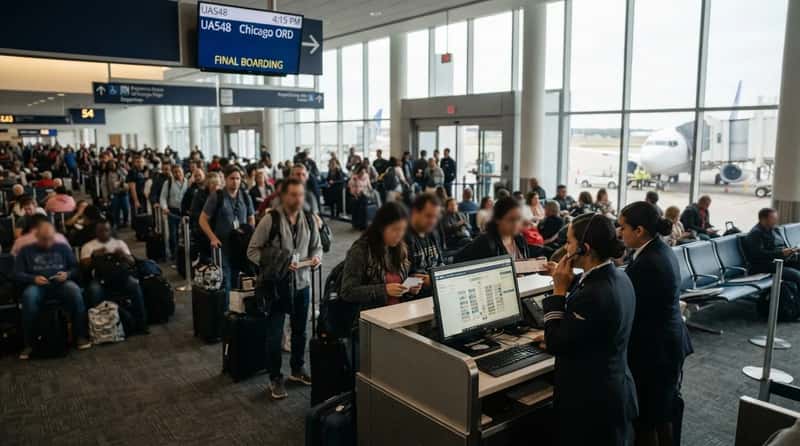
Most people think overbooking is a mistake. It is not – it’s deliberate policy.
Airlines use statistical models to predict how many passengers won’t show up, then oversell seats based on that math. It’s data-driven, not accidental.
Fast Facts
- Voluntary and involuntary denied boardings combined make up less than 1% of all passenger boardings each year.
- The 2024 involuntary “bumping” rate was just 0.28 per 10,000 passengers, according to federal data.
- Bumped passengers denied involuntarily can now receive compensation up to $1,075 for shorter delays and $2,150 for longer ones.
- Airlines must first try to find volunteers before bumping anyone against their will.
Here’s where it gets ruthless: if too few passengers volunteer to give up their seats, gate agents choose who gets bumped – usually based on fare paid, check-in time, and frequent flyer status. Book the cheapest ticket and check in last, and you’re statistically first in line to lose your seat.
Airlines can’t let travelers learn that waiting until the last minute guarantees a cheap fare. If that pattern became public knowledge, the entire pricing model would collapse.
Overbooking is the safety valve that keeps that from ever happening. Everything up to this point, though, is really just the setup for the biggest reason of all.
#1 – The Final-Hour Release: How the Last Seat Gets Decided
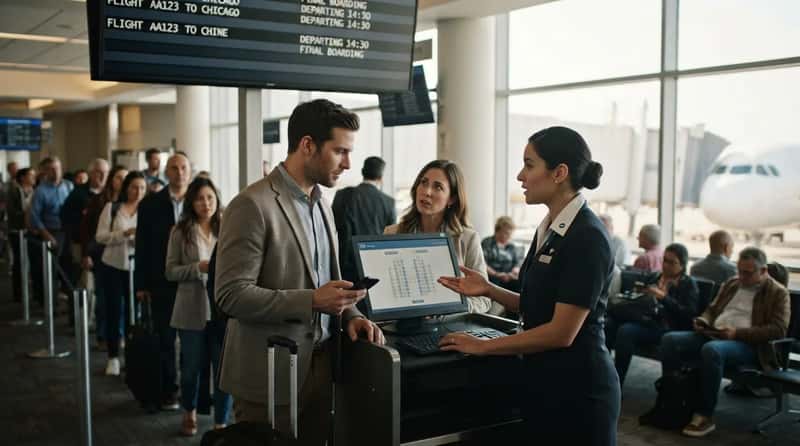
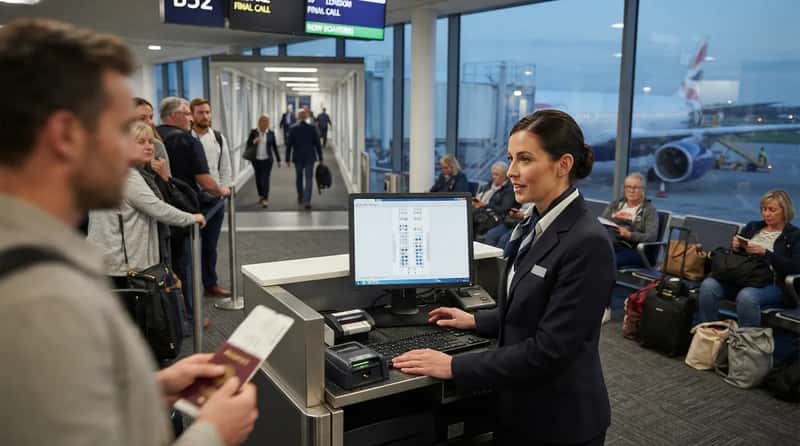
Somewhere between 30 and 60 minutes before departure, something shifts. The carefully guarded inventory unlocks, and the gate becomes a live auction floor.
Even after check-in closes, the airline keeps refining its load plan behind the scenes. That seat blocked all week may have just opened up – but only to someone who knows to ask, or who holds the right status.
The single fact driving every decision: once a plane takes off, an empty seat can never be sold again. Airlines will discount fares or release seats for points, but only after every higher-paying option has been exhausted.
Worth Knowing
- Gate agents typically finalize the seating chart 30 to 60 minutes before departure.
- Elite-status upgrade requests and same-day standby lists are reviewed first.
- Unclaimed premium seats are often released to the gate agent’s discretion at this point.
- Point-based seat releases are usually the very last option offered, not the first.
Sometimes a seat is worth more left empty than sold cheap, if it can support higher fares on future flights or upgrades down the line. An empty seat can be quietly valuable, playing a longer game than any single flight.
Knowing this exists is the closest thing to insider knowledge most passengers will ever get.
The Bottom Line
Airlines aren’t passively hoping to fill seats. They’re running a layered, real-time system where every unsold seat is being held for a reason – physics, crew rest, loyalty math, ghost bookings, deliberate overbooking, or a final-hour revenue play.
The seat map you see while booking is a curated illusion. The real inventory only reveals itself at the gate.
The passengers who understand this – who ask the right questions, hold the right status, or simply show up at the right moment – end up in better seats for less money. Have you ever scored a seat that looked blocked all week? Tell us how it happened.