
For decades, the script was simple. British and northern European retirees sold up, packed a couple of suitcases, and headed for a whitewashed apartment somewhere between Málaga and Alicante. That story hasn’t ended, but it has started to fray at the edges. A growing number of retirees who once assumed the Costa del Sol or Costa Blanca were the obvious final chapter are now quietly looking elsewhere, drawn by lower prices, fewer crowds, and a version of Spain that feels less like a resort and more like a home.
Housing costs on the classic costas have outpaced pensions
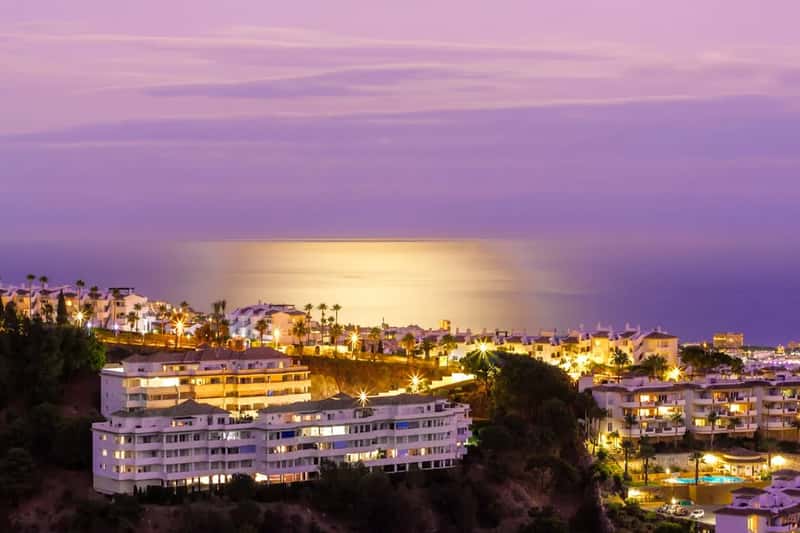
The arithmetic that once made the Costa del Sol an easy sell has shifted. Idealista’s retirement market breakdown places Málaga province at an average of €4,047 per m², with rental rates of €16.7 per m² per month in Costa del Sol compared with €23.1 in Madrid. That gap between Madrid and Málaga has narrowed sharply over the past few years, which was never part of the original pitch to fixed-income retirees.
Marbella has become something of a symbol of this shift. Marbella town centre now competes with Surrey on a per-square-metre basis, and the bargain hunt has moved inland to places like Coín or Alhaurín el Grande, both of which have substantial British populations and a tenth of the gloss. For someone living on a state pension, that inland move isn’t a downgrade so much as a necessity.
Anti-tourism protests have made coastal life feel less welcoming

It’s one thing to read about overtourism in the news. It’s another to have water guns aimed at your café table. Protesters in Barcelona blew whistles and held up homemade signs saying “One more tourist, one less resident,” sticking stickers reading “Citizen Self-Defense” and “Tourist Go Home” on hotel and hostel doors. While Barcelona isn’t a classic retirement destination, the sentiment has spread down the coast.
Málaga saw its own version of this in 2024, and the underlying complaint wasn’t really about tourists themselves but about what they were doing to housing. Many in Málaga fear that their city is becoming a theme park for tourists, with activists saying the post-pandemic tourism boom has pushed locals to the limit by distorting the rental market and gentrifying the city centre. Retirees who moved there for peace and sunshine have found themselves living next to the friction instead.
Record tourist numbers have changed the daily rhythm of the coast
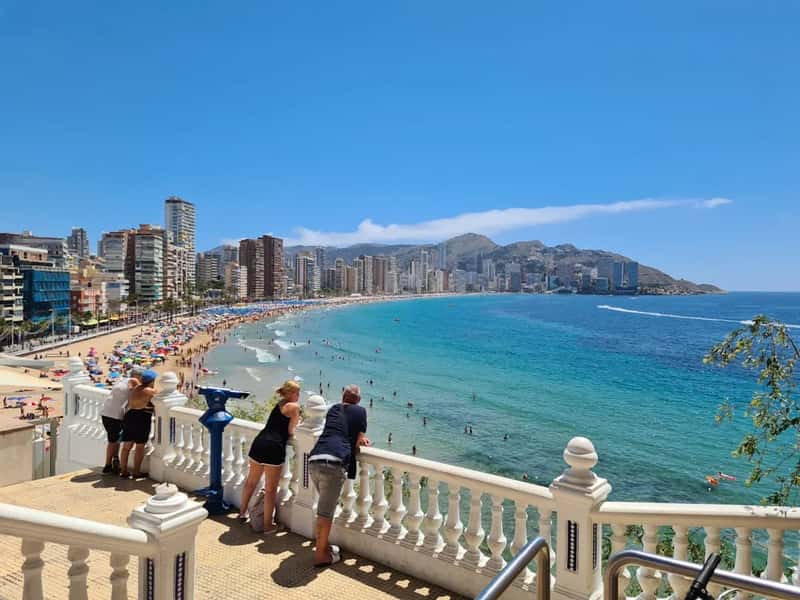
Spain isn’t just popular, it’s setting records almost every quarter now. Almost 66.8 million international tourists visited Spain in the first eight months of 2025, another record that surged past last year’s equivalent figure by 3.9%. For a retiree who wanted a quiet café and an empty beach in October, that kind of growth changes the calculation.
The British in particular remain the backbone of coastal tourism, which has direct consequences for the towns retirees settled in decades ago. According to Spain’s National Institute of Statistics provisional data, across January to August 2025, British arrivals reached 13.2 million, a 4.3% rise, keeping the UK firmly as the top source market. Places like Benidorm and Torrevieja, built around exactly this demand, feel the volume most acutely.
Some coastal towns are growing at a pace their infrastructure struggles to match
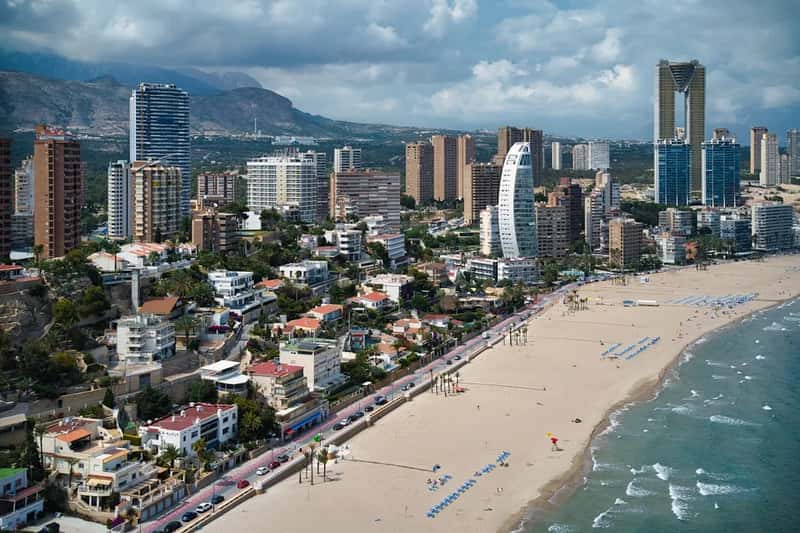
Population growth on parts of the Costa Blanca has been startling. Alicante province is home to roughly 99,000 registered British residents in towns like Torrevieja, Orihuela Costa, Jávea, Dénia and Benidorm, and Torrevieja alone was the fastest-growing city in Spain by relative population growth in 2023, at 6.7%, much of it foreign-driven. That kind of expansion tends to strain roads, water supply, and healthcare appointments long before it shows up in the property listings.
Retirees who arrived when these towns were still modest fishing ports are now navigating traffic jams and packed waiting rooms that didn’t exist a decade ago. It isn’t that these places have become bad, exactly. They’ve simply become busier than many people signed up for when they first bought their apartment.
The Golden Visa’s closure has quietly reshaped who moves where

A less discussed but meaningful shift happened in property investment rules. Spain’s Golden Visa route closed in April 2025, meaning the property investment shortcut no longer exists. That has pushed some retirees toward the more standard Non-Lucrative Visa route, which rewards patience and financial planning over simply buying an expensive coastal villa.
With the investment fast lane gone, retirees are evaluating locations on lifestyle merit rather than visa convenience, which naturally opens the door to towns that were never marketed as investment hotspots. Inland Andalusia and the Costa de la Luz have benefited from this recalibration, since they were rarely part of the Golden Visa conversation in the first place.
Galicia and Asturias offer the sea without the saturation

Green Spain, as it’s often called, has quietly built an appeal that has little to do with sunbathing and everything to do with breathing room. Galicia is known for its lush landscapes, dramatic coastlines, and slower pace of life, offering a serene alternative to the hustle of Spain’s larger cities with beaches that remain largely untouched by mass tourism. For retirees tired of fighting for a parking space in August, that alone can be decisive.
Asturias tells a similar story a little further east. A family of four can live there on roughly $3,000 to $3,500 a month, while a single person can get by on around $1,000 to $1,500 a month. The trade-off is rainier winters and less English on the street, but that’s precisely the point for retirees who wanted less of a British enclave and more of an actual Spanish town.
Huelva and the Atlantic coast are becoming the new value play

Not every retiree wants to give up the Mediterranean climate entirely, and Huelva has emerged as something of a compromise. While destinations such as Marbella, Alicante and parts of the Costa Blanca continue to attract retirees, Huelva is quietly building a reputation for offering a genuinely affordable coastal lifestyle, combining Atlantic beaches, a relaxed atmosphere and significantly lower day to day living costs. It sits close enough to the Portuguese border to feel like its own quiet corner of the map.
The appeal, according to those following the region, is precisely its low profile. Despite its many advantages, Huelva remains one of Spain’s least talked-about coastal cities, and that may actually be part of its appeal, since without the crowds found elsewhere, residents enjoy quieter beaches and a stronger sense of community. It won’t suit anyone chasing nightlife, but for retirees prioritising calm over convenience, that’s a feature rather than a flaw.
Murcia is pulling budget-conscious retirees away from the Costa Blanca

Just south of the busier Costa Blanca resorts, Murcia has carved out a reputation as the practical alternative. Retirees could live well in this region on a budget of as little as $1,855 per month, since the cost of living in Murcia is lower than in most other European countries. That’s a meaningful gap compared with the frontline apartments further north around Torrevieja and Jávea.
The region markets itself, somewhat fittingly, as the orchard of the country. Murcia is known as the ‘Orchard of Europe’ for its agriculture. Retirees who move there tend to describe it less as a discovery and more as Costa Blanca living with the rough edges of overdevelopment sanded off.
Inland Andalusian towns deliver sunshine without the summer siege
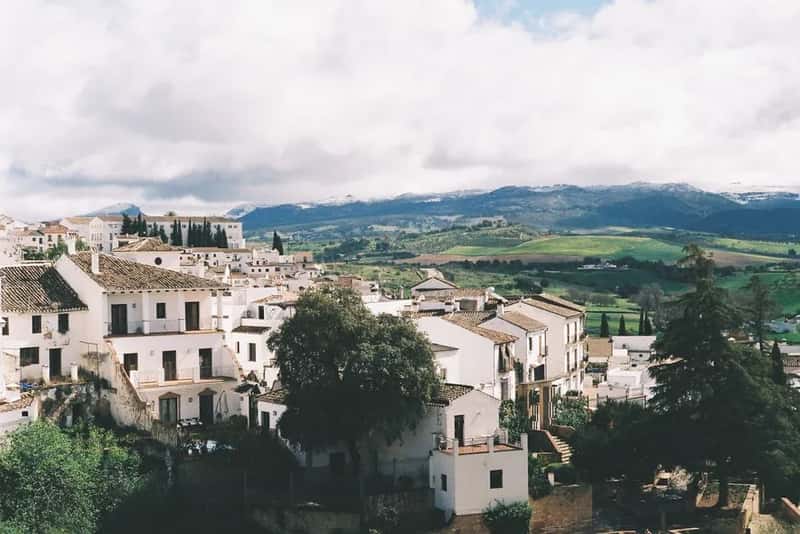
You don’t have to leave Andalusia entirely to escape the crowds. Moving even a short distance from the coastline changes the experience considerably, according to regional property analysts. Property prices in prime coastal zones can run higher than national averages and summer tourism increases population density, but choosing slightly inland from the coastline or in neighbouring towns can often provide better value without sacrificing accessibility. Towns like Coín and Alhaurín el Grande sit within easy reach of Málaga’s airport and hospitals while avoiding the peak-season gridlock entirely.
This isn’t a radical retreat into the countryside. It’s a fifteen or twenty minute drive that trades beachfront views for a quieter high street, cheaper property, and a version of Andalusian life that doesn’t shut down to locals every July and August.
Extremadura and Castilla y León attract retirees chasing genuine affordability
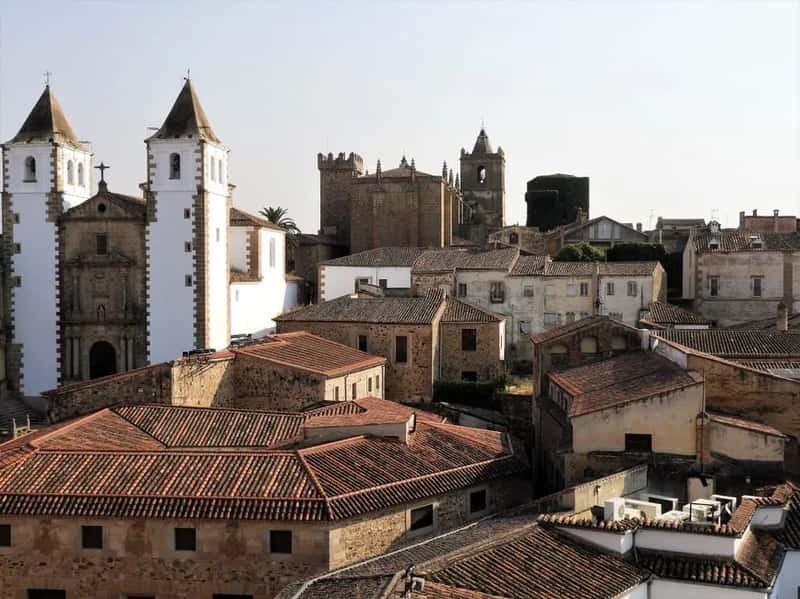
For retirees willing to give up the coast altogether, Spain’s cheaper interior regions offer a dramatically different cost structure. The cheapest mainland regions are Extremadura, Castilla-La Mancha, and parts of inland Andalusia and Galicia, with relative rent levels in Cáceres and Mérida running at roughly 40 to 50 on a scale where Madrid sits at 100. That’s less than half of what a retiree might pay for equivalent space near Marbella or Alicante.
What retirees find there tends to surprise them. Extremadura is inland, with rivers and lakes but no sea, yet visitors consistently mention nature, community, tranquility, and quality of life, with the amazingly cheap housing a factor for many. It’s not a like-for-like swap with a beach town, but for retirees prioritising budget and calm over sea views, the numbers speak for themselves.
The bigger picture: Spain’s tourism boom shows no sign of slowing
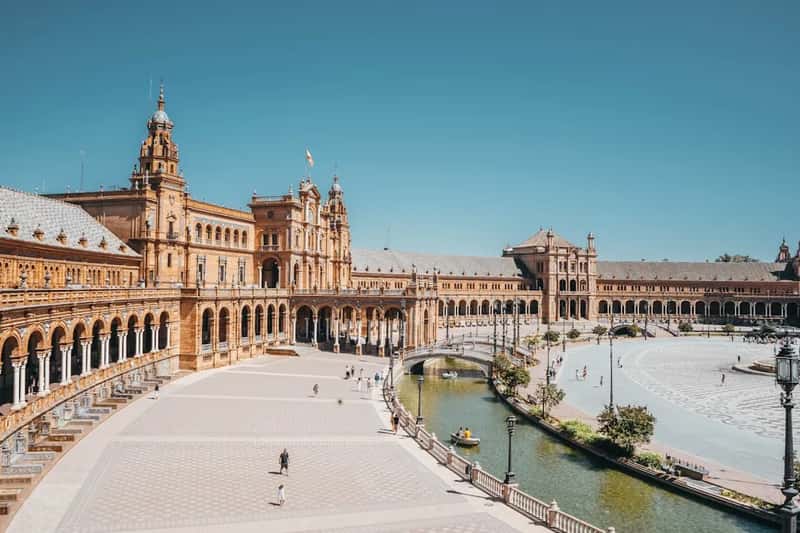
None of this suggests the classic costas are emptying out. Far from it. More than 90 million foreign visitors descended on the country in 2024, and consultancy firm Braintrust estimates that the number of arrivals will rocket to 115 million by 2040. The coast remains an extraordinarily popular place to retire, and for many people it still makes complete sense.
What’s changed is that fewer retirees are treating the Costa del Sol or Costa Blanca as the automatic default. Spain’s Tourism Minister has emphasized the country’s shift away from mass tourism toward a more sustainable, high value model, encouraging visitors to explore lesser known regions, with Murcia and inland Andalusia benefiting from that trend. Retirees, it turns out, are following roughly the same map as the policymakers trying to spread the crowds around.
Final thoughts
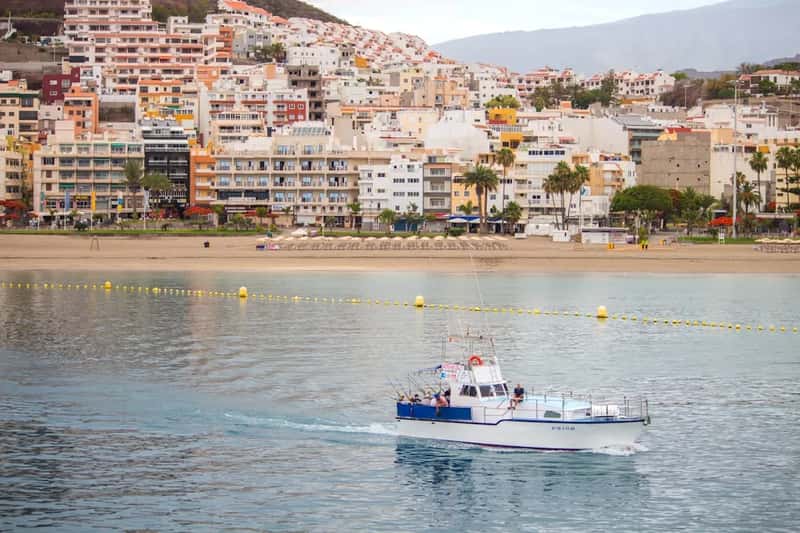
The story here isn’t one of retirees fleeing Spain. It’s one of retirees reconsidering which corner of it actually fits their life. The classic costas built their reputation on sunshine, community, and value, and two of those three things are becoming harder to find on the frontline.
Galicia’s rugged coastline, Huelva’s quiet beaches, Murcia’s orchards, and the inland towns of Extremadura don’t offer the same postcard familiarity as Marbella or Torrevieja. What they offer instead is something a lot of retirees are now willing to trade sunshine hours for: room to breathe, and a pension that still stretches to the end of the month.