You probably think a tour sells out because thousands of fans just happened to click “buy” at the same second. That’s the story everyone tells themselves, and it’s almost never what actually happened.
Behind every “SOLD OUT” banner sits a quiet machine – deliberate scarcity, insider ticketing rules, and market psychology most fans never get to see. Goldman Sachs analysts project live music demand to grow at a 7.2% compounded annual growth rate between 2024 and 2030, so the fight for seats is only going to get worse. Here’s what the industry actually knows.
#7 – The Live Music Market Is Bigger Than Most Fans Realize
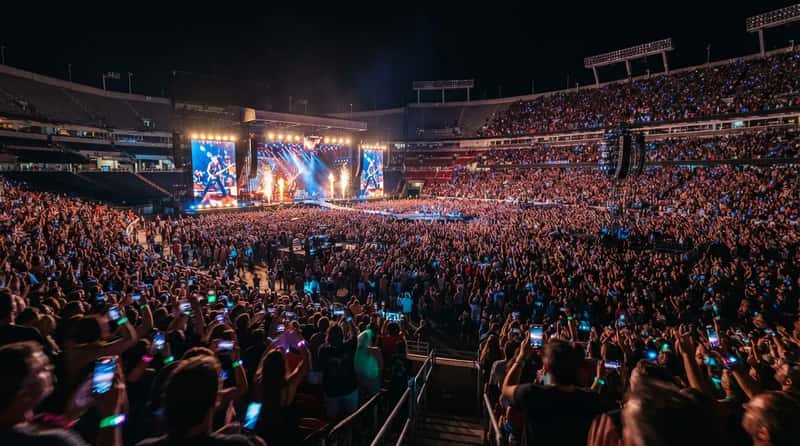
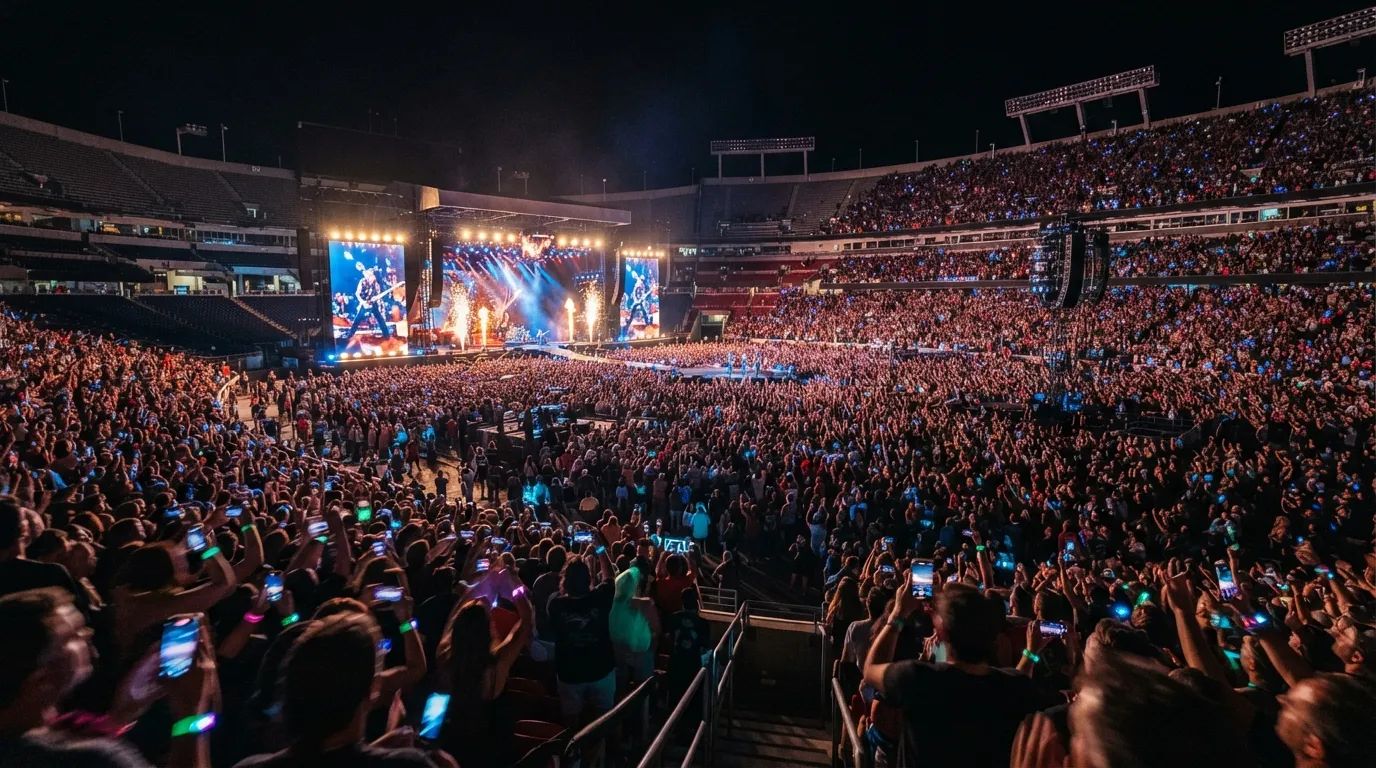
The scale of touring is staggering, and it’s the root cause of everything else on this list.
The top 100 worldwide tours grossed $9.5 billion in 2024, up 3.6% from 2023. The global live music market is now valued around $34.8 billion, with forecasts pushing it to $38.6 billion in 2025.
Fast Facts
- Top 100 worldwide tours: $9.5 billion gross in 2024, an all-time record.
- Average ticket price: $135.92, up nearly 50% since 2019.
- Tickets sold: close to 70 million across the year’s top 100 tours.
- Market outlook: global live music revenue projected near $38.6 billion in 2025.
Fans are paying more than ever for those seats, and somehow still showing up in record numbers.
Music streaming is infinite. A seat in a venue is not.
That single difference is why live music stays a seller’s market year after year – but the demand side is only half the story. The supply side is being managed far more tightly than most people realize.
#6 – Venues Are Picked to Create Scarcity, Not Satisfy It
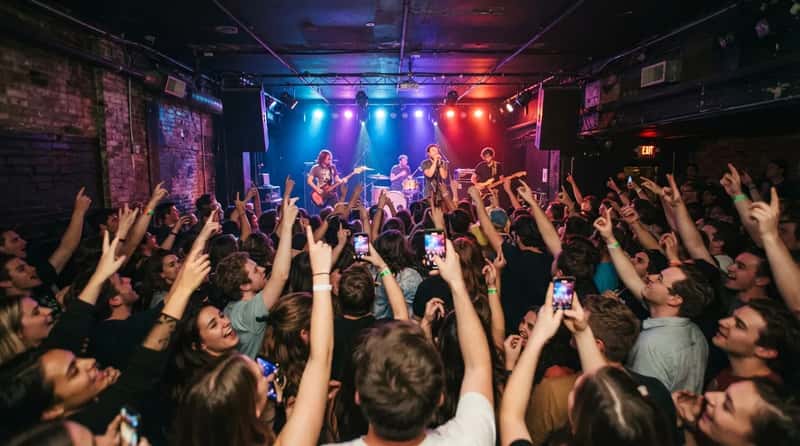
Here’s something the industry rarely says out loud: artists and their teams often pick venues that are deliberately too small.
A room that sells out in ten minutes is a win. You can always add a second show or upgrade to a bigger venue later.
A half-empty arena, on the other hand, kills the energy in the room and looks even worse in headlines. Nothing sells a tour poster like the words “Sold Out” stamped across it.
This is scarcity psychology at work – fans get more excited about a ticket the moment they sense other people might not get one. A sellout isn’t just an outcome anymore. It’s marketing.
For mid-sized acts especially, managers are often told to book slightly smaller than demand actually calls for. The buzz from a sellout builds leverage for the next tour, the next city, the next price tag.
So that “sold out in minutes” headline you saw? There’s a real chance it was built that way from day one – and that’s still not the biggest reason tickets vanish so fast.
#5 – Half the Tickets Are Already Gone Before the Public Sale Even Starts
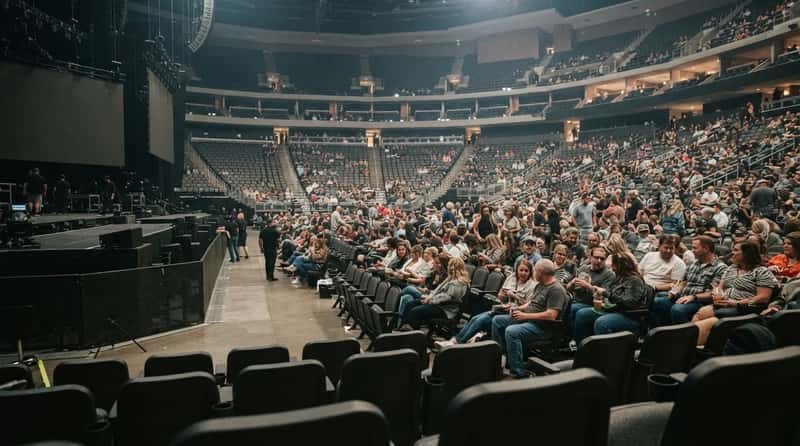
Most fans sit at their laptops right at the announced on-sale time, convinced they have a fair shot. They don’t.
When tickets “go on sale,” the public doesn’t get the whole venue. Only a slice of it.
The rest has already been quietly handed out through presale channels most people never think about – fan club presales, credit card presales, venue member presales, sponsor holds.
Worth Knowing
- A New York state investigation found that for more than 30 major concerts, over half the tickets were set aside for presale programs.
- At one Kanye West show in Brooklyn, roughly 30% of tickets were held back for the promoter and venue contacts alone.
- None of these holds have to be disclosed to fans checking the public on-sale time.
By the time the general public gets a shot, sometimes less than half the tickets remain. That’s not demand. That’s math.
The “instant sellout” you experienced wasn’t the whole show disappearing in seconds. It was the last sliver of inventory getting swallowed by a public market that was already starved before it even opened.
#4 – Bots Are Grabbing Seats Before You Can Even Load the Page

Even when fans do make it into the public sale, they’re not just competing with other humans anymore.
Ticket bots are automated programs built to log in faster than any person can, scoop up tickets in bulk, and resell them for a markup on secondary sites.
Quick Compare: Bot Traffic By Event
- Typical on-sale: bots make up about 40% of all ticketing traffic.
- Major on-sale for a top artist: bot traffic can spike to 60% to 90% of requests.
- One high-profile sale: 96% of traffic came from bots, leaving genuine fans just 4% of the requests.
Bots are responsible for 20% to 30% of ticket sales on major events. By the time you click “Buy,” a script may have already beaten you to the best seats.
Scalpers exploit a simple gap: a seat listed at $200 might have fans willing to pay $500 or more. That gap is the entire secondary-ticket business model.
Bots aren’t a glitch in the system anymore. They’re a permanent feature of it – and fans are only starting to catch up.
#3 – Fan Armies Move Faster Than the Industry Can React
Turns out the most organized people in this entire process aren’t the promoters or the bots. They’re the fans.
Organized fan communities move fast – group chats, shared presale codes, real-time alerts the second dates drop. That coordination alone can drain inventory before most casual fans even know a show exists.
Pop-up shows and surprise drops are now flipping the old rules of presales and dynamic pricing upside down. When the hunger for an artist is strong enough, it overrides the business playbook entirely.
Look at Chappell Roan. She was dropped by her label before the pandemic, and within a matter of months in 2024 she went from struggling artist to the hottest ticket in music.
Her festival slots turned into daytime headlining sets overnight. Every seat was spoken for before the industry could even adjust – no algorithm predicted that, and none fully can.
#2 – Promoters Build the Panic on Purpose
That feeling that you must buy right now or lose your shot forever? That’s not an accident. It’s a strategy.
Phased ticket releases are one of the most reliable tools for engineering urgency. Cap the early-bird tier low, and scarcity does the rest of the work for you.
Successful tours are rarely lucky accidents. Album rollouts, viral moments, and tightly timed press coverage all work together to make a show feel like a once-in-a-lifetime event.
Even routing decisions – which cities, how many nights, which venues – are calculated moves. Shows clustered in major markets or booked on weekends tend to sell out faster, and that’s by design, not coincidence.
Every lever in the process – timing, city, venue size, release schedule – is being pulled by people who do this for a living.
#1 – Touring Is Now the Whole Paycheck, and That Changes Everything
Here’s the real reason behind all of it, and why the pressure to sell out has never been higher.
For most artists, touring is now their biggest source of income, full stop. Streaming pays fractions of a cent per play, so a sold-out tour isn’t a victory lap anymore – it’s the entire business.
That boom isn’t evenly spread, though. “Touring is thriving” and “I can’t make touring pay” are both true right now, just for different artists – the growth is concentrated at the very top.
Why It Stands Out
- Taylor Swift’s Eras Tour became the first tour in history to gross more than $2 billion.
- Coldplay’s Music of the Spheres tour has sold over 10.3 million tickets – the most ever for a single tour.
- Swift alone accounted for nearly 11% of the entire top-100 touring gross in 2024.
The extremes show just how intense demand can get. In Mexico City, an estimated 4.5 million fans queued for a shot at just 115,000 tickets for one tour – the biggest ticket demand event in the country’s history.
In another case, over 890,000 people queued for a single run of shows, and 150,000 tickets across four dates sold out in five minutes.
When an artist’s entire livelihood depends on filling rooms, and streaming barely covers the electric bill, the pressure to sell out – and to be seen selling out – stops being optional. It becomes survival.
The Machine Behind the Banner
Tours sell out a year ahead because the whole system is built to make that feel inevitable. Venues are kept smaller than demand on purpose, and presales quietly absorb half the inventory before the public ever gets a chance.
Bots take another meaningful slice, and promoters engineer urgency at every single stage, from city selection down to ticket tiers. Underneath all of it, touring has become the paycheck artists can’t afford to lose in a streaming era that barely pays them anything.
The sellout was never an accident. It was always the plan – and now you know exactly how it’s built.