Europe’s postcard cities keep landing on lists of the world’s safest, most peaceful places to visit, and for good reason. Violent crime in most Western European capitals remains rare, streets are walkable at night, and travel advisories rarely mention anything more serious than “exercise normal precautions.” Yet beneath that reassuring headline sits a quieter, more persistent problem that rarely makes the safety rankings: theft. Pickpocketing, bike theft, and street scams have become so normalized in certain cities that locals have built entire routines around avoiding them, even while officials insist the overall picture remains calm.
The four cities below are not dangerous in the way most travelers imagine danger. Nobody needs to fear muggings at knifepoint or violent street crime in Prague, Barcelona, Amsterdam, or Vienna. Still, each has developed a genuine, well-documented theft problem that sits uncomfortably alongside its reputation for safety, and understanding the gap between perception and reality is worth a few minutes before you pack your bags.
Prague: The Compact Old Town That Works Against Itself

Prague consistently appears on global “safest cities” lists, and the numbers back that up in the broadest sense. Prague had approximately 1.2 million international visitors in 2025 and 45 reported serious crimes against tourists, meaning roughly 0.004% of visitors experienced any serious incident. That is an extraordinarily low figure for a city this popular. However, the same tight, walkable center that makes Prague so charming also concentrates enormous crowds into a small footprint, and that density has consequences.
Prague ranked third on a recent list, with 6.51 combined mentions for scams and pickpockets per 1,000 reviews, and Charles Bridge is the single most common spot, since the bridge is narrow and the crowds are dense. Locals have adapted accordingly. Locals crossing the bridge daily tend to walk briskly and keep valuables in front pockets rather than pause mid-span. Trams pose a similar risk, since tram lines 22 and 9 run through the main tourist areas and are frequently crowded, with the doors of a crowded tram during boarding and alighting being the moments of highest risk. Old Town Square, Wenceslas Square, and the queues at Prague Castle round out the list of known pressure points.
Barcelona: A Beach City With One Crime Category Doing All the Damage

Barcelona’s overall safety data reads better than its reputation suggests. Recent data from Numbeo (March 2025) rates safety walking alone during daylight as “High” at 68.58%, and according to statistics from Mossos d’Esquadra, Catalonia’s police force, violent crime affecting tourists in Barcelona remains relatively rare. The problem is almost entirely concentrated in one category of offense. According to official statistics from 2023, pickpocketing accounted for over 48% of all crimes committed in the city, with over 100,000 incidents reported, a rise of 6.5% from the previous year.
Certain neighborhoods carry almost all of that risk. The Mossos d’Esquadra report that tourist zones like Las Ramblas, the Gothic Quarter, and metro Lines 1 and 3 account for the majority of theft complaints from visitors. There is a genuine bright spot, though. City authorities launched a crackdown targeting repeat offenders, and pickpocketing in Barcelona dropped 40% in 2026 under the Pla Kanpai operation, though according to the Mossos d’Esquadra, 85 multi-offenders with criminal records were detained between January and June 2026 alone. Locals have also taken matters into their own hands, forming citizen patrols that film and publicly call out suspected thieves around known hotspots.
Amsterdam: Where the Real Threat Comes on Two Wheels
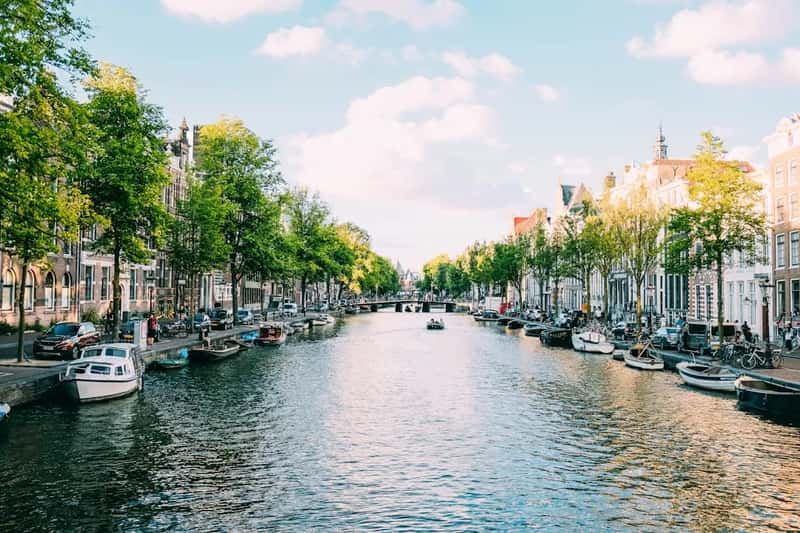
Amsterdam rarely appears on anyone’s list of dangerous cities, and its own residents back that up. For crime, Amsterdam is also safe, and the risk of violent assault in Amsterdam is pretty much absent, in all parts of the city. The city’s genuine weak spot is far more mundane than muggings or scams: it is the humble bicycle. Last year, there were 86,220 reports of bicycle theft in the Netherlands, a 30 percent increase compared to five years ago, and Amsterdam was the city with the most reported incidents.
The scale is striking for a single city. Amsterdam headed the list, with 11,000 people reporting the theft, almost twice as many as Rotterdam and The Hague (4,700) and Utrecht (3,900). Some estimates run even higher once unreported thefts are factored in, and the financial toll adds up quickly across the country. Just 5% of all stolen bikes are retrieved and it estimates the annual damage runs to over €700 million. Pickpocketing exists too, mostly around transit hubs and crowded squares, but for both residents and visitors renting bikes, the lock you buy matters more than almost any other safety precaution in the city.
Vienna: Consistently Ranked Safe, Consistently Targeted by Pickpockets
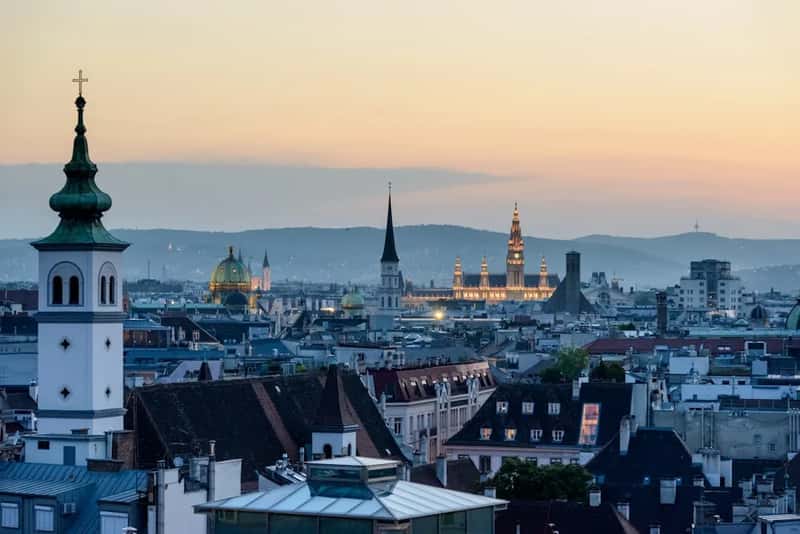
Few cities carry Vienna’s safety credentials. The 2025 Global Peace Index ranked Austria as the fourth most peaceful country in the world, just behind Iceland, Ireland, and New Zealand, and ahead of such countries as Singapore, Denmark and Canada. Official crime figures largely support that reputation, with most categories trending downward. The official crime statistics from the Ministry of the Interior show a decrease in residential burglaries in Vienna from 3,591 in 2023 to 3,124 in 2024, and pickpocketing and trick thefts also declined from 6,416 in 2023 to 5,908 in 2024.
Even with that downward trend, theft remains the crime tourists are most likely to actually encounter. Pickpocketing is the most common crime tourists encounter, overwhelmingly concentrated in Vienna. The pattern is familiar by now: crowds, distraction, and opportunity. Pickpocketing is the most common issue, especially in crowded areas such as Stephansplatz, around St Stephen’s Cathedral, or at the main train stations. Christmas markets add another seasonal spike, since large, slow-moving crowds create the same conditions thieves look for everywhere else in Europe.