Walk through any major U.S. airport on a Tuesday morning and you’ll see it happen in real time: a traveler in their 60s or 70s quietly handing a $20 bill to a skycap for something federal law already guarantees them for free. It happens thousands of times a day, in every terminal in the country, and almost nobody watching realizes what just happened.
The strange part isn’t that these services exist. It’s that most of them have existed for decades, hiding behind confusing signage, rushed gate agents, and outdated assumptions left over from an era when airports really did charge for everything. Here’s what’s actually free, why so many people still pay for it anyway, and where the money quietly disappears every single trip.
1. Wheelchair Assistance Isn’t a Favor – It’s the Law
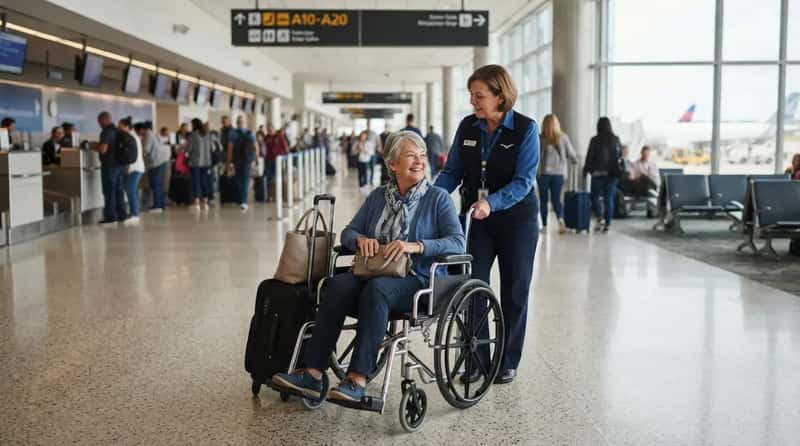
Most travelers over 60 assume wheelchair help is a courtesy you request and hope someone has time for. That assumption is backwards. Under the Air Carrier Access Act, airlines are legally required to provide wheelchair assistance at no charge, on every domestic and international flight, regardless of ticket class.
Here’s the part that surprises people most: you can reserve free assistance for every leg of the trip, from check-in to boarding to baggage claim. Some travelers still hire outside “meet and assist” concierge companies at the curb, never realizing the exact same escort is sitting there for free the moment you call your airline 48 hours ahead. It’s arguably the single most misunderstood benefit in commercial air travel.
Fast Facts
- Covered under the Air Carrier Access Act, in place since 1986
- Free on every domestic and international flight, any ticket class
- Available at check-in, boarding, connections, and baggage claim
- Best requested by calling the airline at least 48 hours before departure
2. TSA Cares: The Free Escort Almost Nobody Books
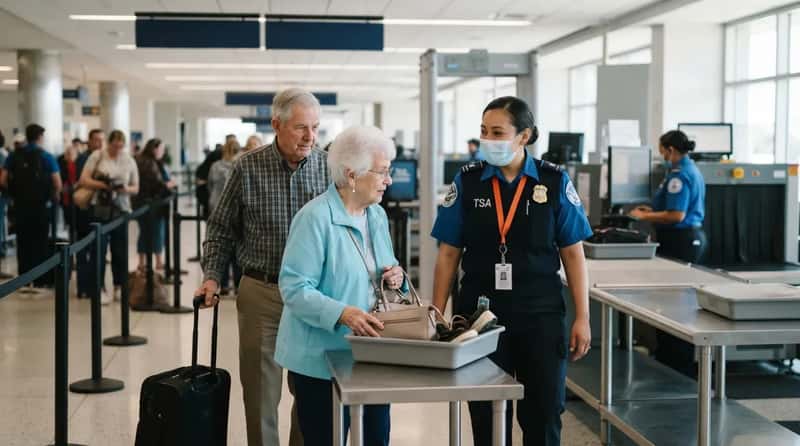
TSA Cares exists specifically to help travelers with disabilities, medical conditions, and other special circumstances get through security without panic or delay. Buried in the fine print is a detail that matters even more for older flyers: passengers 75 and older already qualify for expedited screening designed to move at a slower, calmer pace.
Unlike the paid membership programs travelers are used to, TSA Cares isn’t about speed – it’s about support, and it costs nothing at all. A Passenger Support Specialist will physically walk beside you through the checkpoint, explaining each step instead of rushing you through it. Most people only discover it exists after a stressful screening experience, which is exactly backwards.
3. The Skycap Fee Trap That Costs You Before You Even Get Inside
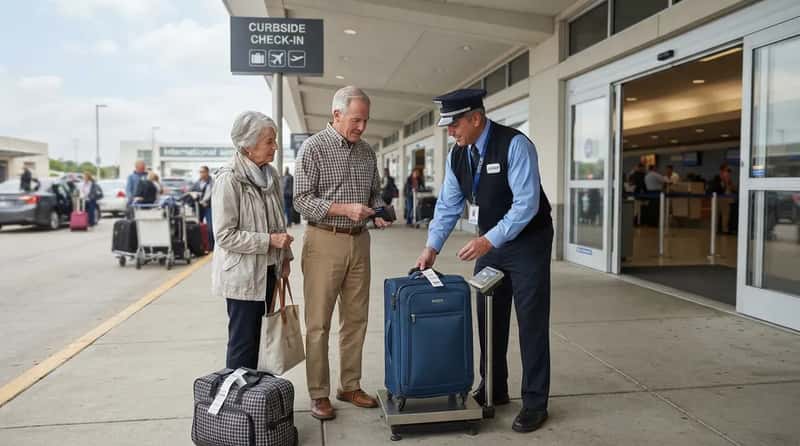
This is where things get genuinely confusing, and a little unfair. Curbside check-in typically carries a $3 to $4 convenience fee per bag on top of standard baggage costs, plus a customary $2 to $5 tip for the skycap handling it. Many travelers assume this fee is mandatory just to check a bag – it isn’t.
Walk fifteen feet inside to the counter and that “convenience fee” disappears entirely, because you’re now checking in with an airline employee instead of a contracted curbside service. There’s real history behind the confusion, too: back in 2008, American Airlines introduced a $2 curbside fee, and travelers simply stopped tipping the skycaps who depended on that money to get by. A small logistics decision from years ago quietly reshaped how millions of people now assume airport check-in has to work.
Quick Compare
- Curbside check-in: $3-$4 convenience fee per bag, plus a $2-$5 tip
- Counter check-in: No convenience fee, only standard baggage charges
- Trade-off: Counter check-in may take a few extra minutes walking inside
4. Water Refill Stations Are Hiding in Plain Sight
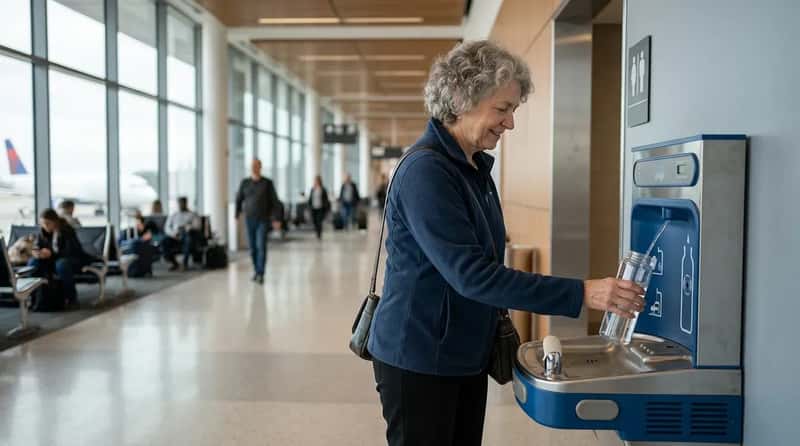
Paying $7 or $8 for a bottle of water past security has become so normal that most travelers stopped questioning it years ago. They shouldn’t have. Free water refill stations let you fill a bottle of any size with cold, filtered water at no charge whatsoever.
The trick is timing. Bring an empty bottle through the checkpoint, since the liquid-dumping station usually sits right before security and the refill stations wait just on the other side. Nearly every major U.S. airport built or renovated in the last decade includes these near restrooms and gate areas, and skipping the $7 bottle habit can save a traveling couple $15 to $20 per trip, every trip they take.
5. Electric Carts and Buggy Rides Aren’t a Luxury Upgrade
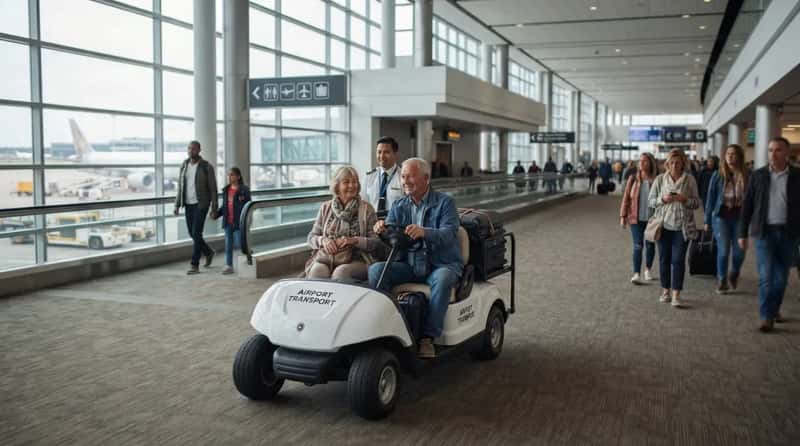
Those beeping electric carts gliding through endless terminals look like a premium perk reserved for VIPs. They’re not. Cart transport and wheelchair service at most large hubs are provided free of charge by contracted airport service providers as a standard part of the traveler experience.
Older travelers frequently wave these carts off, assuming there’s a hidden charge or worrying they’ll take a ride away from someone who “really needs it.” Neither concern holds up. The ride itself has already been paid for through your ticket, though a modest $2 to $5 tip for the driver is appreciated and entirely optional.
6. TSA Cares vs. TSA PreCheck: A Mix-Up That Costs Real Money
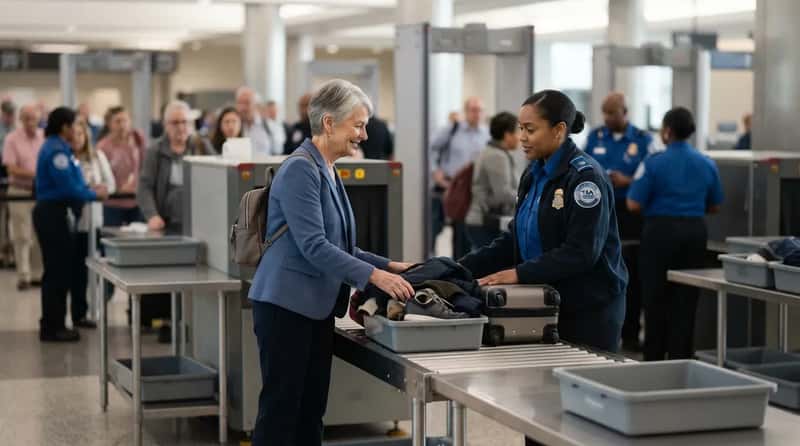
This is one of the more expensive misunderstandings in modern air travel. TSA PreCheck requires an application, a background check, and a fee that runs close to $80. TSA Cares requires none of that – it’s a completely separate, no-cost program built for a different purpose entirely.
TSA Cares is available to any traveler who needs help during security screening, with no formal eligibility approval, membership, or documentation required. Travelers over 60 sometimes skip requesting help altogether, assuming it’s tied to the paid PreCheck system or that they need a doctor’s note to qualify. Neither assumption is true, and it’s quietly costing people a calmer trip for absolutely nothing.
At a Glance
- TSA PreCheck: Roughly $78 fee, application, background check, faster line
- TSA Cares: No fee, no application, personal walk-through support
- Who it’s for: PreCheck rewards speed; TSA Cares rewards patience and guidance
7. The Companion Pass Most Families Never Think to Ask About
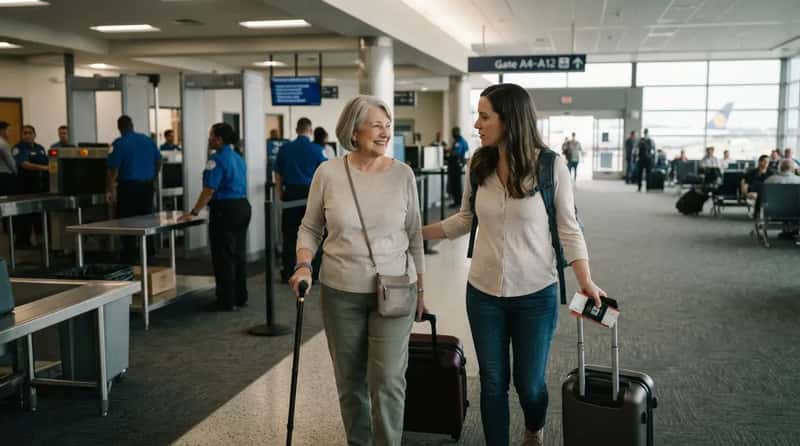
Here’s a detail that surprises even frequent flyers: a traveling companion can often be included in the assistance process without navigating security separately or fighting the system alone. TSA Cares is a helpline built to assist travelers with disabilities, medical conditions, and other special circumstances, along with their traveling companion.
That means an adult child or spouse helping an older parent through an unfamiliar airport doesn’t need to pay for one of the third-party “meet and greet” escort services often advertised near baggage claim. The airline and TSA staff are already built to accommodate this at no cost. Most families simply never think to ask the gate agent directly, and the option quietly goes unused trip after trip.
8. Currency Exchange Kiosks Are Built to Look Convenient – and Drain Your Wallet
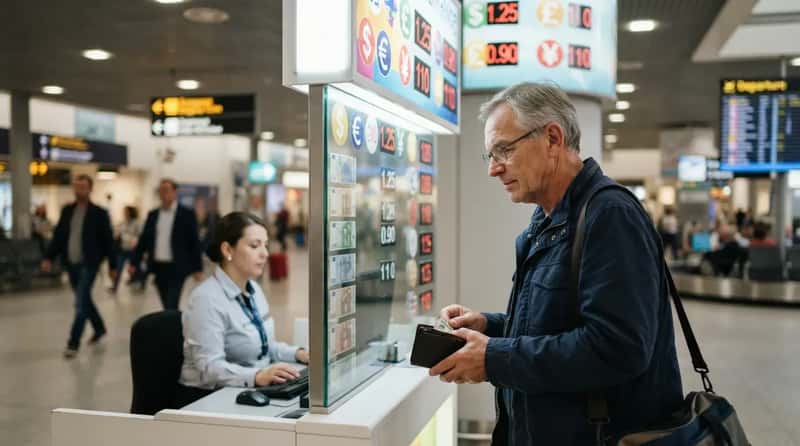
Nobody is scamming you outright at the airport currency counter, but the math is stacked against you the second you walk up. High commission fees combined with unfavorable exchange rates make airport currency exchange one of the worst financial moves a traveler can make.
The free-er alternative is already sitting in every traveler’s wallet. Withdrawing local currency from an ATM with a debit card after landing almost always offers a far more reasonable exchange rate than any airport kiosk. Travelers who grew up exchanging traveler’s checks at dedicated counters sometimes stick with that habit out of comfort, not realizing it’s become one of the most expensive ways to get foreign cash in your hand.
9. Free Wi-Fi Still Gets Overlooked at the Gate
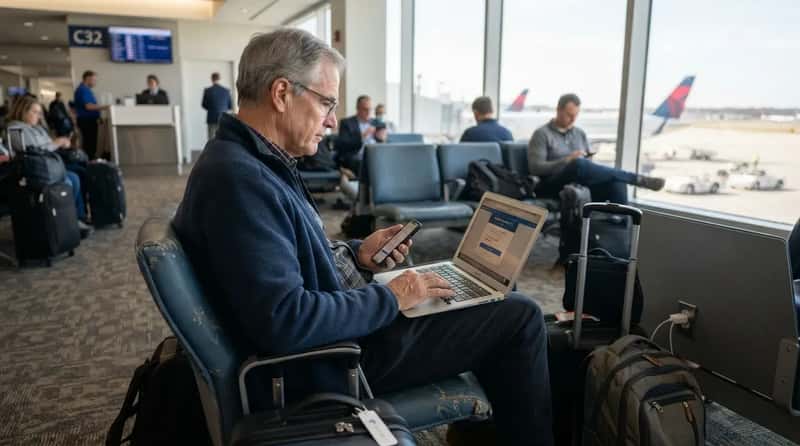
It sounds almost too simple to be a real mistake, but it happens constantly. Travelers connect to a paid hotspot or buy a day pass out of pure habit before even checking whether the airport already offers free internet. Free Wi-Fi is now available throughout the terminals at the vast majority of major U.S. airports.
The confusion usually comes from older login portals that look like paid subscription pages when they’re actually just ad-supported and free. Travelers who paid for hotel or airport internet a decade ago sometimes never updated that assumption. It’s a small thing, but stretched across a long layover, it adds up to real money spent on something that was never necessary in the first place.
Worth Knowing
- Most major U.S. airports now offer free terminal-wide Wi-Fi
- Login pages that resemble paid subscriptions are often ad-supported and free
- Speeds are usually fine for video calls and light streaming
- Paid internet passes are increasingly rare outside older, smaller terminals
10. Early Boarding for Extra Time Doesn’t Require an Upgrade
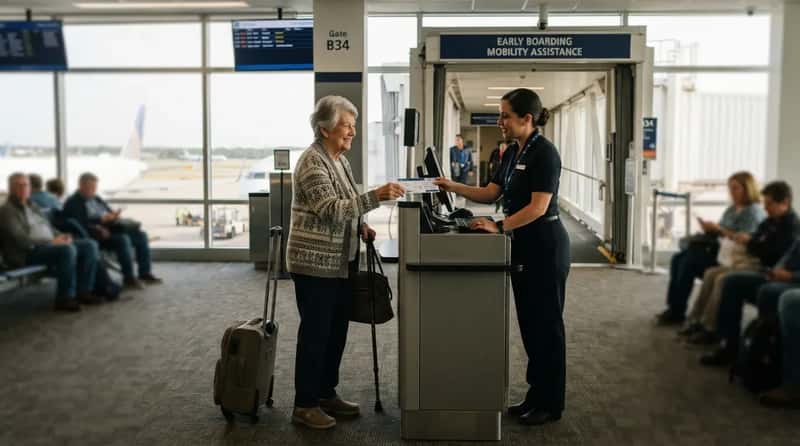
Airlines sell “priority boarding” as a paid add-on, which quietly trains travelers to assume any early boarding request costs extra. It doesn’t, when the reason is mobility-related. Travelers can ask the gate agent directly for early boarding if they need more time, or request wheelchair assistance to cover long distances through the terminal.
This is a free accommodation, completely separate from the paid boarding-group upgrades sold at checkout. Many travelers over 60 quietly struggle down the jet bridge rather than ask, worried the request will look like they’re gaming the paid system. Gate agents field this exact request dozens of times a day, and it costs absolutely nothing to ask.
The One Question That Would Have Saved Everyone Money
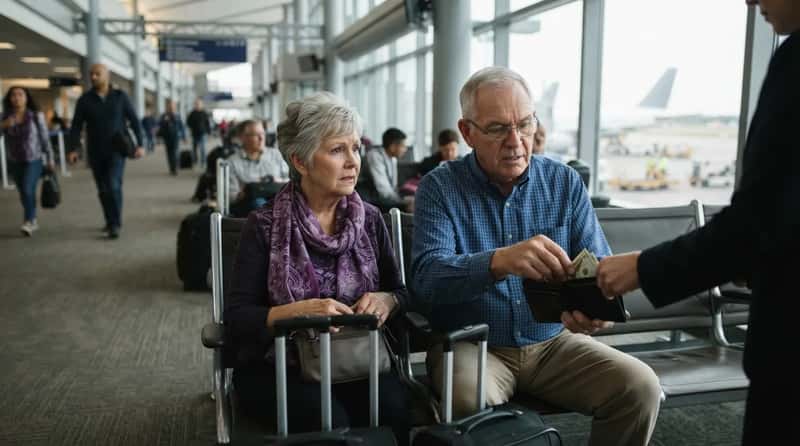
None of these services are secret in the legal sense. They’re written into federal regulations and airline policy manuals, sitting in plain view for anyone who bothers to look. But almost no airport actively advertises them, and that silence is exactly why so many travelers over 60 keep reaching for their wallets out of habit instead of asking one simple question.
The law requires equal access to air transportation for people with disabilities, and it doesn’t come with a price tag attached.
U.S. Department of Transportation, Air Carrier Access Act guidance
From wheelchair escorts and TSA Cares to water refill stations and free Wi-Fi, the pattern never changes: the free option was always there, it just was never announced out loud. The fix isn’t complicated. It’s asking one extra question at the counter before assuming, once again, that you have to pay.