Walk into any hotel lobby and you probably think you’re just checking in. A manager standing behind that same desk is reading the room in ways most guests never consider, from the way a suitcase gets dropped to the tone of a voice asking for a late checkout. These small signals shape decisions about upgrades, service recovery, and even how a stay gets remembered internally long after checkout.
Hotel operations have also changed fast over the past couple of years, with new tipping rules, AI-driven booking habits, and shifting review platforms all quietly reshaping what managers pay attention to. Here are ten things that experienced hotel managers notice, often within the first few minutes of a guest’s stay, that almost nobody staying there ever picks up on.
1. The first five minutes at check-in decide the whole stay
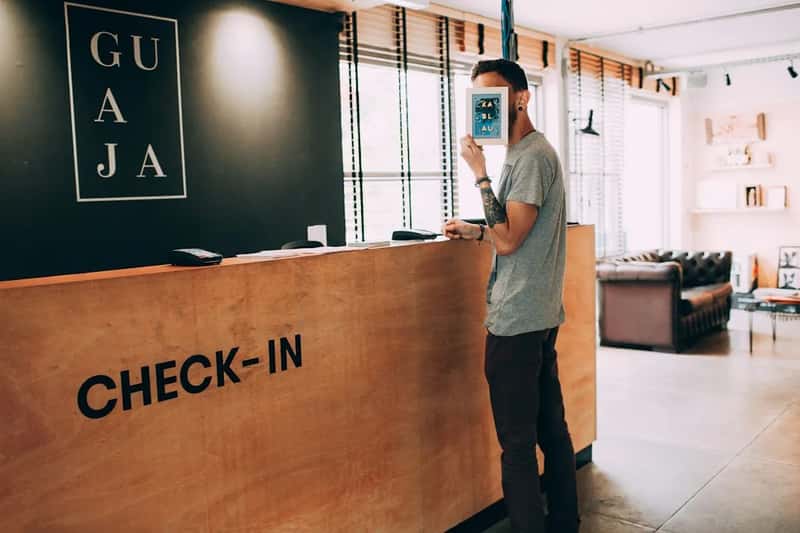
Hotel managers know that arrival experience carries disproportionate weight in how a stay gets remembered. Recent research pulling nearly 1,400 guest reviews across Hyatt, Hilton, and IHG found that first impressions in hospitality are disproportionately powerful, and a smooth, welcoming arrival buys goodwill that carries through the entire stay.[1] A rocky start, on the other hand, tends to color everything else, even if the room itself turns out fine.
That same research noted that a frustrating arrival fractures everything that follows regardless of how comfortable the room turns out to be, and arrival experience is one of the highest volume topics mentioned in guest reviews.[1] Managers who understand this often position their most patient, quick-thinking staff at the front desk during peak arrival hours. Guests rarely connect a slow line with the review score they leave three days later, but managers absolutely do.
2. Nearly every guest has already read the reviews before arriving
Guests tend to assume their own online research is invisible, but managers treat it as a near certainty. One recent industry report found that 92% of guests read reviews before booking a hotel[1], which means a manager is often meeting someone who has already formed opinions about the staff, the breakfast, and the noise level before they ever pull into the parking lot.
This is part of why response speed to reviews has become a quiet obsession behind the scenes. Industry data shows that an impressive 4 out of 5 hoteliers respond to their online reviews within a single day, and a staggering 97% manage to reply within one week.[2] Guests rarely realize how much of that public back and forth is aimed less at them and more at the next person doing the same research.
3. Tipping envelopes tell managers more than guests think

Housekeeping tipping has always been inconsistent, and 2026 brought new attention to it through federal tax changes. Under the newest rules, only voluntary cash tips qualify, and mandatory service charges and resort fees are wages, not tips, and do not count toward the deduction.[3] Managers now watch tipping patterns partly because staff pay tracking depends on it.
What most guests do not realize is how uneven the habit actually is. Reporting on housekeeping income notes that tips arrive entirely in cash, only from a minority of guests, and only if a folded envelope happens to be left on the nightstand.[3] Managers see this pattern room by room, which is one reason many properties quietly track which floors or room types tend to tip and which almost never do.
4. Small maintenance requests reveal how a room was treated
A guest calling about a jammed drawer or a slow drain thinks they’re reporting an isolated issue. A manager reading the maintenance log sees a pattern across dozens of rooms and starts to understand which units get rougher wear, which floors have plumbing quirks, and which guests tend to leave things worse than they found them.
This kind of pattern recognition also affects staffing decisions that guests never see. A property might quietly assign its most experienced housekeeper to a problem floor, or flag a room for closer inspection before the next arrival. None of this is announced, but it directly shapes whether the next guest’s stay feels seamless or slightly off.
5. Business travelers are quietly taking over leisure spaces

Managers have noticed a real shift in who is actually walking through the lobby, and it is not always who the marketing suggests. Recent traveler behavior data found that 52% of guests intend to work during their next trip, blurring the lines between business and leisure travel.[4] That has pushed some properties to rethink lobby seating, coworking nooks, and even breakfast hours without ever telling guests why the layout changed.
Guests rarely connect a redesigned lounge with a spreadsheet full of booking trends, but managers do. A pool chair sitting empty at 10am while every lobby table has a laptop on it is the kind of small signal that eventually reshapes a renovation budget.
6. Loyalty status changes the way staff see a guest

Most travelers know loyalty programs exist, but few grasp how deeply they influence internal handling. Industry figures show that loyal customers spend 22.4% more and stay 28% longer[4] than non-members, numbers that show up on internal dashboards long before a guest ever notices a room upgrade.
It is also why 94% of the world’s top 100 hotel brands and chains have a loyalty program[4], since retention math like that is difficult for any operator to ignore. Managers often flag repeat or high-status guests for small, quiet gestures precisely because the data behind loyalty spending makes those gestures worth the cost.
7. AI tools are already shaping how guests book and expect service

Guests booking through an app rarely think about how much technology is quietly steering the process. A 2026 hospitality outlook noted that 44% of consumers are using AI tools to compare prices and one third are using them to book parts of their trip[5], a shift that pushes hotels to make sure their rates and availability show up correctly in machine generated searches.
Separately, broader traveler research found that 78% of travellers are now open to using AI to plan and book their stays[4], which managers see reflected in shorter, more transactional booking patterns and less direct phone contact before arrival. The result is that many guests arrive having interacted with an algorithm more than a human, something the front desk staff has to compensate for the moment a real conversation begins.
8. Guest satisfaction scores hide big regional gaps
Overall satisfaction numbers look reassuring on paper, but managers watching regional breakdowns know the picture is uneven. Global figures show the global Guest Review Index reached 86.7% in 2025, representing a 0.5 percentage point increase year over year and 1.3 points above the pre pandemic record.[6] That headline number, though, disguises real differences by market.
In the luxury segment specifically, in North America, luxury guest satisfaction did not grow at all in 2025, and over three years it increased by only 0.3 points.[7] Meanwhile the Middle East achieved a remarkable 1.4 point increase[7] over the same period. Guests booking a high end stay in the United States or Europe are, statistically, entering a segment where standards have plateaued even as expectations keep rising.
9. Google reviews now matter more than TripAdvisor

Guests leaving a review rarely think about which platform actually moves the needle for a property’s reputation, but managers track this closely. Recent data shows that for the first time since the pre pandemic period, Google generated more mentions than TripAdvisor[6] in the review landscape. The numbers back this up clearly, with TripAdvisor producing 11.6 million reviews globally in 2023 compared to Google’s 9.1 million, while by 2025 Google had climbed to 12.4 million mentions and TripAdvisor had fallen to 10.3 million.[6]
This shift changes where management teams focus their attention and their response energy. A glowing TripAdvisor review still helps, but a manager today is far more likely to be checking Google first thing in the morning, simply because that is where most new guests are now forming their first impression.
10. A handwritten note gets remembered longer than a room upgrade

Guests often assume the biggest gestures, like a free upgrade or a bottle of champagne, leave the strongest impression. Managers who have watched repeat booking patterns for years tend to disagree, favoring smaller, more personal touches instead. Simple efforts such as remembering a returning guest’s preferred room or noting a small preference in a guest profile tend to build the kind of loyalty that upgrades alone rarely achieve.
This lines up with broader hospitality guidance suggesting that training staff to greet guests warmly, respond quickly to requests, and remember personal touches like a returning guest’s favorite room makes a big difference[8] over time. A note left on a desk or a staff member remembering a name from a previous stay costs almost nothing, yet it often shows up in guest feedback far more often than the cost of a room upgrade would justify.
None of these details are secret exactly, but they rarely surface in a guest’s mind during a stay. A manager watching arrival times, tipping envelopes, maintenance logs, and review dashboards is running a quieter set of calculations behind every smile at the front desk. The next time a stay feels unusually smooth, or oddly rough, there’s a good chance someone behind the scenes already knew why before you did.