Here are 11 roads that pay off more at 65, when you have time to spare, and 11 that still belong to the 25-year-old with a cooler full of energy drinks and no plans to sleep. Each stop below puts one of each side by side, so you can see exactly where the age gap shows up.
The twist is that the winners at 65 aren’t the "easy" roads you’d guess. A few famous bucket-list drives land on the wrong side of the line. And one road changes meaning completely depending on how many birthdays you’ve had. It’s saving that for #1.
#11 – The Natchez Trace Parkway Rewards Anyone Who Finally Stops Racing, While Utah’s Mighty 5 Rewards the Early Riser
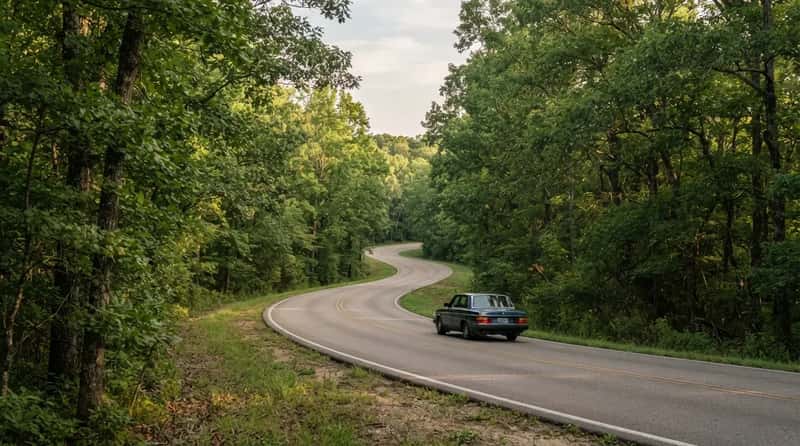
Most people treat a 444-mile drive like a problem to solve, and the Trace quietly punishes anyone who does. The two-lane road runs from Natchez, Mississippi, to Nashville, Tennessee, and a driver can cover the whole length without seeing commercial buildings or traffic lights. Rangers enforce the 50 mph limit. At 65, with no deadline, that limit stops feeling like a rule and starts feeling like the point. It’s free to drive, too.
Now flip it. Utah’s "Mighty 5" means Arches, Canyonlands, Capitol Reef, Bryce Canyon and Zion: five national parks in one state. Plenty of travelers argue it’s a 25-year-old’s game, because the payoff comes from pre-dawn alarms, crowded trailheads and the cheapest bed you can find. Done at a slower pace, the same list can feel less like a vacation and more like a deadline.
Next comes a famously twisty Appalachian road that tests your reflexes at #10…
#10 – The Blue Ridge Parkway Is a Slow-Motion Reward, While the Tail of the Dragon Is a Reflex Test
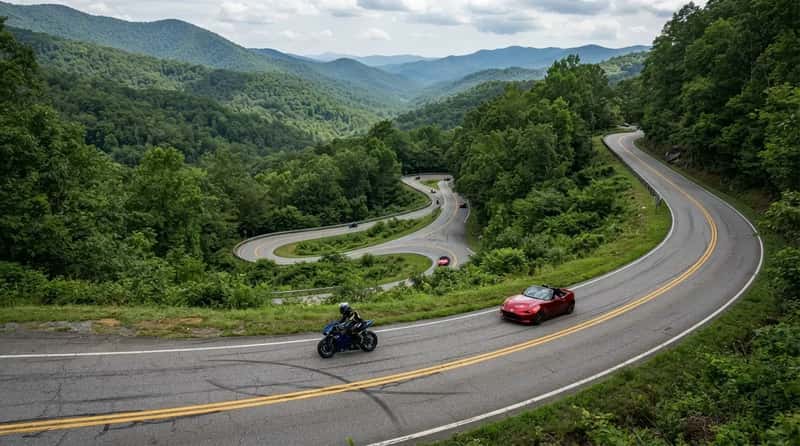
The Blue Ridge Parkway has one rule most drivers never question: the pace is the product. It stretches roughly 469 miles through Virginia and North Carolina, with a top speed of 45 mph. At 65, the overlooks, old mills and mountain craft stops become the whole itinerary instead of interruptions. Add Virginia’s Skyline Drive at the northern end and you can fill a week without merging onto a highway once.
The "aren’t" pick is U.S. 129 along the Tennessee and North Carolina line, better known as the Tail of the Dragon. It’s commonly billed as 318 curves in 11 miles, and the bikers and sports cars lining up for it come for exactly that. It’s a thrill for people with fast reflexes and a taste for adrenaline. That’s why many travelers file it under 25-year-old’s road.
Then the road leaves the mountains and heads out over open water at #9…
#9 – The Florida Keys Overseas Highway Is Built for a Slow Crawl, While Big Bend’s Backroads Belong to the Young
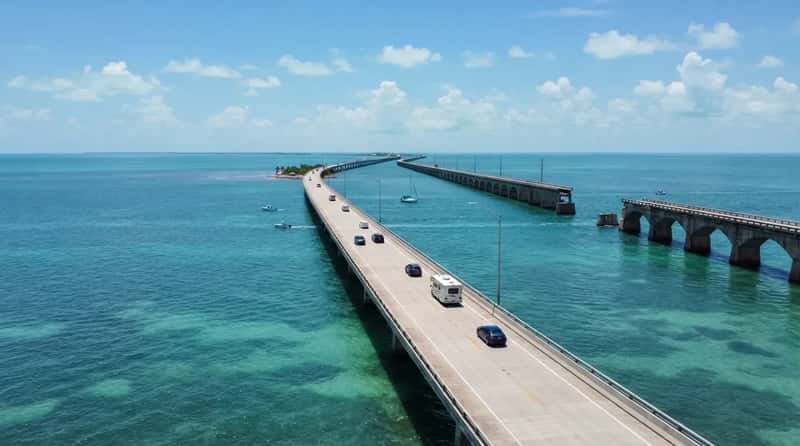
The Overseas Highway turns a road into a floating postcard. It runs about 113 miles from the mainland to Key West and crosses 42 bridges, including the famous Seven Mile Bridge. The road follows the path of Henry Flagler’s old railroad, which a 1935 hurricane destroyed before the highway opened in 1938. At 65, an easy two-day crawl with long lunches and a swim stop is exactly the right speed.
Big Bend National Park is the opposite kind of trip. It covers roughly 800,000 acres of Chihuahuan Desert in far West Texas, and the services thin out fast once you leave the paved loops. You haul water, camp rough and plan around the heat. That suits a 25-year-old with a spare gas can and a flexible schedule, though some retirees pull it off brilliantly with careful logistics.
Quick Compare
- Overseas Highway: about 113 miles, 42 bridges, and a lunch spot or beach never far away.
- Big Bend backroads: roughly 800,000 acres of desert, so water and fuel become your own job.
- Best pace: two relaxed days in the Keys versus a self-supported, weather-watching adventure in Texas.
The road at #8 hides a problem that most photos never show you…
#8 – Big Sur’s Highway 1 Rewards a Long Lunch, While Death Valley to Mount Whitney Rewards Young Legs
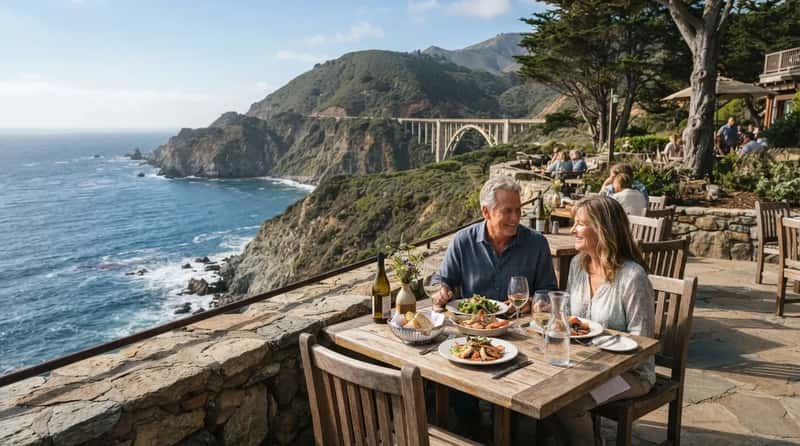
Highway 1 through Big Sur is a lesson in why timing beats mileage. The Carmel-to-San Simeon stretch includes Bixby Creek Bridge, which opened in 1932, and Nepenthe, a cliffside restaurant that has operated since 1949. At 65, a three-hour lunch with an ocean view beats a rushed photo stop. The catch is that the road isn’t always open, because slides and storm damage have closed sections for extended periods.
Death Valley and Mount Whitney make the "aren’t" pick, thanks to a geographic gimmick. Badwater Basin sits 282 feet below sea level, and Mount Whitney, the highest peak in the lower 48 at 14,505 feet, stands less than 100 miles away. You can go from the lowest to the highest point in a single day. It’s a feat that rewards young legs, strong lungs and zero fear of an early alarm.
Up north, the Maine coast changes your sense of time at #7…
#7 – Acadia Rewards the Unhurried, While the Gorge Amphitheatre Run Rewards Stamina
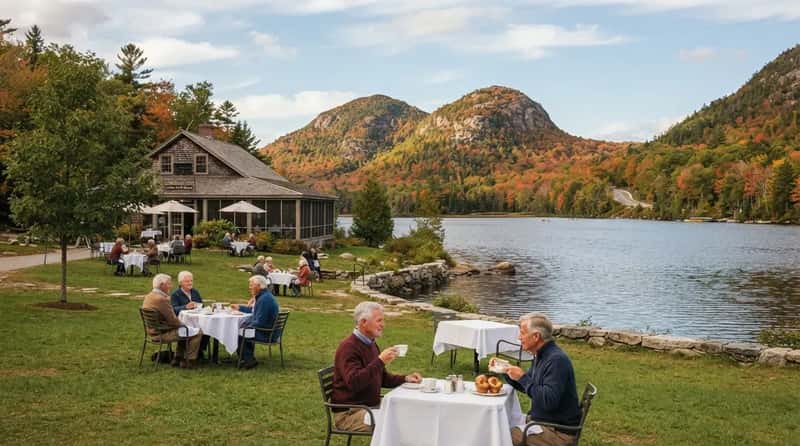
Acadia National Park is a place where doing less genuinely works. The Park Loop Road is about 27 miles, and Cadillac Mountain is often described as the highest point on the U.S. Atlantic coast. The Jordan Pond House has served popovers on its lawn for well over a century, and that tradition alone is reason to slow down. At 65, an unhurried fall visit beats a packed summer weekend.
The Gorge Amphitheatre sits in the Columbia River canyon near George, Washington, roughly 150 miles from Seattle. That doesn’t sound far, but festival weekends mean camping, long lines and late nights. The scenery and the bands pull in a huge crowd, and many travelers insist it’s a 25-year-old’s run. Anyone who has slept in a tent after a three-day lineup probably agrees.
At #6, a river road stitches together ten states…
#6 – The Great River Road Is a Retiree’s Dream, While the White Rim Trail Is a Young Person’s Dare
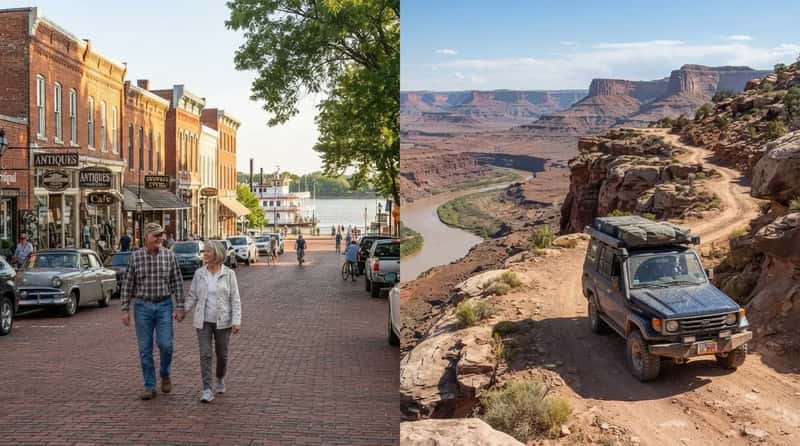
Few routes sprawl like the Great River Road, which follows the Mississippi through ten states from Minnesota to the Gulf. It’s roughly 3,000 miles long, and you don’t need to drive it all to get it right. Pick a stretch with river towns like Hannibal, Missouri, or Natchez, Mississippi, and let the antiques, diners and old brick main streets set your pace. At 65, the freedom to take two weeks instead of two days is the real luxury.
The White Rim Road in Utah’s Canyonlands is the "aren’t." It’s a roughly 100-mile route that typically takes two to three days, and it calls for a high-clearance four-wheel-drive vehicle and a permit for overnight camping. There’s no water or services along the way, which means you carry everything. A flat tire out there is a real problem rather than a funny story.
Worth Knowing
- The Great River Road is marked by green signs with a steamboat pilot’s wheel, so you can follow it without a map.
- It passes through Minnesota, Wisconsin, Iowa, Illinois, Missouri, Kentucky, Tennessee, Arkansas, Mississippi and Louisiana.
- The Mississippi begins at Lake Itasca in Minnesota, where the young river is narrow enough to walk across.
- Hannibal, Missouri, was Mark Twain’s boyhood home, which makes it an easy, rewarding stop.
The next road is all about color, and what it does to your calendar at #5…
#5 – Vermont’s Route 100 Rewards the Flexible Calendar, While Colorado’s Fourteeners Reward the Early Start
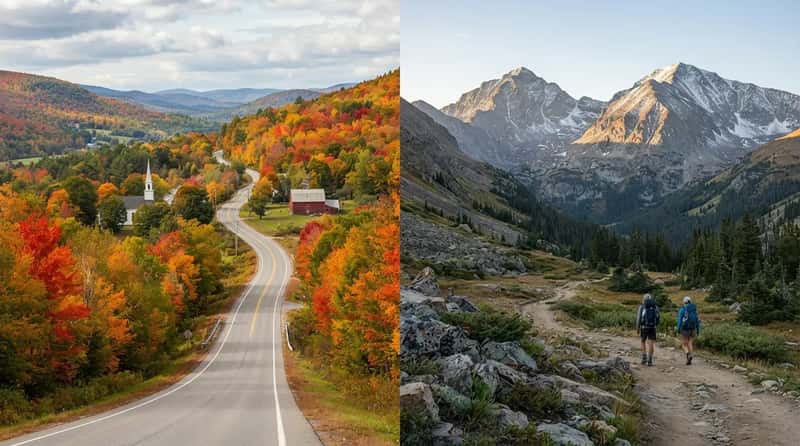
Vermont’s Route 100 is the backbone of the Green Mountains, and the surprise is how little it asks of you. It runs about 216 miles up the length of the state, past ski towns, general stores and the Ben & Jerry’s factory in Waterbury. Peak foliage is a moving target, typically from late September into mid-October, so flexible schedules win. At 65, the freedom to wait for the right week beats having fixed vacation days.
Colorado has 58 peaks over 14,000 feet, and a road trip built around them is a different animal. Mount Elbert tops the list at about 14,440 feet. Afternoon thunderstorms mean most hikers start before dawn, so the whole trip is built around stamina and early starts. Plenty of hikers in their 60s climb them happily. Still, the 3 a.m. alarm is the part most often tied to the younger crowd.
Out West, a Montana road just got a rule change that reshapes the whole visit at #4…
#4 – Going-to-the-Sun Road Got Easier to Plan, While the Blues Highway Crawl Still Rewards Night Owls
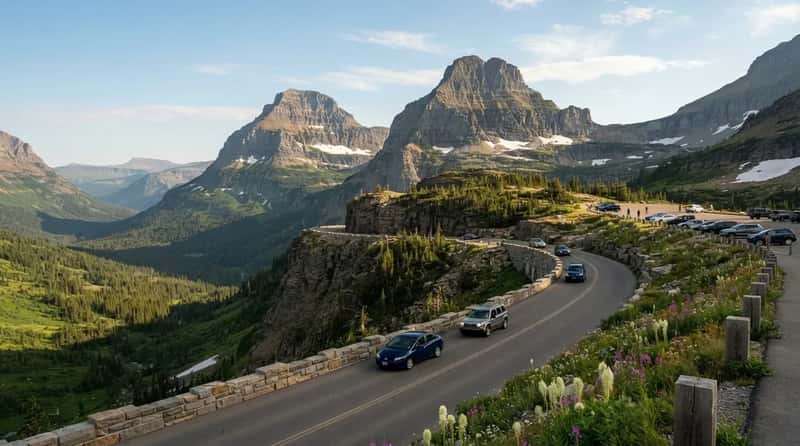
Going-to-the-Sun Road is a 50-mile drive across Glacier National Park, and 2026 changed how it works. Vehicle reservations aren’t required this year, whether you enter from the West or St. Mary side. Beginning July 1, private vehicle parking at Logan Pass is capped at three hours. That’s a better fit for a slow sightseer than for a long-hike marathon, and U.S. citizens and permanent residents 62 and older can buy a lifetime park pass for $80.
The "aren’t" here is a late-night crawl from Memphis toward New Orleans, roughly 400 miles of blues history. Clarksdale, Mississippi, is widely known as a Delta blues hub, and the juke joints and live music often run past midnight. The best part of the route is happening after most people have gone to bed. That’s a better match for a 25-year-old’s schedule than a 65-year-old’s, though some night owls would argue otherwise.
Then comes a coastline where the law itself works in your favor at #3…
#3 – The Oregon Coast Is a Slow Traveler’s Jackpot, While Nevada’s "Loneliest Road" Isn’t for the Easily Bored
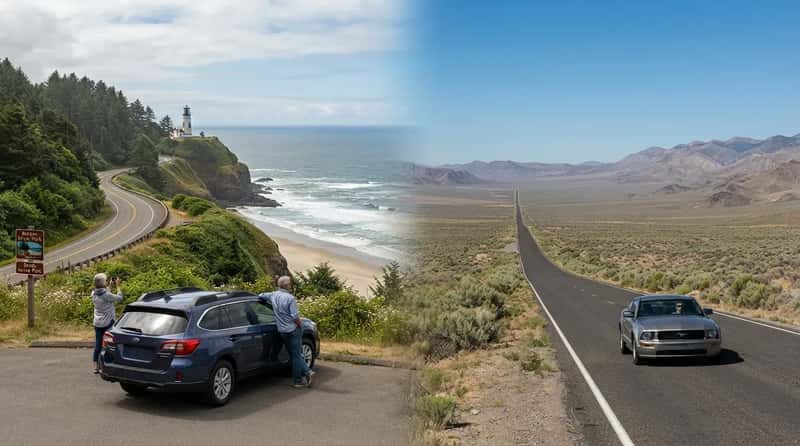
U.S. 101 along the Oregon coast covers roughly 363 miles, and the best stops are free. Lighthouses like Heceta Head, tide pools and wide beaches fill the itinerary without a single ticket booth. A 1967 law keeps Oregon’s beaches open to the public, so there’s always somewhere to pull over. At 65, a week of chowder, short walks and ocean views is hard to beat.
U.S. 50 across Nevada got its famous nickname from a 1986 Life magazine article. It runs about 400 miles through towns like Ely, Austin and Eureka, with long gaps between gas stations and almost nothing on the horizon. For a 25-year-old with a playlist and a sense of humor, the emptiness is the adventure. For others, it can feel like a lot of nothing, so fill your tank whenever you can.
Down in Texas, a road with nothing to check off turns out to be the whole point at #2…
#2 – Texas Hill Country Pays Off Slowly, While the Coast-to-Coast Dash Is a Marathon in a Hurry
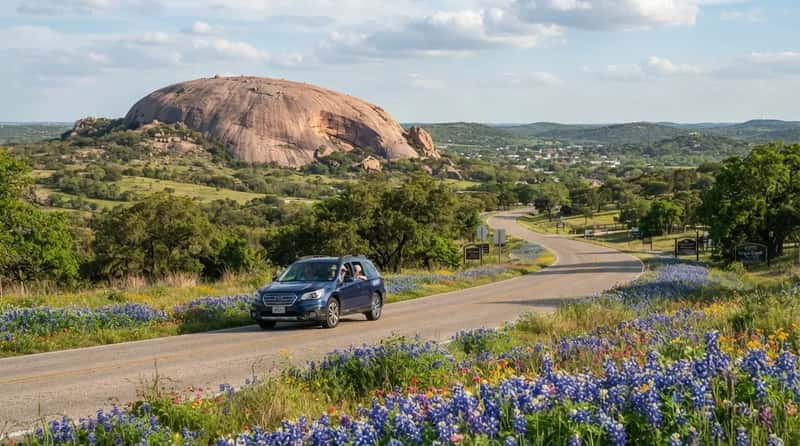
The Hill Country is proof that "nothing to do" can be the best itinerary. Fredericksburg has a strong German heritage, and Enchanted Rock is a pink granite dome whose summit tops out around 1,825 feet above sea level. Wine Road 290 links dozens of wineries along a single highway, and spring brings bluebonnets that turn the roadsides blue. At 65, a few relaxed days with a long lunch and a tasting beat any checklist.
The coast-to-coast dash is the opposite. A run along I-80 from San Francisco to New Jersey is nearly 3,000 miles. Do it in four days and you’re averaging about 725 miles a day. That kind of sprint, fueled by gas-station coffee and short sleep, is a young person’s stunt, and the stories are probably better than the drive.
At a Glance
- Bluebonnet window: usually late March into April, so a flexible calendar helps.
- Enchanted Rock: a summit near 1,825 feet, and the state natural area often asks for advance day-use reservations.
- Wine Road 290: dozens of tasting rooms on one highway, no big detours needed.
- The I-80 dash: about 725 miles a day over four days, with almost no time to stop.
And the road at #1 is the one people say hits harder the longer they’ve lived…
#1 – Route 66 Turns Into a Time Machine at 65, While the Dalton Highway Is a Trial by Gravel
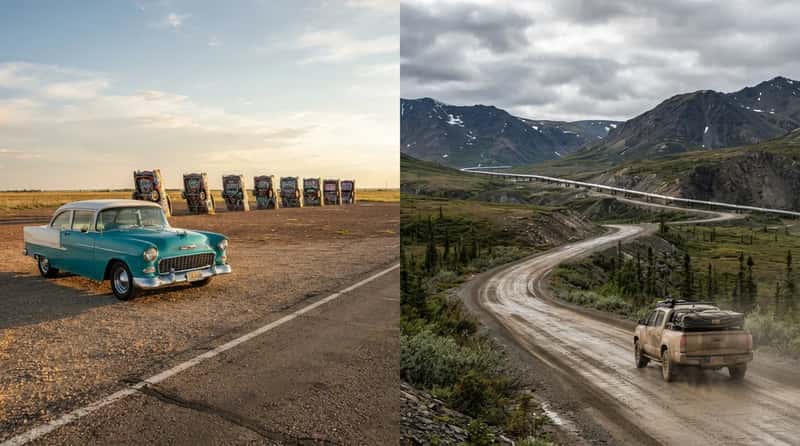
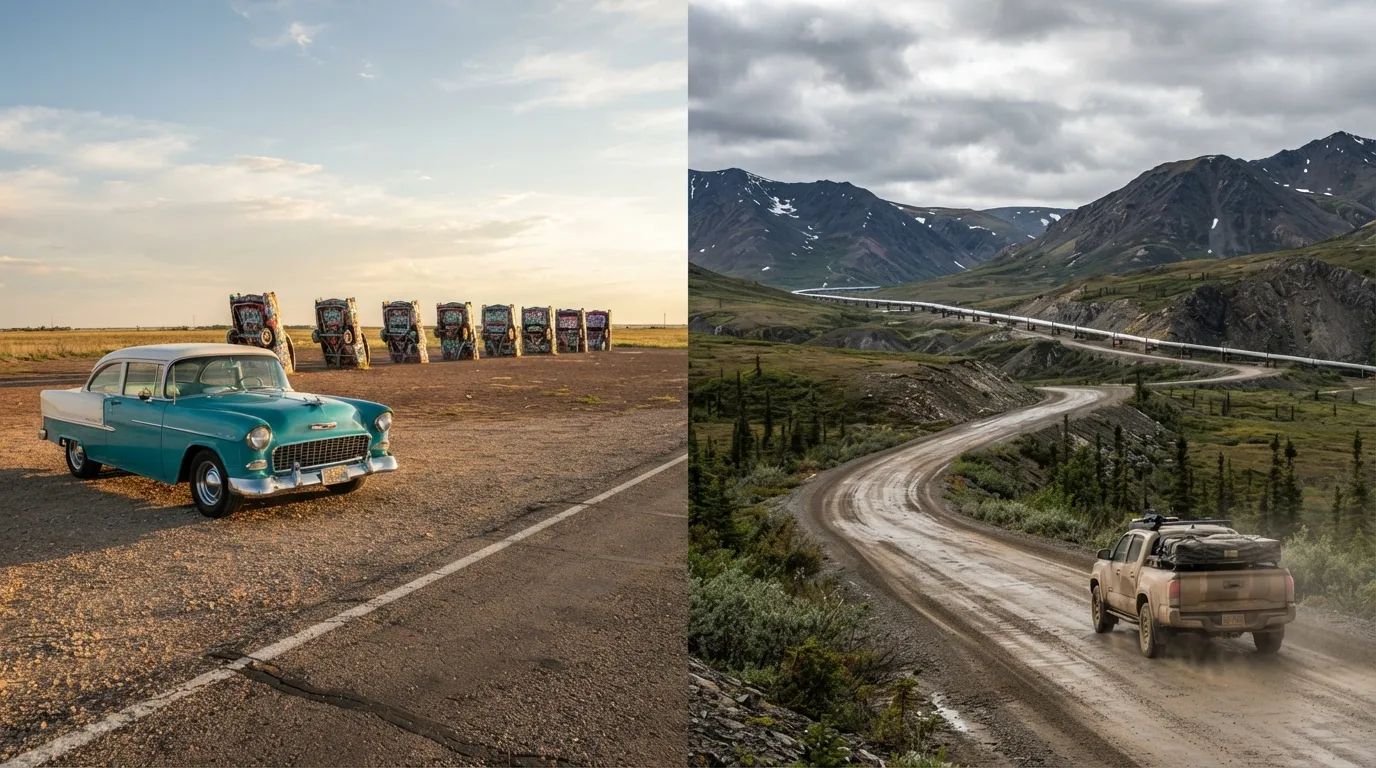
Route 66 is the one road on this list where age changes what you see. It runs about 2,448 miles from Chicago to Santa Monica and was commissioned in 1926, which makes this year its centennial. The road was officially decommissioned in 1985, but the neon, family motels and Cadillac Ranch near Amarillo are still out there. At 65, many travelers remember the world it was built for. The same stops feel like scenery at 25 and like memory at 65.
The Dalton Highway is the toughest "aren’t" on the list. It’s a 414-mile road from near Fairbanks to Deadhorse, Alaska, built to serve the Trans-Alaska Pipeline. It crosses the Arctic Circle, has very few services and long gravel stretches, and some rental companies forbid it. Flat tires and long gaps without help are part of the deal, which is why many travelers call it a 25-year-old’s road.
The pattern across all 22 roads is simple. Roads that reward time, flexibility and a slow pace get better with age. Roads that reward stamina, rough conditions and a love of odd hours belong to the young.
The Natchez Trace, Big Sur and Route 66 shine when you aren’t in a rush. Utah’s Mighty 5, Death Valley to Whitney and the Dalton Highway demand a body and a schedule built for them. Which road would you move to the other side of the list?