Most people assume the driver’s only job is to keep the bus between the lines. That assumption is dead wrong, and it’s quietly costing older travelers the chance to see what actually happens behind the wheel on a senior motorcoach tour. Veteran drivers run a second, invisible job every single day, one built around medication schedules, bathroom timing, federal fatigue laws, and dozens of small judgment calls that never make it onto a brochure.
Here’s the part that surprises even frequent tour-goers: some of these habits are legally required, some are personal tricks passed down driver to driver, and at least one involves a hard legal cap on how long your driver is even allowed to touch the wheel. Keep reading, because the last one on this list is the kind of detail most passengers never learn about until years after the trip.
#12 – They Quietly Soften Every Brake and Turn Just for Your Bus
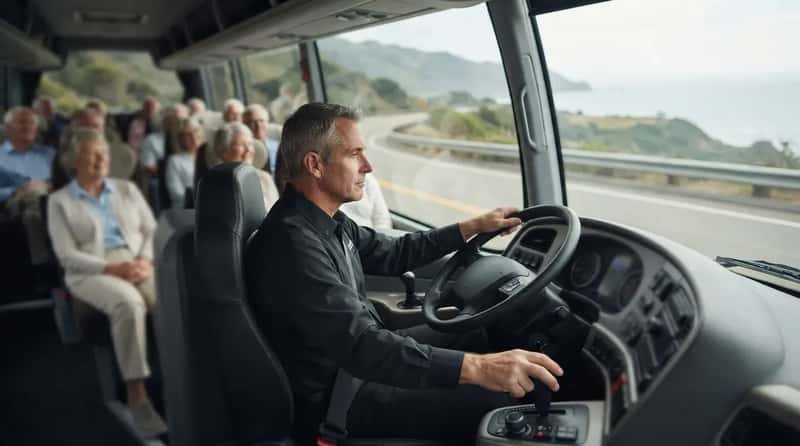
Experienced senior-tour drivers don’t handle a coach full of 65-year-olds the same way they’d handle a busload of college kids. Coach operators who specialize in older travelers say a driver experienced with senior groups instinctively avoids sudden braking and sharp acceleration, because those jolts are exactly what send a standing passenger stumbling into an armrest.
It’s a habit built entirely around fall prevention, and it’s almost impossible to notice unless you’re looking for it. The same drivers are also trained to run hydraulic lifts and other accessibility features smoothly and safely, without ever making it look like extra effort. Nobody announces the softer touch on the pedals; you just feel a gentler ride and never quite know why.
#11 – They Track Your Prescriptions Better Than You Might

Ask any longtime motorcoach driver what actually derails a tour, and medication slips land near the top of the list every time. Forgetting a heart pill or missing a diabetes dose is one of the most common hiccups on senior tours, and drivers have learned to treat it as routine instead of a crisis.
The one thing that people accidentally do that makes it a little more challenging is forgetting to take their medications, like diabetics not watching their sugar, or somebody forgetting their heart medication. It’s not ideal when the tour has to pause because of it, but it’s normal.
Veteran New Mexico motorcoach driver
That quote captures exactly how these moments get handled: no scolding, no fuss, just a driver pulling over, digging through stowed luggage, and quietly handing over a forgotten pill bottle like it happens every week. Because it does.
#10 – They Rework the Entire Schedule Around Bathrooms
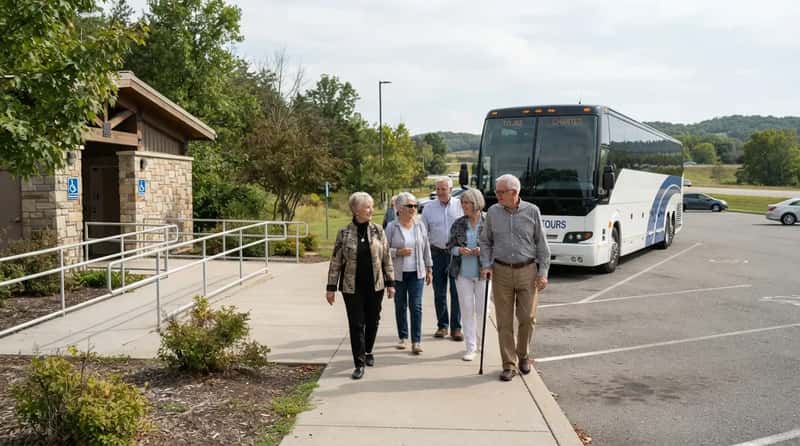
Long before your tour ever leaves the parking lot, someone has already mapped out where every usable restroom sits along the route. Companies that specialize in 55-plus travel treat a missing onboard bathroom as a genuine health concern for older riders, not just an inconvenience to shrug off.
That’s exactly why senior-focused itineraries often look shorter on paper than a typical group trip. Comfort is one of the biggest reasons seniors prefer coaches in the first place, and for a lot of them, no bathroom access is a real deal breaker rather than a minor annoyance. Drivers quietly build extra buffer time into every leg of the drive so nobody ever has to ask twice.
Worth Knowing
- Restroom stops are scouted and mapped before the tour ever departs
- Extra buffer minutes get built into driving legs so nobody feels rushed
- Comfort consistently ranks as a top reason older travelers pick bus tours over other trip styles
- A missing onboard restroom can be a genuine deal breaker, not just an annoyance, for many riders 60 and older
#9 – They Quietly Recruit “Helper” Passengers Without Ever Saying So

On almost every senior charter, a handful of more mobile travelers unofficially become the driver’s extra set of hands. Drivers and tour leaders regularly lean on able-bodied passengers to help with luggage and boarding, and it’s rarely ever said out loud to the group.
It sounds informal because it is, but it works every time. In any senior tour group there are always some passengers who move a little easier than others, and there’s nothing wrong with quietly asking them to help at boarding, off-boarding, or finding a friendly seat at mealtime. If a fellow traveler has ever grabbed your suitcase before you even asked, that wasn’t a coincidence; that was the driver’s invisible system doing exactly what it’s designed to do.
#8 – They Memorize Rest Stops the Highway Signs Never Mention
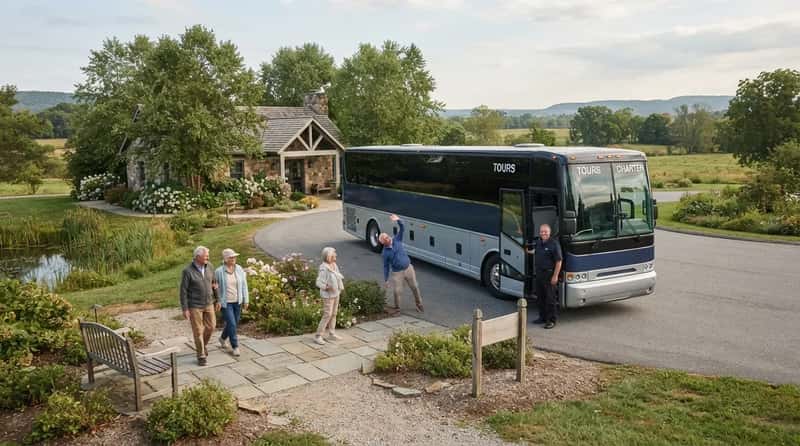
A good driver isn’t just following GPS directions; they’re running a private mental map built from years on the same routes. Drivers often know quieter, cleaner rest stops than the ones any phone app would ever suggest, and that local knowledge quietly upgrades the whole trip.
It’s one of the least visible perks of a professional senior-tour driver. Most schedules already build in regular stops so everyone gets a chance to stretch, but the good drivers steer the group toward the stops that actually feel worth the detour. Nobody prints that decision on an itinerary; it just quietly happens somewhere around hour three.
#7 – They Push Back Against Overnight Driving Whenever They Can
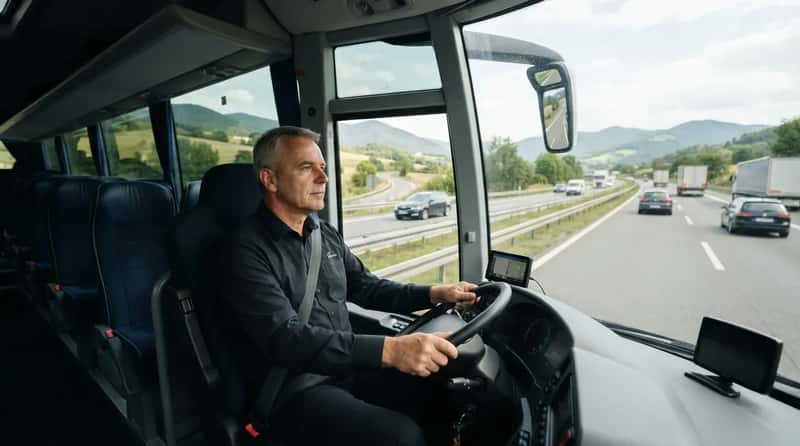
Here’s something that might genuinely surprise you: driving through the night isn’t illegal, but experienced operators actively avoid it whenever the schedule allows. Overnight coach travel carries real, well-documented safety risks that most passengers never think twice about.
That risk isn’t really about your driver’s alertness; it’s about everyone else on the road. Through-the-night travel isn’t banned by regulation, but the danger climbs sharply because even a fresh, fully alert coach driver is now sharing the highway with a much higher percentage of exhausted regular drivers who answer to nobody but themselves. That’s why experienced drivers quietly advocate for daytime-only schedules, even when it stretches the itinerary a little longer.
#6 – Federal Law Actually Caps How Tired Your Driver Can Get
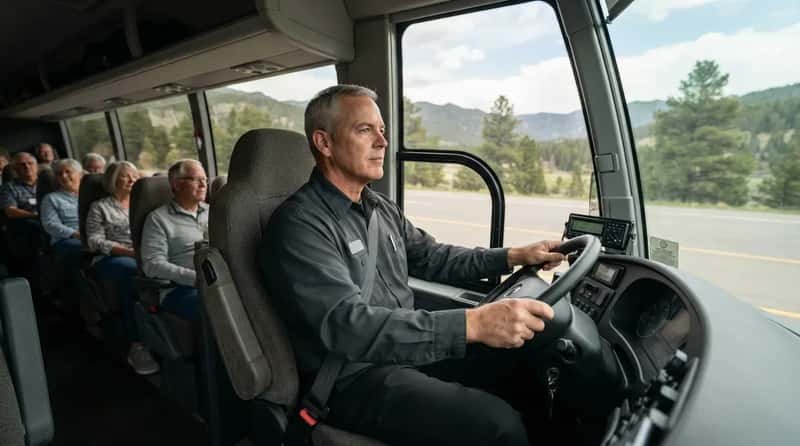
Most travelers have no idea there’s a legal ceiling on driver fatigue, but it exists, and it’s strict. A motorcoach driver can only drive up to 10 hours and stay on duty up to 15 hours in any 24-hour period, a rule built specifically to protect the passengers behind them.
This isn’t a company policy that can be quietly bent to save a tight schedule; it’s federal law, and operators treat it as close to unbreakable. If your itinerary ever feels a little slower-paced than you expected, or the driver hands off to someone new partway through a long trip, this rule is usually the invisible reason why, and it’s working entirely in your favor.
Fast Facts
- Passenger-carrying drivers cannot drive more than 10 hours following 8 consecutive hours off duty
- They also cannot stay on duty for any period after having been on duty 15 hours following 8 consecutive hours off duty
- Weekly limits cap drivers at 60 hours in any 7 consecutive days if the carrier does not operate every day of the week, or 70 hours in any 8 consecutive days if it does
- These limits are enforced nationwide by the Federal Motor Carrier Safety Administration, not left to individual tour companies to decide
#5 – They Keep a Hidden First-Aid Stash Restocked All Trip Long
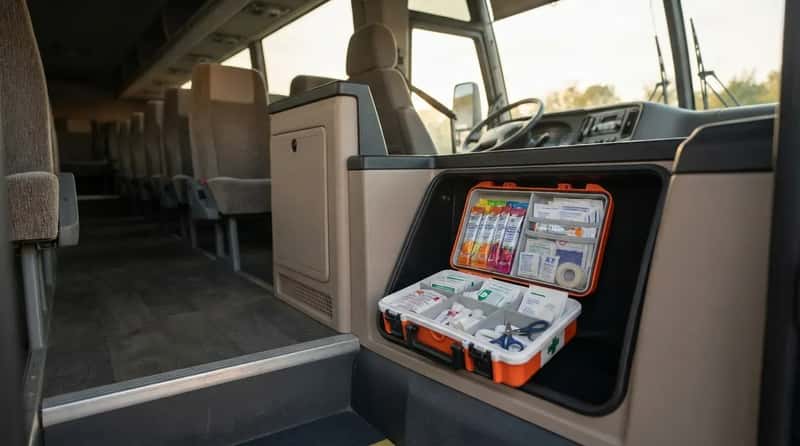
Tucked somewhere on nearly every senior motorcoach is a first-aid kit far more thorough than most passengers ever realize. Drivers and tour staff quietly restock electrolyte packets specifically to head off dehydration on hot travel days, long before anyone thinks to ask for one.
It’s a small detail that speaks to how much planning goes on completely out of sight. A well-stocked, easily reachable first-aid kit is one of the clearest signs of a prepared operator, offering real care in the minutes before professional help can arrive. Most passengers never even open that compartment, but it’s been checked and refilled more times than they’ll ever know.
#4 – They Quietly Master the Lift Almost Nobody Notices
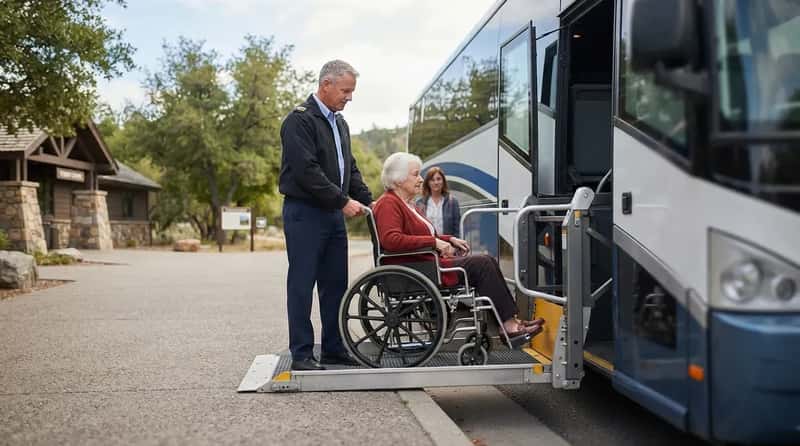
For travelers using a wheelchair or walker, the hydraulic lift is the single most important piece of equipment on the entire bus, and drivers train on it constantly. Operating it smoothly and safely is treated as a core driving skill, not some afterthought bolted onto the job.
It’s easy to overlook precisely because, when it’s done right, it looks completely effortless. A driver’s calm, practiced handling of that lift is a massive reassurance, especially if something unexpected happens mid-boarding. The smoother that ride up feels, the more hours a driver has quietly logged practicing on it when nobody was watching.
Quick Compare
- Untrained handling: jerky starts, rushed pacing, a passenger left gripping the rail unsure what happens next
- Trained handling: slow, steady movement, a calm running narration, and a driver who never breaks eye contact until the passenger is safely aboard
#3 – They Collect Your Emergency Info Before You Even Realize It
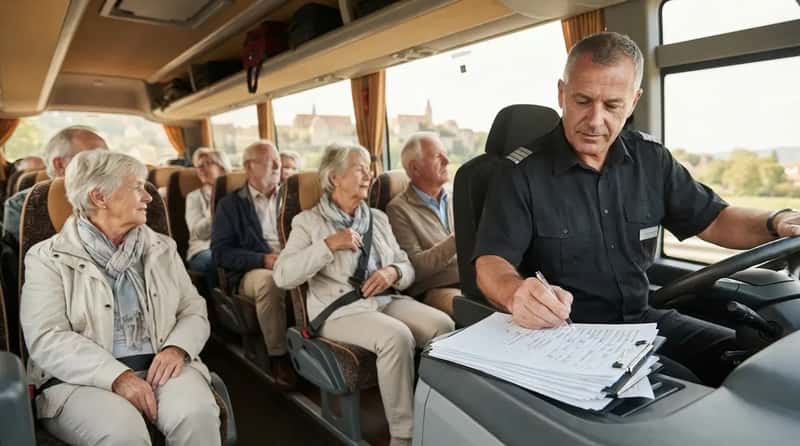
Before the wheels ever start rolling, someone has already gathered private medical and emergency-contact details for nearly every person on board. That information gets collected with deliberate discretion so it never feels invasive, even though it’s happening on almost every senior tour that leaves the station.
It’s one of the most protective steps in the entire process, and also one of the least talked about. Gathering essential medical and emergency-contact information from every passenger is treated as a first-day priority, handled with real respect for privacy rather than nosy paperwork. If anything ever goes wrong on the road, that quiet stack of forms is the reason help knows exactly who to call and who to notify.
#2 – They Turn a Bus Full of Strangers Into Friends On Purpose

That friendly welcome over the intercom isn’t random small talk; it’s a deliberate icebreaker technique used specifically on senior tours. Drivers and tour leaders use the PA system in the first few minutes for exactly one reason: to spark conversation between total strangers.
It sounds simple, but operators say it changes the entire tone of a multi-day trip. Once everyone is settled, a quick welcome message invites passengers to introduce themselves to whoever’s sitting next to them, a small nudge that ripples through the whole coach. By day two, half the bus is swapping stories like old friends, and it all started with thirty seconds nobody thought much about.
#1 – They Carry Decades of Local Knowledge Most Tourists Never Access

The single biggest thing tour bus drivers quietly bring to older travelers isn’t a schedule or a safety rule; it’s personal, lived knowledge of the land itself. Some senior-tour drivers carry deep ancestral and cultural ties to the very regions they drive through every single day.
One of Road Scholar’s most requested drivers, Benjamin R. Salas, is a member of the Pueblo of Zia tribe in New Mexico, and his knowledge of the Ancestral Puebloan sites along his routes comes from his own family history, not a training manual. He’s become a favorite among participants on a nine-day trip winding through New Mexico, Colorado, and Arizona. Passengers who strike up a conversation with him at a rest stop often walk away with insight no guidebook could ever offer, and most never even think to ask for it.
At a Glance
- The nine-day route through Colorado, Arizona, and New Mexico digs into the history of the Ancestral Puebloans, exploring prehistoric villages and National Parks
- Stops along the way include Chimney Rock, Mesa Verde, Hovenweep, Aztec, and Chaco Canyon
- Guides with genuine tribal or regional roots turn a scenic drive into a firsthand history lesson that no printed itinerary can replicate
None of these twelve habits show up in a tour brochure, and that’s exactly the point. They’re quiet, procedural, and built entirely around one goal: getting older travelers to their destination comfortably, safely, and with a little more dignity than a strict schedule would normally allow.
Next time you climb aboard a motorcoach, take a second look at the person behind the wheel. Chances are they’ve already thought about your medication, your bathroom break, your luggage, and your safety, long before you ever asked. What’s the most unexpected thing a bus driver has ever done for you on a trip? Tell us in the comments.