Watch two guests check into the same hotel on the same day, and you can usually spot who’s going to end up with the better room by the time the elevator doors close. It’s not about money, status, or loyalty tier – it’s about a handful of quiet, almost old-fashioned habits that travelers over 60 have been quietly running for decades.
Younger guests walk right past every one of them, convinced a five-star app rating and a mobile key cover everything that matters. It doesn’t. Here’s what lifelong travelers actually do differently at check-in, at the front desk, and long after the lights go out – and why hotel staff quietly reward every bit of it.
#13 – They Pick Up the Phone Instead of Tapping a Screen

Most hotels now push guests toward apps and tablets for everything from housekeeping to checkout requests. Older travelers routinely skip all of it and just dial the front desk instead, treating the phone like it never went out of style.
It isn’t stubbornness, it’s strategy. A real voice on the other end feels more reliable than a status bar that might glitch, and a phone call creates a kind of human record an app request never does. When something goes wrong later, “I spoke with someone at the desk” carries a lot more weight than “I tapped a button.”
#12 – They Actually Read the Room Directory Cover to Cover

Every hotel room has that forgotten folder sitting on the desk, and most guests under 40 have never opened it once in their life. Boomers open it every time, flipping through pool hours, breakfast times, and emergency exits like it’s required reading.
That habit pays off in ways impatient guests never see coming. They rarely miss a free amenity buried on page four, and knowing exactly where the fire exits are isn’t paranoia – it’s the kind of calm preparation that makes a strange hotel feel familiar within minutes.
Fast Facts
- Most in-room directories list pool, gym, and spa hours right on the first page.
- Breakfast and restaurant times are usually buried in the middle section, easy to miss on a quick skim.
- Fire exits and evacuation routes are almost always printed near the back, right next to checkout details.
- Free perks like late checkout requests or local shuttle info often sit unread in the same folder.
#11 – They Fully Unpack, Even for a Single Night

Younger travelers live out of a suitcase for speed, zipping in and out like the room is just a pit stop. Older travelers see that as a rookie mistake, hanging up shirts and lining up toiletries even if they’re leaving again by morning.
It’s part comfort, part quiet control – unpacking is the moment the trip officially starts. It’s also oddly practical: a fully emptied suitcase means nothing important gets forgotten in a drawer at checkout, a mistake that happens constantly to rushed, half-packed guests racing for the lobby.
#10 – They Make a Beeline for the Front Desk, Never the App

Keyless entry and mobile check-in were supposed to make front desks nearly obsolete. Older travelers never got that memo, and it keeps working in their favor. They walk straight up, ask a question or two, and treat the conversation as part of the trip instead of an obstacle to skip.
Staff notice the difference immediately. A guest who strides in confidently signals experience, while someone scanning the lobby for signage broadcasts unfamiliarity in about three seconds flat. That first impression quietly decides how helpful the agent feels like being for the rest of the stay.
#9 – They Still Request an Actual Paper Newspaper

This one sounds like a relic, and it kind of is – yet plenty of lifelong travelers ask for it every single trip. A physical paper slipped under the door with morning coffee isn’t about the headlines. It’s about twenty uninterrupted minutes with no notifications, no alerts, no scrolling.
Younger travelers skip it entirely because they consume news a completely different way, through feeds and push alerts instead of folded pages. Some older travelers will straight up admit the ritual itself is the real luxury, not whatever’s actually printed inside it.
#8 – They Call Housekeeping the Second Something Feels Off

Thin blanket? Only two pillows? Younger guests improvise. Older guests pick up the phone immediately, because they remember a time when hotels handed over extra pillows and blankets without anyone having to ask twice.
It’s not about being demanding, it’s about memory. Meanwhile younger guests just make do – too cold, throw on a hoodie; not enough pillows, bunch up a towel. Hotels almost never charge for these extras, which makes the silence from younger travelers even stranger when the fix is one free phone call away.
#7 – They Book Direct and Never Touch a Third-Party App
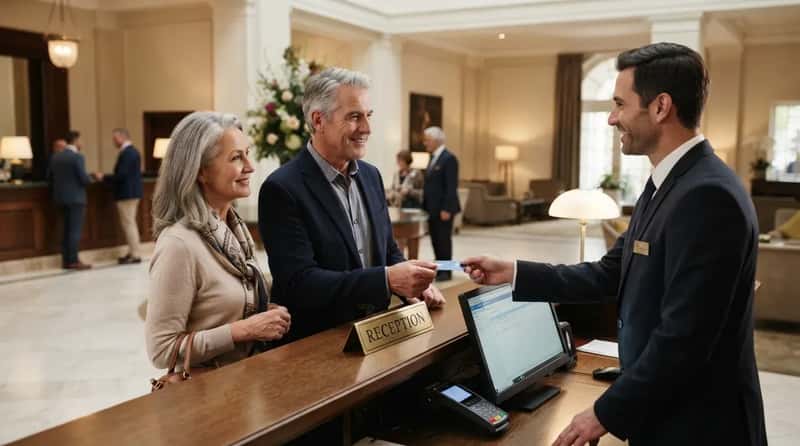
This is the one quietly costing younger travelers real perks, and most don’t even realize it’s happening. Third-party booking sites can charge hotels commissions as high as 25% of the room rate, and hotels remember exactly who costs them that margin versus who books straight through the front door.
It even matters during a crisis. When a hotel overbooks and has to “walk” a guest to another property, third-party reservations get bumped first. Direct bookers stay put, and they also get far more flexibility from the desk when something needs fixing mid-stay.
Quick Compare
| Situation | Direct Booking | Third-Party App |
|---|---|---|
| Overbooked night | Usually kept in-house | Often bumped first |
| Loyalty points | Earned normally | Frequently forfeited |
| Mid-stay changes | Handled at the desk | Must go through the app |
| Cost to the hotel | No commission | Up to 25% commission |
#6 – They Join the Loyalty Program Even If They’ll Never Return

Older travelers treat every hotel stay like the start of a relationship, not a one-time transaction. You don’t need elite status to benefit – even the free tier puts you on staff’s radar as someone who chose the brand on purpose instead of by accident.
Never underestimate the perks of loyalty programs, even at the free tier – it takes minutes and hotels notice.
Hospitality industry advice, widely echoed by front desk staff
Sometimes the payoff is immediate: a free sign-up at the desk has been known to land a same-night upgrade simply because loyalty members get priority when rooms are assigned. It costs nothing and takes minutes, yet countless younger guests skip it because it feels like unnecessary paperwork.
#5 – They Mention the Special Occasion Before They Even Arrive

A birthday. An anniversary. A retirement trip. Older travelers say it out loud during booking, and hotels genuinely remember. Staff enjoy making celebrations feel special, and plenty of properties will slip in a small room upgrade, a treat, or a handwritten note when they know in advance.
It’s one of the most reliable moves in hospitality, and the timing matters most – mentioning it early gives staff time to actually prepare something. Younger travelers, laser-focused on price and photos, almost never think to mention anything personal during booking at all.
Worth Knowing
- Mention the occasion when booking or calling ahead, not on arrival day when there’s no time to prepare anything.
- Birthdays, anniversaries, honeymoons, and retirement trips are the occasions staff notice most often.
- A handwritten note or small treat is common; a guaranteed upgrade is not, so keep expectations realistic.
- Saying it twice – once at booking, once at check-in – reinforces it without sounding demanding.
#4 – They Ask the One Question Almost Nobody Bothers With

There’s a single sentence hotel staff say works far more often than guests expect, and it isn’t a secret code – it’s just direct: “Are there any complimentary upgrades available tonight?” That’s it. That’s the whole trick.
The logic is refreshingly simple. If better rooms are sitting empty, the front desk would rather fill them than leave them vacant, and a friendly, casual ask gives the agent permission to say yes without feeling pressured. Most younger guests never ask because they assume upgrades are locked behind elite status.
#3 – They Deliberately Show Up Late for Check-In
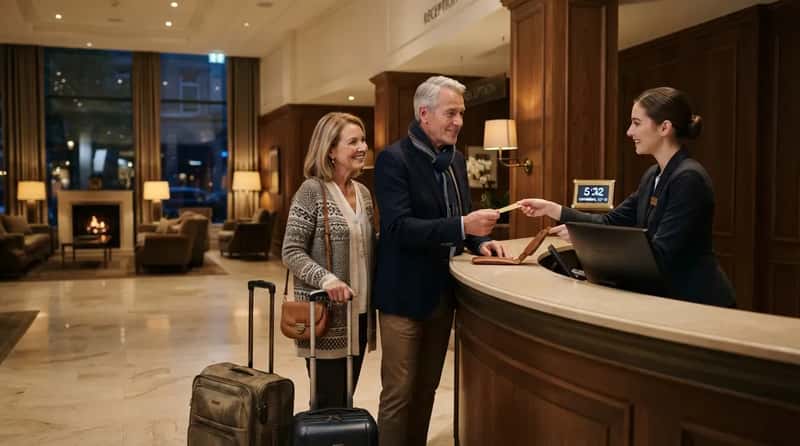
Standard check-in is 3 p.m., and most travelers show up right at that window like it’s a race. Seasoned guests know that’s actually the worst possible time to arrive.
Arriving a couple hours later gives the hotel a clear picture of which premium rooms are still sitting empty, and staff would rather put a guest in a nicer room than leave it vacant for the night. It works especially well midweek and during slower travel seasons – a small delay for a real shot at a better view.
#2 – They Tip the Front Desk, Not Just Housekeeping
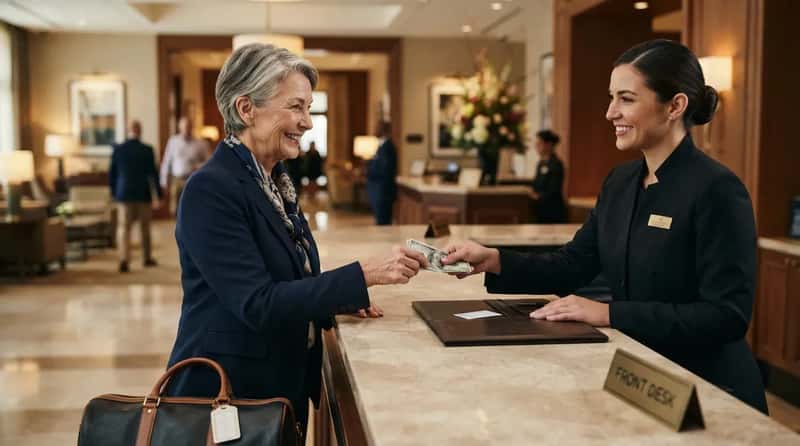
Almost everyone tips the bellhop and leaves something for housekeeping. Almost nobody tips the person who actually checked them in, except lifelong travelers, who know exactly why it matters.
Timing is everything here. The rule of thumb is to tip AFTER an agent has gone out of their way to help, not before, as a genuine thank you rather than a bribe. It’s a small gesture older travelers use instinctively, and it often shapes how the rest of the stay quietly unfolds.
#1 – They Build Real Relationships With the Same Hotel, Year After Year
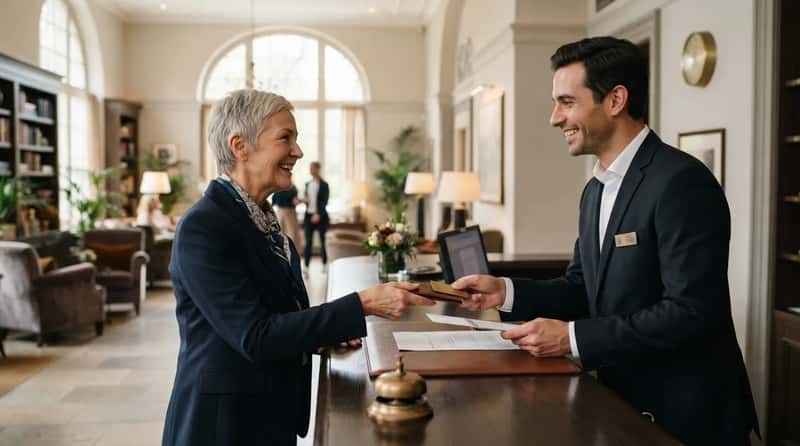
Here’s the trick that beats every app, discount code, and loyalty tier combined: showing up enough times that the staff simply remember who you are. The best desk agents recognize a returning guest before that guest even says their name, and for a solo traveler over 60, that recognition changes the entire emotional tone of a stay.
Even mentioning a past visit does quiet work behind the scenes. Say something like “we stayed here two years ago for our anniversary,” and that detail often gets logged, triggering a quiet upgrade or a room note that makes the whole visit feel personal. In an industry increasingly run by apps and algorithms, being known by name is still the most powerful upgrade there is.
Why It Stands Out
- Being greeted by name resets the entire tone of a stay before a single question is asked.
- Mentioning a past visit often gets added to a guest profile, quietly shaping future service.
- Long-term familiarity with one property tends to outperform elite status earned through points alone.
- Staff remember faces and stories longer than they remember loyalty tiers.
None of these tricks require money, elite status, or insider connections – just patience, a willingness to talk to an actual human, and the old-fashioned instinct that hospitality is still a relationship, not a transaction. Younger travelers aren’t doing anything wrong; they’ve just been trained by an industry that automated most of the moments where these habits used to matter.