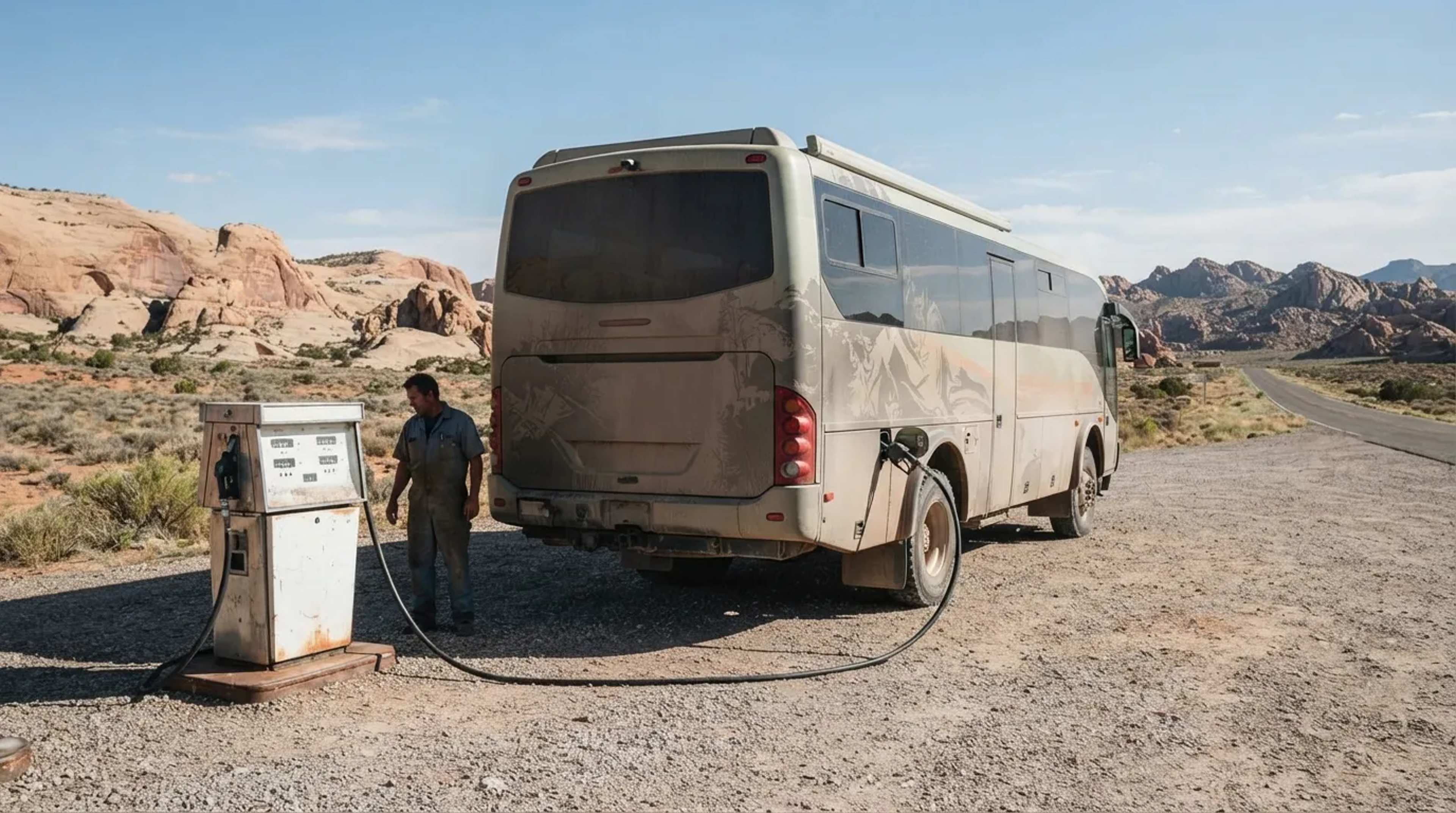
Texas dropped the safety inspection for most personal vehicles, yet your registration bill still carries a fee named after it. That small oddity previews how winter visitors get caught: the rules they remember are not the rules in force.
Some surprises cost a few dollars, like a toll bill mailed to the house you left behind, while others end with a license that is no longer valid for driving. One deadline is shorter than all the rest and sets the pace for the others, but first, the phone in your hand.
#13 – The Statewide Texting Ban and Its Fines
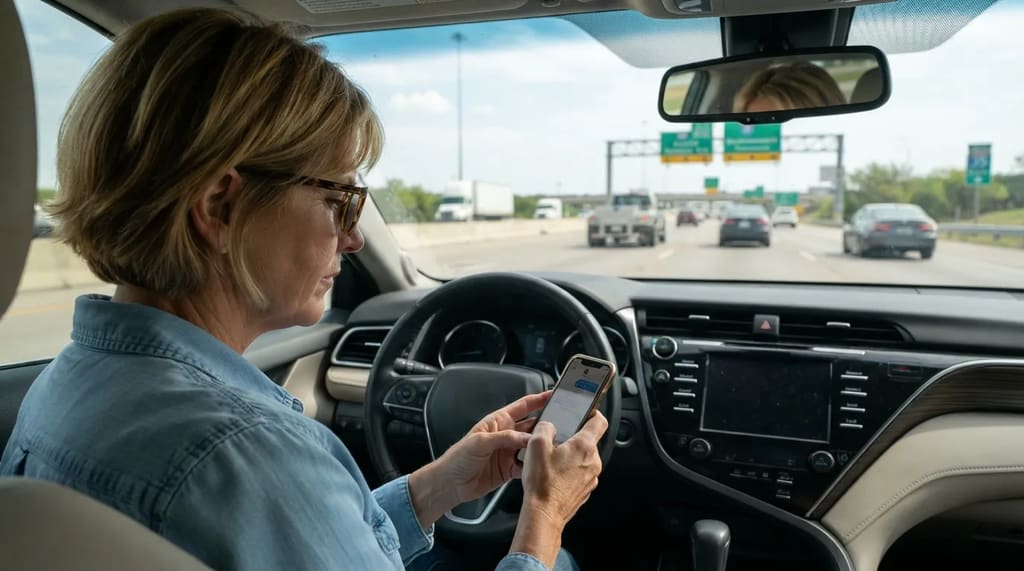
Texting while driving has been illegal across Texas since September 1, 2017. Reading, writing or sending electronic messages behind the wheel is off limits.1
Voice-to-text, GPS navigation and music are still allowed. The ban targets typing and reading, not every use of the phone.
A first offense carries a fine of $25 to $99. If texting causes a death or serious injury, it becomes a Class A misdemeanor, with a fine up to $4,000 and up to a year in jail.
State law stops at messaging, so handheld calls are allowed unless a city says otherwise. And some of the biggest cities say otherwise.
#12 – City Limits Where Handheld Calls Are Banned
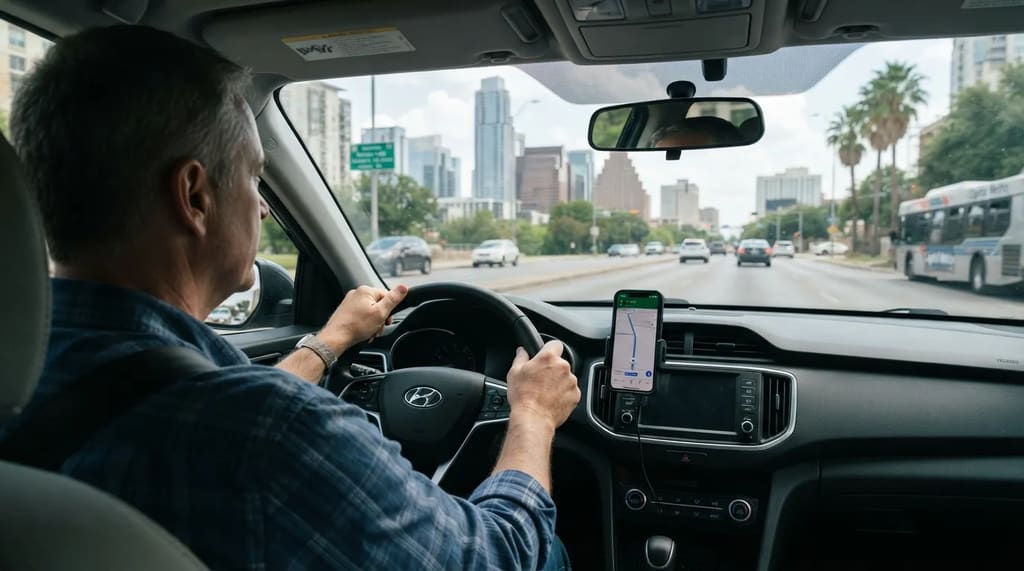
Austin, Dallas, San Antonio and El Paso require fully hands-free driving inside city limits. You cannot hold a phone there for any reason, including calls, GPS or music apps.
More than 90 other Texas cities are reported to have local hands-free ordinances too, with fines up to $500.2 The rule can change at a city line you never notice crossing.
The simplest habit is to treat every Texas drive as hands-free. That beats memorizing which towns have an ordinance.
One more phone rule comes from state law, and it applies in a very specific place.
#11 – Active School Zones and Drivers Under 18
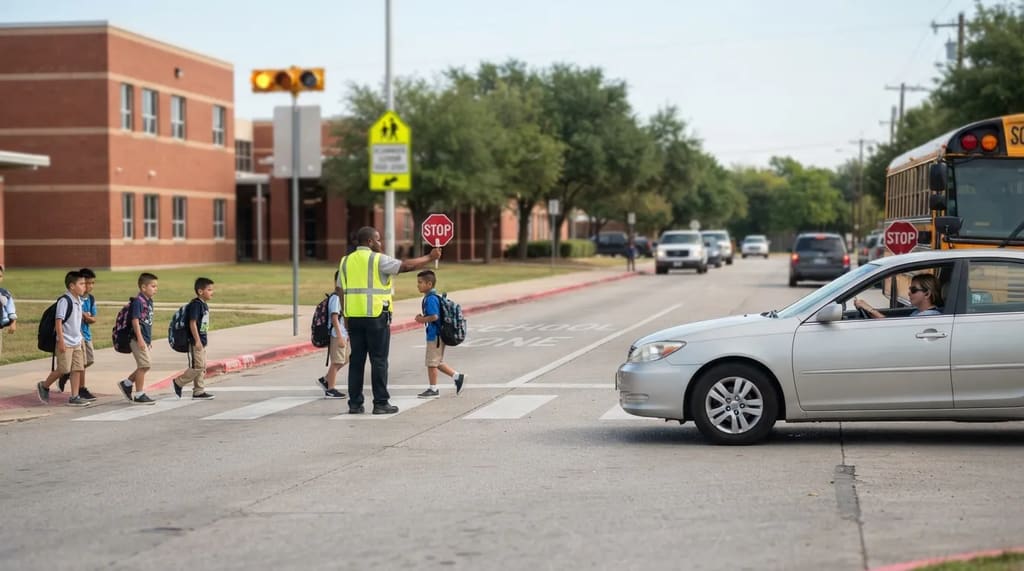
Texas bars handheld phone use, calls included, in an active school crossing zone unless you are stopped or using a hands-free device. A call that is legal on the open road can be a violation near a school.
Drivers under 18 face a stricter rule: no wireless device for any purpose while driving, even hands-free, except in an emergency. If a teenage grandchild borrows your car, that rule rides along.
Fast Facts
- Active school crossing zone: no handheld calls unless you are stopped or hands-free.
- Under 18: no wireless device while driving, except in an emergency.
- Statewide texting ban: in force since September 1, 2017.
- Navigation and music: allowed when hands-free or securely mounted.
In an unfamiliar town, set the route at the curb and leave the phone alone until you park.
#10 – Toll Roads With No Booth and No Cash
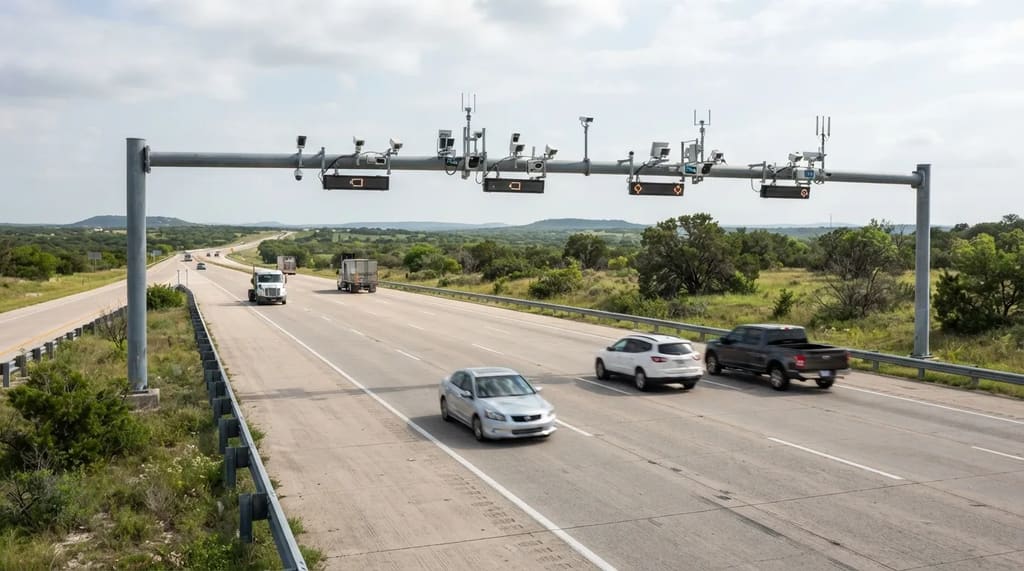
Central Texas toll roads run by the Mobility Authority are all-electronic, so nobody slows down to pay.3 That also means there is no booth to hand cash to.
Without a valid tag account, cameras capture your license plate and a bill goes to the vehicle’s registered owner. For a snowbird, that address may be the house back home.
The invoice follows the plate north instead of waiting where you parked.
That mailed bill costs more than a tag payment, and the gap decides whether a tag is worth the bother.
#9 – What Pay By Mail Costs Compared With a Tag
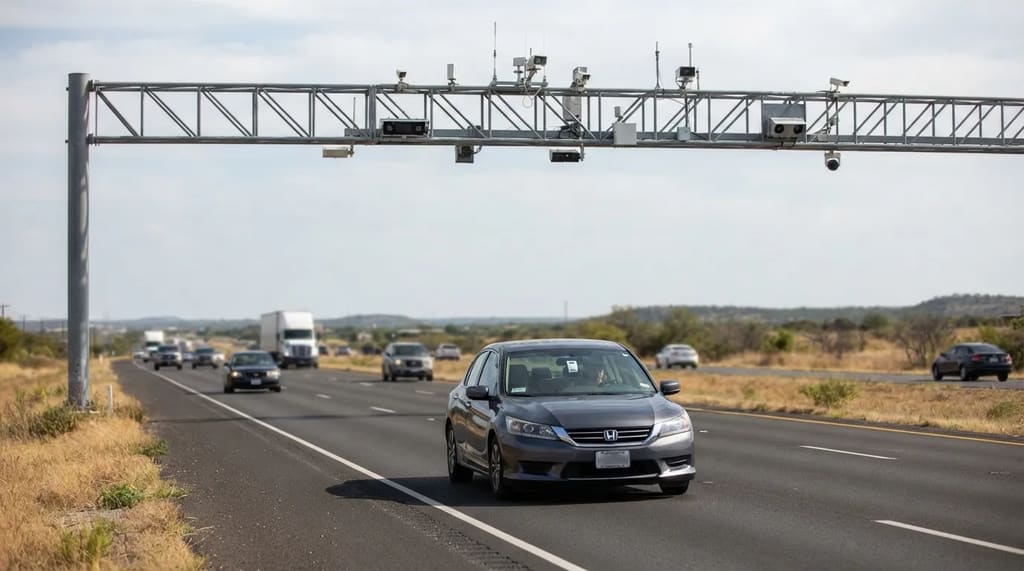
Pay By Mail rates are higher than tag rates, to cover the cost of processing plate information and mailing the bill. The Mobility Authority also charges Pay By Mail customers a $1 processing fee.3
Its roads accept TxTag, TollTag, EZ TAG, K-TAG, Pikepass, SunPass and BancPass accounts.4 If you already carry one of those, you may not need to buy anything.
If you cross a toll road only a handful of times all winter, a new tag account is probably not worth the setup. If tolls are part of your weekly route, tag users are generally charged lower rates.
Quick Compare
- Pay By Mail: higher rates, a $1 processing fee, and a bill sent to the registered owner.
- Tag account: lower rates, and several out-of-state tags already work.
- Rental car: tolls follow the rental company’s own billing program.
In a rental car, ask at the counter how toll charges are passed on.
Next comes a rule that many returning visitors still think they remember.
#8 – The Safety Inspection Texas Dropped in 2025
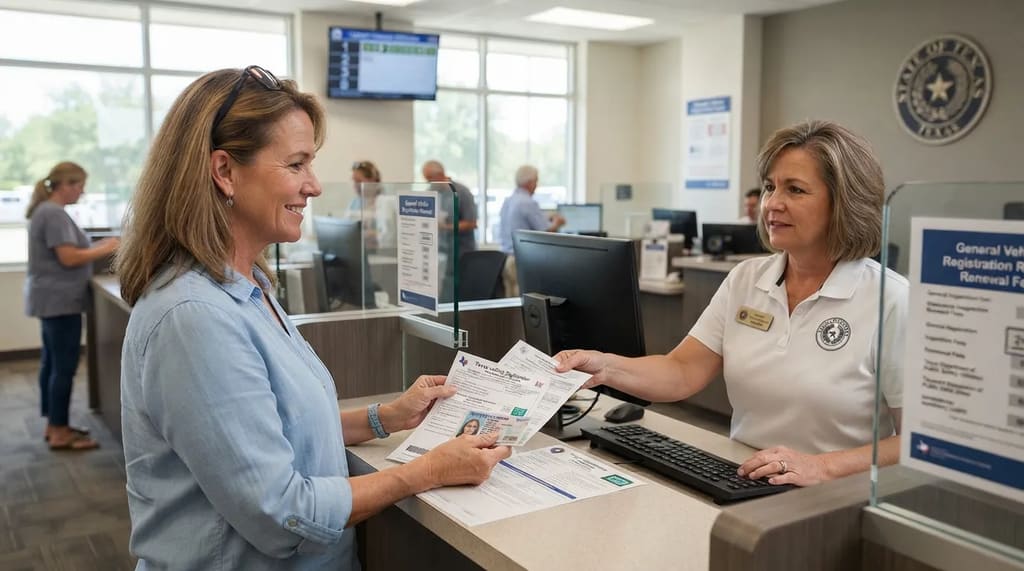
The Texas Department of Public Safety says non-commercial vehicles no longer need a traditional safety inspection before registration. The change took effect January 1, 2025, under House Bill 3297, which lawmakers passed in 2023.5
Commercial vehicles in every county still need a passing safety inspection.5 The exemption covers ordinary cars and trucks.
If a shop or website offers to sell you an inspection just to register a personal vehicle, you can walk away.
The inspection is gone, but a charge named after it is still on your bill.
#7 – The $7.50 Fee That Outlived the Inspection
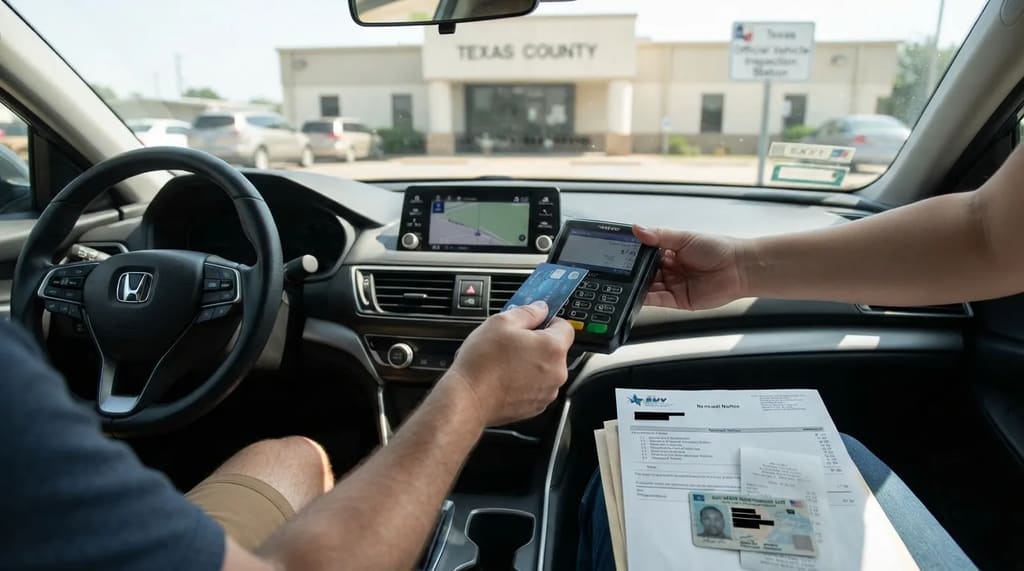
The inspection program replacement fee is $7.50, and the state collects it when you renew whether or not you get any test.5 It replaced the revenue the old inspection fee used to bring in.
It is a line item, not a service, so there is nothing to schedule and no station to visit. For a car already registered in your home state, $7.50 is the figure that applies.
A few counties still ask for a test at renewal, though, and that one has nothing to do with safety.
#6 – Counties Where an Emissions Test Remains
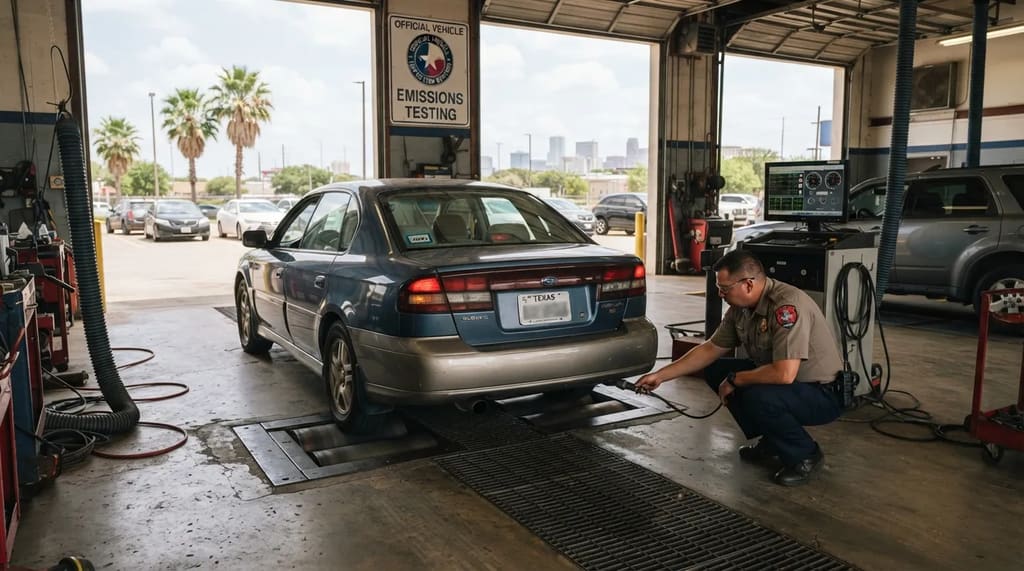
Annual emissions tests are still required in a list of counties that includes Harris, Dallas, Tarrant and Travis. Bexar County (San Antonio) is slated to join on November 1, 2026.
The test follows where the car is registered, not where you happen to drive. DPS says drivers with unexpired registration don’t need a passing test until renewal time.
So don’t book a test the week you arrive. Wait for the renewal, and ask the county tax office whether your county is on the list.
Whichever county you register in, its tax office will also want proof that the car is insured.
#5 – Insurance and Title Papers the County Office Wants
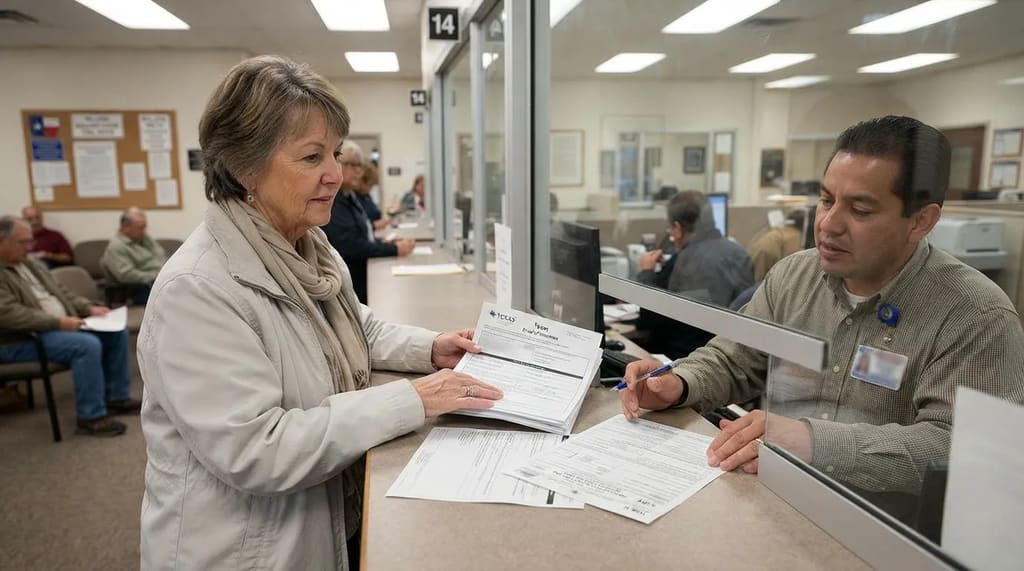
At the county tax assessor-collector’s office, you register with your out-of-state title, proof of Texas insurance and Form 130-U. The Texas Department of Motor Vehicles says a new resident is not always required to title the vehicle in Texas, but first-time registrants still complete that form.6 7
If the vehicle is financed or leased, confirm the correct option first. Someone other than you may hold the title.
DPS also asks for proof of insurance on each vehicle you own when you apply for a license, so the same papers get used twice. Ask your insurer for the Texas proof before you walk in.
All of that paperwork goes to the county office, while the license is handled at a different counter altogether.
#4 – Two Offices, Two Different Jobs
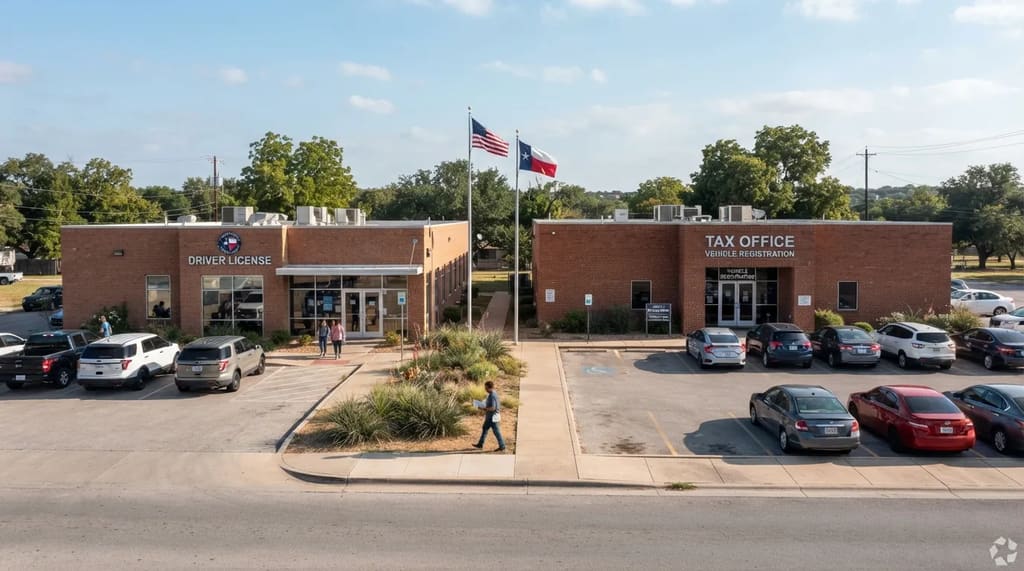
DPS issues driver licenses, but it does not register vehicles or issue plates. Registration goes through the county tax assessor-collector.
When you surrender an out-of-state license, DPS asks for evidence of current Texas registration for each vehicle you own. That is why most new residents register the vehicle first and apply for the license second.
Going to DPS first usually means a second trip.
With registration done, the license has its own, longer clock.
#3 – Day 90 and the Out-of-State License
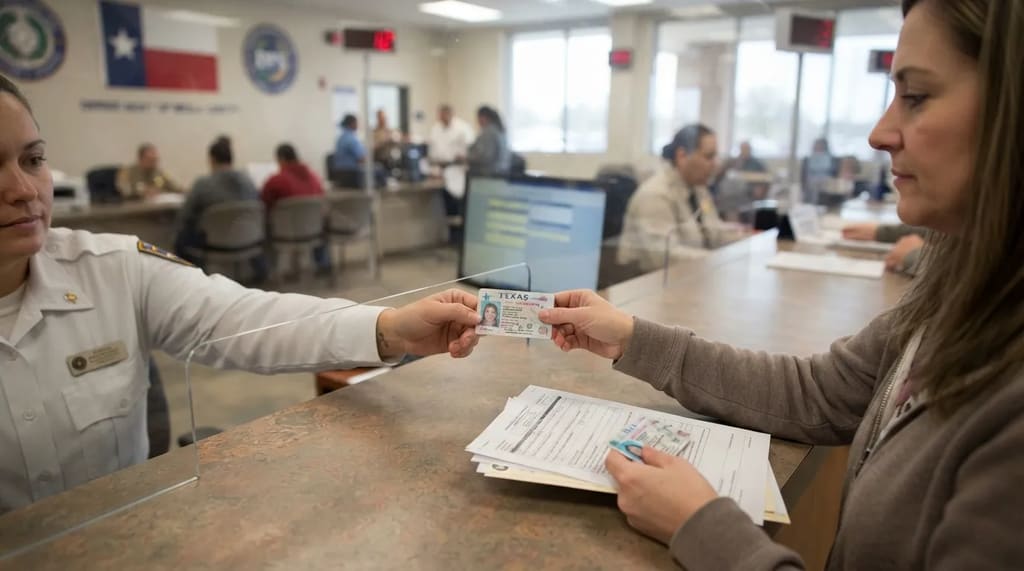
You have 90 days from the date you establish Texas residency to drive on a valid, unexpired out-of-state license. After day 90, it is no longer valid for driving in Texas.8
Each licensed household member needs an individual DPS appointment. A spouse who keeps driving past day 90 faces the same citation risk as the primary mover.
You apply in person and surrender your out-of-state license there. If you are a couple, book both appointments at once.
But a license that expires before you reach the counter changes what you have to do there.
#2 – What an Expired Out-of-State License Costs You
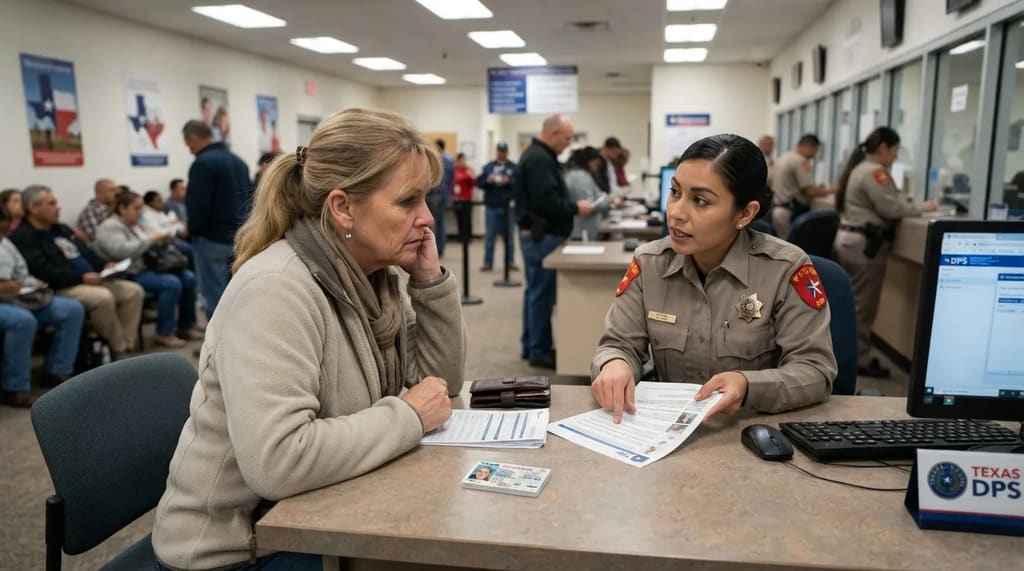
If your out-of-state license is valid and unexpired, surrendering it at DPS requires no written or driving test. The six-hour adult driver education course is also waived for new residents 18 or older who surrender a valid license.
Let it lapse and the picture changes. An expired license typically forces the written knowledge test at minimum, and sometimes a road test.
A driving test also requires an Impact Texas Driver certificate dated within 90 days of the skills test. That is a course and a test you could have skipped.
If your home-state license comes due this winter, renew it before you leave.
Every date on this list is measured from one starting point, and the shortest of them runs out first.
#1 – The 30-Day Registration Clock Behind Everything Else
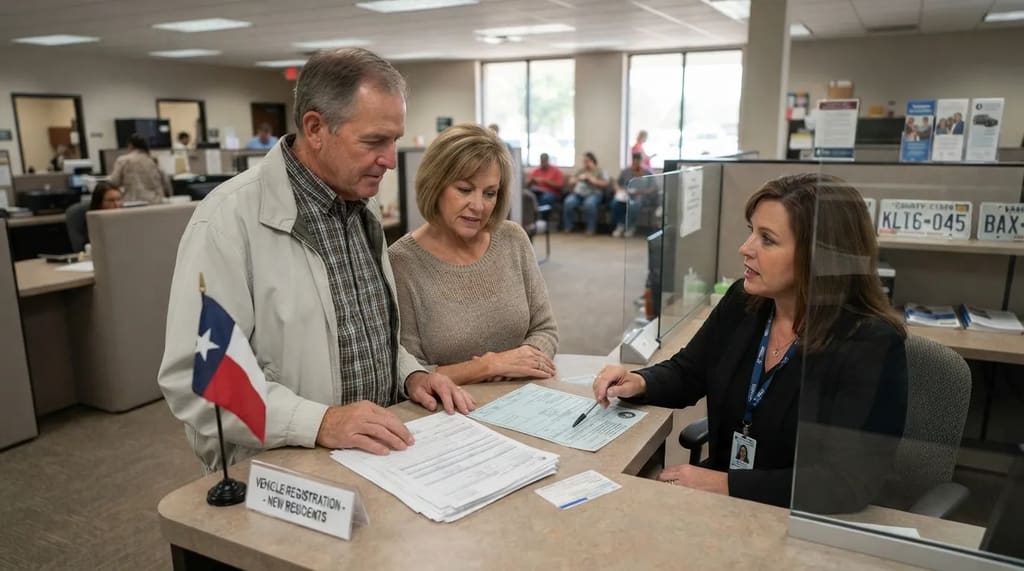
Texas gives new residents 30 days to register vehicles brought into the state. The clock runs from when you become a Texas resident or bring the vehicle in to stay, and out-of-state plates and stickers do not pause it.7
This clock sets the order for the rest. DPS wants proof of Texas registration at the license counter, so the county tax office comes first, long before day 90 arrives.
At a Glance
- Day 30: register vehicles brought into Texas.
- Day 90: your out-of-state license stops being valid for driving.
- At the county office: out-of-state title, Texas insurance proof and Form 130-U.
- At renewal: an emissions test, if your county requires one.
Driving on an expired out-of-state registration increases the risk of a citation at a traffic stop. It also puts the insurance papers, Form 130-U and the county’s emissions question on a short schedule.
Whether a long winter stay counts as establishing residency is a question for the county tax office or DPS. Ask before your second month, because the answer decides which of these dates apply to you.
Many of these rules are not tied to the road under your tires. They are tied to a date, a county or a city limit, and they change without any sign.
Treat the day you settle in Texas as the start of a short list of deadlines, and write them down before the sunshine gets in the way. Phone rules need no calendar entry, only a mount on the dash.
When you head south for the winter, what is the one piece of paperwork you have learned to sort out before you leave home?
- Texas DPS Distracted Driving: https://www.dps.texas.gov/news/dps-increases-enforcement-annual-distracted-driving-campaign
- Texas Distracted Driving Laws: https://perrinlawtexas.com/texas-distracted-driving-laws/
- Mobility Authority Toll FAQs: https://www.mobilityauthority.com/faq/toll/
- Mobility Authority Electronic Tags: https://www.mobilityauthority.com/pay-your-toll/options/electronic-tag/
- DPS Safety Inspection Changes: https://www.dps.texas.gov/news/vehicle-safety-inspection-program-changes-now-effect
- Texas Form 130-U: https://www.txdmv.gov/sites/default/files/form_files/Form-130-U.pdf
- TxDMV New Resident FAQs: https://www.txdmv.gov/faqs
- DPS Moving to Texas Guide: https://www.dps.texas.gov/section/driver-license/moving-texas-guide-driver-licenses-and-ids