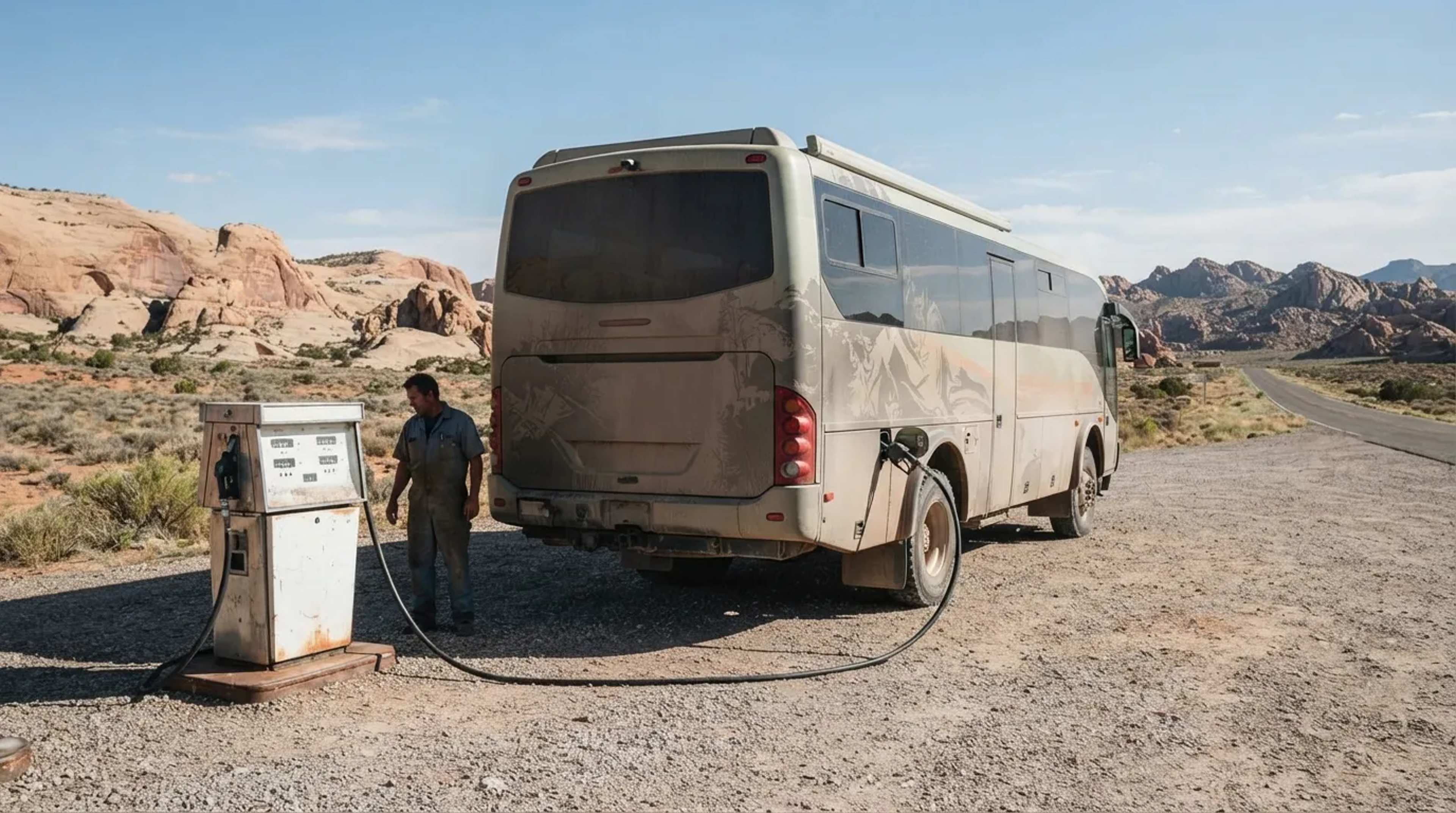
Texas has no personal income tax, and Article 8, Section 24-a of its constitution bans one. So a winter in the Valley or the Hill Country never produces a Texas income tax return.
The paperwork for calling Texas home is another story. It comes with a 30-day clock for the car, a 90-day clock for the license, and a homestead exemption that covers only one house.
One item below costs nothing in Texas, yet it is tied to the biggest bill of all, and that bill comes from a different state. The smallest trap starts at the post office.
#13 – Forwarding Your Mail Does Not Make You a Texan

Filing a USPS change of address to Texas does not make you a Texas resident in DPS’s eyes. It is a mail instruction, so it starts no Texas deadline and proves nothing about where you live.
Residency is built from what you do, like registering a car or applying for a license. The vehicle clock, for instance, runs from the date you establish residence.
Worth Knowing
- A USPS change of address only redirects your mail.
- Actions like registering a car or applying for a license are what build residency.
- The vehicle clock runs from the date you establish residence.
- DPS asks for two pieces of proof of a Texas street address.
File the form for your mail and nothing else. The paperwork that counts starts with proof of a Texas street address, and DPS asks for two pieces of it.
#12 – Two Documents Showing a Texas Address
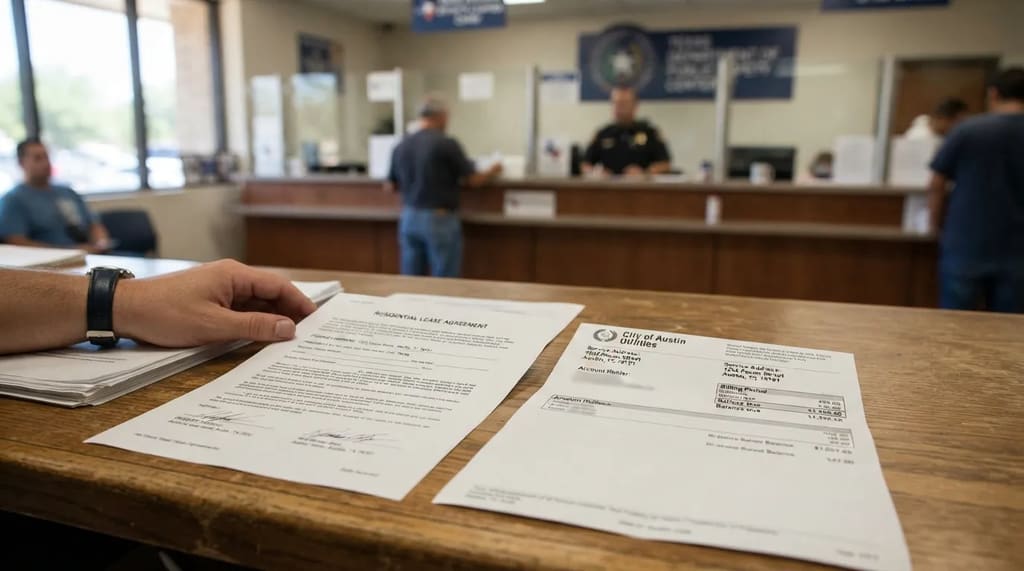
For new residents, DPS waives its usual requirement to prove you have lived in Texas for 30 days. It asks instead for two documents showing your new Texas address.
That cuts both ways for a snowbird. A Texas lease or utility bill gives you what you need, but if every bill still goes to a northern house, you may have nothing to show.
Documents get you through the DPS door, but the car in the parking lot needs Texas insurance before anything else happens.
#11 – Texas Liability Insurance Before the Plates
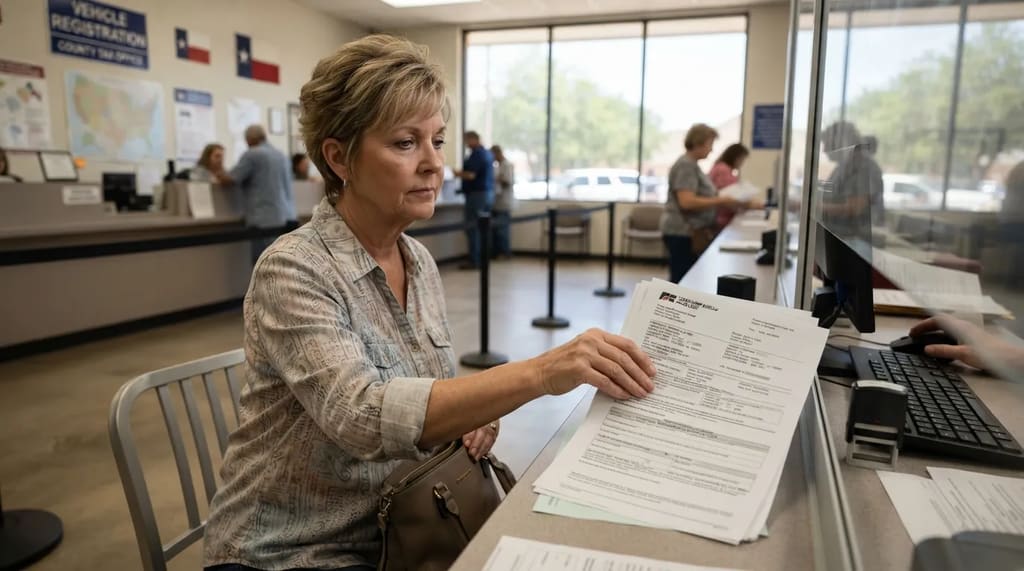
Texas liability insurance is required before you can complete vehicle registration. DPS also asks for proof of insurance for each vehicle you own, or a statement that you don’t own one.
An out-of-state policy may not satisfy the county office if it lacks the coverage limits Texas requires. The state minimums are commonly written as 30/60/25: $30,000 per injured person, $60,000 per accident and $25,000 for property damage.
Call your insurer before the trip to the tax office. A policy that falls short can hold up the whole sequence.
A policy only clears the way for registration, and the driver license has a deadline of its own.
#10 – The 90-Day Window for a Texas License
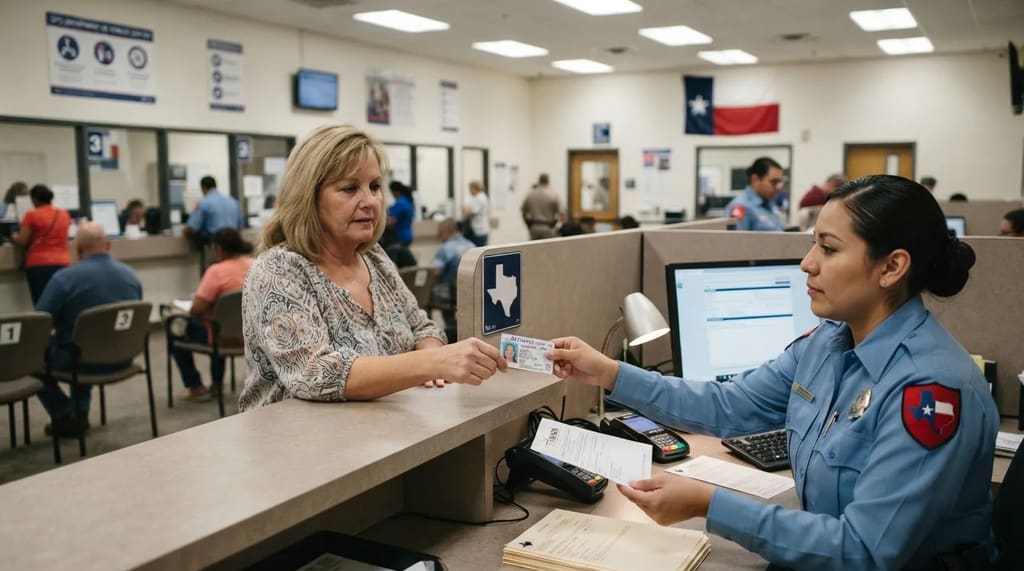
You have 90 days from establishing Texas residency to get a Texas driver license. After day 90, your out-of-state license is no longer valid for driving here, and you can be cited.1
The transfer usually involves no road or written test if your current license is valid and unexpired. According to the DPS fee schedule, the adult license costs $33 for ages 18 to 84 and $9 at 85 and older, and a new adult license is valid for eight years.2
Book in the first month instead of waiting for day 85. A missing document is easy to fix when you still have time.
Your car runs on a shorter clock than your license does, and it starts at a different counter.
#9 – The 30-Day Clock for Your Car
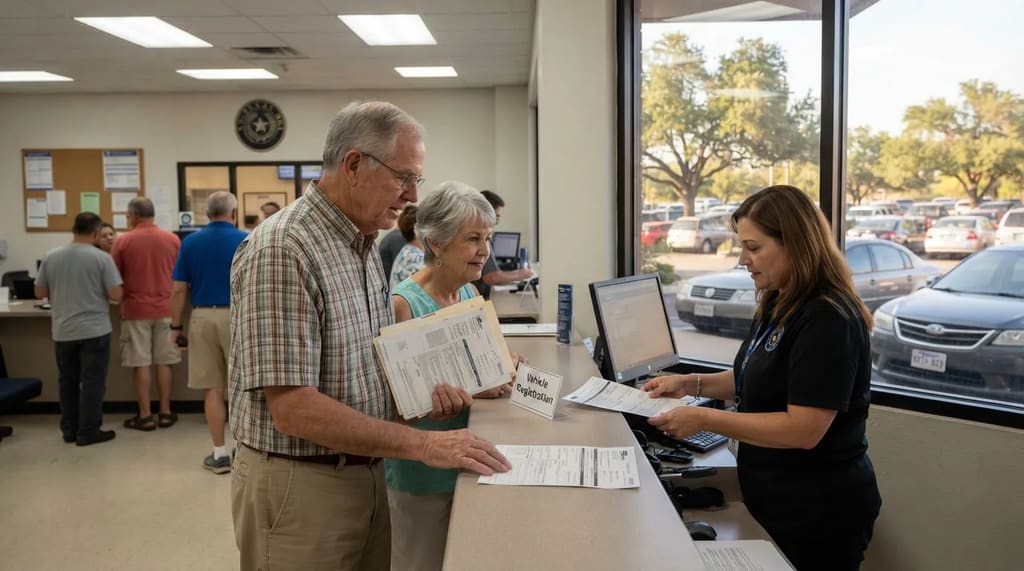
A vehicle brought to Texas must be registered within 30 days of the date the owner establishes residence or secures gainful employment. TxDMV says penalty fees may apply if you register later than 30 days after moving.1 3
Registration goes through your county tax assessor-collector, while DPS handles driver licenses only. Because DPS may ask for proof of Texas registration when you apply for the license, the car comes first.4
If you are not a Texas resident, your home state’s rules govern your registration and plates. The line between visitor and resident is the date you establish residence, so decide which one you are on purpose.
At a Glance
- Insurance: Texas liability coverage comes first.
- Car: register within 30 days, through the county tax assessor-collector.
- License: apply within 90 days, at DPS.
The registration fee is only part of what the county collects, because a car already titled elsewhere gets taxed at its own rate.
#8 – The $90 New Resident Vehicle Tax
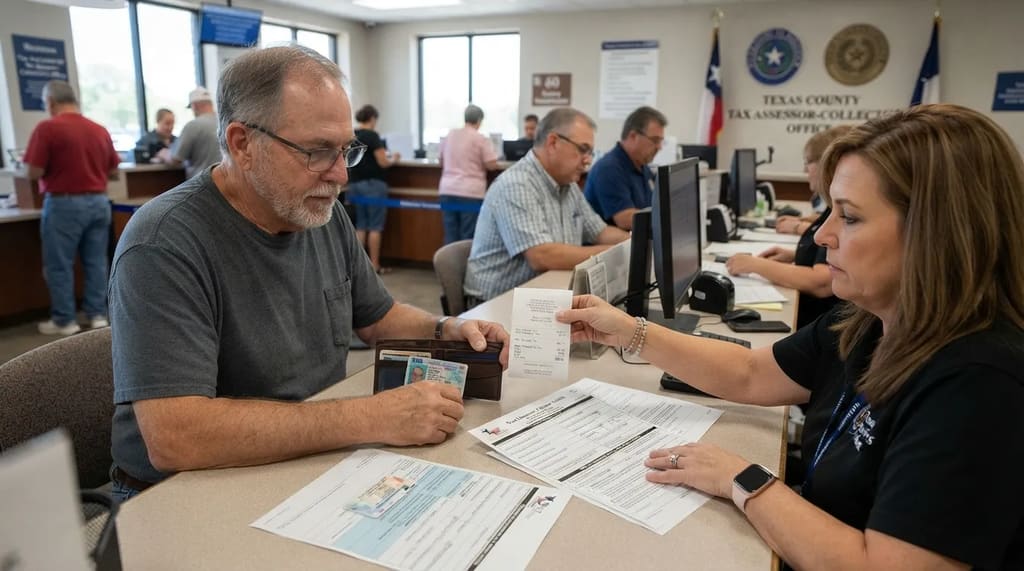
A flat $90 new resident use tax applies instead of the standard 6.25% motor vehicle tax. The catch is that the vehicle must already be registered in your name in another state or country.3 5
It is due within 30 days of the vehicle’s first use in Texas.5 A car bought just before the move, and not yet registered in your name elsewhere, may not qualify for the flat rate, so ask the county office which rate applies before you pay.
Cars are the cheap part, though. The word “resident” can mean five different things in Texas, and one of them is worth real money.
#7 – Texas Has More Than One Definition of Resident
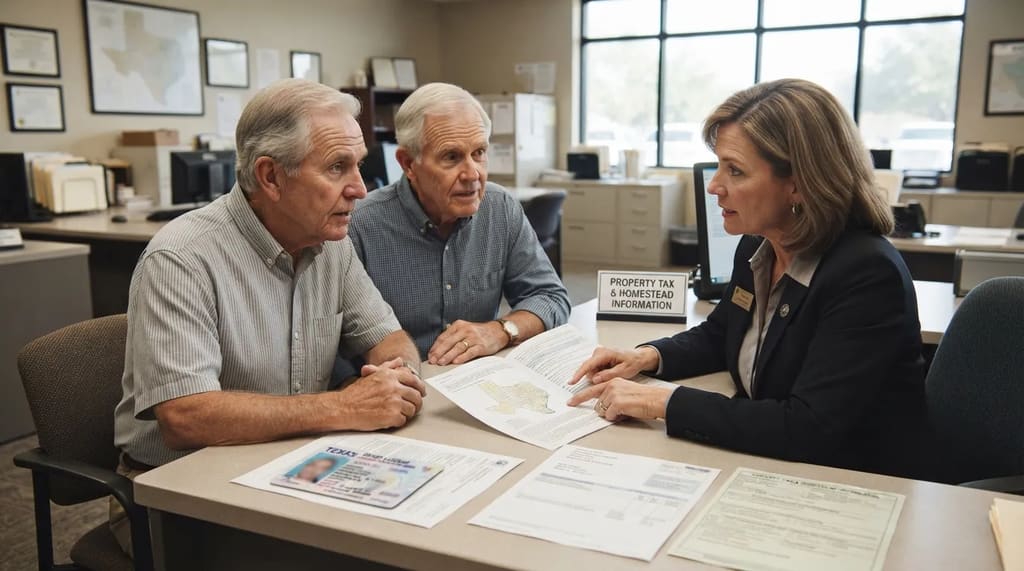
Residency matters in Texas for the homestead exemption, in-state tuition, voter eligibility and driver licensing. Each one has its own standard rather than a single unified test.
So a Texas license by itself does not settle your standing for property taxes. A homestead exemption by itself does not settle the DPS question either.
Texas has no income tax to apply a residency test to, so the concept bites hardest on property tax. Of all these separate tests, the homestead one carries the most money, and it allows only one house.
#6 – One Homestead, One Primary Residence
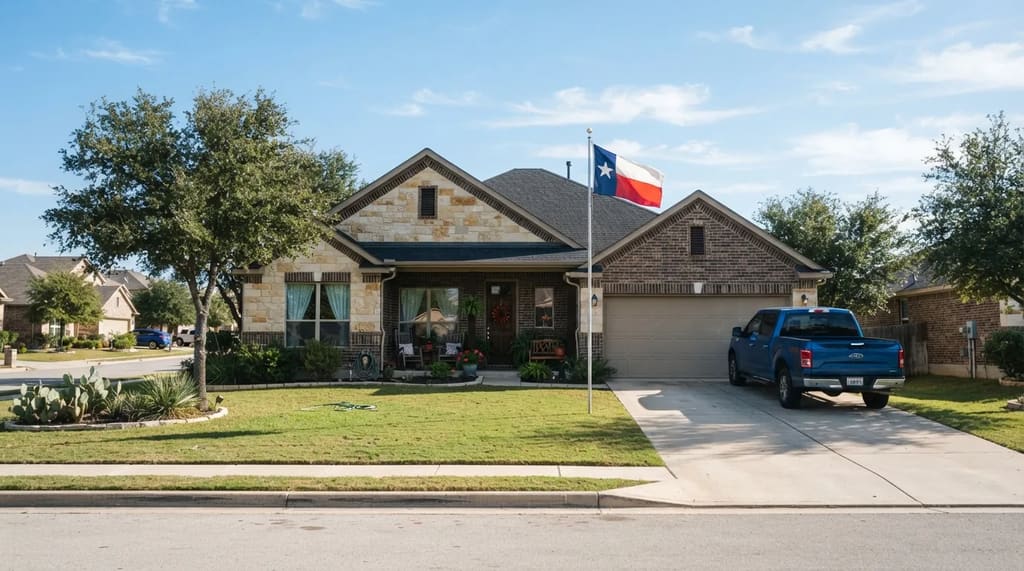
The property must be your principal residence, and you must occupy it as such. You also must not claim the exemption on another property.
Ownership and occupancy are measured as of January 1 of the tax year. A house you use only in winter is hard to present as your principal residence.
If Texas is your second home, skip the homestead exemption. The savings are not worth a claim that conflicts with the primary home you have named somewhere else.
If Texas really is home, the exemption does double duty. It also serves as evidence of domicile when the state you left questions the move.
For owners who do qualify, turning 65 adds a second layer of savings on top of the first.
#5 – What Turning 65 Adds to a Texas Tax Bill
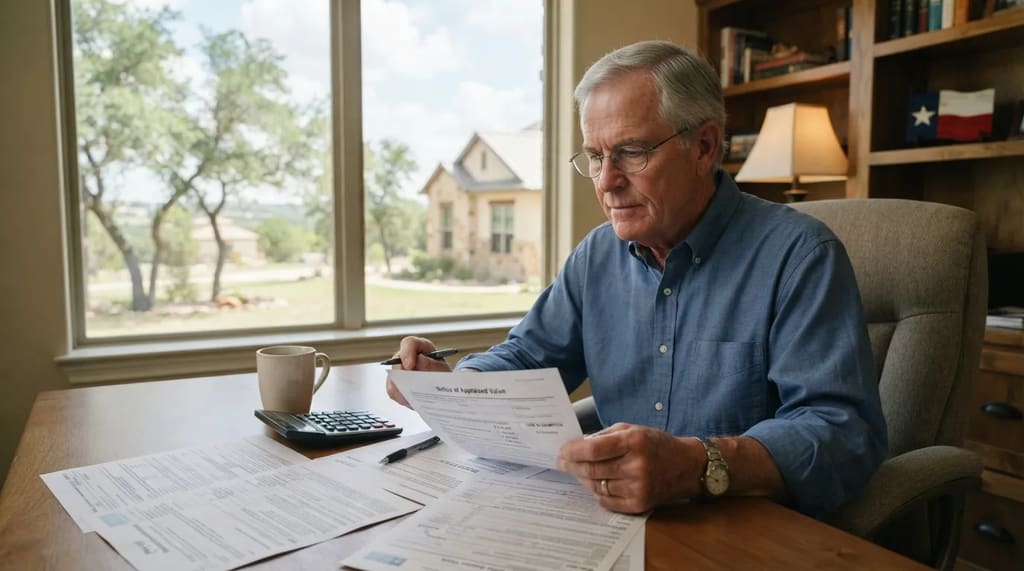
The Texas Comptroller of Public Accounts sets the qualifying age at 65. You must be 65 or older as of January 1.
Homeowners that age get an additional $60,000 school district exemption on top of the standard $140,000.6 7 Here is how that stacks up:
- $140,000 standard homestead exemption
- $60,000 additional at 65 or older
- $200,000 combined
These reduce the value used for school district taxes only. Other taxing units may adopt their own over-65 exemptions of at least $3,000, and you apply on Form 50-114 with your county appraisal district.6 7
The part worth guarding is the tax freeze, because it does not move with you automatically.
#4 – The Freeze That Won’t Follow You Automatically
Once you qualify, your school district cannot raise your school taxes above what it charged in your first qualifying year. The exception is improvements you add to the home.7
When you move, you have to do the work yourself, and the order matters.
Fast Facts
- Request a tax ceiling certificate from the appraisal district that granted the ceiling.
- File the certificate with the district covering the new home.
- Submit a new homestead application there.
- The freeze carries over as a percentage, not a fixed dollar amount.6
Skip a step and the benefit is gone. Because the freeze transfers as a percentage, a more expensive house can still raise your school bill.
Ask about the certificate before you close on a new house, because it is an easy step to forget once the move is done.
All of this belongs to the Texas side of the ledger, and Texas itself never counts how many days you spent here.
#3 – Texas Does Not Count Your Days
Because Texas has no individual income tax, there is no Texas tax residency test, 183-day rule or day count. Time spent here does not trigger the kind of day-count exposure that drives snowbird planning in states like New York or California.
That is the good news for the Texas half of your year. Texas doesn’t count days; the state you left does.
A running tally of nights in each state is worth more than any Texas form.
Related Stories From Travelbinger


The state that does count also wants something Texas never asks for, which is proof that you actually left.
#2 – Proof That You Left Your Old State

Domicile has no day minimum at all. You can do everything right on that side, with a new license, voter registration and a declaration of domicile, and still lose the argument if you cross 183 days in your old state.
Your prior state will want proof that you actually left. That generally means spending fewer than 183 days there and either selling the old home or genuinely giving up use of it.
A Texas license and a homestead exemption are strong evidence. They are only two pieces, though, and strong ties in two places can trigger tax obligations.
Even a clean break on paper can be undone by the day count in the state you left, which works separately from domicile.
#1 – The 183-Day Count in the State You Left

Many states with an income tax apply a statutory residency test alongside the domicile test. It is commonly a permanent place of abode plus more than 183 days in the state, and it applies regardless of the domicile you claim.8
Some states, New York among them, count any part of a day as a full day, so your arrival and departure days can count. Cross the line and you may be treated as a resident for the full tax year.
The result can be dual residency, where both states claim you and double taxation becomes possible. New York, for example, can treat you as a resident if you keep a permanent home there and spend more than 183 days in the state, even if your domicile has moved to Texas.8
That is the bill the opening mentioned. Texas collects nothing, yet a northern house you keep for summers can bring a full year of resident tax there.
The Texas license, the registered car and the homestead exemption all point the right way, and none of them stops the count.
Think of your residency as a file that two states could someday read. Texas asks for little beyond a few forms and fees, so the better use of your time is the other file: the calendar, the old house, and a license that matches the story you are telling.
Decide once a year which state is home, then check that every document you hold points the same way. If you split your year between Texas and another state, what do you use to keep track of the days you spend in each?
- TxDMV New to Texas: https://www.txdmv.gov/motorists/new-to-texas
- Texas Driver License Fees: https://www.relocatemetx.com/texas/drivers-license/
- Texas.gov Vehicle Registration: https://www.texas.gov/licenses-ids-vehicles/vehicle-registration
- DPS Moving to Texas: https://www.dps.texas.gov/section/driver-license/moving-texas
- Comptroller New Resident Tax: https://comptroller.texas.gov/taxes/publications/96-254/new-resident-tax.php
- Property Tax Exemptions Overview: https://help.bcad.org/hc/en-us/articles/40005526883219-Property-Tax-Exemptions-Overview
- Over-65 Exemption Guide: https://texaslandtax.com/blog/texas-over-65-homestead-exemption-school-tax-freeze-application/
- New York Statutory Residency: https://www.cbiz.com/insights/article/statutory-residency-its-more-than-just-time-and-place