Most people assume campground check-in is the same robotic script for everyone: sign here, here’s your site number, quiet hours are at ten. But talk to enough retired RVers and a different pattern shows up again and again, one that never makes it onto a brochure or a welcome sign.
Campground hosts, especially the ones who’ve been doing this for years, tend to quietly shift how they handle guests who are visibly older, slower-moving, or traveling solo in a rig that’s a little too big for their comfort zone. None of it is official policy. There’s no memo taped to the office wall that says “treat seniors differently.” It’s just instinct, built from years of watching who struggles with what, and it starts the second you pull up to the kiosk.
#13 – They Skip the Awkward Age Question and Just Apply the Discount
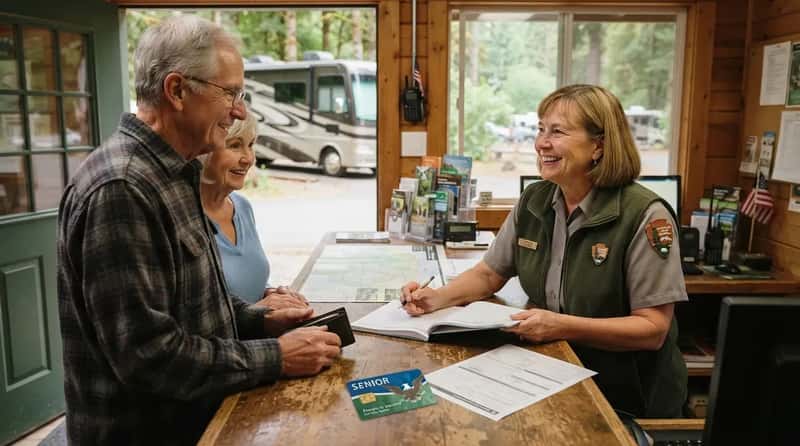
Most campgrounds won’t automatically apply a senior rate unless you ask, but hosts who’ve been around the block tend to mention it before you do. The America the Beautiful Senior Pass is the big one on federal land – a lifetime pass that currently costs $80 and knocks 50 percent off camping fees at qualifying federal sites.
Hosts at Army Corps of Engineers lakes and Tennessee Valley Authority campgrounds do the same math without being asked. A lot of first-time senior travelers never bring it up because they don’t realize the discount applies at that particular site. A good host brings it up first, before you’ve even reached for your wallet.
Fast Facts
- Lifetime Senior Pass: The Senior Lifetime Pass is valid for your lifetime and costs $80, while the Senior Annual Pass is valid for one year and costs $20.
- The real payoff: The Senior Pass may provide a 50 percent discount on some amenity fees charged for facilities and services such as camping, swimming, boat launch, and specialized interpretive services.
- Who qualifies: US citizens or residents 62 years or older are eligible for a Senior Pass.
- Beyond federal land: the Tennessee Valley Authority may honor the Senior Pass for entrance or camping discounts.
#12 – They Point You Toward the Site With the Shortest Walk to the Bathroom
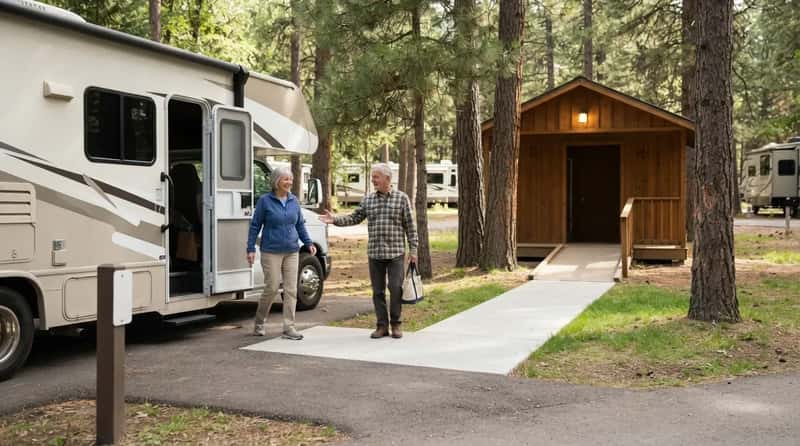
Nobody advertises this on a map, but hosts often know which sites sit closest to the bathhouse without a curb, a hill, or a gravel patch in between. Ask a host which spot they’d pick for their own parents, and the answer usually isn’t the “premium” waterfront site everyone requests first.
This is one of those quiet acts of triage that happens at the kiosk, not the reservation website. A site forty feet from a bathhouse door with a smooth path beats a scenic site two hundred feet away with three concrete steps, and hosts who’ve watched guests struggle with that walk at 2 a.m. know it. It’s a small favor, but it’s the kind that gets remembered for years.
#11 – They Slow Down the Paperwork Without Making It Obvious
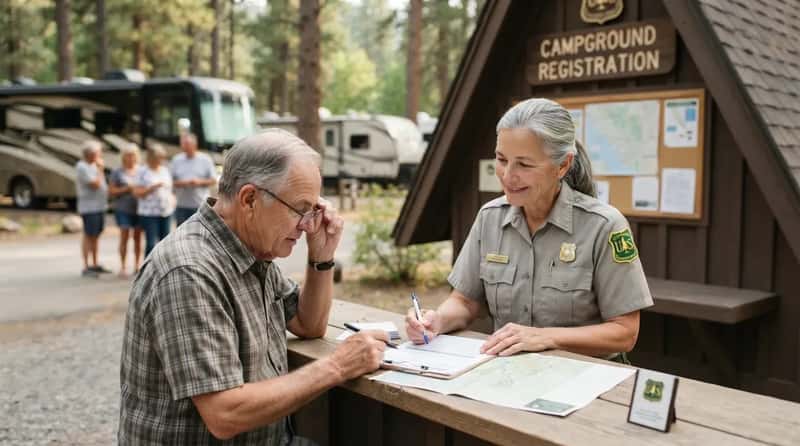
Check-in kiosks move fast during peak season, but experienced hosts read body language quickly. If someone’s fumbling with reading glasses or asking the same question twice, the pace of the conversation changes – not dramatically, just enough.
Campground hosts across state and federal systems are trained to handle registration and camper questions as a core part of the job, alongside light maintenance, park rules, and pointing people toward local attractions. That flexibility gives hosts room to slow down for guests who need an extra minute without holding up the line behind them.
#10 – They Walk You to the Site Instead of Just Pointing
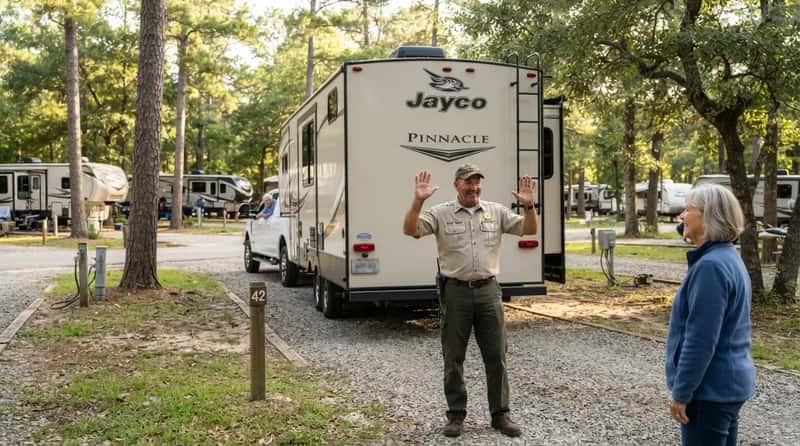
A lot of hosts will hop in a golf cart or walk alongside a rig on the first lap through the loop, especially for guests who seem uncertain about tight turns or low branches. This isn’t standard at every park, but it’s common enough that longtime RVers over 60 report it happening more often than not.
It solves a real problem: backing a 32-foot fifth wheel into an unfamiliar site is stressful at any age, and it gets harder when depth perception or mirror confidence isn’t what it used to be. A host standing at the back bumper waving directions turns a ten-minute ordeal into a two-minute non-event. It’s not written in any job description, but it’s one of the most requested favors nobody actually requests out loud.
#9 – They Flag the Uneven Ground Before You Trip on It
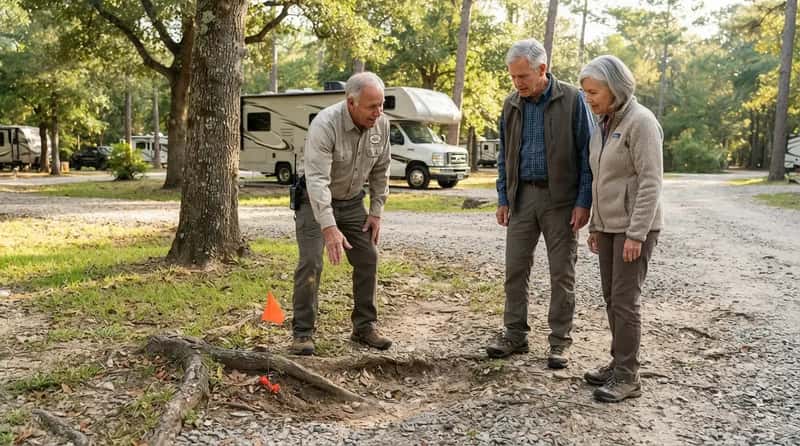
Roots, drainage dips, loose gravel – every campground has trouble spots the host knows by heart and newcomers don’t. For older guests, that knowledge gets shared upfront instead of discovered the hard way.
This is less about liability and more about habit. Hosts spend their days walking the same loops repeatedly, and they notice exactly where past guests have stumbled, even if nobody officially reported it. A quick heads-up at check-in – “watch the dip by site 14, it floods after rain” – has quietly prevented more twisted ankles than any posted sign ever has.
#8 – They Offer the Level Site First, Not the Scenic One
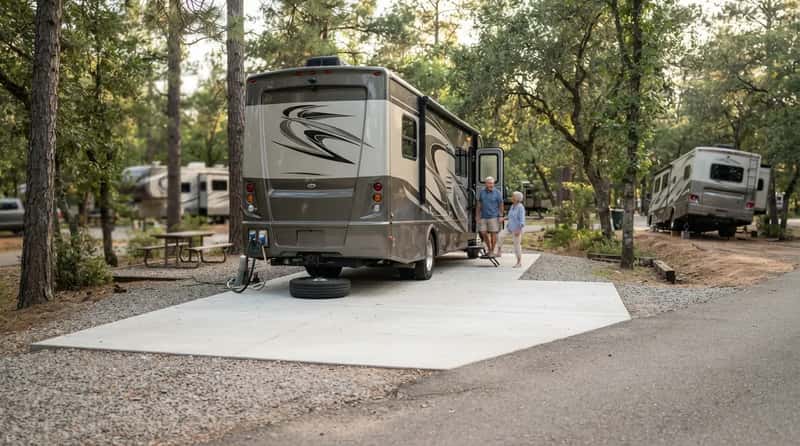
Ask any RVer over 60 what matters more after a long travel day: the view or not fighting with leveling blocks for twenty minutes. Hosts who’ve hosted long enough know the answer, and they steer accordingly.
A perfectly level pad matters more than most younger travelers realize, especially for anyone dealing with joint pain or balance issues who doesn’t want to be climbing around under a rig with blocks and a bubble level at dusk. The site with the best sunset view is often the worst one to sleep in if it’s tilted three inches. Hosts who’ve fielded enough late-night complaints learn to mention this trade-off honestly instead of just upselling the view.
Quick Compare
- Level pad: no blocks, no bubble level, no fumbling with chocks after dark.
- Scenic slope: gorgeous photo, but often means leveling gear at dusk and a tilted bed at 2 a.m.
- Joint-friendly pick: flat ground beats a postcard view for anyone managing knee or hip pain.
- What hosts actually recommend: comfort first, scenery second, when asked directly.
#7 – They Quietly Enforce Quiet Hours Harder Near Certain Loops
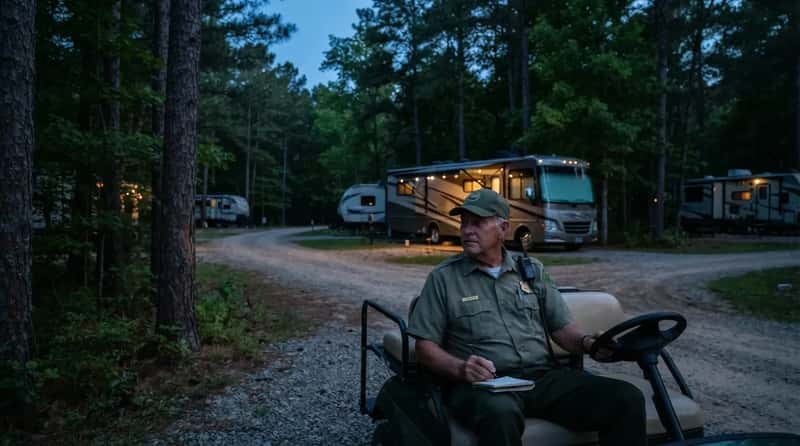
This one triggers debate, but it’s real: hosts often keep a closer ear on noise near loops where older or early-sleeping guests are staying, even when the official quiet-hours policy is the same park-wide. It’s not written anywhere, but it happens.
Some campers find this comforting. Others find it a little inconsistent, arguing that quiet hours should be enforced identically for every site regardless of who’s staying nearby. Both reactions are fair, but hosts who’ve dealt with 6 a.m. wake-up complaints from guests who go to bed at 8 p.m. tend to lean toward the extra vigilance, whether campers realize it’s happening or not.
#6 – They Mark Up a Paper Map Instead of Just Pointing at a Phone
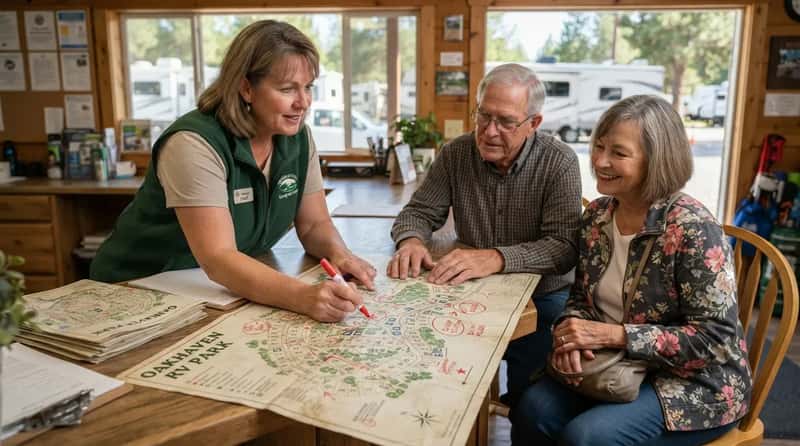
Digital check-ins are everywhere now, but plenty of hosts still keep a stack of paper maps behind the counter, and they reach for one specifically for guests who seem more comfortable with something they can hold, fold, and stick on the dashboard.
It sounds small, but a hand-marked paper map with the bathhouse circled and the dump station starred solves more confusion than a mumbled set of directions ever could. Hosts who’ve worked the same campground for multiple seasons know exactly which turns confuse people, and they mark those turns without being asked.
#5 – They Check On You the First Night, Not Just During Rounds
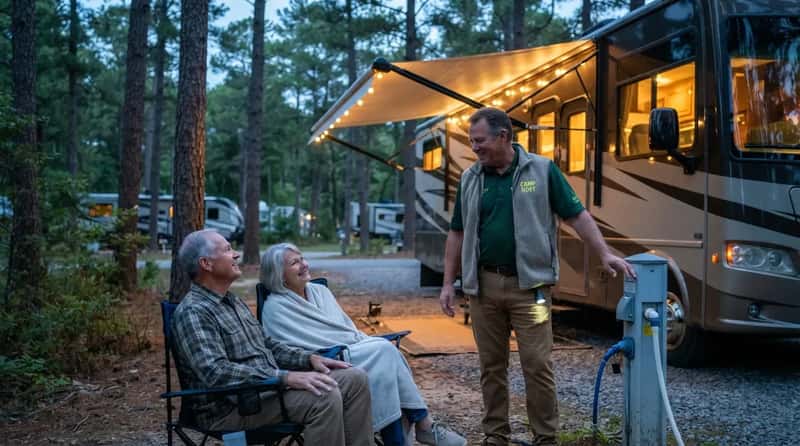
Camp hosts are expected to keep an eye on the whole campground as part of the job, but there’s a difference between a routine sweep and a specific stop by a specific site. Many camp host duties involve greeting arriving campers, answering questions, and checking on sites throughout the day to make sure facilities are clean, stocked, and running smoothly.
For a solo traveler over 60 or an older couple in an unfamiliar area, that first-night drive-by carries extra weight. It’s rarely announced as a welfare check – usually it’s framed as “just making sure your hookups are working fine” – but the timing and frequency often tell a different story. Guests who’ve experienced it describe it as the difference between feeling like a transaction and feeling like someone actually noticed they arrived.
Worth Knowing
- It’s baked into the role: the commonalities among camp hosts are camper check-in; light maintenance and housekeeping of campground facilities; informing campers of park activities and programs as well as park rules and regulations; directing campers to local points of interest and services.
- Hosts double as the safety net: hosts encourage visitors to follow park rules and may act as a point of contact in the event of an emergency after hours or when park staff are off duty.
- Presence is the point: many programs require hosts to live on-site specifically so someone is always reachable after the office closes.
#4 – They Warn You About the One Bad Cell Signal Spot Before You Pick It
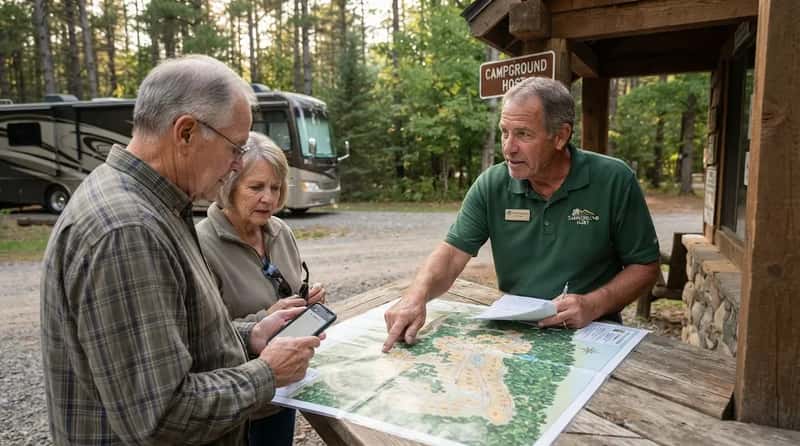
Cell coverage in rural campgrounds is unpredictable, and for travelers who rely on a phone for medical alerts, family check-ins, or GPS backup, a dead zone isn’t just inconvenient – it’s a real concern. Hosts who live on-site year-round know exactly which sites lose signal and which don’t.
This tip rarely makes it onto a printed map, but it comes up constantly in conversation at the kiosk once a host senses it might matter to a particular guest. A site with full hookups but zero bars can turn into a stressful night for someone traveling without backup, and hosts who’ve seen that stress firsthand tend to volunteer the warning before it becomes a problem.
#3 – They Remember You by Name the Next Season
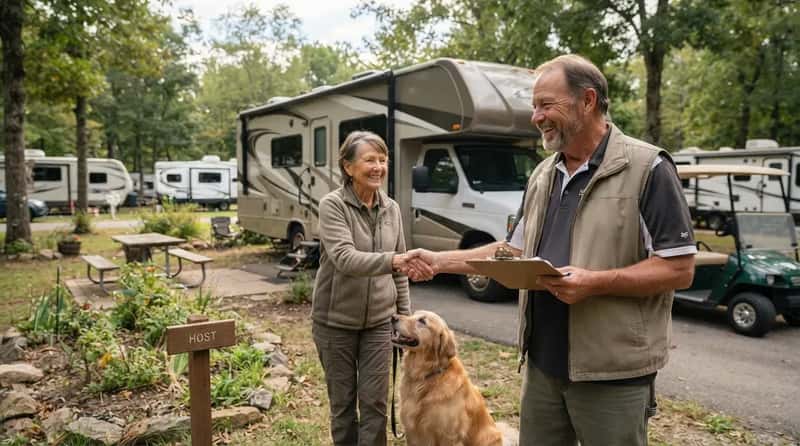
This is the one that surprises people most: hosts at the same seasonal campgrounds genuinely remember repeat guests, sometimes down to which site they prefer and what kind of dog they travel with. It’s part of a role built around long-term presence, since many hosts commit to months at a single park rather than a quick seasonal rotation.
Some campgrounds ask hosts to serve a minimum of one month up to nine consecutive months in a twelve-month period at any one park, and that kind of tenure is exactly what builds this kind of familiarity. It’s what allows a host to greet a returning guest over 60 by name instead of just a reservation number – and for a lot of solo or widowed travelers, that recognition matters more than any discount ever could.
At a Glance
- Tennessee: hosts serve a minimum of one month up to nine consecutive months in a twelve-month period at any one park.
- California: minimum stay is three months; maximum stay is six months at many host sites.
- Washington: assignments typically require a 30-day commitment, which may be extended up to 90 days at the park manager’s discretion.
- Longer stints like these are exactly what let a host recognize a returning face – and a returning rig – season after season.
#2 – They Bend the Check-In Time Without Making a Big Deal of It
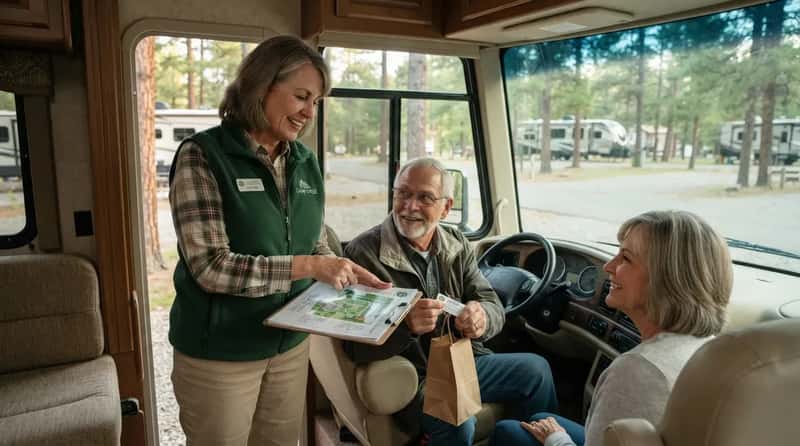
Official check-in times exist for a reason, but experienced hosts often quietly flex them for older travelers who’ve had a rough drive day or need extra time to set up before dark. It’s rarely posted anywhere – it just happens in the moment.
This is one of the more debated practices among campers, since not every host offers this flexibility equally, and some argue it should be formalized rather than left to individual discretion. Still, plenty of hosts see it as common sense: rushing an older traveler to break down camp by a strict 11 a.m. deadline creates more problems than it solves, especially when the next site isn’t occupied yet anyway.
#1 – They Quietly Steer You Away From the “Popular” Site That’s Actually the Worst Fit
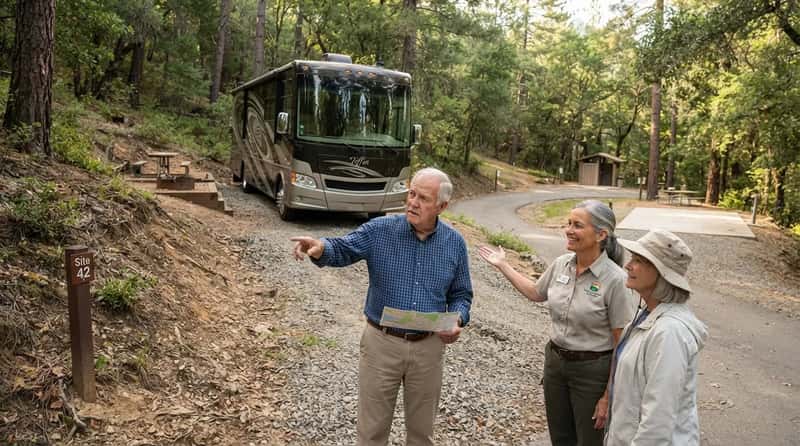
This is the one hosts almost never say out loud, but it happens constantly: the site everyone requests online, the one with the best photos and the top reviews, often isn’t the best fit for an older traveler. A good host will gently redirect without ever criticizing the guest’s original choice.
Maybe it’s the site with the steepest walk to the fire ring. Maybe it’s the one three loops from the nearest restroom. Whatever the flaw, hosts who’ve watched guests struggle with that specific site season after season learn to offer an alternative before check-in is even finished, framed as “have you considered this one instead?” rather than a correction. The most-booked site in the whole campground is sometimes the one hosts privately steer seniors away from, and it’s rarely because of the view.
None of this is official, none of it is guaranteed, and it varies wildly from campground to campground depending on who’s hosting that season. But the pattern is real: the quiet, unwritten kindnesses at check-in often matter more to older travelers than any amenity listed on a website. A host who notices the small stuff – the uneven ground, the weak signal, the discount you didn’t ask about – ends up shaping the whole trip before it even starts.
Have you had a campground host go out of their way for you or a parent on the road? Tell us what happened in the comments – the best stories usually don’t make it onto any review site.