Most people over 60 assume calling a hotel is just a slower, clunkier version of booking online. Same room, same price, same rules, just with more hold music. That assumption is quietly costing them upgrades, discounts, and sometimes an entire trip’s worth of comfort.
A live agent on the phone can do things no booking algorithm will ever offer, and most of them happen without a word of explanation. Some are buried in policy manuals guests never see. Others only unlock if you ask the right question at the right moment, which is exactly why so many travelers miss them completely.
#13 – They Slip You a Senior Rate the Website Never Shows

Plenty of hotel chains have a senior rate that never appears on the standard booking page. You have to ask for it, either by selecting “Senior/AARP” from a special rate menu or by requesting it straight from a phone agent. Age thresholds vary wildly by brand, which is exactly why having a human on the line matters.
Choice Hotels offers guests 60 and older, along with AARP members, up to 10% off. Other chains set the bar higher, with some properties reserving discounts for guests 62 and up, while Hilton offers up to 6% off the Best Available Rate for guests 65 and older. An agent already knows which threshold applies to your exact hotel and will often mention it before you even ask.
Fast Facts
- Choice Hotels: up to 10% off for guests 60+ or AARP members
- Hilton: up to 6% off Best Available Rate for guests 65+
- Some chains set the cutoff at 62 instead of 60 or 65
- These rates rarely appear on the standard booking page
#12 – They Quietly Block a Ground-Floor Room Before You Even Ask

Reservation agents can flag a room near an elevator, on a lower floor, or far from a noisy stairwell the moment they hear hesitation in your voice. This isn’t charity. It’s standard practice for avoiding complaints later, and experienced agents know exactly which rooms cause problems.
Online systems don’t ask why you want a certain room, they just assign whatever’s left in inventory. Over the phone, you can usually request the exact room type you want if it’s available, instead of getting stuck with leftovers. The difference between a random assignment and a requested one can mean the difference between a smooth stay and a painful walk past the ice machine at midnight.
#11 – They Confirm Cancellation Grace Periods the Fine Print Hides

Cancellation policies online are often vague right up until it’s too late to change your mind. A single phone call fixes that instantly, before you’re locked into anything.
Booking directly with a hotel is usually more flexible on cancellations than booking through a travel site, where changing your mind can be nearly impossible. One traveler who called a hotel after booking through what she thought was the hotel’s own site discovered a better discount she’d missed online, plus a cancellation policy allowing a full refund up to a day before arrival. That one phone call rewrote her entire reservation for the better.
#10 – They Stack Your AAA and AARP Discounts Without You Realizing
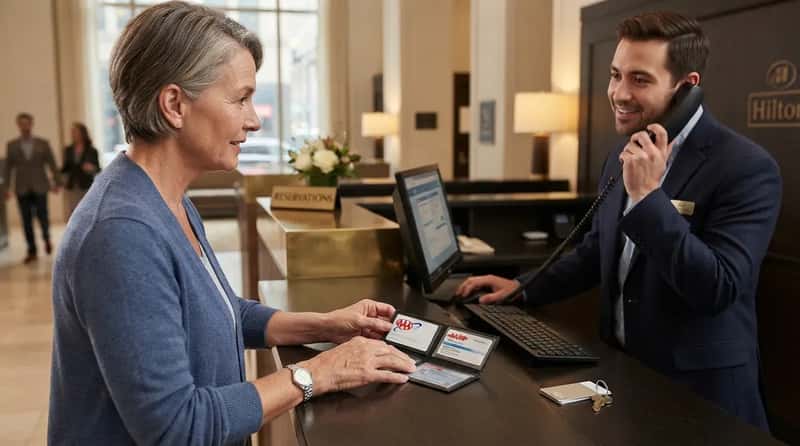
Combining discount codes online almost never works. The system takes one and quietly rejects the second, and most guests never notice they left money on the table.
Booking direct often opens the door to military ID or AAA discounts, plus flexible refund options a third-party site won’t touch. Layer an AARP membership on top and you could save up to 25% at brands like Hilton, Wyndham, and Best Western. Few guests realize a single phone call can unlock two overlapping discounts a website would never combine on its own, but it only works if you ask which memberships the agent accepts before the rate is finalized.
Quick Compare
- Online: one discount code applies, the second is silently rejected
- Phone: agents can often stack AAA or military ID with AARP
- Combined savings can reach up to 25% at Hilton, Wyndham, and Best Western
- Stacking only works if you ask which memberships qualify before booking
#9 – They Hold Your Room Without a Deposit, Just on Your Word

A courtesy hold sounds old-fashioned, but it still happens for guests who call in personally, especially repeat callers or anyone with a specific need. It’s one of the last true handshake deals left in travel.
One traveler described exactly this after a mix-up with a third-party booking site: the hotel agent simply held the room and waited to hear back, no prepayment required. Online systems almost never offer that flexibility, since a card gets charged the instant you click confirm. A held room with no money on the line is one of the rarest perks left in modern travel booking, and it survives mostly because a human being was willing to make a judgment call.
#8 – They Flag Accessibility Needs So Every Department Already Knows
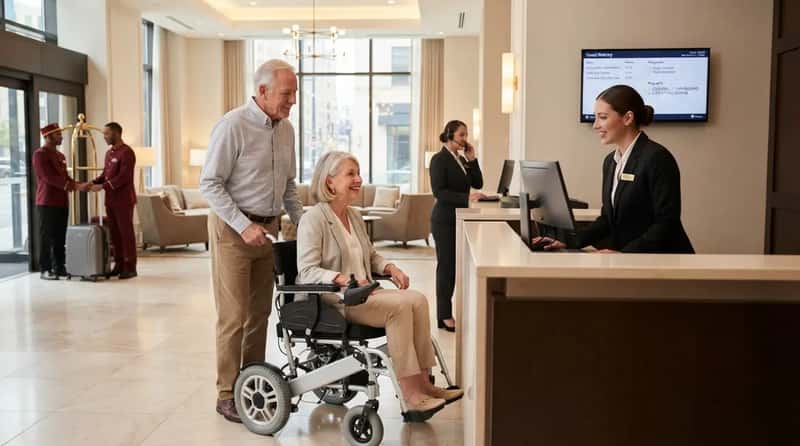
Nobody wants to repeat a mobility request three separate times before they even reach their room. Reservation lines exist partly to make sure that never has to happen.
Guests can speak directly with someone about accommodations like a wheelchair-accessible room or allergen-free bedding, and that note travels automatically to housekeeping and the front desk. Calling also lets guests specify things like a high floor, adjoining rooms, or allergy-friendly pillows and get an immediate yes or no. That kind of instant confirmation almost never happens through an online form.
#7 – They Check for a Free Upgrade Before Locking In Your Rate
Agents can see real-time inventory in a way booking engines simply don’t display, including rooms sitting empty above the category you actually booked.
Booking directly often unlocks perks OTAs can’t touch, like a better room, earlier access, later checkout, or a free breakfast tossed in. Some agents mention an available upgrade without even being asked, especially during slower travel weeks. Hotel employees tend to remember direct callers, and that familiarity is often the entire reason a room upgrade materializes over the phone when it never would have online.
#6 – They Match (or Beat) the Online Price You Found Yourself
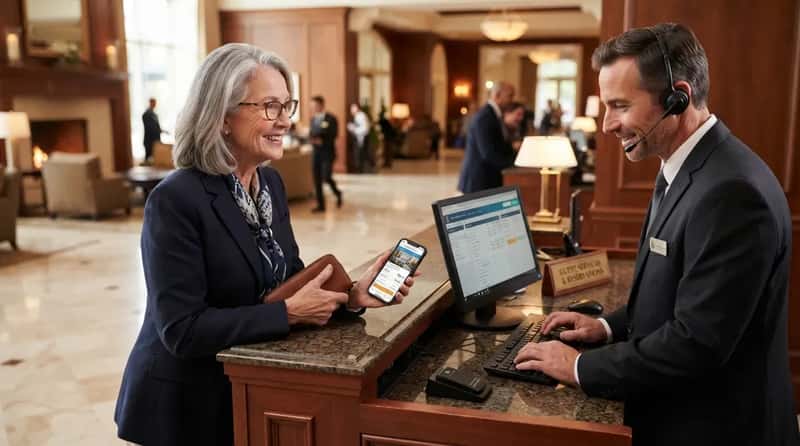
Plenty of guests still assume the internet price is the floor. Reservation agents know it usually isn’t, and they’re often willing to prove it.
Hotels tend to offer their best rate to direct bookers, and many will meet or beat whatever price you found online rather than pay a commission to a travel site. Skipping the central reservation line and speaking to someone at the property itself can go even further, since hotel managers sometimes have flexibility to offer discounts a call center simply isn’t allowed to give. Most guests never think to ask for a manager, which is exactly why most guests never get the better rate.
#5 – They Grant Loyalty Perks You Never Signed Up To Earn

Some senior programs come bundled with status upgrades that guests don’t even know exist until an agent casually mentions them mid-call.
AARP members who join a hotel’s rewards program can receive automatic Gold status, which includes early check-in, late checkout, and bonus points on arrival, subject to availability. Points earned this way sometimes never expire, unlike programs that force you to burn them within a year. An instant status upgrade for simply mentioning your AARP number is exactly the kind of quiet perk an online booking page will never surface on its own.
Worth Knowing
- AARP members can receive automatic Gold status just for joining a hotel’s rewards program
- Perks often include early check-in, late checkout, and bonus arrival points
- Some of these points never expire, unlike standard use-it-or-lose-it programs
- The status upgrade usually has to be requested by mentioning your AARP number directly
#4 – They Steer You Away From Noisy Rooms Without Being Asked

Room placement is one of the most overlooked comfort factors in any stay, and it’s almost entirely controlled by whoever answers the phone.
Agents routinely note preferences like distance from ice machines, elevators, or banquet halls whenever a guest mentions wanting a quiet stay. Many travelers assume a “quiet wing” advertised online is a guarantee, but hotel staff privately admit those labels are inconsistent at best. A five-minute phone call, made before you book, can prevent a five-night headache.
#3 – They Warn You When the Senior Discount Isn’t Actually the Best Deal

Here’s the part that catches most people off guard: the senior rate isn’t automatically the cheapest option, and honest agents will actually tell you that.
The senior discount isn’t always the best available rate, so it’s worth asking before assuming it’s the deepest cut on offer. Some staff genuinely prefer flagging this rather than letting a loyal guest overpay out of habit, since certain chains’ senior discounts are modest compared to other current promotions. Many travelers assume “senior” automatically means “cheapest,” and that assumption is often flat-out wrong.
At a Glance
- Senior rates are not automatically the lowest price available
- Some chains’ senior discounts are modest next to current promotions
- Honest agents will flag a better rate instead of defaulting to the senior discount
- Always ask an agent to compare both before confirming a booking
#2 – They Call You Back Personally If Something Better Opens Up

This one almost never happens with an OTA, and it’s one of the clearest signs a hotel values a direct relationship over a one-time transaction.
Because hotel staff often live in the same city they work in, direct callers sometimes get local insight and personal follow-up that an anonymous 1-800 number could never produce. Some hotels will even make exceptions or offer flexible arrangements specifically because a guest took the time to speak with someone instead of clicking through a form. A callback about a lower rate or a better room isn’t standard practice, it’s a favor extended to guests who built a little rapport first.
#1 – They Treat Your Reservation Like a Relationship, Not a Transaction

This is the quiet advantage every other item on this list ultimately comes back to: a phone reservation puts a name and a voice on your file instead of a random order number.
Booking through a hotel’s official website or by phone often preserves full loyalty points and elite benefits, including upgrades, free Wi-Fi, and late checkout, while some OTAs quietly mask or limit that same recognition. For guests over 60 who travel the same routes year after year, that recognition compounds. The same agents remember preferences, the same properties remember complaints, and the discounts get applied without having to re-explain everything from scratch every single time.
None of this means online booking is useless. It’s often faster, and sometimes cheaper on the surface. But the guests who consistently walk away with upgrades, held rooms, stacked discounts, and personal callbacks are almost always the ones who picked up the phone.
A reservation line isn’t just a slower checkout process. It’s a human being with more discretion than any website will ever have, and for guests over 60, that discretion adds up to real money and real comfort over a lifetime of trips.