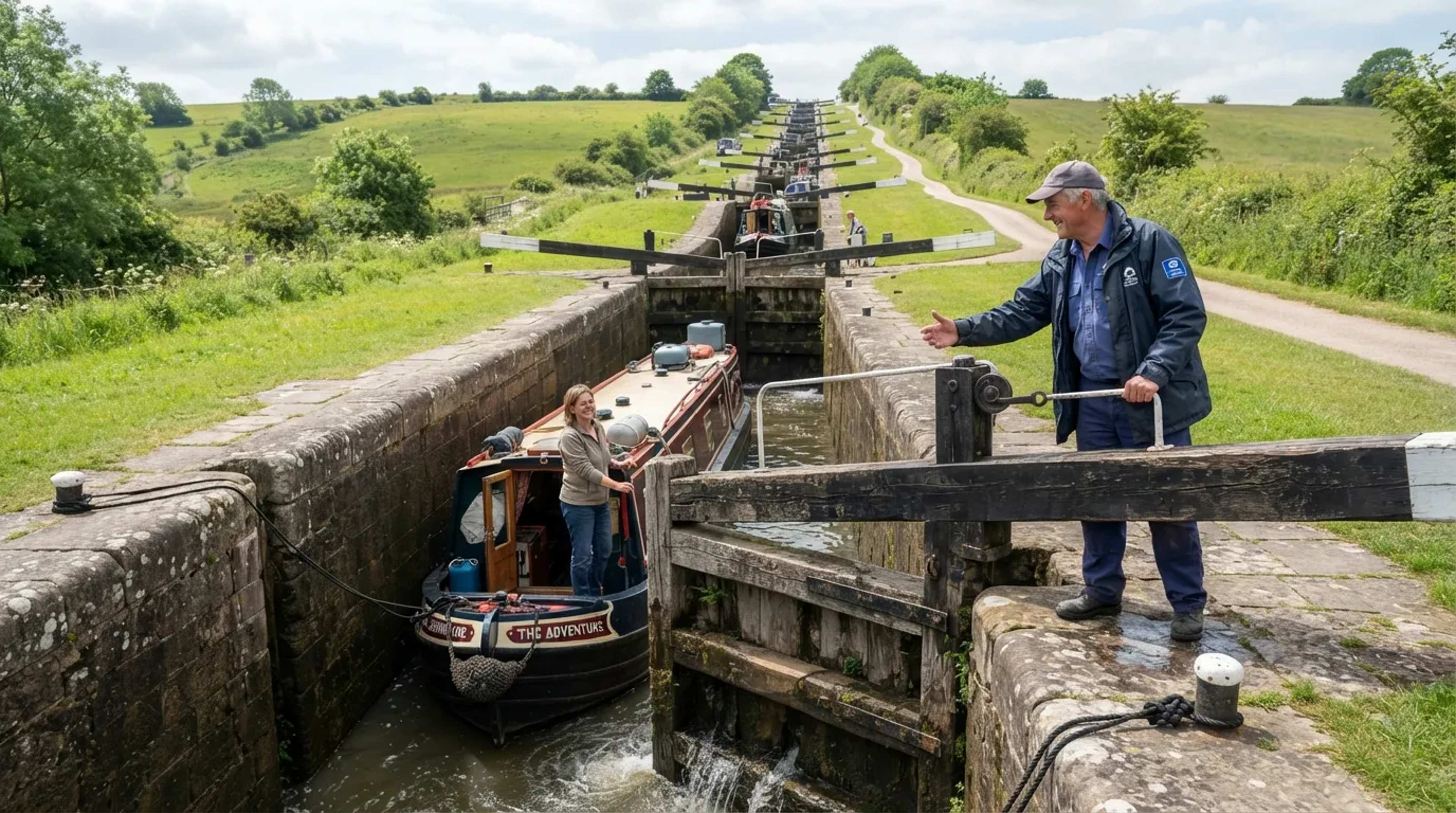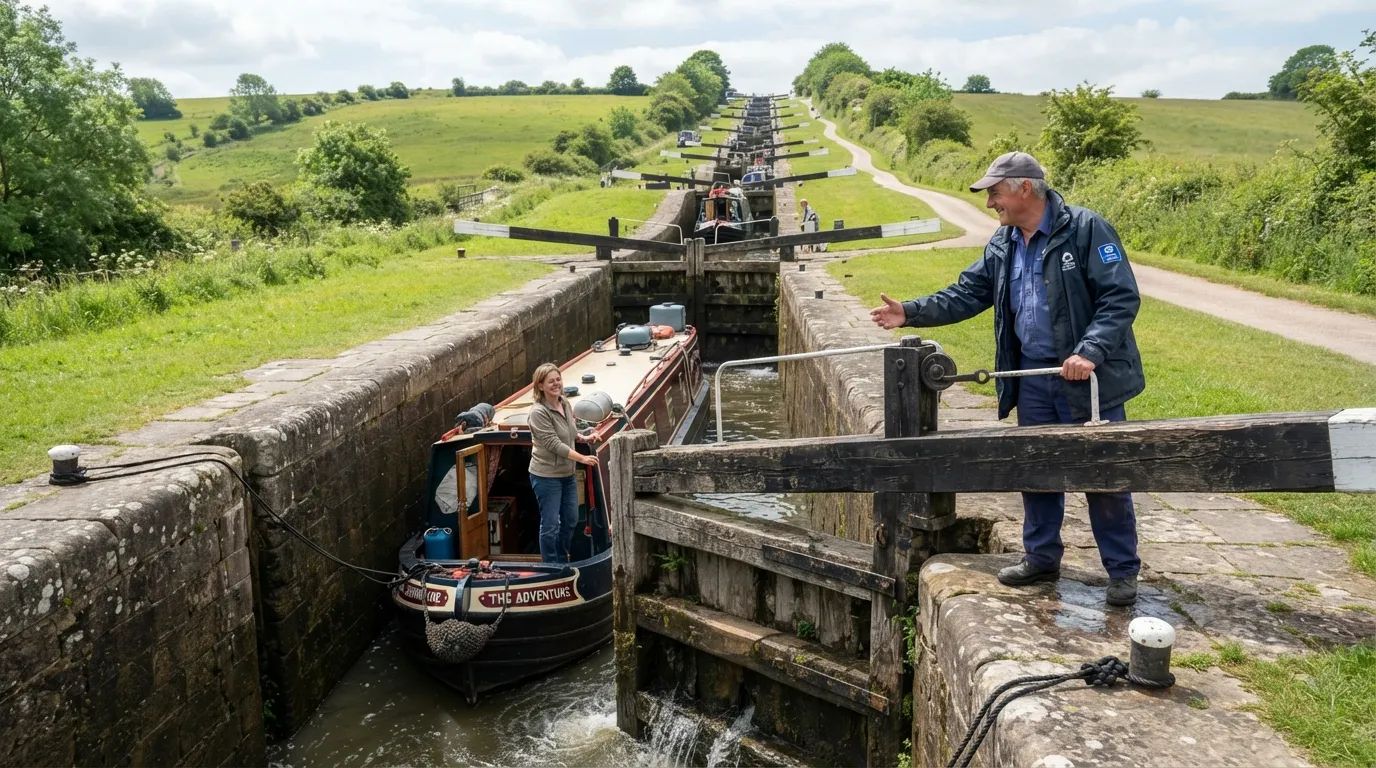
You picture slow water, quiet towpaths and a mug of coffee on the back deck. Canal cruising sells itself as the gentlest vacation going. Then the first lock appears, and the postcard falls apart: huge gates, a metal crank, rushing water and a crew that has to agree on everything in about ninety seconds.
Plenty of first-timers say the scenery wasn’t the surprise. The surprise was how much of the trip happens inside those stone or concrete boxes. Some of what follows is practical, some is genuinely scary, and the last one has nothing to do with gates or ropes at all.
13. The “Quick” Lock Stop That Quietly Eats Your Afternoon
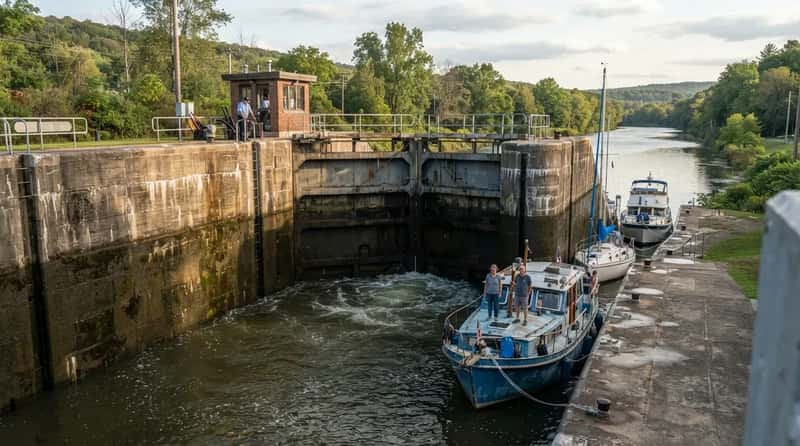
Locks look fast in photos. Erie Canalway guidance says it takes 15 to 20 minutes to go through one. That sounds harmless until you remember that 35 of the New York canal system’s 57 locks sit on the Erie Canal itself.
Do the math and a full Erie run means roughly nine to twelve hours of lock time alone, before you’ve tied up anywhere. And that assumes the lock is ready for you. If it’s full when you arrive, you moor below it while the chamber is emptied by slowly raising the paddles. Every lock adds its own small wait, and the waits add up.
Fast Facts
- A typical lock passage takes 15 to 20 minutes.
- The New York canal system has 57 locks in all.
- 35 of those locks sit on the Erie Canal alone.
- The Erie Canal runs 363 miles from end to end.
12. Your “Cruising Speed” Is About the Pace of a Brisk Walk
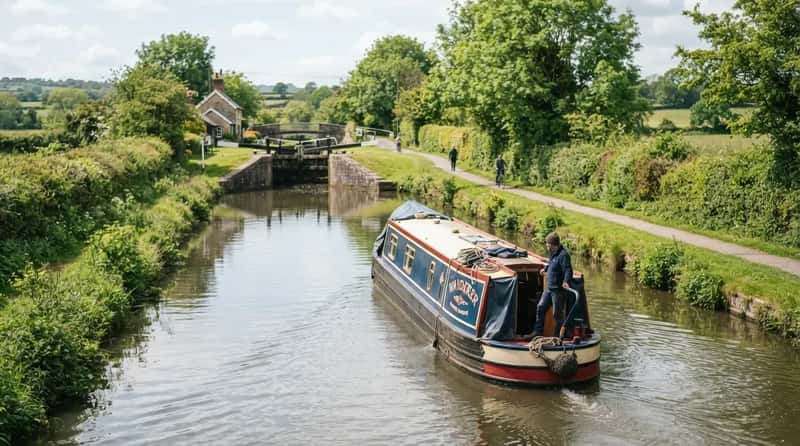
On most British canals, the speed limit is about 4 mph. Narrowboats also have no real brakes, so you slow down by easing off and using reverse gear. Dashing toward a lock to “save time” is the quickest way to hit a gate.
American canals feel different on paper. One Erie Canal planning guide uses a working average of about 10 mph, which works out to roughly 3 days for the eastern half and 5 to 6 days from Waterford to the Niagara River. Even so, locks and posted hours decide your day, not your engine.
11. The Most Dangerous Tool Aboard Is a Bent Metal Handle
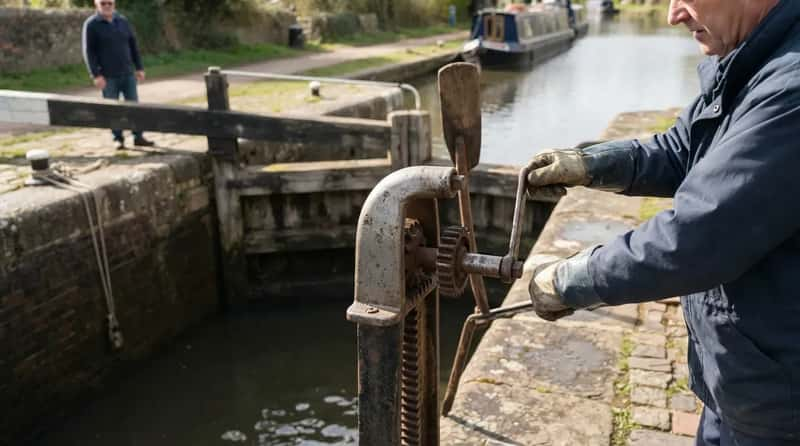
It’s called a windlass. It’s an L-shaped handle that fits onto the spindle of the paddle mechanism and winds the paddles up and down. It looks like something from a toolbox drawer, and nobody tells you it can hurt you.
The Canal & River Trust warns that a flying windlass can cause serious injury. If the safety catch slips and the paddle drops, the handle can spin round, hit someone, or end up at the bottom of the canal. The same guidance says to keep children well clear of paddle gear, gates and the lock edge.
10. Open the Paddles Too Fast and Calm Water Turns Into a Washing Machine
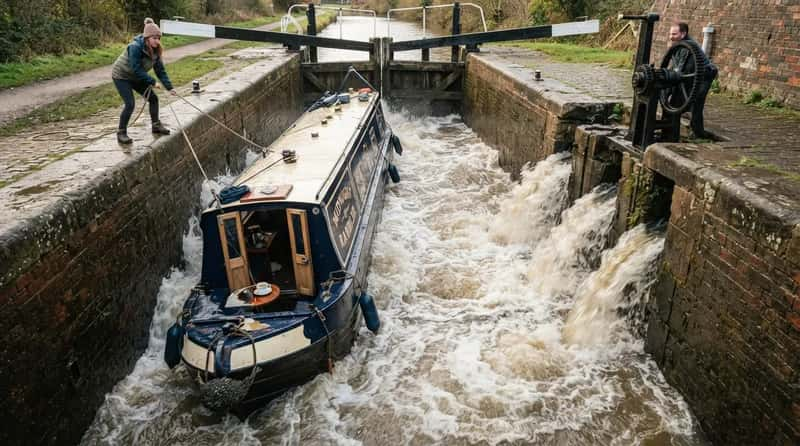
Beginners often assume the water just rises politely. It doesn’t. The Canal & River Trust recommends opening paddles gradually and watching the boat throughout, because incoming water can shove it around unexpectedly. Open too fast and your coffee ends up on the floor.
There’s also a rule of physics that blocks every shortcut. The lock gates won’t open until the water level is equal on both sides. No amount of pushing changes that. You wait for the water, and the water takes the time it takes.
Quick Compare
- Paddles raised gradually: the boat stays steadier and the crew can watch and adjust.
- Paddles yanked open: water surges in, the boat gets shoved and loose items slide.
- Either way: the gates stay shut until the levels match.
9. The Rope That Can Do More Damage Than the Water
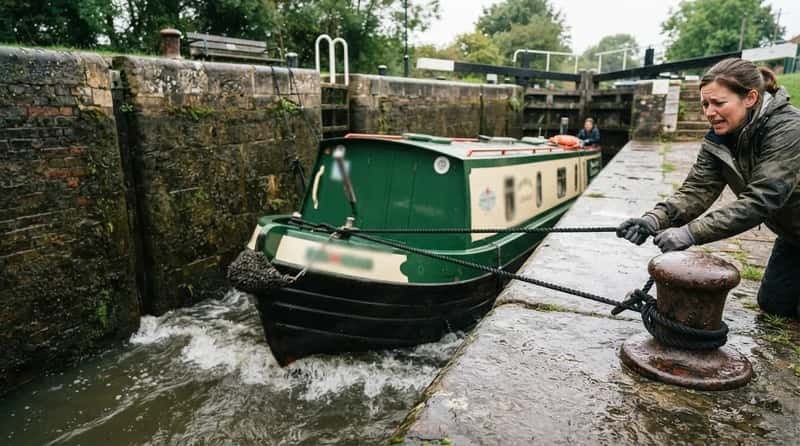
Many first-timers instinctively loop a rope around a post and tie the boat off tight. In a lock, that instinct is backwards. Guidance on lock use says never hold the boat so tightly that it can’t move vertically.
The right approach is to let the boat rise with the water, adjusting the ropes progressively as it goes. It feels odd to manage a line that’s constantly changing. But a locked-off rope is the kind of mistake that damages a boat in seconds.
8. The Fenders You Hung Up Are Suddenly in the Way
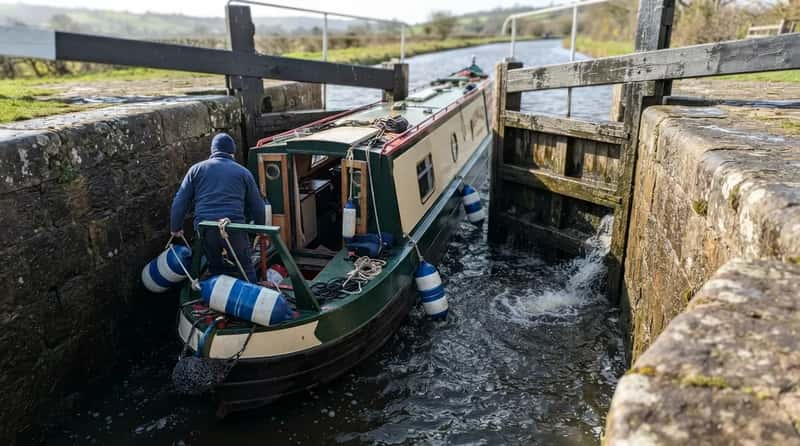
On open water, fenders protect your hull. In a narrow lock, they can wedge you in place. One narrowboat guide advises taking all side fenders onboard before entering, since space in the lock is so limited.
Another detail catches people out too. The same guide suggests closing all hopper and porthole windows to keep water out, because paddles and gates can throw spray and surges across the deck. Nothing ruins a sunny morning like a soaked bed.
At a Glance
- Side fenders: bring them aboard before you enter.
- Hopper and porthole windows: close them all.
- Windlass: keep it handy, but on the spindle only while winding.
- Ropes: ready to be adjusted, never fixed tight.
7. Locks Don’t Run on Your Schedule, and They Close
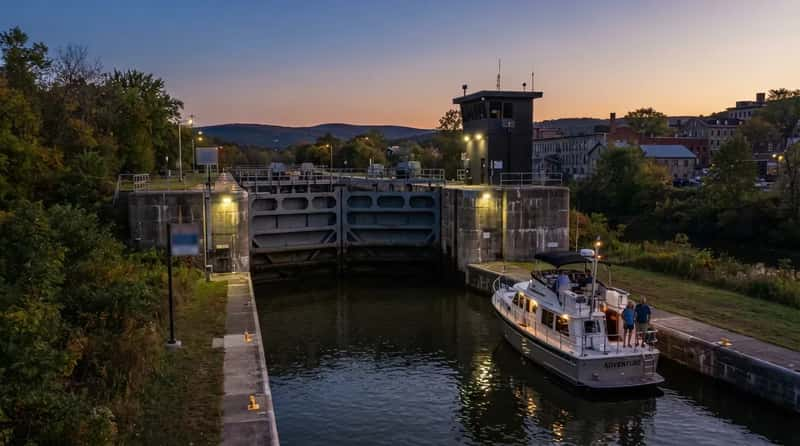
On the Erie Canal, standard lock and lift-bridge hours are 8 a.m. to 6 p.m. daily, with extended hours to 9 p.m. at select locks from May 16 through September 10. That’s the 2026 schedule, and the season runs from May 15 through October 14. Miss the last lock and you may be stuck for the night.
The guide’s advice is blunt: don’t try to beat the last lock. Aim to be through your final one well before closing. Craft type matters too. The same source says stand-up paddleboards are not permitted to lock through, so paddlers have to portage.
6. The Hidden Ledge That Can Sink a Boat Going Downhill
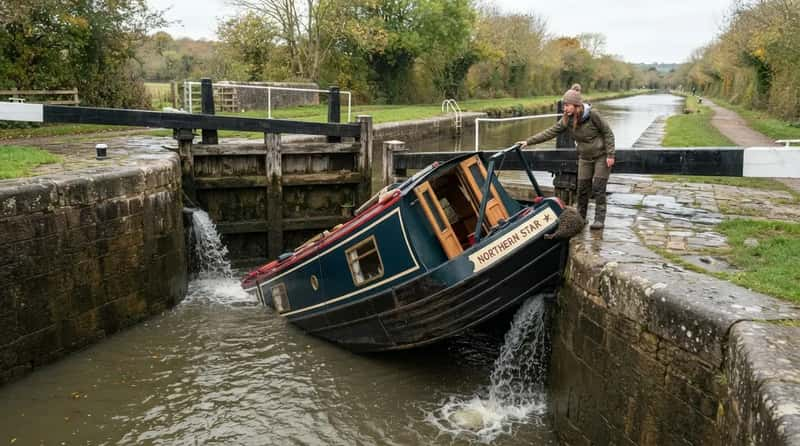
Nobody mentions the cill until it matters. It’s a raised ledge at the top end of the lock, which the top gate shuts against. Go downhill and it sits right behind your stern, out of sight.
If the back of the boat catches on it while the water drops, the front keeps going down with the water and the boat tilts. One guide puts it bluntly: stay away from the cill, because a hang-up can sink the boat. Cill markers and warning signs exist for this reason, and the standard advice is to keep checking behind you as the lock empties.
5. The Argument You’ll Have Over a Hand Signal
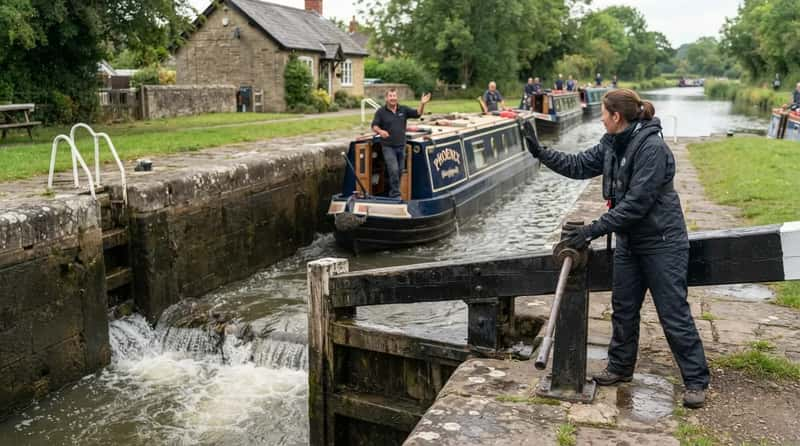
Lock work splits a crew in two. The skipper is at the helm and the crew is at the far end, with the roar of water and engine in between. Shouting doesn’t carry.
The Canal & River Trust’s advice is practical: work out clear signals so crew and skipper can communicate quickly, such as one that means “close all the paddles.” It also asks you to wait for a boat already in the lock to leave before you start opening or closing paddles. And before you jump in to help strangers, ask first.
4. The Lock “Flight” That Turns One Day Into a Marathon
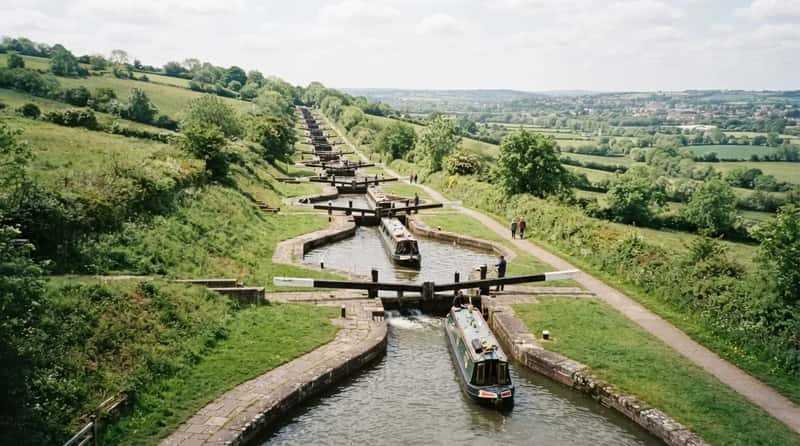
Some locks come stacked up a hillside like stairs. Britain’s best-known example is Caen Hill on the Kennet & Avon Canal. It has 29 locks with a rise of 237 feet over two miles, and the 16 steepest form a scheduled ancient monument.
Timing varies by source. The Canal & River Trust says the locks typically take 5 to 6 hours in a boat. A hire operator estimates about 4½ hours, often with volunteer help. Either way, expect most of a day, and don’t plan anything else around it.
3. Water Is the Real Currency, and Canals Can Run Short
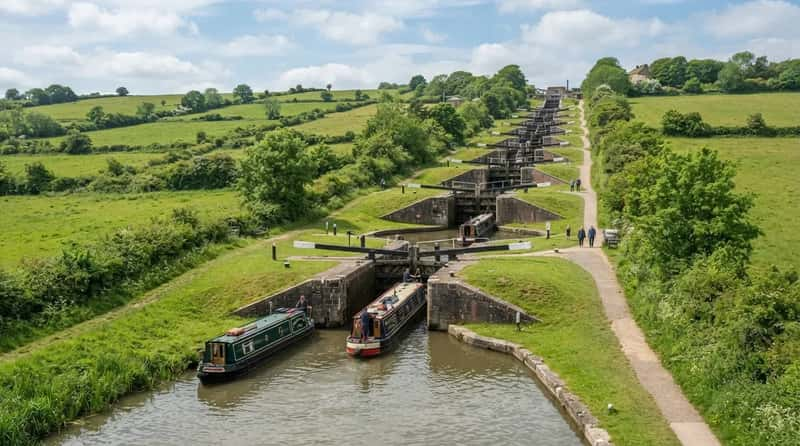
Every lock uses a chamber full of water, and that water has to come from somewhere. The Canal & River Trust’s boating guide includes a section on saving water. It matters most on steep flights, where a single boat can drain a lot very quickly.
Caen Hill shows the scale. A back pump installed at Foxhangers in 1996 can return 7 million gallons of water a day to the top of the flight, roughly one lockful every eleven minutes. Without it, the hill would need constant rain to keep boats moving. That peaceful ride is running on engineered plumbing.
2. The Lock Keeper You Didn’t Know You Needed Might Save Your Trip
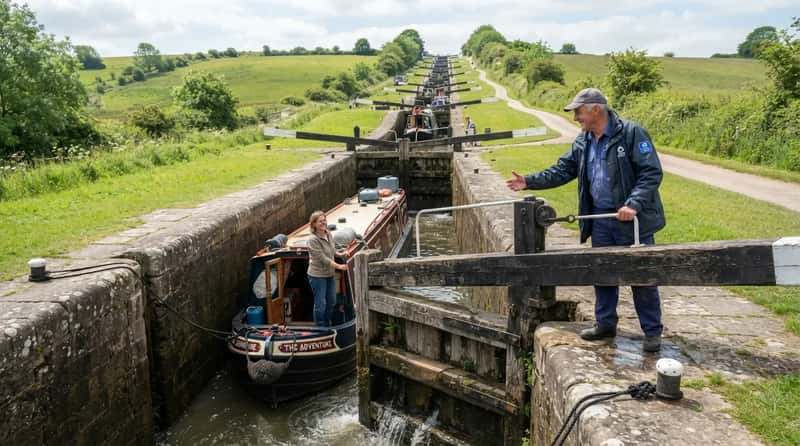
Many beginners assume they’re on their own. They aren’t. At Caen Hill, you can talk to the volunteer lock keepers, who have the experience to make sure water is conserved during your passage. At busier British locks, some are manned and operated for you during the summer months.
New York works similarly. The Erie Canalway says lock tenders are on hand to assist you. For 2026, the Canal Corporation reported no tolls or fees for recreational use. Help, in other words, is often free, and it usually knows your route better than you do.
1. The Real Shock Isn’t the Lock. It’s How Much You Slow Down
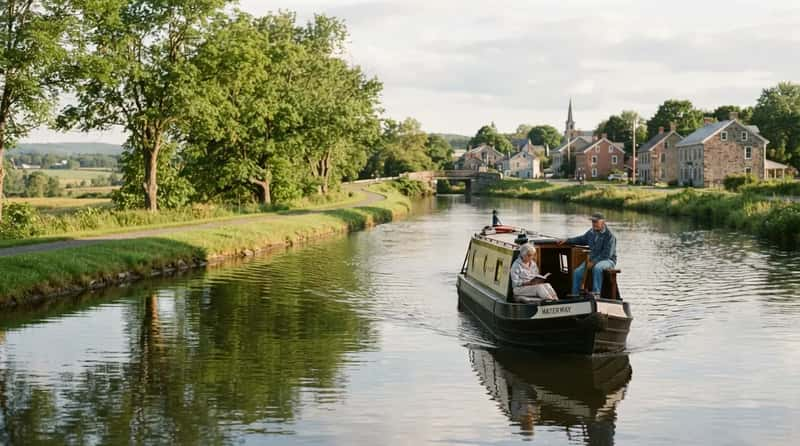
This is the part nobody puts in the brochure. Locks run on posted hours, so most Erie cruisers don’t rush the 363-mile canal. As one guide puts it, most spread the trip across a week or more, tying up in canal towns each evening.
That sounds like a limit, but many boaters come to see it as the point. Erie’s own boating tips tell visitors to expect a leisurely pace on the water. The first lock is where it clicks. You stop racing a clock and start moving at the speed of the water.
Why It Stands Out
- The schedule is set by lock hours, not by how fast your boat can go.
- Most Erie cruisers stretch the 363 miles over a week or more.
- Evenings end in canal towns instead of at highway exits.
- Lock tenders on the Erie can help, and 2026 recreational use carried no tolls or fees.
Most people arrive at that first lock worried about the gates, the ropes and the crank. They leave remembering something else: nobody was in a hurry, and for once, neither were they.