Most people assume an overnight bus driver’s job ends the moment the cabin goes dark – hands on the wheel, eyes on the road, nothing else. But talk to veteran drivers who’ve spent decades on red-eye routes, and a very different picture shows up. The quietest hours of the trip are often the busiest ones for looking after older riders, and none of it is written in any handbook passengers ever see.
These aren’t grand gestures. They’re small, almost invisible habits – the kind a driver does without a word, hoping no one even notices. Once you know what to look for, you’ll never watch a bus pull away from a gas station the same way again.
#13 – They Quietly Reserve the Front Rows Before Anyone Boards
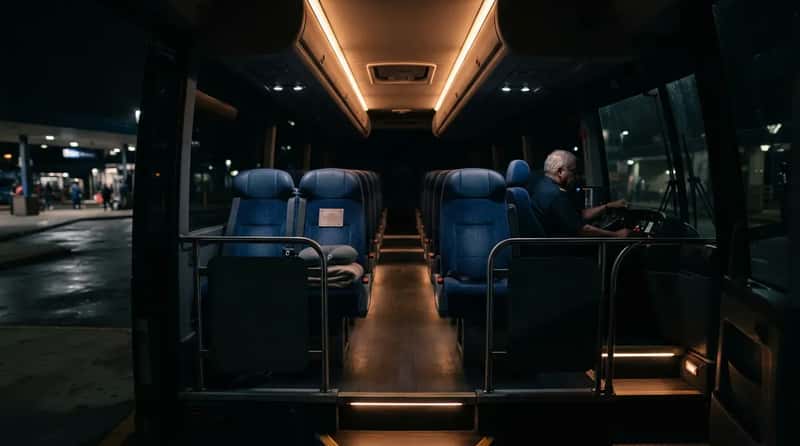
Long before the first passenger steps on, many drivers have already earmarked the front two rows for older riders and anyone with a visible disability. It lines up with broader industry guidance recommending priority seating for elderly passengers and those with disabilities in the front two rows. Sitting closest to the driver means less walking down a moving aisle in the dark.
It also happens to be the safest seat on the bus for a completely different reason. Transit safety guidance consistently notes that sitting near the front provides better security and easier communication with transit personnel. Drivers rarely explain why they steer an older passenger toward row two – they just do it, and keep moving.
At a Glance
- The front two rows are the unofficial priority zone on most overnight coaches
- Priority seating cuts down on aisle-walking in a dim, moving cabin
- Sitting near the driver means faster help if something feels wrong
- Many drivers assign these seats before boarding even starts, without asking
#12 – They Do a Silent Headcount Before Killing the Cabin Lights
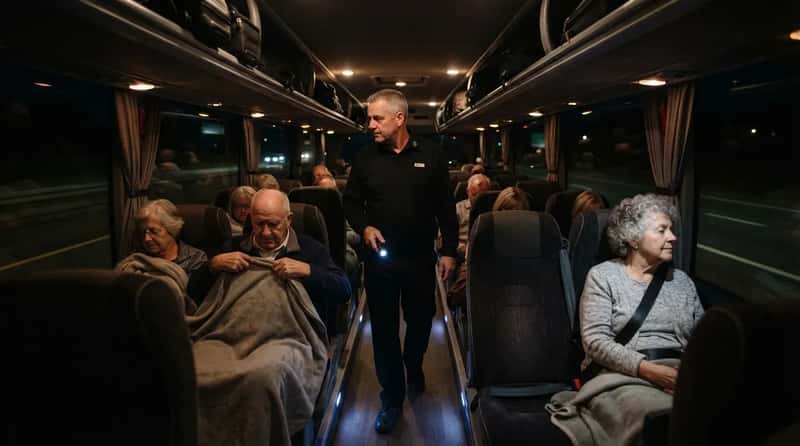
Before the overhead lights go dark for the night, most drivers run a quick, unannounced visual sweep of the bus. They’re not checking tickets again – they’re confirming everyone is seated, seatbelted if the coach has them, and not still wandering toward the restroom. For older passengers who move a little slower, that extra thirty seconds matters.
It sounds like nothing, but it’s the last real safety check most passengers over 60 will get until sunrise. Once the lights go off, a driver’s ability to spot someone in distress drops sharply. That single quiet pass down the aisle is designed to catch a problem before it becomes one.
#11 – They Leave One Light Glowing Near the Restroom
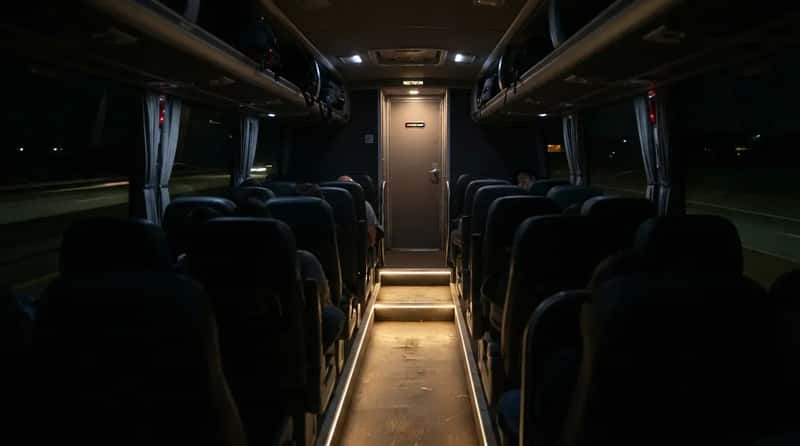
Full darkness looks dramatic, but almost no overnight driver actually kills every light. A dim strip near the restroom or rear stairwell usually stays lit, and it’s rarely accidental. Safety guidance for coach operators is explicit that interior lighting helps passengers move around safely, and that vehicles should stay lit whenever passengers are aboard.
For a 30-year-old, stumbling to the restroom half-asleep is a minor inconvenience. For a passenger over 60, it can mean a real fall risk in a moving vehicle. That single unglamorous strip of light is one of the most quietly important safety features on the whole bus, and most riders never register it’s even there.
#10 – They Soften Every Bump, Turn, and Lane Change
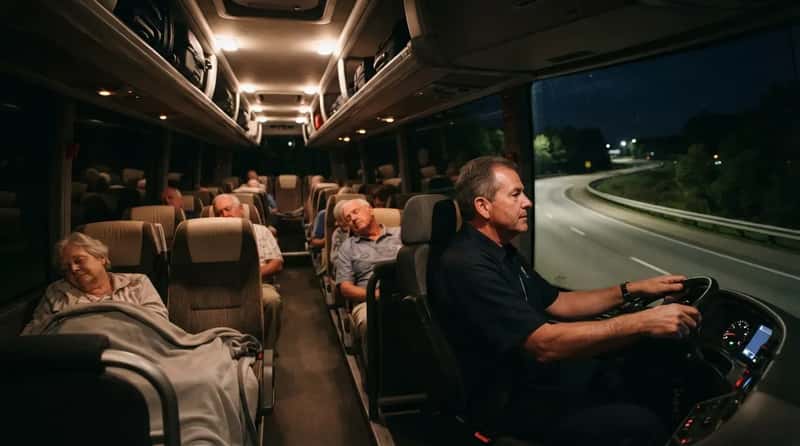
Ask any longtime coach driver and they’ll tell you the difference between a rough ride and a smooth one usually comes down to habit, not the road itself. Overnight drivers who regularly carry older passengers often ease off the accelerator earlier before a turn, brake more gradually, and skip the aggressive lane-splitting some daytime drivers get away with.
It’s a quiet trade-off: a slightly longer trip for a noticeably gentler one. Sudden jolts can jar an older passenger awake, strain a bad hip, or send an unsecured bag sliding into the aisle. Drivers who’ve run this route for years know exactly which stretches of highway need the lightest touch, and they adjust without ever announcing it over the intercom.
#9 – They Quietly Nudge the Thermostat Warmer
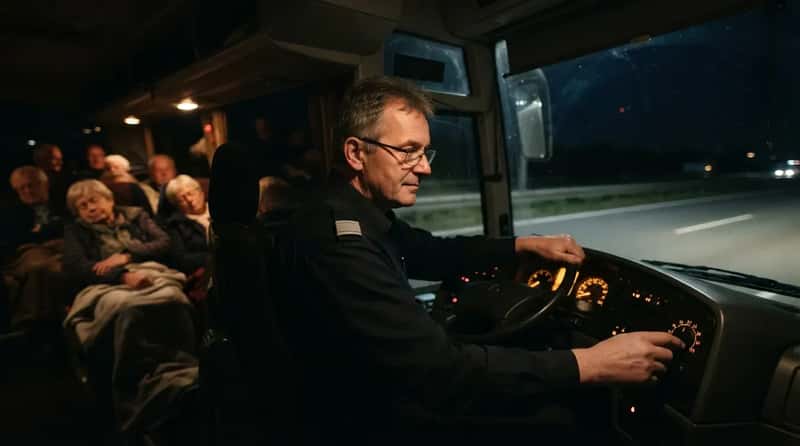
Bus air conditioning has a reputation for running cold, and most drivers know it. On overnight routes with a visibly older ridership, many will dial the temperature up a few degrees once the cabin settles, long before anyone complains. Older passengers tend to feel cold more acutely and are less likely to get up and ask for a blanket in a dark, moving bus.
It’s a small, almost domestic gesture – the kind you’d expect from a relative, not a stranger behind a wheel. Some drivers even keep a spare blanket or two stashed near the front specifically for passengers who look chilly but won’t ask. No announcement, no fuss. Just a slightly warmer bus by 1 a.m.
#8 – They Trade the Loudspeaker for a Whisper
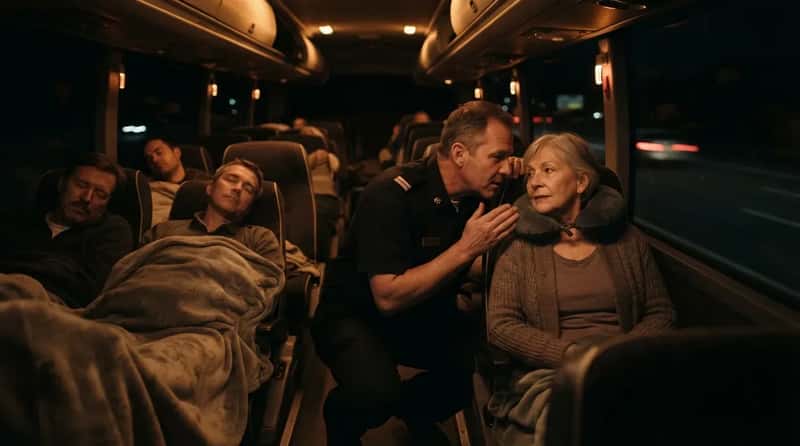
Daytime announcements come through the PA system loud and clear. Overnight, many drivers deliberately abandon the microphone for anything that isn’t essential, choosing instead to walk back and speak quietly, one row at a time. It keeps the rest of the cabin asleep while still delivering the message.
This matters more for older passengers than people realize. A blaring PA announcement in the middle of deep sleep can trigger a startled, disoriented wake-up that takes minutes to shake off. Whispering directly to a passenger who needs a heads-up – a stop change, an ID check, a reminder to grab their bag – protects everyone else’s rest while still getting the job done.
#7 – They Extend Rest Stops Without Ever Saying So
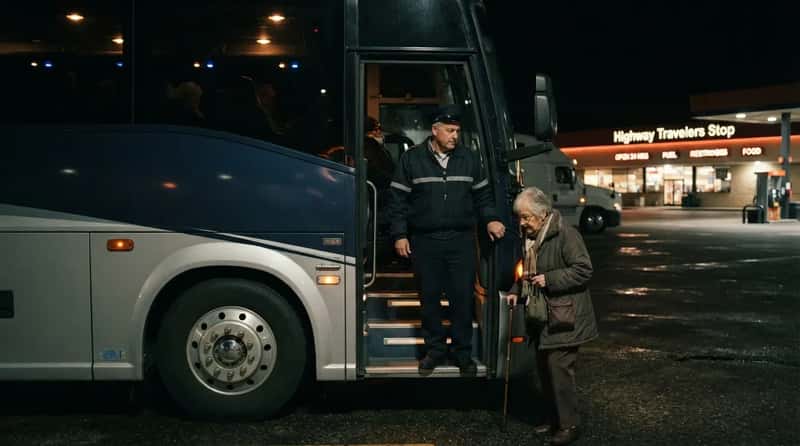
Scheduled rest stops usually list a hard number of minutes. In practice, many drivers quietly stretch that window when they notice an older passenger moving slower than the rest of the group. They’ll linger at the door, chat with another driver, or “double-check the luggage bay” – anything to buy two or three extra minutes without singling anyone out.
It’s a subtle kind of patience that never shows up on a schedule sheet. Rushing an older passenger back onto a moving bus is a genuine fall risk, and experienced drivers know it. That extra unannounced pause at a truck stop at 2 a.m. is often the difference between a smooth boarding and a scramble.
Worth Knowing
- Rest stops on most overnight routes are typically scheduled for around 15 to 20 minutes
- Drivers often stall near the door or the luggage bay to buy slower passengers extra time
- A rushed reboarding is one of the most common fall risks at any late-night stop
- Regular route drivers learn which stops have longer walks and plan for it without being asked
#6 – They Handle the Heavy Bags Without Being Asked
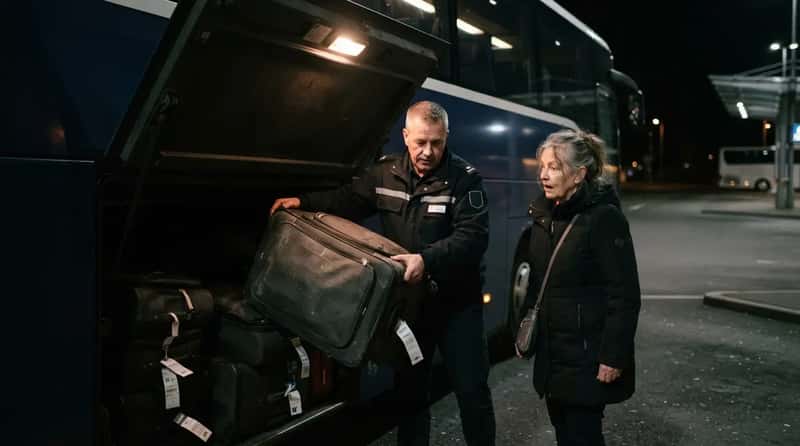
Loading and unloading luggage is technically a passenger’s job, but plenty of drivers quietly step in when they spot an older rider wrestling with a suitcase that’s clearly too heavy. It happens fast, almost before the passenger can protest, and it’s rarely acknowledged out loud by either party.
Some drivers say it’s just muscle memory after years on the job – they’ve seen enough strained backs and near-falls at the luggage bay to act on instinct now. A quick, wordless lift of a 40-pound suitcase can prevent an injury that would otherwise derail someone’s entire trip. It’s one of the simplest, least glamorous things a driver does all night.
#5 – They Remember the Regulars, Down to the Small Details
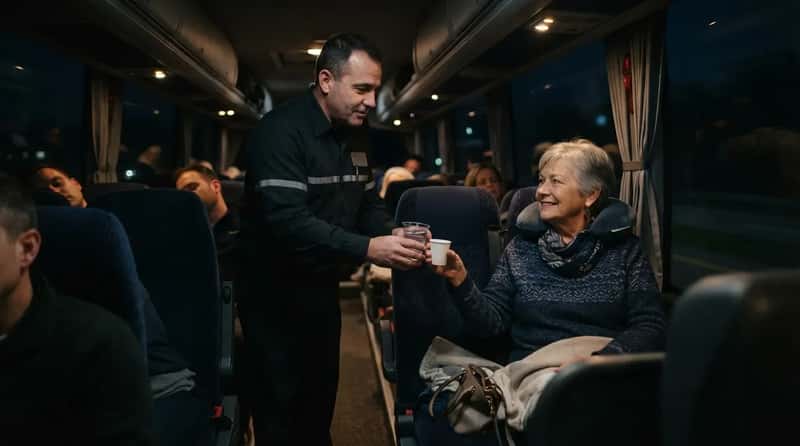
Overnight routes attract repeat riders – retirees visiting grandchildren, snowbirds heading south, people without a car doing the same trip every month. Drivers on these routes notice patterns fast, and many quietly remember names, preferred seats, and even small health details a passenger mentioned once in passing.
This kind of familiarity builds real loyalty, even if it never gets talked about. A driver who remembers that a passenger takes medication at midnight, or always needs the aisle seat for a bad knee, is providing a level of care most transit systems never formally ask for. It’s earned trust, one overnight run at a time.
#4 – They Watch Boarding More Closely Than Anyone Realizes
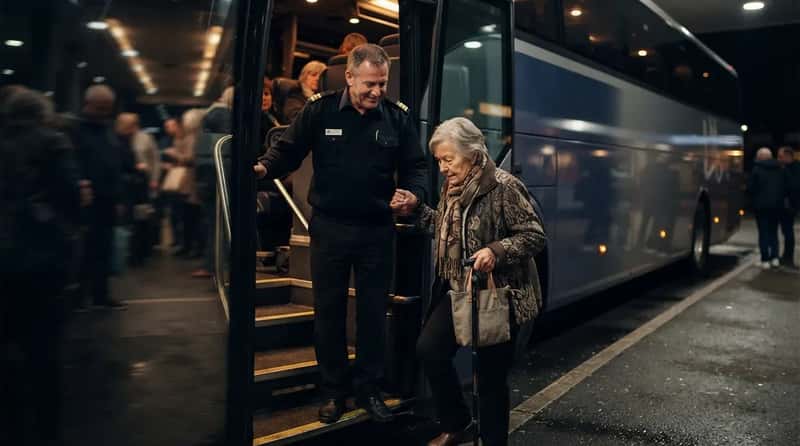
Federal transportation guidance makes clear that passengers with disabilities have certain rights when it comes to accessible over-the-road bus transportation, and older passengers often benefit from drivers who take that seriously without making a scene of it. That means quietly slowing the boarding pace, offering an arm at the step, or holding the door an extra beat.
Most passengers never notice this happening because it’s done so casually. The driver isn’t following a script – they’re reading body language and adjusting in real time, something no printed safety card can teach. It’s one of the more debated habits among drivers themselves: some call it basic decency, others worry it risks running the route behind schedule.
Fast Facts
- Large fixed-route operators must ensure their entire fleet consists of accessible buses.
- Charter operators must provide an accessible bus when given 48-hour advance notice.
- An accessible over-the-road bus has a lift or other device for passengers who cannot climb steps, plus dedicated wheelchair securement locations.
- Operators are required to keep those accessible features in working order at all times.
#3 – They Stay Alert to the First Signs of Something Being Wrong

Federal guidance is blunt about what riders should do if a driver seems impaired or unwell, but the same watchfulness runs the other direction too. Experienced overnight drivers keep a mental note of which older passengers boarded looking tired, pale, or unsteady, and they check on them more than once during the night without making it obvious.
This is one of the least talked-about parts of the job. A driver noticing labored breathing or confusion in row three at 3 a.m. can be the first line of defense before a medical situation turns into an emergency. It’s not in most job descriptions, but drivers who’ve been doing this for years say it becomes second nature.
#2 – They Ease the Wake-Up Instead of Announcing It
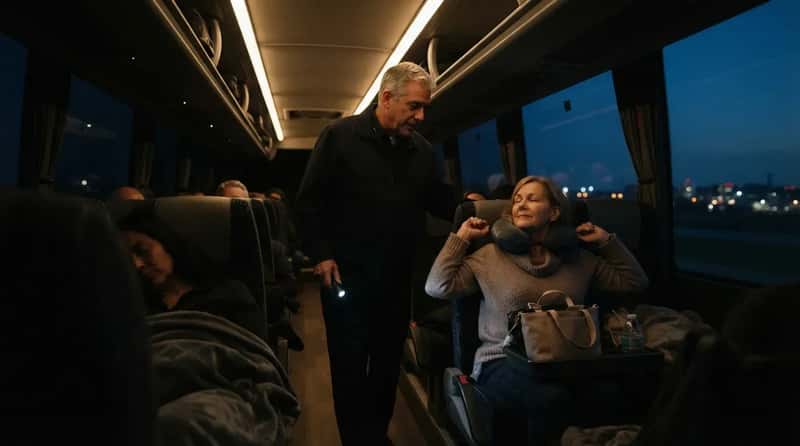
Slamming on the overhead lights and shouting the next stop might work for a bus full of twenty-somethings, but plenty of drivers avoid it entirely on overnight routes. Instead, they’ll bring the lights up gradually, or walk the aisle quietly a few minutes before arrival, giving older passengers time to reorient before the whole cabin lights up.
This slower wake-up matters more than people assume. Jolting an older passenger out of deep sleep with sudden bright light and noise can cause real disorientation, especially in an unfamiliar city at 6 a.m. A gradual transition gives them a chance to gather their bags, take their medication, and step off the bus steady on their feet instead of scrambling.
#1 – They Quietly Loop In Dispatch Before Anyone Else Notices a Problem
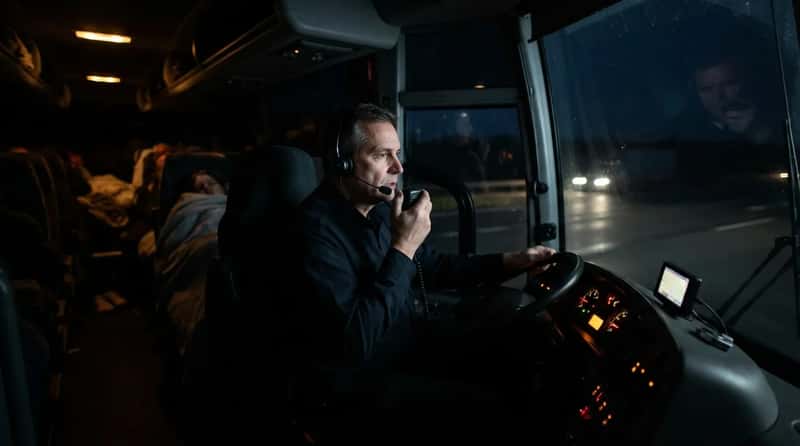
The single most important thing overnight drivers do for older passengers almost never happens in view of the rest of the bus. If a driver notices something concerning – confusion, distress, a missed connection risk, a passenger who seems more unwell at every stop – many will radio dispatch quietly, without alarming the cabin.
This is the habit veteran drivers describe as the real job behind the job. A five-second call to dispatch, made discreetly while everyone else sleeps, can get help waiting at the next stop before a small problem becomes a genuine emergency. It’s the kind of care passengers over 60 benefit from most, and almost never find out about.
Why It Stands Out
- It happens without a single passenger ever noticing anything unusual
- It turns a driver’s gut feeling into a real, actionable alert
- It can shave critical minutes off getting help to the next stop
- Veteran drivers consistently name it as the habit that matters most
None of these thirteen habits show up on a ticket receipt or a company brochure. They live in the small, unscripted decisions drivers make somewhere between one dark highway exit and the next – a warmer cabin, a slower wake-up, a quiet word instead of a loudspeaker announcement. Multiply that across the thousands of overnight departures running every single night, and it adds up to a surprising amount of quiet, unofficial care for older riders.
Most passengers will never know which of these things happened on their trip. That’s kind of the point. Did a driver ever do something like this for you or someone you were traveling with? Tell us about it in the comments.