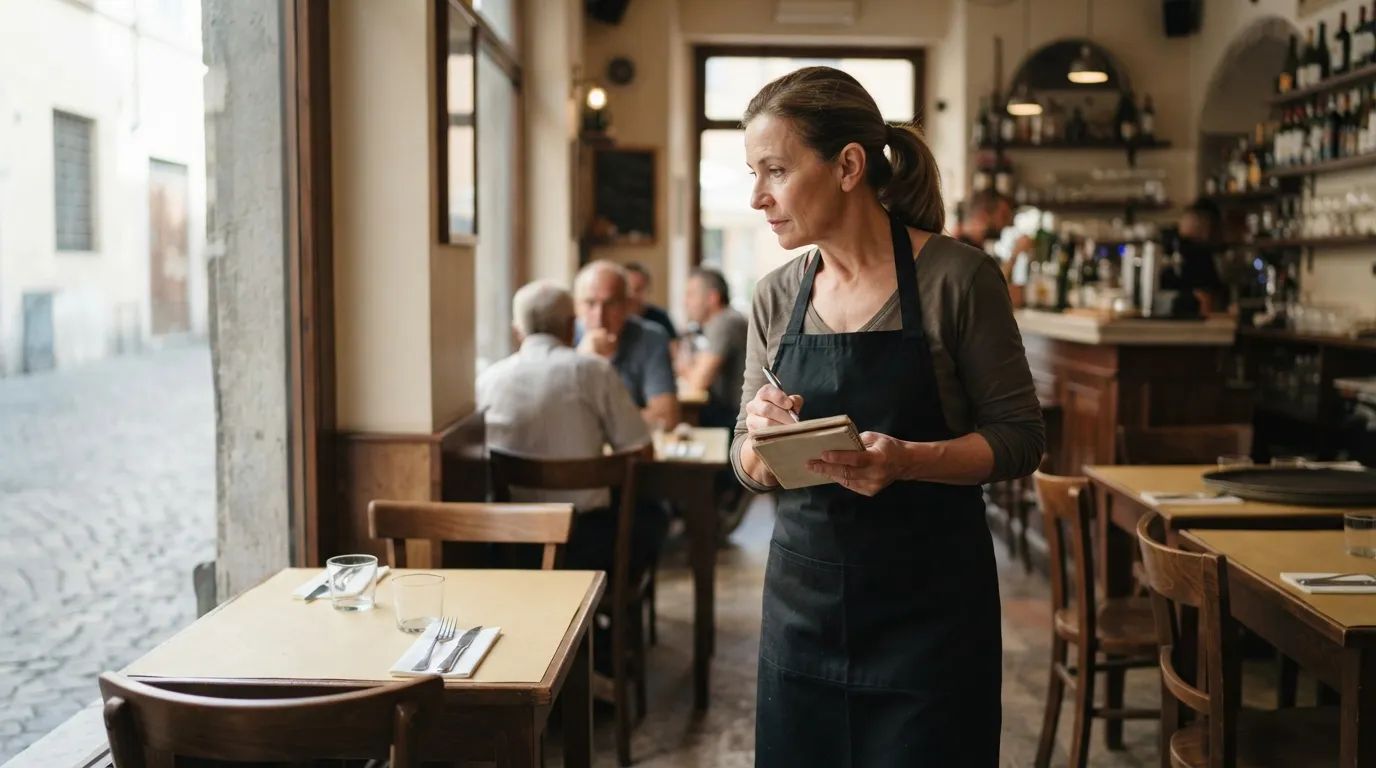
You’ve probably seen it without a second thought. A waiter slides a sturdier chair under someone’s grandmother, a plate arrives already cut into bite-size pieces, or a tiny dish shows up that nobody ordered. It feels like friendly service, or a lucky night. Across the world, it’s often neither. It’s a quiet system that new staff pick up in their first week, built around the oldest person at the table.
The strange part is how invisible it all is. Visitors credit charm, coincidence, or a cook in a good mood. Some of these habits are warm, a few are a little controversial, and one of them happens so far from the dining room that you may never see it at all.
#13 – The “Seniorenteller” That Shrinks the Plate and the Price
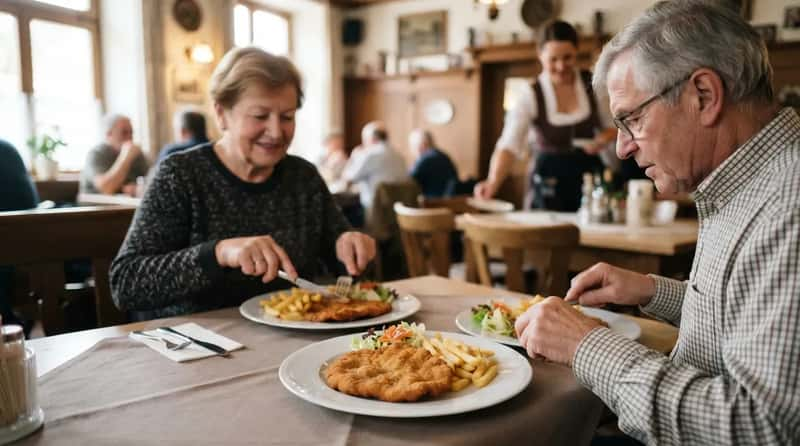
In Germany, many restaurants list a Seniorenteller, a smaller portion at a lower price. It’s easy to miss at the bottom of a long menu. Some servers mention it to older guests before they’ve even asked. The logic is simple: appetites often shrink with age, and nobody wants to pay for a giant schnitzel they’ll leave half-eaten.
Fast Facts
- The word combines Senioren (seniors) and Teller (plate).
- It usually means a smaller portion of a regular menu dish at a reduced price.
- Age cutoffs differ from place to place, and some restaurants never ask for proof.
- Some menus use a plain “small portion” label instead.
Not everyone loves it, though. Some older diners say it feels like being sorted into a category without being asked first. That’s the tension at the heart of it: a considerate gesture can also land as a quiet judgment. Either way, it’s deliberate, and the next habit is more subtle still.
#12 – The Spanish Lunch Nudge That Turns One Meal Into a Smarter One
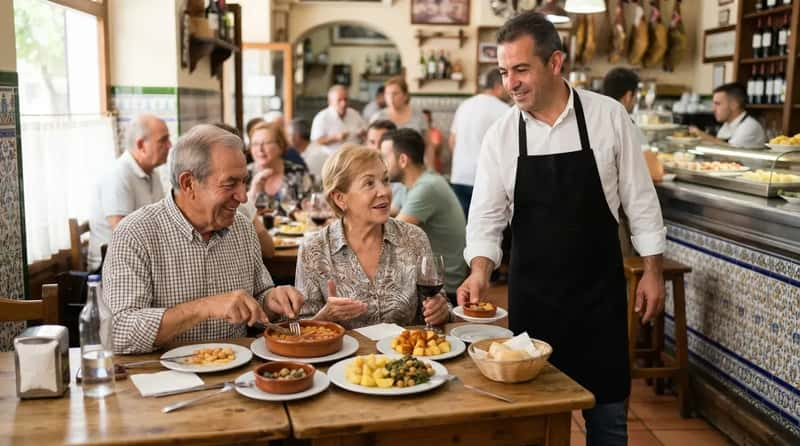
In Spain, lunch is traditionally the main meal of the day. Many places serve a fixed-price menú del día at midday, with several courses for one price. Servers often point regulars, older ones included, toward it, because it’s a full meal at a predictable cost that arrives in a sensible order. Many menus also offer a media ración, a half portion of tapas-style dishes. Staff may offer it without being asked.
Visitors usually write it off as a pricing quirk. It’s also a way of matching the meal to the diner. Midday is when the kitchen is fresh and the pace is calmest, so nobody feels hurried. That sense of unhurried care connects to something Japanese restaurants do before you’ve even opened a menu.
#11 – The Warm Towel That Arrives Before Anyone Says a Word
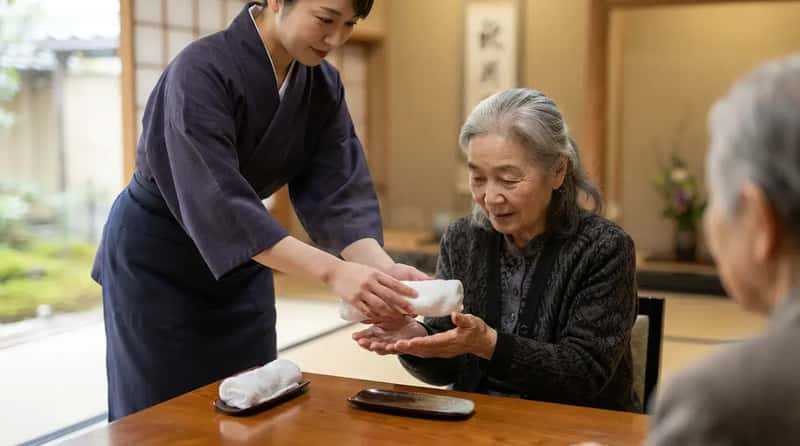
In Japan, many restaurants hand over an oshibori, a damp towel, as soon as you sit down. Everyone gets one, but staff often take extra care with older guests. They may place it directly in their hands, and in cold months it arrives noticeably warm. Traditionally, it’s meant for wiping your hands, not your face, which is a mistake many visitors make.
For someone with stiff fingers or slower mobility, a warm towel is a small, real comfort. It also sends a quiet message: you’re not being rushed here. Nobody explains any of this, which is exactly why it never looks deliberate. Seating is where that thinking becomes physical.
#10 – The Legless Chair That Appears Before You Have to Ask
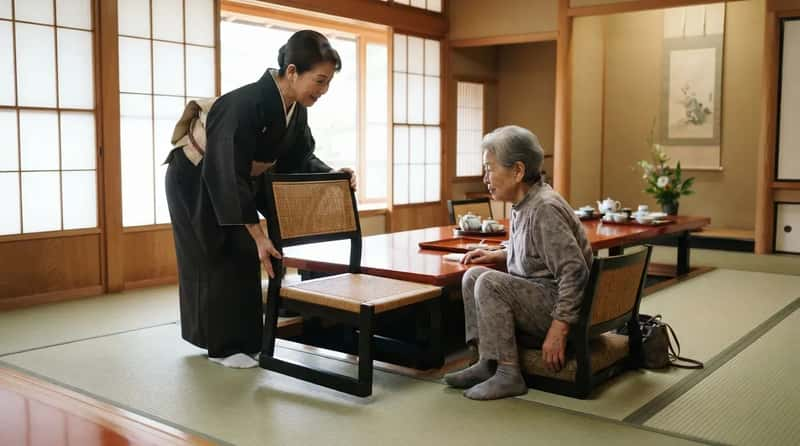
Traditional Japanese restaurants with tatami floors often keep zaisu, legless chairs with a back, close at hand. Staff commonly bring one to guests who might struggle to sit on the floor. Many places also offer a sunken-floor table, known as horigotatsu, which lets you sit with your legs down. Often the decision is made the moment you walk in, based on how you move.
Visitors tend to think they scored a lucky table. In reality, it’s a split-second judgment call that spares everyone an awkward scramble at the shoe rack. Staff in other countries use seating to send a message too, only louder.
#9 – The Seat of Honor That Is Never a Coincidence
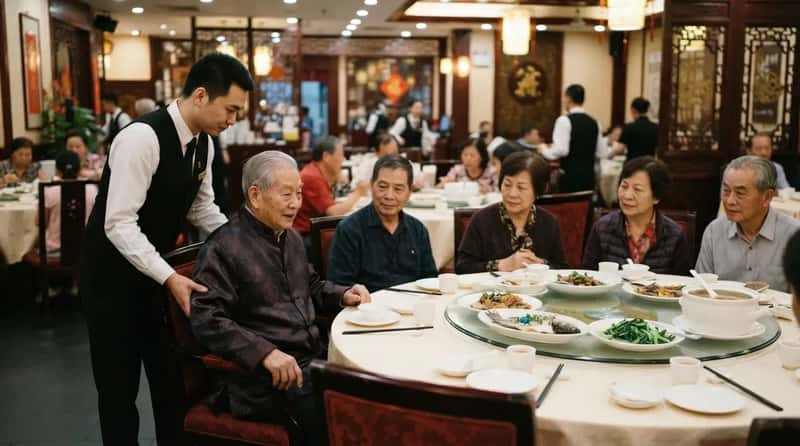
At Chinese banquets and family meals, seating follows an order. Traditionally, the seat of honor goes to the eldest or most respected guest, often the one facing the entrance. Experienced staff know this and may steer an older guest toward that spot, or quietly watch which person the group defers to. Hosts often leave that chair open until the eldest arrives.
If you’ve ever sat down first and felt the family hesitate, this was probably why. Customs vary by region and household, so think of it as a strong tendency rather than a law. A very similar order shows up in who gets served first.
#8 – The Oldest Guest Gets the First Plate, and the Table Waits
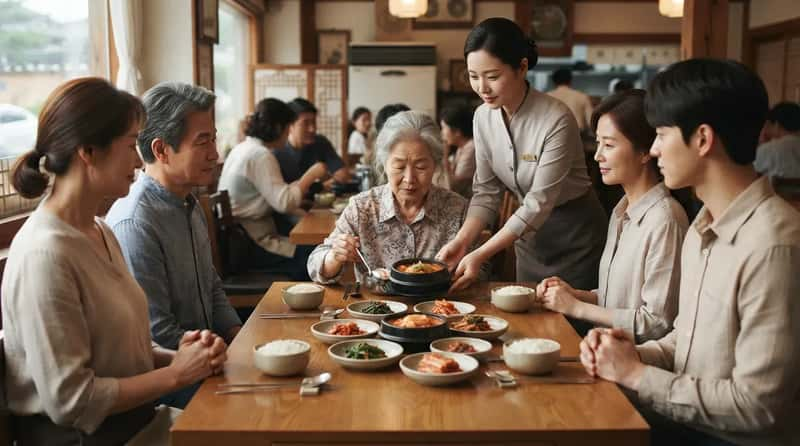
In many East Asian restaurants, staff serve the eldest guest first, then work their way down the table. In Korea in particular, the meal traditionally doesn’t begin until the eldest has picked up their spoon. Everyone else’s food may sit there untouched for a few beats. To visitors it looks like awkward timing. It’s actually a ritual.
Quick Compare
- Korea: The meal traditionally starts once the eldest picks up a spoon.
- China: The eldest is often seated in the place of honor and served first.
- Japan: Guests commonly wait until everyone is served and someone says itadakimasu.
Staff aren’t forgetting the rest of the group. They’re reading the table, and spotting the eldest person is part of the job. Foreign guests who dig in early often get a polite, silent pause in return. That respect gets even more physical when the drinks arrive.
#7 – The Two-Handed Pour That Says Everything Without Words
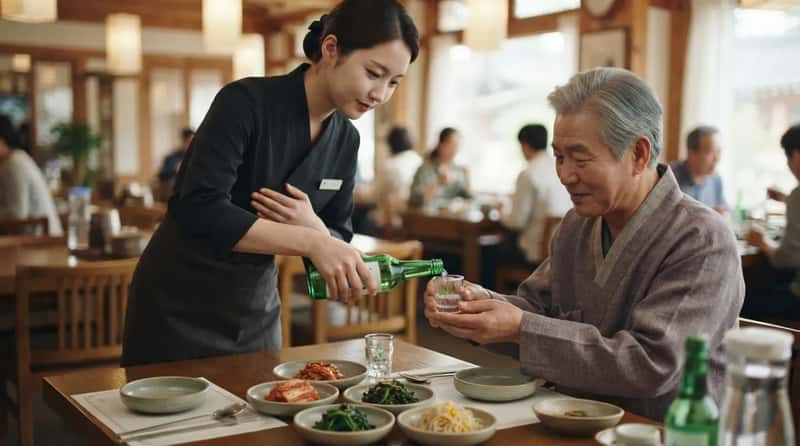
In Korean dining, pouring a drink for an elder with both hands, or with one hand supported at the wrist or forearm, is a sign of respect. Younger people at the table are expected to do it, and staff tend to follow the same etiquette when serving older guests. An elder’s glass is often topped up before anyone else’s. Many visitors assume the servers are just being formal.
If someone ever pours for you this way, receiving the glass with both hands is the polite reply. Respect isn’t always about the first pour, though. In Greece, it can arrive after the plates are cleared.
#6 – The Free Treat That Never Shows Up on the Bill
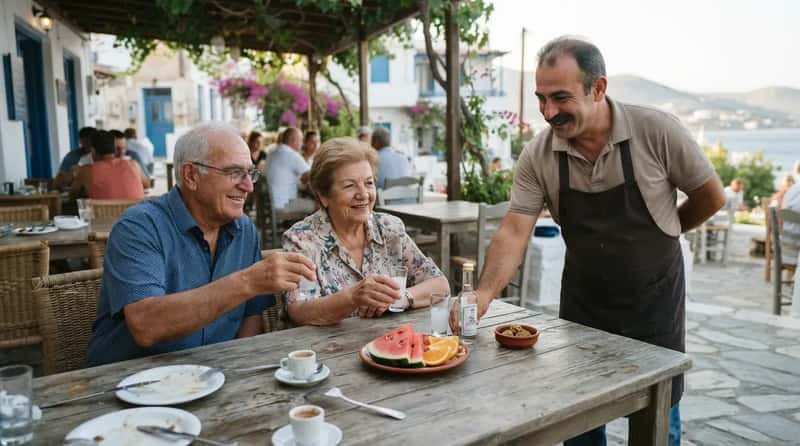
In Greece, a meal often ends with something nobody ordered. It might be fruit, a sweet, or a small glass of raki or a similar spirit, known as a kerasma, a treat from the house. It’s a hospitality tradition, not a prize for good behavior. Regulars, and the older neighbors who’ve been coming for decades, are often the ones who feel it most.
Worth Knowing
- Kerasma is the Greek word for a treat offered by the house.
- It’s typically fruit, a sweet, or a small pour of spirit after the meal.
- It usually isn’t listed on the bill.
- Philoxenia literally blends “love” and “stranger,” which is why it’s often translated as hospitality.
Tourists tend to read it as a lucky bonus. It’s actually a deliberate gesture rooted in philoxenia, the Greek tradition of welcoming guests. The message is that you matter here, and the people who keep a place going are treated that way. Not every gesture involves extra food, though. Some don’t involve a menu at all.
#5 – The Menu That Lives in the Waiter’s Head
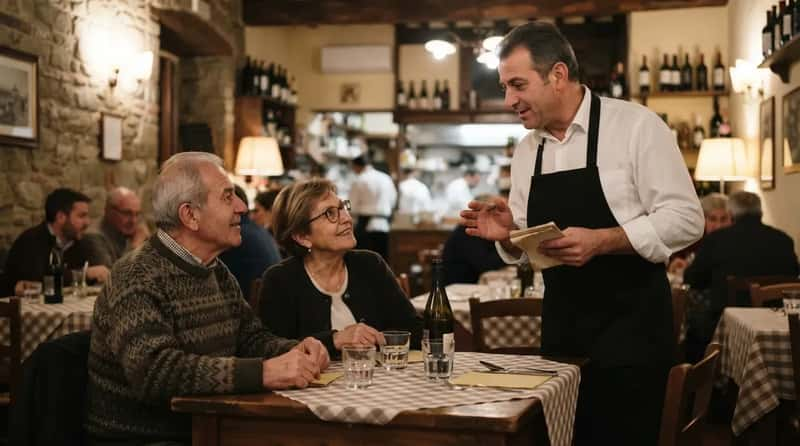
At many small Italian trattorias, the waiter simply recites the day’s dishes and skips the printed menu. Some do it for everyone, but it can be especially welcome for older diners. Tiny print and dim lighting make menus hard to read, and being told the options is far easier than squinting. At some places, the real menu exists only in the waiter’s memory.
Visitors often file it under charming local quirks. It’s also a practical fix for a real problem. The next habit is about hearing, and it’s one most people miss completely.
#4 – The Lean-In That Helps You Hear Without Admitting You Can’t

Good servers in many countries move closer, face the guest, and speak a little slower when they sense someone is struggling to hear. They often avoid talking while turned away or while carrying plates. Some lower themselves to eye level, which also helps guests who read lips without realizing it. The best ones do all of this without ever mentioning hearing.
Visitors see attentive service and move on. It’s actually a learned skill, and it spares older guests the small humiliation of asking twice. The next adjustment happens on the plate itself.
#3 – The Plate That Arrives Already Cut, Softened, and Still Beautiful
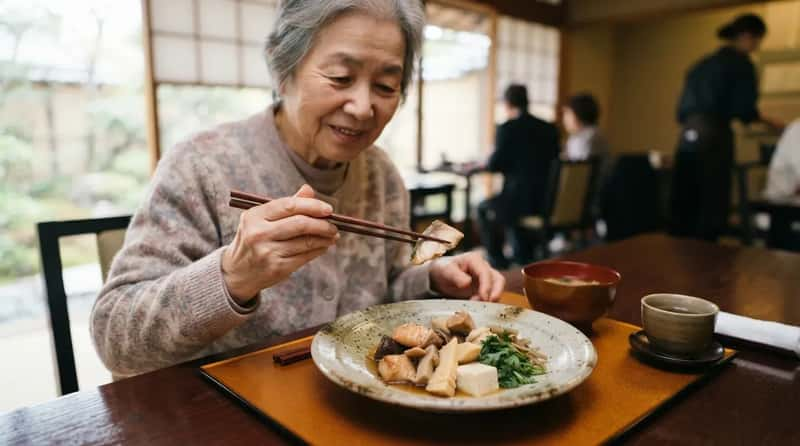
In Japan, kitchens often cut, chop, or soften food for guests who have trouble chewing. The country even has a whole category of specially prepared meals for older people, sometimes called kaigo-shoku, or care food. Restaurants may offer to cut a dish into smaller pieces if you ask, and some do it quietly in the kitchen. The goal is for the dish to still look like a normal, dignified meal.
That’s why a dish can look flawless and still be easy to eat. Visitors rarely notice the work hidden inside it. The last two entries on this list hit hardest, and the first is a national tradition.
#2 – The Holiday That Fills Restaurants With Grandparents
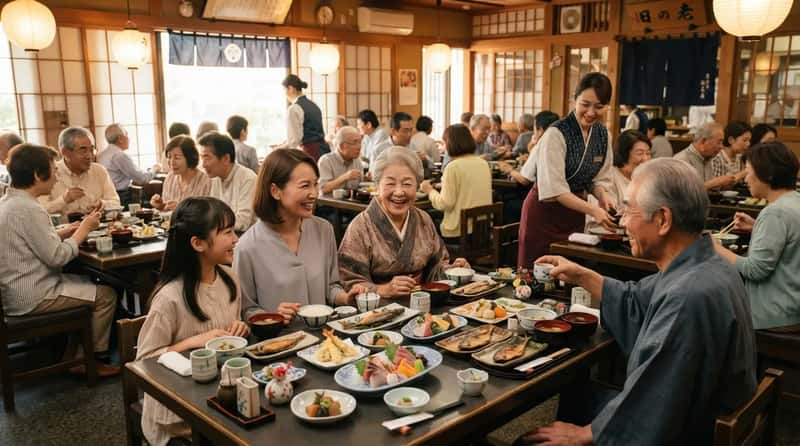
Japan celebrates Respect for the Aged Day, Keiro no Hi, on the third Monday of September. It’s a national holiday, and families often mark it by taking older relatives out to eat. Many restaurants and shops run special menus or gift sets around the date. For staff, it’s a day on the calendar built entirely around grandparents.
At a Glance
- Name: Keiro no Hi, or Respect for the Aged Day.
- National holiday since: 1966.
- Third-Monday rule: in place since 2003.
- 2026 date: Monday, September 21.
Tourists who wander into a packed Japanese restaurant that weekend may think they’ve stumbled onto a local hotspot. In fact, they’ve walked into a quiet national ritual. The warmth that day is real, but the most moving example of all happens on an ordinary Tuesday.
#1 – The Server Who Notices When a Regular Stops Coming
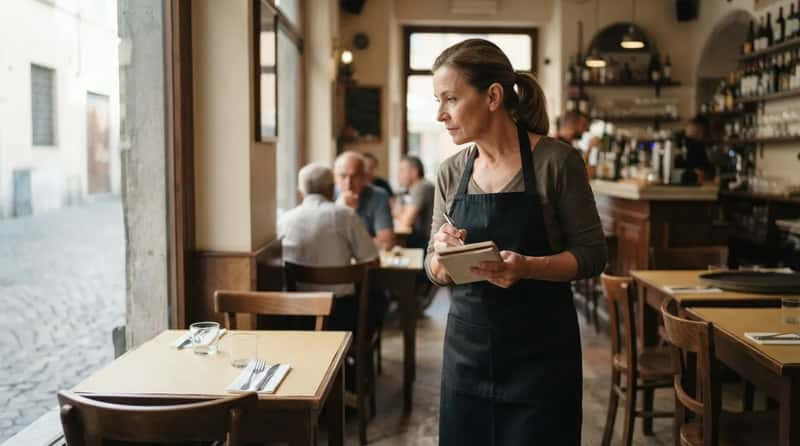
In small neighborhood restaurants around the world, staff remember who sits where, who takes tea, and who can’t have salt. Older regulars are often the people with the most predictable routines. When one of them stops showing up, the staff are sometimes the first to notice. No policy requires it, and no menu mentions it.
Visitors rarely see it because it happens in the gaps: a table held a little longer, a question asked at the counter, a phone call after closing. It’s the hardest gesture to fake. Of everything on this list, it’s the one that has nothing to do with service and everything to do with attention.
Most of these habits are easy to miss. A towel, a chair, a pause before the first bite, a dessert nobody ordered. They look like routine until you notice how consistently they point toward the oldest person in the room.
Some are tradition, some are practical, and a few are debatable. All of them are deliberate. The next time a server does something small for the eldest guest at the table, watch how the whole room quietly rearranges itself around it.