There’s a version of air travel that feels completely different from the one most people endure – no frantic security scrambles, no gate sprints, no standing in lines that seem designed to break you. Experienced travelers over 60 know exactly what that version looks like, because they’ve quietly assembled a set of tricks, programs, and habits that younger travelers almost never bother with. Seniors aged 65 and up now make up 21% of all frequent flyers – and the savviest among them have turned the airport into something that actually works in their favor.
Some of these hacks are official programs hiding in plain sight. Others are behavioral tweaks that cost absolutely nothing. A few of them will make you genuinely angry that nobody told you sooner. The list counts down from 14 to 1 – and the closer you get to the top, the more time, money, and physical strain it’s going to save you.
#14 – Book Non-Stop Flights Whenever Possible, Even If It Costs More

This sounds obvious until you actually do the math. Every connection you take is another security checkpoint, another gate sprint, another chance for a delay to unravel your entire trip. For travelers over 60, the physical toll of multiple boardings and de-boardings adds up fast – and arriving completely drained is its own kind of cost. A single non-stop flight can be the difference between starting your trip rested and starting it already beaten.
When you factor in the potential cost of missed-connection rebooking fees, extra meals during a layover, and the sheer energy you burn navigating a connecting airport, that slightly pricier direct ticket almost always comes out ahead. One missed connection can cascade into a 12-hour ordeal that no seat upgrade can fix. Experienced travelers say it plainly: the real cost of a cheap connecting flight isn’t in the fare – it’s in everything the airport takes out of you before you even arrive.
At a Glance: Why Non-Stop Wins
- Every connection adds a new security checkpoint, boarding, and delay risk
- Missed connections can trigger rebooking fees and multi-hour waits
- Non-stop flights reduce total physical exertion – especially for longer trips
- No risk of your carry-on medications being stranded at a connecting gate
- Arriving rested is a genuine health advantage, not just a comfort preference
#13 – Use the LoungeBuddy App to Find Lounge Access You Didn’t Know You Had
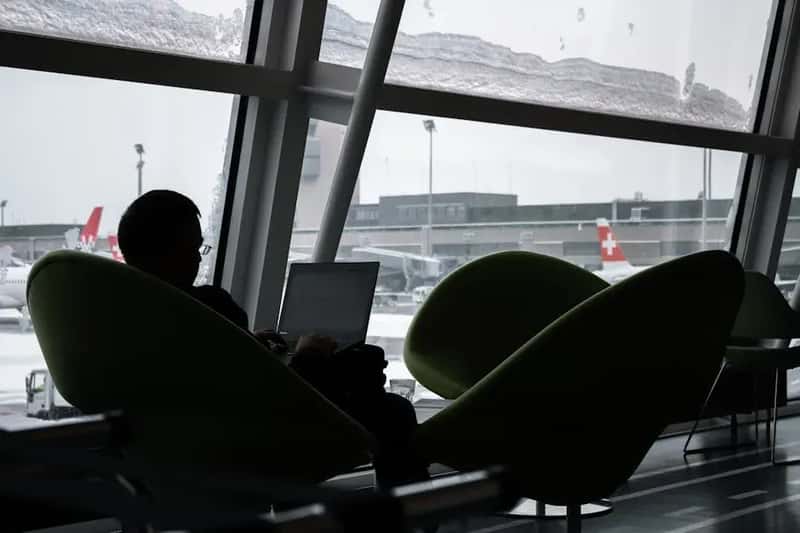
Here’s something that surprises nearly every traveler over 60: you may already have airport lounge access and simply don’t know it. Credit cards, airline memberships, and some travel insurance policies quietly include lounge perks that a huge number of people never activate. LoungeBuddy is a free app that shows you exactly which lounges you’re eligible for based on your cards and memberships – and lets you book paid access if you don’t qualify for free entry.
For travelers over 60, the lounge isn’t about feeling fancy – it’s a genuine health and comfort tool. Quiet seating, clean restrooms, real food, and a calmer environment can transform a brutal layover into something manageable. The American Express Global Lounge Collection alone covers more than 1,550 lounges across 140 countries. Even if your card isn’t premium, check the app before you assume you’re stuck at a crowded gate for three hours.
#12 – Pack Medications in Your Carry-On and Declare Them at Security Without Hesitation

Checked luggage gets lost – that’s not a fear, it’s a documented reality. But beyond the logistical risk, keeping medications in your carry-on is actually easy through TSA security once you know the rules. Liquid medications in quantities larger than 3.4 ounces must be separated from other carry-on items and declared to the security officer as medically necessary. That exemption from the standard 3-1-1 liquid rule exists specifically for this situation, and most travelers never use it because they don’t know it’s there.
The move is simple: pull your medications out before you reach the conveyor belt and tell the officer directly. There’s no confrontation, no drama – officers handle this daily. TSA notes that prescription pills don’t have to be in their original bottles, though having them labeled can help the process move faster. Staying in control of your prescriptions throughout the trip is non-negotiable. Don’t let a baggage handler make that decision for you.
#11 – Always Request a Courtesy Cart for Long Terminal Treks
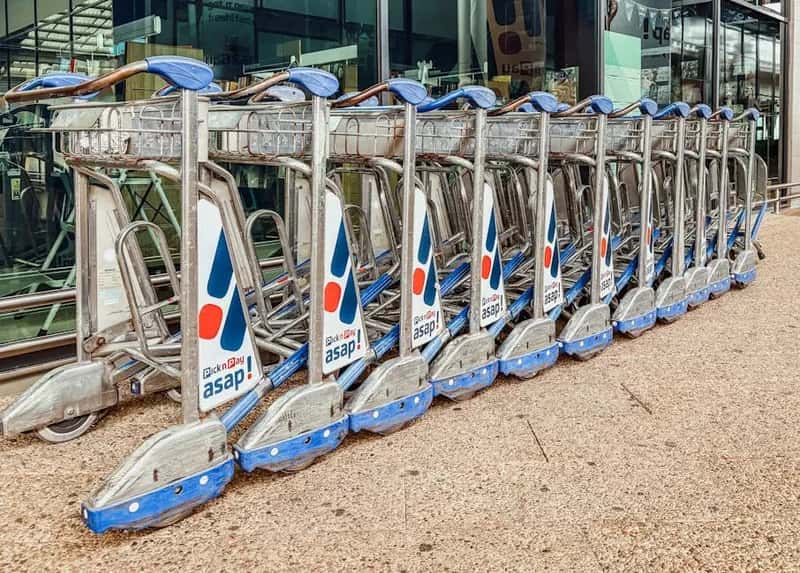
You do not have to walk a half-mile between gates. That’s exactly what the cart is for – and most travelers simply never ask for one. Airport courtesy carts are golf cart-style vehicles driven by staff to transport passengers who need extra assistance or have tight connections. This is not a service reserved for people in wheelchairs. It is available to anyone who requests it, at no charge, at airports across the country.
At major international hubs, the distances between gates can be genuinely startling. Even with moving walkways, a gate change can require 30 minutes of walking for anyone who isn’t sprinting. The insider move is calling your airline ahead of time to pre-arrange a cart rather than trying to flag one down mid-terminal in a panic. Some larger airports can book them through the airline’s customer service number before you even leave home.
Worth Knowing: Courtesy Cart Facts
- Free at virtually every major U.S. airport – no documentation required
- Available to anyone who asks, not just passengers with disabilities
- Pre-arranging through your airline before departure is more reliable than flagging one down
- Especially valuable at mega-hubs like ATL, DFW, ORD, and LAX where concourse walks can exceed half a mile
#10 – Ask About Senior Airfare Discounts That Airlines Don’t Advertise

Airlines are not in the habit of advertising discounts you don’t ask for – but those discounts exist. American Airlines allows you to select “Senior (65+)” under the Passengers section during an advanced search booking, which can surface discounted fares on certain routes. Delta, United, and JetBlue offer senior discounts on select routes as well, typically ranging from 5% to 15% off – but those rates often require a phone call to customer service rather than an online booking.
International carriers go further. Air France offers a Senior Pass for travelers 65 and older with flexible tickets, free checked baggage, and discounts up to 30% on European and select international routes. The discount lives on the phone, not on the website. One call can unlock savings that the booking page was never going to show you. Pick up the phone and ask directly – that single word, “ask,” is worth more than any deal-hunting algorithm.
#9 – Skip Checked Bag Fees by Mastering the Carry-On
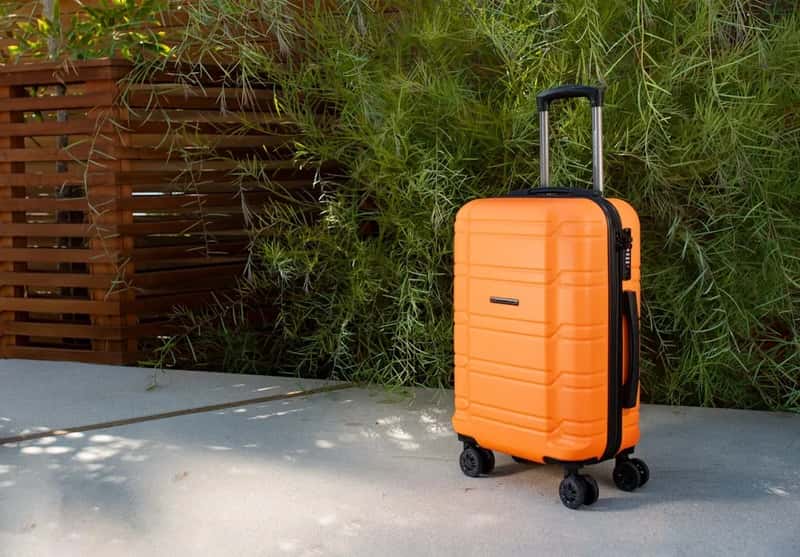
Checked bag fees have quietly ballooned into one of air travel’s most punishing costs. Many airlines now charge up to $60 per bag each way, and oversized or overweight bags can run $200 or more. On a round trip with two bags, you could be looking at $400 in fees before you’ve seen a single sight. Experienced travelers over 60 have learned to pack a full week into a carry-on – and do laundry at the destination instead of hauling half their closet.
The upside goes well beyond the savings. No waiting at baggage claim. No wondering whether your suitcase made the connection. No risk of medications or valuables vanishing into the airline’s lost luggage system. Rolling carry-ons with spinner wheels are dramatically easier on joints and backs than older drag-style bags, and most domestic airlines still allow one personal item plus one carry-on for free. Pack smarter, not heavier, and you reclaim hours of your travel day on both ends of the trip.
#8 – Know Your Federal Right to Pre-Board Without a Doctor’s Note

This surprises a lot of people: U.S. Department of Transportation rules protect your right to board early if you need extra time – and you don’t need a doctor’s note, a disability placard, or any documentation at all. If you self-identify to a gate agent as a passenger who needs additional time or assistance, the airline must allow you to board before other passengers. That gives you time to navigate the jet bridge, settle into your seat, and stow your belongings overhead before the main boarding rush hits.
Airlines actually encourage pre-boarding for seniors because it keeps the aisles less congested for everyone. Whether you’re traveling with a mobility aid, medical equipment, or simply prefer a slower pace, the right is yours as long as you speak to the gate agent before Group 1 is called. Most airlines will also allow one travel companion to pre-board alongside you. Walk up before boarding begins, explain that you need a little extra time, and the gate agent handles the rest.
#7 – Use the TSA Notification Card for Medical Devices to Avoid Awkward Screenings
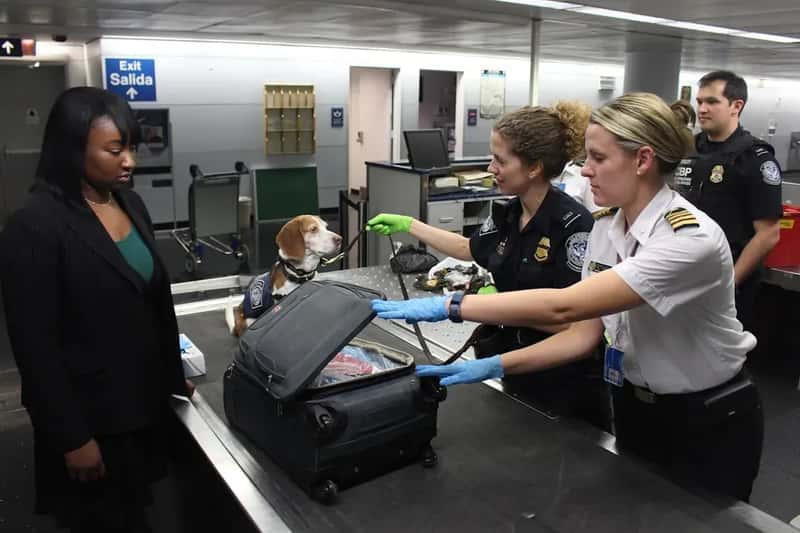
If you have a pacemaker, artificial knee, hip replacement, or any other implanted device, you need a plan before you reach the checkpoint – not while you’re standing in the middle of it. TSA officers should be informed of any internal medical device such as a pacemaker or defibrillator before screening begins, because passengers with those devices should not go through a standard walk-through metal detector. Telling an officer upfront routes you to an alternative screening method, which typically means less hassle, not more.
TSA publishes a discreet Notification Card you can print from their website, fill out in advance, and hand to the officer at the checkpoint – no verbal explanation required in a crowded line. Showing the card won’t exempt you from additional screening when necessary, but it communicates your situation clearly and professionally. Requesting Advanced Imaging Technology screening before approaching the metal detector may also allow you to keep your shoes on throughout the entire process. Know this before your next trip, not during it.
Fast Facts: TSA Medical Device Screening
- TSA Notification Cards are free to download and print at tsa.gov
- Pacemaker and defibrillator patients should avoid standard walk-through metal detectors
- Handing the card to an officer avoids explaining your condition aloud in a public line
- Advanced Imaging Technology (AIT) is the standard alternative screening method
- No doctor’s note is required – the card alone is sufficient communication
#6 – Call TSA Cares 72 Hours Before You Fly

Almost nobody uses this service. That’s a genuine shame, because it’s completely free and it can fundamentally change how your entire security experience unfolds. TSA Cares is a helpline – reachable at (855) 787-2227 – specifically designed to help travelers with disabilities, medical conditions, or other special circumstances navigate the security screening process. Calling 72 hours before your flight lets TSA answer your questions about procedures and assign a dedicated Passenger Support Specialist to meet you at the checkpoint.
That specialist walks you through screening step by step, at your pace, without the pressure of an impatient line behind you. For travelers who find airport security genuinely stressful – whether because of a medical device, mobility issue, or anxiety – this single phone call can eliminate the most unpredictable part of the entire airport experience. The number is (855) 787-2227. Put it in your phone right now, before your next trip.
#5 – Leverage Loyalty Programs for Upgrades and Perks Nobody Volunteers

Most frequent flyers over 60 are sitting on more reward miles than they realize – and leaving serious perks on the table. Travel experts consistently advise older travelers to let airline staff, hotel front desks, and travel planners know about every loyalty membership they carry, because upgrades, discounts, and complimentary perks often exist but are never proactively offered. The key word is “ask” – because the benefit only appears when you surface it.
Major carriers like Delta, American, and United offer programs with savings ranging from 5% to 15% for eligible older travelers, and elite loyalty status adds priority boarding, free checked bags, and automatic seat upgrade consideration on top of that. A mid-tier loyalty status with one airline consistently outperforms hunting for the cheapest fare across five different carriers. The airport works very differently once the airline knows your name – and your status number.
#4 – Wear Compression Socks on Any Flight Over Four Hours

This isn’t just a comfort trick – it’s a medically supported one. Being over 60 increases your baseline risk for deep vein thrombosis (DVT), and the American Society of Hematology notes that flights longer than 8–10 hours carry the greatest clotting risk of any travel scenario. High-certainty evidence shows that compression stockings reduced the incidence of symptomless DVT on flights of more than four hours. The risk isn’t abstract – it’s a physiological reality that hits harder with age, and compression socks directly address it.
Compression socks apply graduated pressure to your legs – highest at the ankle, decreasing up the calf – which helps blood return to the heart more efficiently and reduces dangerous pooling. For most travelers, a moderate compression level of 15–20 mmHg is sufficient for flights. If you have a history of DVT or varicose veins, a doctor can guide you toward a higher level. These cost less than $20 a pair, they fit in any bag, and they work every time. Buy a pair. Wear them every single time you fly.
Quick Compare: Compression Sock Levels for Flyers
- 8–15 mmHg (mild): Light support for healthy travelers on short flights
- 15–20 mmHg (moderate): Recommended starting point for most flyers over 60
- 20–30 mmHg (firm): Better for those with a history of DVT, varicose veins, or edema – consult a doctor first
- Cost: Quality pairs start under $20; no prescription needed for mild or moderate grades
#3 – Use CLEAR to Physically Skip to the Front of the Security Line
TSA PreCheck shortens the line you wait in. CLEAR eliminates the identity verification queue entirely. CLEAR uses biometric verification – matching your face to your ID and boarding pass at a dedicated kiosk or eGate – and once confirmed, you proceed directly to physical screening without stopping at the TSA podium. For travelers over 60 who find long, unpredictable security queues physically exhausting, that bypass isn’t a luxury. It’s a practical advantage on every single trip you take.
As of early 2026, CLEAR has deployed its biometric eGates across more than 37 U.S. airports, with rapid expansion still underway. The CLEAR+ annual membership runs $209, but Delta and United both offer free and discounted memberships to frequent flyers, and American Express Platinum cardholders receive it as a built-in benefit. The smartest combination: use CLEAR and TSA PreCheck together. CLEAR gets you past the identity check; PreCheck means the lane you reach moves faster and requires far less of you physically. Together, they make airport security feel like a completely different experience – one measured in minutes instead of exhausting, unpredictable stretches of standing still.
#2 – Enroll in Global Entry If You Travel Internationally Even Once a Year
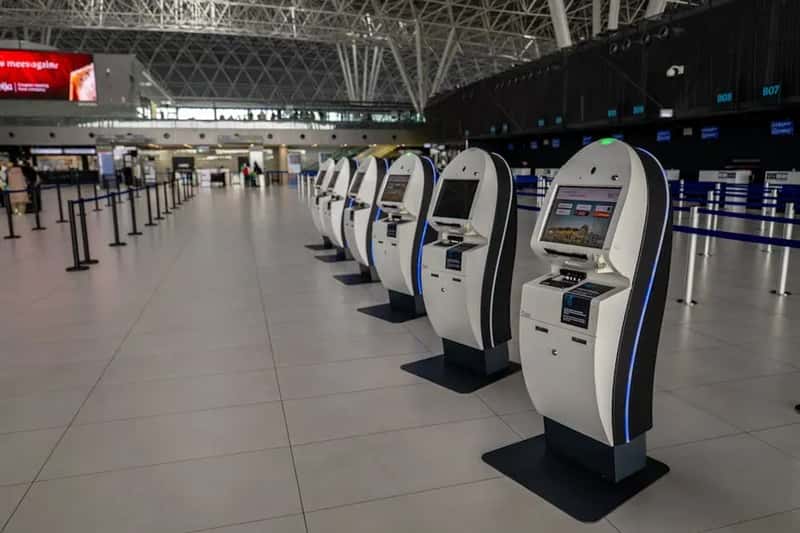
Most people know about TSA PreCheck. Far fewer have pulled the trigger on Global Entry – and that’s a mistake if you travel internationally even occasionally. Global Entry includes full TSA PreCheck benefits and adds expedited U.S. customs processing when you return from abroad. Instead of joining a passport control line while tired, stiff, and ready to be home, Global Entry members use dedicated kiosks to verify their identity via fingerprints or facial recognition and complete a quick customs declaration before heading straight to baggage claim.
The membership costs $120 for five years – that works out to just $24 a year – and many premium travel credit cards reimburse the application fee entirely as a statement credit, making the effective cost zero. Global Entry also automatically includes your TSA PreCheck benefits, so you’re essentially getting both programs for a single fee. If you travel internationally even once in five years, the math is clearly in your favor. The only people who regret enrolling are the ones who waited too long to do it.
Fast Facts: Global Entry vs. TSA PreCheck
- TSA PreCheck: ~$80 for 5 years – expedited domestic security screening at 200+ U.S. airports
- Global Entry: $120 for 5 years – includes full PreCheck benefits plus expedited U.S. customs on return from abroad
- Many premium credit cards (Amex Platinum, Chase Sapphire Reserve, Capital One Venture X) reimburse the fee in full
- Global Entry kiosks use facial recognition or fingerprints – no standing in passport control lines
- If you fly internationally at all, Global Entry is the better value every time
#1 – Get TSA PreCheck and Use It on Every Domestic Flight You Take

This is the one hack that experienced travelers universally, without exception. TSA PreCheck means shorter wait times, a dedicated faster lane, and – critically – you keep your shoes, belt, and light jacket on throughout screening. Laptops and approved liquids stay in your bag. No more frantically unloading your carry-on at the conveyor belt while a line of impatient strangers stacks up behind you. About 99% of TSA PreCheck passengers wait less than 10 minutes at security – a consistency that’s almost impossible to put a price on when you’re traveling.
Enrollment costs as little as $79.95 for five years depending on provider – less than $16 a year to eliminate the single most stressful part of flying. PreCheck is available at over 200 U.S. airports across more than 90 participating airlines, so the experience stays consistent no matter where you’re headed. If you only do one thing on this entire list, make it this one. Apply at tsa.gov/precheck. You will genuinely wonder how you ever flew without it.
The airport has never been designed with travelers over 60 as the priority – but that doesn’t mean it can’t work brilliantly for you. From a free phone call to TSA Cares, to a $20 pair of compression socks, to an enrollment fee that pays for itself on the very first trip, every tool on this list is sitting there waiting. The frequent flyers who figured this out years ago aren’t smarter or luckier – they just asked the right questions. Now you have them. Which one are you trying first?