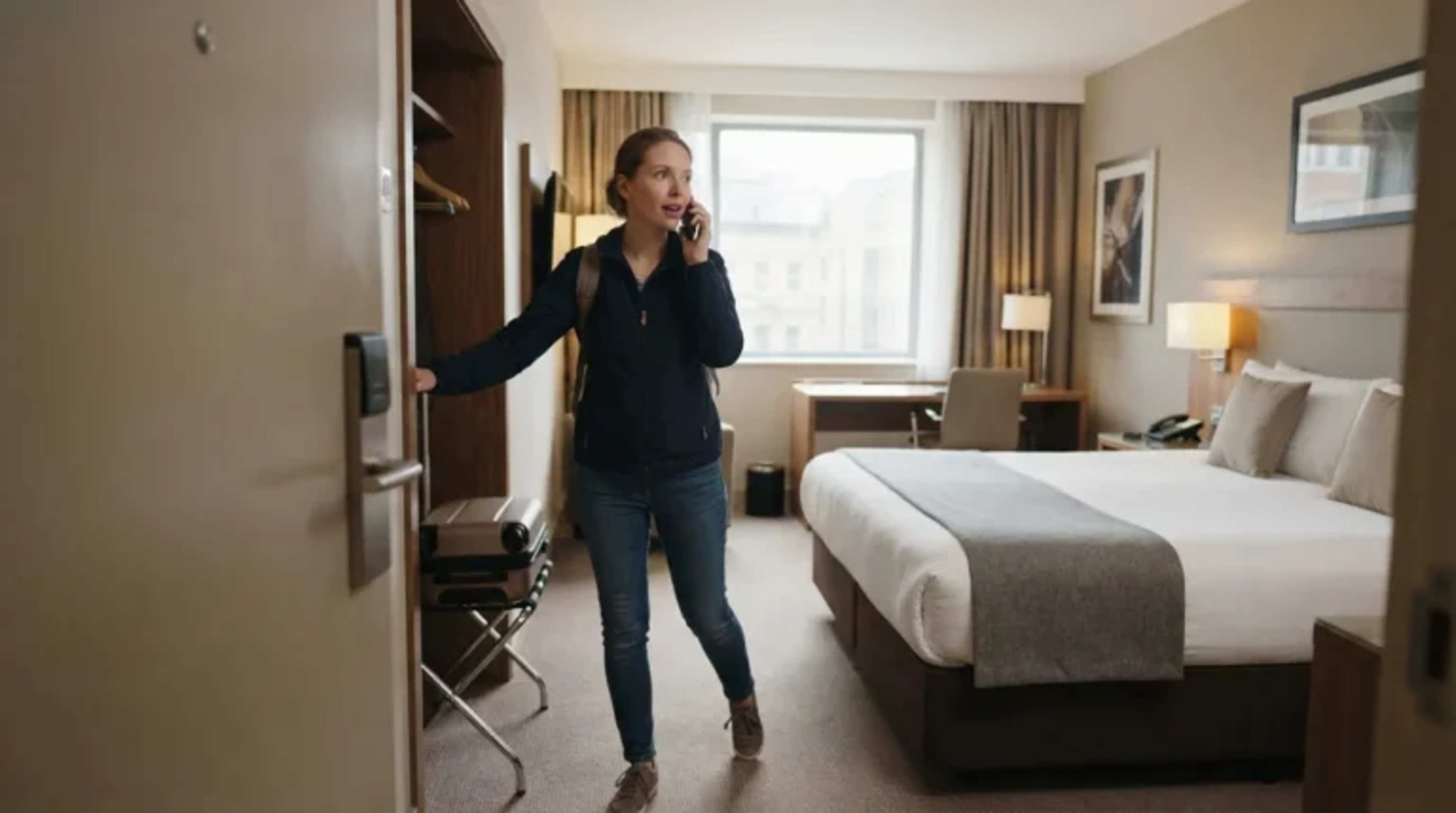
You’ve probably paid for breakfast upgrades that were never actually upgrades at all. Diners, chain restaurants, and hotel buffets across the country already build dozens of small requests into the price you’re charged, whether you ask for them or not, which means plenty of people are quietly overpaying for things that were free the entire time.
The strange part is that almost nobody asks. Servers won’t volunteer these swaps, cooks won’t announce them, and the menu certainly isn’t going to tell you. But once you know the exact words to say, breakfast gets noticeably better without your bill moving a single cent, and the list gets more surprising the further down you go.
#14 – Extra Salsa, Cheese, or Last Night’s Leftover Veggies, Just for Asking
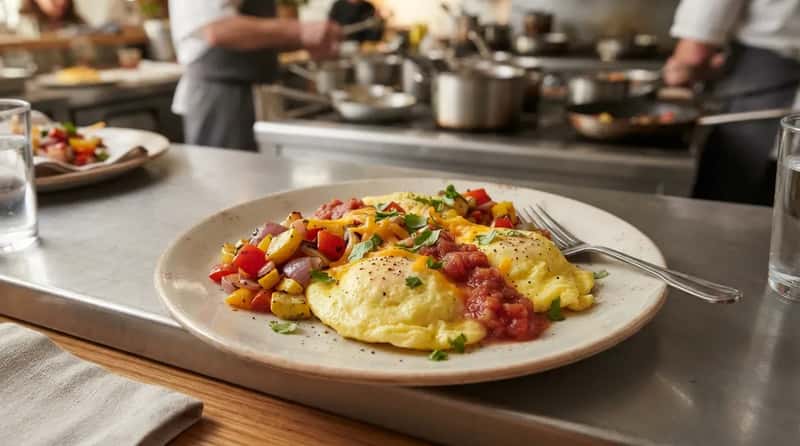
Kitchens hate waste, and that quietly works in your favor at breakfast. Hotel restaurants especially tend to have extra roasted vegetables sitting around from the previous night’s dinner service, sometimes peppers and onions, sometimes a whole tray of squash nobody finished. Cooks would rather use that food than throw it out, so asking for a scoop on your eggs costs the kitchen nothing and almost always costs you nothing either.
Salsa, extra shredded cheese, or those leftover roasted vegetables are frequently just one request away from landing on your plate. Most guests never think to ask because none of it is printed anywhere on the menu or the buffet sign. It just sits in the back, waiting for someone curious enough to mention it. But that’s nothing compared to what we found about #13.
#13 – Doubling the Veggie Fillings in Your Omelet
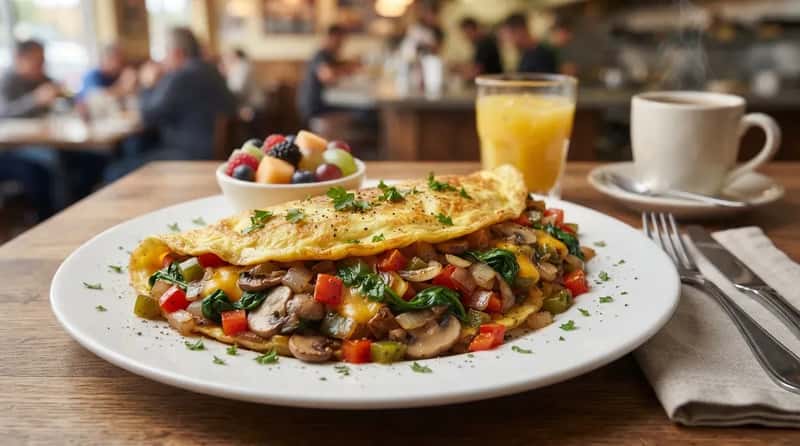
Omelets already come priced for a set number of fillings, and most kitchens won’t nickel-and-dime you for leaning heavier on the vegetables already included in that build. Peppers, onions, mushrooms, and spinach are some of the cheapest ingredients in the entire kitchen, so cooks rarely push back when you ask for a heavier scoop of any of them.
Where restaurants actually draw the line is swapping in extra meat, cheese blends, or premium add-ons, which almost always trigger a real upcharge on the check. The loophole only works on produce, never on protein, and once you know that boundary, you can build a genuinely bigger omelet for free every single time. But that’s nothing compared to what we found about #12.
#12 – Toast Instead of Pancakes in a Combo Plate
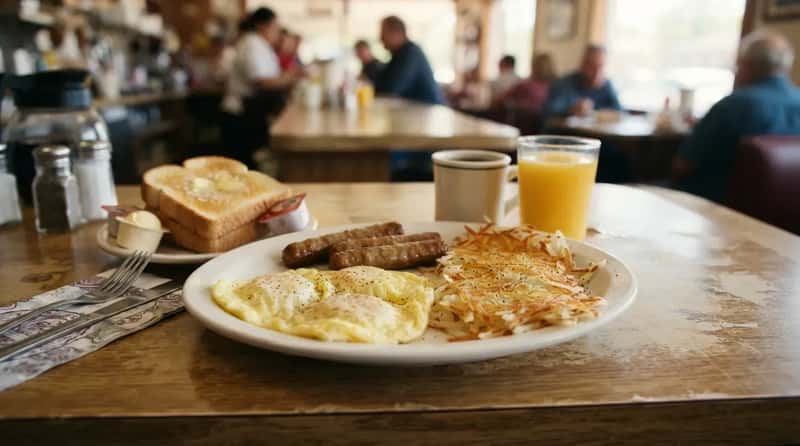
Combo breakfasts almost always list a carb option as part of the base price, and toast is usually the cheapest one sitting on that list. That means swapping out hotcakes, waffles, or French toast for a simple side of toast isn’t really a substitution at all. It’s just choosing the version the menu already priced in from the start.
A typical two-egg breakfast comes with eggs, hash browns, bacon or sausage links, and toast as the default combo structure many chains still run today. Most diners assume toast is the boring downgrade, when it’s actually the built-in option the whole combo was priced around. Once you realize that, the pancakes start looking like the actual upsell. But that’s nothing compared to what we found about #11.
#11 – Egg Whites Instead of Whole Eggs, No Charge
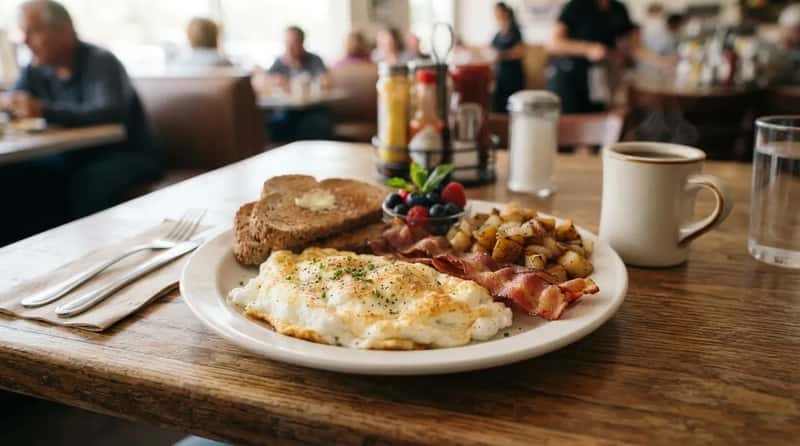
This is one of the most requested swaps in American breakfast culture, and it’s almost always free because it’s already built into how kitchens portion eggs. Chains have quietly formalized it, listing egg whites right on the menu as a legitimate substitution instead of a paid upgrade.
Some restaurants specifically market it as a “wholesome substitution” rather than anything extra, and the same courtesy shows up well beyond diners. Plenty of cooks will swap the whole-egg base for egg whites only at no extra charge, making it one of the easiest wins in the entire building that almost nobody bothers to use. It’s a free swap hiding in plain sight on nearly every breakfast menu in America.
Worth Knowing
- A single whole egg carries roughly 186 mg of cholesterol, while egg whites have essentially none.
- Egg whites are almost pure protein, with very little fat along for the ride.
- Most kitchens will swap whites for whole eggs at an even 1:1 ratio with no upcharge.
- The request is common enough now that some menus list it as a standing option, not a special order.
But that’s nothing compared to what we found about #10.
#10 – Choosing Fruit Instead of Hash Browns on Your Plate
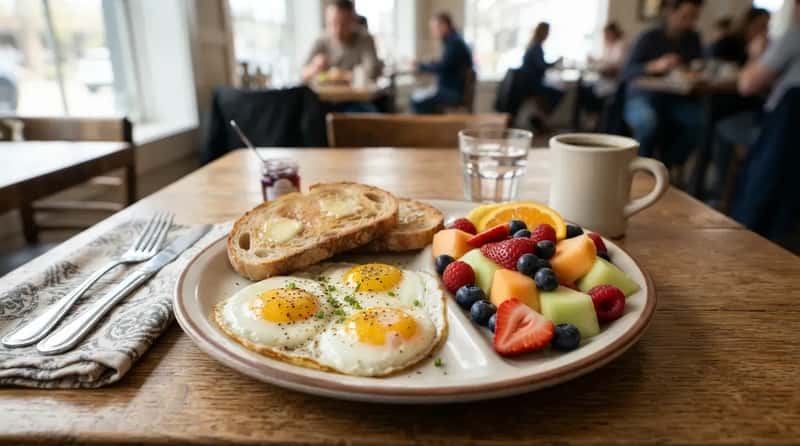
Hash browns feel like the automatic default at most breakfast spots, but they’re rarely mandatory once you actually look at the menu. Nearly every combo plate lists a side “choice,” and fresh fruit is almost always sitting right next to the potatoes as one of the free options.
Classic breakfast plates list hash browns or fruit as fully interchangeable choices with zero price difference, and that same structure repeats across nearly every combo on the menu. Even newer items like avocado toast come with a choice of seasonal fresh fruit or hash browns built directly into the base price. Most people just accept whatever the server assumes they want instead of actually choosing. But that’s nothing compared to what we found about #9.
#9 – Turkey Sausage or Turkey Bacon Instead of the Regular Stuff
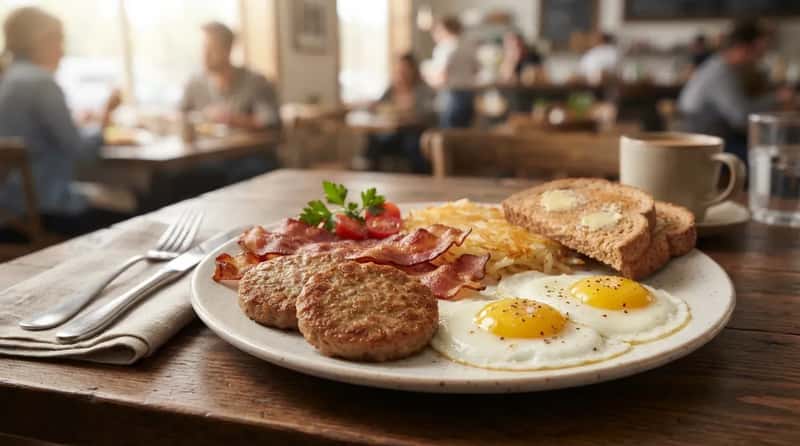
Health-conscious swaps used to feel like a special request that might slow down the kitchen, but most restaurants now treat turkey versions as an equal, interchangeable option rather than a premium one. It’s become common enough that staff barely blink when you ask for it.
Menus increasingly note that vegetarian or turkey sausage can simply replace the standard breakfast meats without any price adjustment at all. Staff at popular diner chains routinely make swaps like turkey sausage in place of Canadian bacon purely for dietary preference, no questions asked. The turkey swap went from special order to standard order almost overnight, and the price tag never noticed the difference. But that’s nothing compared to what we found about #8.
#8 – A Free Refill, Plus a To-Go Cup on the Way Out
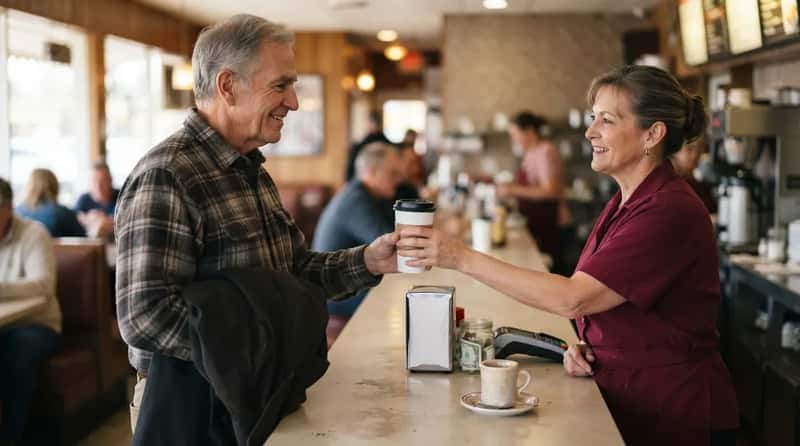
Coffee refills are one of the oldest unwritten rules in American diner culture, but the to-go cup is the part people forget to ask for. Servers pour refills constantly throughout a shift, and most are just as willing to send you off with one more cup for the road.
Guests at hotel restaurants have described getting a full cup, a refill, and even a to-go cup for the walk back to their room without any extra charge showing up anywhere on the bill. It’s a small ask that most travelers never make, mostly because they don’t realize the courtesy extends past the table. But that’s nothing compared to what we found about #7.
#7 – Extra-Crispy Bacon or Hash Browns, Cooked Your Way
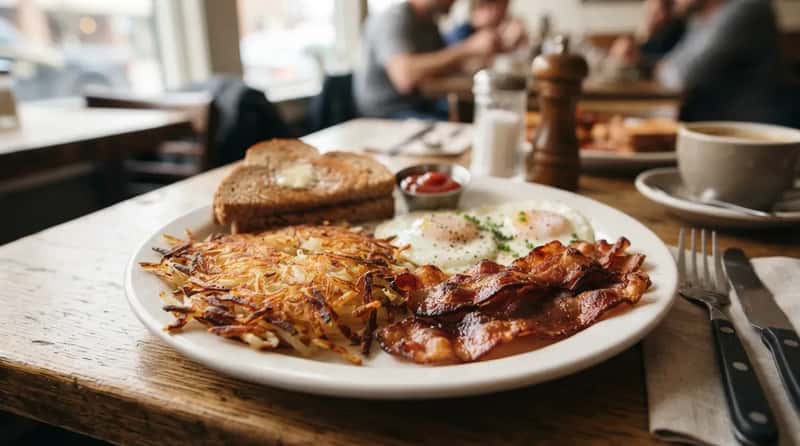
Texture requests cost restaurants nothing because the food is already in the pan. Asking for bacon well-done, hash browns extra crispy, or eggs cooked hard instead of soft is purely a cooking-time adjustment, not a different ingredient or a different portion.
Cooks generally welcome the clarity because it prevents a plate from coming back cold or wrong. The mistake most people make is assuming this counts as a “special order” that might annoy the kitchen, when in reality it usually speeds up service because there’s no guessing involved on either end. Being specific is doing the cook a favor, not asking for one. But that’s nothing compared to what we found about #6.
#6 – Ordering Two Drinks Instead of Picking Just One
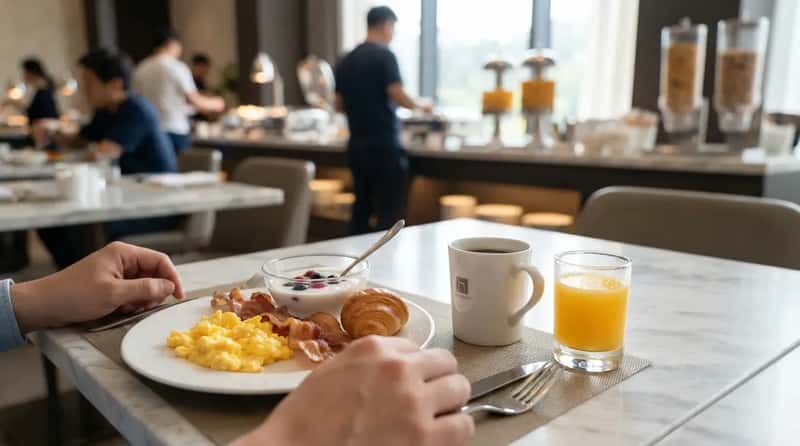
At a sit-down restaurant, ordering coffee and orange juice means paying for both, no exceptions. At a hotel breakfast buffet, that rule quietly disappears, and most guests never actually test whether it does.
Everything at an included hotel breakfast is already covered under one price, so guests can pile eggs, meats, pastries, and yogurt onto one plate without a second thought. Choosing between hot chocolate and juice simply means having both, because nothing about the buffet was ever priced per item to begin with.
Quick Compare
- Sit-down restaurant: Coffee and juice are billed separately, and ordering both adds to the total.
- Hotel breakfast buffet: Coffee, juice, and even hot chocolate are all covered under one flat price.
- The real difference: Buffets charge per person, not per item, so doubling up on drinks costs nothing extra.
The “pick one” mentality only applies when you’re paying per item, and at a buffet, you’re not. But that’s nothing compared to what we found about #5.
#5 – A Full Allergy-Safe Plate, Cooked in Its Own Pan
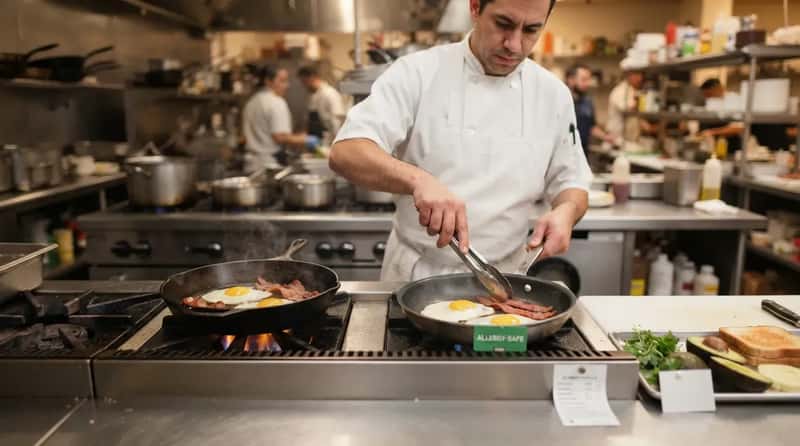
Dietary requests used to mean apologizing to a server and hoping for the best. That’s changed fast, and kitchens have quietly rebuilt their entire prep flow to keep up with how common these requests have become.
Gluten-free, dairy-free, and nut-free requests are now common enough that many kitchens keep separate prep space and even separate pans set aside for them entirely. What used to feel like a burden on the kitchen is now standard operating procedure in most full-service restaurants. Asking doesn’t slow anything down or add a surcharge; it just tells the cook which pan to reach for first. But that’s nothing compared to what we found about #4.
#4 – A Genuine Second Helping, Off the Books
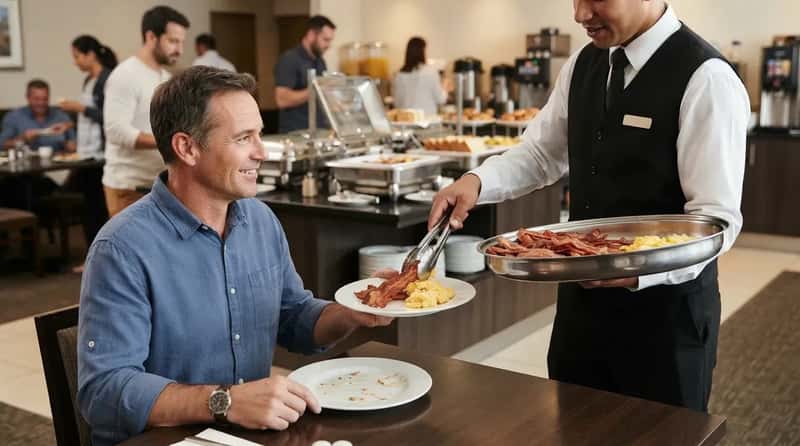
Buffet portions look stingy on purpose. Hotels control food costs by keeping servings small across hundreds of guests every morning, but that doesn’t mean seconds are actually off-limits once the tray runs low in front of you.
Buffet portions of bacon, sausage, and eggs are intentionally modest, but most hotel restaurants will bring out a second helping if a guest simply flags down the server and asks directly. It rarely shows up as a separate charge, because keeping guests satisfied matters more to the hotel than the marginal cost of a little extra bacon, especially when breakfast is already bundled into the room rate. The kitchen already budgeted for it; you just have to say something. But that’s nothing compared to what we found about #3.
#3 – A To-Go Box Packed Before You Even Check Out
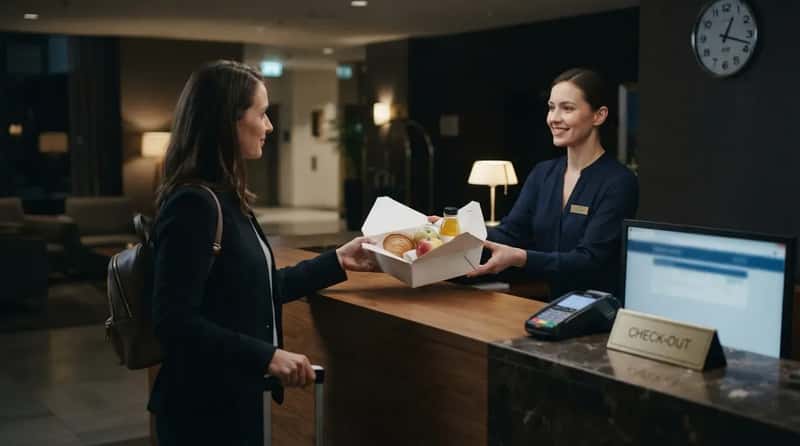
Early flights shouldn’t mean skipping breakfast entirely, and most front-desk and dining staff already know it. This request works best the night before, giving the kitchen time to set food aside before the buffet gets picked over by everyone else in the lobby.
Checking out at 6 a.m. doesn’t have to mean missing breakfast, since front-of-house staff frequently pack croissants, muffins, or bagels into a to-go box for guests heading to the airport. It never appears on any printed sign anywhere in the hotel, and it works best when requested the night before or first thing in the morning before the rush starts.
Fast Facts
- Asking the night before gives the kitchen time to set food aside before the morning rush picks the buffet clean.
- Guests catching early flights are the most common ones to make this request, so staff are already used to it.
- Muffins, croissants, bagels, and whole fruit hold up best for the trip to the airport.
- This perk almost never appears on a printed sign, menu, or hotel policy sheet.
It’s an entirely unofficial perk that depends completely on simply asking. But that’s nothing compared to what we found about #2.
#2 – Piling a Full Plate at a Bundled Breakfast, No Portion Guilt
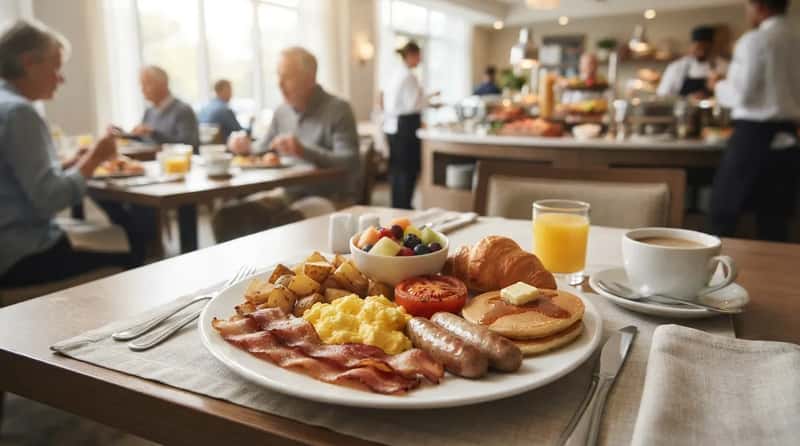
When breakfast is bundled into a room rate or included as a nightly amenity, the psychology of “ordering more” disappears completely. There’s no itemized bill waiting to punish a second plate, so the usual hesitation just doesn’t apply anymore.
A large included breakfast can be substantial enough to skip lunch afterward entirely, saving real money later in the day without anyone noticing the trade. Most travelers under-eat at included breakfasts purely out of habit, not because anything actually costs more if they go back for seconds. The plate is already paid for; the only thing stopping most people is old restaurant instincts that don’t apply here. But that’s nothing compared to what we found about #1.
#1 – A “Basic” Voucher That Turns Out to Cover a Full Hot Entrée
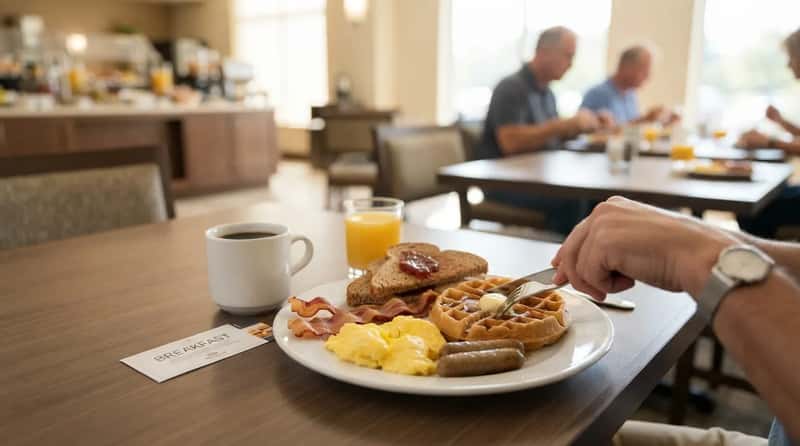
This is the request people regret not making the most, mainly because they never realize there’s anything to ask for. Assuming a breakfast voucher only covers coffee and toast is the default expectation, when it often quietly covers a complete hot meal instead.
One traveler who paid roughly nine dollars a day for what they assumed was a basic breakfast voucher discovered it actually covered coffee and a full, hot breakfast entrée, resulting in twenty-dollar breakfasts of eggs, waffles, toast, and meat every single morning of the trip. The lesson is simple: never assume a voucher is “just” the cheap option before actually asking what it includes.
Why It Stands Out
- Most guests assume a “basic” voucher automatically means the cheapest possible option.
- Plenty of vouchers actually cover a full hot entrée, not just coffee and toast.
- The only way to know for sure is to ask exactly what the voucher includes before ordering.
- It’s the easiest way on this whole list to turn a low expectation into a genuinely filling breakfast.
That gap between low expectation and generous reality is exactly why this request tops the entire list.
None of these requests require charm, negotiation, or a loyalty card. They just require knowing that the menu, the buffet line, and the voucher fine print already have more built into the price than most people bother to use. The real waste isn’t the money spent on breakfast; it’s the free stuff left sitting on the table because nobody thought to ask.
Which one of these are you trying tomorrow morning? Drop it in the comments.