Most people assume the best coach seat is whatever is left when they climb aboard. Frequent riders know better. Before they ever pick a seat, they’ve checked the layout, the route, the time of day and the type of bus, like a small strategy game played in a booking window.
The strange part is how often their favorites go against common sense. The row with the most legroom can be the wrong call. The seat everyone warns you about can be perfect for the right trip. Keep scrolling, because the seat at #1 is not the one most people expect, and the #2 pick has nothing to do with where you sit.
#14 – The Aisle Seat Tall Riders Quietly Lock In
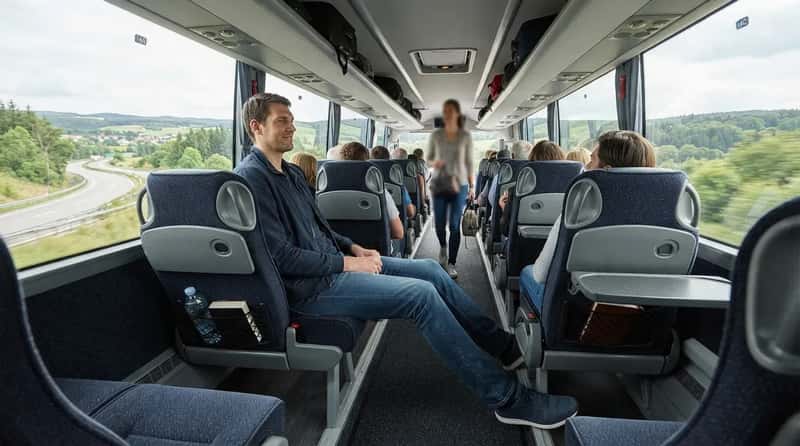
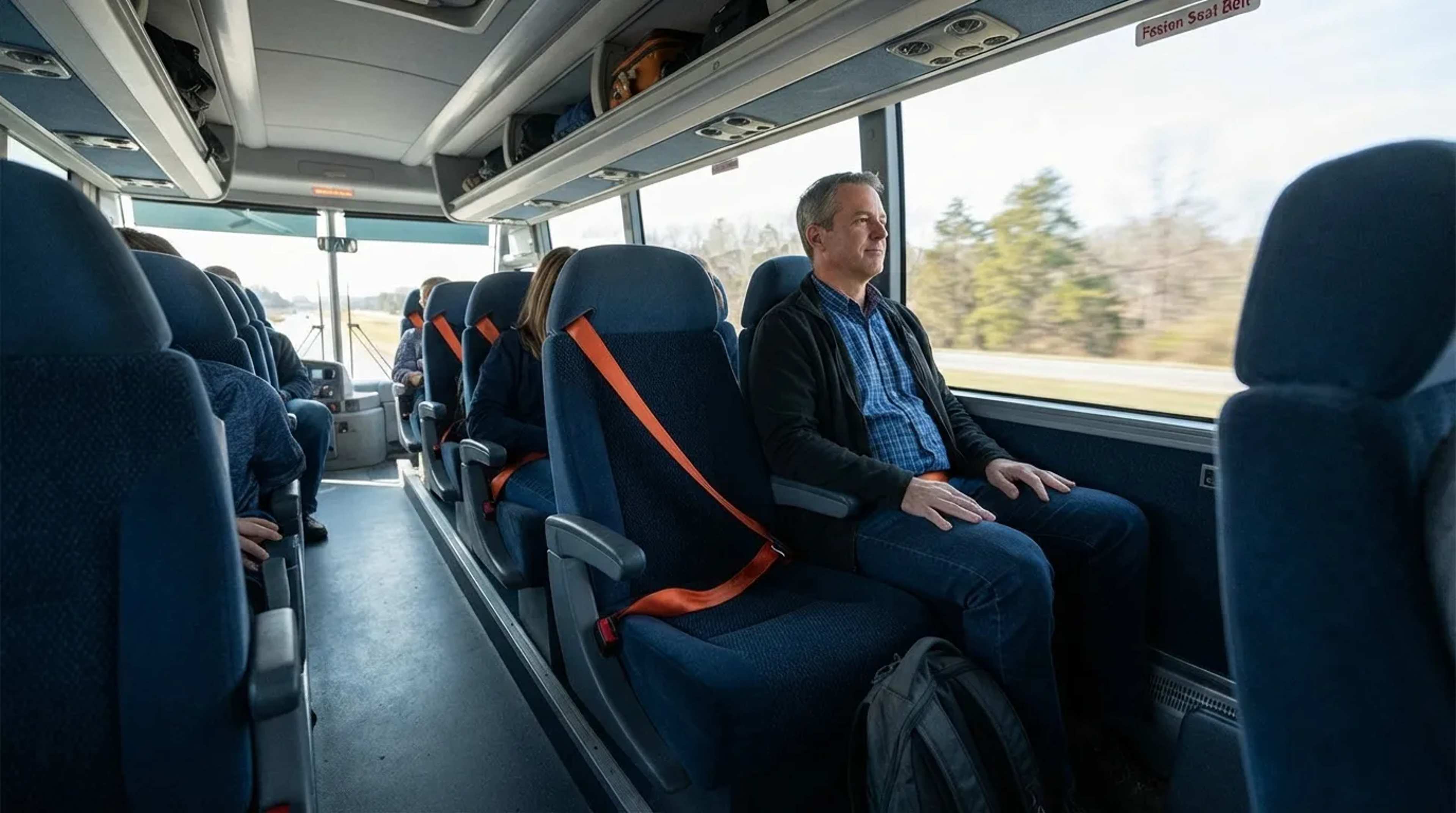
Tall riders learn this one the hard way. An aisle seat gives your legs somewhere to go, and it lets you stand up whenever you want. Legroom on coaches varies a lot by service level, roughly 30 to 40 inches in many cases, so every inch counts. Window riders often have to climb over a stranger just to reach the restroom.
There’s a price, though. People walking past can clip your shoulder or bump your elbow, and some travelers say that makes the aisle overrated because you become the human speed bump. Experienced riders shrug it off. They’d rather take the occasional bump than feel trapped for four hours.
But the next seat solves a problem the aisle never can…
#13 – The Mid-Coach Window Seat Made for Sleeping

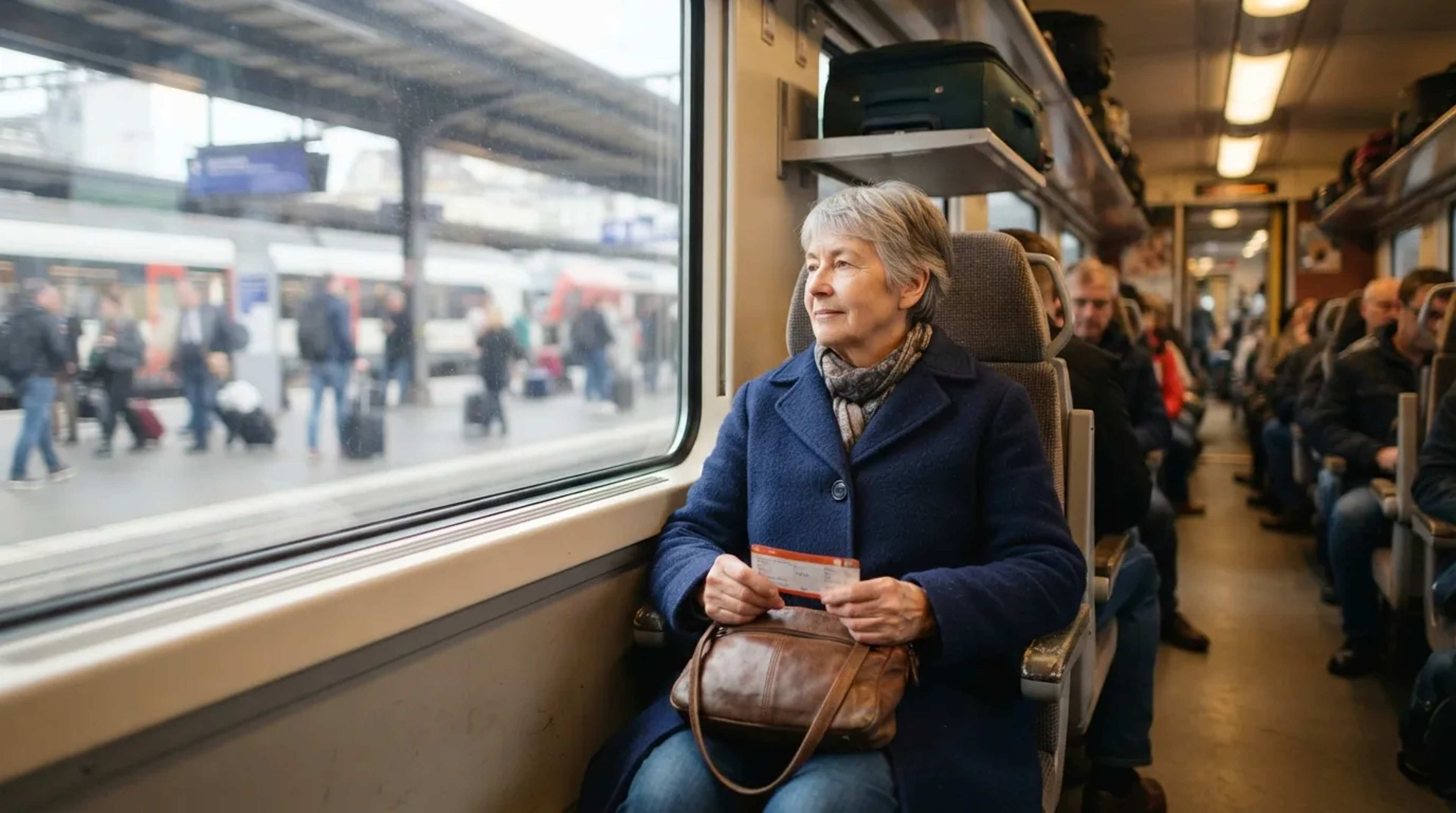
Overnight riders chase this seat first. A window gives you something solid to lean on, which is why travel guides often tie it to privacy, a view and a wall to rest against. Pair it with the middle section of the coach, and you get the best odds of actually sleeping.
Don’t assume any window will do. Windows can be harder to get out of, and the glass runs cold at night. Pack a layer even if the forecast looks mild. Light sleepers also like the middle because it’s usually calmer than the back.
Fast Facts
- Best for: overnight trips and light sleepers
- Big perk: a solid surface to lean your head against
- Trade-off: you may have to climb past a neighbor to get out
- Pack: a jacket or scarf, because window glass gets chilly after dark
Then there’s the group that books by stomach, not by comfort…
#12 – The Seats Ahead of the Front Axle for Queasy Travelers
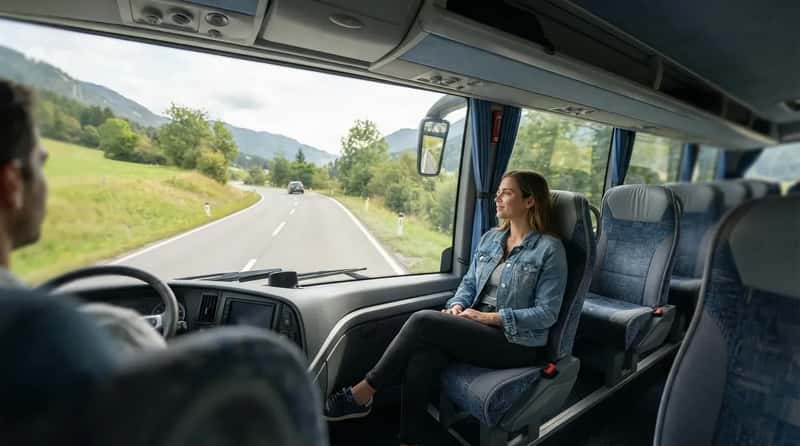
If you get carsick, this is the zone to target. One coach guide says seats ahead of the front axle tend to cause fewer travel sickness problems than seats behind it. The front moves less than the rear, so your eyes and inner ear argue less about what’s happening.
Seat position isn’t the only factor. Facing forward and watching the road helps your brain match what it sees with what it feels. The back of the coach is often described as the place where every bump feels bigger. Riders who’ve been sick once rarely gamble again.
Yet the very front row comes with a catch most people miss…
#11 – The Front-Row Window With the Windshield View
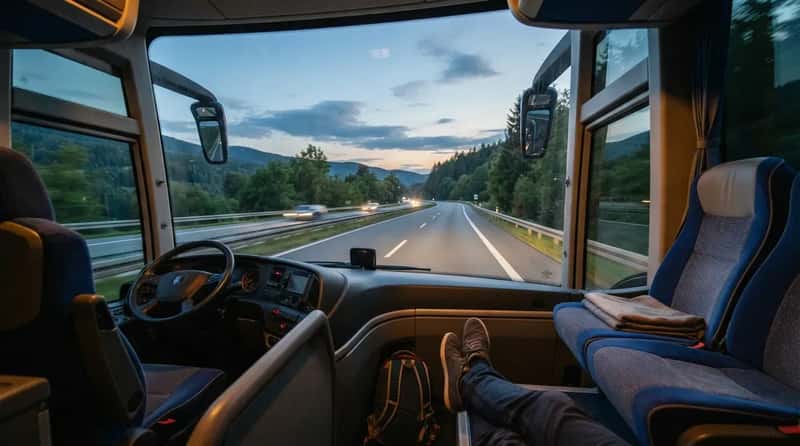
The front row feels like a private lookout. You get a big forward view, a steadier ride and less side-to-side sway. Some coaches also give front-row riders extra legroom, so you can stretch out and watch the road unroll.
Now for the part travelers argue about. Recline can be limited on some models, and oncoming headlights hit you head-on after dark. One guide also points out that the very front row is the closest to any frontal impact. Some riders call it the most overhyped seat on the bus, while others swear they’d never sit anywhere else.
Speaking of getting out fast, the next pick is all about timing…
#10 – The Second-Row Aisle for First Off at Rest Stops
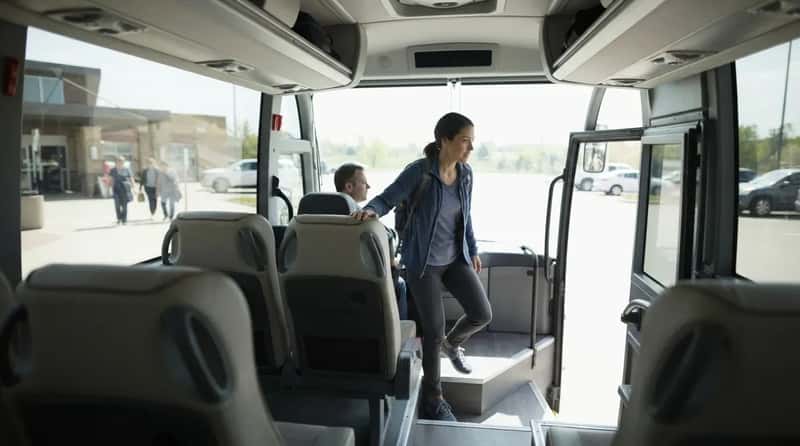
Rest stops can be short, and every minute counts. Sitting near the front means you can step off the bus almost right away. That’s a big deal when the restroom line is already snaking out the door.
It also makes talking to the driver easier if you have a question about the next stop. Riders near the door are often first in line for snacks and first back to their seats. Over a long travel day, those saved minutes add up to a calmer trip.
Still, sitting close to the door isn’t always a win, and the next seat shows why…
#9 – The Seat That Isn’t Perched Over a Wheel Arch
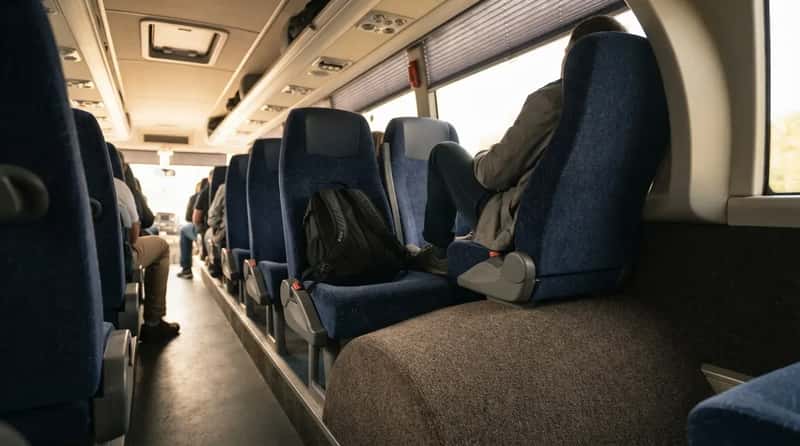
Here’s a detail most first-timers miss. Seats right over the wheels can feel different from the ones beside them. One motion-sickness guide notes that seats directly over the wheel arches pass along more thump from the road.
Wheel arches can also mess with your feet. That “great” window seat may leave you hugging a bulge in the floor. Experienced travelers study the seat map and look for rows without that interruption. When the map is unclear, they ask staff or check photos.
Next comes a seat choice that depends on something you can’t control…
#8 – The Shady Side of the Coach on Sunny Routes
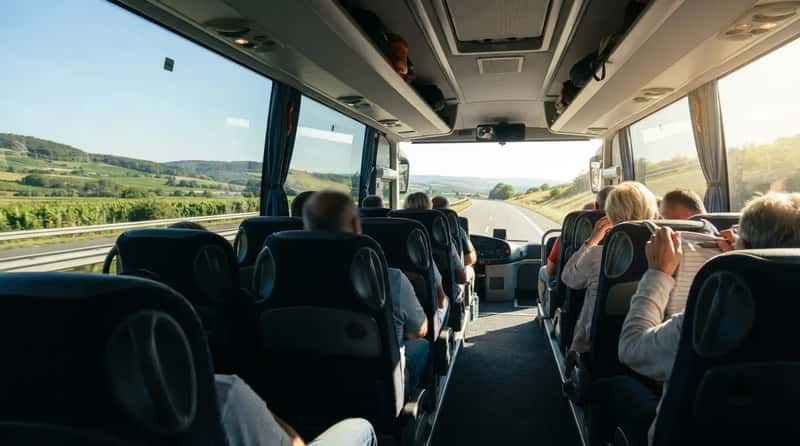
Coaches heat up fast in direct sun. Veteran riders think about which way the bus will be traveling and where the sun will sit. On a long afternoon drive, one side can feel like a greenhouse while the other stays comfortable.
No single side is always better, because it depends on your route and the time of day. The trick is to check your direction before you commit, not after you’ve boarded. If your seat is already booked, a light layer and a window shade can help.
Quick Compare
- Heading north in the morning: the sunny side is the right side, since the sun rises in the east.
- Heading south in the morning: the sunny side flips to the left.
- Heading north in the afternoon: the sun sets in the west, so the left side bakes.
- Heading south in the afternoon: the right side takes the glare.
Another choice comes down to something far less pleasant than sunshine…
#7 – The Row Near the Restroom, but Not Behind It
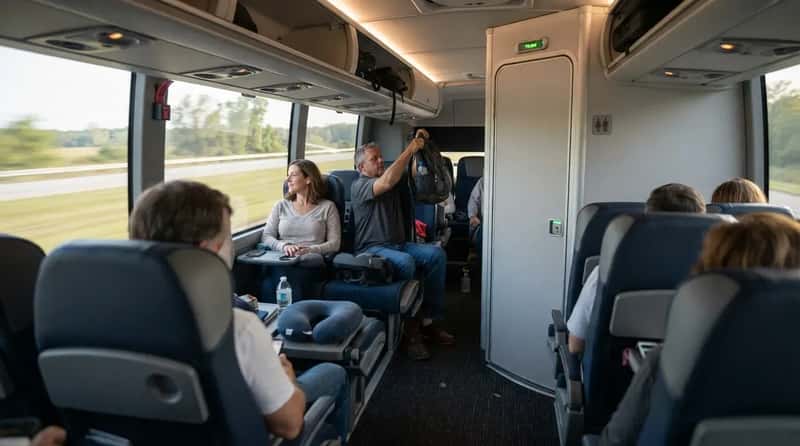
This one splits travelers. If your coach has a restroom, nearby seats are convenient, especially for anyone who needs to go often. The trade-off is foot traffic, poor airflow and the occasional whiff every time that door opens.
One coach guide warns that if the restroom is mid-coach, the seat right behind it can carry a smell that sets off travel sickness whenever someone is using it. Frequent riders aim for a few rows away. That way they’re close enough to walk, but far enough to dodge the line.
And what happens when you end up facing the wrong way?
#6 – Any Forward-Facing Seat Over a Sideways One
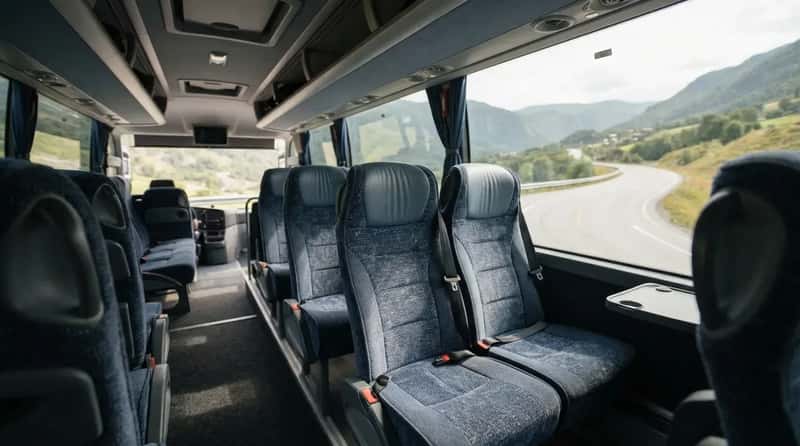
This sounds obvious, but not every vehicle works that way. Some coaches have seats that face sideways. One motion-sickness guide recommends avoiding them, because you can’t anticipate which way the bus is about to move.
Your body likes a heads-up before a turn or a hard stop. Facing forward gives you that warning, and sideways seating takes it away. Riders who get queasy often pick a forward-facing seat even when the view is a little worse.
Next up is a seat with a view that fewer riders claim than they should…
#5 – The Upper Deck or Lower Floor on a Double-Decker
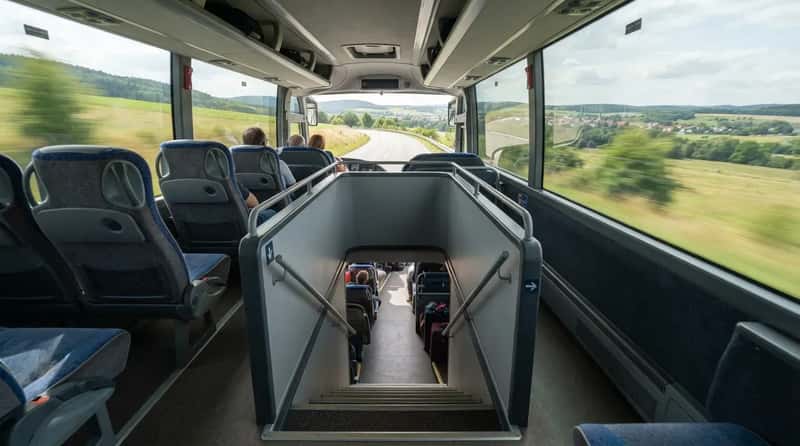
If your coach has two levels, you have a real decision to make. The upper deck is the pick for scenic views, which makes it a favorite on sightseeing routes. Sitting up high feels like you’ve been handed a better window on the whole trip.
The lower floor has its own fans. One guide says it’s easier for people with reduced mobility or large luggage, and it usually has less vibration, which helps with motion sickness. The “best” level depends on whether you want the view or the stability. Experienced riders pick based on the trip, not habit.
At a Glance
- Upper deck: the scenic pick, popular on sightseeing routes
- Upper deck catch: you’ll have to climb stairs, which is a hassle with a heavy bag
- Lower floor: easier access and usually less vibration
- Best for queasy riders: the steadier lower level
Now for a pick that most guides tell you to avoid…
#4 – The Back-Row Gamble That Some Riders Swear By
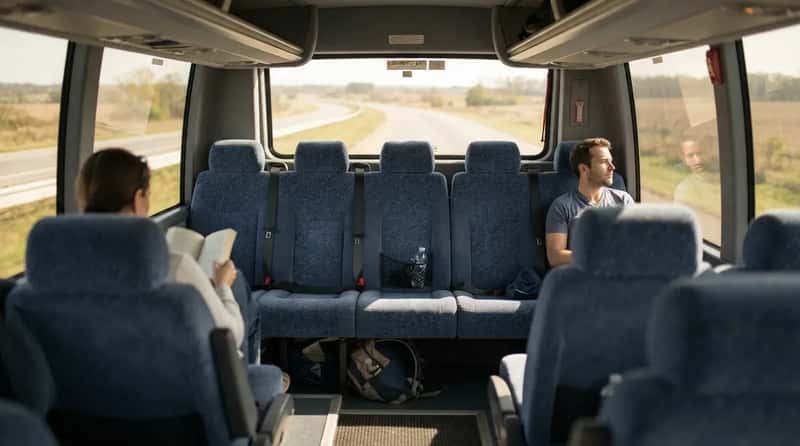
Here’s where the experts disagree. Many sources call the back the noisiest and bumpiest area, partly because it’s close to the engine. One motion-sickness guide calls it the worst area, where every bump and turn feels stronger.
So why do some people book it anyway? Back rows can be cheaper and may come with an empty seat beside you. One coach guide even says the middle seat of the back row has the best legroom. Still, the rear may be the biggest gamble on the coach, and it only pays off if you don’t get queasy.
Meanwhile, some riders skip the gamble and pay for certainty…
#3 – The Extra-Legroom Seat Worth Paying For
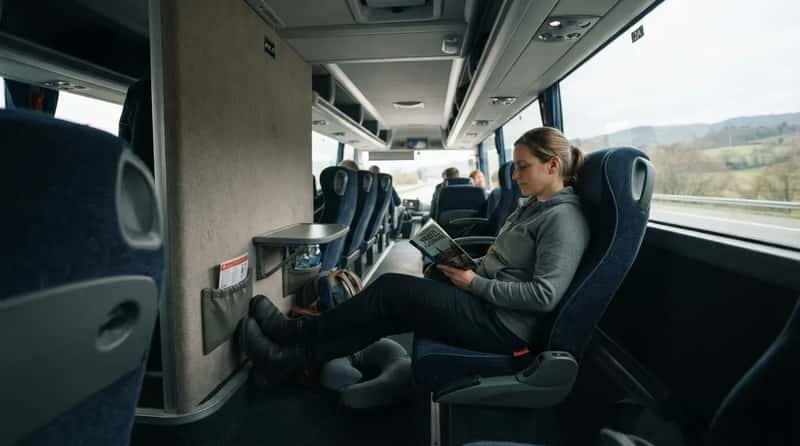
On some services, extra-legroom seats are a paid add-on. Legroom, recline and room to stretch rank among the comfort factors that matter most on long trips. If you’ve ever spent hours with your knees pressed against the seat in front, you already understand why people pay.
Before you buy, know the downsides. Premium seats may cost extra or need early booking, and they can be limited on busy routes. Bulkhead-style spots can also lack a tray table or have limited recline. Check what’s actually included first.
But the timing of your booking may matter more than the seat itself…
#2 – The Seat You Grab Before the Crowd Even Looks
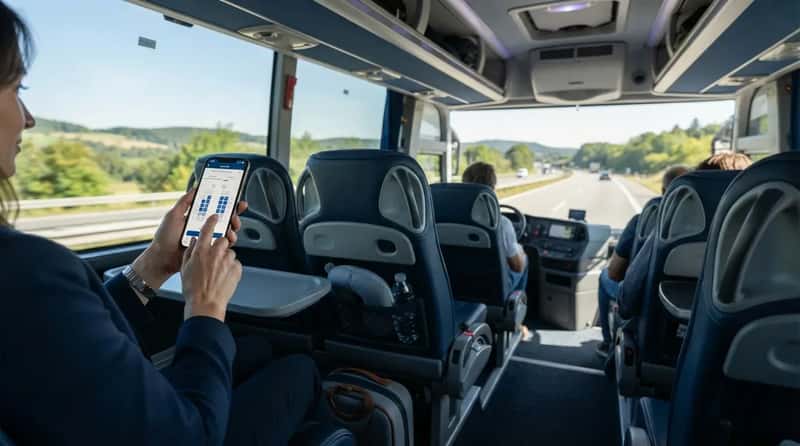
Here’s the real secret of experienced riders. The best seats go quickly, so booking early gives you a wider selection. A brilliant seat plan means nothing if the seat is gone by the time you open the map.
That’s why frequent travelers check the seat map right after buying. A good seat is often decided at the booking screen, not at the boarding door. Leave it to chance, and you may end up with the rear or a middle seat.
And the seat that tops the list is the one most guides keep coming back to…
#1 – The Middle-Section Seat That Experts Call the Sweet Spot
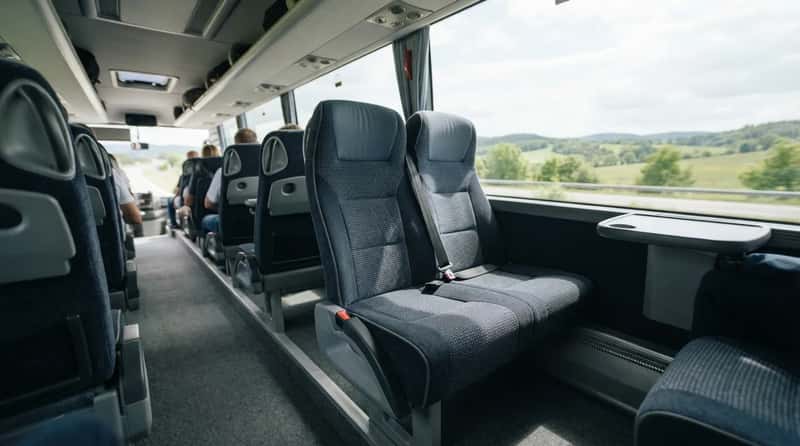
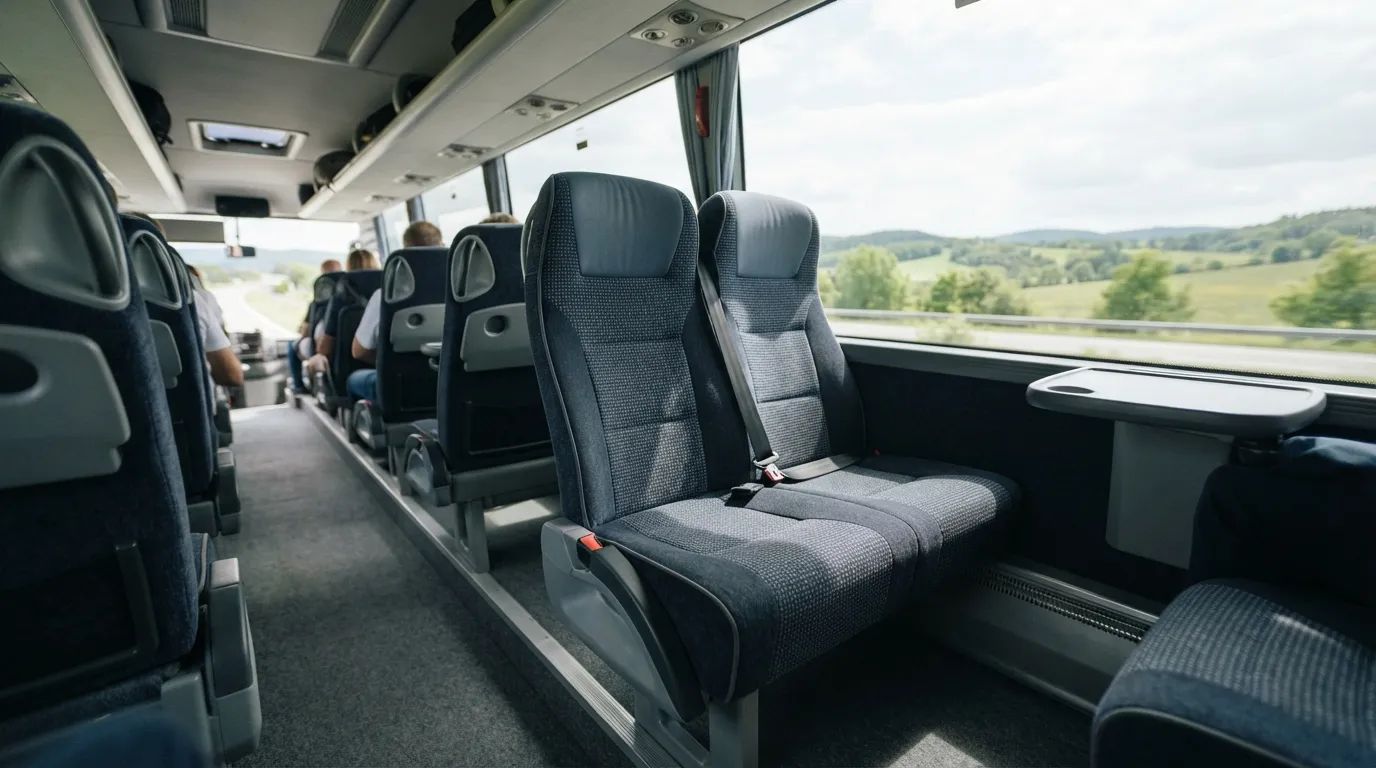
Many coach guides land on the same answer. The middle of the coach feels steadier than the front or the back on rough roads, with less bounce and less noise than the rear. One guide calls it often the best seat for long journeys if you have no special needs.
Safety-minded guides lean the same way, favoring seats in the middle portion between the axles. The best seat for most people is the one nobody brags about. It isn’t the front-row view or the back-row bargain. It’s steady, quiet and easy to reach.
Why It Stands Out
- Steadier on rough roads than the front or the back
- Less bounce and less noise than the rear
- Favored by safety-minded guides for its spot between the axles
- A solid default when you have no special needs
The best coach seat isn’t one spot. It’s the one that fits your trip, your stomach and your schedule.
The middle is the safest bet, the front rewards the queasy, and the aisle rewards the tall. Even the “worst” seat has its moment for the right traveler. But the riders who always seem comfortable usually did the same thing: they chose early.