Here is the honest answer behind that title: no Amtrak charge vanishes just because you have a few decades behind you. The senior discount is real, though, at 10% off most rail fares on most trains, and it starts at 65 on domestic routes, not 60.
Between that age line and the fare type you chose, speaking up can save real money or nothing at all. One charge on many long-distance bills sits completely out of the discount’s reach, and one New England train offers a break five times bigger than the standard senior rate.
#15 – The Age Line Is 65 on Domestic Trains
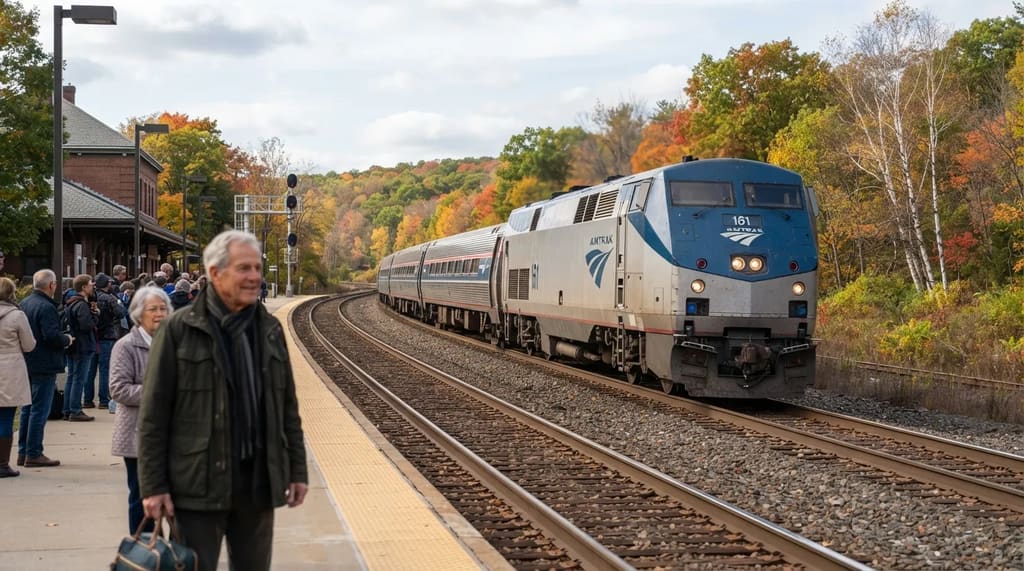
Amtrak travelers 65 and over get 10% off most rail fares on most Amtrak trains. A traveler of 62 or 63 booking a domestic route falls outside that wording, no matter where other senior discounts begin.
The percentage is small, so the size of the fare matters more than the label. Ten percent of a $50 ticket is $5, while ten percent of a $250 ticket is $25.
At a Glance
- Domestic routes: senior discount starts at age 65.
- Trains into Canada: the age drops to 60.
- Size of the break: 10% off most rail fares on most trains.
- Real-dollar feel: about $5 on a $50 fare, about $25 on a $250 fare.
On a short regional hop, I would not rearrange a trip to chase the savings. On a long itinerary with several legs, it adds up quickly.
The age drops to 60 for one set of trains, the ones that cross into Canada.
#14 – Age 60 Works on Trains Into Canada
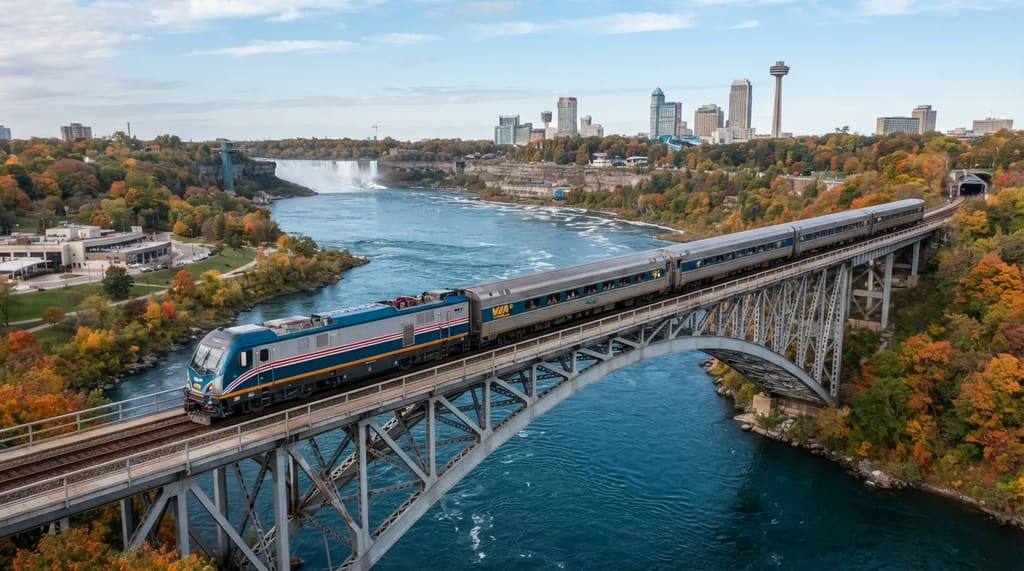
On cross-border services that Amtrak runs jointly with VIA Rail Canada, the 10% senior discount applies to travelers aged 60 and over. The Maple Leaf is the usual example, so a 61-year-old can claim the reduction on a trip toward Toronto but not on a domestic route.
The percentage matches the domestic senior fare, so the only thing that changes is the lower age threshold. That makes this the one place a traveler aged 60 to 64 gains by asking.
If a Canadian trip is on your list and you are 60 or older, price it as a senior before you book.
Qualifying by age does nothing until the booking page is told, and that happens in a single box.
#13 – The Senior Box on the Booking Page

Amtrak’s instructions are to select at least one “Senior” as the traveler type in the fare finder. The discount then applies automatically and shows on the purchase confirmation page.
No promo code is needed, and an AARP membership is not required. Skip any website that suggests you must hunt for a coupon, because the box is the whole mechanism.
Read the confirmation page before you pay, since that is where Amtrak says the reduction appears.
The fare finder is not the only way in, since a phone call or a station window can apply the same fare.
#12 – Saying “Senior Fare” to a Phone Agent

If you would rather talk to a person, say “senior fare” when you book by phone or at a station. The reservation line listed in consumer guides is 1-800-872-7245.
Give your age class at the start of the call, before the agent quotes a price. Otherwise you may compare a senior fare against an adult quote and mistake the gap for a new discount.
#11 – The Photo ID Checked Onboard
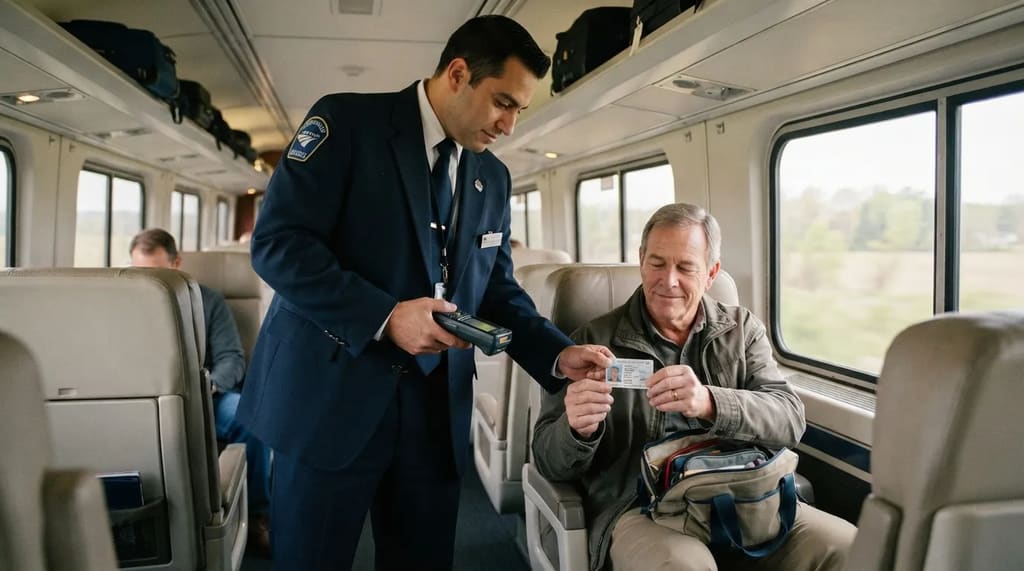
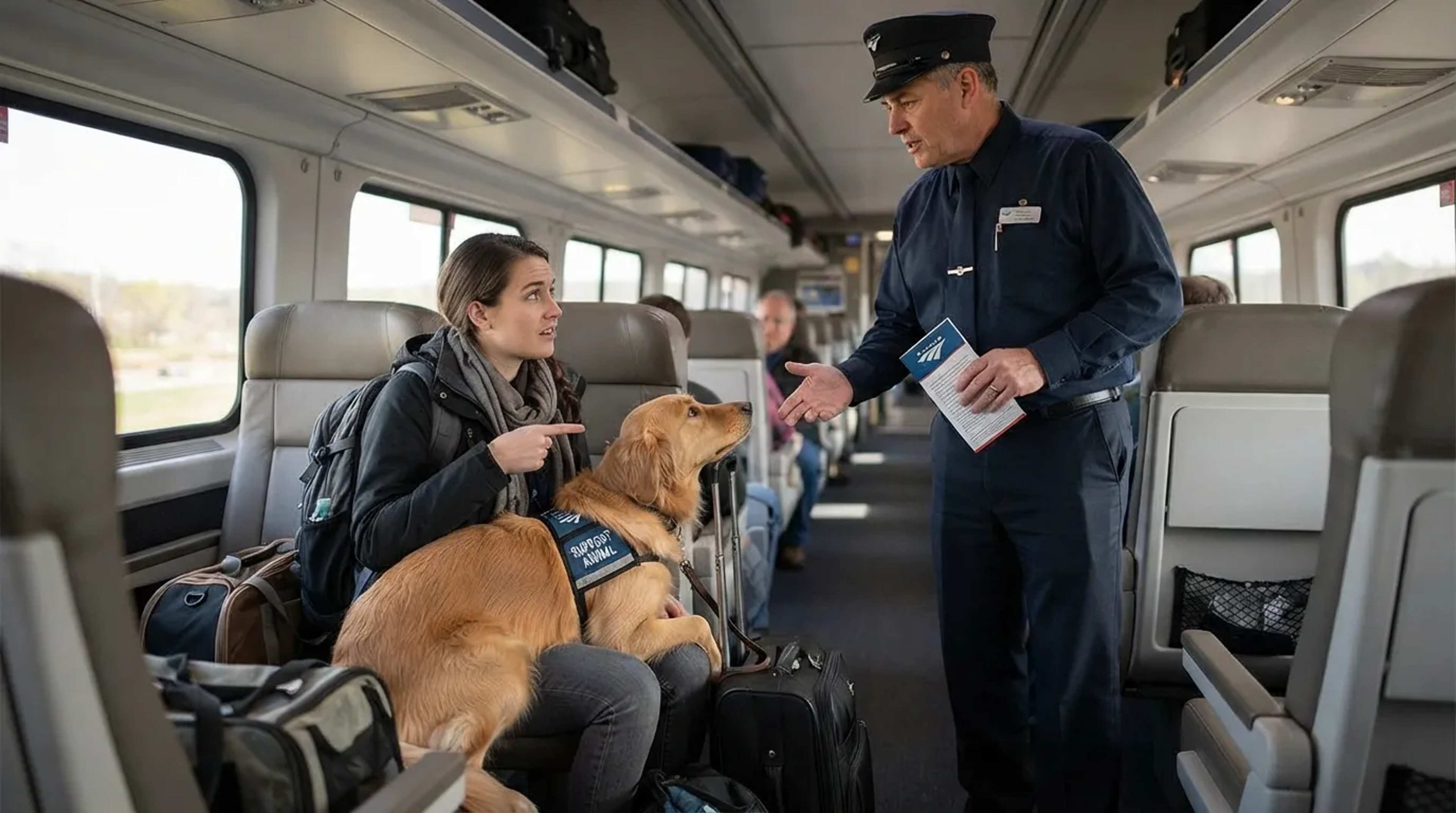
Valid proof of age is required when you buy the ticket and again on board the train. A government photo ID showing your birth date covers both, and the conductor is the person who will ask to see it.
Keep it where you keep the ticket, not in a suitcase you plan to check. A bag in the baggage car does you no good when the conductor walks down the aisle.
The ID proves one person’s age, which leaves open what the traveler beside you pays.
#10 – A Spouse Under 65 Pays Full Fare
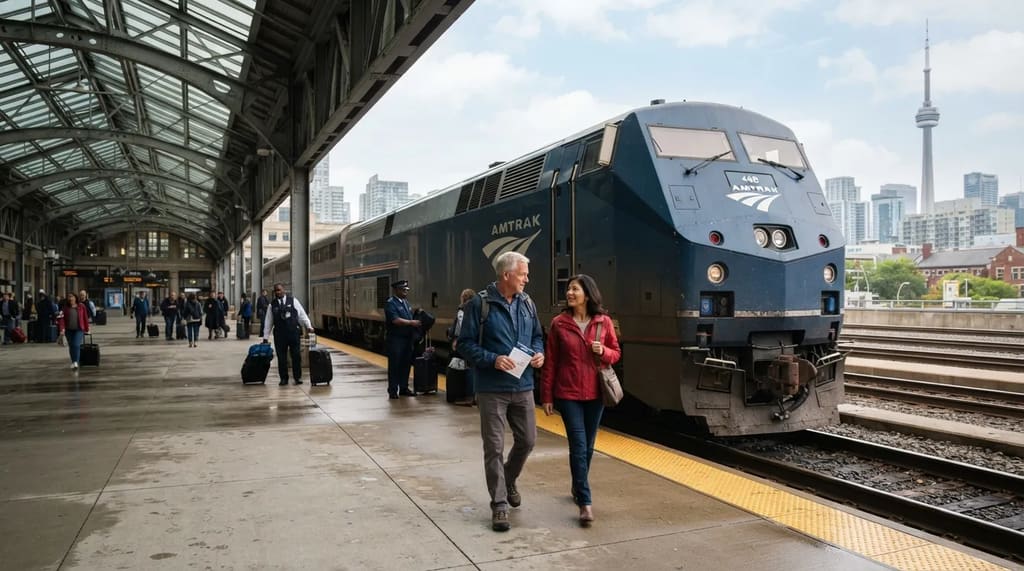
The discount follows each traveler’s own age, which is why Amtrak’s instructions say to select at least one Senior rather than the whole party. When you travel with a companion, only the senior passenger receives the reduction, and the partner pays the regular fare.
On a couple’s trip to Toronto, a 66-year-old and a 61-year-old would both qualify, because the cross-border rule starts at 60. On a domestic route, only the older one would.
Quick Compare
- Domestic trip, ages 66 and 61: only the 66-year-old gets 10% off.
- Toronto trip, ages 66 and 61: both get 10% off.
- Domestic trip, age 61 alone: full adult fare.
So set each traveler’s type separately instead of assuming the party gets one rate.
Even a traveler with the right type can find a better price elsewhere, because the senior reduction competes with sale fares.
#9 – When a Sale Fare Beats 10% Off

The senior discount may not be combinable with other discount offers, and it may not combine with Saver Fares or other promotions. That means the cheaper of the two wins, and it will not always be the one with your age on it.
My view is that the senior label deserves a comparison, not loyalty. If a sale fare is cheaper than 10% off the regular fare, take the sale fare.
Running the search both ways takes a couple of minutes and settles the question for your date.
Sale fares are not the only exception, because a few trains sit outside the senior rate altogether.
#8 – Trains Where the Senior Rate May Not Apply

Amtrak’s page says the discount covers most trains and is not valid on certain Amtrak Connection services. Consumer guides also list the Auto Train and weekday Acela as excluded, and Amtrak’s own wording is broader, so the search result is the final word.
If your plans involve either of those trains, price the trip as an adult fare first and treat any senior reduction as a bonus. The disability discount has its own Auto Train limit: only passengers traveling with their own wheelchair or scooter qualify.
#7 – Two Carry-Ons and a Personal Item
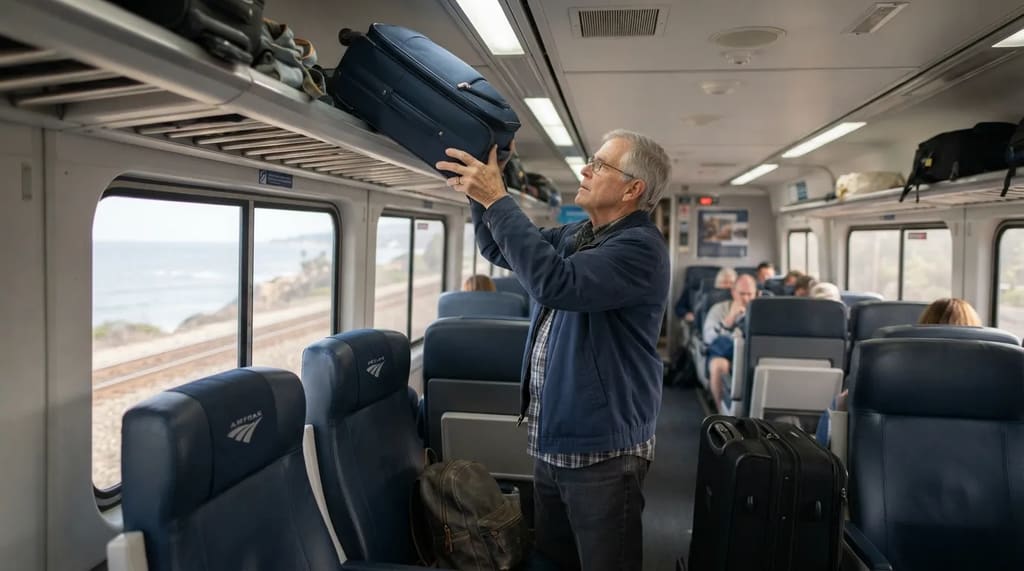
Every passenger can bring one personal item up to 25 pounds and two carry-on bags up to 50 pounds each onboard free of charge. There is nothing to ask for here, because this is the standard allowance for every passenger.
Passengers must be able to safely lift carry-on items overhead onto the luggage shelf. A 50-pound bag you cannot raise to the rack is a bag to check instead.
A $20 excess baggage fee applies to each carry-on or personal item above the quantity and size limits. That is how a cheerful packing job turns into a charge at the platform.
Heavy bags that fail the lift test belong in the baggage car, where the first two are free, though the service is not on every train.
#6 – Two Free Checked Bags, Where Offered

Each passenger can check up to four bags, two free and two at $20 each, with each bag held to 50 pounds and 75 linear inches. The catch is availability, because the origin and destination stations must both offer checked baggage service.1
Your specific train must also have a baggage car. Amtrak warns that you may be charged a baggage fee or denied boarding if your items exceed these limits.
Check that your route offers the service when you book, not at the station on the morning you leave. If it does not, the fee-free plan is to pack to the carry-on limits covered above.
#5 – Fees for Changing or Canceling by Fare Type

What you pay to change or cancel depends on the fare type, not on your age. Amtrak’s refund page lists one category of tickets with no change fee 15 days or more before departure and a possible 15% fee inside 14 days, plus a 25% fee for canceling less than 14 days out.
The most flexible tickets are listed with a full refund and no fees if canceled before departure. That means a fare that costs more up front can be the cheaper one when your plans are uncertain.
If you are planning months out, read the fare’s rules before counting on the 10%. A ticket you have to forfeit costs far more than the discount saves.
The rules are firmest for a traveler who does not show up at all.
#4 – The Forfeited Ticket After a No-Show
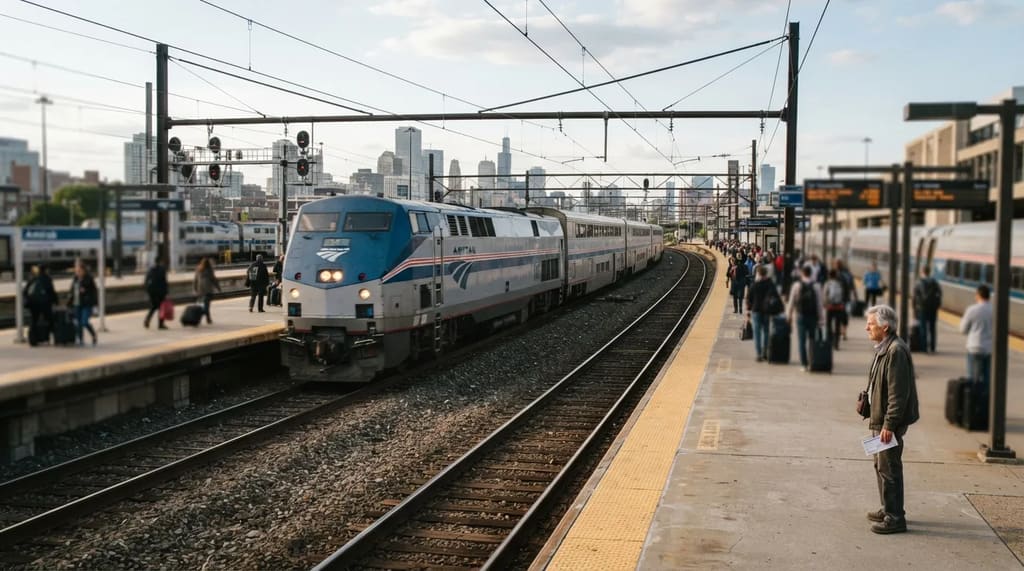
If you have not canceled before the train’s scheduled departure from its origin, the ticket is forfeited, and no funds or points can be applied toward future travel. A cancellation made before the train leaves can recover whatever your fare allows, while silence recovers nothing.
If you wake up unwell on travel day, cancel first and rest second. On a fare with refund rights, like the flexible kind above, a call before departure is the difference between a refund and no refund.
#3 – Disability Discount for You and a Companion

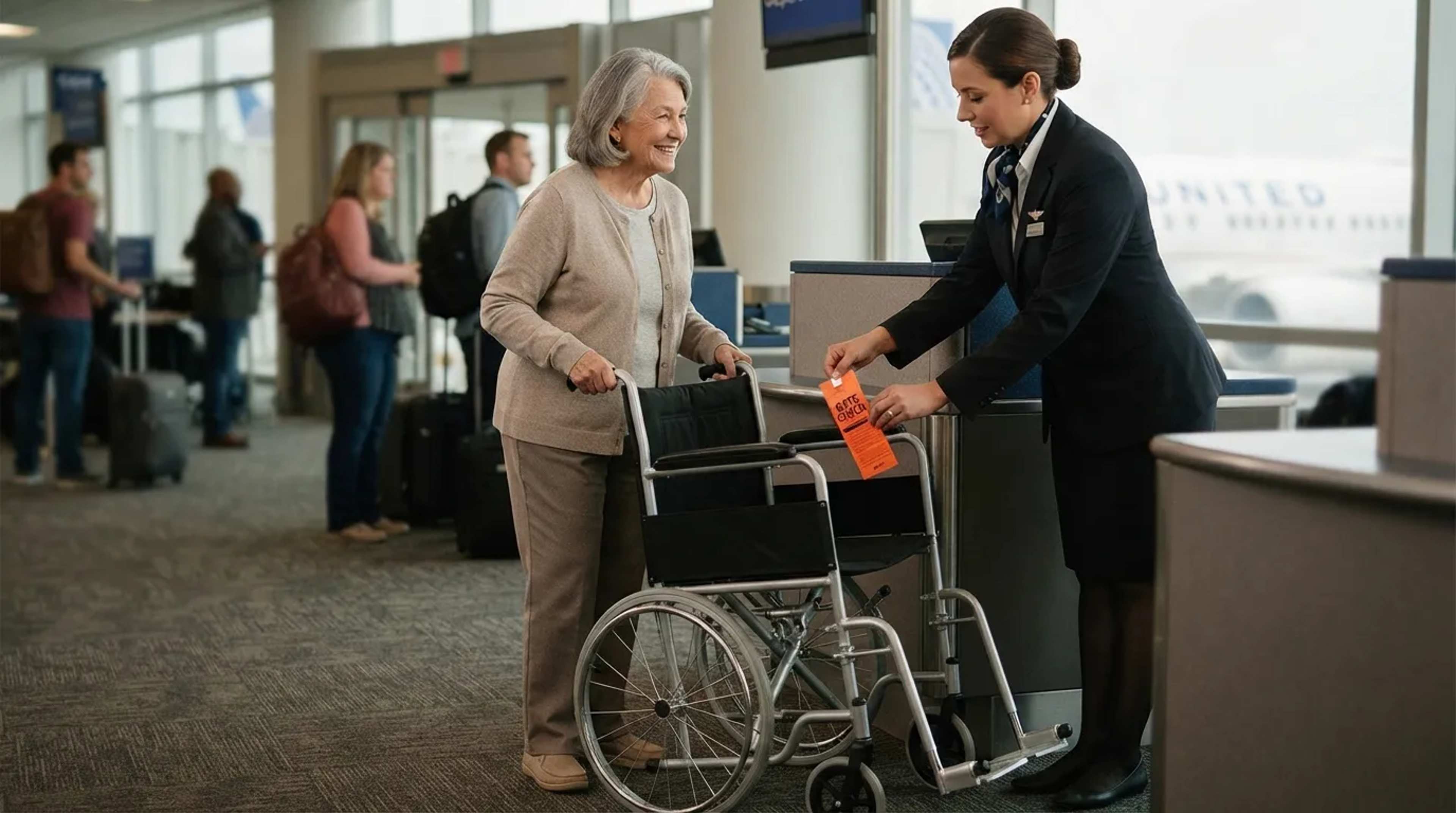
Separate from age, Amtrak offers a 10% rail fare discount to adults with a disability, and 10% for a companion traveling with them. The companion must be capable of providing the necessary assistance.
You must provide written documentation of your disability at the ticket counter and when boarding. The accepted list includes a letter from a physician, or a Medicare card if you are under 65.
If both the senior and the disability discounts fit you, ask an agent which gives the lower total. Amtrak notes that its discounts may not be combinable with other discount programs.
On one route in New England the disability discount is five times larger, and Medicare cardholders are named on it.
Related Stories From Travelbinger



#2 – Half-Price Downeaster Fares for Medicare Holders
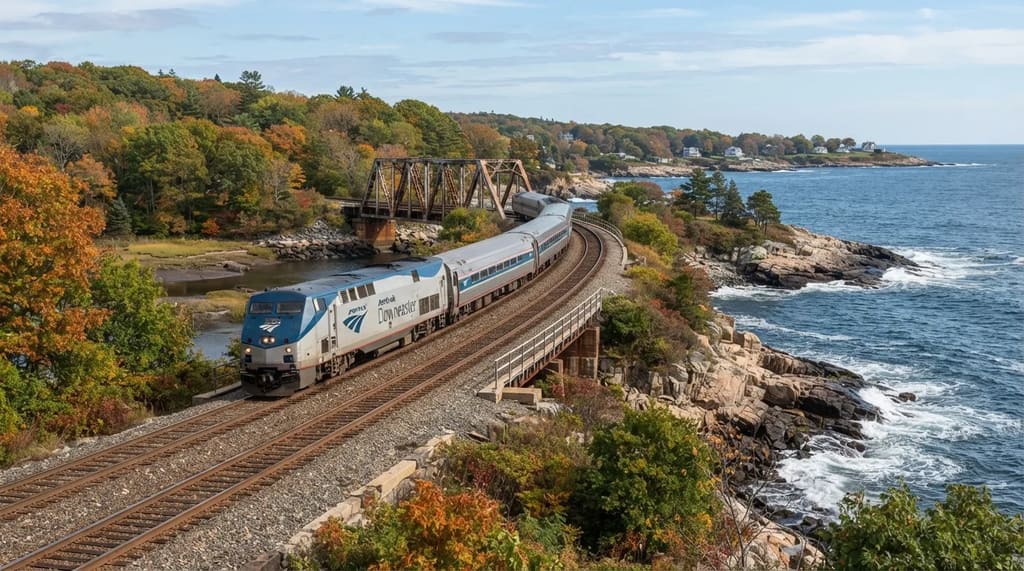
On the Downeaster between Boston and Portland, Maine, customers with a disability are eligible for a 50% discount. The Downeaster’s own site extends this to Medicare card holders on regular one-way coach fares on most trains, which reaches many travelers over 65.
Buyers need a valid photo ID and a Medicare card when purchasing tickets and while traveling. The discount is not valid for travel in business class.
For a Medicare cardholder riding that corridor, 50% is five times the 10% senior fare, so it is the first thing to ask about. Confirm the current terms on the Downeaster site when you book.
None of these percentages reaches the biggest charge on an overnight train, which is the room itself.
#1 – The Sleeper Charge the Senior Rate Skips
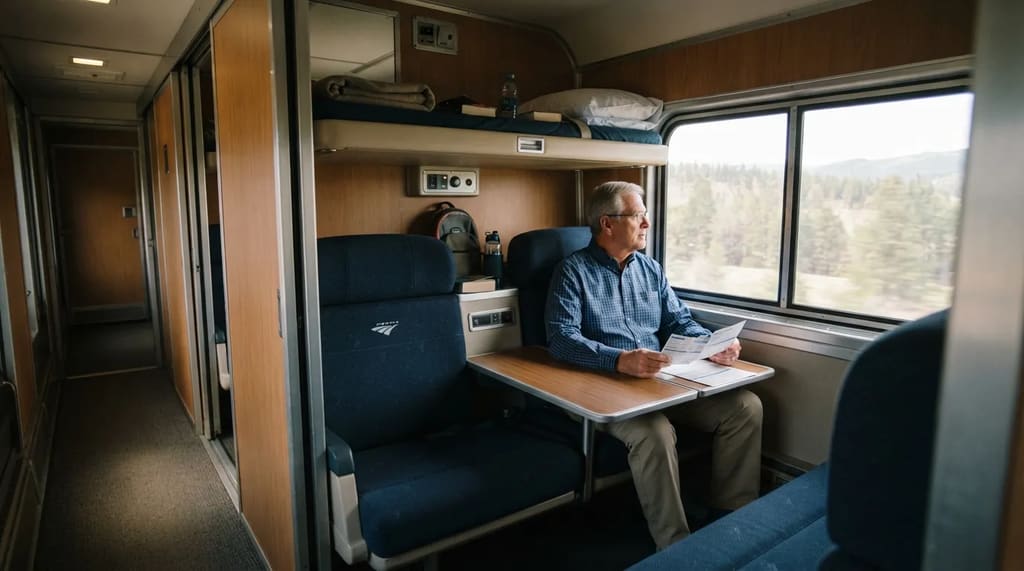
Amtrak states that the senior discount does not apply to sleeping accommodation charges. On a long-distance trip with a roomette or bedroom, the 10% reaches only the rail fare portion, and the room charge is usually the larger part of the cost.
Worth Knowing
- The senior 10% touches the rail fare only, not the room.
- The room charge is often the bigger share of an overnight bill.
- Cancellation rules cover the accommodation charge as well as the fare.
- Ask for the rail fare and room charge listed separately before you pay.
A 10% cut on the smaller piece of the bill saves less than the same 10% on a coach ticket of the same total. That is why a discount that looks generous on a daytime ticket looks thin on an overnight one.
So the question to ask before counting on any discount is how much of your total is rail fare and how much is room. Amtrak’s policy also covers the accommodation charge as well as the rail fare when you cancel.
The savings in this list are real but narrow. They land on the rail fare, they follow each traveler’s age or paperwork, and several depend on a fare type chosen long before anyone spoke to an agent.
Before you pay, read the total and mark which part a discount can reach. Then decide whether the cheapest ticket, the most flexible ticket or the senior ticket suits your plans.
On your last or next long train trip, which part of the bill was largest: the fare, the room or the extra bags?
Bonus: The Sleeper Math Nobody Shows You

The room charge looks steep until you see what Amtrak bundles into it. Private-room customers get complimentary meals onboard, lounge access at major stations and priority boarding.
So do not weigh the room against a coach seat alone. Weigh it against a coach seat plus every meal you would otherwise buy.
- Step 1: Price the same dates in coach and in a roomette, and write down the gap.
- Step 2: Subtract what you would realistically spend on food during those days. What is left is the true cost of the upgrade.
- Step 3: Check your boarding and arrival times. If you board late at night or get off early in the morning, outside scheduled meal times, you may get few or no meals, so the bundle is worth less.
- Step 4: Ask the agent how meals are served on your specific train, since the dining setup differs by route.
Done this way, the “skipped” senior discount matters far less than whether the room fits your schedule.
- Checked Baggage Guide: https://www.citizendailypost.com/faq/how-do-checked-bags-work-on-amtrak