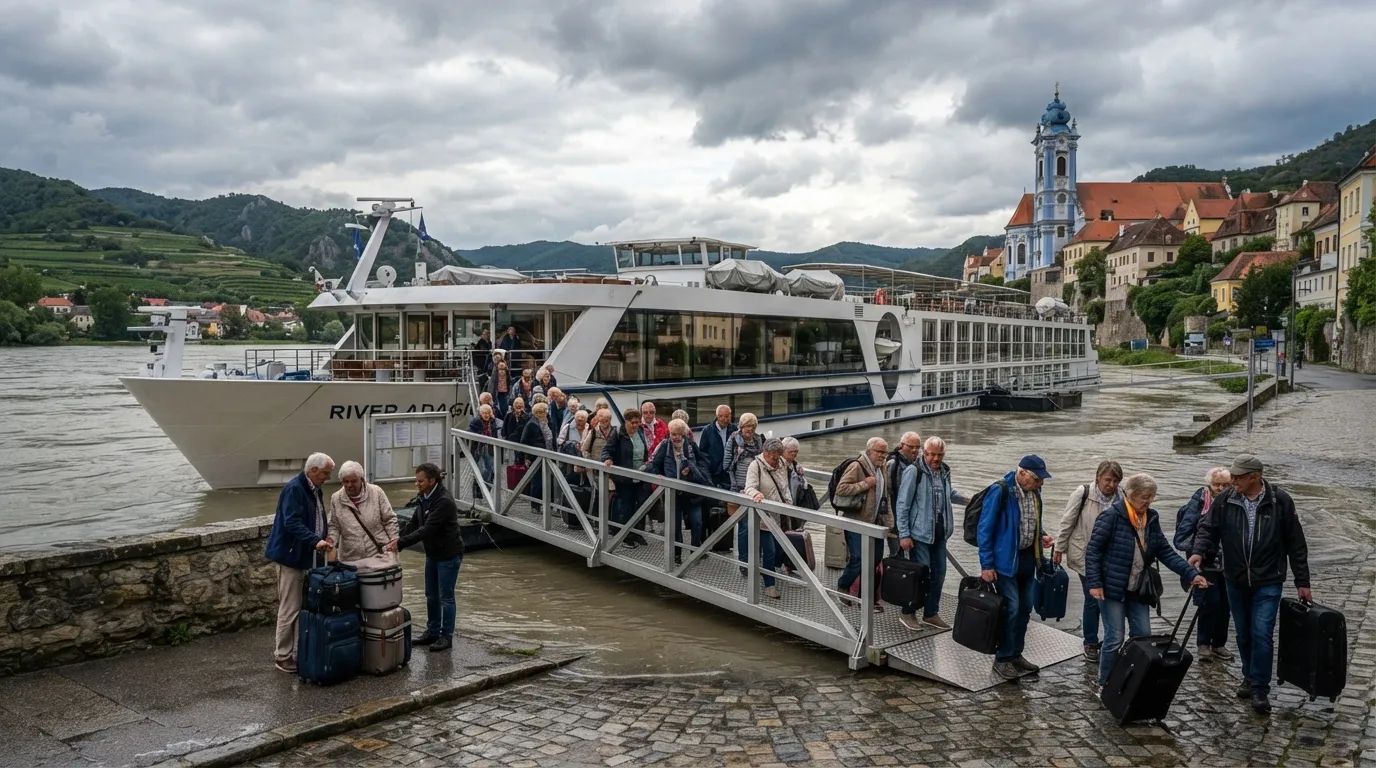
Most people over 60 who book their first river cruise have already crossed oceans, navigated foreign train stations solo, and never missed a flight that actually mattered. That confidence is exactly what catches them off guard. River cruising runs on a completely different set of rules than everything decades of travel taught them.
The result is a string of avoidable frustrations that quietly drain the joy out of what should be a dream trip. Sailing after sailing, the same mistakes trip up sharp, seasoned travelers who never saw them coming. Here are the 15 that matter most – and the one at the very end that veteran cruisers say costs people the most.
15. Treating It Like an Ocean Cruise

River cruising operates by a completely different set of rules than ocean cruising, and first-timers who don’t realize this arrive with the wrong expectations.
Ocean cruise veterans often expect massive entertainment venues, multiple pools, and a shopping mall onboard. River ships typically carry fewer than 200 passengers, and the experience is quieter, slower, and far more destination-focused.
Most river lines are nearly all-inclusive, but gratuities, drinks, and excursions can be covered differently from line to line. Sometimes the ship pulls right into the heart of the old town and you step onto cobblestones and cafés – but that isn’t guaranteed, and water levels can change the plan overnight.
That’s nothing compared to the shock first-timers get about mistake #14.
14. Choosing the Wrong Cruise Line for Your Style

Not all river cruise lines are created equal, and booking based on price or a recognizable brand name is one of the most repeated first-timer mistakes.
Viking caters to travelers who appreciate clean design, informative onboard lectures, and a calm, mature atmosphere. AmaWaterways attracts active guests with guided hikes, yoga classes, and themed wellness sailings, while Uniworld leans plush and boutique with opulent decor and all-inclusive luxury.
Two cruise lines can look equally good on a comparison chart, but one may fit better because of cabin placement, transfer length, excursion pacing, or how the line handles mobility requests before departure. Those are the details that turn a good-looking itinerary into a trip you actually enjoy.
But that’s nothing compared to what we found about mistake #13.
13. Booking Too Late and Missing the Best Cabins
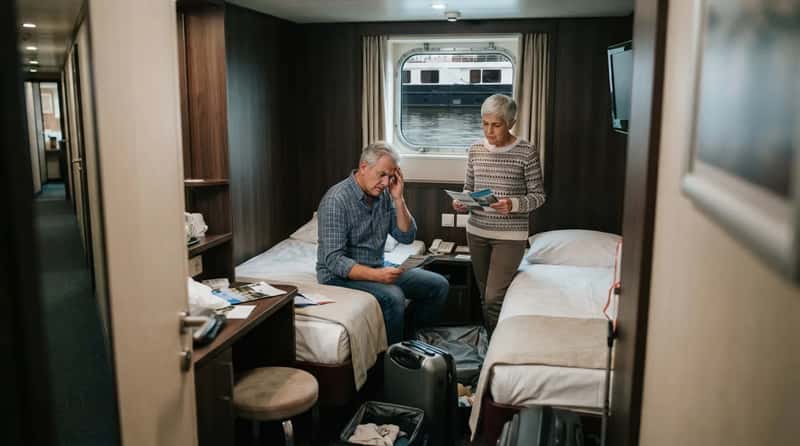
River cruise ships are small. That means the best cabin categories sell out months – sometimes over a year – before departure, and accessible staterooms go even faster.
First-timers who wait for a last-minute deal often find themselves in the least desirable cabin location on a ship where every position matters. Accessible cabins have grab bars, step-free showers, and more space, and they’re gone the earliest of all.
Cabin location on a river ship isn’t just about views – it directly affects noise, gangway access, and daily comfort. That matters far more when you’re spending a full week aboard the same small footprint.
But that’s nothing compared to what we found about mistake #12.
12. Skipping Travel Insurance or Buying the Wrong Kind

Travel insurance is the item most over-60 first-timers either skip entirely or buy too late to get full value from it.
It should be purchased within a week of the first cruise payment to maximize coverage for pre-existing conditions and cancellations. Miss that window and pre-existing condition coverage often disappears – exactly the coverage that matters most for travelers over 60.
A basic policy that covers trip cancellation alone leaves serious gaps. Medical evacuation from a remote river port in Central Europe can run into tens of thousands of dollars without proper coverage.
But that’s nothing compared to what we found about mistake #11.
11. Not Arranging Airport Transfers in Advance

The transfer from the airport to the ship is consistently ranked as the most stressful part of a river cruise – and it’s completely avoidable.
Long lines, connections, luggage, and unfamiliar airports can feel overwhelming. Pre-arranged transfers quietly erase most of that stress – a representative meets you after customs and takes you straight to the ship, with luggage handling from curb to cabin standard on several lines.
Cruise port terminals are often 30 to 90 minutes from the main airport, sometimes in a completely different city. Know exactly where your port is and check the exact terminal and travel time before you book flights, so there are no surprises on sailing day.
Worth Knowing
- Cruise port terminals often sit 30 to 90 minutes from the nearest major airport.
- Pre-arranged transfers typically include luggage handling from curb to cabin.
- A cruise line representative usually meets travelers right after customs, removing the guesswork of a foreign terminal.
- Self-arranged taxis or trains can save money but leave no safety net if a flight runs late.
But that’s nothing compared to what we found about mistake #10.
10. Arriving the Same Day the Cruise Departs
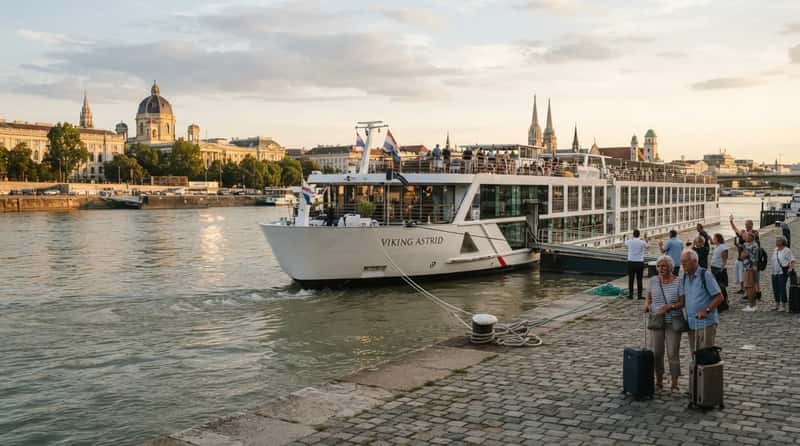
Booking a flight that arrives the same day your river cruise embarks is one of the most common – and most punishing – first-timer mistakes. Turns out, even a modest flight delay can mean missing the ship entirely.
Arriving one day early lets you rest, shake off jet lag, and begin your cruise feeling steady. Rushing straight from an international flight to a departing ship is a rough way to start a trip.
River ships in Europe often depart in the evening on embarkation day, but they will not wait for latecomers. Unlike an ocean terminal with a full day of boarding, river ship boarding windows can be surprisingly short.
Building in one night before the cruise also gives you a buffer day to genuinely explore the embarkation city – Paris, Amsterdam, Budapest – rather than just seeing it from a taxi window on the way to the dock.
But that’s nothing compared to what we found about mistake #9.
9. Overpacking for a Ship With Tiny Cabins
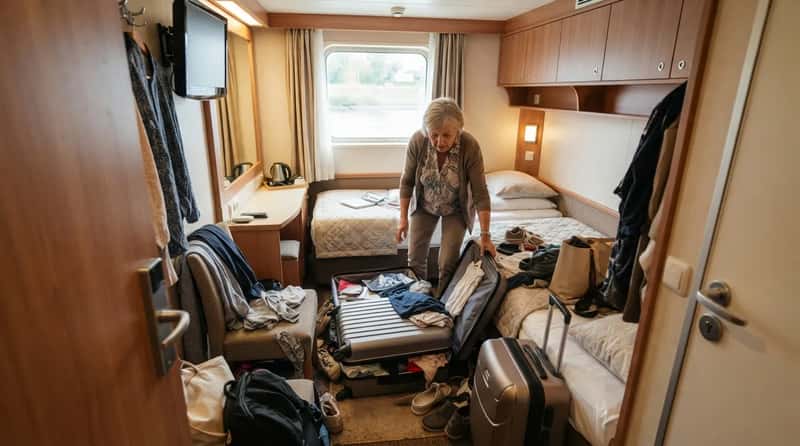
River cruise cabins are compact by design. Dragging oversized luggage into a space barely larger than a queen bedroom is a mistake that torments first-timers from day one.
The specific trap for over-60 first-timers is packing for every “what if” – what if there’s a formal night, what if it gets cold, what if there’s a themed event. Formal nights have relaxed considerably on most mainstream lines in recent years, so check your specific ship’s dress code before you pack.
Most river cruise lines offer onboard laundry at a reasonable cost – something veterans factor into packing but first-timers completely overlook. One rolling suitcase per person is the practical limit for a river cruise cabin.
Leave half of what you think you need at home, and you’ll board without regret.
But that’s nothing compared to what we found about mistake #8.
8. Ignoring Medication Logistics

This is the mistake that doesn’t announce itself until the moment you’re anchored in a small town with no pharmacy in sight and a prescription running low.
Medications and health supplies should be packed well in advance, including extra prescriptions and refrigerated medications arranged with the cruise line 30 to 60 days before sailing. River cruise lines can accommodate refrigerated medications in medical facilities onboard, but only if you request it ahead of time.
Keep one critical category of items in a carry-on rather than checked luggage: a change of clothes, swimsuit, sunscreen, all medications, and any valuables. If your bag is delayed or misrouted, your medications need to stay with you at all times.
Pack at least a two-week supply of every prescription medication even on a one-week cruise. Flight delays, extended pre-cruise stays, or unplanned itinerary changes can push the timeline in ways nobody predicted.
Fast Facts
- Request refrigerated medication accommodations 30 to 60 days before sailing.
- Pack at least a two-week supply of every prescription, even for a one-week cruise.
- Keep all medications, a change of clothes, and valuables in a carry-on, never in checked luggage.
- Small river towns often have no pharmacy within easy walking distance of the dock.
But that’s nothing compared to what we found about mistake #7.
7. Not Checking Accessibility Details Before Booking
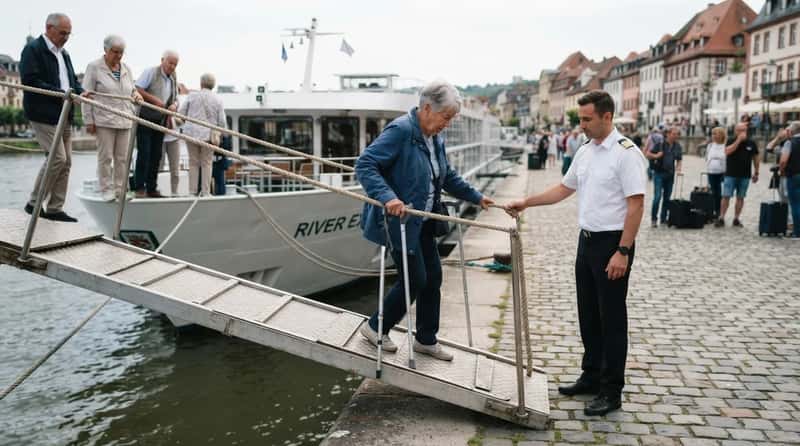
River cruising is genuinely well-suited for travelers over 60 – but the accessibility reality is more complicated than the brochures suggest, and the details matter enormously.
The gangway between the ship and shore is often just a plank with a rope for a handrail, and depending on the river’s water level, that plank can slope sharply up or down toward the dock. Crew members quietly position themselves right there to lend a steadying hand, though it isn’t technically a guaranteed duty.
Travelers who use a cane, rollator, or walker need to specifically confirm gangway conditions on their chosen itinerary before booking. Sometimes your ship isn’t even docked at the pier at all – it’s tied to another ship, which is tied to the actual pier.
When two or three vessels raft together like this, passengers on the outer ships have to cross narrow connecting gangways, often on the sun deck, then navigate stairs down to shore.
But that’s nothing compared to what we found about mistake #6.
6. Choosing Excursions That Don’t Match Physical Ability

Excursion brochures are designed to sell, not to honestly describe the physical demands involved. First-timers over 60 routinely choose tours that look beautiful in photos and turn out to be genuinely grueling in reality.
The brochure doesn’t show the 200 uneven cobblestone steps that got the photographer there in 90-degree humidity. This is the mistake that sends a surprising number of over-60 cruisers home with real regret – and sometimes real injuries.
Travelers with mobility concerns should contact the cruise line early for accessibility options. Lines like AmaWaterways now formally offer gentle-walking tour groups that move slowly and take more breaks, built specifically for seniors who want to explore without strain.
Always read the “activity level” rating on excursions and call the cruise line to ask what “moderate” specifically means – a term that can cover anything from a flat riverside walk to a 45-minute uphill cobblestone climb.
But that’s nothing compared to what we found about mistake #5.
5. Misunderstanding What “All-Inclusive” Actually Means

River cruises are frequently marketed as all-inclusive, and most first-timers assume that means every single cost is covered. It turns out the definition varies wildly between lines and even between cabin categories on the same ship.
During booking, inquire about extra costs for gratuities, port charges, and alcoholic beverages onboard. River cruises typically won’t cover visas, airfare, or medical insurance.
A fare that looks competitive at first glance may require hundreds of dollars in add-ons that a slightly pricier fare already includes. Gratuities alone can add $15 to $20 per person per day depending on the line – a cost many first-timers don’t budget for until the final invoice arrives.
Ask specifically what is and is not included, in writing, before you book.
But that’s nothing compared to what we found about mistake #4.
4. Waiting Until Onboard to Book Excursions

Most first-timers assume they’ll figure out excursions once they’re settled on the ship. Veteran river cruisers know that by then, the best options are already full.
The single biggest rookie mistake – by a wide margin – is waiting until boarding day. By the time you’ve unpacked your suitcase and found the excursion desk, the best tours are full, the best time slots are gone, and the early-booking discounts have expired.
River ship passenger counts are small, which sounds reassuring until you realize it also means each excursion has a strict cap. Popular tours – especially cooking classes, private winery visits, and castle access – routinely sell out months before departure.
Cruise lines now bluntly warn passengers to be back onboard no later than 30 minutes before departure, and veterans over 60 treat that warning as gospel. Booking excursions in advance also gives you time to study the logistics so you’re never rushing at the end of a port day.
But that’s nothing compared to what we found about mistake #3.
3. Dismissing the Risk of Water Level Disruptions
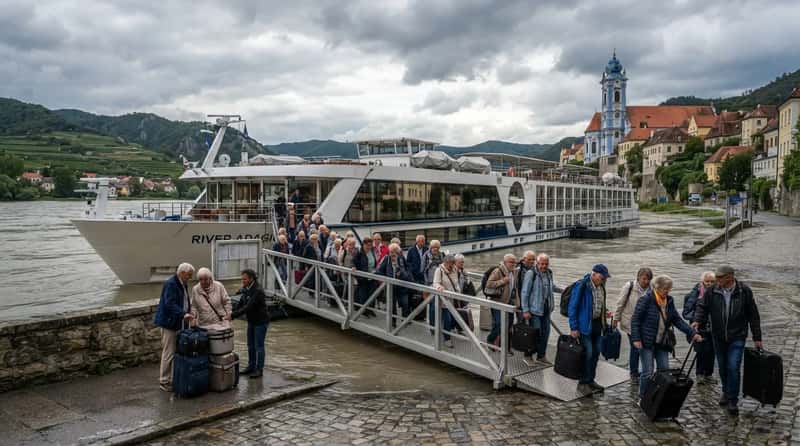
Most first-timers have no idea that their carefully planned itinerary can be legally altered – sometimes dramatically – because of river water levels. This catches people over 60 especially hard because they’ve often saved for years for this exact trip.
River sailings aren’t affected by hurricanes, high winds, or rough seas, but low or high water levels can lead to altered itineraries and, in a worst case, canceled sailings. Too much rain can raise rivers so boats cannot pass under bridges or through locks, while drought can leave waterways too low to sail at all.
Europe is especially vulnerable in late spring and early summer for high water, and late summer or early fall for drought. The Rhine and the Danube are the most problematic because of bends and shallow stretches that can prevent ships from completing some of the region’s most popular itineraries.
When water levels drop too low, ships simply can’t sail – and the standard backup is a long bus transfer between ports. There is no water-level guarantee when you book months in advance, so travelers need to get smarter about risk before they commit.
But the single most consequential mistake isn’t this one – it’s #2, and it surprises almost everyone who hears it.
2. Not Knowing How Each Line Handles Disruptions Before You Book
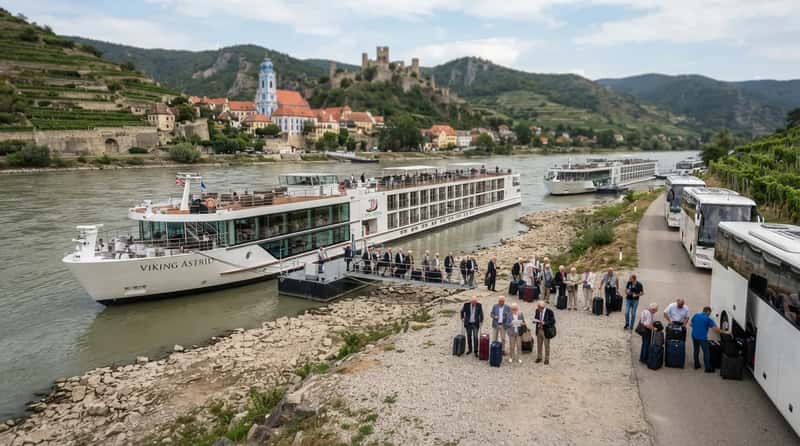
This is the mistake that separates travelers who handle a difficult sailing gracefully from those who feel completely blindsided. How a river cruise line responds when something goes wrong is just as important as the itinerary itself – and almost nobody researches it beforehand.
Low water on European waterways has forced itinerary changes, ship swaps, bus transfers, hotel stays, and outright cancellations across multiple lines. Some lines offer refunds, future cruise credits, or rebooking choices, while others leave travelers waiting for answers.
Cruise companies prefer to keep passengers happy by sailing the published itinerary, so they often wait until just a week or two before the voyage to announce changes. That’s a very small window to rearrange flights, hotels, and excursions booked around a fixed plan.
Before booking any river cruise, specifically ask: “What is your policy if water levels force itinerary changes?” Viking, for example, transfers passengers with luggage to an identical sister ship on the other side of an affected river section to minimize inconvenience, though some travelers felt bus-heavy alternatives on other lines weren’t equivalent to the cruise they’d booked.
And now, the mistake veteran river cruise guides say they watch first-timers over 60 make more than any other – the one with the most lasting consequences.
1. Flying Home the Morning After the Cruise Ends
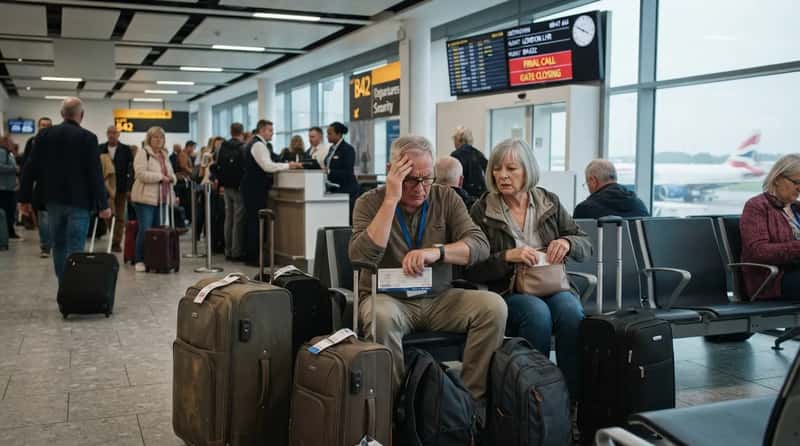
Veterans call this the “final-day trap,” and it’s by a wide margin the most common reason an otherwise perfect river cruise ends on a sour note. First-timers over 60 consistently book flights home the morning of disembarkation day, and they consistently regret it.
River cruises disembark early – often by 9 a.m. – and the ship may be docked far from the airport. Add customs, luggage logistics, and the physical fatigue of a week of daily excursions, and a tight morning flight becomes genuinely risky.
The trips they remember most fondly are the ones where they gave themselves breathing room at both ends.
Veteran river cruise traveler feedback
Miss that flight and you’re paying for a last-minute, same-day ticket out of a foreign city. Rushing through that transfer on the last day – exhausted, with luggage, trying to make a tight connection – undoes the relaxation of everything that came before it.
Build in one night at the disembarkation city instead. Walk around, have a proper final dinner, sleep – the extra hotel night costs a fraction of what a missed international flight costs, financially or emotionally.
The Bottom Line

River cruising is genuinely one of the best travel formats for people over 60 – calm water, one unpacking, a new destination daily, and itineraries built for discovery rather than exhaustion.
But the mistakes above are real, repeating, and preventable. The biggest ones aren’t about forgetting to pack something – they’re about misunderstanding how river cruising actually works: the water level risk, the all-inclusive fine print, the excursion booking window, and the importance of buffer days on both ends of the trip.
At a Glance
- Book cabins and excursions 6 to 9 months ahead for the best selection.
- Buy travel insurance within a week of your first payment.
- Add one buffer night before boarding and one after disembarkation.
- Confirm each line’s water-level disruption policy before you book.
Go in informed, book early, match the cruise line to your actual travel style, and never fly home the morning the ship docks. Do those things, and a river cruise over 60 can be everything the brochure promised – and quieter, richer, and steadier than any ocean voyage you’ve taken before.