The ports on every cruise brochure are the ones seasoned cruisers quietly cross off. A first-timer sees Cozumel, Santorini, Venice, and Rome as bucket-list stops. Someone on their twentieth sailing sees tender lines, new fees, and sidewalks packed shoulder to shoulder. This countdown covers 15 of those stops and what the regulars do instead.
It isn’t snobbery, and it isn’t always a flat-out skip. Some cities have written hard caps into law, and some stops quietly burn half your day before you reach the sights. One Maine town will only let 1,000 cruise passengers walk off the ship. Save that one for last.
#15 – Cozumel’s Pier Strip, Where Every Ship Unloads Into the Same Few Blocks
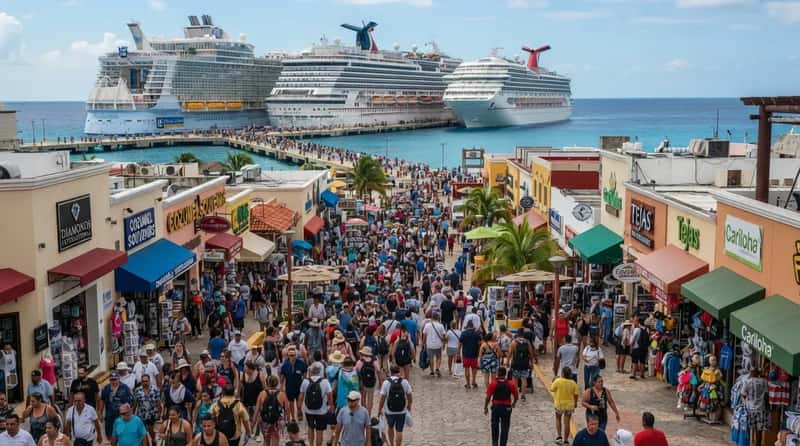
Cozumel is one of the busiest cruise stops on the planet. One report put its 2025 total at 4.73 million cruise passengers. It also sees multiple ships per day during peak season. That’s a lot of people heading for the same souvenir blocks.
Here’s the part most people don’t realize. Cozumel receives about 66% of the cruise passengers who visit Mexico. Seasoned cruisers often walk straight past the pier shopping strip. They book an early excursion or head for the island’s quieter stretches before the midday wave arrives. The smarter Cozumel day tends to start early. But one Caribbean favorite has an even bigger crowd problem, and it’s right at the gangway…
#14 – Mykonos, Where a €20 Fee Didn’t Thin Out the Crowd
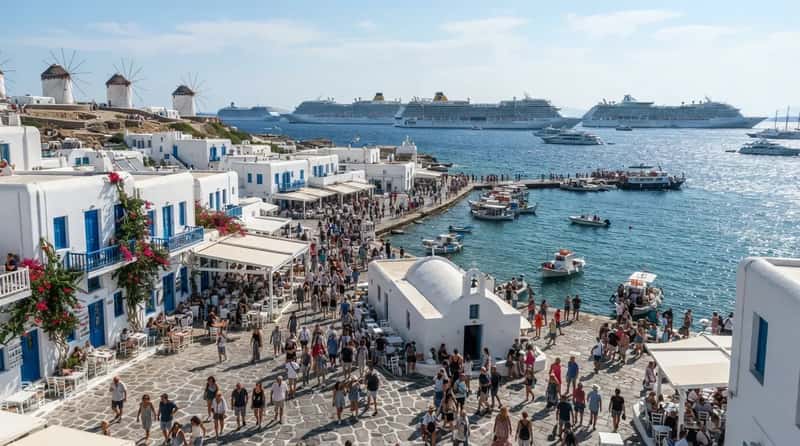
Greece started charging cruise passengers per port call in mid-2025. For June 1 to September 30, 2026, the fee is €20 at Mykonos and Santorini and €5 at other ports. It sounds like it should scare people off. It didn’t. One analysis found Mykonos volume grew 16 to 17% even with the charge in place.
So what do veterans do? Plenty of them pick other Greek stops, where the peak fee is a quarter of the price. The charge lands on your onboard account each time you disembark at a Greek port, so skipping the big-name island adds up fast.
For many repeat cruisers, a ship-day Mykonos is the stop that feels most overhyped in the Aegean. Next up, a Caribbean port with a very different problem…
#13 – Nassau’s Dockside Shopping Rush
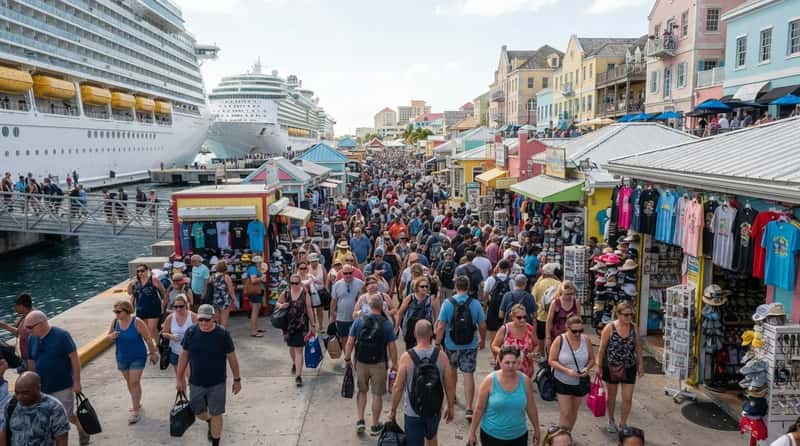
Nassau is one of the Caribbean’s best-known cruise ports. The ships dock right beside downtown, so the first thing you see is a wall of shops and vendors. On a busy day, several large ships can empty into those same few blocks at once. For a first visit, that’s fine. For a repeat cruiser, it often feels like a long walk past the same stalls.
Many seasoned cruisers treat Nassau as a beach day somewhere else on the island. Some book a small-group excursion that leaves the port area right away. Others head to a beach on Paradise Island instead of browsing the pier district. The trick is to decide before you step off the ship. Otherwise the crowd decides for you. But the next stop makes you wait before your day even begins…
#12 – Grand Cayman’s Tender Line, Where Your Beach Day Starts With a Wait
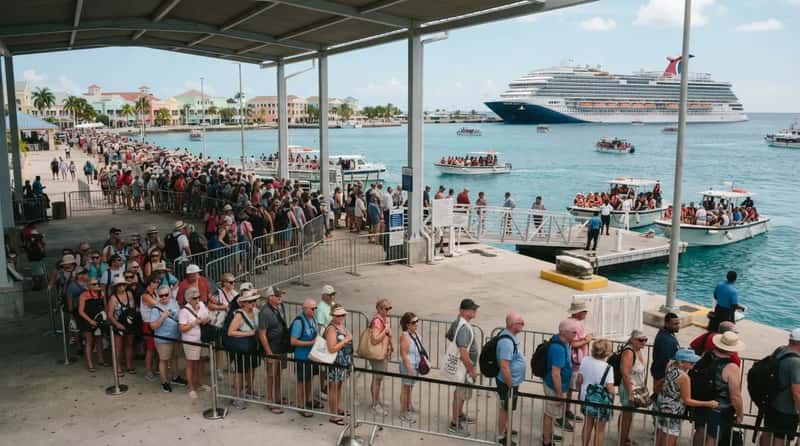
Grand Cayman is famous for Seven Mile Beach and stingray encounters. It’s also a tender port. The ship anchors offshore, and small boats ferry guests to George Town in batches. On a big-ship day, that can turn the start of your visit into a lineup before you’ve seen any sand.
Veterans plan around that bottleneck. Some grab the earliest tender slot they can get. Others book an organized tour that boards first and skip the free-roaming beach scramble.
A few treat Grand Cayman as a calm sea day and stay aboard while the crowds go. That might sound like heresy, but the empty pool deck is a real perk. And the next port charges you extra just for arriving…
#11 – Cabo San Lucas, Where the Fee Doubled and Tenders Still Rule
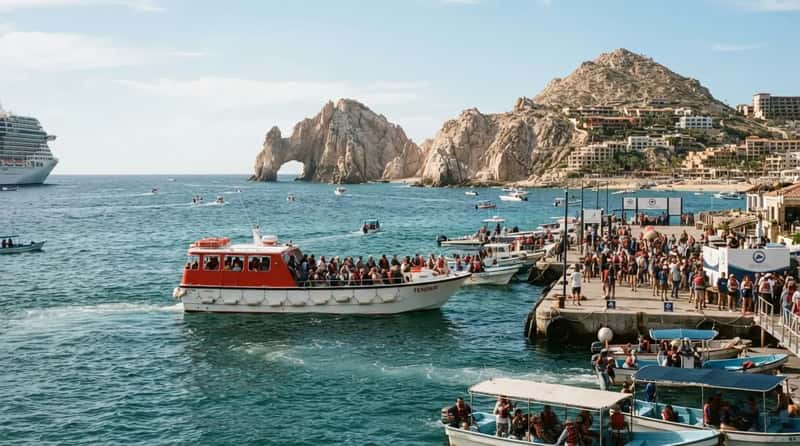
Cabo is another tender stop, so ship-day logistics can eat into your hours ashore. Now there’s a cost angle too. As of Aug. 1, 2026, Mexico’s fee for foreign cruise passengers rose to $10 per person, up from $5.
The fee isn’t the whole story, because it’s only charged once per itinerary, even if the ship visits several Mexican ports.
Fast Facts
- The fee is now $10 per person, up from $5.
- It applies at Cabo San Lucas, Puerto Vallarta, Cozumel, and Costa Maya.
- You pay it once per itinerary, not once per port.
- Mexico’s original idea was $42 per person.
- The plan expects the fee to hit $21 by 2028.
Many veterans now spend their Cabo time on a half-day boat trip, such as winter whale watching, instead of wandering the marina crowds. Next, a European port where one rushed day is a recipe for regret…
#10 – Barcelona on a Port Day, the Stop Veterans Treat as a Starting Line
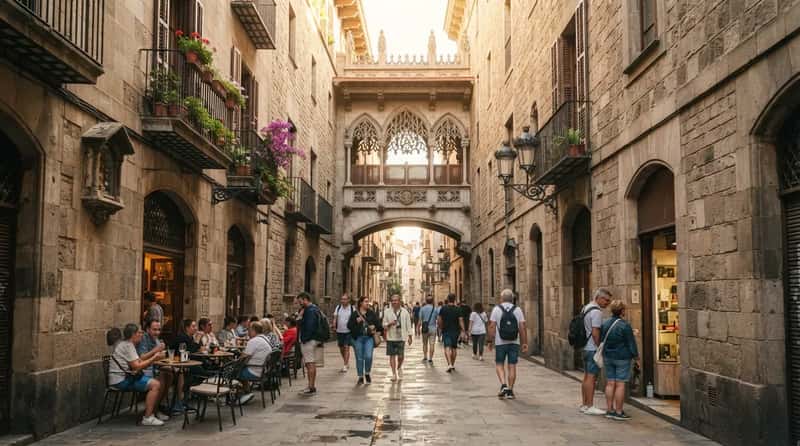
Barcelona is a giant on the cruise map. In 2024 alone, nearly four million cruise passengers arrived there. The mayor has backed calls to cut cruise terminals and ship calls. It’s a loved city that’s openly pushing back on cruise crowds.
That’s why plenty of experienced cruisers don’t squeeze Barcelona into one rushed port day. They fly in a day or two early and treat the city as its own trip. Then the ship becomes the easy part.
You get the neighborhoods without a ticking all-aboard clock. The smartest move is to stay longer, not shorter. But another northern city is making its feelings even clearer…
#9 – Amsterdam, the Port With a Countdown Clock
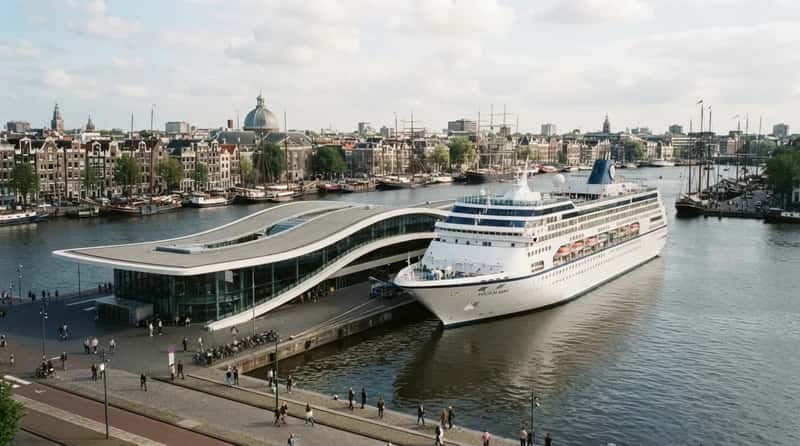
Amsterdam is shrinking its cruise traffic on purpose. The city planned to limit ocean cruise ships to 100 per year by 2026, down from 190. Its reasoning is that cruise ships bring crowds and emissions. That’s a big cut for a classic stop.
The long-term target is blunt. The city plans to ban ocean cruise ships altogether by 2035. Some displaced calls are expected to shift elsewhere in the Netherlands. Rotterdam agreed to take more than 40 ships that won’t be welcome in Amsterdam from 2026.
Veterans often treat Amsterdam as a land trip, then use alternate Dutch ports for the ship. Still, the next stop’s rule change is the one that really shakes up the Riviera…
#8 – Cannes, Where Big Ships Now Have to Anchor Out
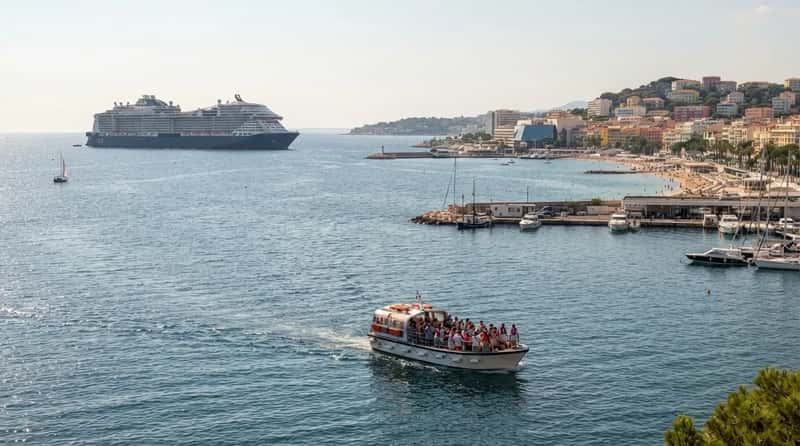
The glamorous French Riviera has new rules. As of January 1, 2026, Cannes no longer lets cruise ships carrying more than 1,000 passengers tie up at its dock. That sidelines most of the ships a typical American cruiser sails on. It’s one of the biggest recent shifts on the Riviera.
Larger ships must anchor offshore and ferry guests in by tender. So a once-simple walk-off port is now a boat-ride port for nearly every big ship.
Worth Knowing
- Ships carrying more than 1,000 passengers can’t use the dock as of January 1, 2026.
- The city caps total cruise arrivals at 6,000 passengers a day.
- A tender ride now sits between your ship and the shore.
- Ship excursions come with a guaranteed ride back.
Experienced cruisers know what that means for timing. They either lock in a ship excursion, or they use the day for a nearby Riviera stop with easier access. Tender ports punish the spontaneous. But the next two Italian ports are famous for punishing something else…
#7 – Florence in a Hurry from Livorno, the Day Trip That Eats Your Day

Livorno is the usual gateway to both Florence and Pisa. Cruise lines sell the combo constantly. But the transfers are long, and the clock, not the sights, ends up running your day. It’s a common complaint that people spend more time on a bus than in a museum.
So what do veterans do instead? They pick one place and slow down. Some go to Pisa for the tower and a relaxed lunch, then head back early.
Others save Florence for a future land trip when they can stay overnight. It’s less impressive on a checklist, and much better in real life. The next port has the same problem on a bigger scale…
#6 – Rome in a Day from Civitavecchia, the Famous Mistake
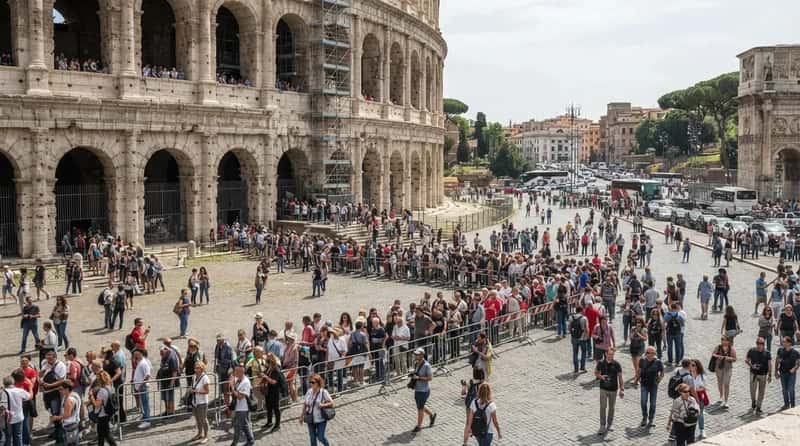
This is the classic overreach. Cruise ships dock at Civitavecchia, which sits roughly 50 miles from Rome. Fitting the Colosseum, the Vatican, and a proper meal into one port day means spending a big slice of it just getting there and back. Most people don’t realize that until they’re standing in line.
Seasoned travelers tend to flip the plan. They add hotel nights in Rome before or after the cruise and see the city properly. On the actual port day, some stay local. Etruscan sites such as Tarquinia’s painted tombs are within reach of the port area, and they’re far less crowded.
Quick Compare
- Rome in one port day: roughly 50 miles of travel, plus a Colosseum, Vatican, and meal crammed in.
- Rome with hotel nights: no all-aboard clock, and the sights get your full attention.
- A local Etruscan day: painted tombs near the port, with far fewer crowds.
Rome deserves better than a sprint. And the next city has the opposite story: it was restructured on purpose…
#5 – Venice by Ship, Where the Big Ships Were Pushed Out of the Lagoon
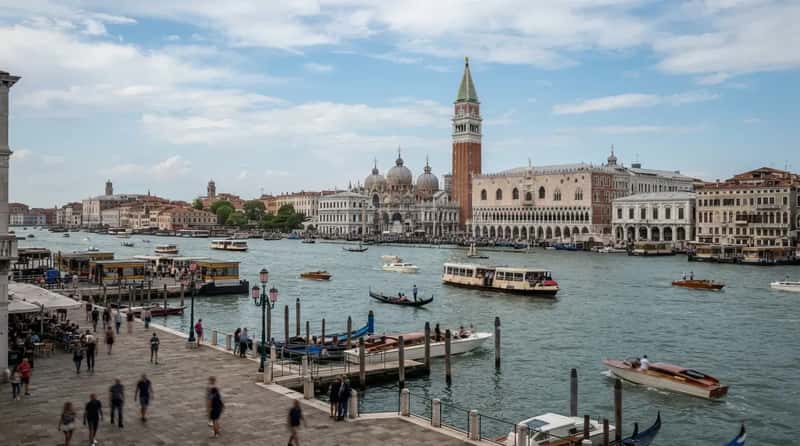
The old image of a huge cruise ship gliding past St. Mark’s is gone. Ships over 25,000 gross tonnes, 180 meters long, or 35 meters tall have been barred from the Giudecca Canal and lagoon since 1 August 2021. They now use the Marghera terminal instead. Many first-timers still book Venice expecting the old view.
The grand ship-through-the-city moment is officially history. Veterans respond by making Venice a pre-cruise or post-cruise stay instead of a port call. Then the ship is just the ride out.
It may be the only way to see the city without feeling like a visitor on a conveyor belt. Next, a place where the limit is literally written down in passengers per day…
#4 – Juneau on a Peak Day, Where Ships Had Been Stacking Up to 21,000 People
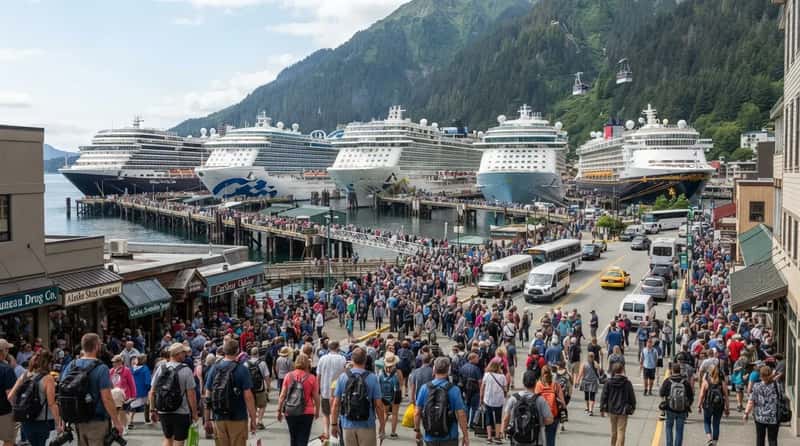
Alaska’s capital is the first big U.S. port to set daily passenger caps this way. A five-ship daily limit is already in effect, and in 2026 there’s a daily cap of 16,000 cruise passengers, with 12,000 on Saturdays. That’s a response to crowded summers. Previous seasons could bring roughly 21,000 cruise visitors on peak days.
Those caps are voluntary agreements, signed by the city and the cruise industry as nonbinding. They also move ships around. A few Royal Caribbean calls were canceled in Juneau and shifted to Ward Cove in Ketchikan.
At a Glance
- Daily limit: five ships.
- 2026 daily passenger cap: 16,000, or 12,000 on Saturdays.
- Past peak days: roughly 21,000 cruise visitors.
- Status: voluntary and nonbinding.
- Side effect: some calls moved to Ward Cove in Ketchikan.
Veterans pay attention to the schedule, check which day their ship calls, and avoid the busiest dock days when they can. The same crowd math is even stricter in the next port…
#3 – Dubrovnik, the Walled City That Starts Turning Ships Away
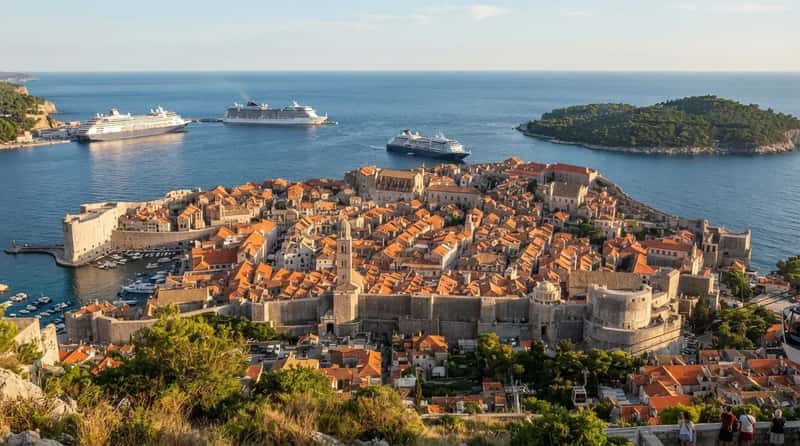
Dubrovnik’s Old Town is one of the most photographed spots in Europe, and the city decided it had seen enough. It allows two ships a day at its main port plus one near the Old City, aiming for around 8,000 passengers on the busiest days. That’s tight for a place with narrow stone streets.
The cap has real teeth. The port authority has turned away dozens of ships that wanted dates that were already full. Some lines have adapted. Many have shifted calls to other Croatian cities, like Split.
Veterans tend to make the same pivot. Or they come to Dubrovnik by land and stay overnight, after the day-trippers have left. But the most surprising numbers of all are back on the Greek islands…
#2 – Santorini, Where a Cap and a Fee Just Cut Ship Visits by Almost a Fifth
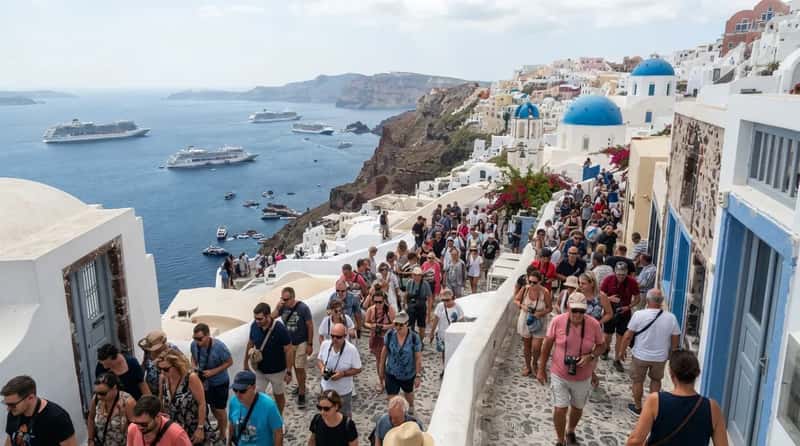
Santorini has been the poster child of overtourism for years. Greece introduced a cap of 8,000 cruise passengers per day and a €20 levy for 2026. The island’s cruise berth system tells the story. It shows an 18.27% drop in scheduled cruise arrivals for 2026, with 595 ships against 728 in 2025.
For plenty of repeat cruisers, Santorini on a ship day is the picture-perfect stop that doesn’t match the picture. You pay the top fee, share the viewpoints with thousands, and leave by late afternoon.
Veterans instead look for quieter Greek islands where the peak fee is lower. Some pick Santorini only in the cooler months. One more stop shows just how far a town can go to limit cruise visitors…
#1 – Bar Harbor, Where Only 1,000 People Are Allowed Ashore
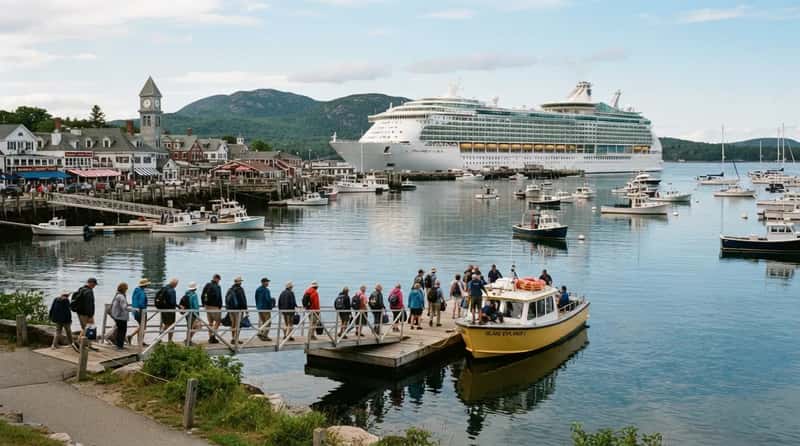
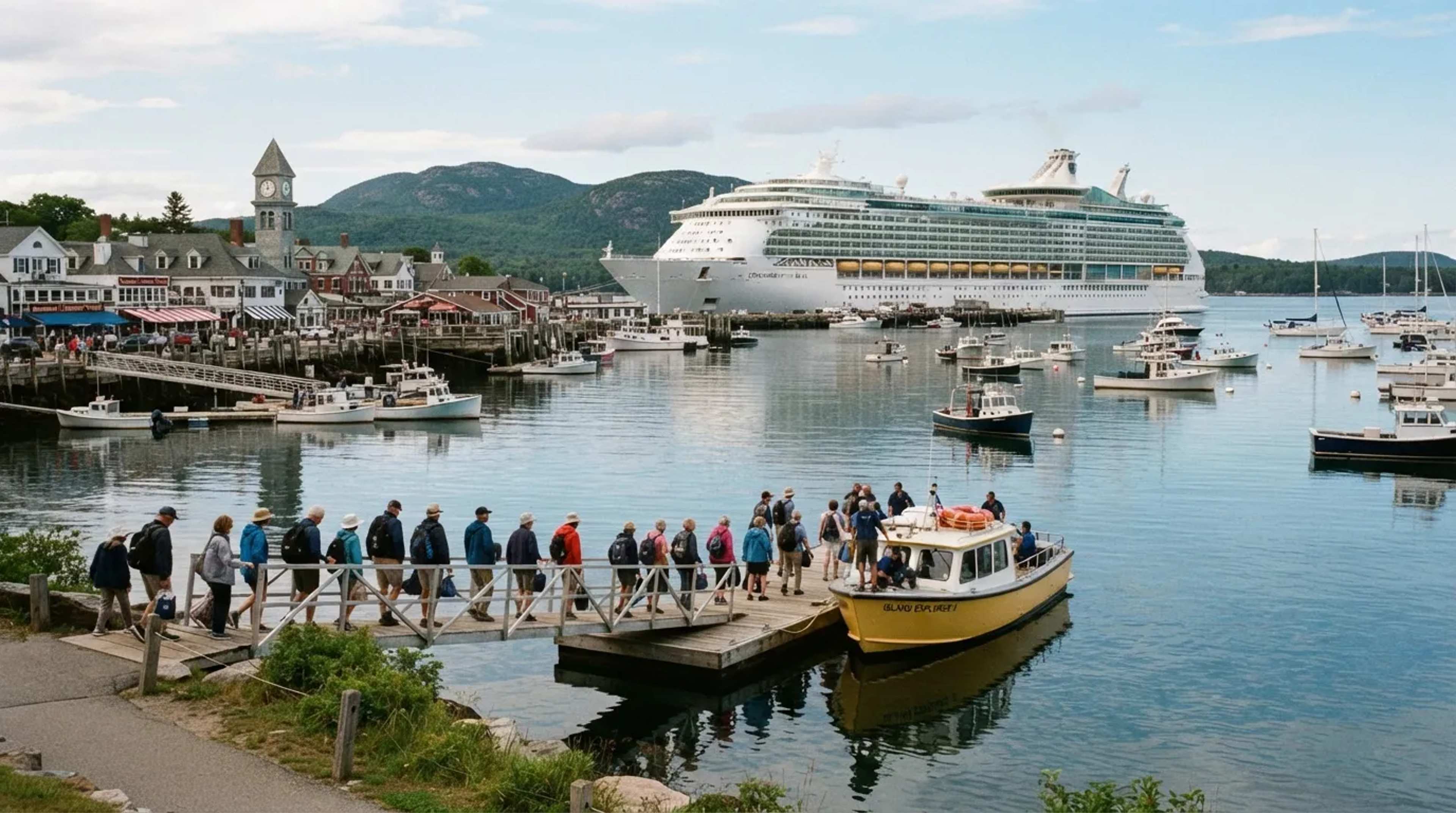
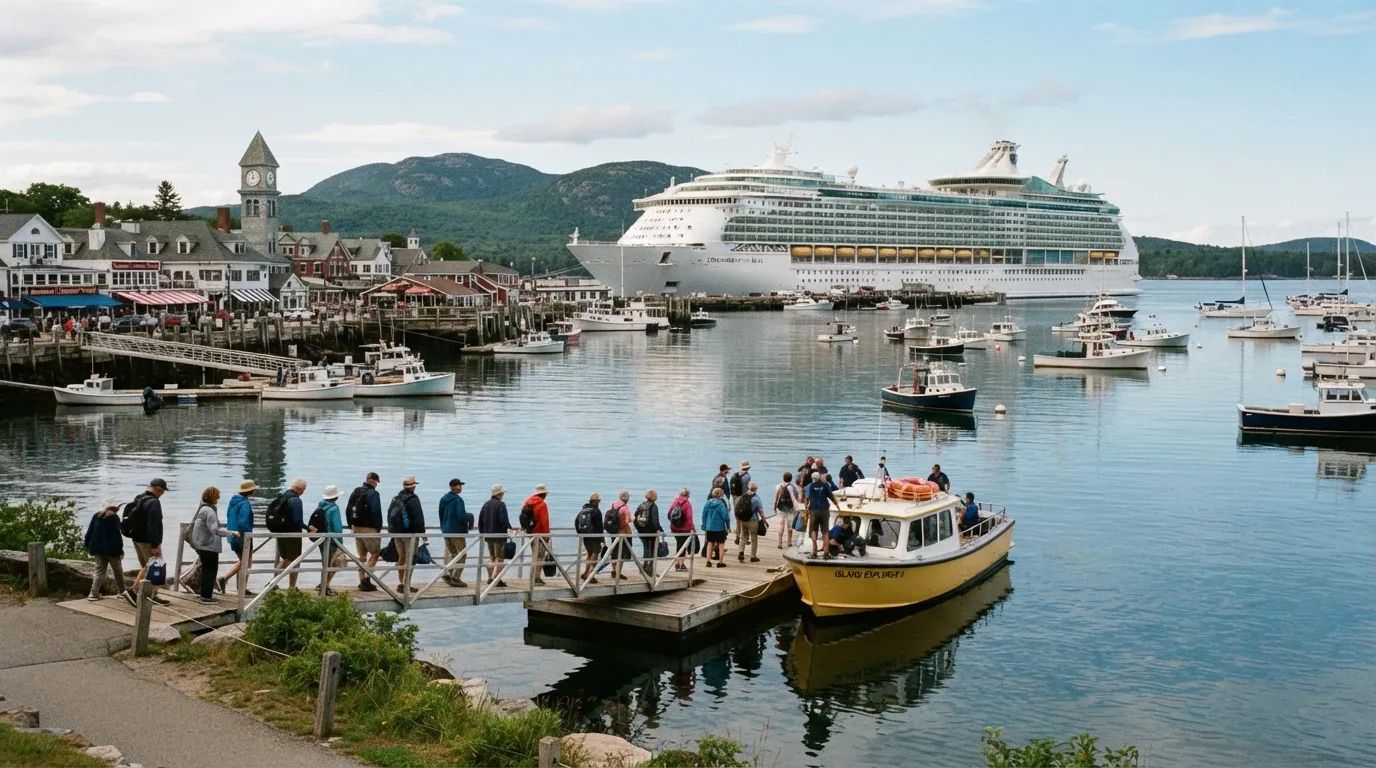
This one sounds made up, but it’s real. Bar Harbor, Maine, is the gateway to Acadia National Park. The city voted to limit daily cruise passengers to 1,000. Even when ships carry more, only 1,000 people can legally go ashore on a given day. The rest of the passengers must remain aboard in port.
The rules keep shifting. A federal judge ruled in May 2026 that Bar Harbor can only enforce the limit in July and August. In other months, the town cannot enforce the 1,000 cap.
Veterans check the current rules before booking, since your date may matter more than your ship. Many simply pick other New England stops, such as Portland, Maine, and plan Acadia as a separate land trip. That’s the real secret of seasoned cruising: the best port is the one you can actually enjoy.
Veteran cruisers aren’t skipping these ports out of snobbery. They’re dodging caps, fees, and lines, and trading a rushed port call for a slower trip they’ll actually remember. Which of these famous stops did your last cruise stuff into a single day?