You can pay for the balcony, the ocean view and the “great location,” then spend the week awake over a pool deck or trudging down a hallway that never seems to end. For guests over 65, the cabin number quietly decides how the whole trip feels. Most of the fixes cost nothing but a little time with a deck plan.
The 15 requests below run from small tweaks to the ones that make or break your week. Some will surprise you, and one of them is a trap hiding in the brochure’s best-looking cabin. Stay for #1, because it’s the single booking choice that makes most of the others possible. First, the smallest one, which is about how you describe a distance.
#15 – A Cabin Counted in Doors From the Elevator
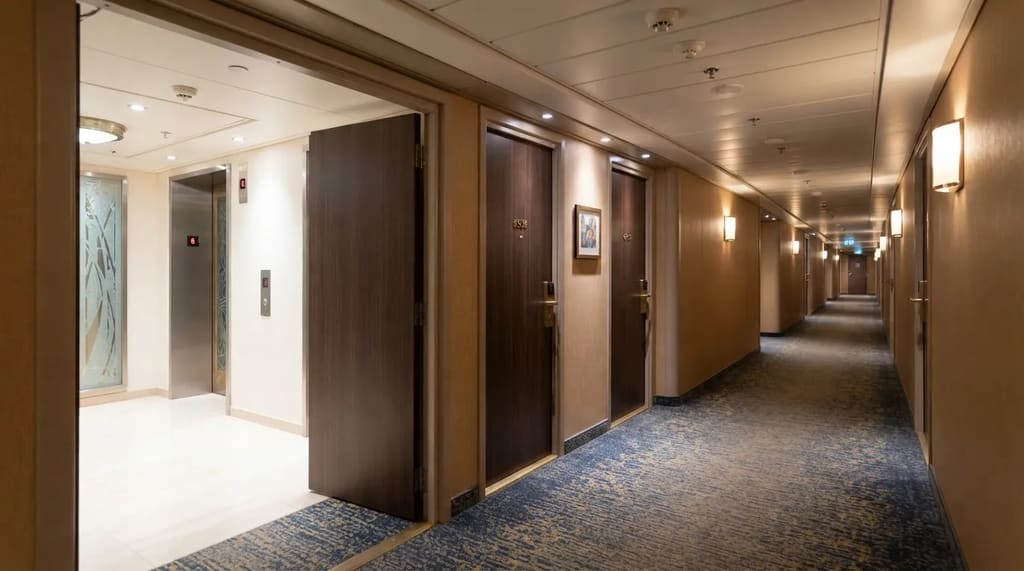
Forward, midship and aft are loose labels on a big ship. A cabin can carry any of them and still sit at the far end of a very long hallway. A sharper request names the distance in doors.
Ask for a cabin a few doors from the elevator, not beside it. Rooms near elevators aren’t automatically noisy, though nearby passenger traffic is worth considering. A cabin a few doors from an elevator lobby often offers excellent convenience without much additional sound.
Large ships often have several elevator banks, so learning which one is yours gives you a landmark after a long day ashore. After several days of walking back and forth to restaurants, shows and the pool, that distance can wear you down.
Skip paying extra for the door right beside the elevator. Two or three doors buys nearly the same short walk with a little more peace.
Elevators settle the walking question. The other end of the ship settles a different one, and the end that looks best in the brochure is the one to be careful with.
#14 – Anything Well Back From the Bow
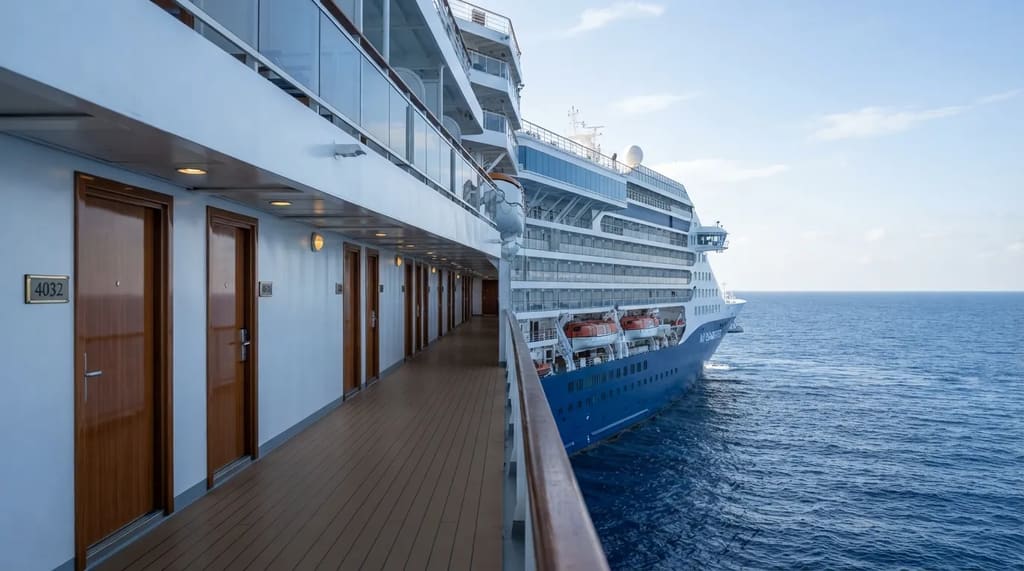
The cabin near the front of the ship has the best view in the brochure. It may also come with more noticeable movement when the seas get rough.
Cabins on lower decks near the ship’s center generally pitch and roll less than rooms higher up or toward the bow and stern. Ask for a cabin well back from the bow. If midship isn’t available, a lower deck slightly behind center is a better fallback than anything forward.1
Noise is the second reason. Cabins near the anchor and anywhere close to the bow turn up on lists of rooms to avoid, and no deck plan warns you what it sounds like when the anchor goes down.
Moving away from the bow takes care of the anchor. Down the hallway there’s a door with no cabin number on it, and what’s behind it can be louder.
#13 – A Few Doors Clear of Crew Access
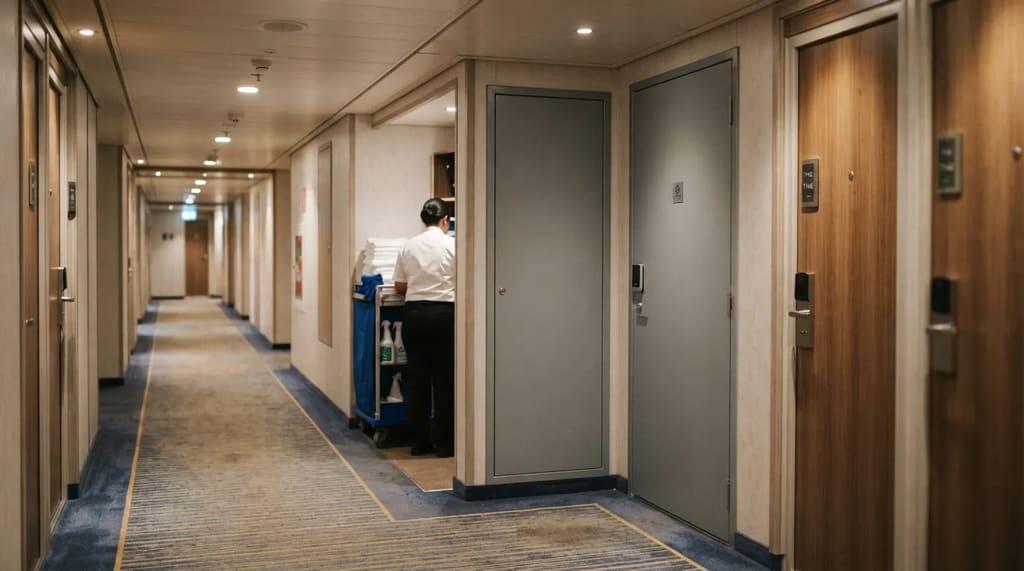
Not every door in a cabin hallway belongs to a cabin.
The noisiest staterooms are generally those close to nightclubs, theaters, elevators, staircases, restaurants, kitchens, pool decks, crew areas and mechanical spaces.2 Crew areas are the one first-time bookers forget, because nothing on the booking page mentions them.
Cabins beside a crew access door, or opposite a housekeeping or service area, are worth passing over.
Ask not to be beside a crew door, service room or crew elevator. Even on a hallway made only of cabins, you’ll want to make sure yours isn’t beside a crew elevator shaft.
Your travel agent or the cruise line can tell you what sits beside any cabin number on your short list. Ask for each number separately, since the same deck can have a quiet end and a busy one.
Fast Facts
- Noise hot spots: nightclubs, theaters, restaurants, kitchens and pool decks
- Traffic hot spots: elevators and staircases
- Easy-to-miss hot spots: crew areas and mechanical spaces
- Best check: ask about each cabin number on your list, one at a time
#12 – Not Directly Under the Pool Deck
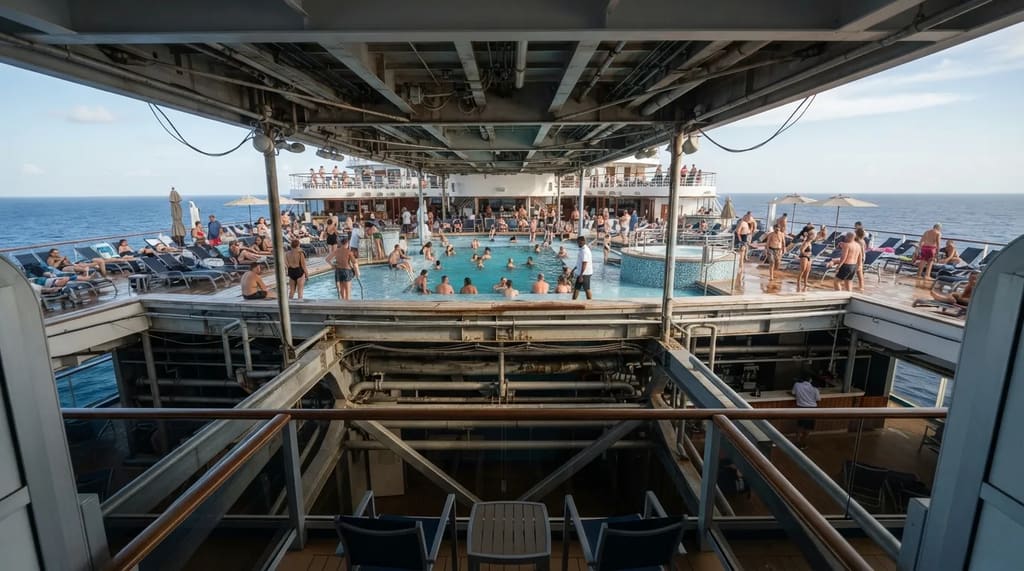
Chairs dragged across the deck before breakfast are the least of it. Staterooms under the pool deck are exposed to noise throughout the day, from live music to poolside competitions.3
Evenings aren’t safe either. Pool decks can host late-night revelry loud enough to carry down to the deck below. Ask for a cabin a few decks below the pool, not directly under it. The decks in between act as a buffer.
Not every outdoor deck is a problem. A cabin beneath a quiet walking deck may be much better than one beneath a pool or buffet area. A balcony cabin under a busy pool can even be louder than an inside cabin surrounded by other cabins.
The pool is above you, but theaters and nightclubs can sit either above or below, and the problem there is one you can feel as much as hear.
#11 – Away From the Theater and Nightclub
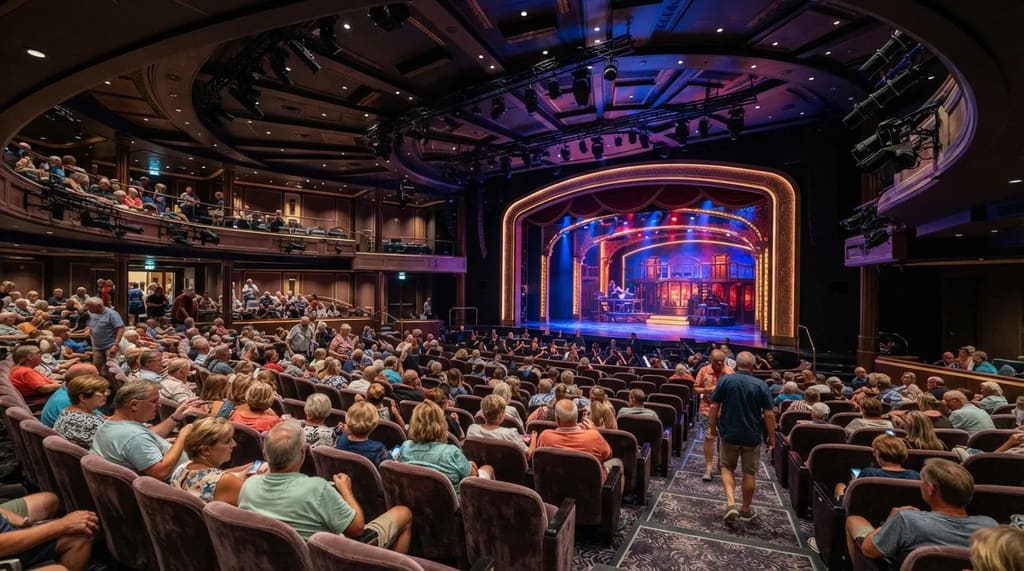
You don’t have to share a wall with a nightclub to notice it. Rooms over the theater, nightclub, casino or busy promenade can pick up music, crowd noise or announcements.
AAA’s group travel manager for Western and Central New York points out that cabins below the nightclub might hear music or dancing. She also advises against sitting above theaters or lounges, which can be rough for early sleepers.
Ask for a cabin well clear of theaters, lounges, nightclubs and the casino. If you’re in bed by ten, this request matters more than the view.
Entertainment gets the blame, but the loudest room at breakfast is a kitchen, and on many ships it sits where you wouldn’t think to look.
#10 – Not Beneath the Buffet or Galley
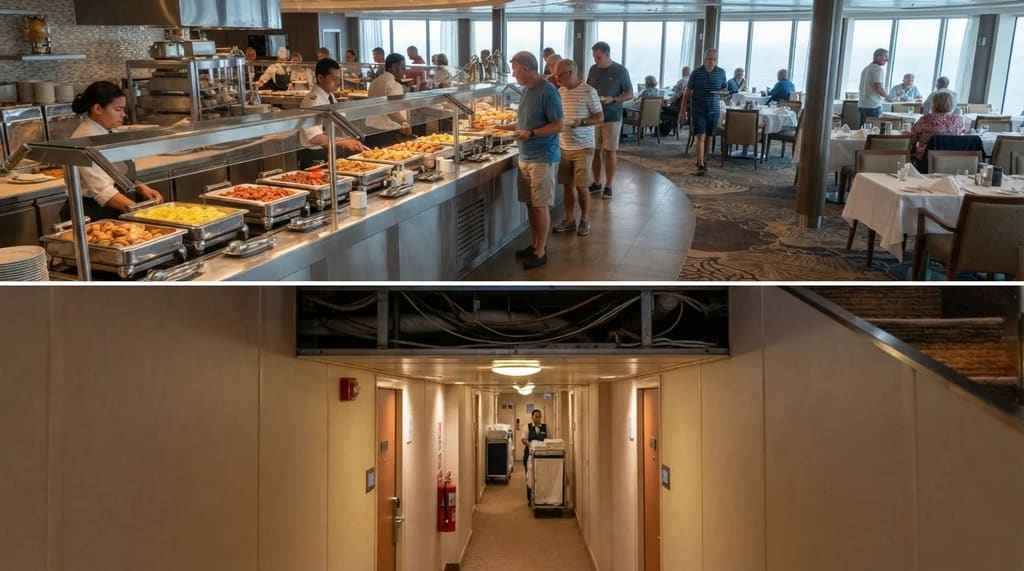
Rooms directly under the buffet, pool deck, jogging track or sports court regularly draw complaints. The buffet belongs on that list for a plain reason: breakfast service and cleanup start long before you want to be awake.
The main galley is typically one deck below the main dining room. That makes cabins next to or below the dining room, and near crew doors leading to the galley, a poor bet. Carts roll and ventilation hums at hours when the dining room itself is empty.
Ask for a cabin with no restaurant, buffet or galley above or beside it. When two similar cabins are open, take the one that isn’t directly beneath a dining space.
Dodging each of those hazards one at a time gets tedious. A single request covers most of them at once, and it depends on what’s above and below you rather than where you sit along the ship.
#9 – Cabins Stacked Above and Below Yours
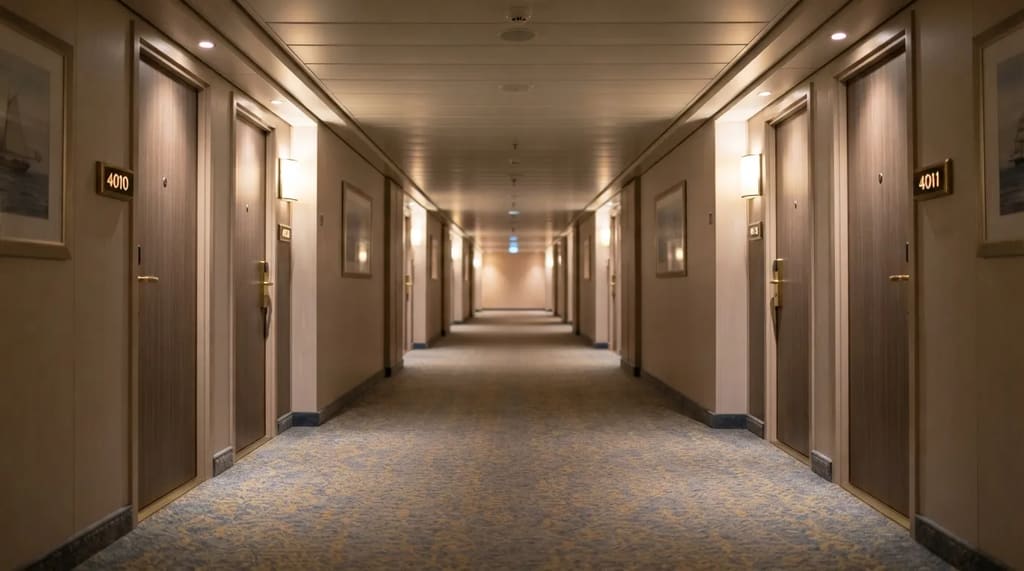
The quietest room on a ship tends to have the plainest neighbors. The best noise-buffer strategy is to choose a cabin with other cabins directly above and below.3
Cruise writers call this the cabin sandwich, and it matters more in a small room, where even minor noise can feel amplified. Retirees and light sleepers usually do best on lower to mid decks with cabin decks surrounding them.
Ask for cabins directly above and below your room. It can rescue a modest booking, since a balcony cabin directly beneath a pool deck could be noisier than an interior cabin surrounded by other cabins.
The neighbors above and below are settled by the plan. The one on your left is trickier, because some of those rooms share a door with yours.
#8 – A Cabin Without a Connecting Door
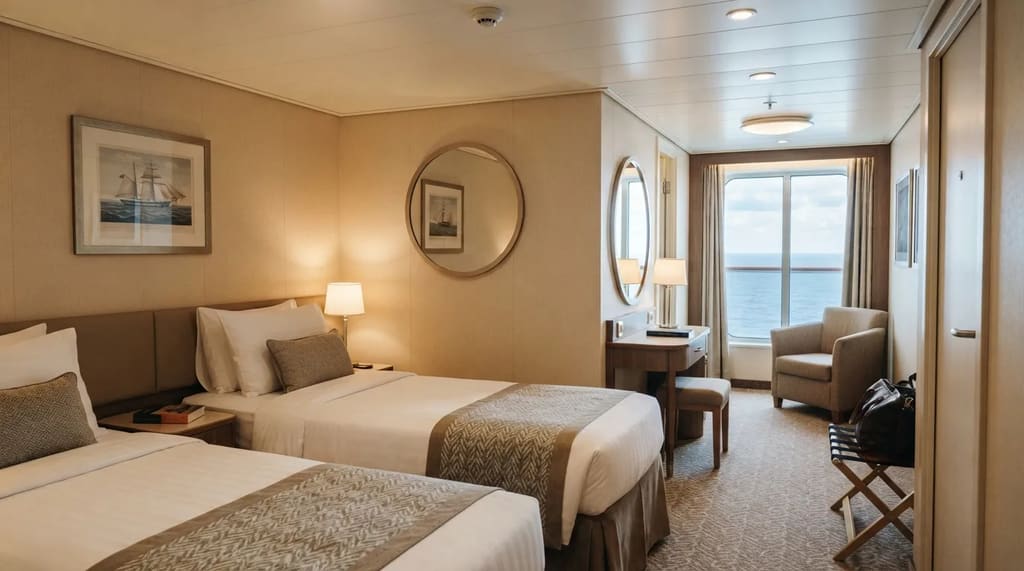
Some cruise ship cabins have a door that opens straight into the cabin next to them. Those doors exist for families booking two rooms, and a wall with a door in it passes sound more easily than a solid one.
Connecting doors can carry the voices of your neighbors right into your room, and that has nothing to do with elevators or pool decks. Ask for a cabin that doesn’t have a connecting door.
Quiet isn’t the only thing a deck plan can hide. A small symbol on it can mean the window you’re paying for won’t show you what you expect.
#7 – No Obstructed-View Symbol on the Plan
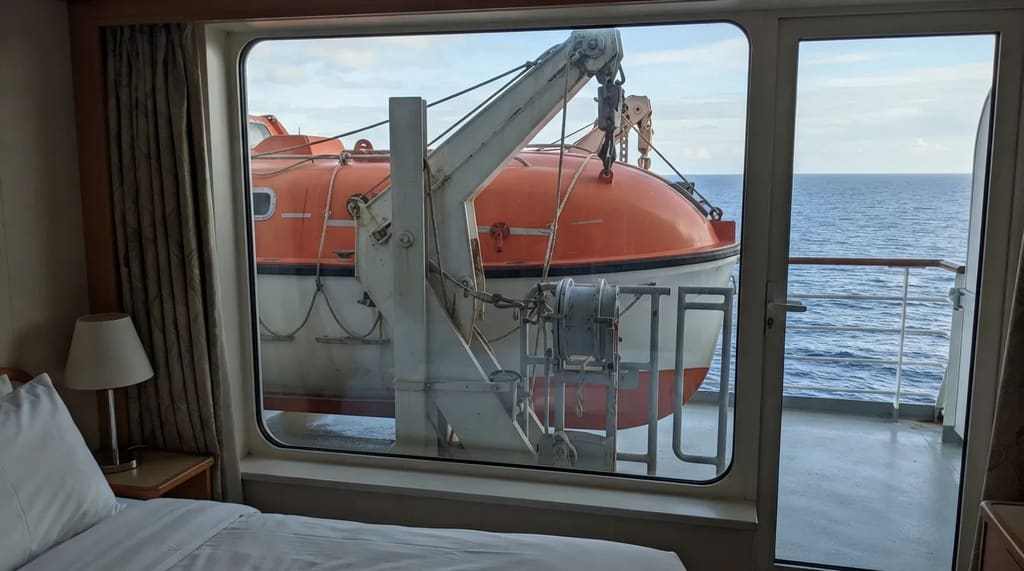
Paying for an ocean view and finding a lifeboat outside the glass is a letdown you can prevent. Obstructed-view cabins are normally marked on deck plans with a symbol.
Check for the obstructed-view symbol before you accept any window or balcony cabin. If a partly blocked view is going to bother you, steer clear of the cabins marked that way.
The plan on the cruise line’s own website shows each cabin’s exact position, so you can check this in minutes. If an agent offers a window cabin at a lower price, ask directly whether the view is partly blocked.
Worth Knowing
- Look for the obstructed-view symbol on the deck plan
- Use the cruise line’s own plan to see each cabin’s exact spot
- A cheaper window cabin is a cue to ask about a partly blocked view
- The check takes minutes at home and saves a week of disappointment
#6 – Midship on a Lower Deck, Even Inside
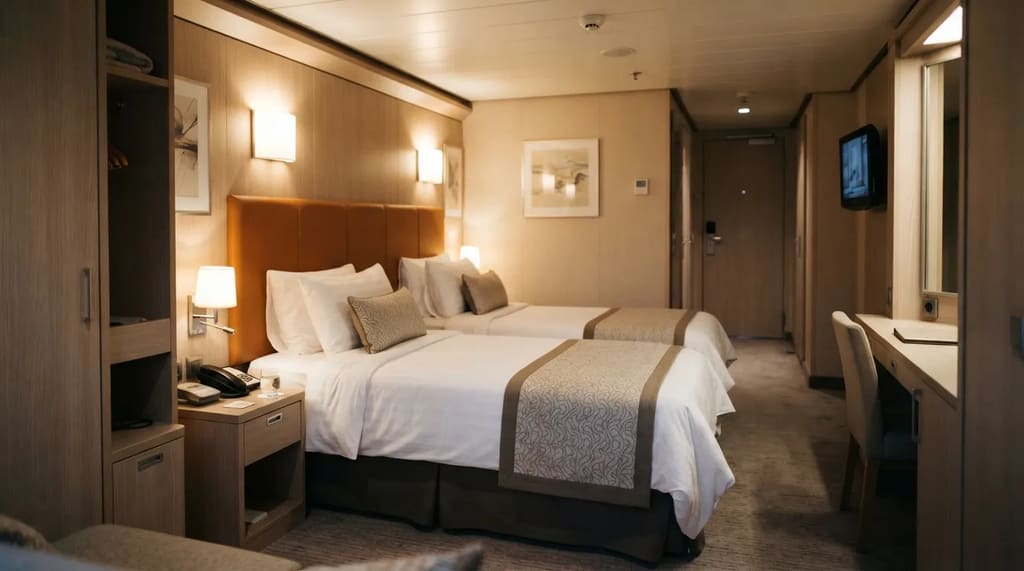
Buyers pay extra for a balcony hoping it will steady the ride, but a balcony doesn’t change how the hull moves. Position does.
P&O’s guidance says a lower, centrally located cabin is least affected by motion. Lower decks near the center experience less pitching and rolling than rooms higher up or toward the bow and stern, and that holds on any line.1
If you get seasick, ask for a lower-deck cabin near the middle. No cabin can eliminate movement during rough weather, but the right spot takes the edge off.
My verdict: a midship inside cabin beats an aft or forward balcony for anyone prone to seasickness. You give up the view and keep your stomach.
Location only softens motion. If you use a walker, scooter or wheelchair, the cabin itself has to be built differently, and there aren’t many of those to go around.
#5 – An Accessible Cabin, Requested Before You Book
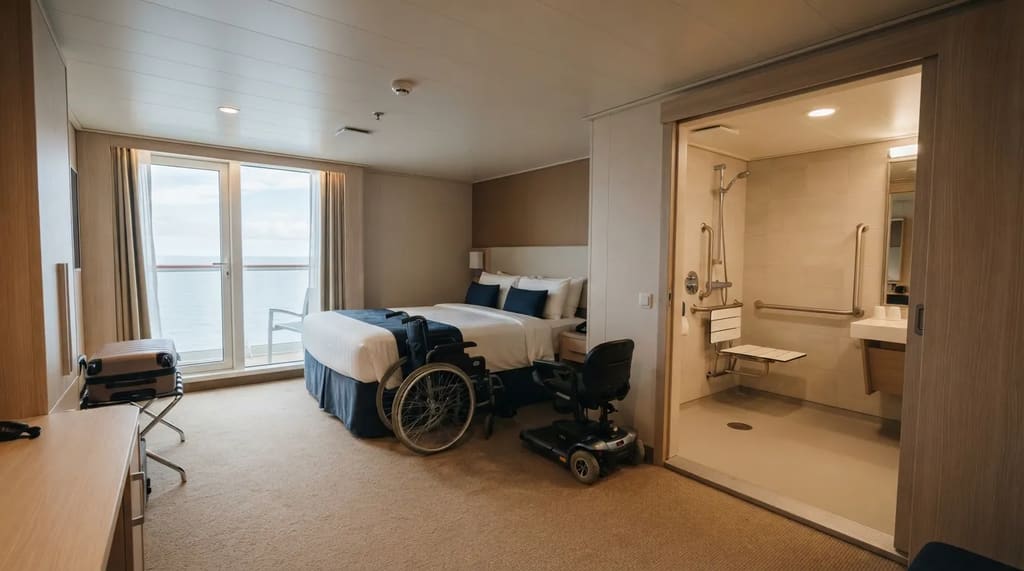
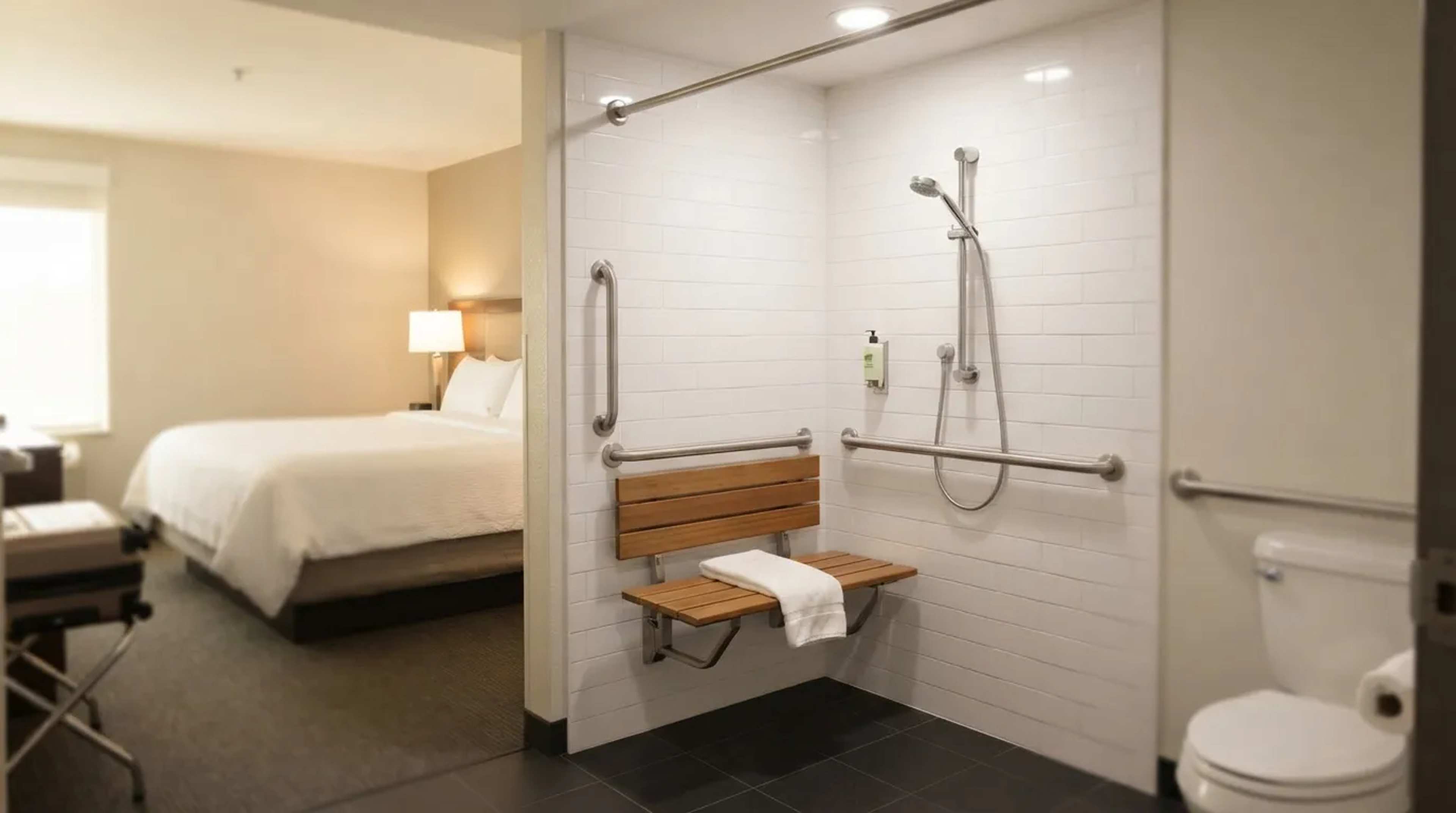
Accessible cabins are a small share of any ship, and they can sell out early, especially on popular routes and newer ships. A request at the pier can’t create one that doesn’t exist.4
Call the cruise line about accessible cabins before you book. Some lines have different categories for full wheelchair access and for limited mobility, so say exactly what you need. If you use a mobility aid, ask whether the floor space is enough to store and turn it.
Placement is a bonus. Cruise Critic notes that designers generally place modified cruise cabins near the central elevators, which means easier access to dining and the big venues.2
A cabin built for access is one way to cut down on walking. For everyone else, the shortest route depends on what sits near your door, and a quiet corner can cost more than it saves.
#4 – A Cabin Near What You Use Most
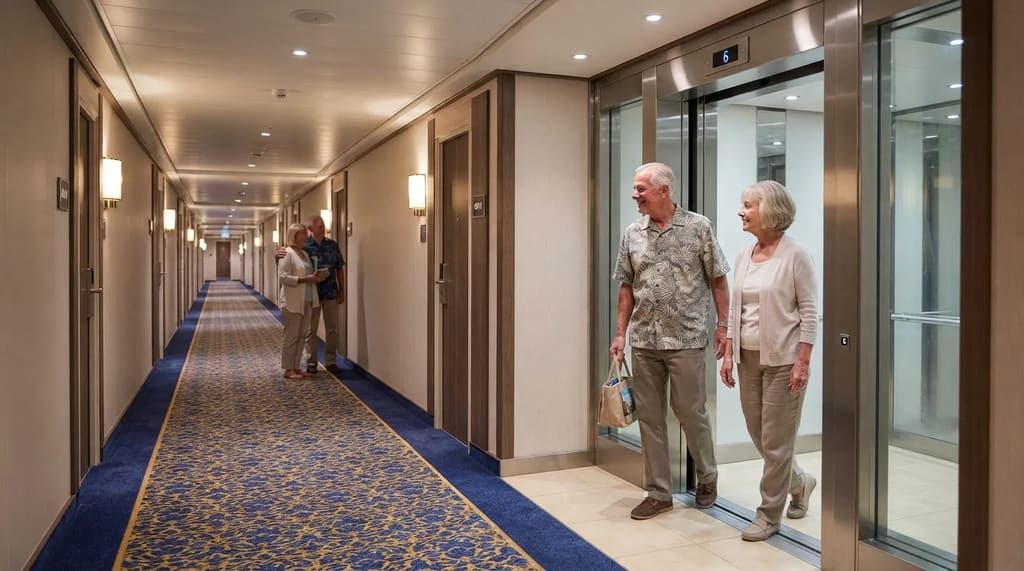
A room far from the elevators can be quiet but exhausting. Across a week, that hallway gets walked after every meal, show and port return.
Cruise Critic’s advice for travelers with limited mobility is to choose a cabin nearest the attractions that matter most to you, whether that’s the casino, the pool or the spa. Ask for the cabin closest to the places you’ll visit every day.
Rough seas raise the stakes. A swaying ship makes walking tough for anybody, and elevator waits after shows, dinner or port returns can be long for wheelchair and scooter users.
Quick Compare
- Quiet but far: a calmer hallway, but a long walk after every meal, show and port return
- Busy but close: more foot traffic, but a short trip to dining, the pool or the spa
- The tiebreaker: if walking is your harder problem, closeness wins
Here’s a verdict that cuts against #9: if walking is the harder problem, take the busier location. The cabin sandwich is worth little if the trip to dinner leaves you too tired to enjoy it.
Every request so far assumes you still have a choice. Once you’re aboard and the cabin turns out wrong, the question is who can fix it, and the answer isn’t a long list.
Related Stories From Travelbinger


#3 – A Real Problem Raised at Guest Services

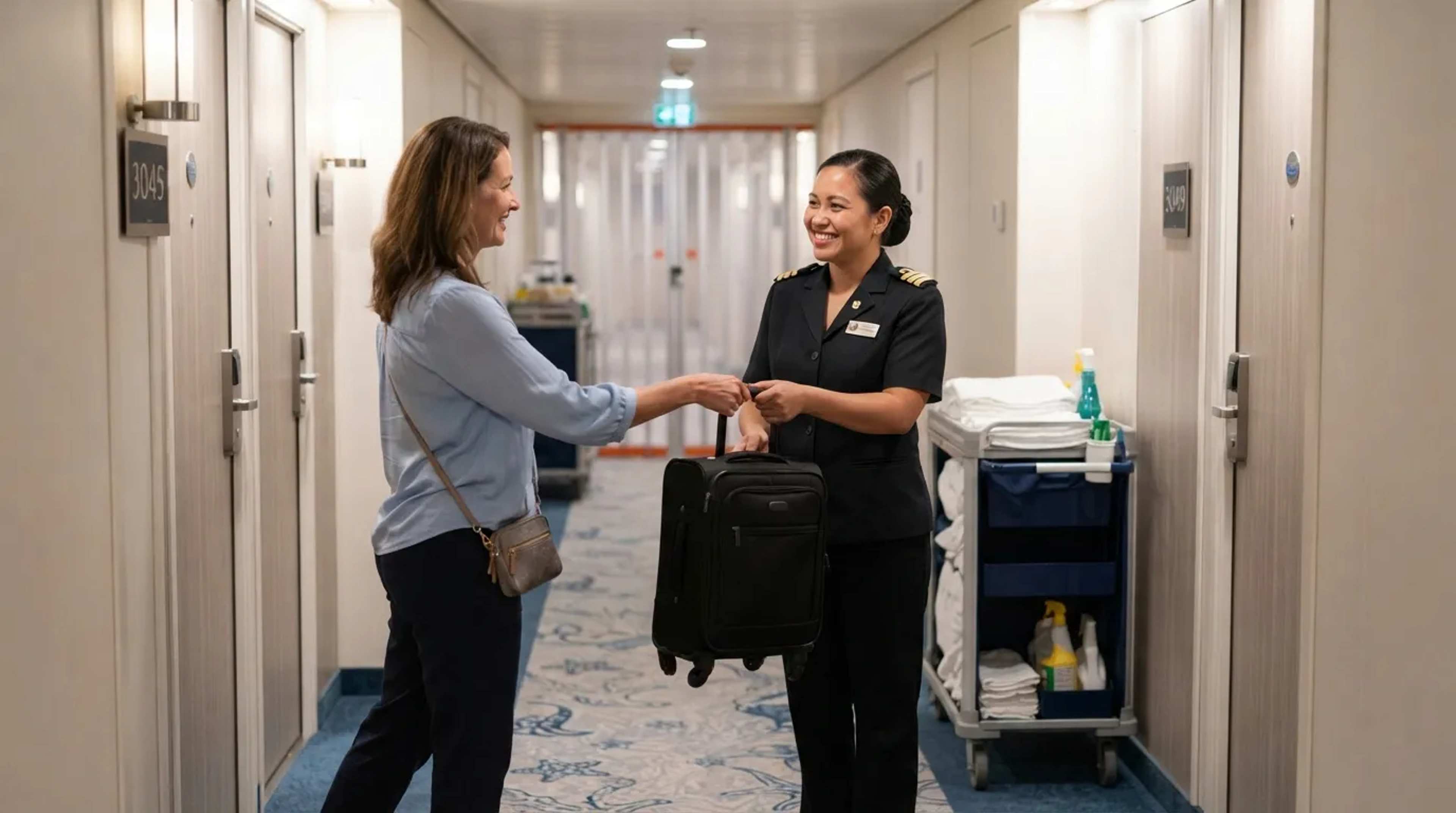
Cabin moves are decided aboard, not at the gangway. Guest services handles immediate requests, while hotel directors oversee cabin assignments and can approve bigger moves.
The odds are modest. Because ships sail full, it is very unlikely you’ll be able to change or upgrade your room onboard. If you still want to try, speak with them as soon as you get on board.
Go to Guest Services right after boarding, and only with a genuine problem. A leak, a broken air conditioner or a cabin that fails your accessibility needs gets a hearing, since cruise lines will intervene when comfort, safety or accessibility is compromised.5
Don’t spend embarkation afternoon in line asking for a nicer view. That request rarely works, and it uses up the goodwill you’ll want if something is truly wrong.
By then you’re working with whatever is left. The better window opened weeks earlier, while the ship still had rooms to trade.
#2 – A Change Request Made Before Final Payment

The closer to sailing you ask, the thinner the choices. Most ships sail completely full, so staterooms sell out in the weeks before the cruise.
You can still move before departure. It is possible to change your stateroom even after you’ve made your final payment, and your travel agent or the cruise line handles it. The best time to ask is as soon as you see your assignment and before final payment or embarkation.
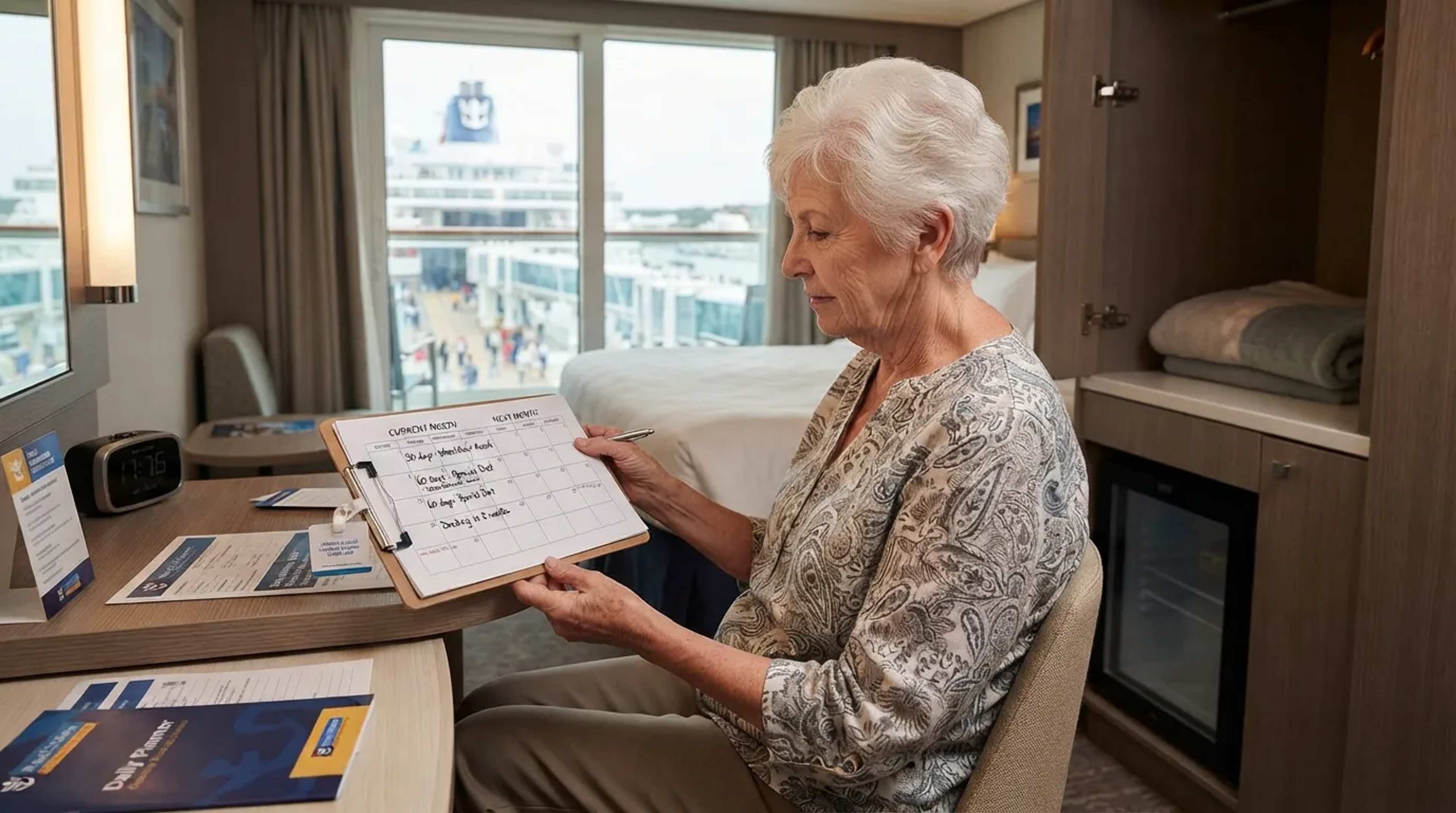
Ask for the change the day your cabin number appears. Make the request specific, and tie it to the reason you’re asking:
- Motion: a lower deck, near the middle
- Sleep: cabins above and below, clear of pool, theater and galley
- Walking: a few doors from an elevator
Even this early request is a second attempt. The first is made at the moment of booking, and it changes what you’re assigned in the first place.
#1 – The Exact Cabin Number, Not a Guarantee
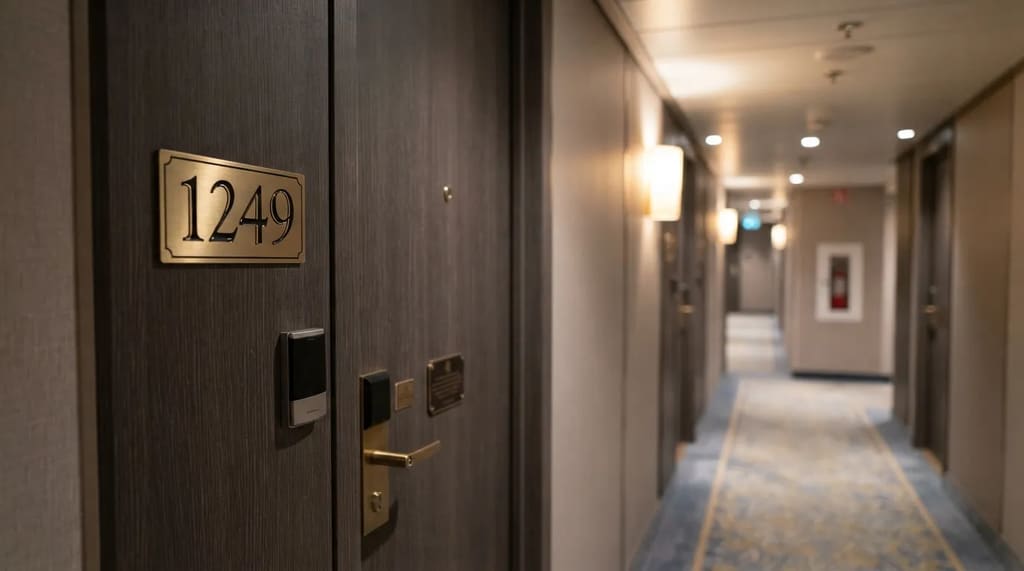
A guarantee fare means you tell the cruise line to pick any old cabin for you, as long as you get a deal. That’s the cheapest way to book and the least controlled, and every request on this list depends on the opposite.
The AAA travel manager quoted in #11 is blunt about it: if location is a priority, she doesn’t recommend guaranteed cabins at all. The reason is simple. A guarantee means you may be assigned any location, so you can request a preference, but you can’t choose a number.6
If location matters to you, pay to pick the exact cabin number. Only then can you check it against the bow, the pool deck, the theater, the galley, the crew doors, the connecting door and the elevator.6 7
My verdict: a guarantee only makes sense if you’d be content in any cabin on the ship. If you’re over 65 and care about sleep, steadiness or walking, the extra cost of choosing is cheaper than a week in the wrong spot. Ask your agent to price both, so you see the actual difference.
At a Glance
- Guarantee fare: the lowest price, but any location is possible
- Exact cabin number: you pick the spot and can check it against the deck plan
- Your preference: can be requested with a guarantee, but not promised
- Best fit if you’re over 65: choose the number when sleep, steadiness or walking matters
The pattern across all fifteen is timing. A cabin’s location is a paper decision made weeks before the pier, and every request gets harder once the ship is full and you’re standing at the desk.
Give the deck plan the attention you’d give a hotel room you’d be sleeping in for a week, and let the cabin number lead the conversation rather than the fare.
If you’ve sailed before, which caused you the most trouble in your cabin: the noise, the motion or the walk to the elevator?
- P&O Motion Cabin Guidance: https://mycruiseadvisor.co.uk/articles/best-cabin-location-on-cruise-ship-to-avoid-seasickness
- Cruise Critic Best Cabins: https://www.cruisecritic.com/articles/best-cabins-on-any-cruise-ship?posfrom=1&stay=1
- Quietest Cruise Cabins Guide: https://cruisingwithcrystalandmarshall.com/how-to-find-the-quietest-decks-cabins-on-a-cruise-ship/
- Accessible Cabins for Seniors: https://www.cruisebound.com/articles/best-cruises-for-seniors-with-mobility-issues
- Switching Cabins After Boarding: https://www.cruisebite.com/blog/can-i-switch-cabins-after-boarding
- Cruise Guarantee Cabin Facts: https://thecruisehq.com/what-is-a-cruise-guarantee-cabin/
- Points Guy Cabin Guarantee: https://thepointsguy.com/cruise/cruise-cabin-guarantee/