You’ve seen the person sprinting down the concourse, boarding pass in hand, while the gate agent shakes her head. That person didn’t break a rule. They just ran into a rule that was already waiting for them. Arrive genuinely early, and most of these rules never even show up.
Cutoff times, door deadlines, ID checks and packing limits look like fixed walls on paper. In real life, they behave very differently depending on when you walk in. Some of the entries below changed within the past year, and one of them isn’t a rule at all, even though almost everyone treats it like one.
#15 – The Gate Door That Closes While You’re Still in the Terminal
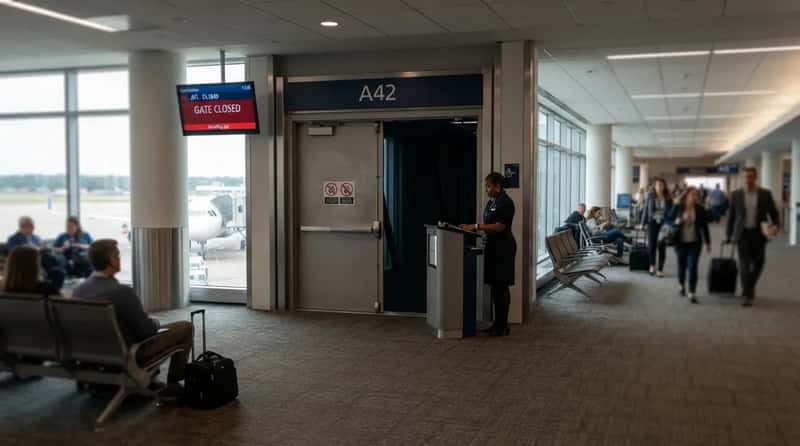
You can be inside the airport, boarding pass glowing on your phone, and still lose your seat. Most airlines close the boarding gate 15 to 20 minutes before scheduled departure, according to flight guidance site iFly. One airport’s airline listing says Delta’s aircraft door closes 15 minutes before departure. Once that door shuts, the pass on your phone is just a picture.
Early arrivers almost never meet this rule. They’re already sitting at the gate, watching the late group jog past with their jackets half on. The time printed on your ticket is when the plane leaves, not when you’re allowed to walk onto it.
But the next rule changed recently, and it caught carry-on-only flyers off guard…
#14 – The Carry-On Loophole That Quietly Closed at United
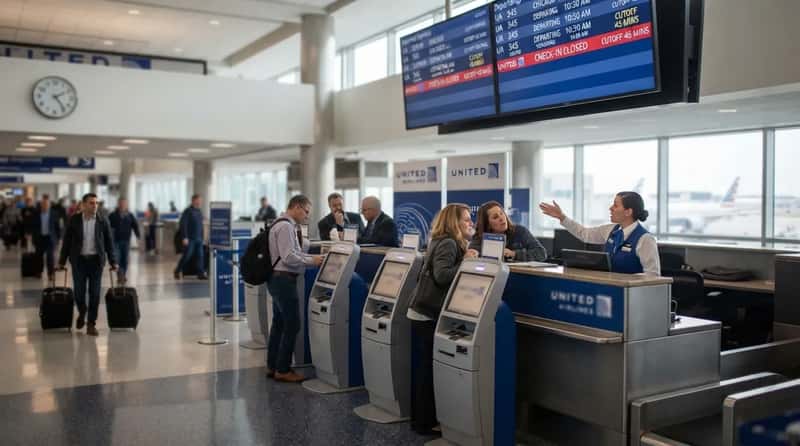
Packing light used to buy you extra minutes. For some travelers, it no longer does. Starting June 3, 2025, United passengers needed to check in for a domestic flight at least 45 minutes before departure, up from 30 minutes. The new cutoff applies whether or not you have checked bags, and The Associated Press flagged it as a warning to carry-on-only stragglers.
The consequences are real. Passengers who miss the cutoff can be denied the option to check bags or be forced to miss their flight. Early arrivers sail right past this rule without ever knowing it changed.
Fast Facts
- New United domestic check-in cutoff: 45 minutes before departure
- Previous cutoff: 30 minutes
- Effective date: June 3, 2025
- Applies with or without checked bags
And if you think the same number applies everywhere, the next entry will change your mind…
#13 – The Airports Where “45 Minutes” Is Actually a Trap

The standard cutoff isn’t standard everywhere. United lists a 90-minute check-in limit at St. Thomas in the U.S. Virgin Islands, the same as flights between Guam and Honolulu. American requires 90 minutes at both St. Croix and St. Thomas. Travelers who memorized “45 minutes” get burned in exactly these places.
Alaska has its own exceptions too. Travelers flying out of King Salmon or Dillingham need to check bags at least 60 minutes before departure. Anyone who arrives genuinely early clears every one of these thresholds without opening a single policy page.
International flights stack even more rules on top, as we’ll see next…
#12 – The International Deadlines That Start Earlier Than You’d Guess
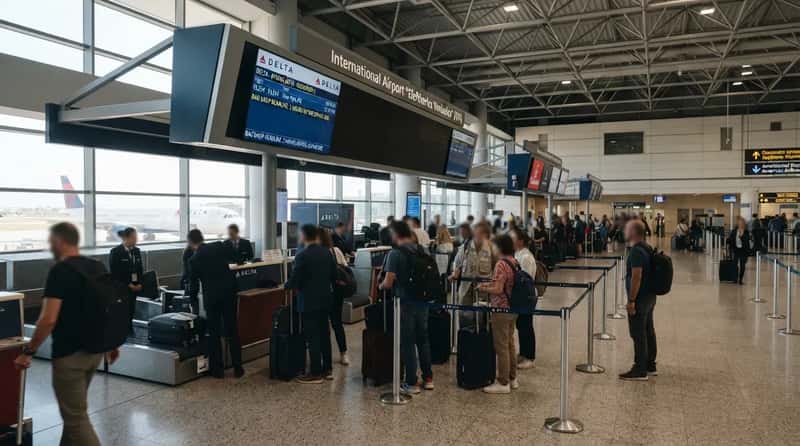
Flying abroad shifts the whole clock. American keeps a 45-minute domestic cutoff but asks for 60 minutes on international flights. Delta also requires 60 minutes for international departures. Some airports ask for far more.
Athens is one example, where Delta lists two hours for checked baggage at Athens International Airport. Online check-in can slam shut early as well. Emirates closes online check-in 90 minutes before departure, according to an AP-based roundup. Someone who arrives early never has to learn these numbers the hard way.
Quick Compare
- American: 45 minutes domestic, 60 minutes international
- Delta: 60 minutes international, two hours for checked bags in Athens
- Emirates: online check-in closes 90 minutes before departure
But the next rule survived for nearly two decades, then vanished…
#11 – The Shoes-Off Rule That Lasted Almost 19 Years
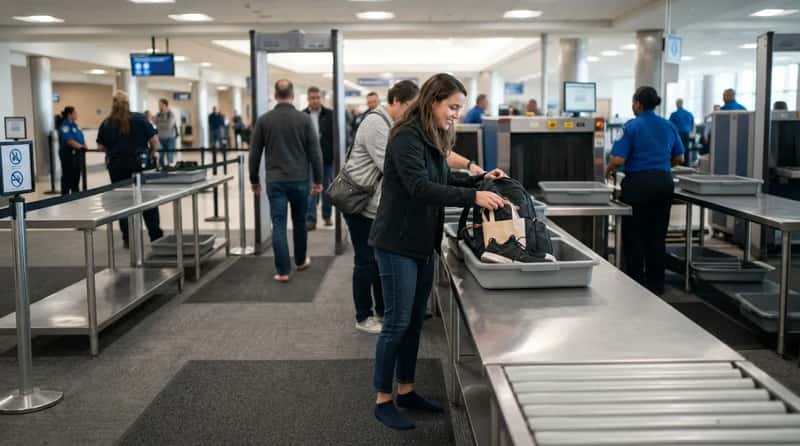
The most hated ritual in American air travel is now officially gone. The TSA ended its policy requiring most travelers to remove their shoes at checkpoints nationwide. The rule had been in place for nearly 19 years, and the change took effect July 8, 2025.
There’s a catch. If you set off a detector, your shoes alarm, or you’re picked for additional screening, an officer can still ask you to take them off. Someone with a comfortable cushion just laughs and slips them off. Someone with 20 minutes to boarding feels their stomach drop.
The next rule has tripped up more travelers than almost any other, and it’s still liquid…
#10 – The 3-1-1 Liquids Rule That Ruins Rushed Packers
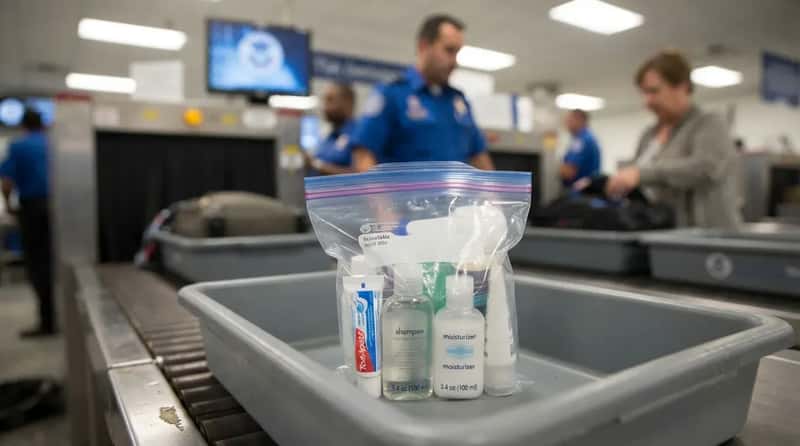
That tube of toothpaste is the villain in more checkpoint standoffs than you’d think. TSA says the most common item travelers bring to the checkpoint that isn’t permitted is liquids, gels and aerosols over the limit. Each passenger may carry containers of 3.4 ounces (100 ml) or smaller, as long as they fit in one quart-sized resealable bag.
A late arriver has to toss the oversized bottle or sprint back to check a bag. An early arriver has choices: repack, check the item, or ship it home. The rule is identical, but the cost of breaking it is completely different.
Next up is a screening layer that most domestic flyers never think about…
#9 – The Extra Screening Hiding Behind Certain International Flights
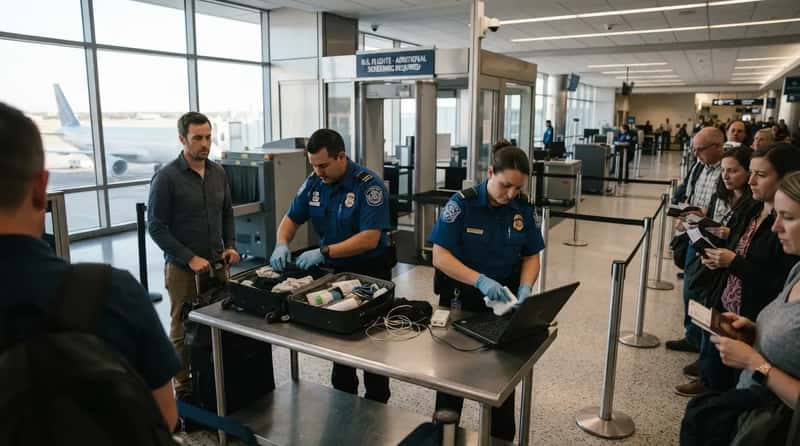
Some departures come with a longer checkpoint experience, and it’s spelled out in the TSA’s own guidance. Flights from last-point-of-departure airports into the U.S. may involve more extensive screening, including of property and personal electronic devices. That means extra bag checks and device checks before you ever see your gate.
The agency’s advice is blunt: arrive early to leave enough time for the screening process. A traveler with a real buffer treats this as a minor detour. A traveler cutting it close experiences it as a crisis.
The next rule gets enforced at the very first checkpoint, and it can change your whole morning…
#8 – The REAL ID Rule That Turns an ID Into a Time Sink
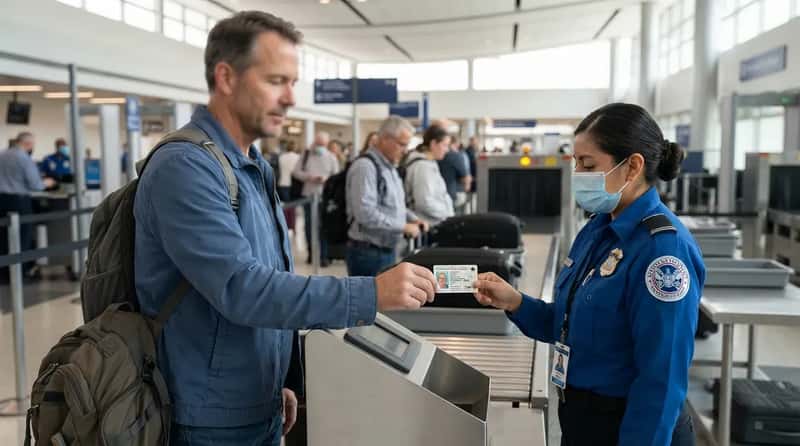
The REAL ID requirement took effect on May 7, 2025, and it means flyers need identification with a star in the upper right corner. That doesn’t mean everyone without one gets turned away. Passengers who can’t present a REAL ID are subject to extra screening.
Extra screening takes time, and time is exactly what late arrivers don’t have. Early flyers can sort it out calmly, and TSA publishes a list of more than a dozen acceptable alternative IDs online.
Then there’s the number that makes everyone feel smug about showing up late…
#7 – The “Average Wait” Statistic That Quietly Misleads Everyone
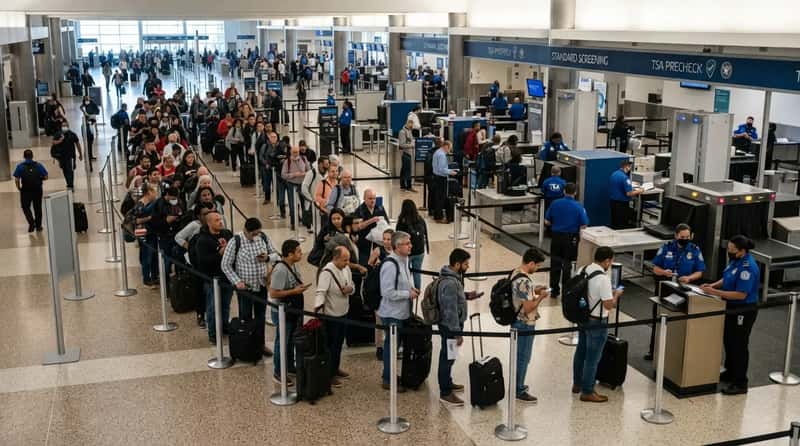
The average wait sounds wonderfully reassuring. A 2024 analysis of U.S. Customs and Border Protection data found TSA wait times were usually under 27 minutes on average. PreCheck’s average wait is under 10 minutes, according to the program.
But an average is not your wait. It hides the one bad morning when a lane closes or a scanner goes down. Some frequent flyers argue the usual two-hour advice is overkill, while others say it only takes one bad day to prove them wrong. Early arrivers are protected against the ugly tail of that average.
At a Glance
- Typical TSA wait: under 27 minutes on average (2024 analysis of CBP data)
- PreCheck average: under 10 minutes
- What averages hide: closed lanes, broken scanners and sudden surges
- Who gets hurt most: travelers with no buffer on the unlucky morning
Even small airports can’t escape the surge, as the next entry shows…
#6 – The Small-City Airport That Set a Record in a Single Day
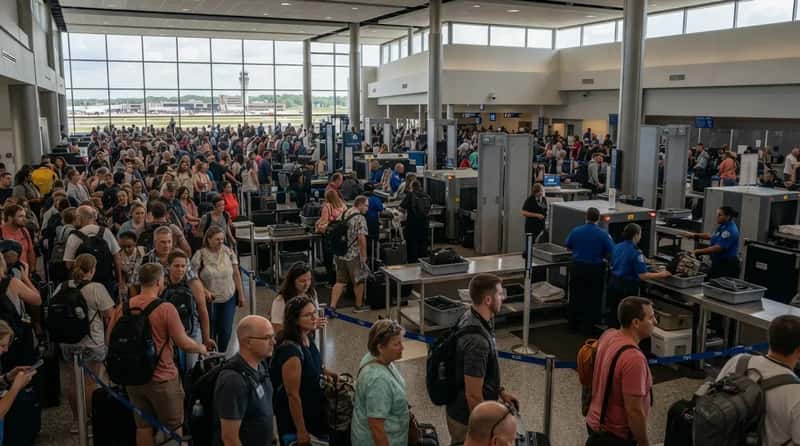
Big hubs get the headlines, but smaller airports get slammed too. TSA recorded the highest checkpoint volume ever at Gerald R. Ford International Airport in Grand Rapids on June 23, 2025. All of that airport’s top ten checkpoint volume days have occurred since December 2024.
This is a regional airport many travelers assume is easy. TSA’s response was familiar: it advised air travelers to arrive early and be ready for every step.
Now picture what happens when the whole country flies on the same day…
#5 – The Thanksgiving Sunday That Broke Every Record
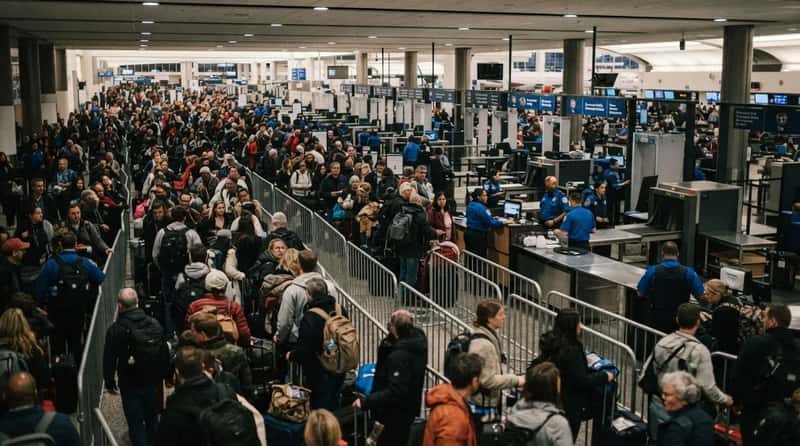
TSA screened 3.13 million people on the Sunday after Thanksgiving, a new single-day record. On a day like that, checkpoint rules feel stricter because there’s no slack left in the system. Early arrivers barely notice.
The trend keeps pointing up. TSA’s forecast, as reported in June 2026, expected a record 18.7 million travelers over the Fourth of July period, with the peak day projected to top 3 million passengers. When volume is that heavy, the extra hour you spent at the airport is the cheapest part of your trip.
So what does TSA itself say about arriving early? The answer isn’t what most people think…
#4 – The Two-Hour “Rule” That Is Actually Just Advice
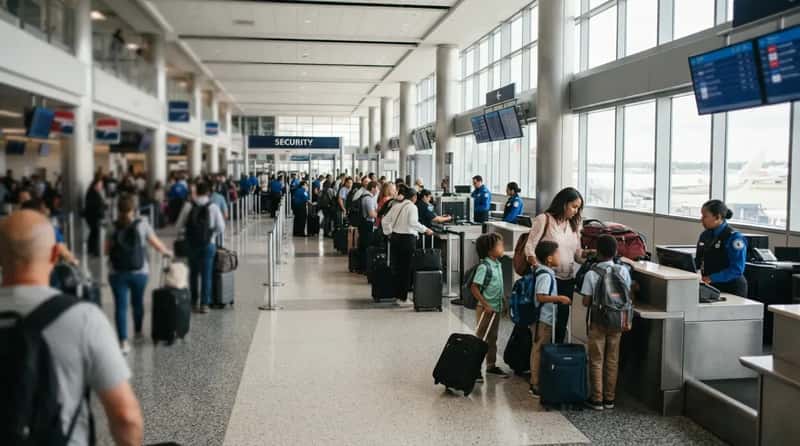
Here’s the truth most people miss. TSA advises arriving at least two hours before domestic flights and three hours before international flights. That’s guidance, not a law, and no officer is going to stop you for showing up at ninety minutes.
The airline’s cutoff is the real rule, and it’s usually far shorter. Critics say the two-hour advice is overly cautious at small airports. But it’s also the only number that covers parking, bag drop, security and a bathroom stop all at once. Early arrivers treat the advice as a buffer, not a deadline.
Then 2026 happened, and that buffer got a stress test…
#3 – The Funding Lapse That Turned Checkpoints Into Waiting Rooms
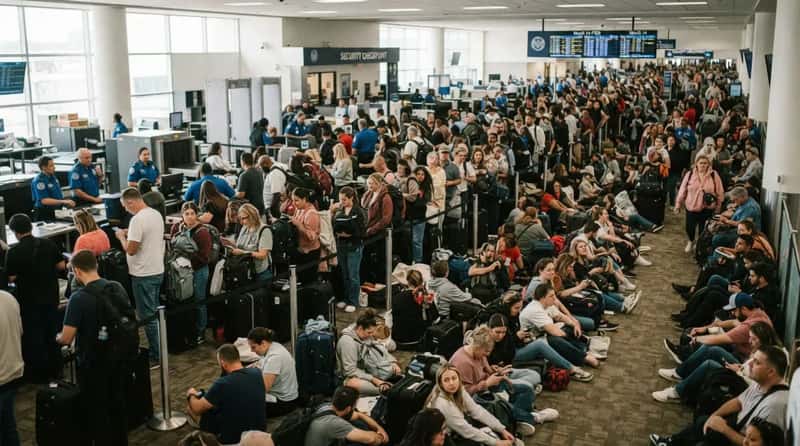
Early 2026 gave travelers a harsh lesson. One travel guide reports that Department of Homeland Security funding lapsed on February 13, 2026. By March 19, roughly 50,000 TSA screeners were working without a full paycheck.
Worth Knowing
- Funding lapse reported: February 13, 2026
- Screeners affected by March 19: roughly 50,000
- Some hubs reportedly advised arriving up to five hours early
- Houston Hobby, March 14: a five-hour buffer reportedly decided who made their flight
The guide also says some hubs advised arriving up to five hours before flights. These are secondhand reports, so treat the specific hours as examples, not rules. The pattern still holds: when the system strains, the early flyer is the one who boards.
Airlines can change their rules just as quietly, and almost nobody notices…
#2 – The Cutoff Times That Changed Without Fanfare
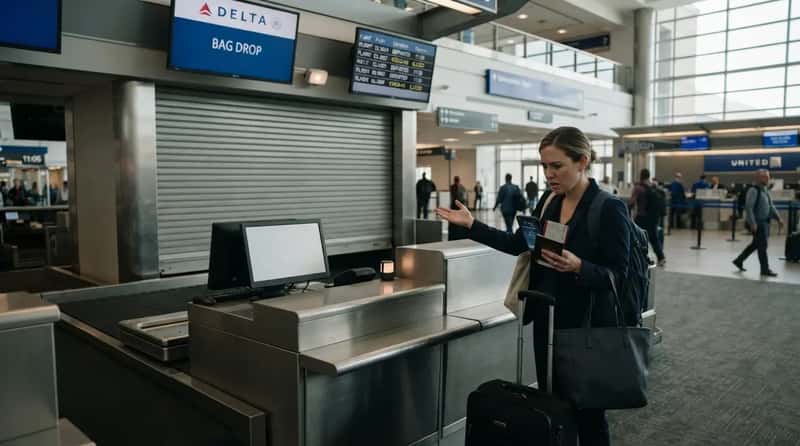
Airline policy isn’t carved in stone. Delta updated its minimum bag drop times, putting a 45-minute cutoff in place for most U.S. airports starting April 8, 2025. United followed with its June change for check-in.
Old information lingers online, and that’s the trap. One older airport listing still shows Delta with a strict 30-minute check-in. Anyone who trusted that number could have lost their bag or their seat, while early arrivers never needed to look.
But the most painful rule of all is the one that ends the story at the counter…
#1 – The Bag Counter That Closes While You’re Still in Line
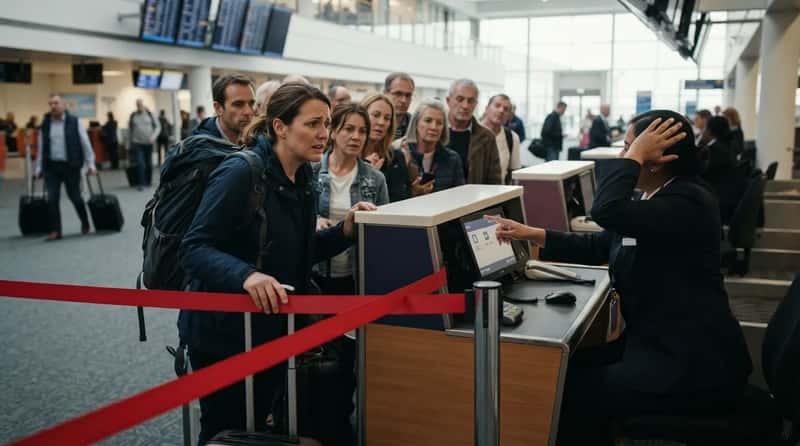
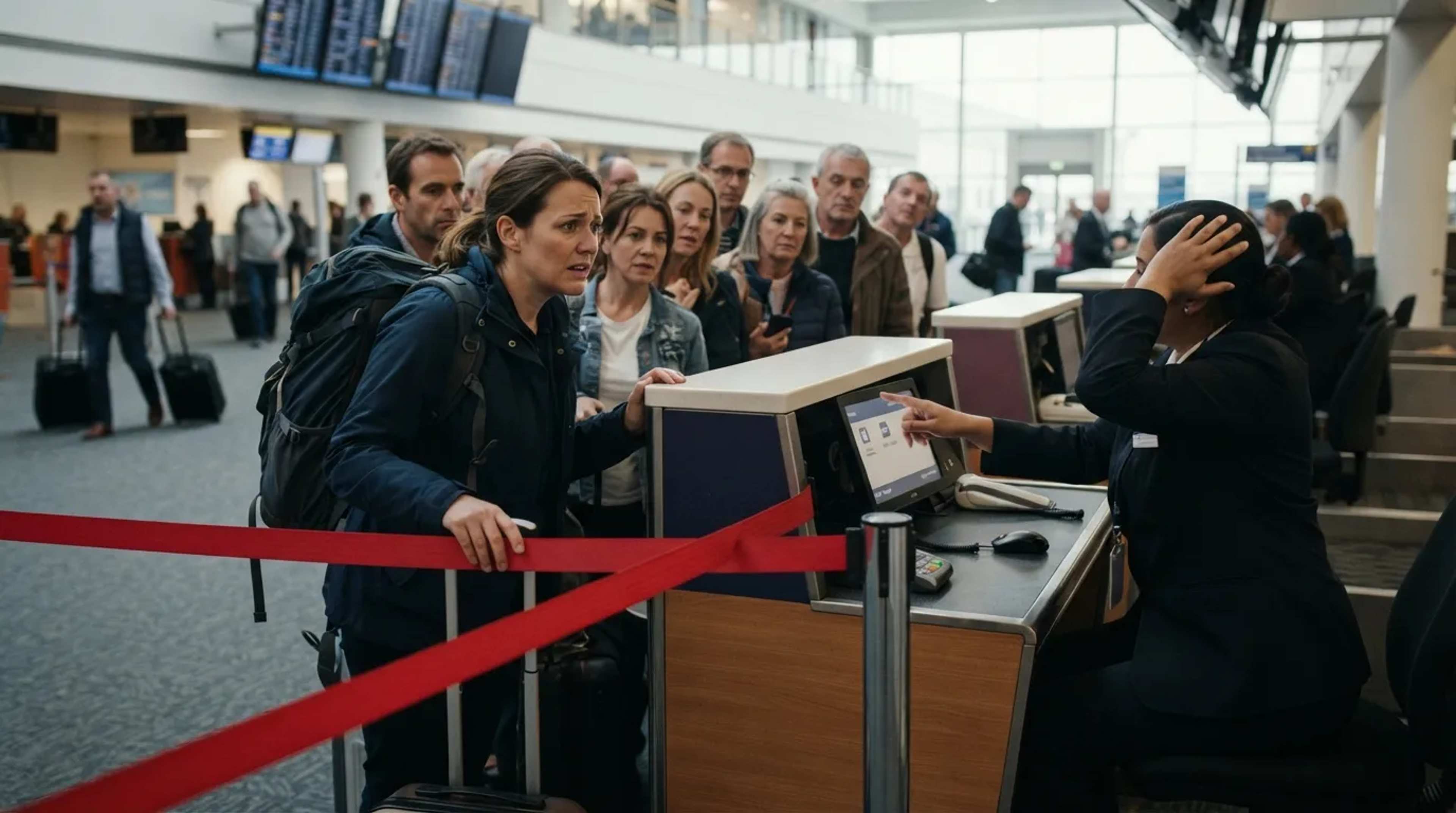
This is the rule that makes people cry in terminals. American’s listing says that if you’re in line less than 45 minutes before a domestic departure, you won’t be able to check in or check your bag. The cutoff is measured against the clock, not against how long you’ve already been standing there.
Some travelers swear exceptions get made. One frequent flyer on a forum said they’d never had an issue arriving at 45 minutes, while others warned not to count on it. Genuinely early travelers don’t need an exception, and that’s the whole secret.
That’s the pattern behind every rule on this list. Gate doors close, bag counters lock, ID checks eat extra minutes, and cutoffs quietly shift from airline to airline and airport to airport.
Early arrivers aren’t getting special treatment. They just show up before the rules start to matter.