You’ve been staring at seat 32E on your boarding pass like it was carved in stone. It usually isn’t. Gate agents and crew field seat requests all day, and a surprising number of them get a quiet “sure” when the ask comes at the right moment. This list covers the 15 seat changes that tend to work, counting down from the everyday fixes to the one almost nobody wants to refuse.
Some of these are so routine that agents barely blink. A couple are the opposite, with experts openly disagreeing about whether they work at all. And the single request that lands at #1 comes with a catch most travelers don’t know about.
#15 – The Same-Class Swap That Needs Zero Explanation
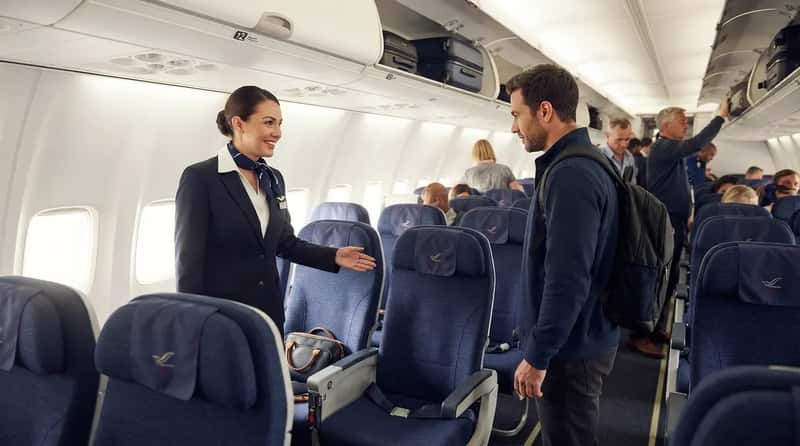
Moving to another seat in your own cabin is the most routine request there is. Airline guidance reported by Johnny Jet draws a clear line. A request to move into a different seat class gets a polite no unless there’s a service or regulatory conflict. A swap within the same class is a different story.
If a customer asks before the boarding door closes, the crew works with the gate agent to accommodate it. So the wording matters. “Can I move to another main cabin seat?” gets a yes far more often than “Can I have extra legroom?” One sounds like housekeeping, and the other sounds like a free upgrade.
#14 – The Middle Seat Escape That Agents Quietly Grant
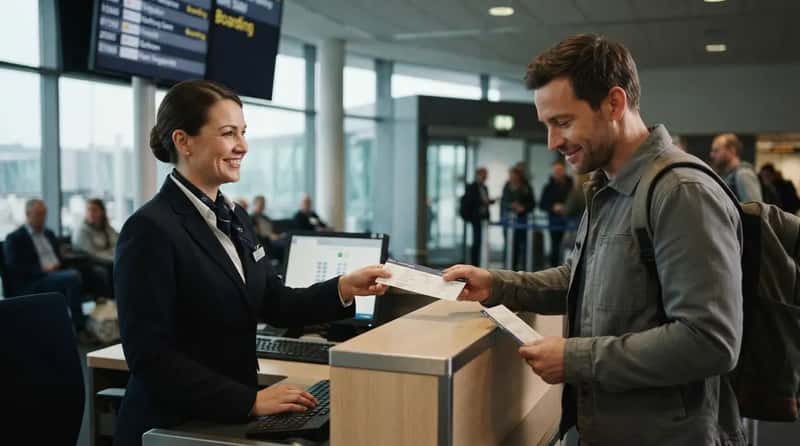
Nobody wants the middle seat, and the people behind the desk know it. Plenty of flights aren’t full, and the non-elite section often has a few middle seats left over. One frequent flyer on a travel forum said they get an aisle more often than not just by asking the gate agent politely.
Why does it work? Agents can often see the seat map long before passengers can, so they know which seats are truly open. The catch is that it works best on flights that aren’t packed. On a full flight, there’s simply nowhere to move you.
#13 – The Empty Row That Appears Right Before Boarding
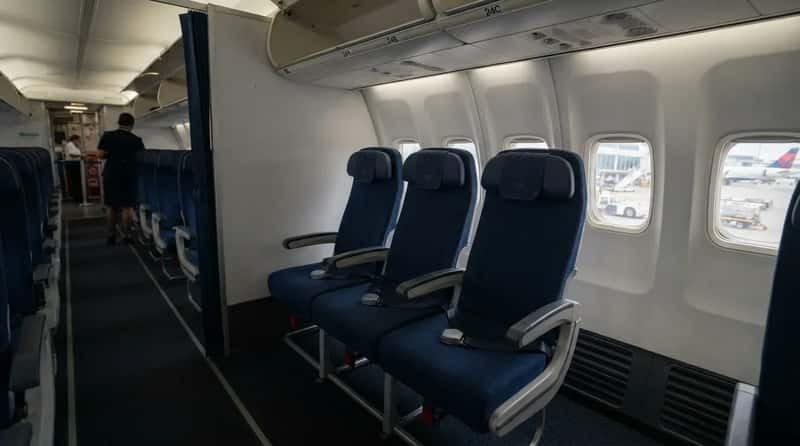
Some of the best seats on the plane open up after most passengers have stopped looking. As boarding approaches and no-shows become clear, agents can reassign the seats they were holding. Sometimes that means an entire empty row.
Travel-site accounts of agent practice suggest asking about 20 minutes before boarding. By then, the agent no longer has to protect that seat for a late elite flyer. It’s no guarantee, since fuller flights have fewer surprises, but a calm ask costs you nothing.
#12 – The Second Check-In Almost Nobody Bothers With
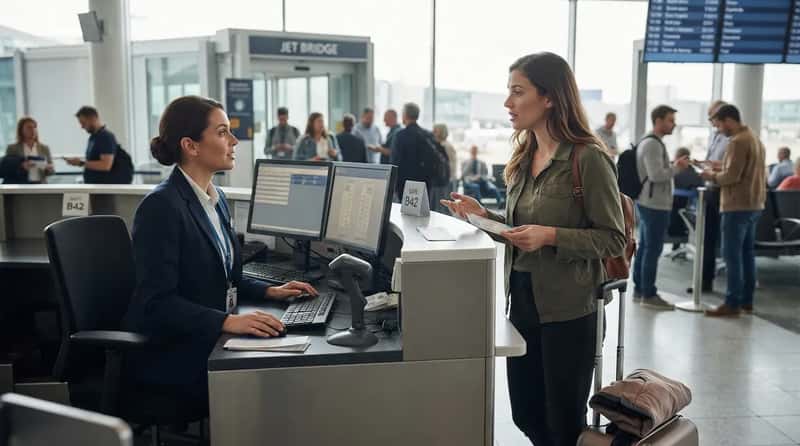
The answer you got an hour ago may already be out of date. An old NBC travel column explains why. An agent may tell you only middle seats are left, but misconnects happen, and good seats go empty while you’re stuck near the back. The writer’s advice was simple: check with the gate agent one last time before boarding.
That column is old, but the logic still holds, because seat maps keep shifting until the final minutes. The same piece adds one small warning. Moving seats doesn’t mean moving your bags first, because the writer watched people lose a great seat while relocating their luggage.
At a Glance
- The first answer isn’t final: seat maps keep changing until close to departure.
- The best moment: a calm, quick check with the gate agent before boarding starts.
- The classic mistake: hauling your bags to a new row before the seat is confirmed.
- The easy win: a second ask takes about ten seconds and costs nothing.
#11 – The Gate-Side Swap Before Anyone Gets Comfortable
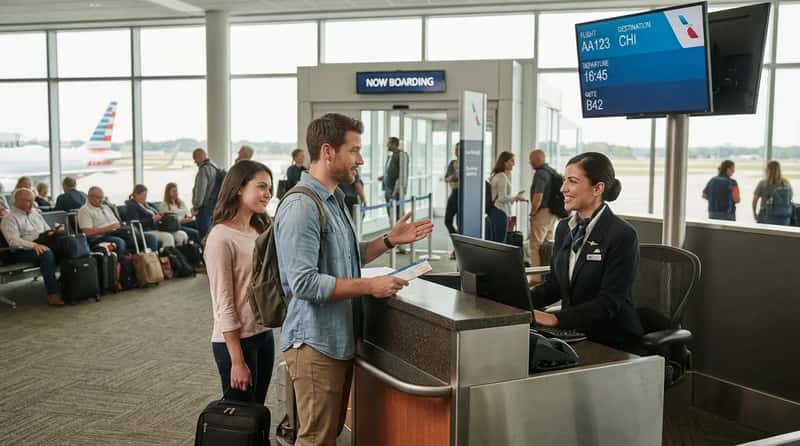
Once someone is sitting comfortably, your odds of a swap drop fast. The Points Guy makes this point bluntly. Gate agents are the final authority on seat assignments, and persuading a passenger to move after they’re settled with overhead space is much harder.
That’s why asking before boarding matters so much. A traveler still at the gate hasn’t stowed a bag or claimed an armrest, so they have less to lose. Frequent flyers disagree on etiquette. Some say a swap is only fair if the other person gains something, while others say any polite ask is fair game.
#10 – The Couple Who’d Secretly Love to Sit Together
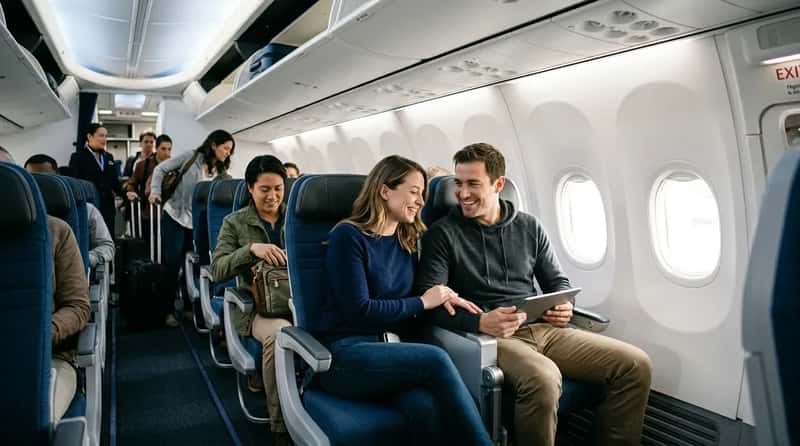
On a three-seat row, one pair is often hoping for something very specific. NBC’s old seat-switching guide points to the move. Look for a couple who booked the aisle and the window, hoping the middle stays empty. Many would rather sit side by side, which leaves you the aisle or window.
It’s a clean trade where everybody wins. They get each other, and you escape the middle. It doesn’t always go smoothly, though. The guide’s writer once ended up wedged between a couple in the middle of a fight, even though the move worked every other time. Do it at the gate or right at boarding, and always let the agent or crew approve it.
#9 – The Exit Row Seat You’re Allowed to Walk Away From
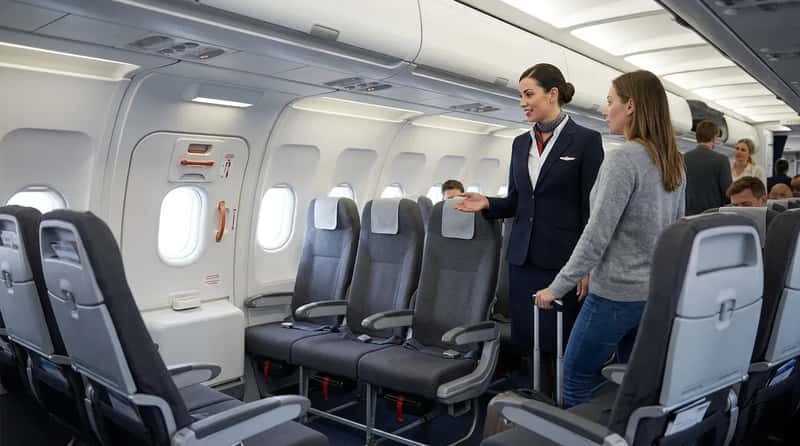
Crew won’t argue if you say you’re not up for exit row duty. Exit rows come with rules. Flight attendants must confirm that passengers are willing and able to help in an emergency, which means understanding instructions and being able to open the exit.
If that doesn’t sound like you, saying so is exactly what the process wants. Crew would rather move someone early than discover a problem mid-emergency. If a flight attendant decides you can’t operate the exit, you must give up the seat anyway, so asking first just saves everyone the awkward moment.
#8 – The Exit Row Myth About Disability
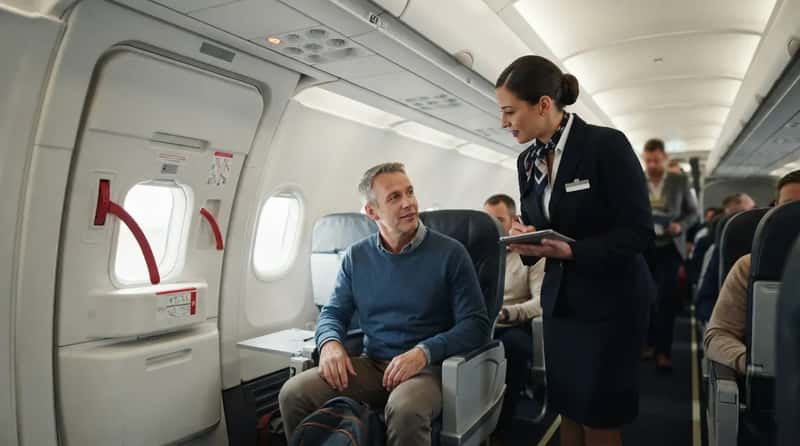
Many people assume a disability automatically rules out an exit row. It doesn’t. The FAA’s own advisory material says crew must assess the individual. A passenger with a disability who can perform the required functions can’t simply be turned away from that row.
The catch is that it’s a case-by-case call, and the crew makes it on the spot. That’s why asking before boarding, not at the seat, gives everyone time to sort it out. It also helps to explain what you can do, not just what you can’t.
Quick Compare
- What crew look at: whether you can perform the required tasks, not a label or a diagnosis.
- Usually fine: someone who can understand instructions, open the exit, and help others move.
- Usually a move: someone who can’t do those tasks, or who is traveling with a person who needs their help.
- Age rule: under FAA rules, exit row passengers generally must be at least 15.
#7 – The Seat Move Agents Expect When the Need Is Real
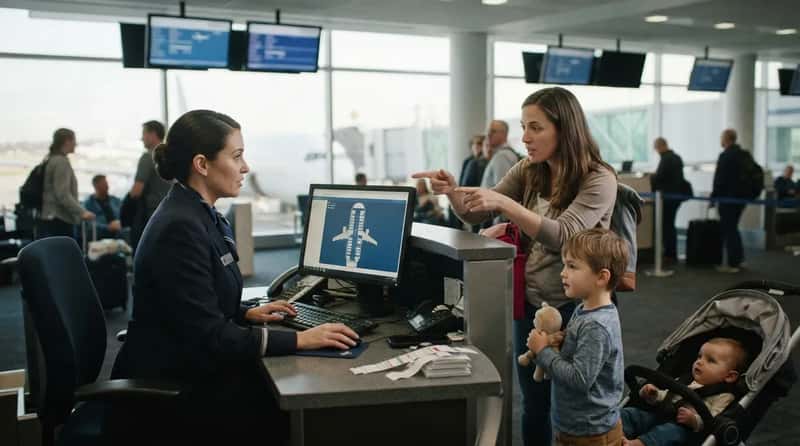
Agents have more freedom here than the seat map suggests. Seat maps are sold as fixed inventory, yet gate agents keep real authority to move people once boarding starts. That discretion covers things like families, customers with special needs, and balancing the aircraft.
So a request tied to mobility, a medical need, or a hard-to-manage situation is the kind of ask agents see all the time. Mention the need briefly and clearly, and do it at the gate, not at the door of the plane. Asking before the line forms gives the agent time to check options.
#6 – The “Sold Out” Seats Airlines Hold Back Until the Last Minute
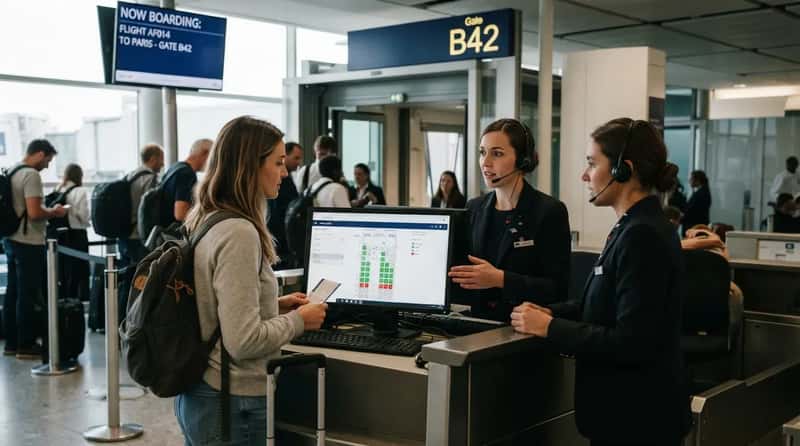
Some of the better seats aren’t actually gone. NBC’s guide notes that some of the best seats are held until the day of departure, so showing up early could be your best shot. That’s how a flight that looked packed online can still have good options at the airport.
It also helps to know the booking pattern. Flights often fill from the back to the front, which can leave better rows open near the front. Some travelers swear by arriving early for this reason alone, and others say app checks are enough. Either way, your odds improve if you ask before boarding begins.
#5 – The “I’ll Give Up My Seat” Goodwill Play
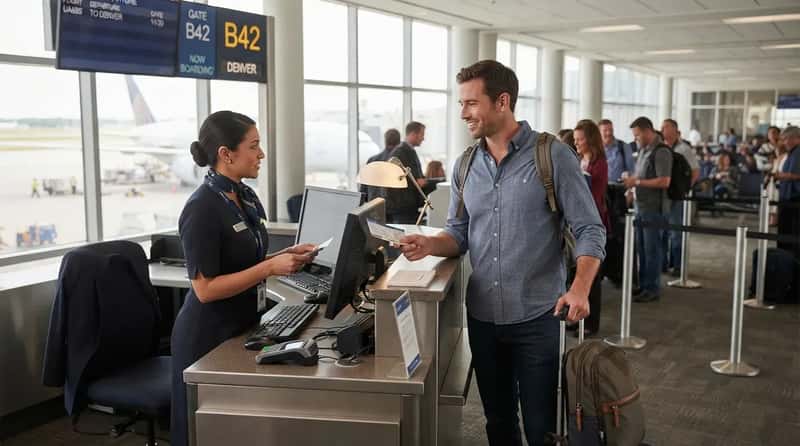
Offering to help the airline can quietly help you. NBC’s guide has this tip. If you can, offer your seat when the desk asks for volunteers to take another flight. If they end up not needing it, the gate agent is more likely to respond to your seat request.
Worth Knowing
- It’s goodwill, not policy: no airline promises a better seat in return.
- It only applies when the desk is asking: typically on an oversold flight.
- Stay close to the desk: agents remember the friendly face who made their job easier.
- Know the rebooking details first: ask about the new departure time before you commit.
It’s not a formal rule, just goodwill. Agents juggling an oversold flight tend to remember who made their job easier. Of course, volunteering only makes sense if your plans are flexible, and for a traveler with a meeting at the other end it’s a very different trade.
#4 – The Wrong Seat on Your Boarding Pass
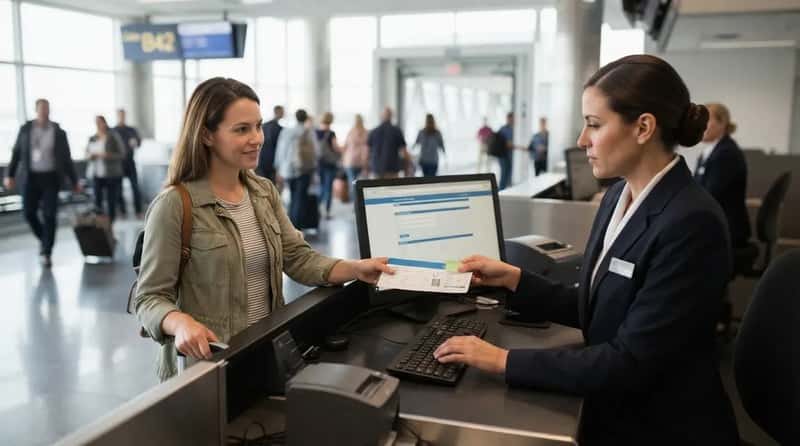
A boarding pass mistake looks like a disaster. It usually isn’t. Travel Binger reports that gate agents can reissue a corrected pass right away instead of sending travelers back through security. That covers a wrong seat number, as well as misspelled names and printer glitches.
Because it’s an error rather than a favor, it’s one of the easiest requests to get approved. Check the seat on your pass before you walk to the gate, and bring any mismatch to the agent right away. Most people don’t realize this is a normal part of the job, and agents fix these constantly.
#3 – The Paid Seat That Some Say Is Free at the Gate
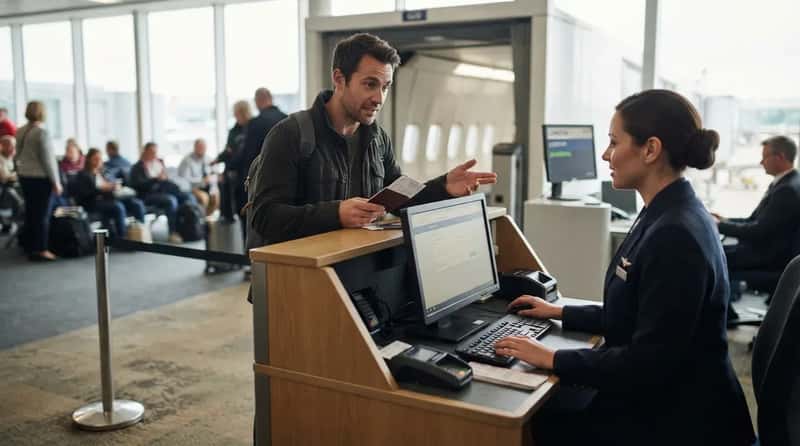
Here’s where the experts truly disagree. Some travel sites say agents can assign new seats at no charge, even ones that were blocked earlier or carried a fee. In theory, a seat quoted at $40 online could become free at the podium.
Others are much more cautious. One frequent flyer on a forum argued it isn’t fair if the seat would have cost extra before boarding, such as extra legroom or an exit row. The truth is probably in the middle, since rules vary by airline, fare, and flight. Walking up expecting a free paid seat is the quickest way to hear “no.”
#2 – The Basic Economy Split That Agents Hate Too
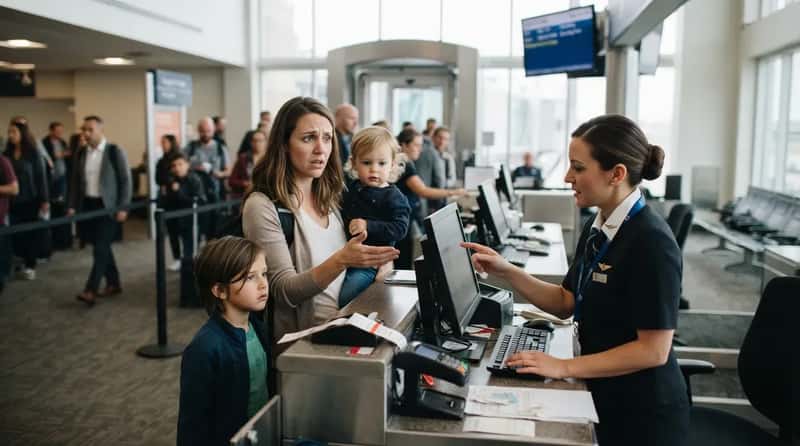
Nobody on the airline side enjoys seeing a family scattered across the cabin. Basic Economy fares on most carriers assign seats at check-in, which often separates families. It’s a common pain point at the gate, and agents see it every day.
Travel Binger’s reporting says agents have flexibility here. A polite request before boarding often gets a quick swap, since agents can rearrange assignments until the doors close. It’s easier when the family is on one reservation and arrives early enough to talk to the agent calmly before boarding starts.
#1 – The Child Next to a Parent, Where “No” Is Rare
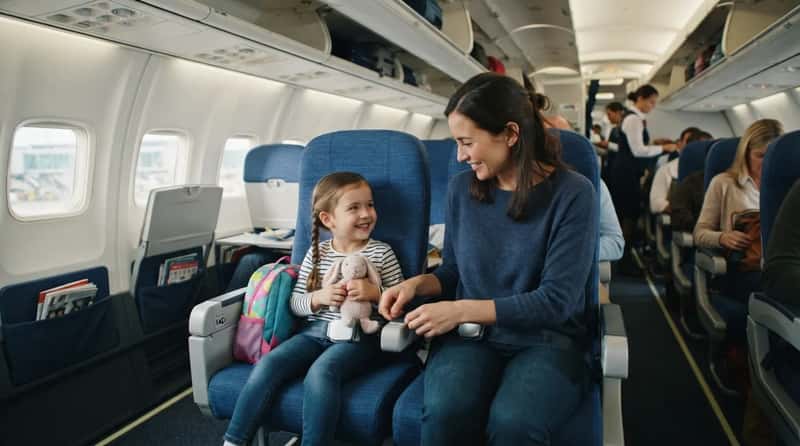
This is the request almost nobody wants to refuse. Parents of young children tend to have the strongest case. Most agents would rather quietly solve it than watch an anxious child sit ten rows from a parent.
Airline policies differ. Some carriers, including Alaska, Frontier, and JetBlue, have publicly committed to seating young children next to an adult at no extra charge when seats are available. Others, including Delta and United, promise only a “best effort.” And no federal law requires free family seating. A rule proposed in 2024 to ban family seating fees was never finalized, so at the gate it often comes down to a person helping a person.
The biggest surprise isn’t any one seat. It’s how much depends on when and how you ask. Same-class swaps, middle-to-aisle moves, empty rows, and fixes for errors are routine, and children next to parents may be the closest thing to a guaranteed yes. Paid seats and exit rules are where hopes tend to collide with the rules.
Most of the wins happen before boarding, while the agent still has options and nobody is settled in. The seat on your pass may look final, but a polite question at the gate has changed more than a few flights.