Airline marketing has focused on lie-flat suites and recliners, which are the most profitable seats on many planes. Behind the premium cabins, though, carriers are testing features that could make coach more tolerable. The Points Guy [1] has outlined several of these changes, which do not widen seats or add legroom but aim to make a budget ticket more comfortable on long flights. ([1])
Wi-Fi that works, often at no extra cost
Onboard internet has long frustrated travelers who paid a fee for a connection that dropped frequently. That pattern is starting to change. Most large U.S. carriers either offer free internet to loyalty program members or plan to do so, and many are preparing to install Starlink, the satellite service widely viewed as the fastest in-flight Wi-Fi available today.
For frequent flyers, the practical result is simple. Staying connected on a cross-country trip may soon require no separate purchase, and the days of losing service mid-flight appear to be ending.
Better sleep and more snack options
Anyone who has slept upright in coach knows the toll it can take on the neck. Emirates introduced a headrest this year with side wings designed to cradle the head, a feature aimed at passengers on overnight routes. It is most likely to matter on long journeys, such as flights from the United States to Dubai.
Food service is also moving toward the cabin’s open spaces. Walk-up snack bars are appearing on some commercial aircraft, giving passengers a place to stretch their legs and buy something to eat mid-flight. United placed one in the last row of its new Airbus A321XLR, a single-aisle jet that the airline is using on long-haul routes. JetBlue has operated a snack pantry on its long-range planes for years, and several other U.S. carriers have announced plans to add similar bars.
Couches and bunks, at a price
Some airlines are testing ways to turn coach seats into something closer to a bed, though passengers will pay for the privilege. United plans to debut its “Relax Row” on some long-haul flights next year. The paid add-on converts three economy seats into a single bed, and the airline has presented it as a practical option for families traveling together. Air New Zealand has offered a similar “Skycouch” on its long transpacific flights for years.
Air New Zealand is also developing a more unusual option called “Skynest.” The concept includes two sets of bunk beds stacked three high, with a ladder to reach the upper level. Passengers would be able to book a four-hour nap for an additional $495. It is not business class, but for travelers whose main goal is sleep on a flight from the United States to New Zealand, the company’s pitch may appeal to some.
More room to move and new ways to be entertained
Qantas is preparing its “Project Sunrise” service, which is scheduled to begin in October 2027 with flights from Sydney to London. The airline has also described a “well-being zone” on its Airbus A350-1000 aircraft, where passengers can walk, stretch and perform some exercises. The space is designed for flights that will last nearly a full day in the air.
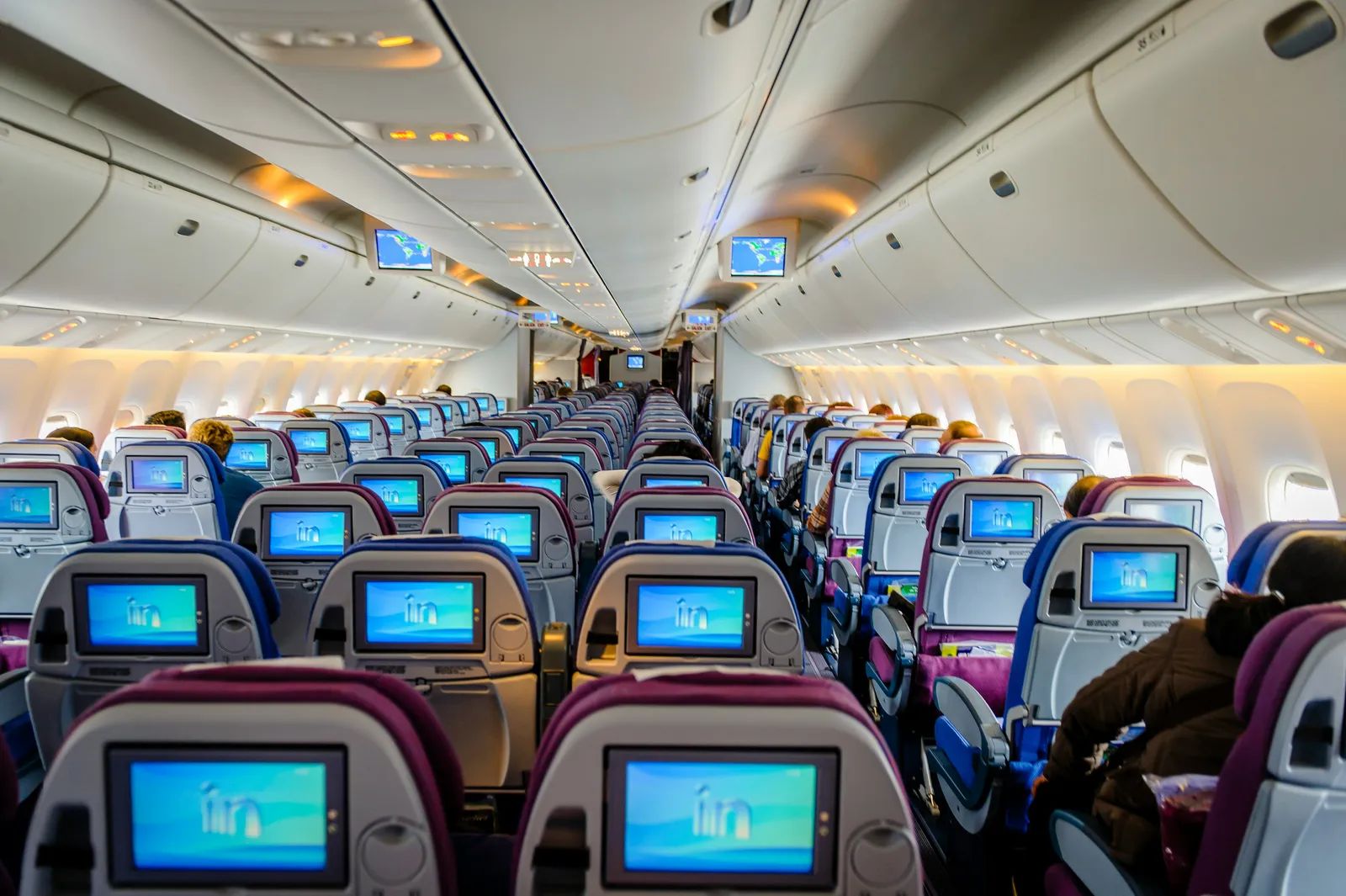
Entertainment is evolving as well. Seatback screens are already standard on United, Delta Air Lines and JetBlue, and those carriers are now adding features that let passengers connect their own wireless headphones. United has equipped many of its seatback devices with Bluetooth pairing, and it has partnered with Spotify so passengers can stream music from their accounts. Delta has added YouTube content and is preparing new screens. American, which removed seatback screens from its planes years ago, is returning to them, although the rollout will take time.
Related Stories From Travelbinger


Economy is not turning into premium cabin, but the gap in everyday comfort is narrowing. Many of these features remain in development, so timing and availability will vary by airline and aircraft.
For travelers planning their next booking, the most useful step may be checking which aircraft and cabin features each airline has confirmed for a specific route. Several of these upgrades are still on the drawing board, but the direction is clear. The cheapest seat on the plane is starting to offer more than it used to.