Most people assume the best American vacations happen in cities with skylines and reservations booked six months out. Travelers over 60 keep proving that theory wrong, one slow afternoon at a time. They’re trading crowded airports for towns where the waitress remembers your coffee order and the biggest traffic jam is a tractor.
What’s driving this quiet migration isn’t nostalgia alone – it’s something closer to relief. Here’s what seasoned travelers actually say about the towns that made them cancel their return flights.
#15 – Prescott, Arizona: The Wild West Capital Nobody Expects
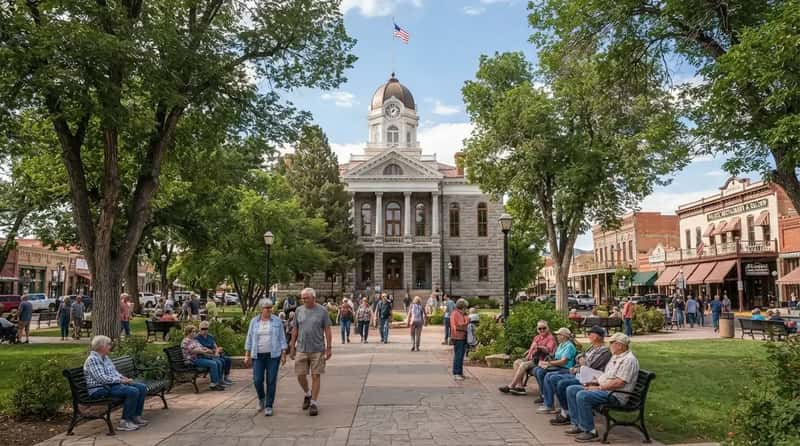
Most visitors think Arizona means Phoenix or the Grand Canyon, but Prescott quietly outshines both for slow, walkable charm. Founded in 1864 as the capital of the Arizona Territory and named after historian William H. Prescott, this Northern Arizona town isn’t playing dress-up. That territorial history isn’t a plaque on a wall – it’s baked into the whole downtown.
Prescott played a real role in shaping the Southwest during the rowdy territorial days of the Wild West era. Retirees over 60 gravitate here for the historic saloons and courthouse square that feel frozen in the 1880s. It’s a town that rewards wandering rather than checklists. But that unhurried pace is nothing compared to what’s waiting in a lakeside Ohio town most travelers have never heard of.
#14 – Port Clinton, Ohio: The Fishing Town Retirees Quietly Claimed
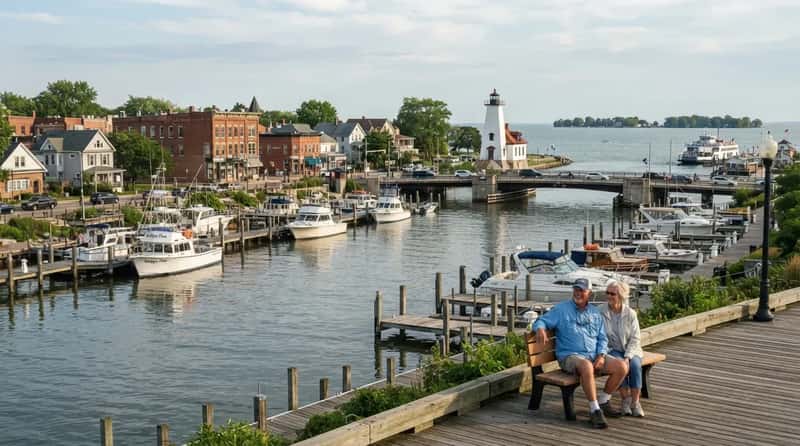
Nobody expects a walleye fishing town to become a retirement magnet, yet that’s exactly what happened here. Tucked at the mouth of the Portage River on the southern shores of Lake Erie, Port Clinton is affectionately known as the “Walleye Capital of the World,” pulling anglers from across the country to its rich waters.
This lakeside town of roughly 6,000 residents has a surprising share of retirees who came for the peaceful pace and stayed for the affordable living. The median home sale price sits around $309,000 – a bargain for lakefront real estate. Beyond the fishing, the Lake Erie Islands, including Put-in-Bay and Kelleys Island, are just a ferry ride away, and the African Safari Wildlife Park adds a family-friendly surprise. Still, that’s nothing compared to the baseball town that somehow has it all.
Fast Facts
- Population: roughly 6,000 residents
- Median home price: around $309,000
- Nickname: “Walleye Capital of the World”
- Ferry access to Put-in-Bay and Kelleys Island
#13 – Cooperstown, New York: More Than Just Baseball’s Hometown
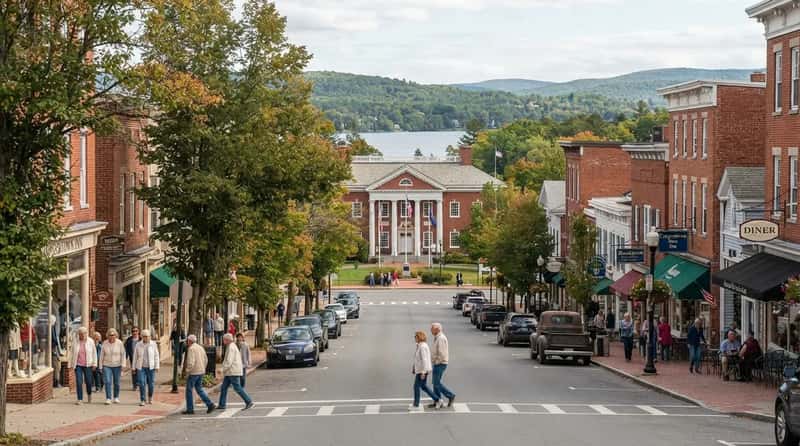
Most people write off Cooperstown as a one-attraction town for baseball fans, but longtime visitors know better. Few towns can say they have it all, but Cooperstown does – lake views, a full medical center, a genuine culinary scene, and the Baseball Hall of Fame all within walking distance of each other.
The real surprise is the real estate market. Home prices run higher than average, but as of early 2025 Cooperstown is technically a buyer’s market, thanks to a surplus in supply outpacing demand. That combination of scenery and small-town healthcare access is exactly what keeps older travelers coming back season after season. But a seaport in Connecticut has an even deeper hold on visitors’ hearts.
#12 – Mystic, Connecticut: The Seaport That Feels Frozen in Time
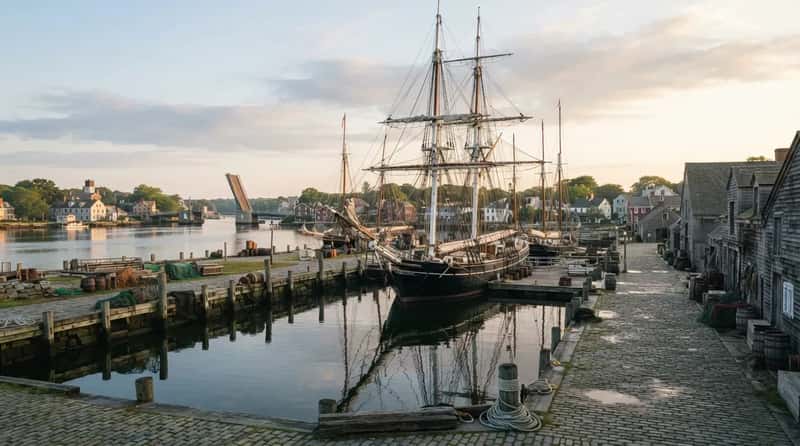
Travelers expect quaint here, but few expect just how much history is packed into one small seaport. Sitting along Connecticut’s southern coastline between Boston and New York City, Mystic overflows with history, art, and entertainment while somehow keeping its original colonial charm intact.
The town’s identity is still rooted entirely in the sea. Museums, art festivals, and historic landmarks all pay homage to its working-seaport origins, and that authenticity is exactly what separates it from manufactured tourist towns. Locals will tell you the best hours are early morning, before the day-trippers arrive from either coastal metropolis. That kind of quiet charm is nothing compared to the sunset views waiting on Alabama’s coast.
#11 – Fairhope, Alabama: The Artsy Bay Town Retirees Won’t Shut Up About
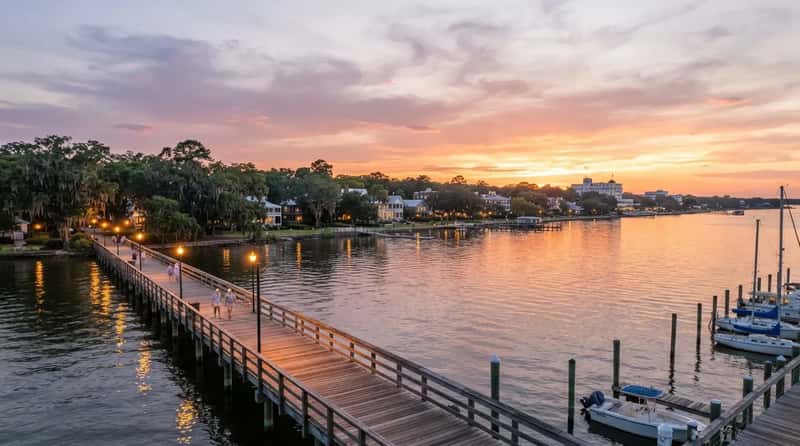
Most people don’t associate Alabama’s coastline with art galleries and unforgettable sunsets, but Fairhope changes that assumption fast. Set on Mobile Bay, its artsy downtown and walkable streets seem built specifically for slow evenings.
With homes averaging around $483,000, the town offers Southern charm, vibrant local galleries, excellent restaurants, and costs far lower than most coastal communities nationwide. That price tag is a fraction of what comparable bay views cost in Florida or the Carolinas. It’s a town built for lingering, not rushed itineraries. But nothing quite prepares you for a Bavarian village hiding in the Cascade Mountains.
#10 – Leavenworth, Washington: The Bavarian Village Hiding in the Cascades
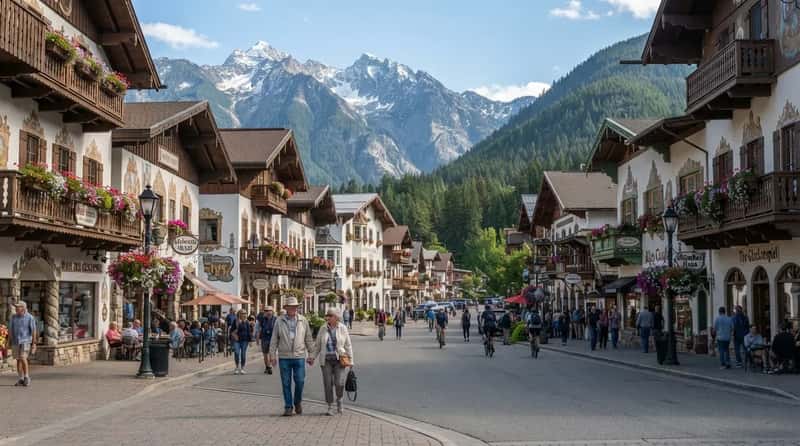
Most travelers assume they’d need a passport for architecture like this, but it’s tucked into the Pacific Northwest instead. Leavenworth’s alpine-style buildings, modeled after traditional Bavarian design, sit nestled in the Cascade Mountains where European charm meets genuine wilderness.
The visual effect is so complete that photos rarely capture it properly. Festivals and seasonal celebrations keep the town lively, while nearby forests and rivers turn a simple visit into an outdoor adventure. Retirees say it’s the rare theme town that actually improves with age instead of feeling gimmicky. That same alpine trick shows up again, oddly enough, deep in the American South.
Why It Stands Out
- Reinvented itself as a Bavarian-style village after its logging and rail economy collapsed in the 1960s
- Surrounded by the Cascade Mountains, with hiking and river access minutes from downtown
- Runs seasonal festivals nearly year-round, from Maifest to Christmas lighting
- Consistently ranked among the most photographed small towns in the Pacific Northwest
#9 – Helen, Georgia: The Bavarian Twist Nobody Sees Coming in Georgia
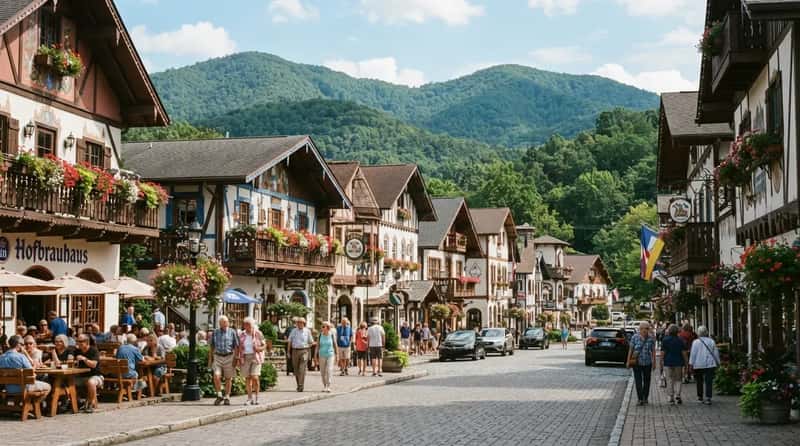
Here’s the twist most first-time visitors can’t believe: this isn’t Europe, it’s the Georgia mountains. This small southern town was intentionally designed to resemble a Bavarian alpine village, complete with colorful timber-frame buildings, cobblestone walkways, German bakeries, and beer gardens serving pretzels and sausages.
What most people don’t realize is that Helen wasn’t always like this. Nestled in the foothills of the Blue Ridge Mountains, the town was actually a struggling logging community before reinventing itself entirely in the late 1960s. That reinvention story is part of why locals feel so protective of the place. But a Maine coastal village proves reinvention isn’t always necessary when the original charm was never lost.
#8 – Camden, Maine: The Coastal Town That Skips the Crowds
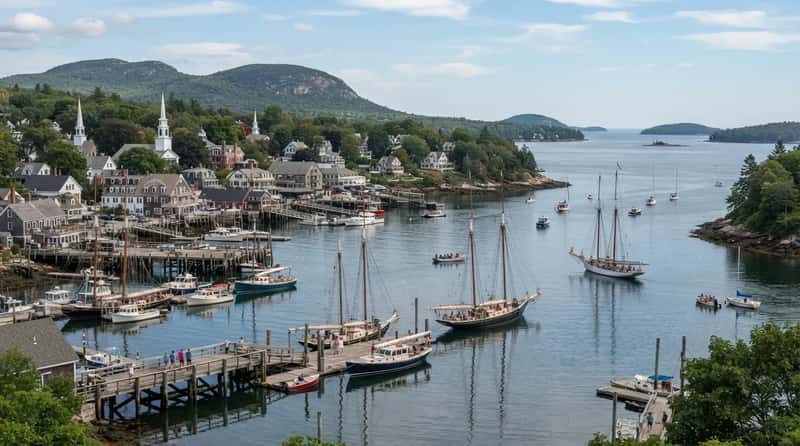
While most travelers rank Bar Harbor as Maine’s top coastal stop, longtime visitors now argue Camden is the smarter choice. This laid-back town sits on Penobscot Bay in Maine’s mid-coast region, offering nearly identical scenery with a fraction of the tourist traffic.
Locals consider it the deliberate alternative for people who want the views without the wait. Camden is regularly ranked among the most scenic small towns in America for its coastal beauty alone. Harbor cruises, working schooners, and quiet inns give it a rhythm that feels earned rather than manufactured. But an adobe town in New Mexico brings an entirely different kind of surprise.
#7 – Taos, New Mexico: Where a Bridge Steals the Spotlight from a Pueblo
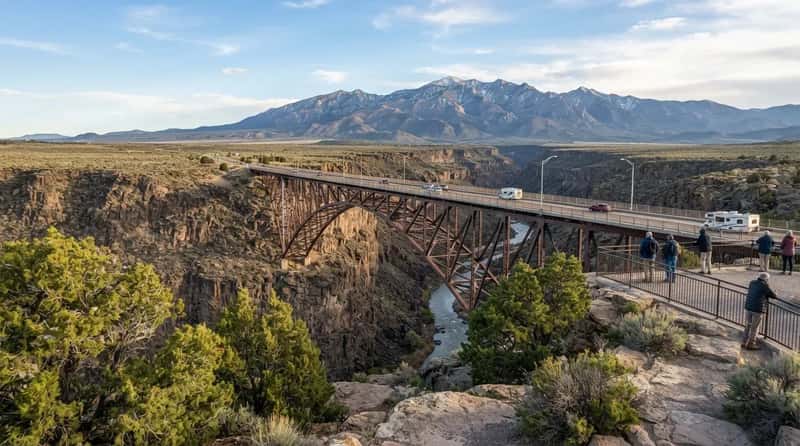
Most people come to Taos for the adobe architecture, then leave talking about something else entirely. Visitors flock here for Taos Pueblo, the only living Native American community with UNESCO World Heritage Site status, but the Rio Grande Gorge Bridge – the second highest bridge on America’s highway system – is what actually stops them in their tracks.
That bridge detail genuinely stuns first-time visitors. Taos’ historic district also hosts seasonal outdoor concerts and is packed with specialty shops and art galleries. The mix of ancient history and dramatic geography is nearly impossible to find anywhere else in the country. But nothing quite matches the culture shock of a Danish village hiding in Southern California.
#6 – Solvang, California: The Danish Village Hollywood Keeps Borrowing
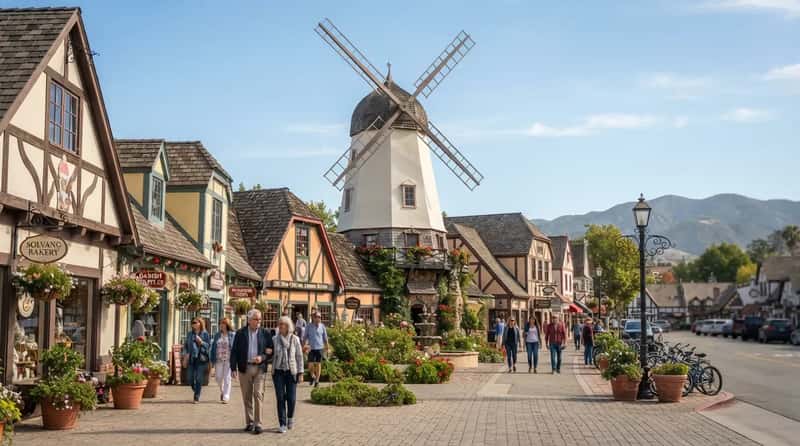
Most people assume they’ve stumbled into the wrong country when they first drive into Solvang. Its founders envisioned a colony where they could live the American dream while preserving Danish tradition, and the name – meaning “sunny field” in Danish – fits perfectly.
The town has quietly become a favorite backdrop for holiday movies, which only deepens its storybook reputation. Tucked in the Santa Ynez Valley about 40 minutes north of Santa Barbara, Solvang has appeared in numerous Hallmark Christmas movies and TV series. Windmills sit among shops built in Danish provincial style, and travelers line up at the Solvang Bakery for almond kringle before browsing the Hans Christian Andersen Museum. But that European fantasy is nothing compared to a river town built on lead, war, and Victorian brick.
#5 – Galena, Illinois: The Mining Town That Made a President
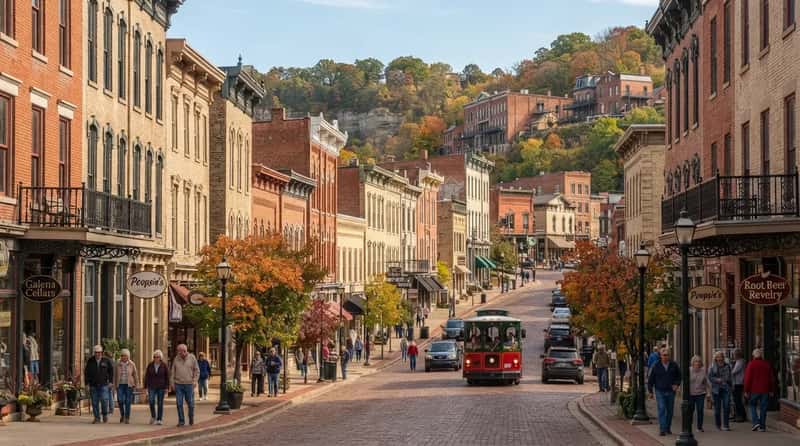
Most travelers don’t expect a former lead-mining town to look this polished, but Galena has aged better than most cities twice its size. Its Victorian architecture and odes to Ulysses S. Grant transport visitors straight to the 1800s, whether they’re shopping down Main Street, riding a narrated trolley, or touring Grant’s post-Civil War home.
The brickwork alone tells a story most visitors never expect. These buildings represent 19th-century commercial design at its finest, with cast-iron storefronts and decorative cornices that have weathered beautifully over 150 years. Set on the bluffs of the Mississippi River, Galena’s hilly landscape is a boon to skiers in winter and bikers in summer. But a lakeside Florida town flips the usual retirement script entirely.
At a Glance
- Once one of the busiest lead-mining ports on the Mississippi River
- Home to Ulysses S. Grant’s post-war residence, now a historic site
- Main Street lined with 19th-century cast-iron storefronts
- Nearby bluffs offer skiing in winter and biking trails in summer
#4 – Mount Dora, Florida: The Anti-Florida Florida Town
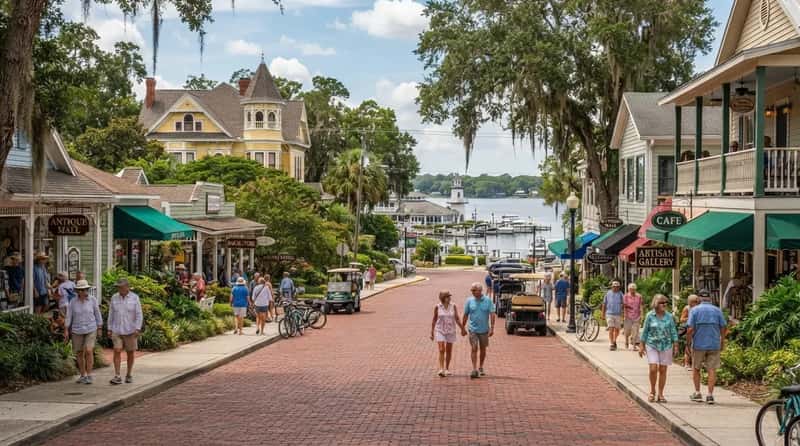
Most people picture Florida as beaches and theme parks, but Mount Dora deliberately rejects both. In place of crowded resorts and high-rises, it offers lakeside scenery, antique shops, historic architecture, and a slower old-Florida ambience that feels almost defiant.
That “old Florida” identity is exactly what keeps retirees returning year after year, long after the theme parks have lost their appeal. Visitors love the brick streets, boutique shops, bookstores, art galleries, and seafood festivals scattered throughout downtown. It’s proof that Florida’s small towns can outshine its beaches. But two coastal towns further up the map claim the strongest loyalty of all.
#3 – Beaufort, South Carolina: The Antebellum Town Movies Can’t Stop Filming
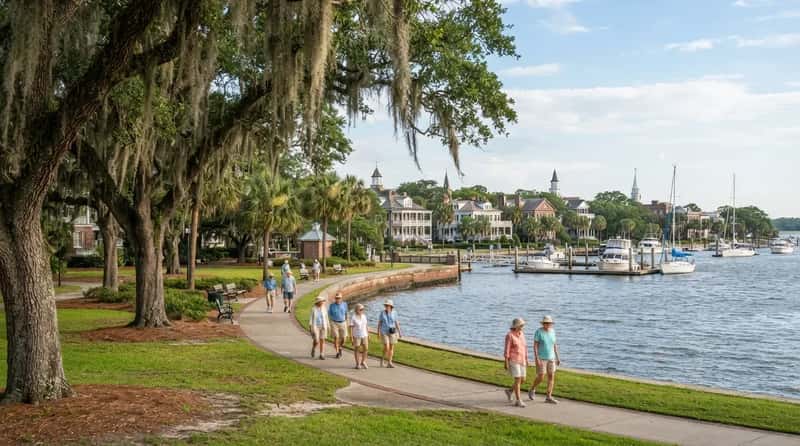
Most travelers assume they’ve seen this scenery in a film before – and they probably have. Moss-draped oak trees, elegant antebellum homes, and scenic waterfront parks make Beaufort one of the South’s most cinematic small towns.
The town rewards slow exploration far more than a checklist visit. Visitors wander the historic district, eat fresh seafood overlooking the marina, kayak through nearby waterways, or take guided boat tours past barrier islands. Longtime visitors insist the shoulder seasons are when the town truly shows its character. But a German-founded town in Texas Hill Country claims an even deeper following.
#2 – Fredericksburg, Texas: The German Town That Refuses to Fade
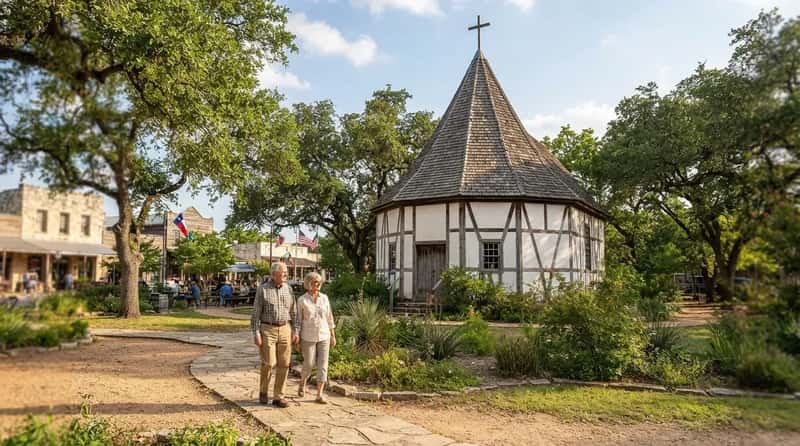
Most people don’t expect Bavarian beer gardens in the middle of Texas Hill Country, yet Fredericksburg has thrived on that contrast for generations. Founded by German immigrants in 1846, the town still carries a surprising duality between Texan and German culture.
What’s remarkable is how little that heritage has faded. The Pioneer Museum tells the story of the German farmers who originally settled here, and many of their descendants still live in town today. Fredericksburg has also quietly become one of America’s fastest-growing wine destinations, with dozens of wineries scattered through the surrounding countryside. But nothing prepares first-time visitors for the sheer emotional pull of one small Maine harbor town.
#1 – Bar Harbor, Maine: The Town Travelers Over 60 Refuse to Rank Second
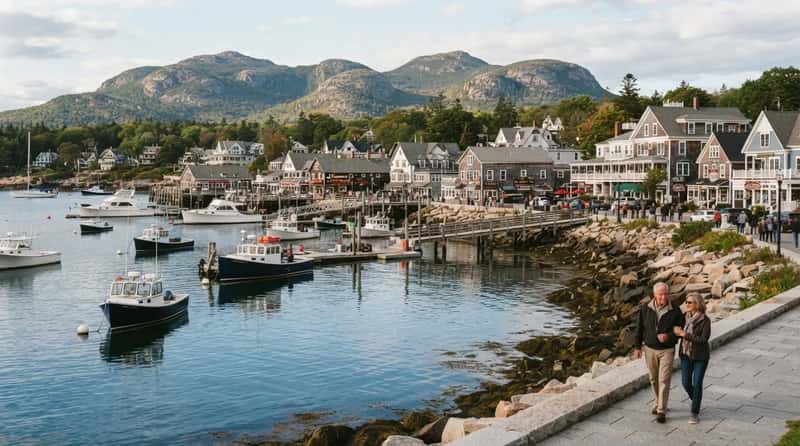
Most lists claim there’s a “best” small town in America, and almost every one of them lands on the same answer. Bar Harbor sits along Maine’s rocky shoreline near Acadia National Park, offering sweeping ocean views alongside easy access to forested trails, mountain peaks, and scenic roads.
The real secret is how the town balances two completely different paces in a single day. Visitors spend the morning hiking the mountains or walking coastal paths, then return downtown to shops and seafood restaurants, with maritime heritage and classic New England architecture making the whole place feel like a postcard – one lobster roll at a time. With cottage-style bed-and-breakfasts and a Main Street lined with galleries, Bar Harbor lets visitors join a boat tour, history tour, or simply stroll the Shore Path at their own pace. It’s the rare place where every generation agrees, and travelers over 60 consistently say it’s the one town they’d move to tomorrow if given the chance.
Worth Knowing
- Gateway town to Acadia National Park, one of the smallest yet most-visited national parks in the country
- Shore Path offers waterfront views without needing a car or a trail map
- Downtown mixes lobster shacks, art galleries, and historic sea captain’s homes within a few walkable blocks
- Popular with multi-generational family trips as well as solo retiree travelers
What ties all fifteen of these towns together isn’t luxury or size – it’s the feeling of being somewhere that hasn’t been optimized for speed. Retirees keep choosing walkable Main Streets, real conversations, and views that don’t require a reservation. Whether it’s a Bavarian village in Georgia or a seaport in Connecticut, the pull is the same: less rush, more presence.
Which of these towns matches your own idea of the perfect slow getaway? Drop your pick in the comments, or tell us which charming town we left off the list.