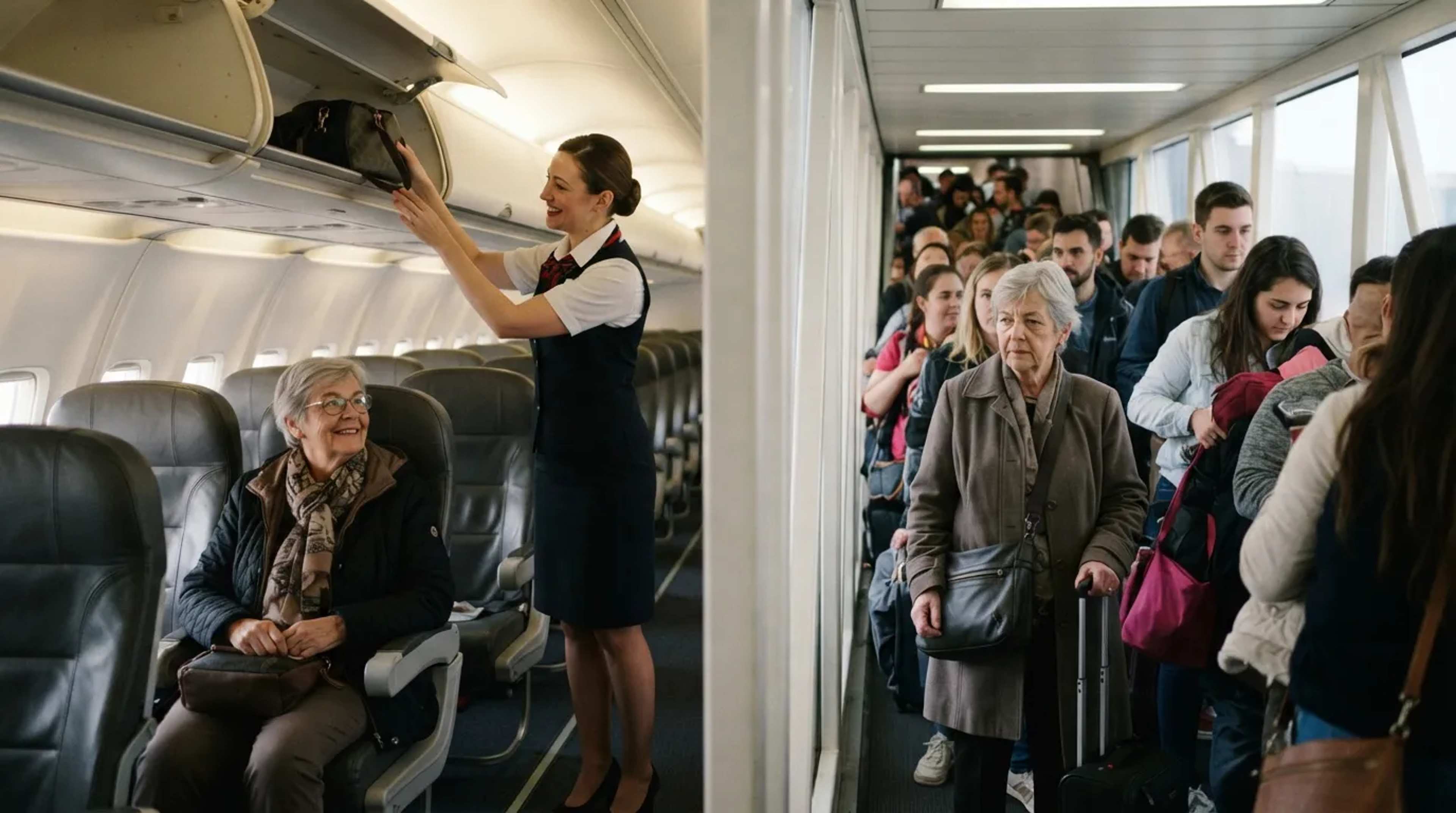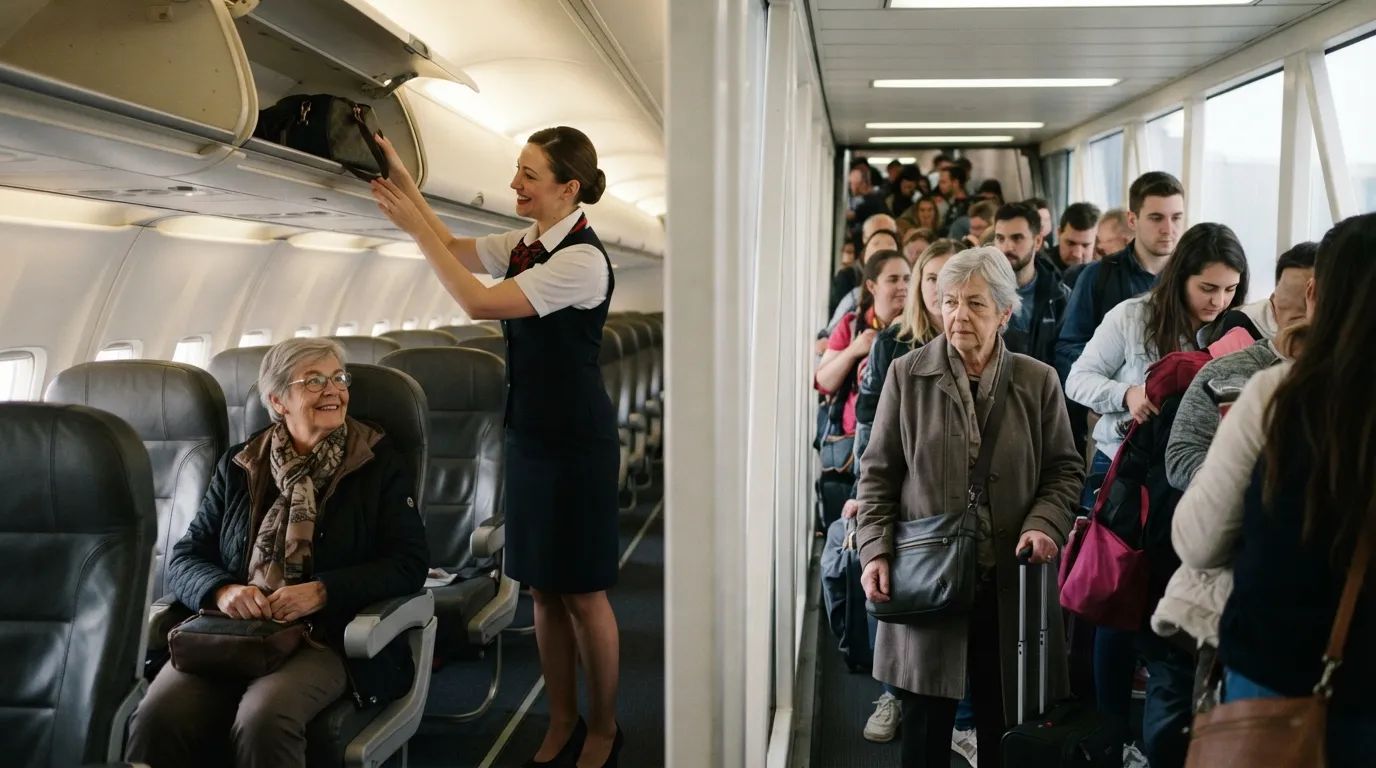
Picture a gate full of travelers waiting for a special senior line to open. It never does. Turning 60 doesn’t hand you a secret boarding lane. Southwest, for one, states that it has no special boarding for seniors.
And yet gate crews, ground staff and screeners really do help older travelers every day, quietly and almost never out loud. The trigger isn’t the age on your license. It’s something most passengers never hear at the gate. Here are 15 things that happen behind the counter, counted down to the one that explains why two identical travelers can have two totally different boardings.
#15 – The “Senior Boarding Line” Mostly Doesn’t Exist
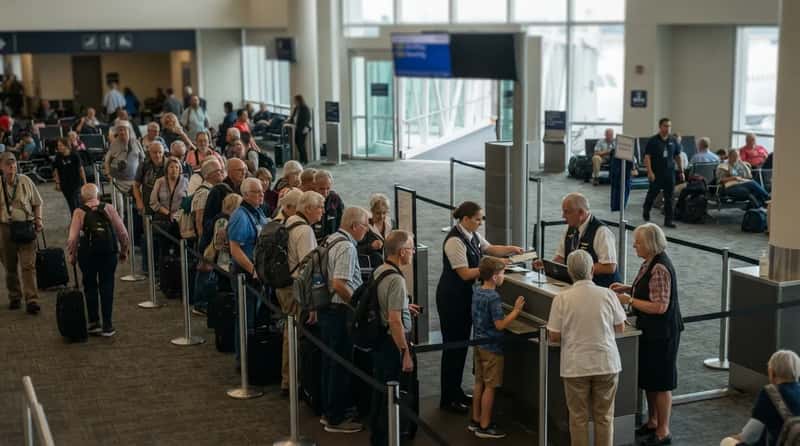
That early-boarding line you imagine for people over 60 isn’t an official lane. What exists is preboarding for passengers who need assistance, and you get it by speaking with the gate agent. The perk is real, but it runs on need, not age.
Quick Compare
- The myth: Turn 60 and a special early line opens for you.
- The reality: Preboarding is tied to needing extra time, not to a birthday.
- The gate view: Agents decide in the moment, and some airlines, Southwest included, don’t offer senior boarding at all.
Sixty isn’t a legal category here. Agents decide in the moment, based on whether someone needs extra time. A birthday alone doesn’t get you down the jet bridge first. How you actually unlock early boarding is the next surprise.
#14 – Nobody Offers Preboarding, So You Have to Say the Word
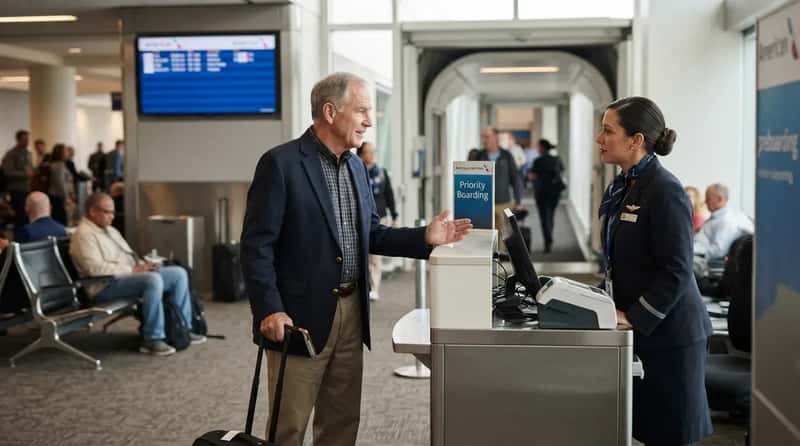
Nobody walks over and offers it. Under federal rules, carriers must offer preboarding to passengers with disabilities who self-identify at the gate as needing additional time to board. If you sit quietly in your seat, nothing happens.
American Airlines tells senior travelers to request early boarding with the gate agent if they need extra time or assistance. The staff aren’t hiding it. They just can’t guess. The next entry tackles the question most people are afraid to ask.
#13 – No Diagnosis, No Paperwork: The Fear That Keeps People in the Crowd
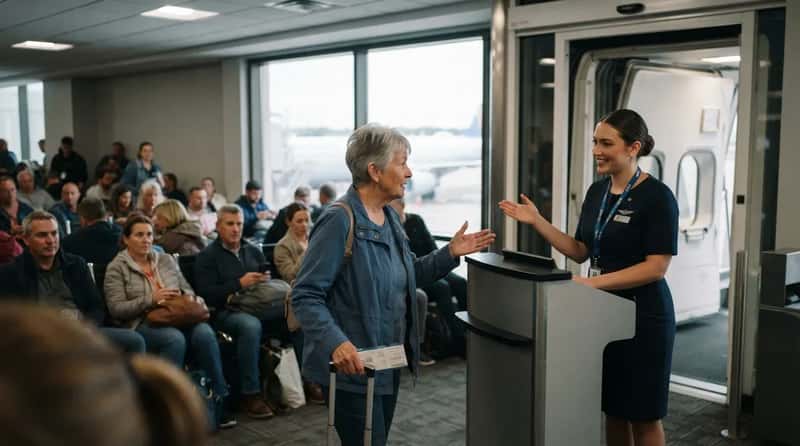
Many travelers assume preboarding is only for people with obvious medical needs. That worry keeps a lot of them standing in the crush. One senior-travel guide says you don’t need a diagnosis or paperwork, only to self-identify at the gate.
Policies and judgment calls still vary by airline and by agent. But the stated test is whether you need extra time, not whether you can prove why. Staff can say yes to more than just the jet bridge, as the next entry shows.
#12 – The Travel Companion Who Gets to Walk On With You

Flying with a spouse or friend? Some airlines let one companion preboard alongside the passenger who needs extra time. That means no awkward split at the door. One person can handle the bags while the other settles in.
Worth Knowing
- Companion preboarding is offered by some airlines, not all of them.
- You can ask at the ticket desk or the departure gate.
- One person can stow the bags while the other gets seated.
- Checking your carrier’s policy before travel day avoids a surprise at the door.
You ask an agent at the ticket desk or the departure gate. The catch is that policies differ by airline, so “most” is not “all.” Check your carrier before you assume. Then there’s a fare quirk that surprises people at the very next gate.
#11 – Your Group Number Isn’t the Only Way In
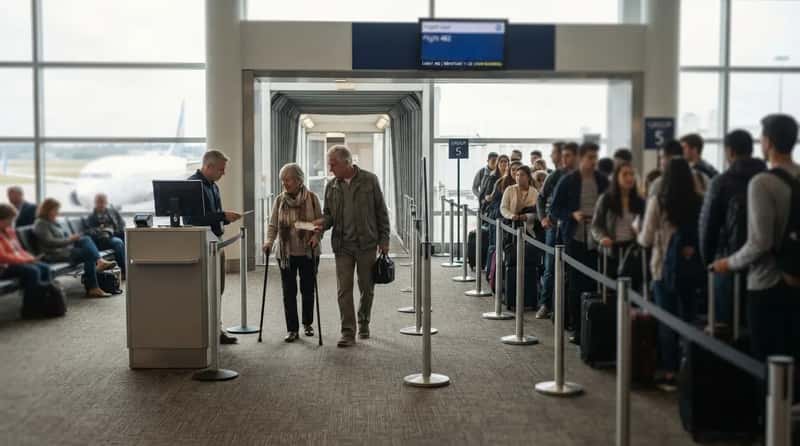
The preboarding route is separate from the numbered groups. That matters because basic fare passengers who don’t qualify for an earlier group board last. Age doesn’t change that.
Delta says you may board during pre-boarding or when your zone number is called. Two paths, one gate, and many travelers only know about one. There’s also a quieter signal that skips the conversation entirely.
#10 – The Sunflower Lanyard That Speaks for You
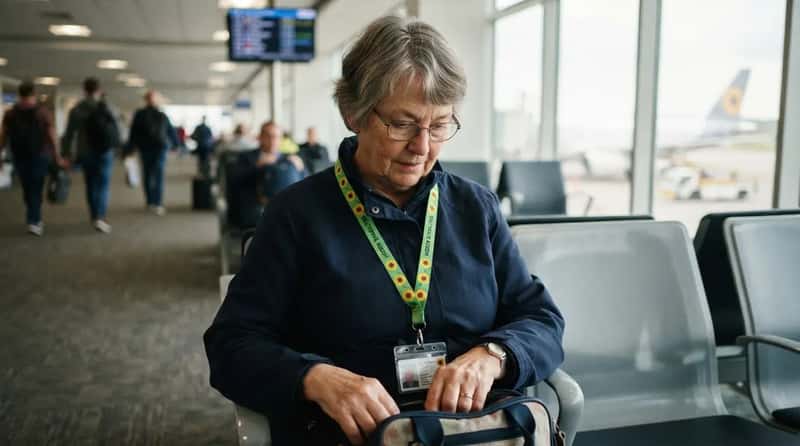
Not every need is visible. The Sunflower Lanyard is a globally recognized symbol for hidden disabilities, discreetly signaling to airport staff that you might need more time or clearer instructions. Some travelers wear it so they don’t have to explain a thing.
The same guide also points to a TSA Notification Card, available in the airport. It’s a way to ask for patience without announcing your medical history to a line of strangers. It doesn’t replace asking for help, but it can make that conversation easier. And one kind of help is free in a way many people never expect.
#9 – Wheelchair Help That Costs Absolutely Nothing
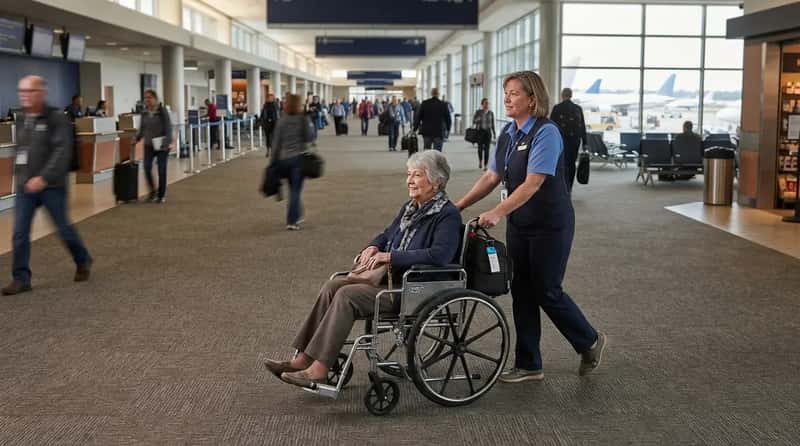
US airlines are prohibited from charging for wheelchair assistance, terminal escorts or boarding support. It must be free regardless of ticket class. Airlines must assist you from the terminal entrance or curbside through checkpoints to your gate and onto the aircraft.
Many people skip it out of pride, not because they don’t need it. But this service isn’t only for people who can’t walk at all. That’s next.
#8 – You Don’t Have to Be Unable to Walk to Use It
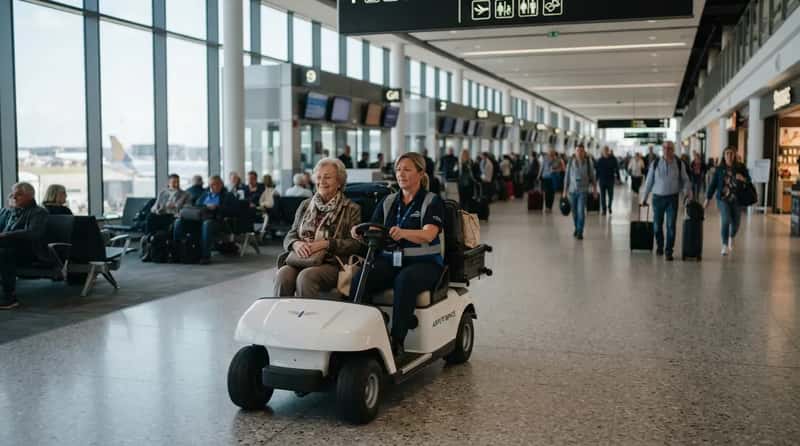
Airport distances catch plenty of people off guard. American lists wheelchair assistance as an option for help with long distances. One provider says eligible travelers include seniors or anyone who has difficulty walking long distances.
Some airports run golf-cart-style vehicles, and staff drive them to pick up passengers who need extra assistance or have tight layovers. The shortest route to your gate may be a ride you didn’t know to ask for. The help doesn’t stop at the gate, either.
#7 – Help With Connections and Baggage Claim, Not Just Departure
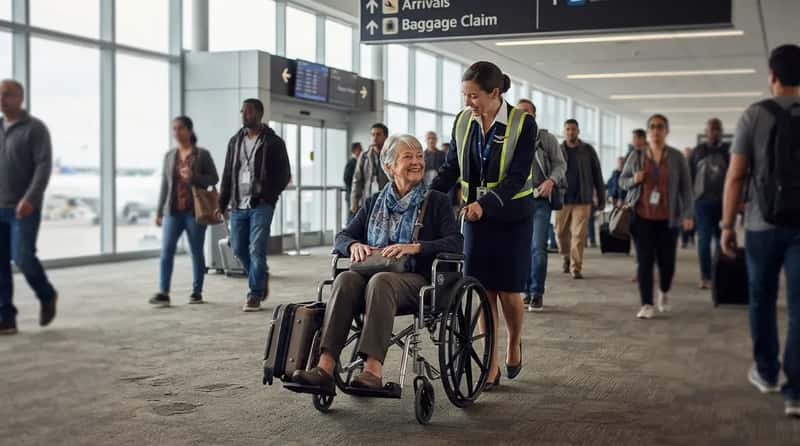
Most people think of assistance as a departure-day service. It isn’t. You can request wheelchair assistance for travel to and from your gate, navigating between gates on connecting flights, and transport to baggage claim.
At a Glance
- Departure: Help to and from your gate.
- Connection: Help moving between gates on connecting flights.
- Arrival: Transport to baggage claim.
- Best move: Request help for every leg when you book.
That matters most on the connection nobody plans for, the one with a gate change and 40 minutes to spare. The leg people forget to book is often the one that wears them out. Ask for the whole itinerary, not only the first leg. And the screening line has its own rule for one specific age.
#6 – The Age-75 Screening Perk (and the Shoe Rule That Just Vanished)
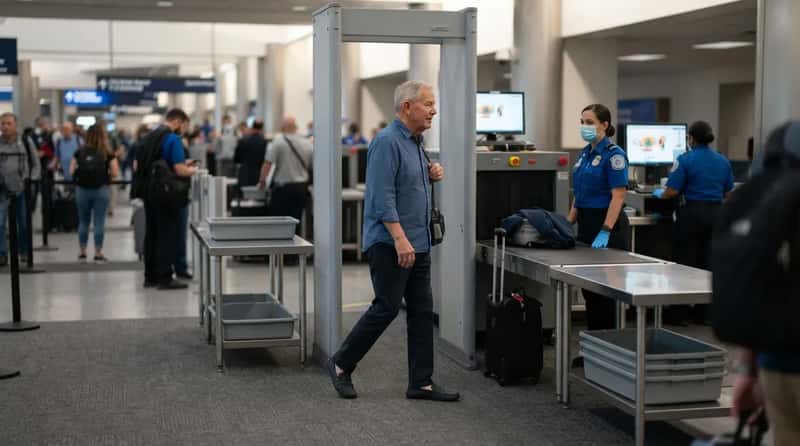
If any perk is tied to a number, it’s this one. Passengers 75 and older can receive some form of expedited screening through risk-based, intelligence-driven security. Those unable to stand for screening are screened through other methods.
The shoe part changed fast. Children 12 and under and passengers 75 and older used to be exempt. Now everyone can keep their shoes on, nationwide.
If an alarm goes off, you may still be asked to remove your shoes or undergo a pat-down. Back at the gate, the luggage question is next.
#5 – The Bag Help and Seating Tweaks Nobody Mentions
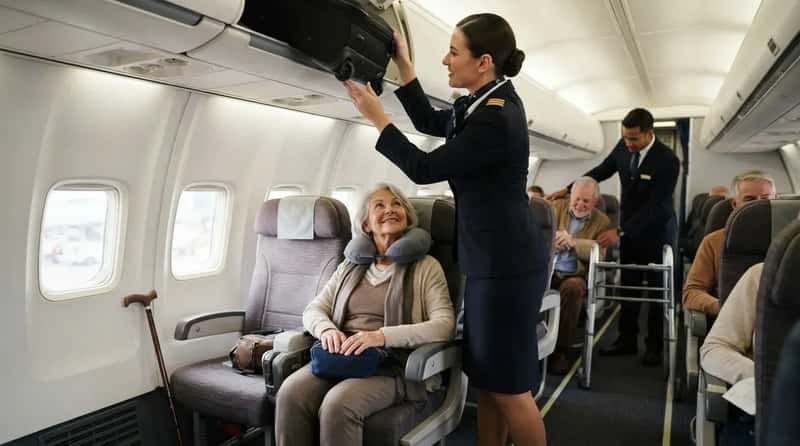
Airline personnel may help with carry-on or gate-checked luggage when a passenger cannot carry it because of a disability. Other accommodations may include preboarding, appropriate seating arrangements and help stowing certain assistive devices.
Airlines must carry personal wheelchairs and mobility devices free of charge. A walker is not a luxury item with a fee attached. Timing is where the whole thing can fall apart, though.
#4 – The Arrival Window Staff Won’t Always Explain
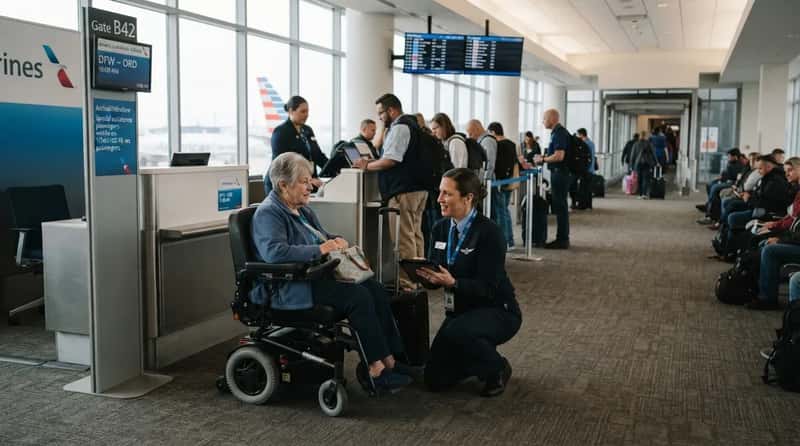
Assistance runs on a schedule. American’s staff guidance for wheelchair passengers lists gate-arrival times of 45 minutes before domestic departures and 60 minutes before international ones. That’s one airline’s internal guidance, so confirm your own carrier’s timing.
Show up late and the help may still be there, but it may not be there on time. Treat the buffer like part of the ticket. Another kind of help happens before the safety demo even starts.
#3 – The Private Safety Briefing
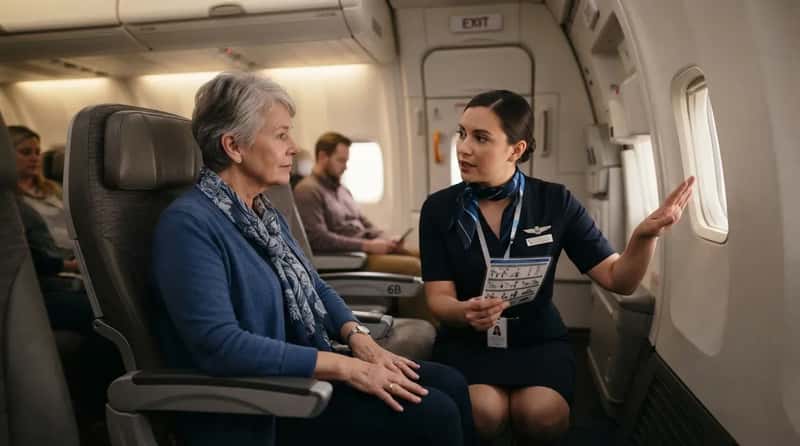
Some of the quietest accommodations never involve a wheelchair. American asks travelers to tell a team member about vision or hearing limitations so they receive a safety briefing and important flight updates. It’s a direct, personal heads-up in a cabin full of noise.
American says to let them know if you are blind or have low vision even if you don’t need airport assistance. Missing a gate-change announcement can derail a trip. And if staff say no, there’s a person with real authority.
#2 – The “CRO” Nobody Tells You About
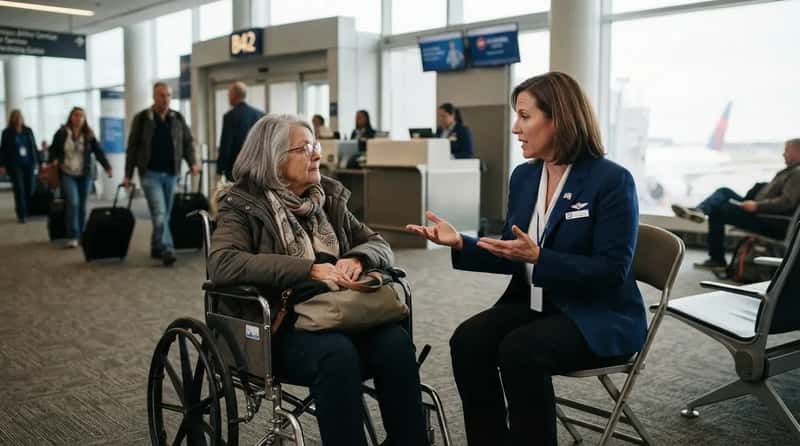
If you think your rights were ignored, there’s a specific request to make. Ask to speak with a Complaints Resolution Official. Airlines must make one available at no cost, in person at the airport or by phone.
A CRO is the airline’s expert on disability accommodation issues. Most passengers never learn the title until after the flight is gone. That brings us to the pattern behind every item on this list.
#1 – Two Identical Travelers, Two Completely Different Boardings
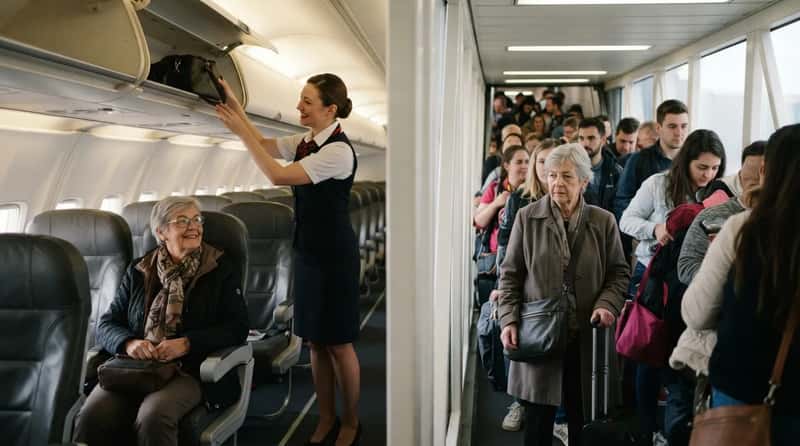
Here’s the truth behind every entry: none of it happens unless someone knows you want it. Two identical travelers on the same flight can end up in very different places. One is settled in with open overhead bin space, and the other is waiting in the crush.
Nobody at the gate will offer it first, because agents can’t guess who wants it. One traveler booked the assistance or spoke up. The other is waiting to be noticed. The difference isn’t age, status or luck.
Fast Facts
- Preboarding starts when you self-identify at the gate as needing extra time.
- Wheelchair assistance and terminal escorts are free, whatever your ticket class.
- Personal wheelchairs and mobility devices fly free.
- A Complaints Resolution Official is available at no cost if help is denied.
- The one age-based perk is TSA’s expedited screening courtesy for passengers 75 and older.
So the “senior perks” gate crews quietly extend are real, but they run on need and on one spoken request, not on a 60th birthday. The one age-based exception is a TSA screening courtesy that begins at 75. Everything else, from preboarding to free wheelchair rides to private safety briefings, waits for you to ask.
Which of these did no one ever mention to you at the gate?