Nobody hands you a brochure that says “senior help included.” There is no official over-65 program at campgrounds, and that’s exactly what makes this list so surprising. The quiet help below comes straight from real host job descriptions, and it lands hardest when you’re pulling in tired, towing a trailer, or traveling without backup.
Most of it happens while you’re out on the trail or settled in for the night, so plenty of travelers never realize it’s going on. And the person behind it all has a secret that doesn’t show up until #1. First, the part that greets you at the gate.
#15 – The Greeting That Quietly Does a Lot of Work
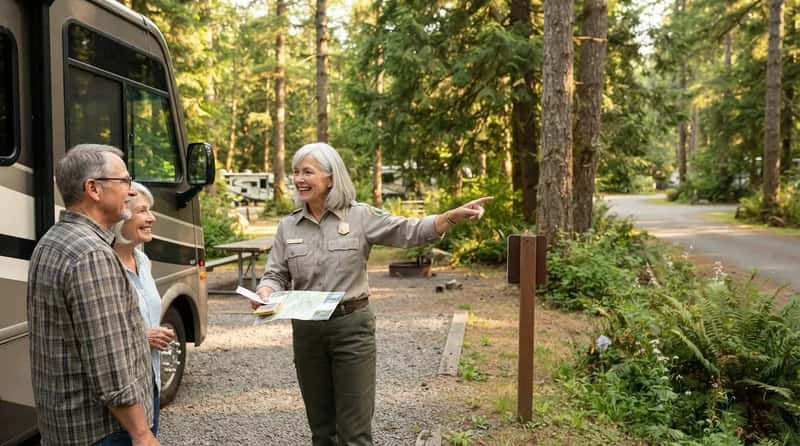
The first wave of help arrives before you’ve unhooked a thing. Hosts greet visitors, hand out information, collect fees and watch for problems. It sounds routine, but it’s a free orientation to a place you’ve never seen.
Many hosts also explain the rules up front. State host descriptions include sharing campground and recreation area information and rules with campers. Nobody has to ask for this briefing, because it’s written into the role. You learn where the water spigot is and when quiet hours start before you need either.
- Where the restrooms are
- Which rules actually get enforced
But that’s nothing compared to the local knowledge hosts carry around in their heads, which is #14…
#14 – The Unprinted Local Guide They Hand Over for Free
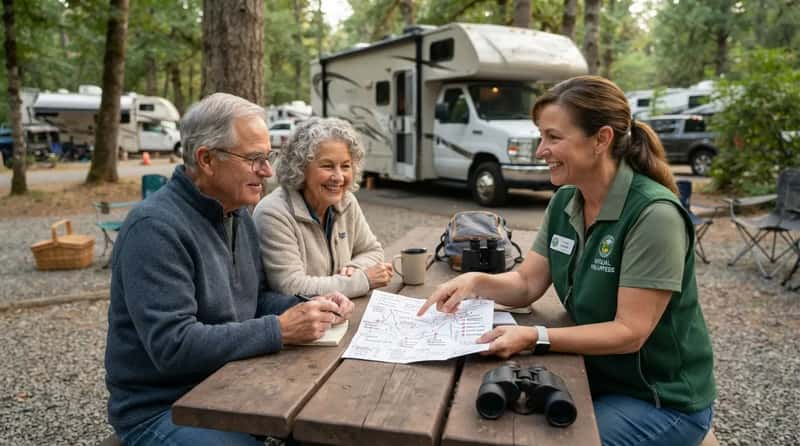
Ask a host where the nearest grocery store is, and you’ll usually get a better answer than your phone’s. Their listed duties include answering visitors’ questions and giving information about local services and attractions. The key word is “local.”
Hosts live on site, sometimes for weeks at a stretch. They often know which services close early and which roads are slow. That’s the kind of detail no map app flags, and many campers never think to ask, so the tips go unclaimed.
Now for the rounds they make while you’re out, because they’re easy to miss…
#13 – The Twice-a-Day Campground Check You Never See
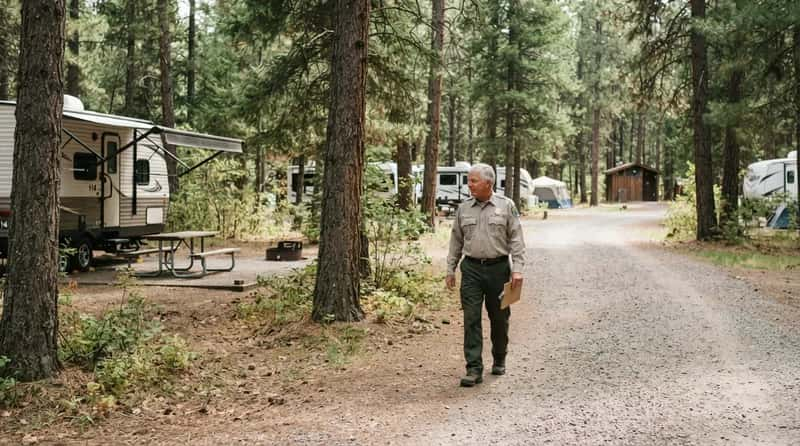
While you’re out on the trail, someone is walking the loops. Idaho’s host description lists complete campground checks twice a day. That’s a routine, not a favor.
At a Glance: Who Checks What
- Idaho: complete campground checks twice a day
- Washington: regular inspections of restrooms, picnic shelters and fire pits
- Indiana: shower houses and pit toilets checked for cleanliness
- Colorado: an evening walkthrough of the campground
Most campers never spot it. A host strolls past, glances at the sites and the facilities, then moves on. In some programs, a camper in trouble could be noticed by someone whose job is to be watching. That’s different from a formal wellness check, and no host promises one. Still, an extra set of eyes counts for a lot when you travel solo.
One of those checks involves a place most people would rather not think about, and it’s #12…
#12 – The Restroom Rounds That Decide Whether You Come Back
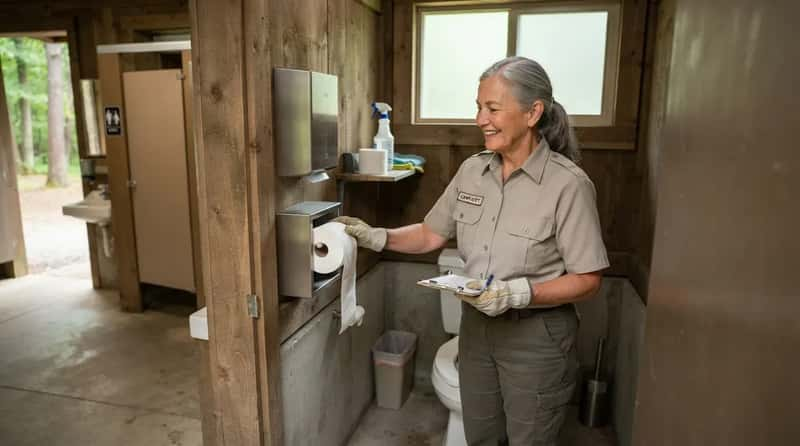
Here’s a part of the job nobody puts on a brochure. Indiana hosts check shower houses and pit toilets for cleanliness and toilet paper, and they pick up trash. Washington’s list adds regular inspections of restrooms, picnic shelters and fire pits.
For travelers with knee trouble or tired legs, a stocked restroom is a big deal. A missing roll of toilet paper at 9 p.m. is a real problem, and hosts exist to prevent it. If something runs out, tell your host. They’re often the fastest fix in the campground.
The next one spares you a very awkward late-night moment…
#11 – The Reserved-Site Tags That Prevent Midnight Evictions
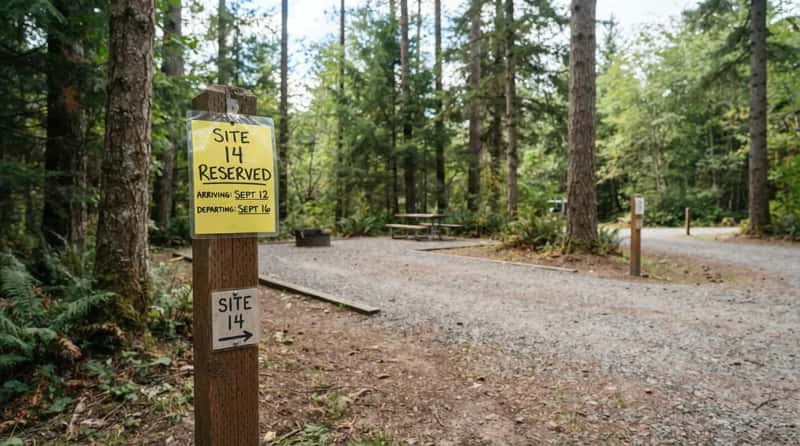
Few things ruin a trip like setting up on a site someone else booked. Hosts post reservation information and mark reserved sites. That small job heads off a real headache.
Picture the alternative. You back in a long trailer, level it, and then a pair of headlights appears with a confirmation printout. Marking sites is how hosts spare you a full re-park in the dark. Walk the loop with your host if you can, and ask which sites are truly open.
The next stop on the host’s route comes with wood, ice and a surprisingly big convenience…
#10 – The Firewood and Ice Run That Saves You a Drive
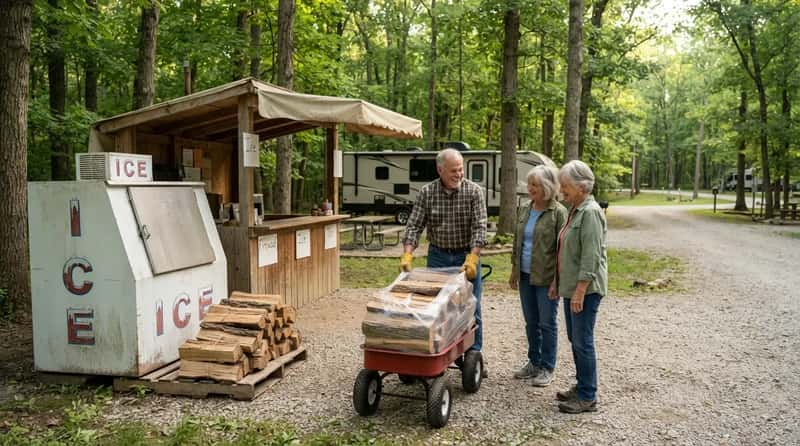
Skipping a trip into town matters when you’re tired. Indiana hosts sell firewood and ice, and California State Parks hosts handle firewood sales too. The supplies are right at the host site, a short walk from your door.
Some hosts also lend a hand with a heavy bundle, though that depends on the host and isn’t a rule. A bundle of wood can weigh more than most people expect, so asking for help is smart. Policies vary by park, so a polite question is worth it.
- Buy wood locally to avoid carrying pests between regions
- Ice and wood are usually sold at the host site
The next item can cut your nightly rate in half, and many people never hear about it…
#9 – The Half-Price Hint at the Fee Window
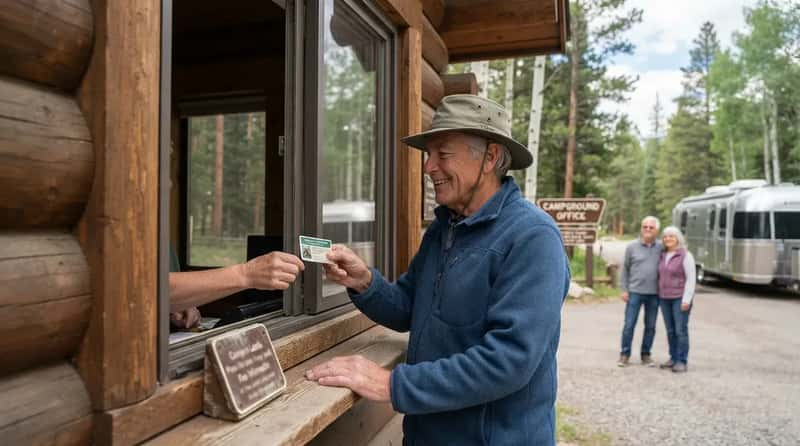
This one is a “maybe,” and honesty matters here. Hosts don’t set fees. But because hosts often collect them, the Senior Pass question tends to come up right at the window.
Fast Facts: The Senior Pass
- Open to U.S. citizens and permanent residents 62 and older
- Annual pass: $20
- Lifetime pass: $80
- May give 50 percent off some amenity fees, such as camping
The payoff is camping, but there’s a catch. The pass generally does not reduce fees charged by concessioners. That means private operators inside federal land may not honor it. Check before you assume.
But the next item involves a deadline most campers don’t know exists…
#8 – The Gate Schedule Heads-Up That Beats a Locked Exit
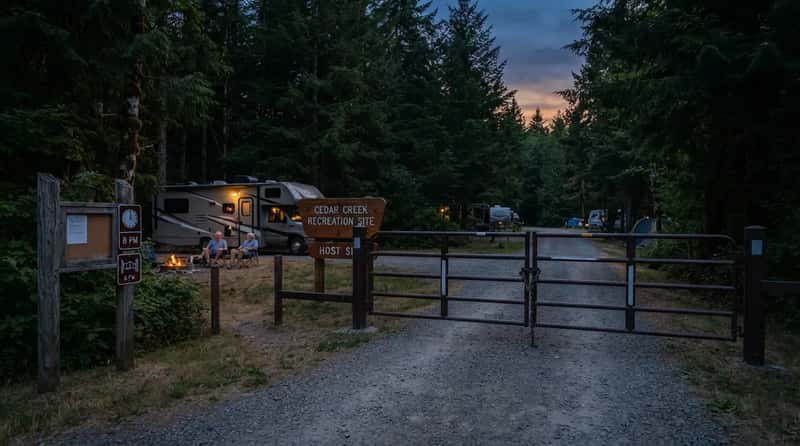
Some campgrounds lock up at night. Washington’s host duties include opening and closing recreation site gates on a schedule. California hosts also close entrance gates.
For late arrivals, that is critical information. A gate that’s closed when you arrive can mean a long wait or a rushed backtrack. Ask about hours the moment you check in. Hosts know exactly when they turn the key.
- Ask when the gate closes
- Ask what to do if you’re running late
After the gate closes, something far more social starts to happen at dusk…
#7 – The Evening Programs They Help Run
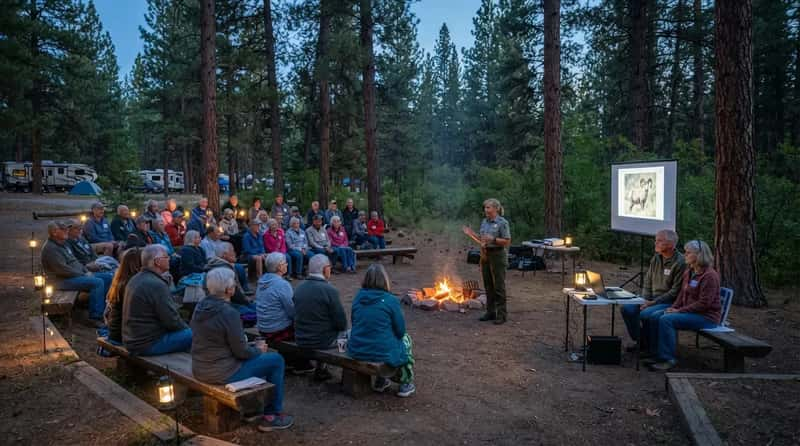
Some campgrounds put on an evening talk or a ranger walk. Idaho’s hosts may assist park staff at evening programs, tours or other interpretive activities. Hosts often help set up and spread the word.
That matters for travelers who are alone. A scheduled program gives you a built-in reason to meet other campers. You don’t need to be outgoing. Just show up, sit down, and listen to a ranger talk about the local wildlife.
Some hosts take that friendliness even further with a habit most people never notice…
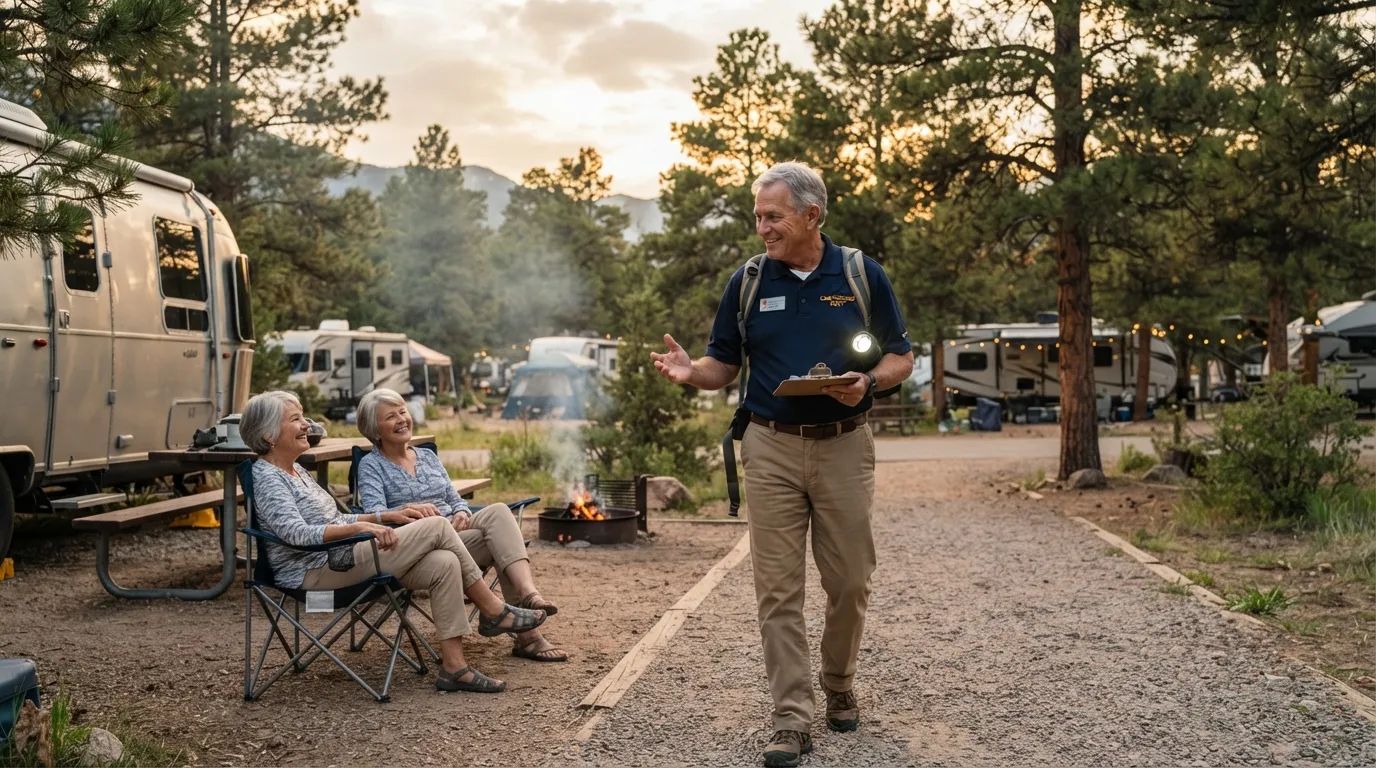
#6 – The Evening Walk-Through That Doubles as a Welcome
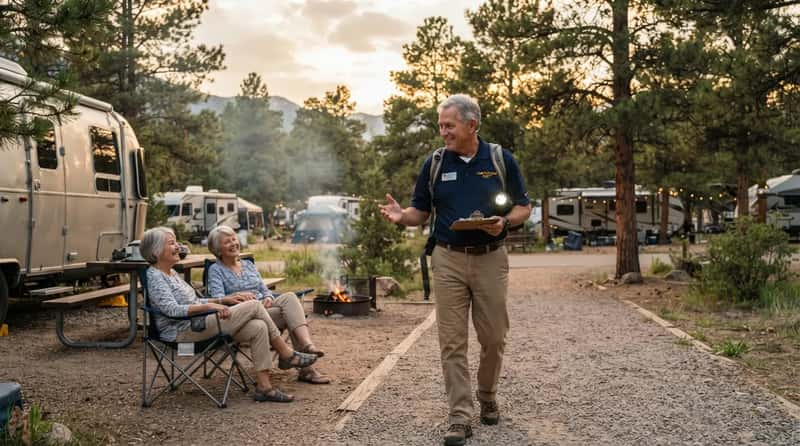
Some hosts walk the campground in the evening just to talk. One Colorado host listing includes an evening walkthrough of the campground for visitor interaction. It’s built into the role, not an extra.
It’s a gentle way to get help without asking for it. Many travelers who’d never knock on a door will happily chat when someone strolls by. If you want a tip or have a minor problem, that stroll is your chance. Keep a question ready.
But what happens when something is actually broken? That’s the next one…
#5 – The Problem Reports Sent Up the Chain Before You Complain
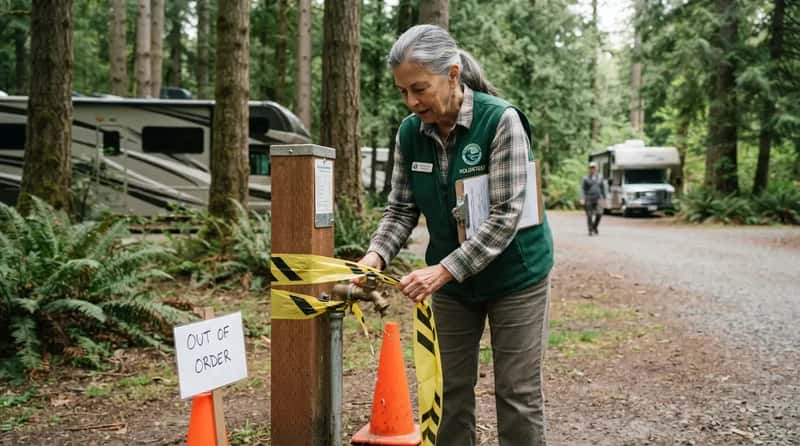
Hosts are the campground’s early warning system. Their duties include monitoring campground activities and reporting potential issues to park staff. That includes a leaking tap or a dead light.
Washington goes further. Hosts there immediately secure vandalized or unsafe facilities until they are repaired. That means a hazard can be blocked off before you ever walk into it. Still, hosts are volunteers, not repair crews, so don’t expect same-day fixes.
Next comes the one job nobody hopes to need, and it may matter most…
#4 – The Emergency Call They’ll Help You Make
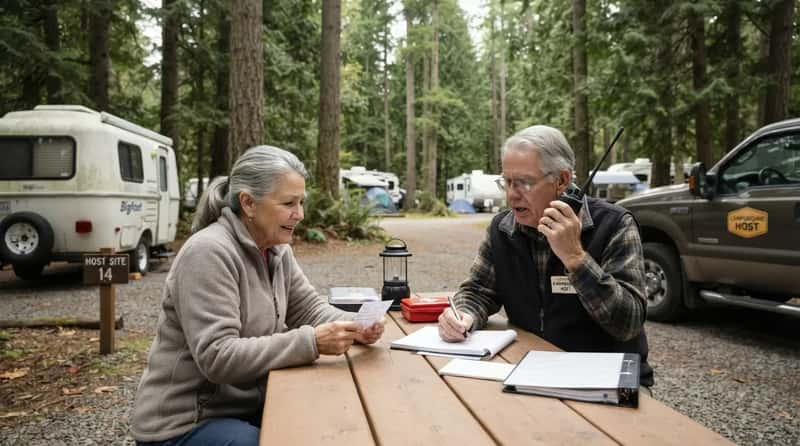
Here’s the one that counts. Washington’s job description says hosts help campers and visitors contact emergency assistance as needed. That’s in writing.
Cell service is spotty at many campgrounds. A host with a radio or a phone may be the only fast link to help. Know where your host’s site is. Note the number somewhere you can reach it, even without signal.
- Know where the host site is
- Save the park’s contact number
But emergencies don’t keep office hours, and neither do hosts, as #3 reveals…
#3 – The After-Hours Safety Net Most Campers Forget
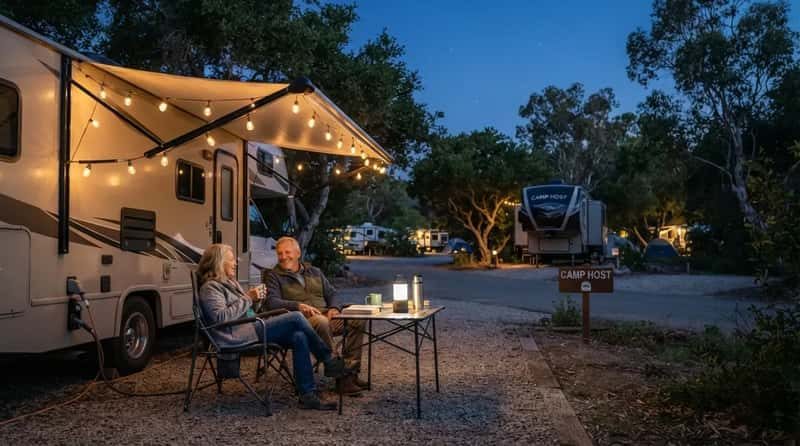
Campgrounds don’t stop at 5 p.m. San Diego County hosts may act as a contact in an after-hours emergency or when park staff are off duty. That’s a big reason many hosts live on site.
Why It Stands Out
- The host is on site when staff have gone home
- San Diego County names hosts as an after-hours emergency contact
- Indian River County expects weekend, holiday and after-hours availability
It extends beyond emergencies. The staff go home, but the host is still in the loop. For a traveler far from family, that presence is a quiet comfort, even if it’s rarely used.
And the next one is a paper trail that could matter more than you’d guess…
#2 – The Written Log That Tracks What Happens Overnight
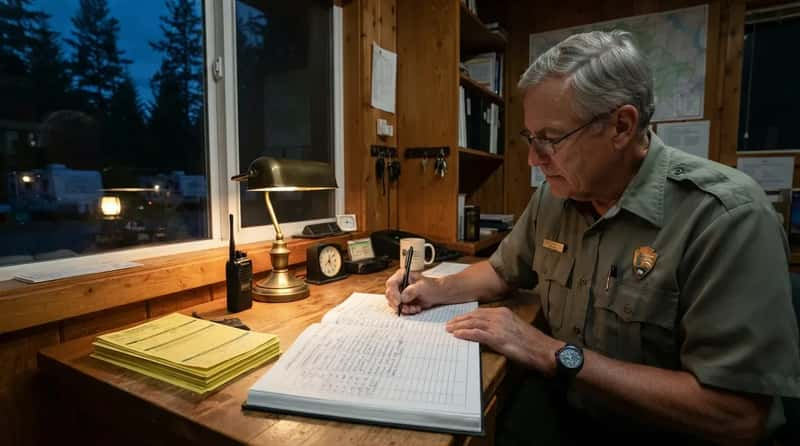
It sounds dull, but it counts. Washington hosts keep written logs of camper activity, information and incidents, and submit registration information monthly. It’s paperwork, but it’s a record.
Here’s why it matters. If something goes wrong, there’s a written note on file instead of just someone’s memory. That helps staff follow up on a problem or a complaint. So don’t be shy about telling your host about an issue, because writing it down is part of the job.
But the biggest secret behind all of this is the person doing it, and it’s #1…
#1 – The Truth: Your Host Is Usually Working for a Campsite
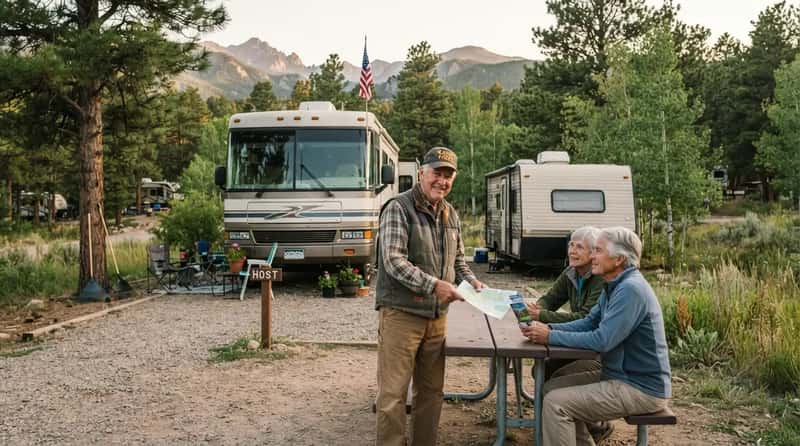
Here’s the part that stops people. Colorado’s campground host positions are unpaid volunteer roles. The pay is a patch of ground.
Quick Compare: What Hosts Give Back
- Colorado: unpaid volunteer roles
- Michigan: complimentary camping in exchange for 30 hours of service per week
- San Diego County: roughly 20 hours a week
Hours vary by program. Many hosts work a full part-time schedule for free, then still stop to ask how your trip is going. Hosts also typically bring their own motor home, camper or trailer to live in. Keep that in mind next time you thank one.
None of these favors is an official senior program. They’re ordinary host duties: greeting, checking, reporting, locking gates, answering the radio. What stands out is how much of it happens in the background, especially for older travelers far from home.
The surprise is that the person doing it is often an unpaid volunteer living in an RV near the restrooms. Use the Senior Pass if you qualify, ask your host the questions, and remember they can’t fix everything. But the next time a stranger in a work vest waves from a golf cart, you’ll know how much that wave might be covering.