Most people picture an overnight train as a moving hotel. You board, you sleep, you wake up rested in a new city. Then they actually ride one, and the fantasy runs into a bed barely wider than your shoulders, a dinner menu you didn’t choose, and a bathroom that may be down the hall.
Riders on Amtrak, Nightjet, and the Caledonian Sleeper keep running into the same surprises after trip one. Some are annoying, some are weirdly wonderful, and a few cost real money. The one that makes people book a second trip is waiting at #1.
#17 – Your Roomette Is Just 3 Feet 6 Inches Wide
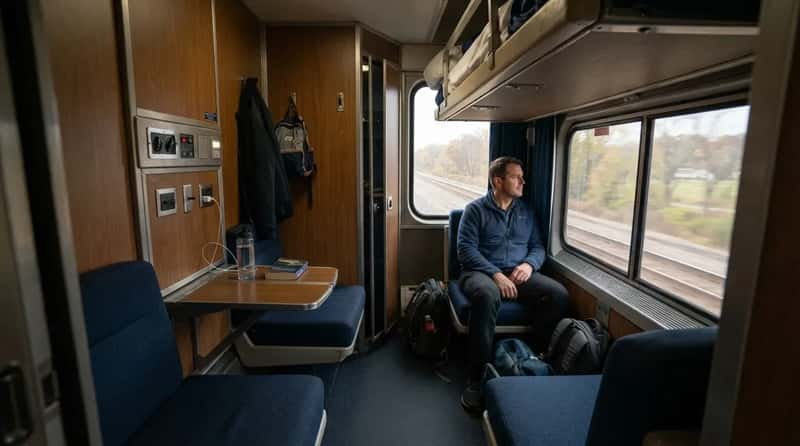
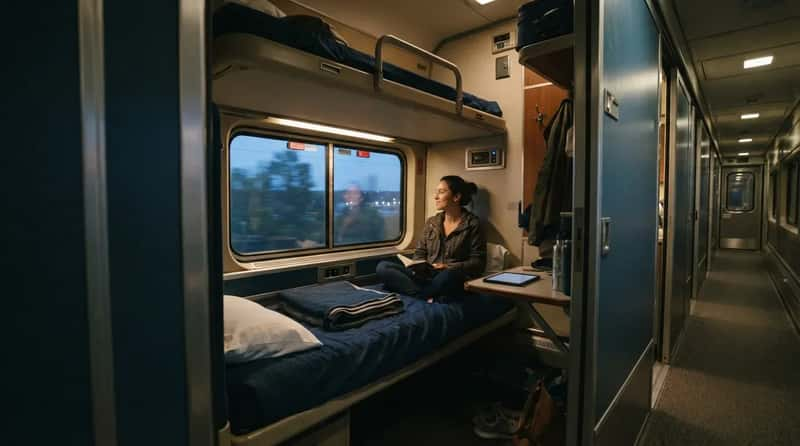
Amtrak lists a roomette at 3 feet 6 inches by 6 feet 6 inches, with room for two adults. That’s the whole room. Two reclining seats convert into a bed, and an upper bunk folds down from above. Amtrak itself calls it a cozy option for first-time riders.
Every inch is put to work. Each room has outlets, a fold-down table, reading lights, climate control, and a garment rack. One reviewer’s best advice was to check as much luggage as possible and keep only the essentials with you. Your bags compete with you for floor space.
The room is tiny, but the way it transforms is the real trick. That’s #16.
#16 – Someone Quietly Turns Your Seats Into Beds While You Eat
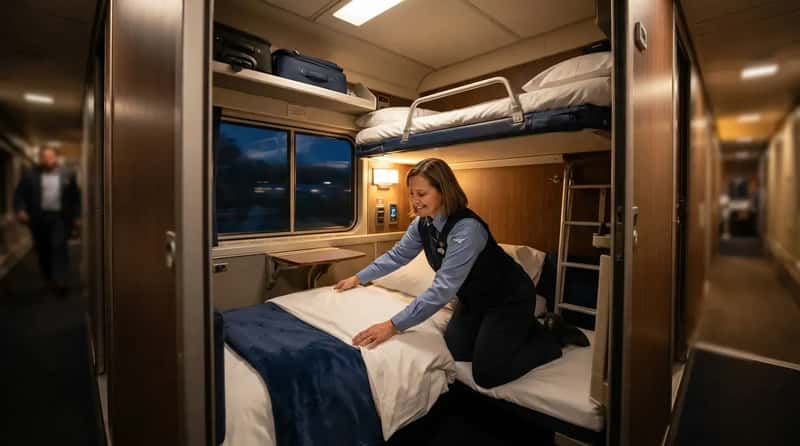
The best feature isn’t the bunk. It’s the person who makes it. A dedicated first-class attendant handles turndown service, helps with meals, and assists with luggage. Amtrak also lists coffee and bedding among the attendant’s jobs. You walk back from dinner and the room has changed shape.
The perks go beyond the car. Private-room customers get lounge access at major stations, priority boarding, and complimentary meals onboard. In other words, you bought a service, not just a ticket. Coach riders never see any of it.
At a Glance
- One dedicated attendant per sleeping car
- Turndown service, meal help, and luggage assistance
- Coffee and bedding on the attendant’s job list
- Lounge access, priority boarding, and meals for private-room guests
#15 – The “Free” Meals Come With a Fixed Menu and a Catch
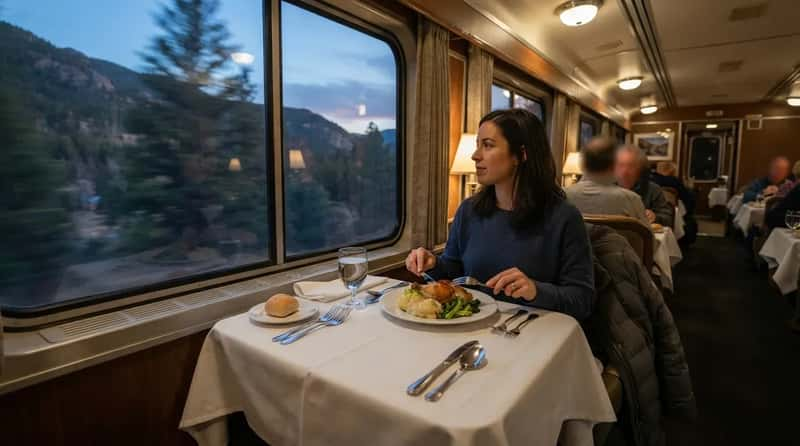
The food is included, though not quite the way you’d imagine. All scheduled meals are part of the fare, and you can eat in the dining car or have them brought to your room. One traveler noted the menu is fixed, and the same one shows up again the next day.
Plenty of riders still call it a fair trade. On a long haul with no restaurants nearby, a sit-down meal with scenery sliding past the window is a big deal. Just don’t expect variety. The real trap is timing.
Food is one thing. The bathroom situation in #14 is another.
#14 – Your Roomette May Not Have a Toilet at All
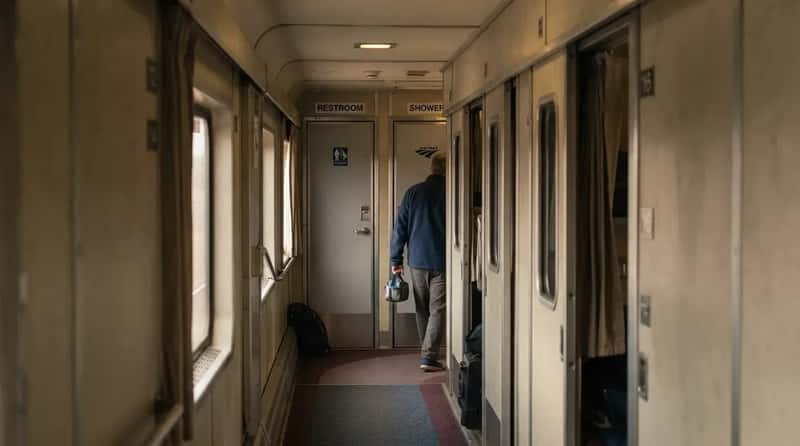
Here’s the detail booking pages tend to bury. On bi-level Superliner trains in the West, roomettes have no toilet. The restrooms and shower are down the hall, in the same car. Bedrooms are different, with a private in-room toilet and shower.
The type of train car matters as much as the type of room. Amtrak says roomettes on its Viewliner trains do have a toilet in the room. Two rooms with the same name can have very different bathroom setups. Some riders argue the toilet matters more than extra square footage.
- Each Superliner sleeping car has restrooms on the lower level.
- Check which type of train you’re on before you pick a room.
And if the toilet is down the hall, so is the shower. Which brings us to #13.
#13 – The Train Shower Has Its Own Secret Changing Room
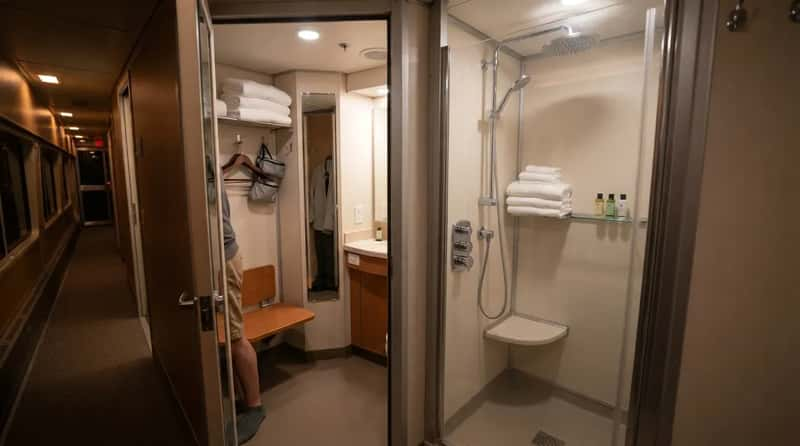
Yes, you can actually shower on a train. Reviewers describe a private changing room with a heated shower, towels, and soap. One rider noted the small changing space meant they didn’t have to get dressed inside the shower itself.
Most people expect something grim. It turns out to be a proper little bathroom suite, shared by everyone in the car. After a 20-hour ride, that’s a big deal. Still, the walk to it is part of the deal.
The shower isn’t what makes riders gasp, though. The price is, in #12.
#12 – The Jump From Coach to Roomette Is a Cliff
Sleeper pricing doesn’t climb gradually. In one recent search, a $106 coach ticket became $713 for a roomette on the same trip. A full bedroom on that route priced out at $2,619. That’s one sample, and fares change by date and demand.
The gap starts arguments. Critics call a sleeper a luxury splurge. Fans say that one fare replaces a hotel night, dinner, and breakfast. Both sides have a point.
- Coach: $106, no bed
- Roomette: $713, with a bunk and meals
- Bedroom: $2,619, with a private bathroom
Now cross the Atlantic, where “private” doesn’t always mean private. That’s #11.
#11 – That “Private” Couchette Might Come With Strangers
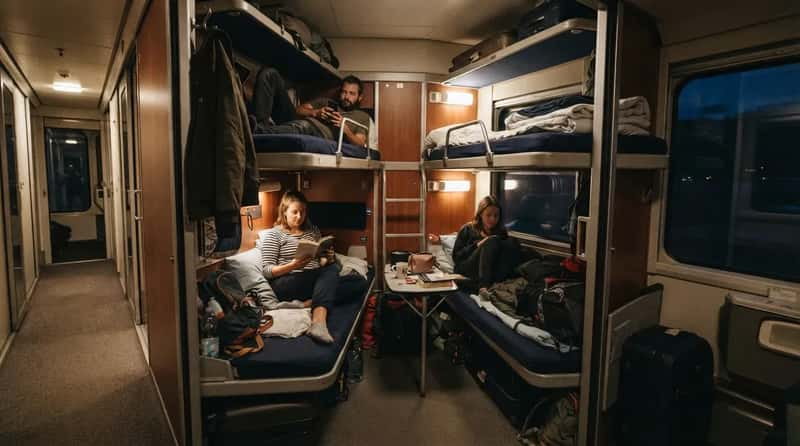
Europe’s night trains have their own surprises. ÖBB’s Nightjet sells seats, couchettes, and sleeper compartments, and each couchette compartment holds several fold-down bunks. Book one berth and you may be sharing the room with people you’ve never met.
Buying every berth in a compartment gives your group the space to itself, so four people booking a four-berth couchette share with nobody. A smaller group that books only some berths can still end up with strangers. The new-generation Nightjets have no six-person compartments at all. That helps, but it doesn’t erase the sharing.
Worth Knowing
- A couchette compartment holds several fold-down bunks.
- Book every berth and the compartment is yours alone.
- Book only some berths and strangers may take the rest.
- New-generation Nightjets have no six-person compartments.
And the word “sleeper” hides an even bigger gap. See #10.
#10 – A Nightjet “Sleeper” May Only Give You a Sink
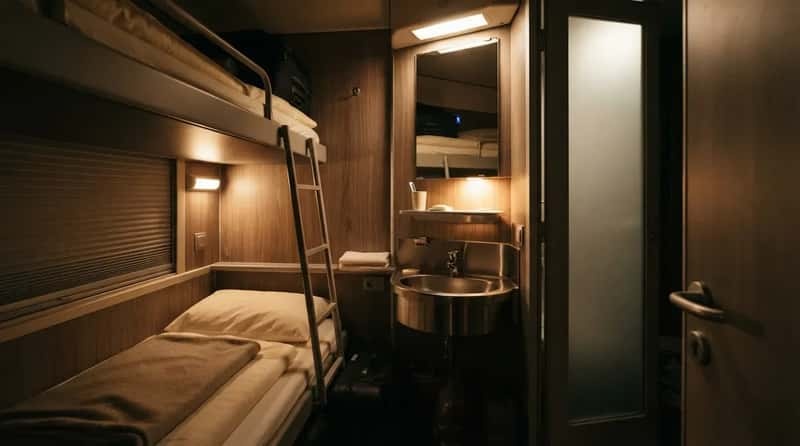
The word “sleeper” sounds like a bathroom comes with it. Standard sleeper cabins have only a washbasin, with a shared bathroom between compartments. Couchette passengers share the toilets in their carriage.
The deluxe version is a different world. Two-person and some three-person deluxe cabins have their own shower and toilet, with towels, toiletries, slippers, and earplugs. Same train, same word, completely different night.
Whichever room you land in, your luggage is coming with you. See #9.
#9 – Your Suitcase Sleeps in the Room With You
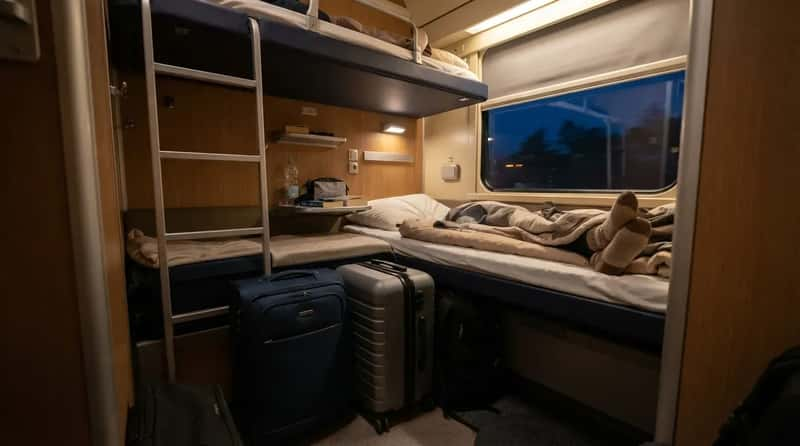
There’s no baggage car for a Nightjet compartment. You take all your luggage with you and put it on the racks or, in couchettes, beneath the lower berths. You keep access to your bags all night. That’s both a perk and a squeeze.
The Caledonian Sleeper works the same way. Luggage goes under the bottom bed, and the cabins are compact, particularly with two people. A separate small bag with your essentials is a smart move. Pack like you’re camping, not checking in.
Quick Compare
- Nightjet: No baggage car. Bags go on racks, or under the lower berths in couchettes.
- Caledonian Sleeper: Luggage goes under the bottom bed in a compact cabin.
- Either way: Your bags stay within reach all night.
The next mistake is one you can literally smell. It’s #8.
#8 – The Smell Mistake Everyone Makes in a Shared Compartment
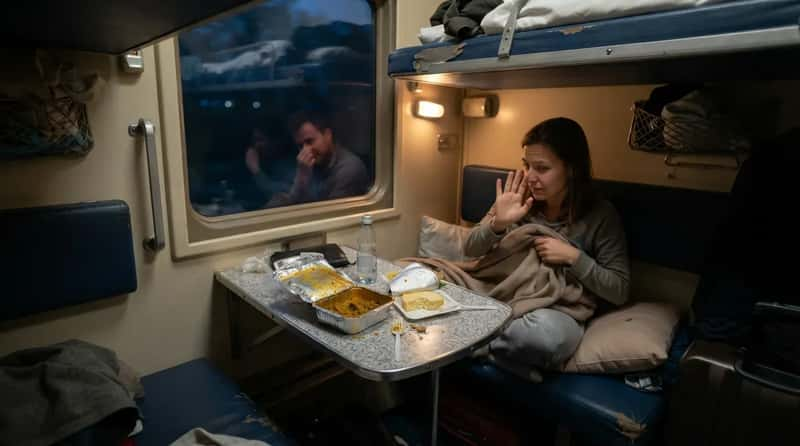
Packing dinner sounds smart, until you share a small room. Strong-smelling food is a poor choice in a shared couchette, where several passengers sleep in one compartment. The air doesn’t go anywhere. Your neighbors will remember.
Breakfast, at least, is covered. A sleeper cabin gets an à la carte breakfast, and a couchette berth gets a small one. A couchette ticket also includes a bottle of mineral water. So dinner is on you, and so is the smell.
Rail passes sound like the budget hack. Here’s the catch, at #7.
#7 – Your Rail Pass Doesn’t Cover the Bed
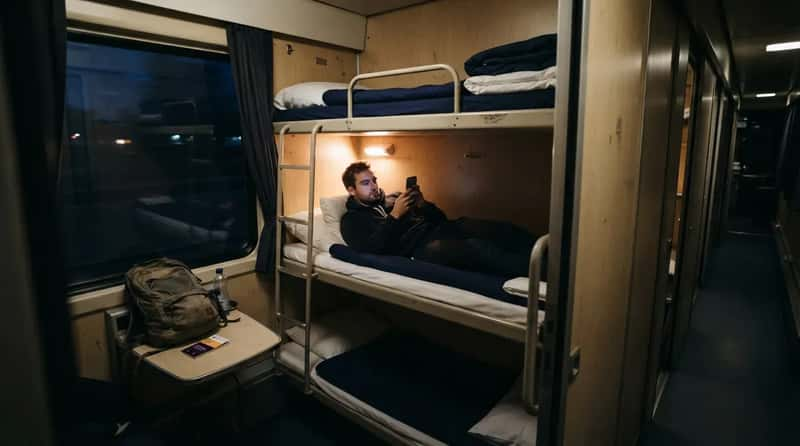
Pass holders get a nasty surprise at the booking screen. An Interrail or Eurail Global Pass covers the Nightjet journey, but you must pay for a mandatory seat, couchette, or sleeper reservation. The bunk costs extra. The pass doesn’t change that.
Pricing works like a flight, too. Nightjet tickets use dynamic pricing, much like airlines. Two riders in the same compartment can pay very different amounts. And don’t count on streaming, because onboard Wi-Fi is often limited or missing.
Some riders call that a feature, not a flaw. The safety question in #6 matters more.
#6 – Solo Travelers Can Ask for a Ladies-Only Compartment
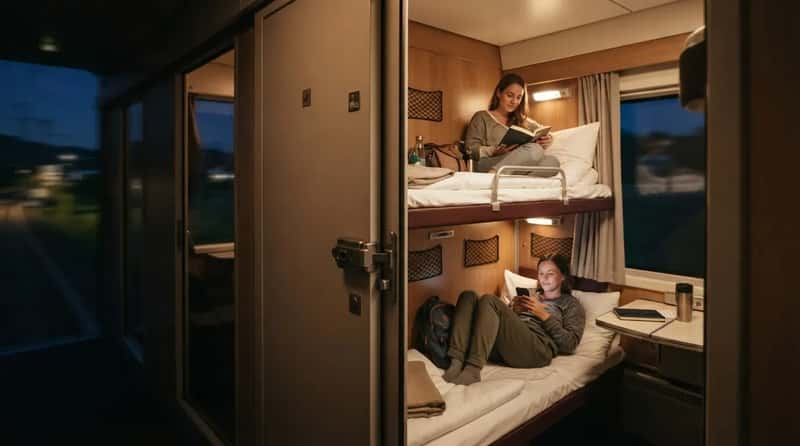
Many riders find this option too late. Solo travelers booking a couchette or standard sleeper can request a single-gender compartment on the ÖBB website while booking. It’s a booking setting, not a secret handshake.
Locks are standard, too. Couchette and sleeper compartments have a lock on the inside of the door. Still, one guide says theft is rare but does occasionally happen on popular tourist routes.
Now for a scene that plays out on a London platform every night. It’s #5.
#5 – Caledonian Boarding Is a Two-Tier Affair
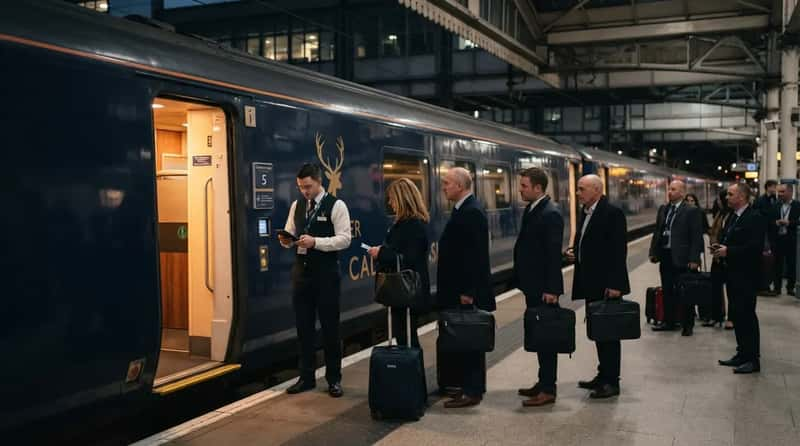
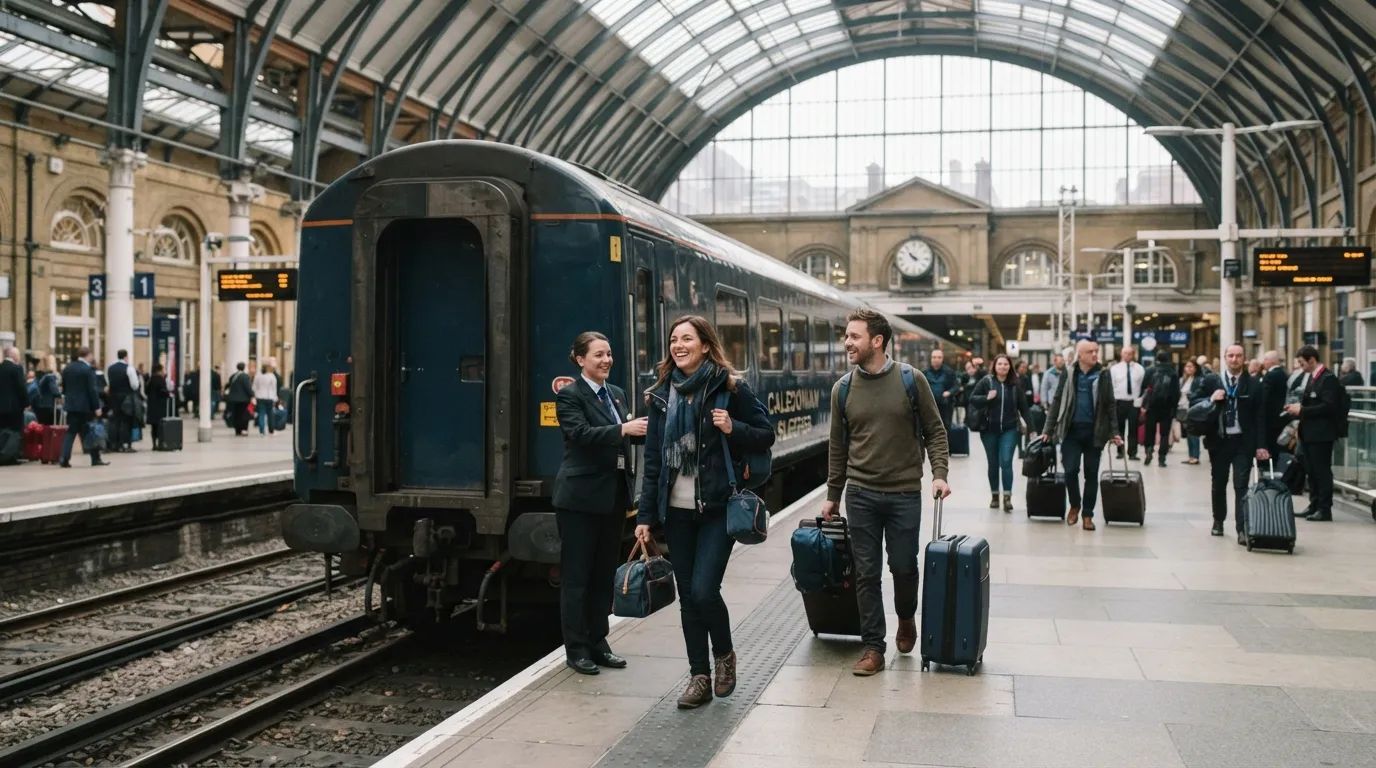
On the Caledonian Sleeper, rank starts at the platform. Boarding at Euston opens at 22:15 for Caledonian Double and Club guests, and 22:30 for everyone else. The train leaves once boarding closes. Don’t wander off for one more snack.
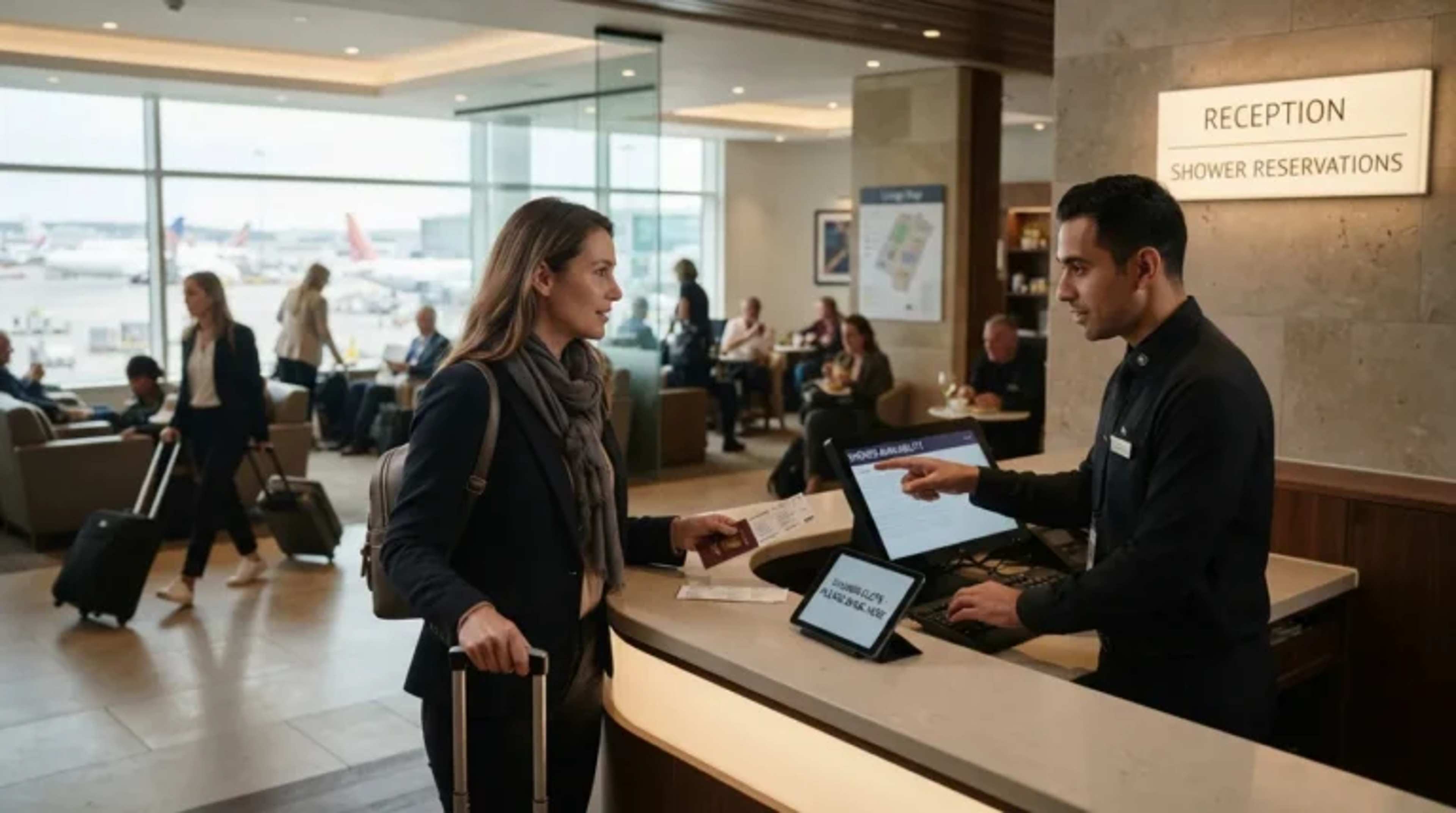
The lounge is the real secret weapon. One reviewer advises staying in the lounge until staff hand out your keycards. Station lounges also have showers, a perk after an overnight trip. You can arrive grubby and leave fresh.
Once you’re aboard, the pecking order follows you to the bar. Here’s #4.
#4 – The Club Car Fills Fast, and Rank Decides Who Gets a Table
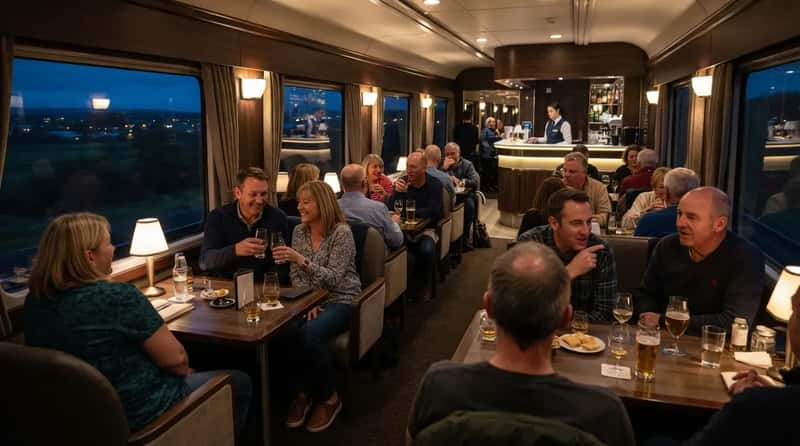
The Club Car gets all the photos. Club and Caledonian Double guests get priority, and other passengers may get in subject to space. It can get crowded, so you may have to wait for a table. Classic guests are gambling.
The workaround is simple. Drop your bags in the cabin and head straight there to claim a table. One UK guide calls it the best part of the train. A local guide also warns against treating it like a late night out. It suggests two drinks help you sleep, while four ruin the morning.
Why It Stands Out
- Priority entry for Club and Caledonian Double guests
- Everyone else gets in only if there’s space
- A crowd can mean a wait for a table
- One local guide’s rule of thumb: two drinks help, four hurt
The best view on the train isn’t where you’d expect it. It’s #3.
#3 – The Best Views Show Up at Breakfast, Not Midnight
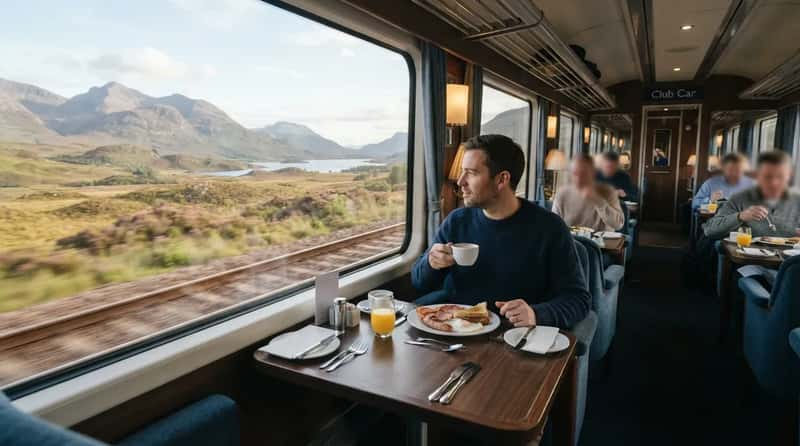
Overnight trains run in the dark, and that’s the secret nobody advertises. Heading to Scotland, the best views come around breakfast, in the lounge with its bigger windows. The midnight hours are for sleeping.
Want a proper scenic ride? One reviewer says to take a daytime train for dramatic Highland views. The sleeper is a way to get there, not the sightseeing itself. Breakfast is included with Club and Caledonian Double rooms.
Meanwhile, the train itself is up to something while you sleep. That’s #2.
#2 – The Train Stops, Splits, and Shunts While You Sleep
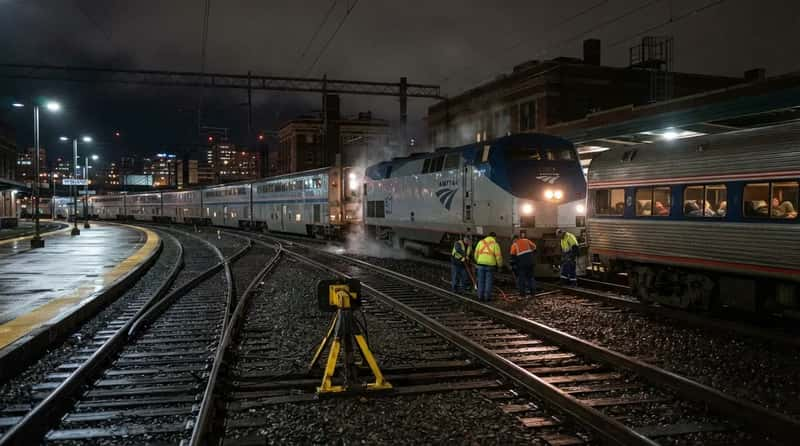
Sleeping on a moving train isn’t always smooth sailing. One guide says the Caledonian Sleeper stops, splits, and shunts overnight. On Amtrak’s Empire Builder, a Portland train meets a Seattle train in Spokane, gaining a dining car and more cars. Trains change shape while you dream.
Riders disagree on how it feels. One reviewer called the motion jerky and noisy, with unavoidable light sources. Others compare it to being rocked to sleep. Both reactions are real.
Bumps, lights, and all, here’s the reason riders put up with it. It’s #1.
#1 – You Wake Up in the City Center With the Whole Day Left
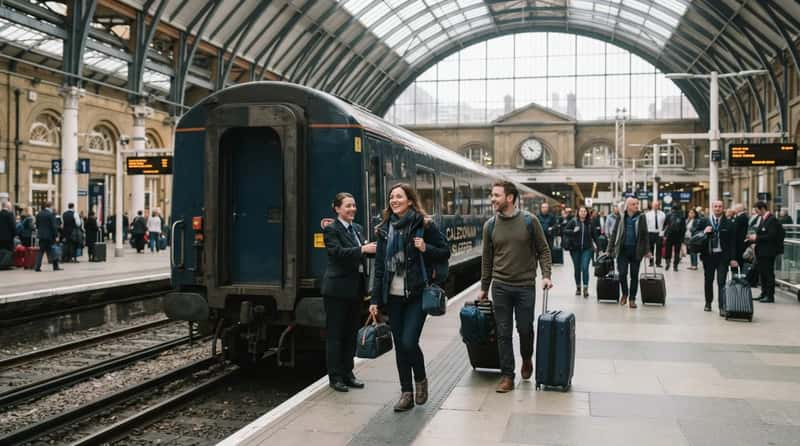
Here’s what keeps riders coming back. One couple boarded in Fort William and woke up steps from central London, without setting foot on a plane. No airport dash. No lost morning.
It’s a growing trend, too. One 2026 overview says Nightjet runs more than twenty routes, and European Sleeper has private lines linking Brussels, Berlin, Prague, and Venice. The train pulls into a central station, so your first coffee is at your destination. The real luxury isn’t the bunk. It’s the morning you get back. Some Club passengers can even use the London Euston lounge after arrival.
The biggest surprise about overnight trains is how much hangs on small details. Your room might be 3 feet 6 inches wide, with the toilet down the hall. A “sleeper” might only mean a sink, and a rail pass might not cover your bed.
Yet people go back. They remember the stranger who turned down their bed, the lounge shower, and the first coffee in a city that was hundreds of miles away at dinner. The night is cramped, but the morning feels like a gift.